
Aim How to write half reactions Half Reaction
- Slides: 10
Aim: How to write half reactions
Half Reaction • Half reaction shows the exchange of electrons in a redox reaction • One half reaction shows oxidation; the other reduction
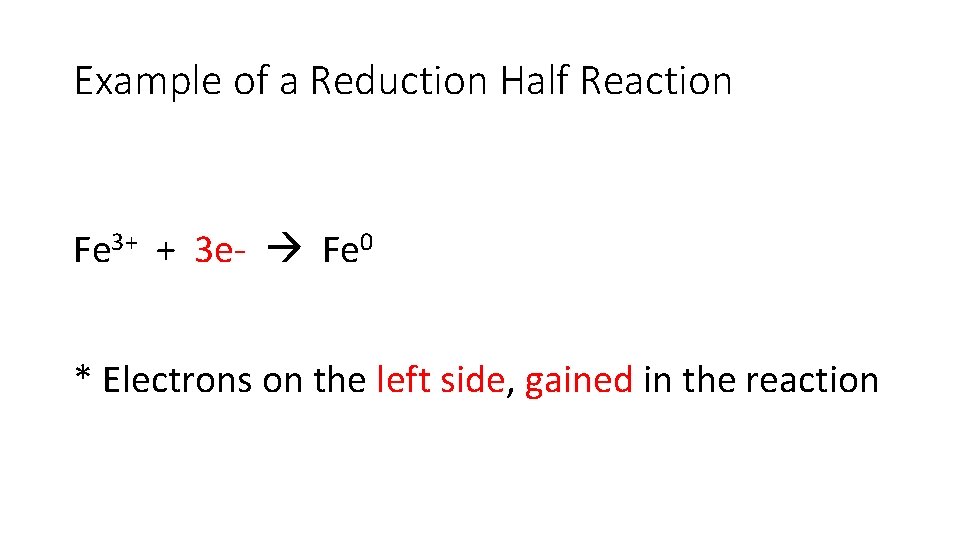
Example of a Reduction Half Reaction Fe 3+ + 3 e- Fe 0 * Electrons on the left side, gained in the reaction
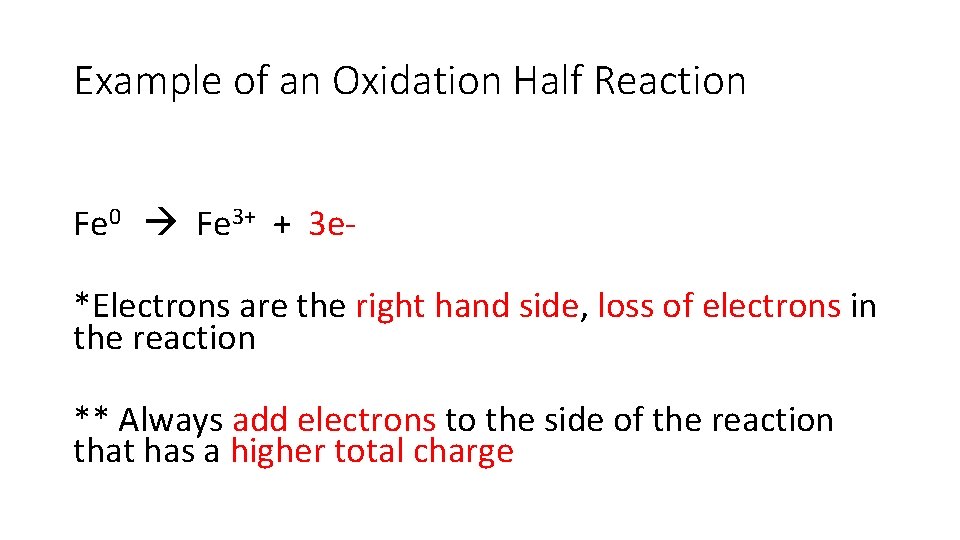
Example of an Oxidation Half Reaction Fe 0 Fe 3+ + 3 e*Electrons are the right hand side, loss of electrons in the reaction ** Always add electrons to the side of the reaction that has a higher total charge
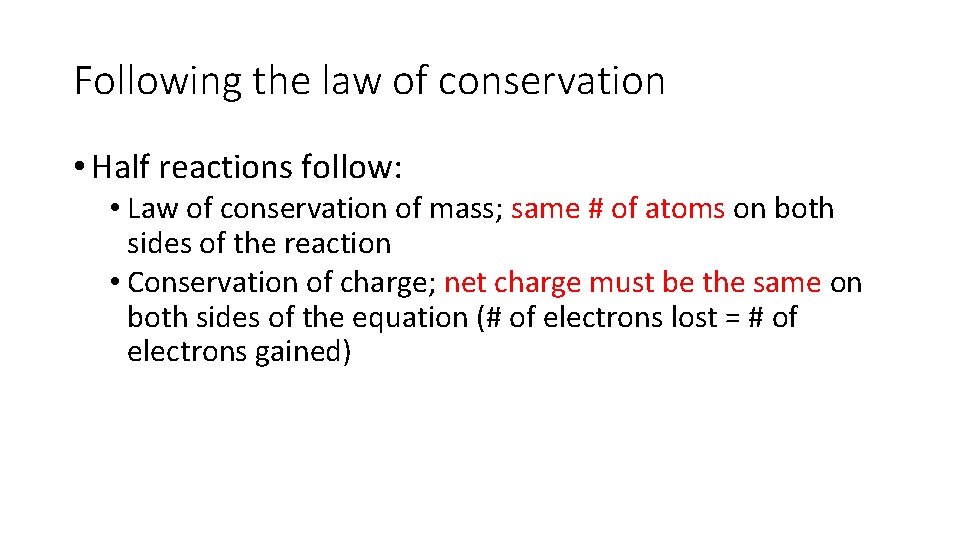
Following the law of conservation • Half reactions follow: • Law of conservation of mass; same # of atoms on both sides of the reaction • Conservation of charge; net charge must be the same on both sides of the equation (# of electrons lost = # of electrons gained)
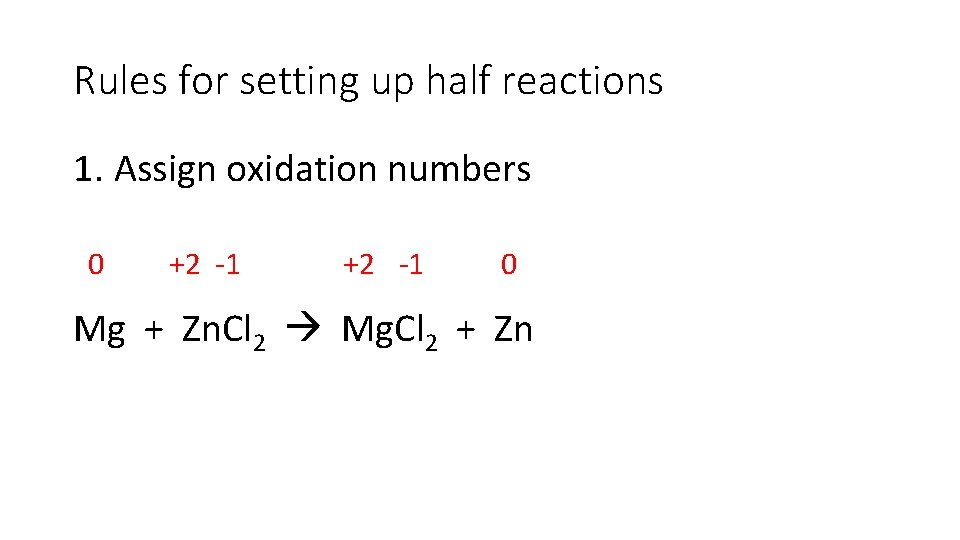
Rules for setting up half reactions 1. Assign oxidation numbers 0 +2 -1 0 Mg + Zn. Cl 2 Mg. Cl 2 + Zn
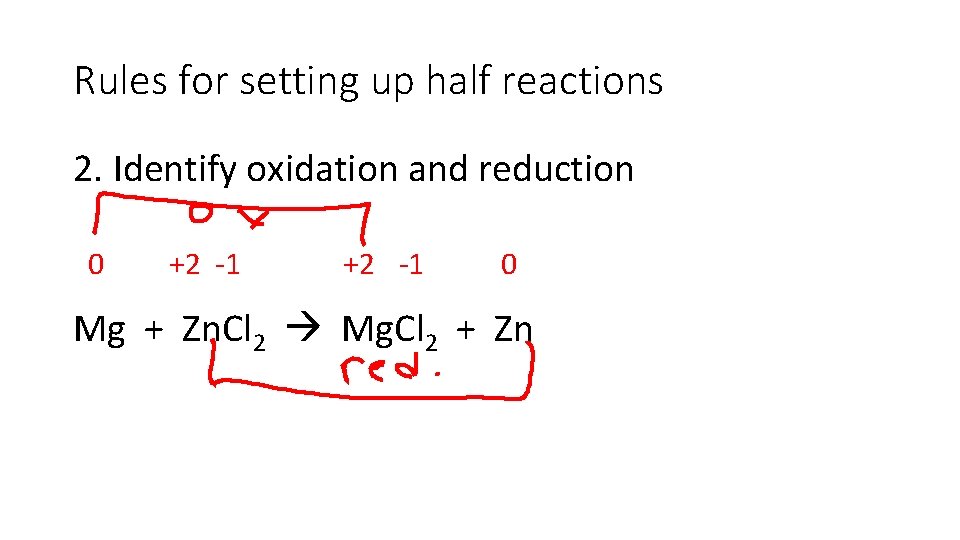
Rules for setting up half reactions 2. Identify oxidation and reduction 0 +2 -1 0 Mg + Zn. Cl 2 Mg. Cl 2 + Zn
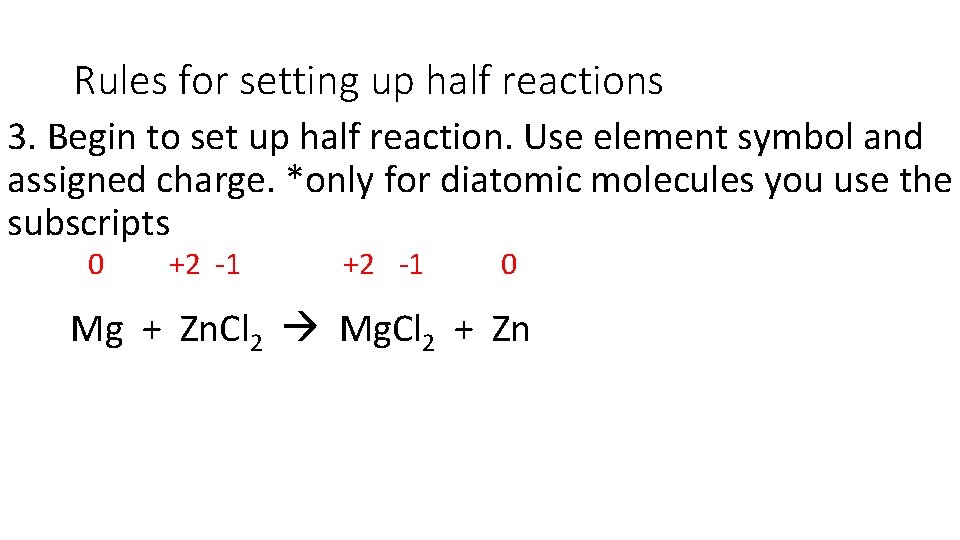
Rules for setting up half reactions 3. Begin to set up half reaction. Use element symbol and assigned charge. *only for diatomic molecules you use the subscripts 0 +2 -1 0 Mg + Zn. Cl 2 Mg. Cl 2 + Zn
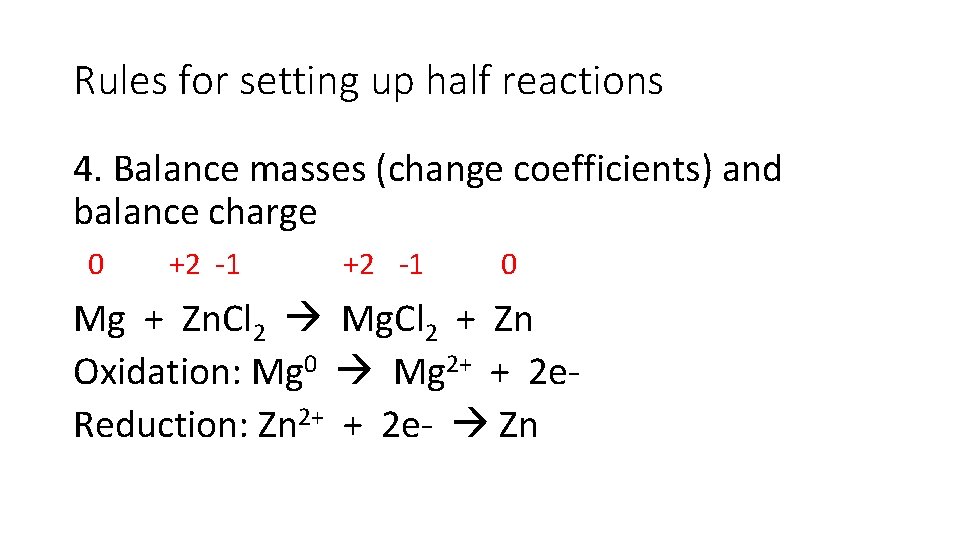
Rules for setting up half reactions 4. Balance masses (change coefficients) and balance charge 0 +2 -1 0 Mg + Zn. Cl 2 Mg. Cl 2 + Zn Oxidation: Mg 0 Mg 2+ + 2 e. Reduction: Zn 2+ + 2 e- Zn
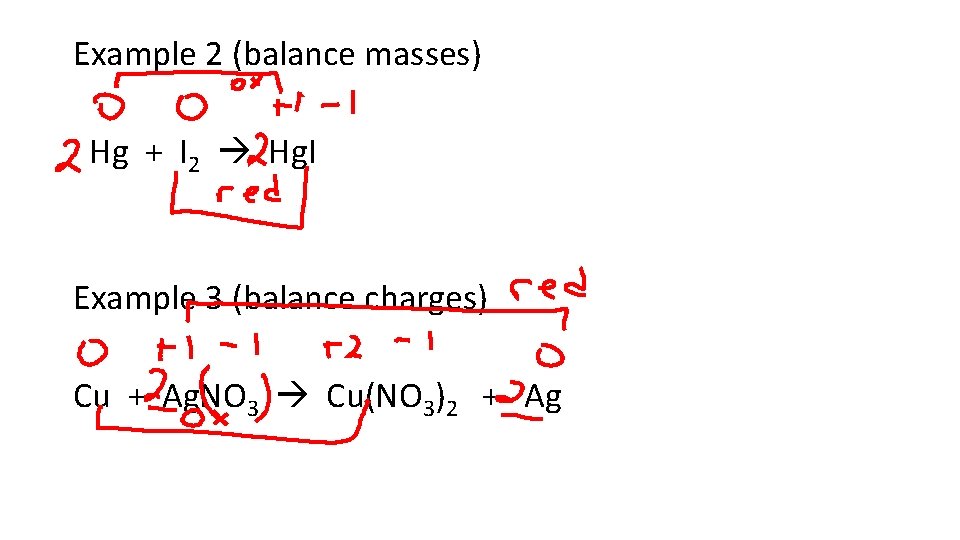
Example 2 (balance masses) Hg + I 2 Hg. I Example 3 (balance charges) Cu + Ag. NO 3 Cu(NO 3)2 + Ag