
AIM HOW IS THE ELECTRON ORGANIZED IN THE


- Slides: 14
AIM: HOW IS THE ELECTRON ORGANIZED IN THE ATOM? D 0 Now: Explain the difference between the Bohr Model and the Electron Cloud Model.
ELECTRON Electrons are found in the electron cloud Negative charge In a neutral atom the # of protons = the # electrons The electron cloud has very little mass (low density, large volume); therefore, the atom is considered to be primarily empty space
ELECTRON CLOUD MODEL (WAVE MECHANICAL MODEL) In the wave-mechanical model (electron cloud model), the electrons are in orbitals, which are defined as the regions of the most probable electron location (ground state) The ground state is the state of the electron when it is not excited
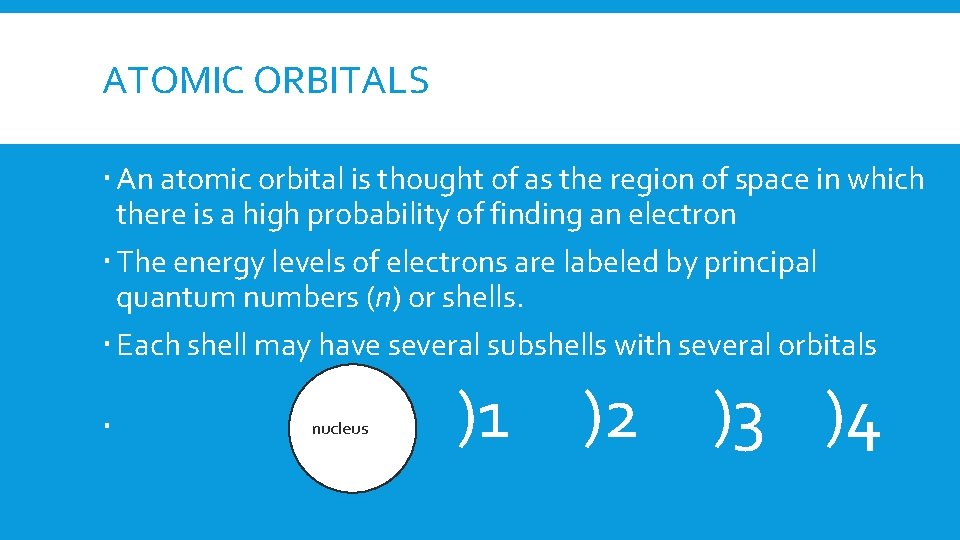
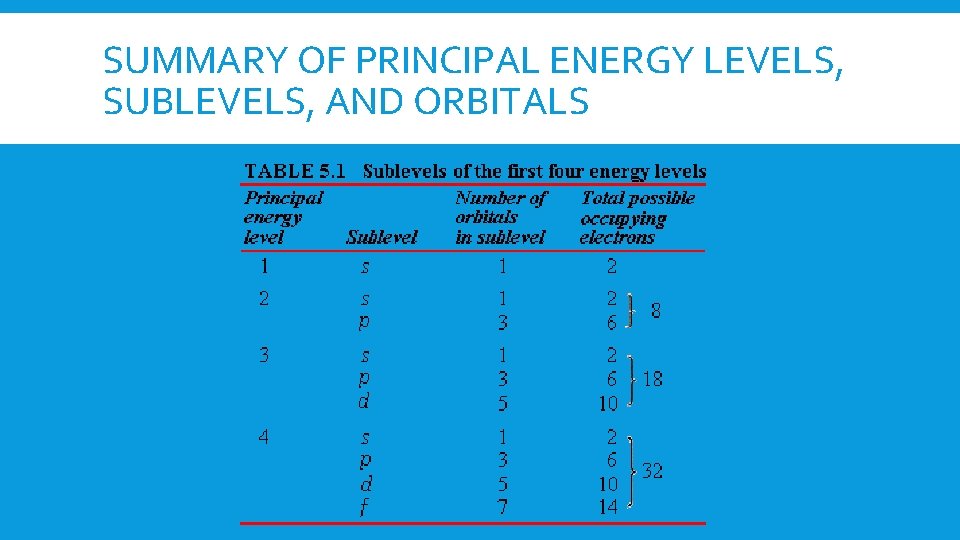
ATOMIC ORBITALS An atomic orbital is thought of as the region of space in which there is a high probability of finding an electron The energy levels of electrons are labeled by principal quantum numbers (n) or shells. Each shell may have several subshells with several orbitals nucleus )1 )2 )3 )4
SUMMARY OF PRINCIPAL ENERGY LEVELS, SUBLEVELS, AND ORBITALS
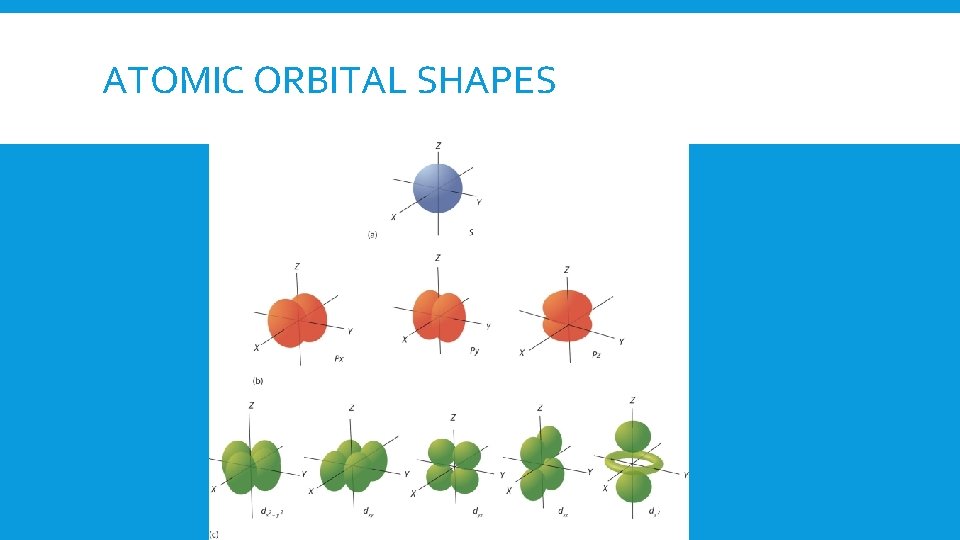
ATOMIC ORBITAL SHAPES
ORBITAL NOTATION Orbital notation- a shell or energy level is indicated by a number, but the shells are subdivided by subshells sublevel- a division of a shell Sublevel is divided into orbitals
ORBITAL NOTATION Orbitals can hold a maximum of two electrons Magnetic attraction holds the electrons together. The opposite magnetic attraction overcomes the charge repulsion of the two electrons in an orbital. s p d
ORBITAL NOTATION The s sublevel has one orbital The p sublevel has 3 orbitals And the d sublevel has 5 orbitals
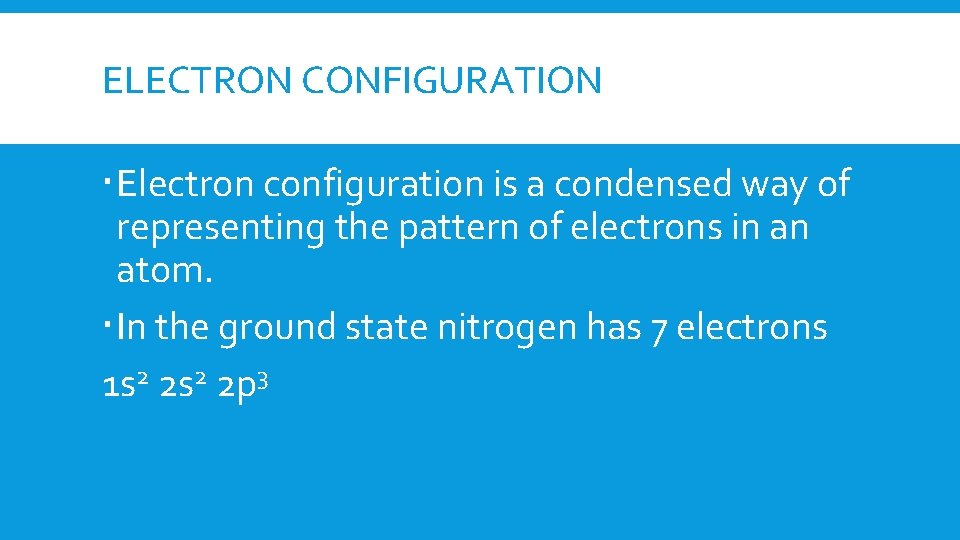
ELECTRON CONFIGURATION Electron configuration is a condensed way of representing the pattern of electrons in an atom. In the ground state nitrogen has 7 electrons 1 s 2 2 p 3
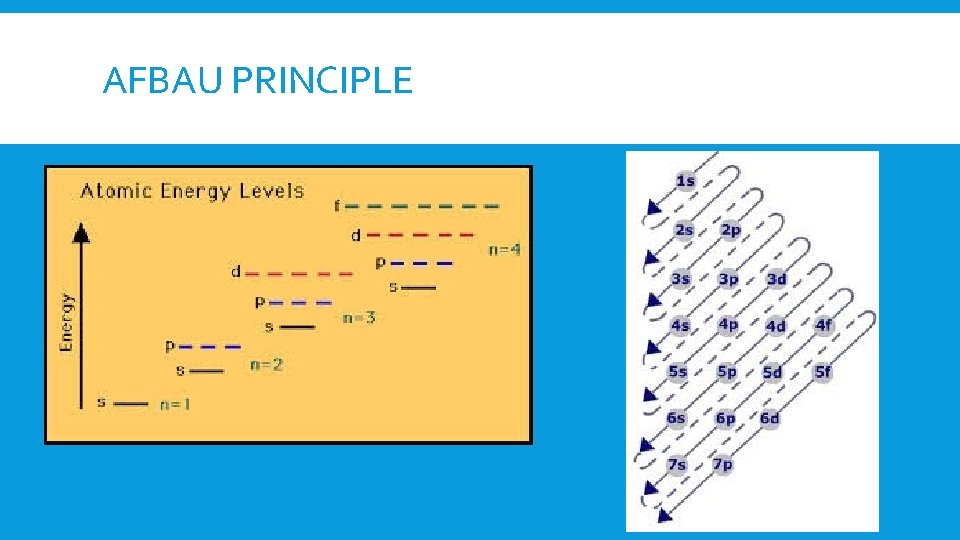
AFBAU PRINCIPLE Assign electrons in order of energy levels Cannot put electrons in the 2 s until the 1 s is full.
AFBAU PRINCIPLE
PAULI EXCLUSION PRINCIPLE An atomic orbital can only hold two electrons at a time
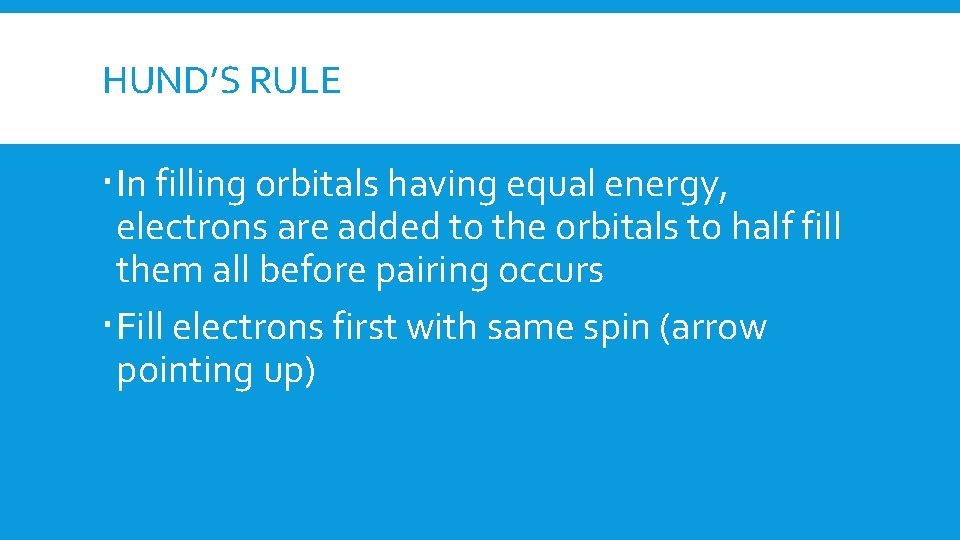
HUND’S RULE In filling orbitals having equal energy, electrons are added to the orbitals to half fill them all before pairing occurs Fill electrons first with same spin (arrow pointing up)