
Aim How is language acquired Nature v nurture


- Slides: 24
Aim: How is language acquired? Nature v. nurture debate Do Now: 1. Take out your HW 2. Complete the practice questions. Homework: • None
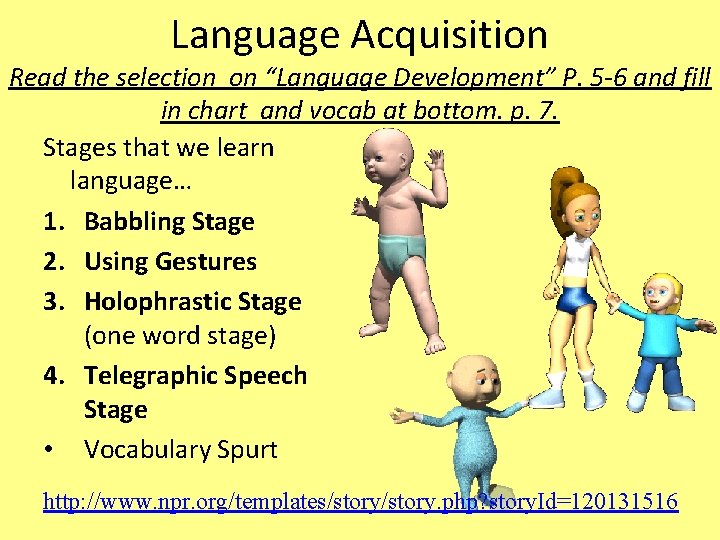
Language Acquisition Read the selection on “Language Development” P. 5 -6 and fill in chart and vocab at bottom. p. 7. Stages that we learn language… 1. Babbling Stage 2. Using Gestures 3. Holophrastic Stage (one word stage) 4. Telegraphic Speech Stage • Vocabulary Spurt http: //www. npr. org/templates/story. php? story. Id=120131516
Overgeneralization Tendency to over apply the rule of grammar. Shows an innate understanding of the rules • • http: //www. youtube. com/watch? v=I 0 x. Nmbrjo_w&desktop_uri=%2 Fwatch%3 Fv% 3 DI 0 x. Nmbrjo_w&app=desktop http: //www. youtube. com/watch? v=I 0 x. Nmbrjo_w AMN’T
Overextension Applies a label to a broader category • http: //www. youtube. com/watch? v=Ag. Y 7 nkb. YFaw&desktop_uri=%2 Fwatch%3 Fv%3 DAg. Y 7 nkb. YFaw&app=desktop
Biological Matureness and Language Development • Infants must be able to control flow of air into larynx, manipulate tongue • need teeth to help with sounds • muscular control must develop • brain development - must have connections in sensorimotor cortex • programmed to prefer mothers speech
Aim: How is language acquired? Nature v. nurture debate Do Now: • What were your first words? When did you say them? Homework: Read “Is Texting Killing The English Language” Underline key points, circle things you need clarification on, Write a BRIEF summary, Create 2 – 3 Questions for Discussion
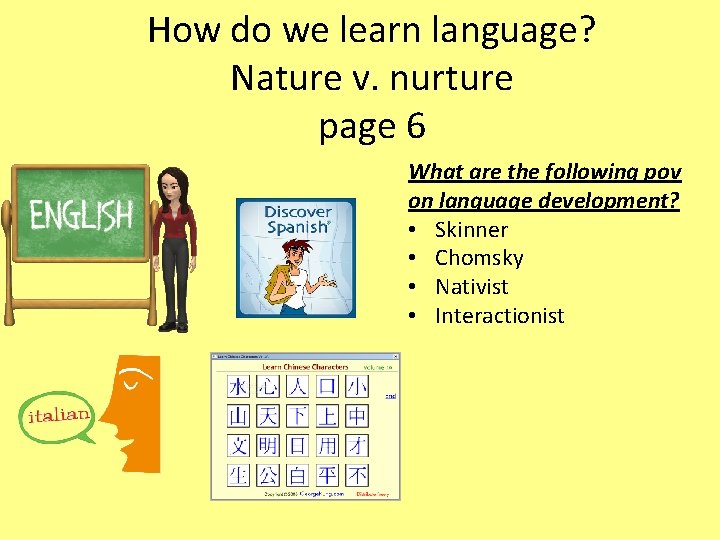
How do we learn language? Nature v. nurture page 6 What are the following pov on language development? • Skinner • Chomsky • Nativist • Interactionist
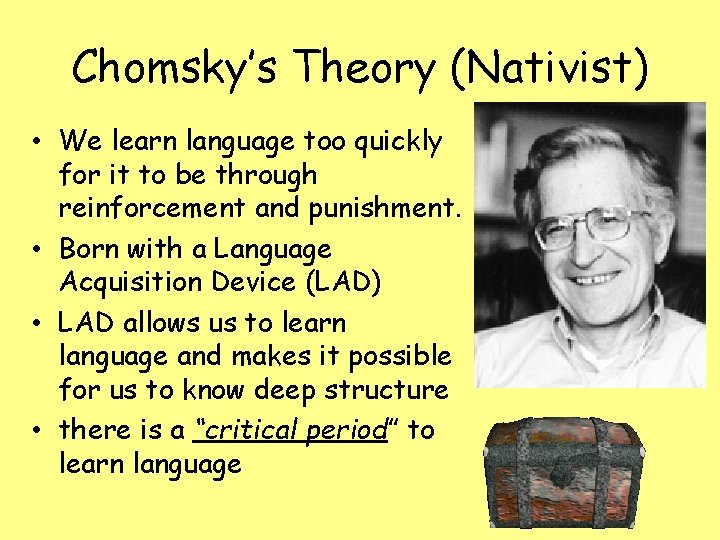
Chomsky’s Theory (Nativist) • We learn language too quickly for it to be through reinforcement and punishment. • Born with a Language Acquisition Device (LAD) • LAD allows us to learn language and makes it possible for us to know deep structure • there is a “critical period” to learn language
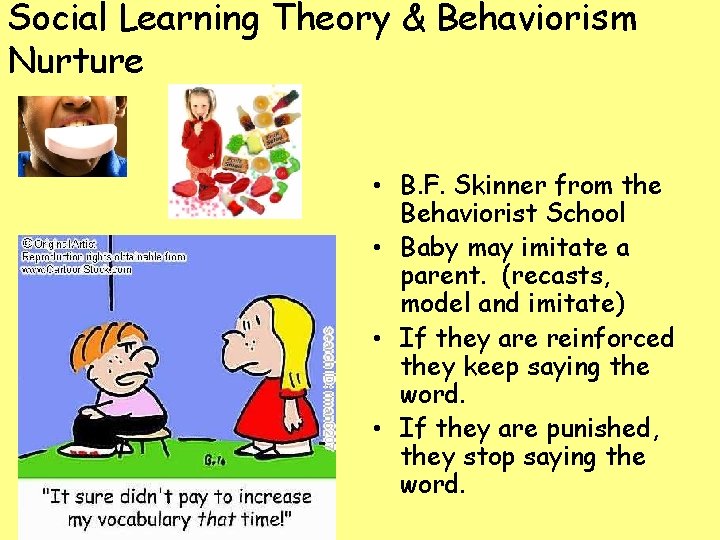
Social Learning Theory & Behaviorism Nurture • B. F. Skinner from the Behaviorist School • Baby may imitate a parent. (recasts, model and imitate) • If they are reinforced they keep saying the word. • If they are punished, they stop saying the word.
Check for Understanding Complete Page 8 of Packet Nature or Nurture? Chomsky or Skinner?
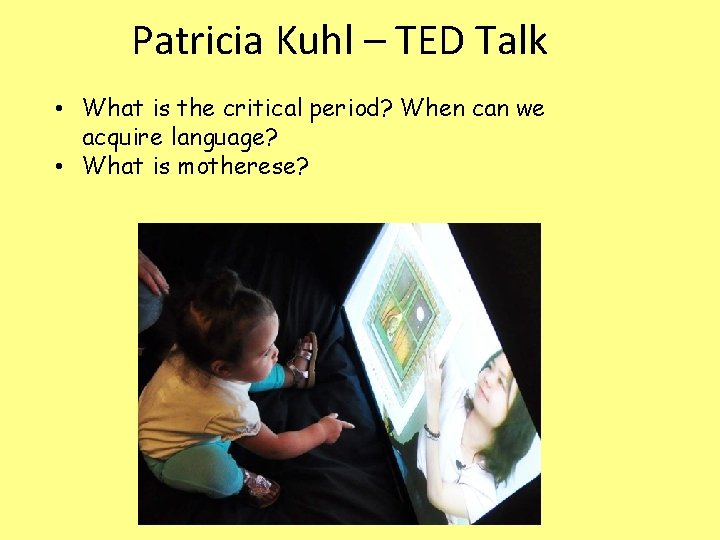
Patricia Kuhl – TED Talk • What is the critical period? When can we acquire language? • What is motherese?
Nurture and Language Development • “Motherese” fosters language acquisition ( How do parents help LA? ) • Must hear language to acquire phonemes • social interaction to activate LAD https: //www. youtube. com/watch? v=e. Zcl. OL 7 v. IQQ
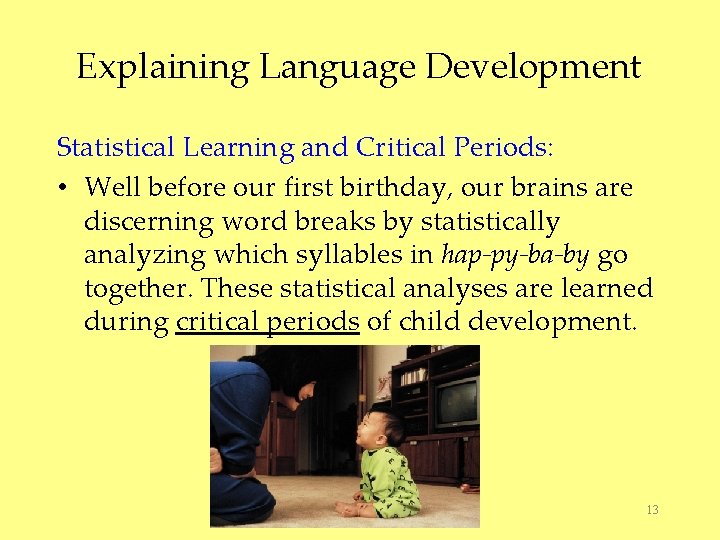
Explaining Language Development Statistical Learning and Critical Periods: • Well before our first birthday, our brains are discerning word breaks by statistically analyzing which syllables in hap-py-ba-by go together. These statistical analyses are learned during critical periods of child development. 13
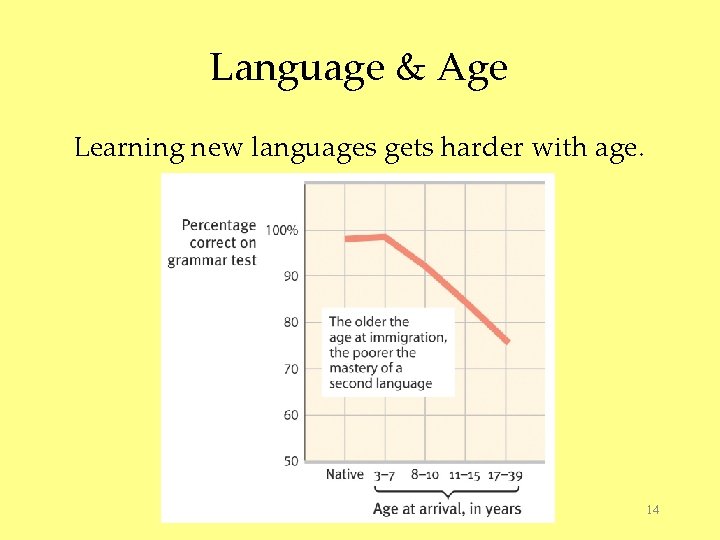
Language & Age Learning new languages gets harder with age. 14
RSA Animate - Language as a Window into Human Nature • http: //www. thersa. org/events/rsaanimate/an imate/rsa-animate-language-as-a-window-into -human-nature
Aim: Does the story of Genie reflect the nature or nurture debate? Do Now: • Take out Article “Is Texting Killing the English Language? ” Homework: • Due Tues. -Read Story of Genie and Victor p. 23 - 37 in packet. Answer Q's p. 21 on handout** • Friday – Test Language and Intelligence
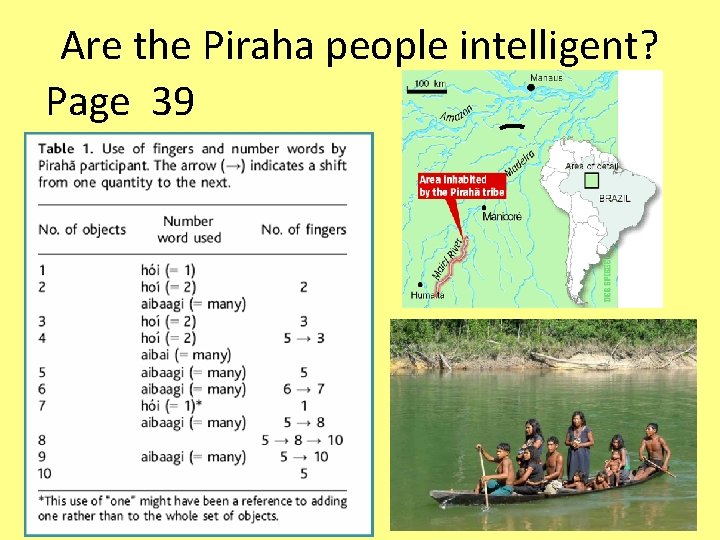
Are the Piraha people intelligent? Page 39
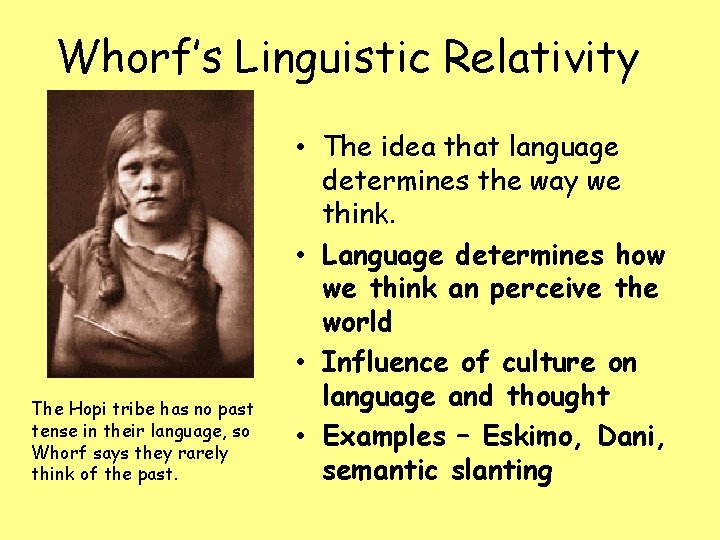
Whorf’s Linguistic Relativity The Hopi tribe has no past tense in their language, so Whorf says they rarely think of the past. • The idea that language determines the way we think. • Language determines how we think an perceive the world • Influence of culture on language and thought • Examples – Eskimo, Dani, semantic slanting
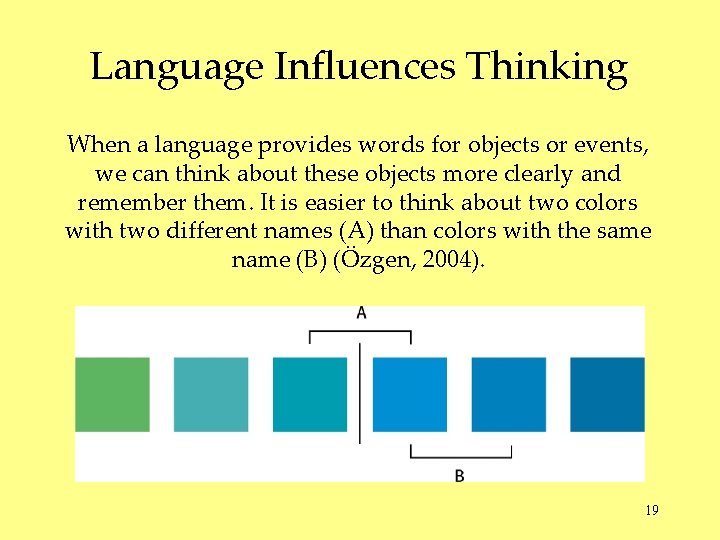
Language Influences Thinking When a language provides words for objects or events, we can think about these objects more clearly and remember them. It is easier to think about two colors with two different names (A) than colors with the same name (B) (Özgen, 2004). 19
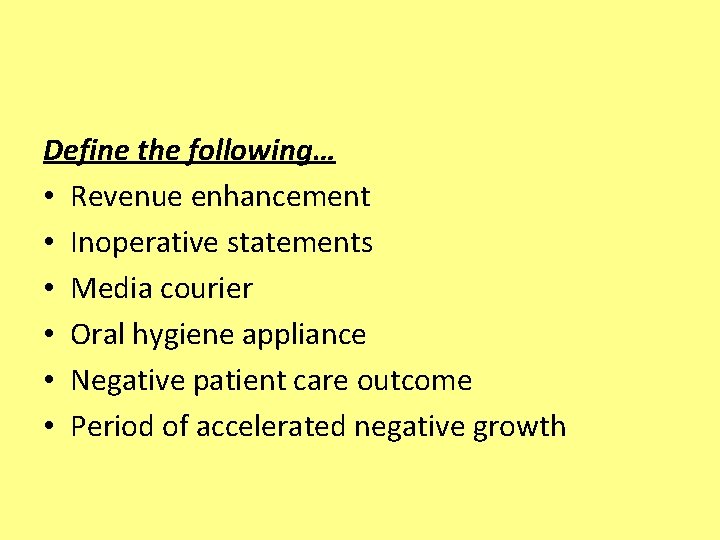
Define the following… • Revenue enhancement • Inoperative statements • Media courier • Oral hygiene appliance • Negative patient care outcome • Period of accelerated negative growth
Doublespeak • Example of how language can influence our thinking, alter our perception and to corrupt our thinking • Designed to disguise/ distort meaning , can used to avoid responsibility, to make the bad seem good, the negative positive, the unpleasant attractive etc 21
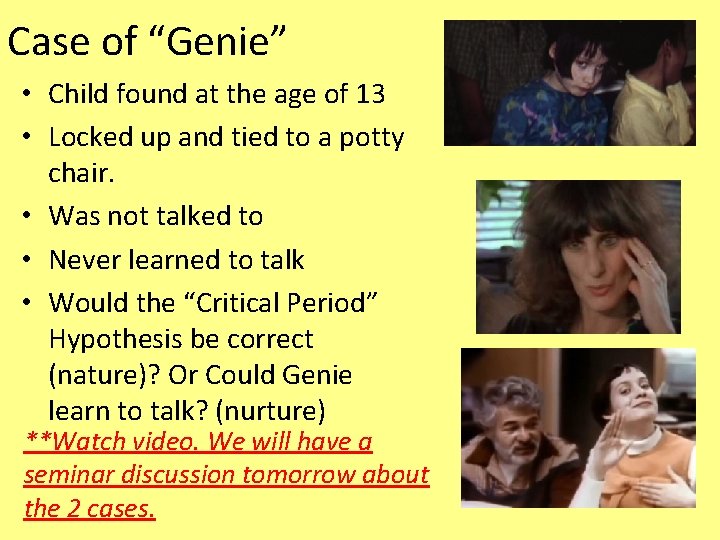
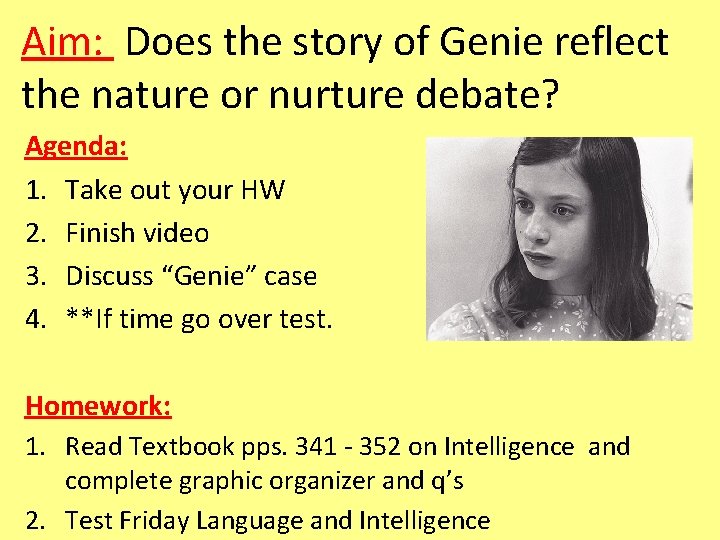
Case of “Genie” • Child found at the age of 13 • Locked up and tied to a potty chair. • Was not talked to • Never learned to talk • Would the “Critical Period” Hypothesis be correct (nature)? Or Could Genie learn to talk? (nurture) **Watch video. We will have a seminar discussion tomorrow about the 2 cases.
Aim: Does the story of Genie reflect the nature or nurture debate? Agenda: 1. Take out your HW 2. Finish video 3. Discuss “Genie” case 4. **If time go over test. Homework: 1. Read Textbook pps. 341 - 352 on Intelligence and complete graphic organizer and q’s 2. Test Friday Language and Intelligence
Science of Neglect • http: //developingchild. harvard. edu/resources /inbrief-the-science-of-neglect-video/