
Aim How do we form complete sentences Do
- Slides: 10
Aim: How do we form complete sentences? Do Now:
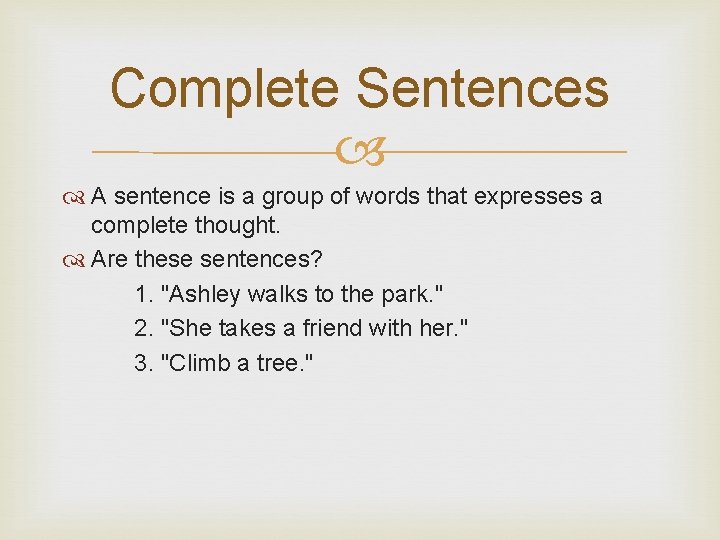
Complete Sentences A sentence is a group of words that expresses a complete thought. Are these sentences? 1. "Ashley walks to the park. " 2. "She takes a friend with her. " 3. "Climb a tree. "
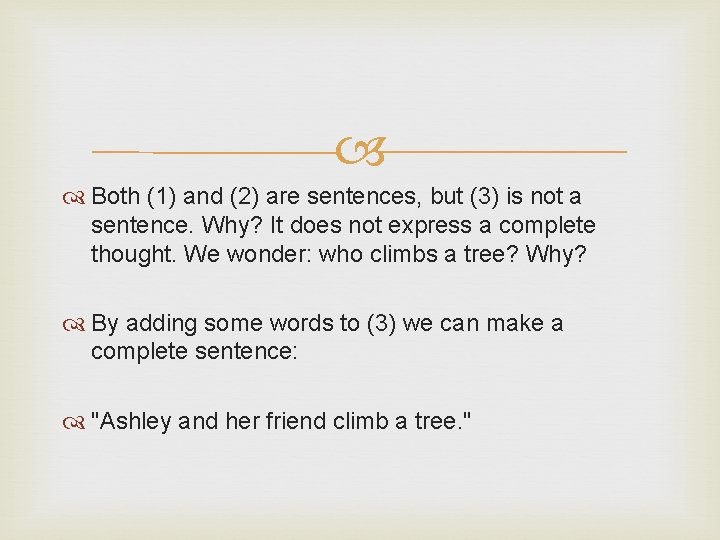
Both (1) and (2) are sentences, but (3) is not a sentence. Why? It does not express a complete thought. We wonder: who climbs a tree? Why? By adding some words to (3) we can make a complete sentence: "Ashley and her friend climb a tree. "
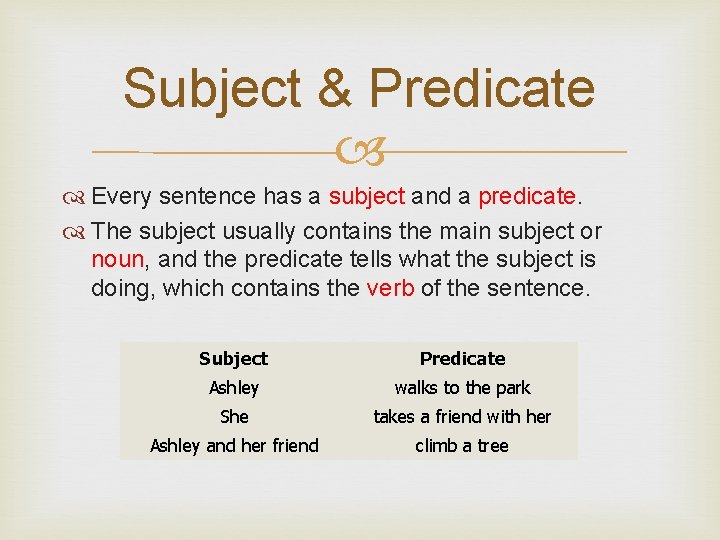
Subject & Predicate Every sentence has a subject and a predicate. The subject usually contains the main subject or noun, and the predicate tells what the subject is doing, which contains the verb of the sentence. Subject Predicate Ashley walks to the park She takes a friend with her Ashley and her friend climb a tree
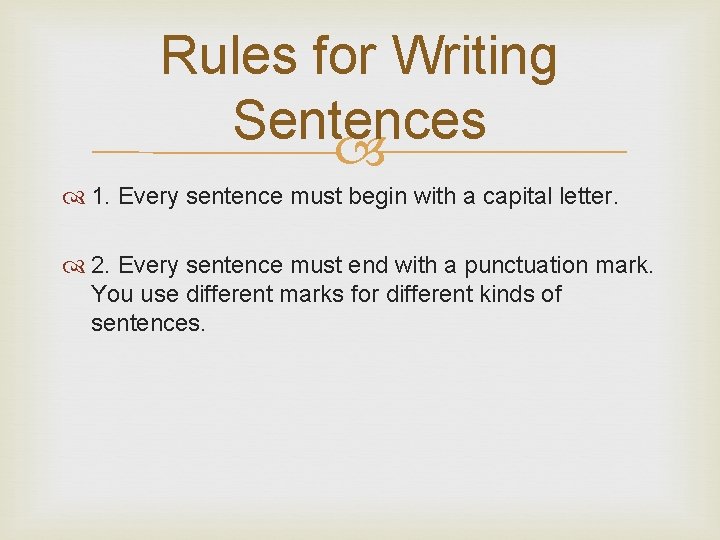
Rules for Writing Sentences 1. Every sentence must begin with a capital letter. 2. Every sentence must end with a punctuation mark. You use different marks for different kinds of sentences.
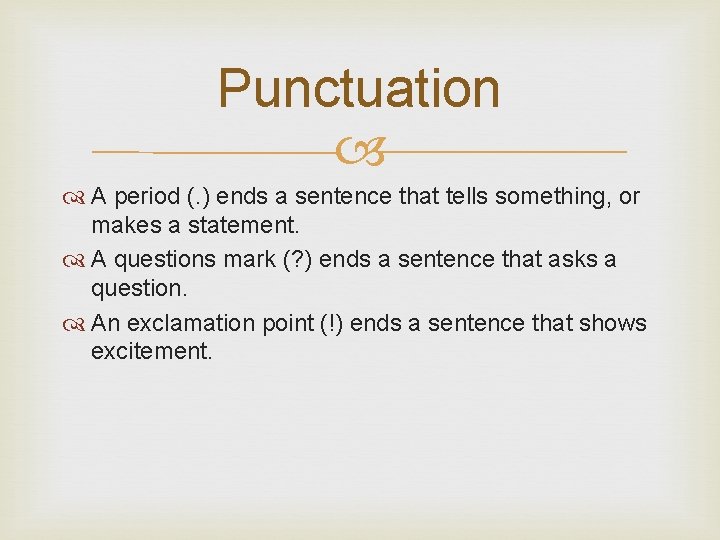
Punctuation A period (. ) ends a sentence that tells something, or makes a statement. A questions mark (? ) ends a sentence that asks a question. An exclamation point (!) ends a sentence that shows excitement.
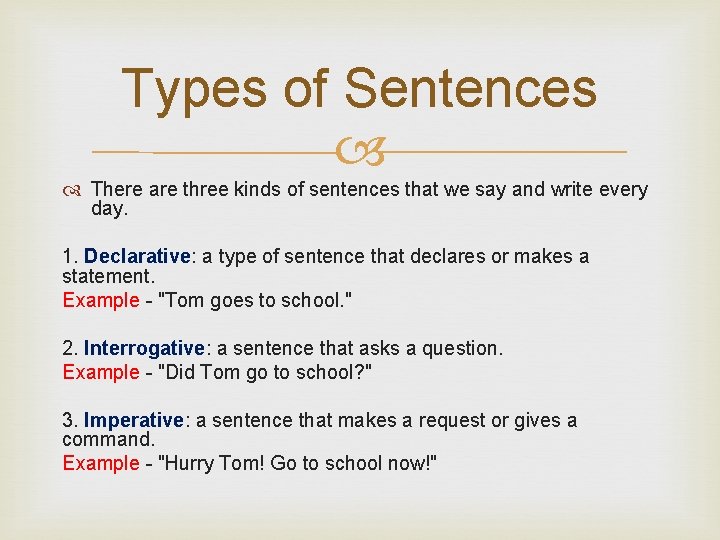
Types of Sentences There are three kinds of sentences that we say and write every day. 1. Declarative: a type of sentence that declares or makes a statement. Example - "Tom goes to school. " 2. Interrogative: a sentence that asks a question. Example - "Did Tom go to school? " 3. Imperative: a sentence that makes a request or gives a command. Example - "Hurry Tom! Go to school now!"
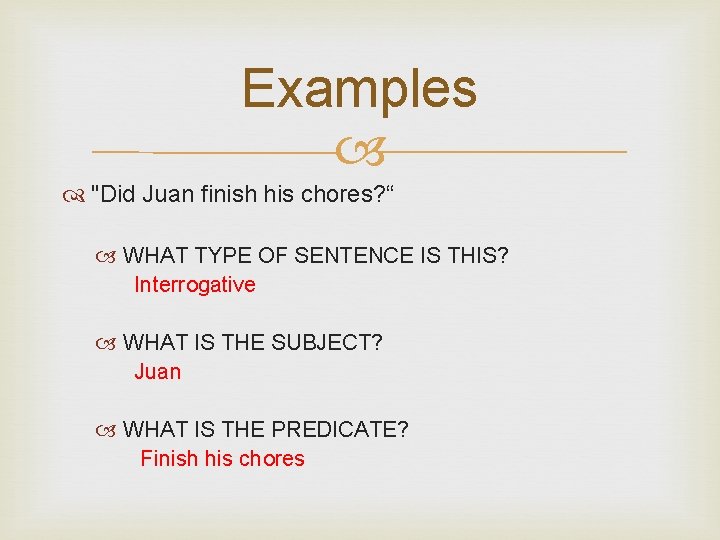
Examples "Did Juan finish his chores? “ WHAT TYPE OF SENTENCE IS THIS? Interrogative WHAT IS THE SUBJECT? Juan WHAT IS THE PREDICATE? Finish his chores
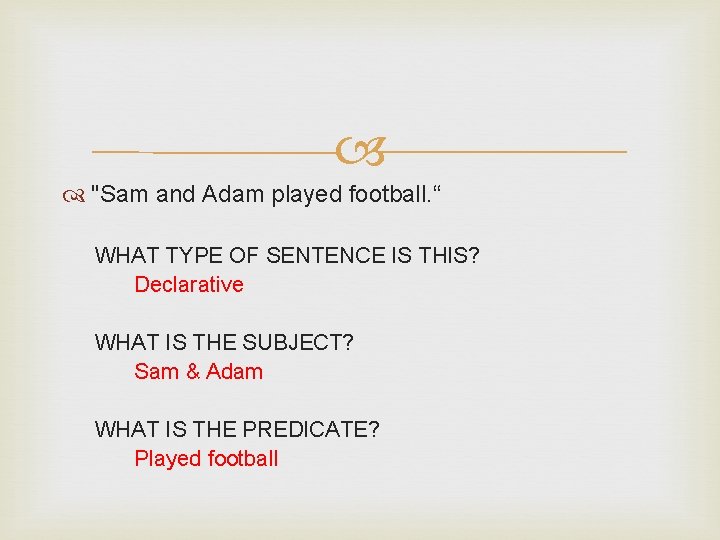
"Sam and Adam played football. “ WHAT TYPE OF SENTENCE IS THIS? Declarative WHAT IS THE SUBJECT? Sam & Adam WHAT IS THE PREDICATE? Played football
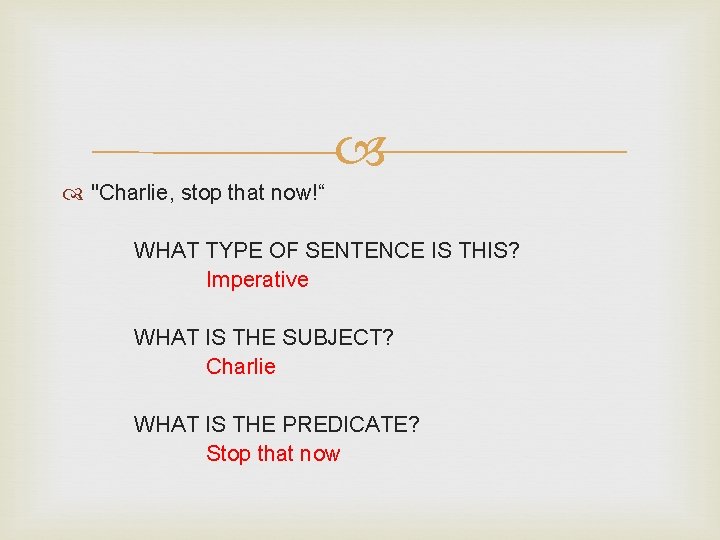
"Charlie, stop that now!“ WHAT TYPE OF SENTENCE IS THIS? Imperative WHAT IS THE SUBJECT? Charlie WHAT IS THE PREDICATE? Stop that now