
Aim How do organisms reproduce What is Reproduction
- Slides: 25
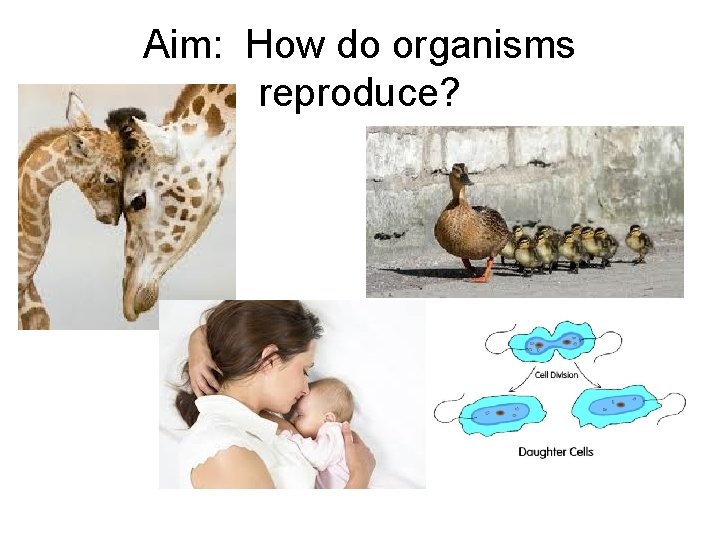
Aim: How do organisms reproduce?
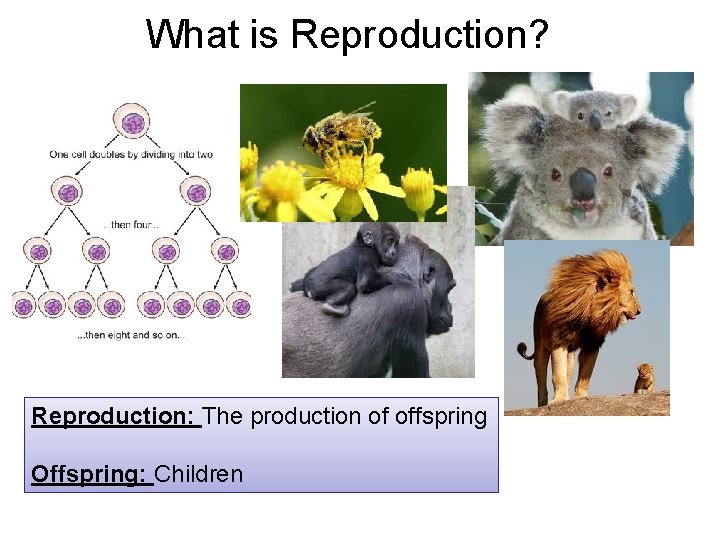
What is Reproduction? Reproduction: The production of offspring Offspring: Children
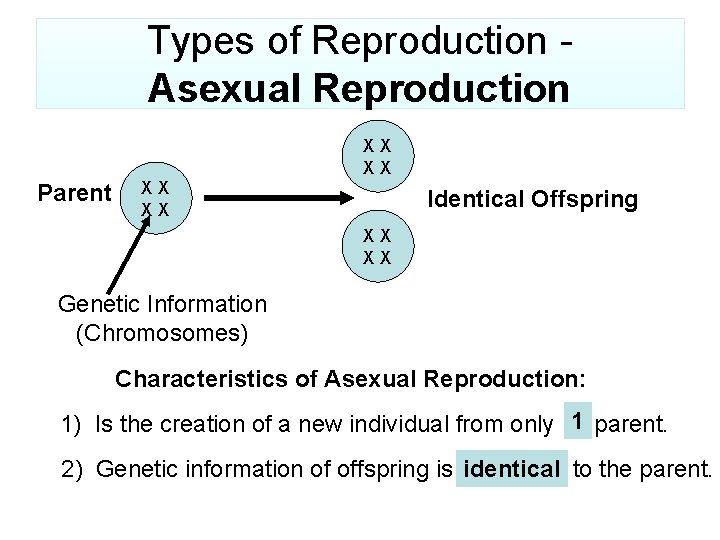
Types of Reproduction Asexual Reproduction XX XX Parent XX XX Identical Offspring XX XX Genetic Information (Chromosomes) Characteristics of Asexual Reproduction: 1) Is the creation of a new individual from only 1 parent. 2) Genetic information of offspring is identical to the parent.
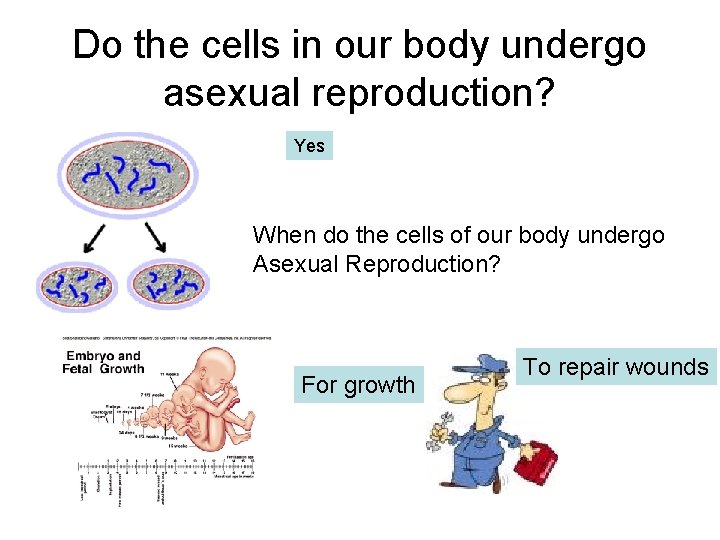
Do the cells in our body undergo asexual reproduction? Yes When do the cells of our body undergo Asexual Reproduction? For growth To repair wounds
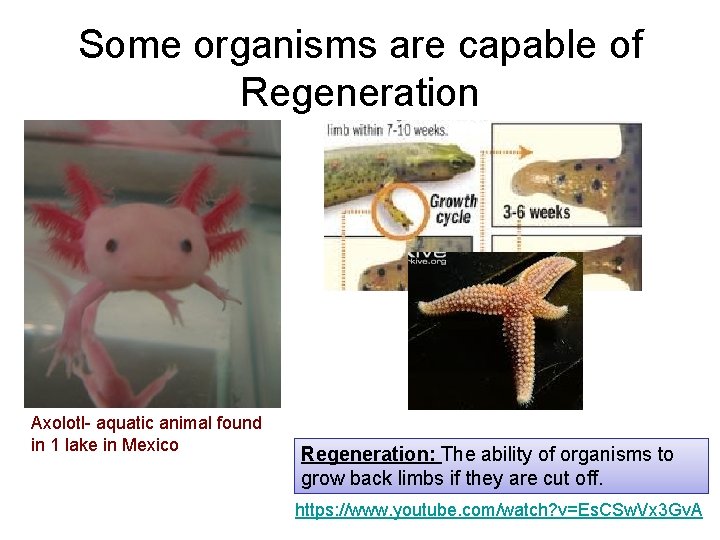
Some organisms are capable of Regeneration Axolotl- aquatic animal found in 1 lake in Mexico Regeneration: The ability of organisms to grow back limbs if they are cut off. https: //www. youtube. com/watch? v=Es. CSw. Vx 3 Gv. A
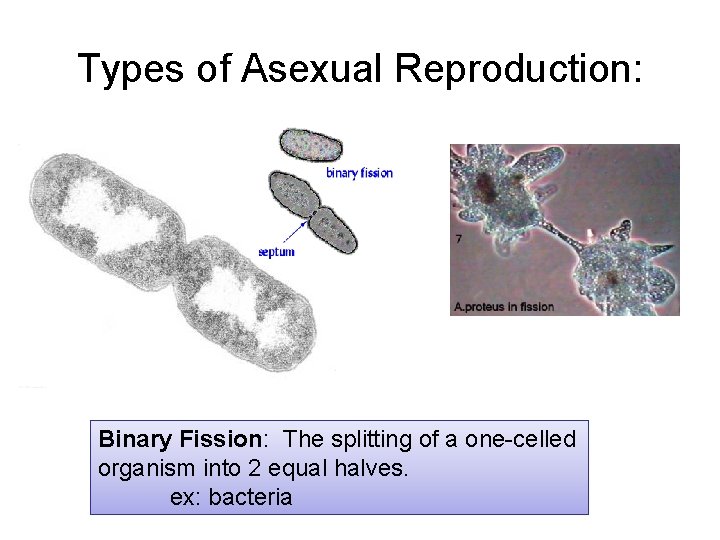
Types of Asexual Reproduction: Binary Fission: The splitting of a one-celled organism into 2 equal halves. ex: bacteria
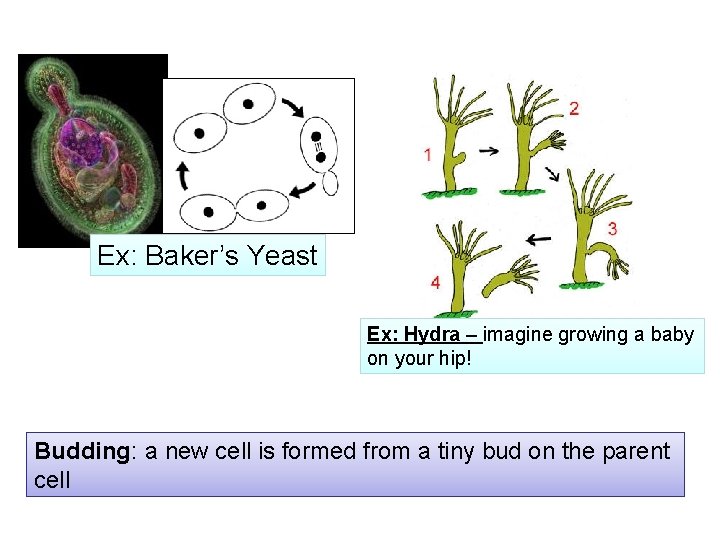
Ex: Baker’s Yeast Ex: Hydra – imagine growing a baby on your hip! Budding: a new cell is formed from a tiny bud on the parent cell
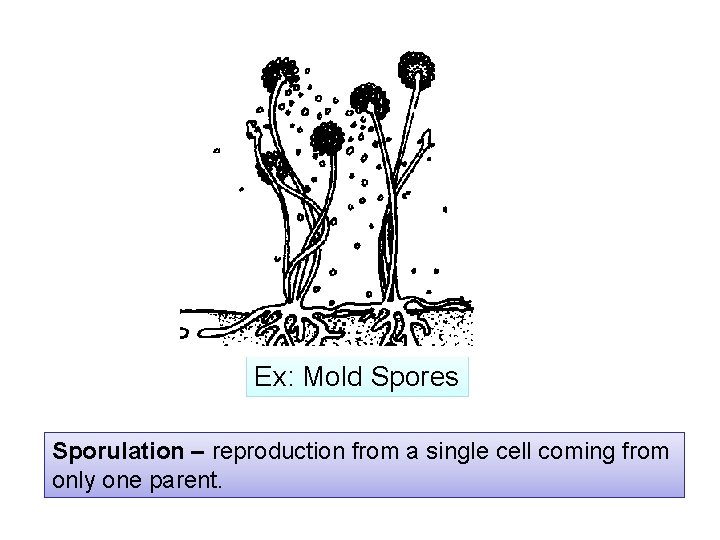
Ex: Mold Spores Sporulation – reproduction from a single cell coming from only one parent.
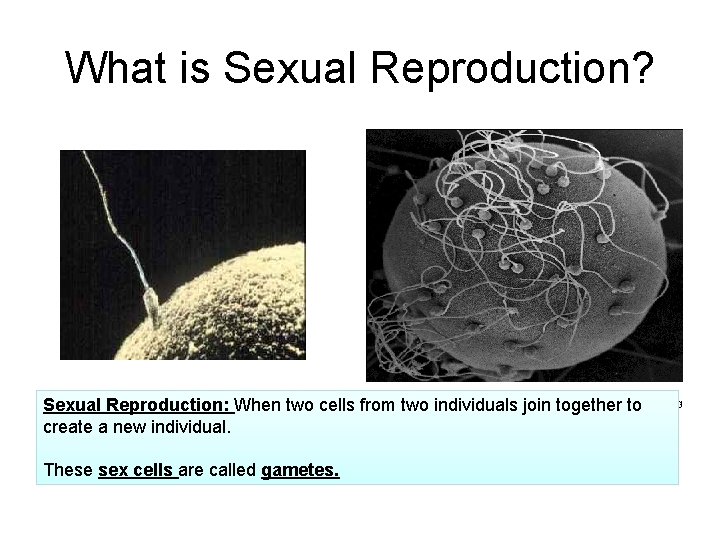
What is Sexual Reproduction? Sexual Reproduction: When two cells from two individuals join together to create a new individual. These sex cells are called gametes.
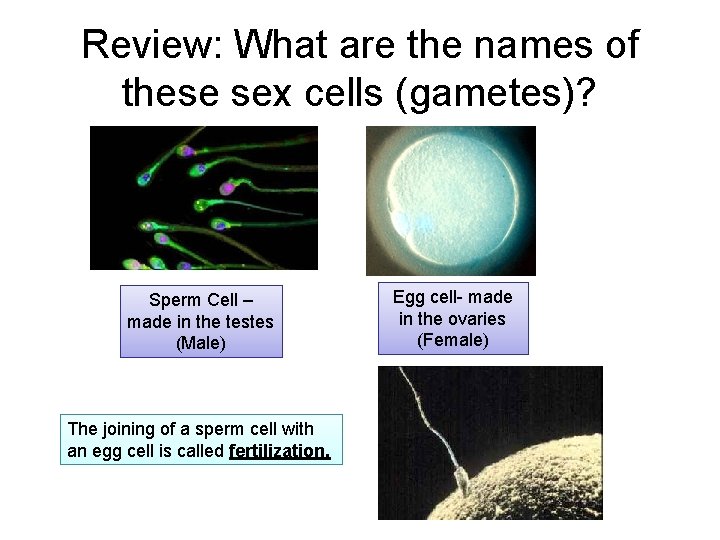
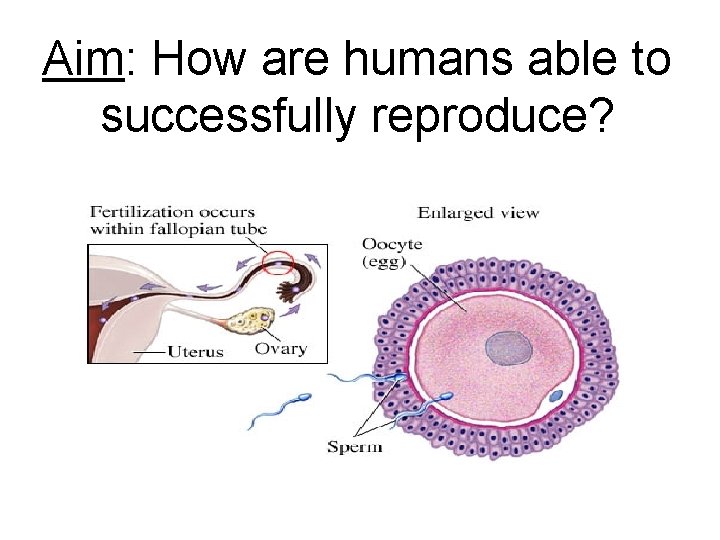
Review: What are the names of these sex cells (gametes)? Sperm Cell – made in the testes (Male) The joining of a sperm cell with an egg cell is called fertilization. Egg cell- made in the ovaries (Female)
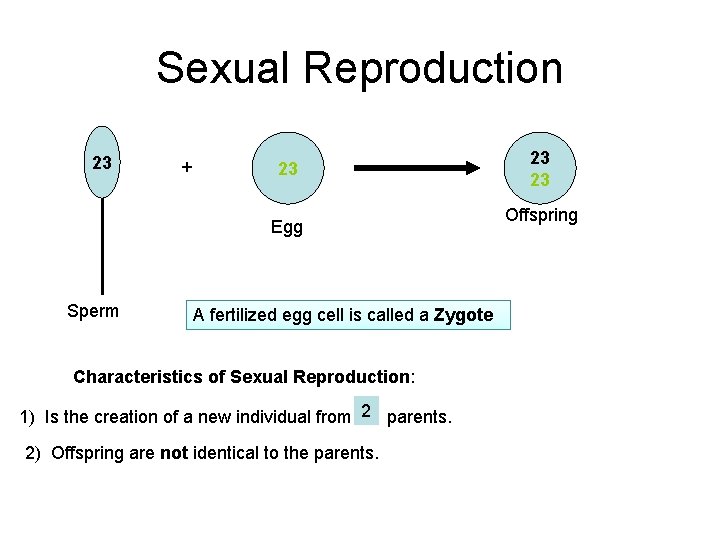
Sexual Reproduction 23 + 23 Egg Sperm A fertilized egg cell is called a Zygote Characteristics of Sexual Reproduction: 1) Is the creation of a new individual from 2 parents. 2) Offspring are not identical to the parents. 23 23 Offspring
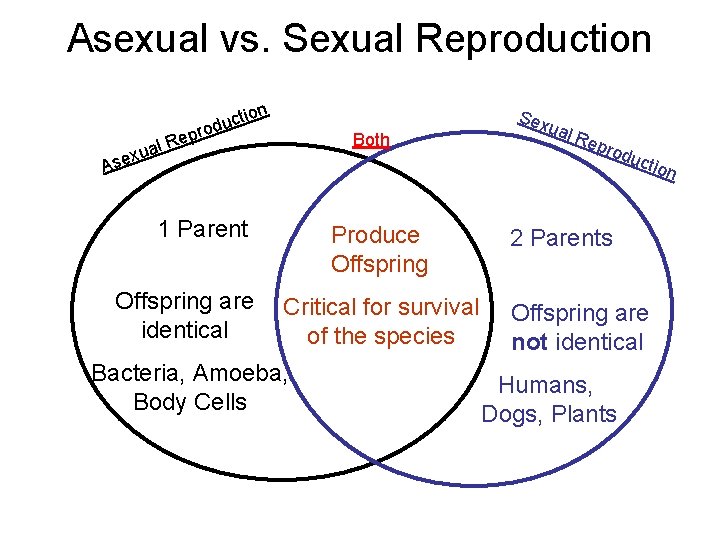
Asexual vs. Sexual Reproduction cti u d epro on Both l. R xua Ase 1 Parent Offspring are identical Produce Offspring Critical for survival of the species Bacteria, Amoeba, Body Cells Sex ual Rep rod ucti 2 Parents Offspring are not identical Humans, Dogs, Plants on
Aim: How are humans able to successfully reproduce?
Opening: https: //www. youtube. com/watch? v=65 BV 5 d. XXxz. M Trailer: https: //www. youtube. com/watch? v=y. OB_Mqca. ZHw 1. What happened during the movie clip? 1. Why did only one sperm fertilize the egg?
Human Reproduction The human body has two major reproductive features: 1. Reproductive System 2. Hormones Male hormone- testosterone Female hormones- estrogen & progesterone
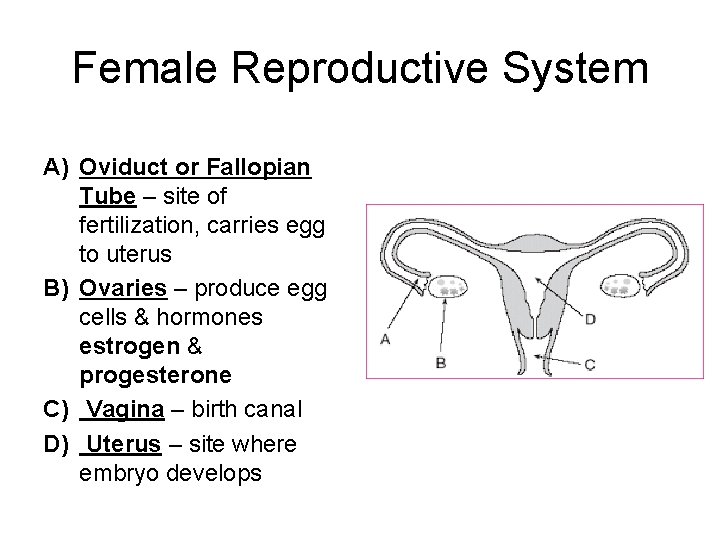
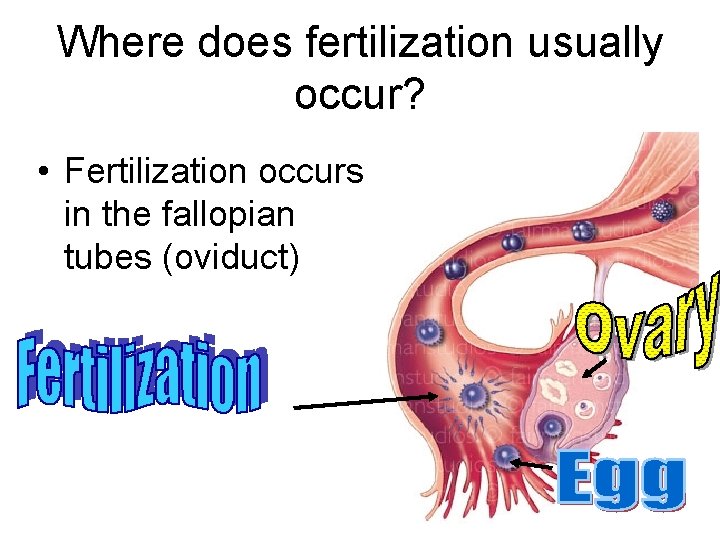
Female Reproductive System A) Oviduct or Fallopian Tube – site of fertilization, carries egg to uterus B) Ovaries – produce egg cells & hormones estrogen & progesterone C) Vagina – birth canal D) Uterus – site where embryo develops
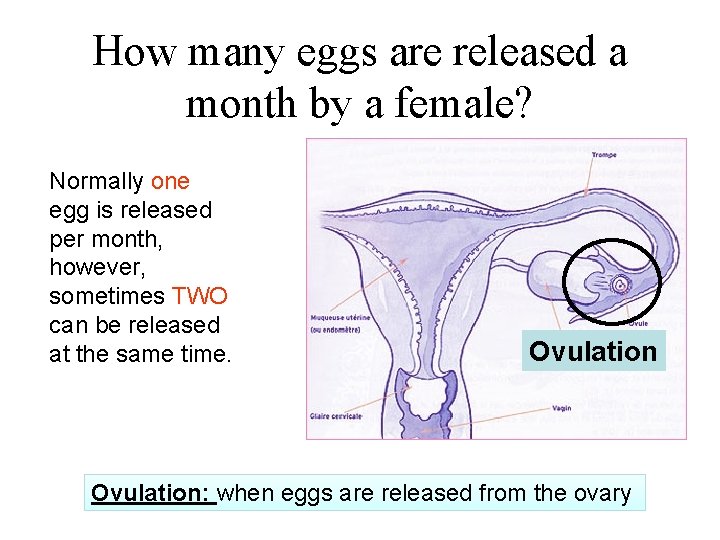
How many eggs are released a month by a female? Normally one egg is released per month, however, sometimes TWO can be released at the same time. Ovulation: when eggs are released from the ovary
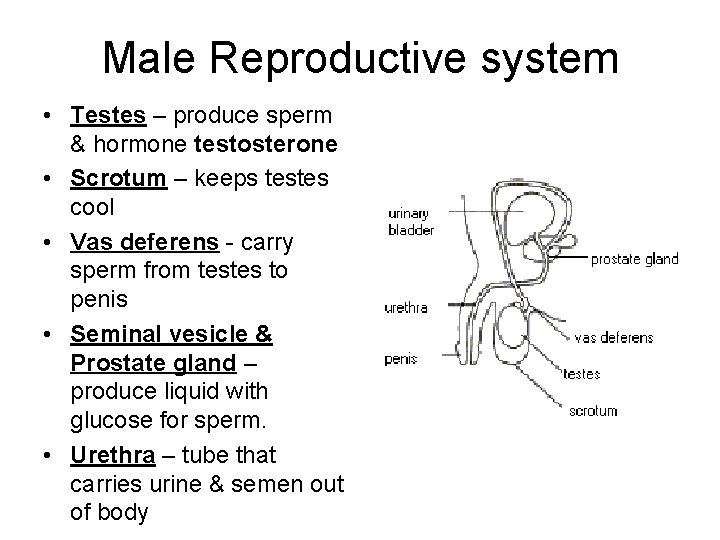
Male Reproductive system • Testes – produce sperm & hormone testosterone • Scrotum – keeps testes cool • Vas deferens - carry sperm from testes to penis • Seminal vesicle & Prostate gland – produce liquid with glucose for sperm. • Urethra – tube that carries urine & semen out of body
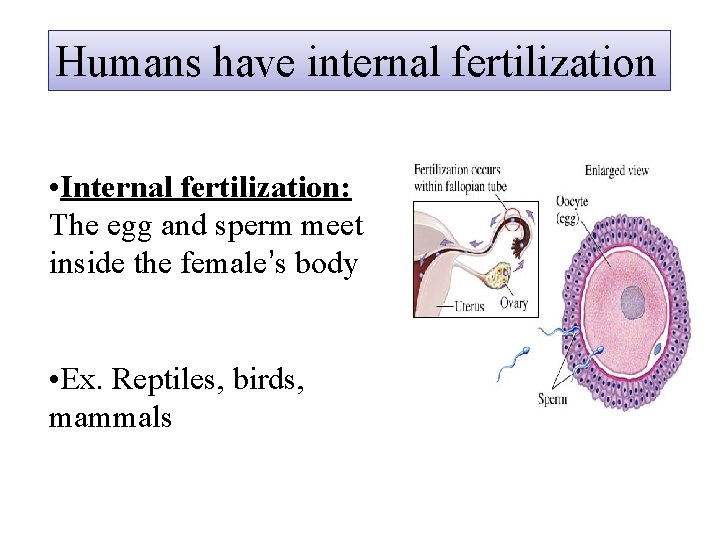
Humans have internal fertilization • Internal fertilization: The egg and sperm meet inside the female’s body • Ex. Reptiles, birds, mammals
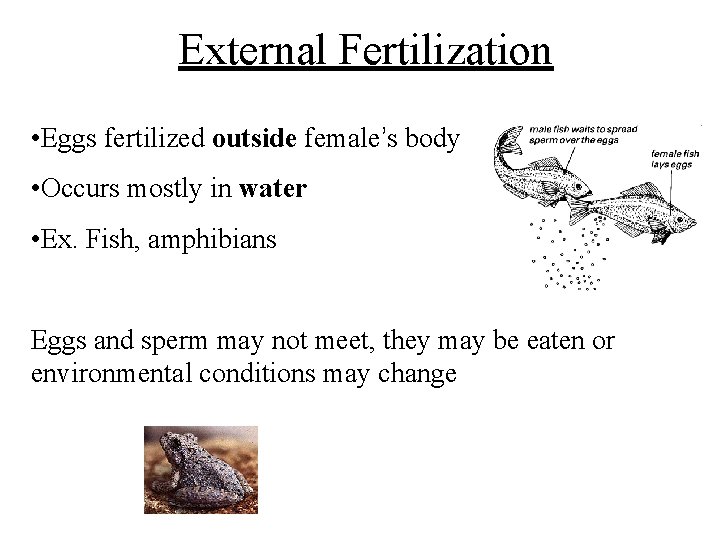
External Fertilization • Eggs fertilized outside female’s body • Occurs mostly in water • Ex. Fish, amphibians Eggs and sperm may not meet, they may be eaten or environmental conditions may change
Where does fertilization usually occur? • Fertilization occurs in the fallopian tubes (oviduct)
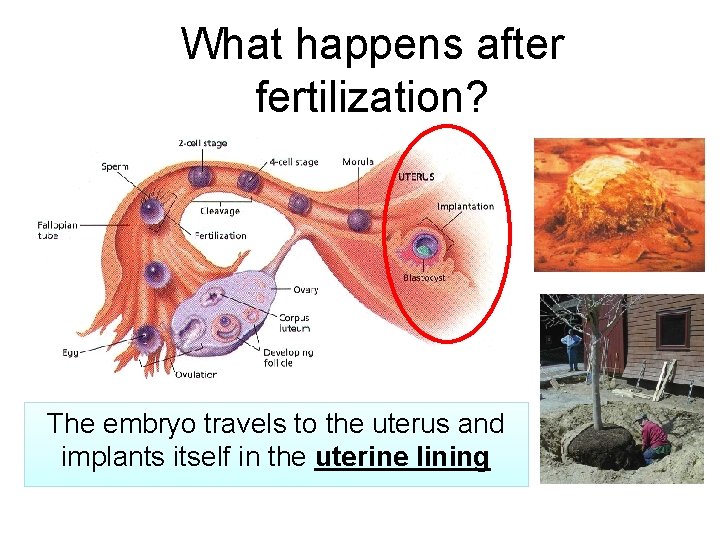
What happens after fertilization? The embryo travels to the uterus and implants itself in the uterine lining
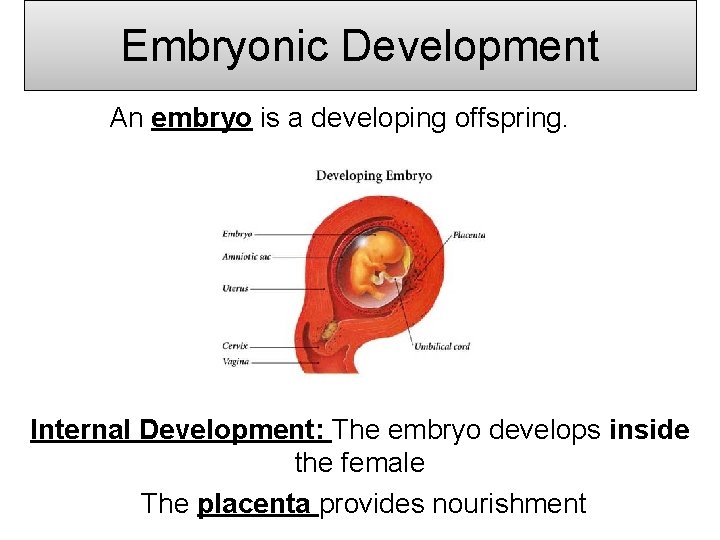
Embryonic Development An embryo is a developing offspring. Internal Development: The embryo develops inside the female The placenta provides nourishment
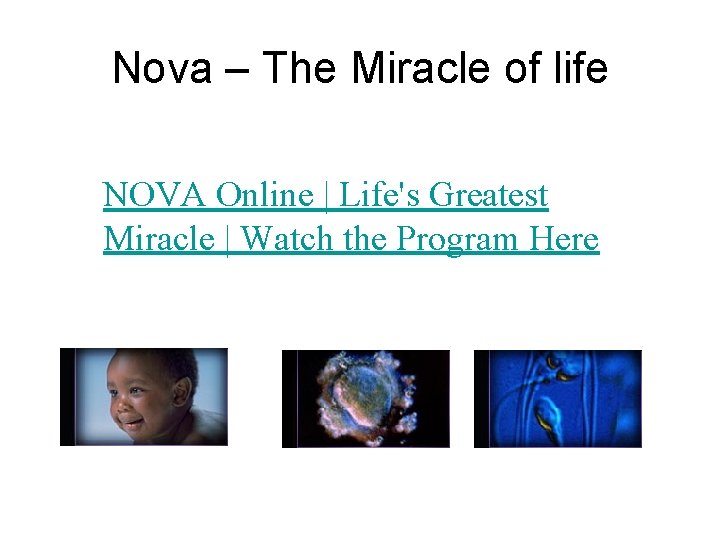
Nova – The Miracle of life NOVA Online | Life's Greatest Miracle | Watch the Program Here