
Aim How do molecules move in and out
- Slides: 12
Aim How do molecules move in and out of a cell?
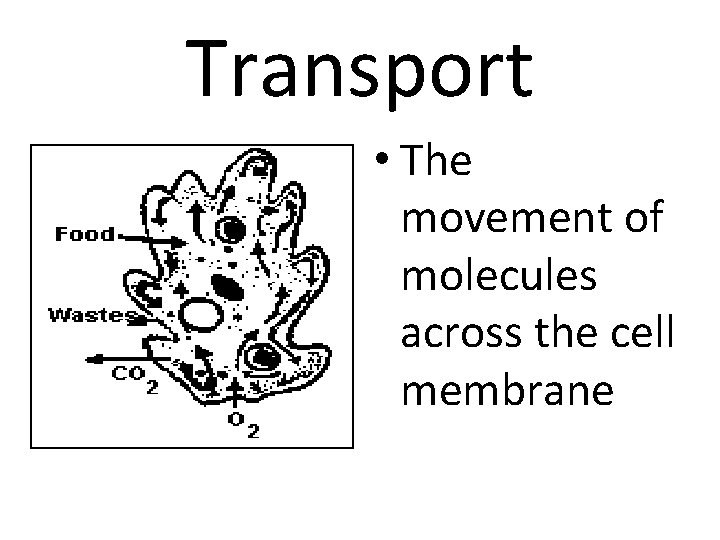
Transport • The movement of molecules across the cell membrane
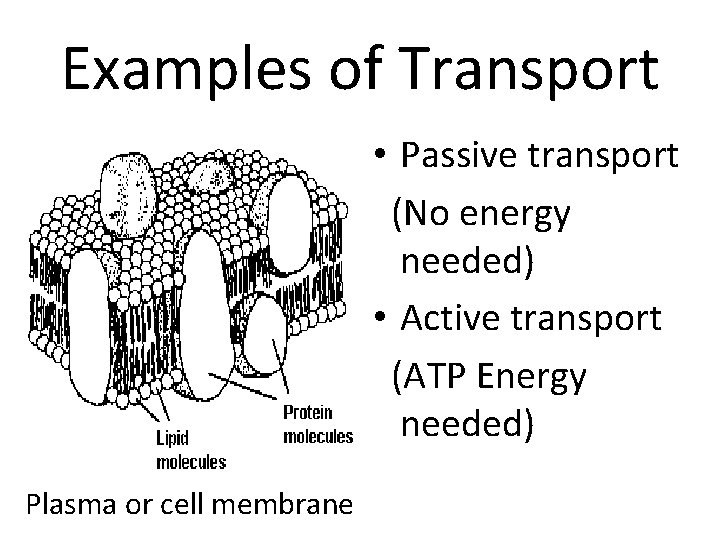
Examples of Transport • Passive transport (No energy needed) • Active transport (ATP Energy needed) Plasma or cell membrane
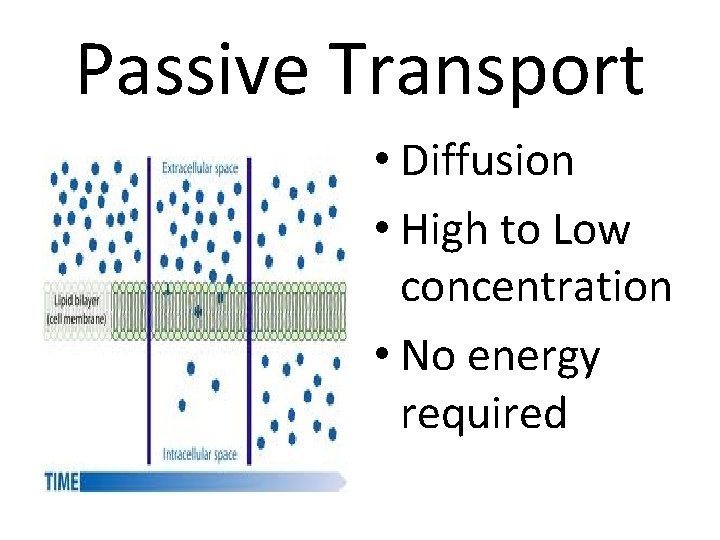
Passive Transport • Diffusion • High to Low concentration • No energy required
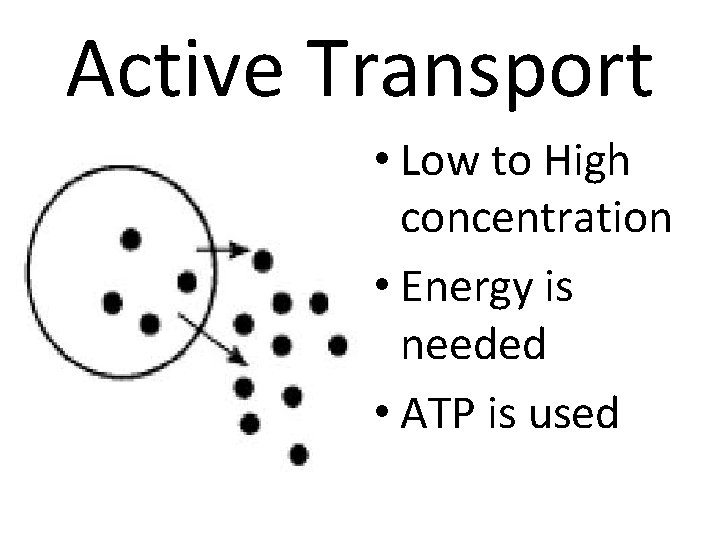
Active Transport • Low to High concentration • Energy is needed • ATP is used
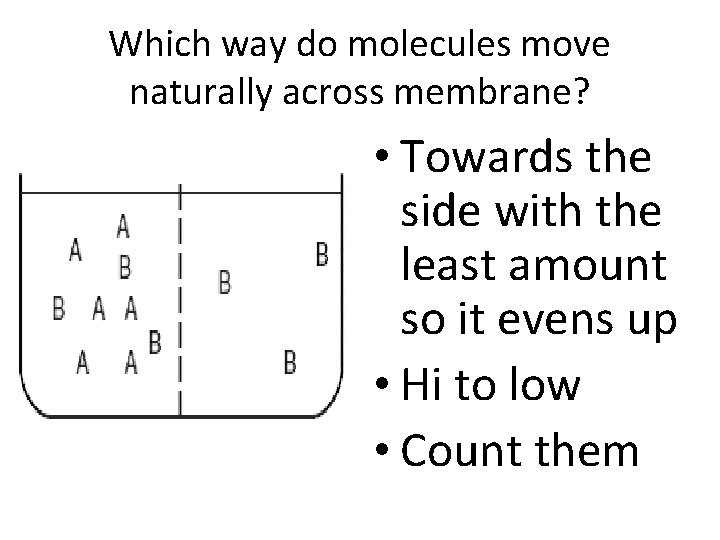
Which way do molecules move naturally across membrane? • Towards the side with the least amount so it evens up • Hi to low • Count them
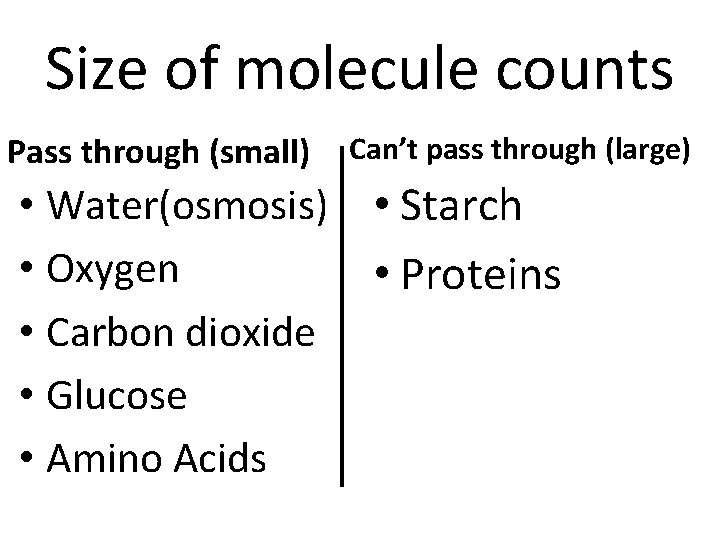
Size of molecule counts Pass through (small) • Water(osmosis) • Oxygen • Carbon dioxide • Glucose • Amino Acids Can’t pass through (large) • Starch • Proteins
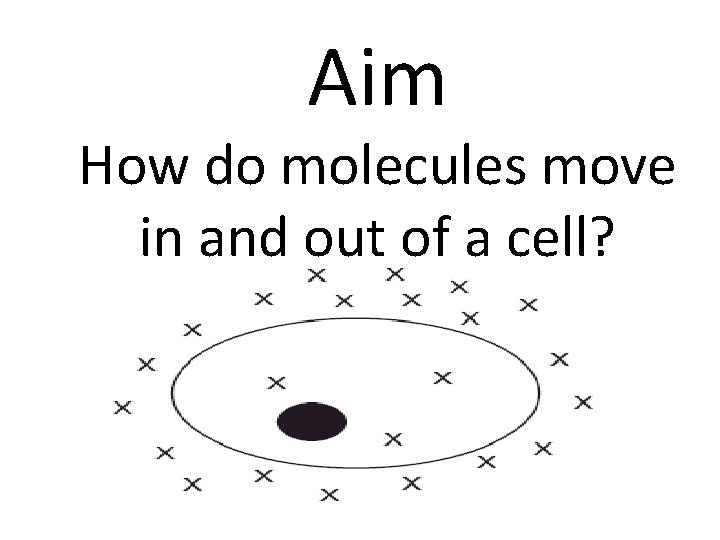
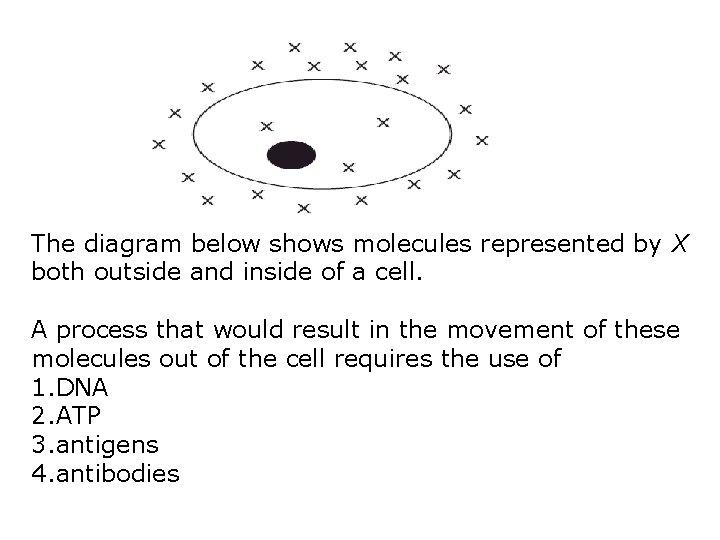
The diagram below shows molecules represented by X both outside and inside of a cell. A process that would result in the movement of these molecules out of the cell requires the use of 1. DNA 2. ATP 3. antigens 4. antibodies
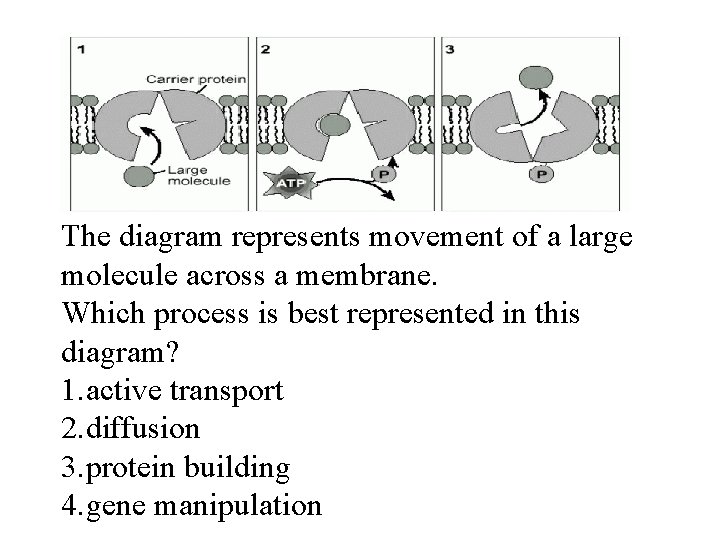
The diagram represents movement of a large molecule across a membrane. Which process is best represented in this diagram? 1. active transport 2. diffusion 3. protein building 4. gene manipulation
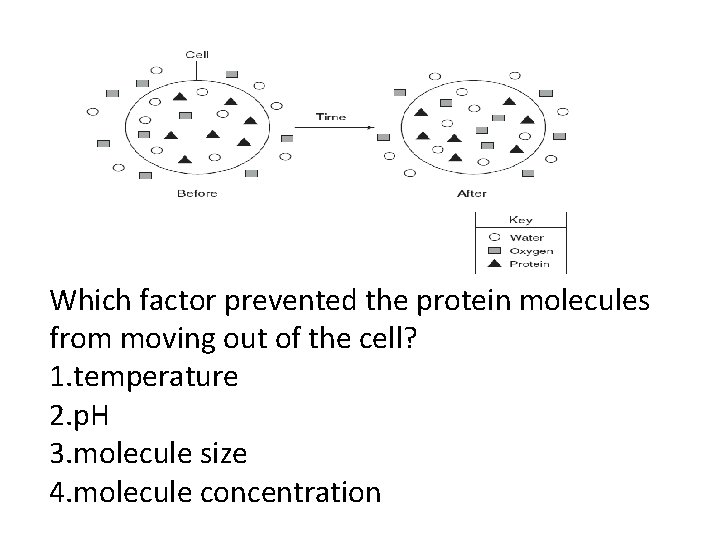
Which factor prevented the protein molecules from moving out of the cell? 1. temperature 2. p. H 3. molecule size 4. molecule concentration
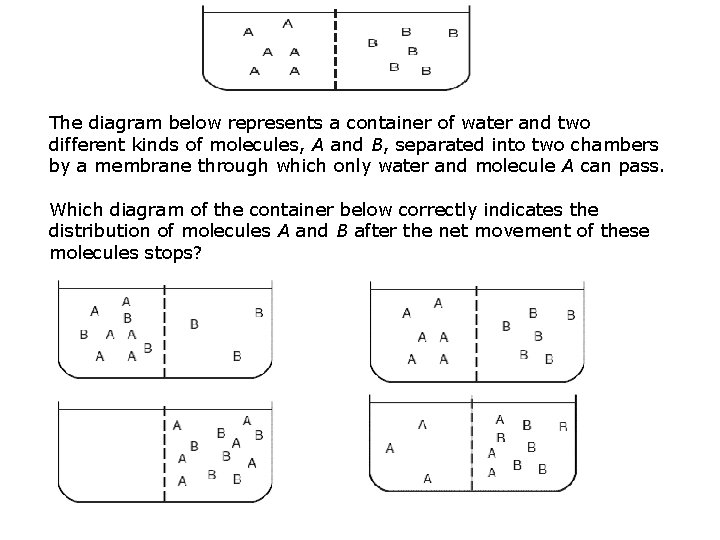
The diagram below represents a container of water and two different kinds of molecules, A and B, separated into two chambers by a membrane through which only water and molecule A can pass. Which diagram of the container below correctly indicates the distribution of molecules A and B after the net movement of these molecules stops?
Molecules A and B come in contact with the cell membrane of the same cell. Molecule A passes through the cell membrane readily, but molecule B does not. Which statement could describe molecules A and B? 1. Molecule A is a protein, and molecule B is a fat. 2. Molecule A is a starch, and molecule B is a simple sugar. 3. Molecule A is an amino acid, and molecule B is a simple sugar. 4. Molecule A is a simple sugar, and molecule B is a starch