
AIM HOW DID INDUSTRIALIZATION CHANGE AMERICAN BUSINESS PRACTICES
AIM: HOW DID INDUSTRIALIZATION CHANGE AMERICAN BUSINESS PRACTICES AT THE TURN OF THE CENTURY? Do Now: Obtain Regents Review Packet #6 on Industrialization Open RED books to p. 436 -472 Workbook: p. 102 -118 YOU HAVE 12 minutes to complete vocabulary
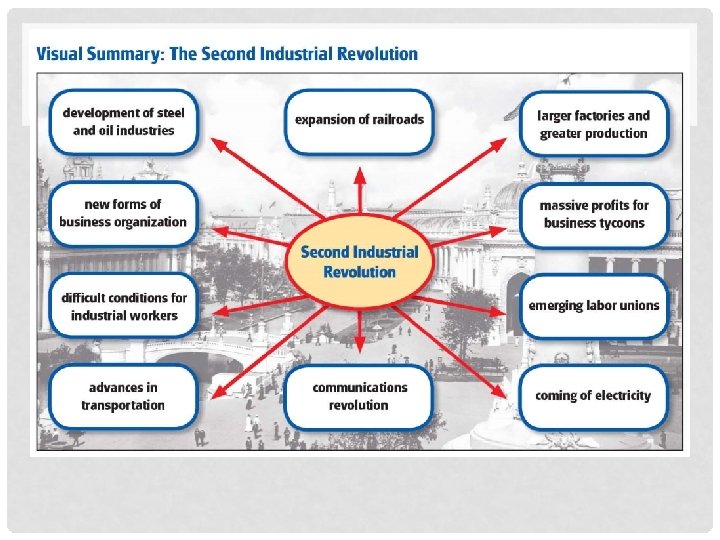
QUESTION #1 During the late 1800 s, new technology led to rapid industrial growth and the expansion of railroads. New technologies • Electrical power replaced steam and water power. • Larger factories produced more and more goods. • Faster transportation moved people and goods more cheaply.
QUESTION #2 • The Bessemer process of purifying steel helped to make America the world’s top producer and transformed the U. S. into a modern industrial economy. • Major sources of energy from oil fueled a revolution in transportation and industry.
QUESTION #3 Critics Business tycoons were “robber barons” who profited unfairly by squeezing out competitors. They lived lavish lifestyles from their illgotten rewards. Proponents Business tycoons were “captains of industry” who used their business skills to make the American economy more productive. That in turn made the American economy stronger.
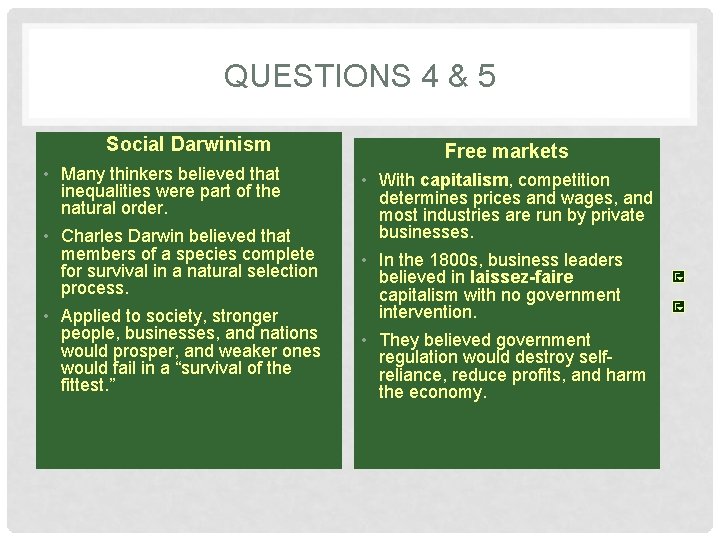
QUESTIONS 4 & 5 Social Darwinism • Many thinkers believed that inequalities were part of the natural order. • Charles Darwin believed that members of a species complete for survival in a natural selection process. • Applied to society, stronger people, businesses, and nations would prosper, and weaker ones would fail in a “survival of the fittest. ” Free markets • With capitalism, competition determines prices and wages, and most industries are run by private businesses. • In the 1800 s, business leaders believed in laissez-faire capitalism with no government intervention. • They believed government regulation would destroy selfreliance, reduce profits, and harm the economy.
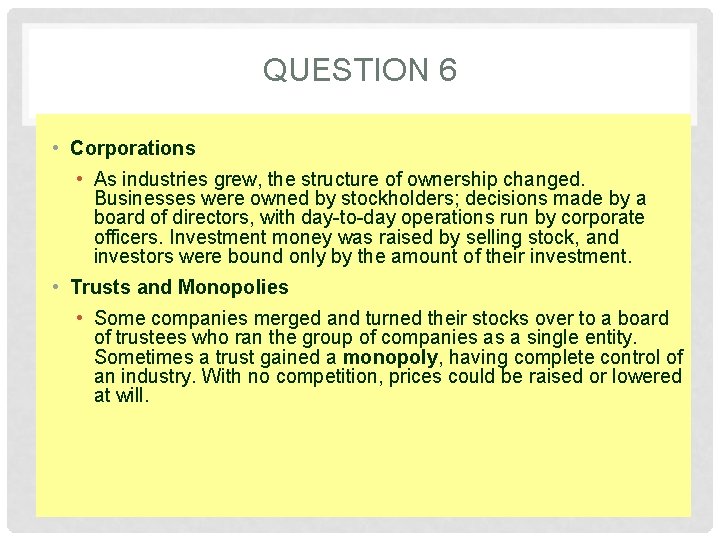
QUESTION 6 • Corporations • As industries grew, the structure of ownership changed. Businesses were owned by stockholders; decisions made by a board of directors, with day-to-day operations run by corporate officers. Investment money was raised by selling stock, and investors were bound only by the amount of their investment. • Trusts and Monopolies • Some companies merged and turned their stocks over to a board of trustees who ran the group of companies as a single entity. Sometimes a trust gained a monopoly, having complete control of an industry. With no competition, prices could be raised or lowered at will.
QUESTION #7
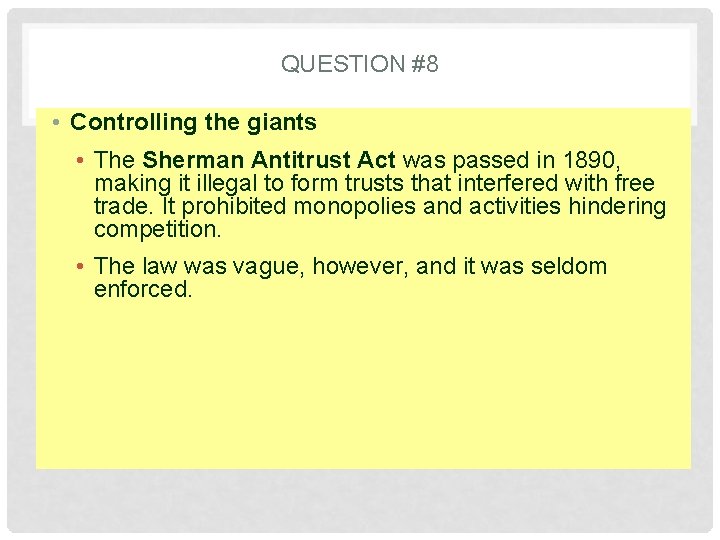
QUESTION #8 • Controlling the giants • The Sherman Antitrust Act was passed in 1890, making it illegal to form trusts that interfered with free trade. It prohibited monopolies and activities hindering competition. • The law was vague, however, and it was seldom enforced.
QUESTION #9 • Collective Bargaining: • Negotiations between representatives of labor and management to reach written agreements on wages, hours and working conditions.
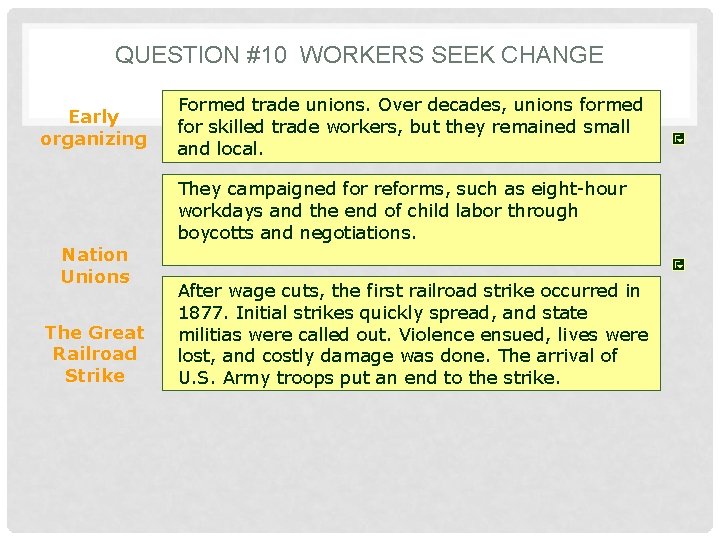
QUESTION #10 WORKERS SEEK CHANGE Early organizing Formed trade unions. Over decades, unions formed for skilled trade workers, but they remained small and local. They campaigned for reforms, such as eight-hour workdays and the end of child labor through boycotts and negotiations. Nation Unions The Great Railroad Strike After wage cuts, the first railroad strike occurred in 1877. Initial strikes quickly spread, and state militias were called out. Violence ensued, lives were lost, and costly damage was done. The arrival of U. S. Army troops put an end to the strike.
QUESTION # 11 • Employers struck back at organized labor, forcing employees to sign documents saying they would not join a union. • Blacklists of people deemed troublemakers were made and shared by employers, who refused to hire anyone listed. • Striking workers were replaced with “scabs, ” or strikebreakers.
QUESTION #12 • The Knights of Labor formed in 1869. Under the leadership of Terence V. Powderly in the 1880 s, they began to accept unskilled workers, women, and African Americans as members. • Samuel Gompers led a group of skilled workers to form the American Federation of Labor in 1886. • Using strikes and other tactics, the AFL did win wage increases and shorter workweeks.
QUESTION #13 The Haymarket Riot • 1886 was a difficult year for labor. • One of the worst clashes was at Haymarket Square in Chicago. A bomb was thrown in a crowd gathered to protest violent police action. Gunshots rang out, and eleven people were killed and hundreds injured before it was over. • Foreign-born unionists were blamed for the violence, and the press fanned xenophobia. • Eight men were charged with conspiracy, but no evidence connected them to the crime. • All eight were convicted and sentenced to death. After four hangings and one suicide, the last three were pardoned.
Question #14 The Homestead Strike Unions made some gains, but conflicts continued. Carnegie Steel workers in Homestead, Pennsylvania, refused to work faster, and the manager tried to lock them out. The workers seized the plant. Gunfire erupted when private guards hired by the company tried to take control. After a 14 -hour battle and fourteen deaths, the governor called out the state militia. The steelworkers’ union withered within months. The Pullman Strike After laying off a third of its employees in 1893, the Pullman Company cut the wages of remaining workers by 25 percent without lowering their rents. Workers went on strike with the support of Eugene V. Debs, the leader of the American Railway Union. The government ordered the strike be called off, but the union refused. President Grover Cleveland called in federal troops, and the strike collapsed. The late 1800 s would remain an era of big business.
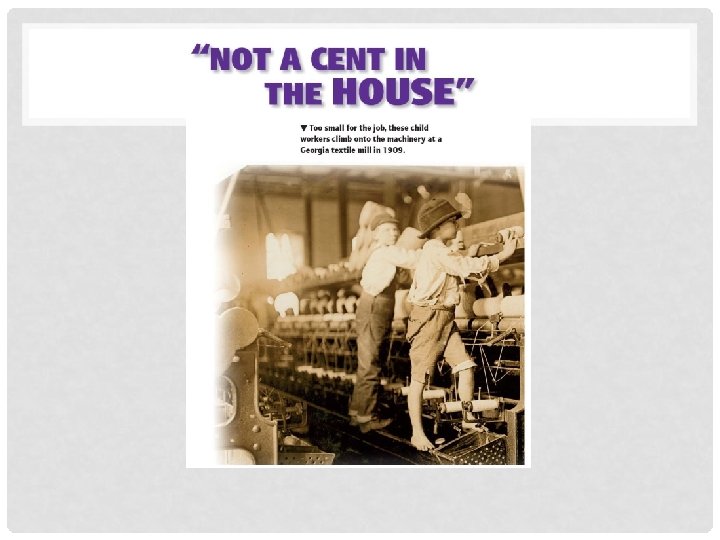
QUESTION # 15 Grim working conditions in many industries led workers to form unions and stage labor strikes. The workforce Working conditions • Many factory workers were immigrants or rural Americans moving to the cities for jobs. • Most unskilled laborers worked 10 -hour days, six days a week. • The best jobs went to nativeborn whites or European immigrants. • Less well-paying jobs were open to African Americans, as household help or laborers. • By 1900, one in six children between the ages of 10 and 15 held factory jobs. • They had no paid vacation and no sick leave. • Speed of production led to terrible accidents. Injured workers were replaced. • Sweatshops were common. These cramped workshops set up in shabby tenement buildings were common in the garment industry.
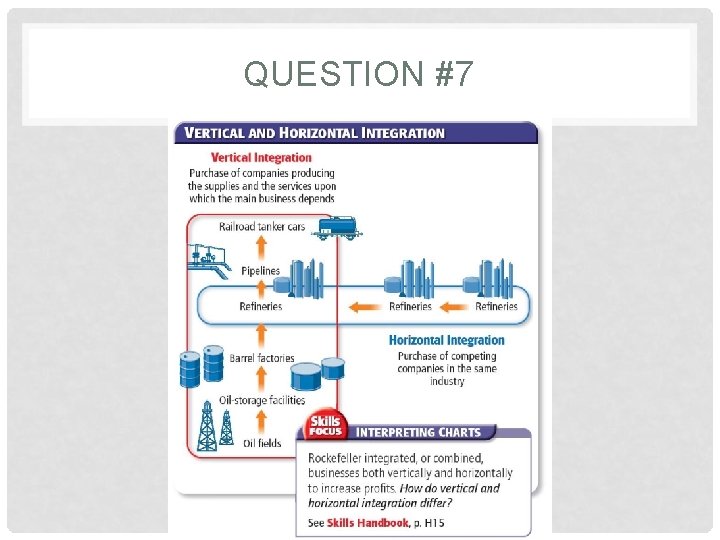
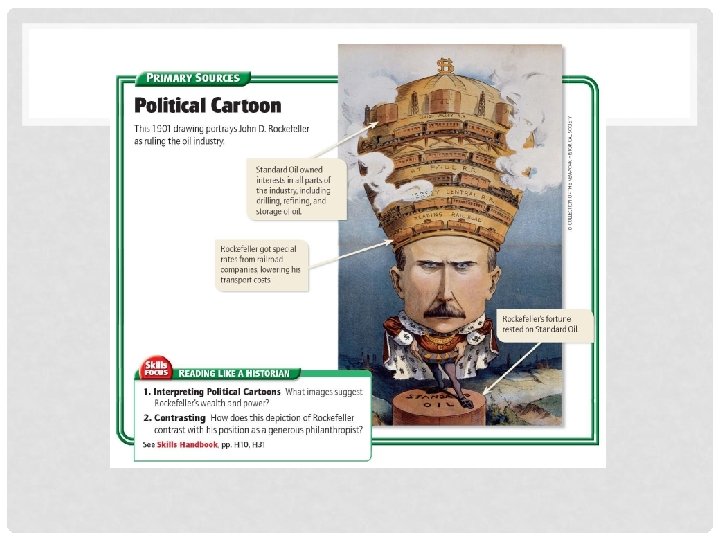
INDUSTRIAL TYCOONS Rockefeller and oil Starting with an oil refinery and superb business sense, John D. Rockefeller used both vertical and horizontal integration to capture 90 percent of the U. S. oil refinery business by 1879. Rockefeller gave away over half of his fortune to charity. He donated millions to education and good works through his Rockefeller Foundation. Carnegie and steel Andrew Carnegie rose from immigrant child to steel magnate. He used profits from various business investments to found his own company. By the end of the century the Carnegie Steel Company dominated the U. S. steel industry. After retiring, Carnegie devoted his time to charity, supporting education and building public libraries.
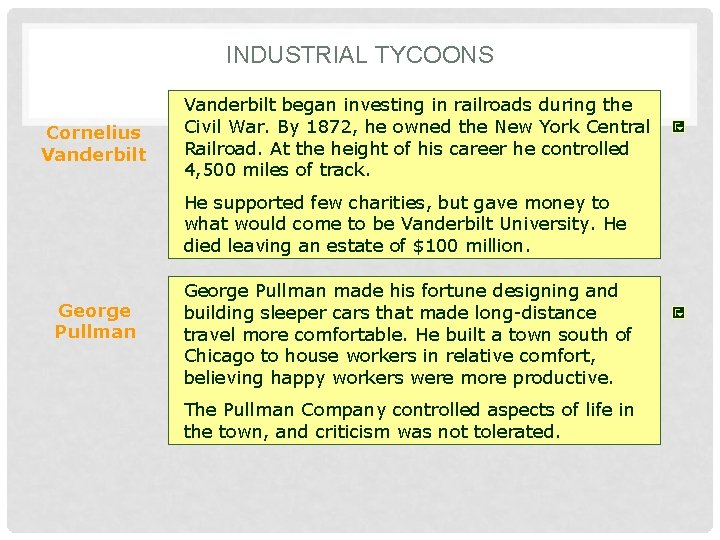
INDUSTRIAL TYCOONS Cornelius Vanderbilt began investing in railroads during the Civil War. By 1872, he owned the New York Central Railroad. At the height of his career he controlled 4, 500 miles of track. He supported few charities, but gave money to what would come to be Vanderbilt University. He died leaving an estate of $100 million. George Pullman made his fortune designing and building sleeper cars that made long-distance travel more comfortable. He built a town south of Chicago to house workers in relative comfort, believing happy workers were more productive. The Pullman Company controlled aspects of life in the town, and criticism was not tolerated.
- Slides: 20