
Aim How did early humans adapt to their



- Slides: 14
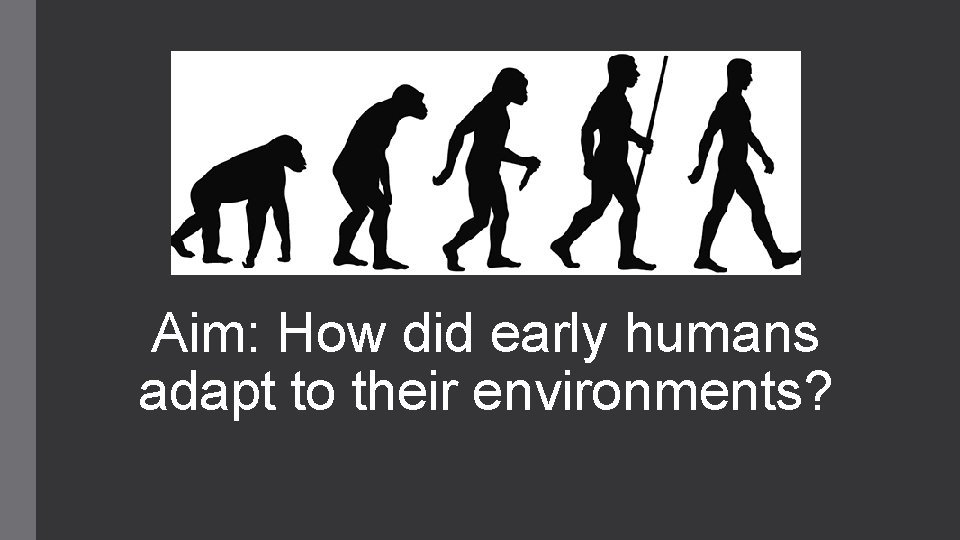
Aim: How did early humans adapt to their environments?
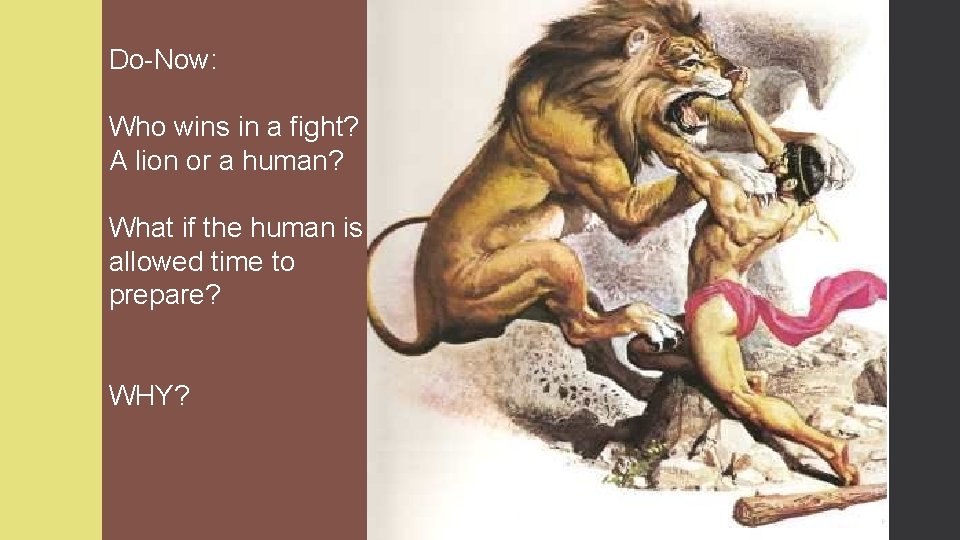
Do-Now: Who wins in a fight? A lion or a human? What if the human is allowed time to prepare? WHY?
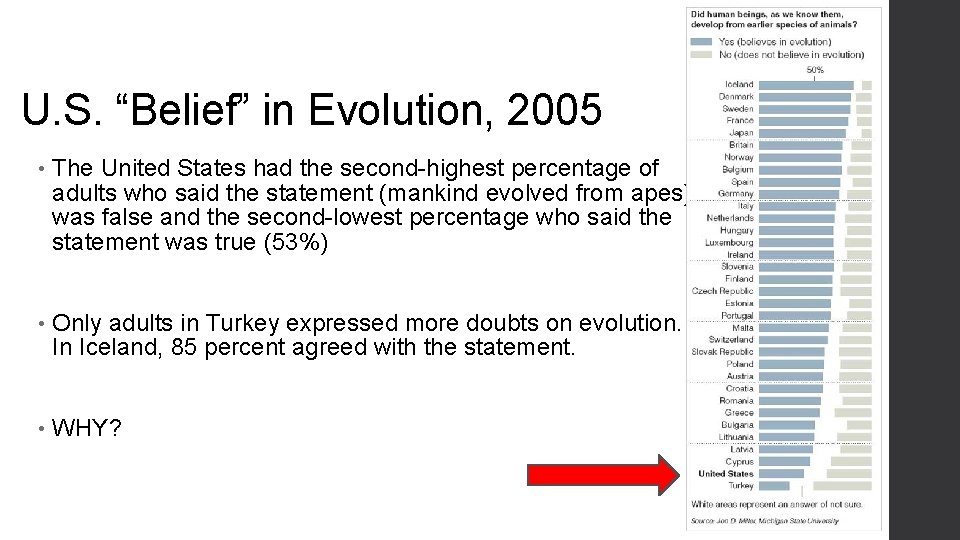
U. S. “Belief” in Evolution, 2005 • The United States had the second-highest percentage of adults who said the statement (mankind evolved from apes) was false and the second-lowest percentage who said the statement was true (53%) • Only adults in Turkey expressed more doubts on evolution. In Iceland, 85 percent agreed with the statement. • WHY?
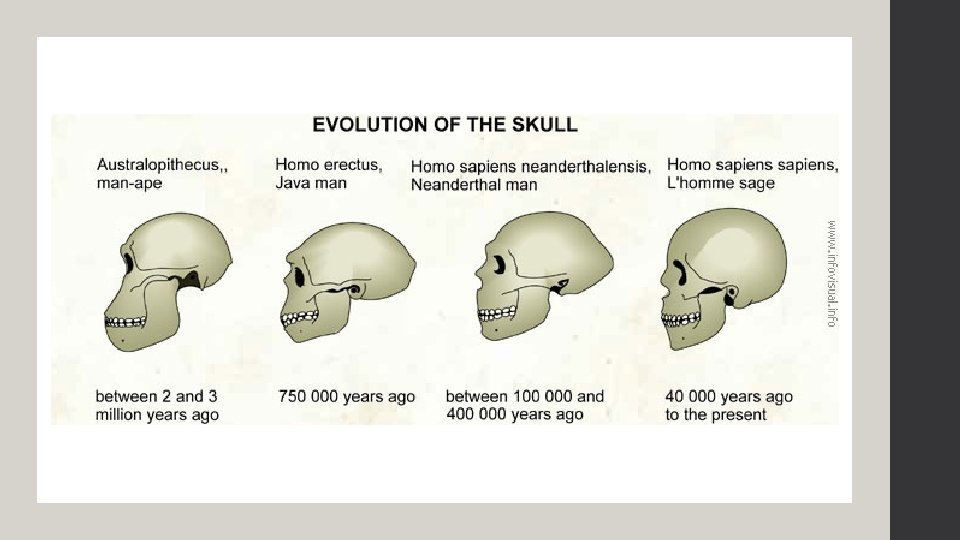
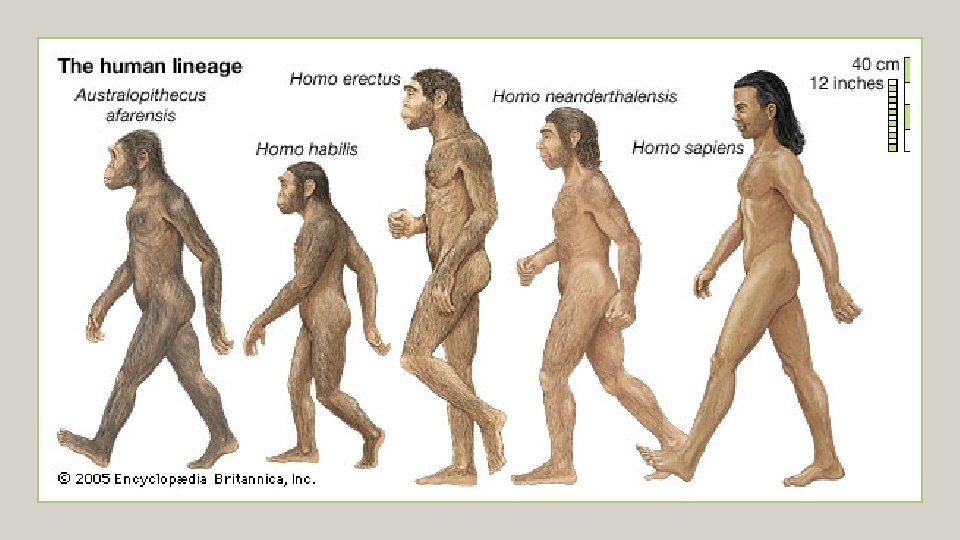
Think-Pair-Share Activity • Rank the Hominid Worksheet-Rank the various levels of humans 1 (the least advanced) to 5 (most advanced) • Be prepared to explain why
What is Prehistory? • Think back to last week
Prehistory • Period in history between the first man to the invention of writing
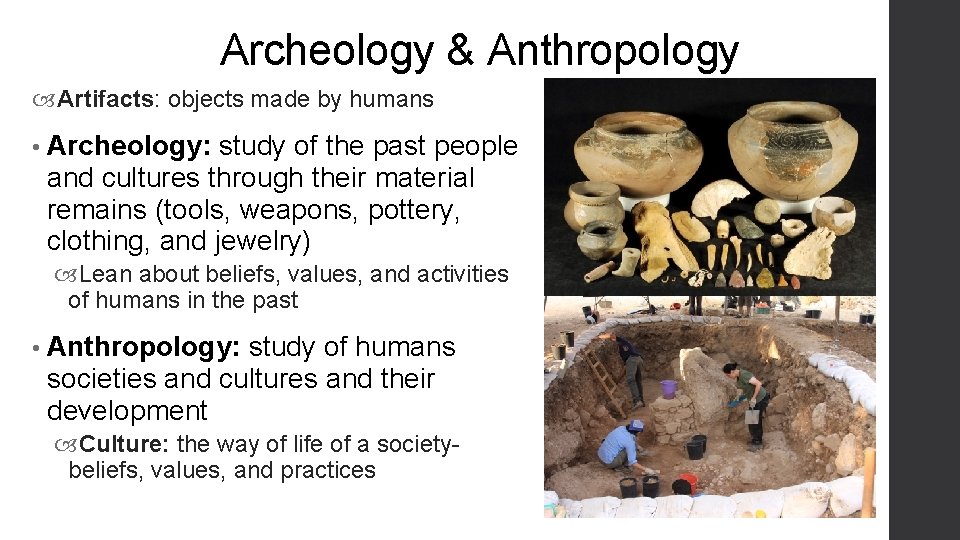
Archeology & Anthropology Artifacts: objects made by humans • Archeology: study of the past people and cultures through their material remains (tools, weapons, pottery, clothing, and jewelry) Lean about beliefs, values, and activities of humans in the past • Anthropology: study of humans societies and cultures and their development Culture: the way of life of a societybeliefs, values, and practices
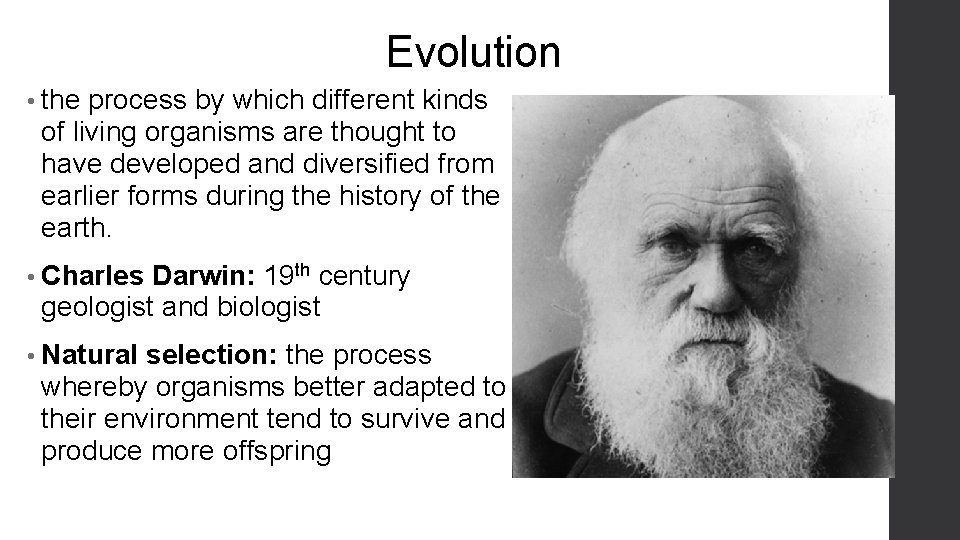
Evolution • the process by which different kinds of living organisms are thought to have developed and diversified from earlier forms during the history of the earth. • Charles Darwin: 19 th century geologist and biologist • Natural selection: the process whereby organisms better adapted to their environment tend to survive and produce more offspring
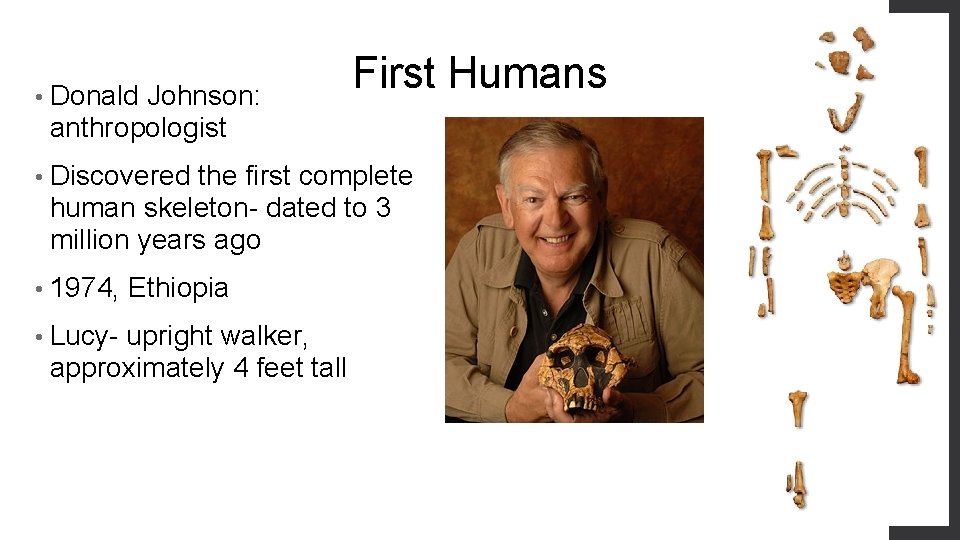
• Donald Johnson: anthropologist • Discovered First Humans the first complete human skeleton- dated to 3 million years ago • 1974, • Lucy- Ethiopia upright walker, approximately 4 feet tall
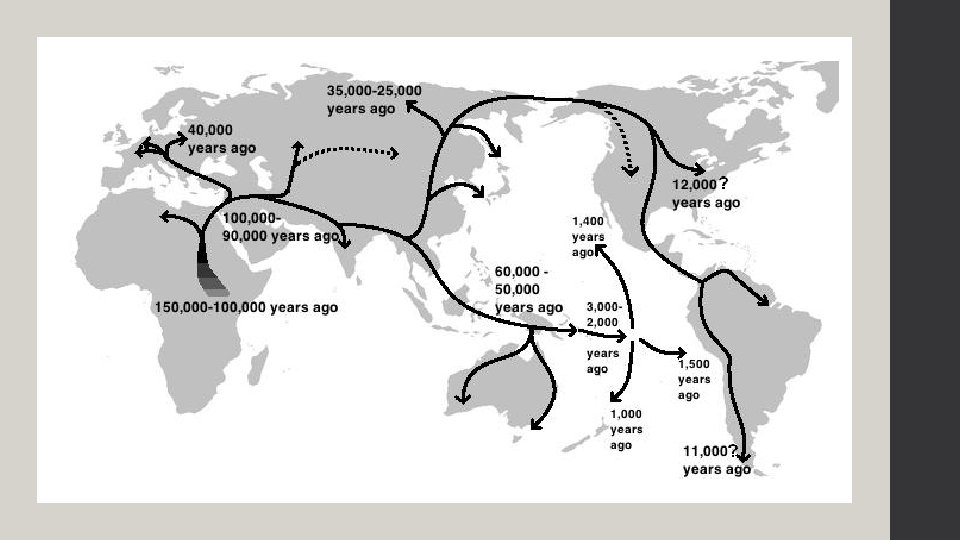
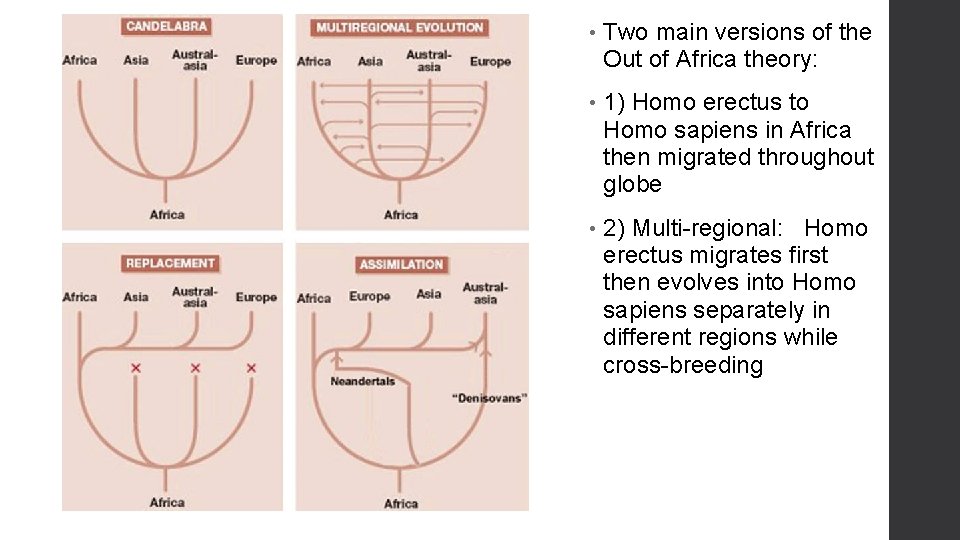
• Two main versions of the Out of Africa theory: • 1) Homo erectus to Homo sapiens in Africa then migrated throughout globe • 2) Multi-regional: Homo erectus migrates first then evolves into Homo sapiens separately in different regions while cross-breeding