
AIM How can we describe sound and light
AIM: How can we describe sound and light waves?
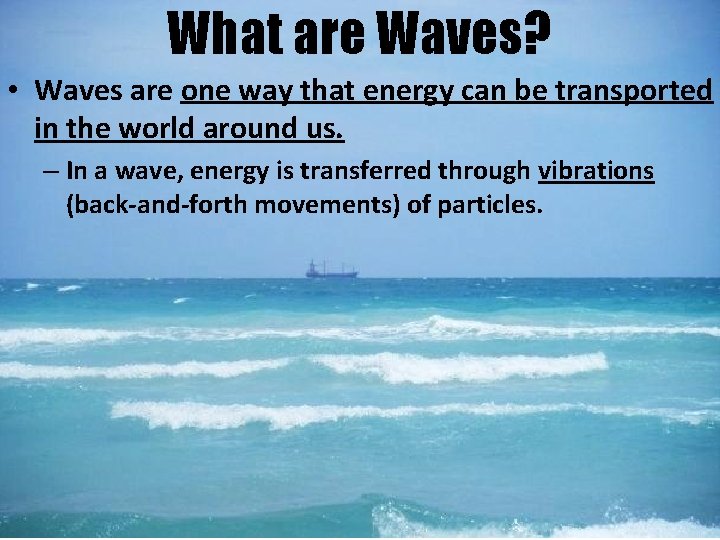
What are Waves? • Waves are one way that energy can be transported in the world around us. – In a wave, energy is transferred through vibrations (back-and-forth movements) of particles.
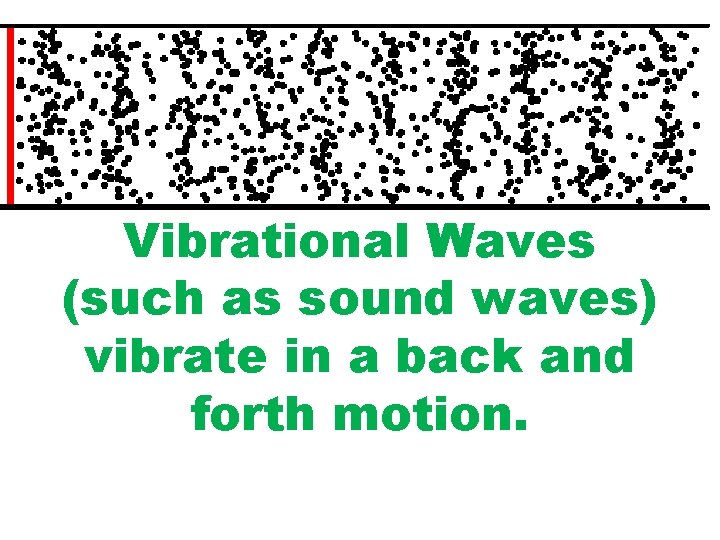
Vibrational Waves (such as sound waves) vibrate in a back and forth motion.
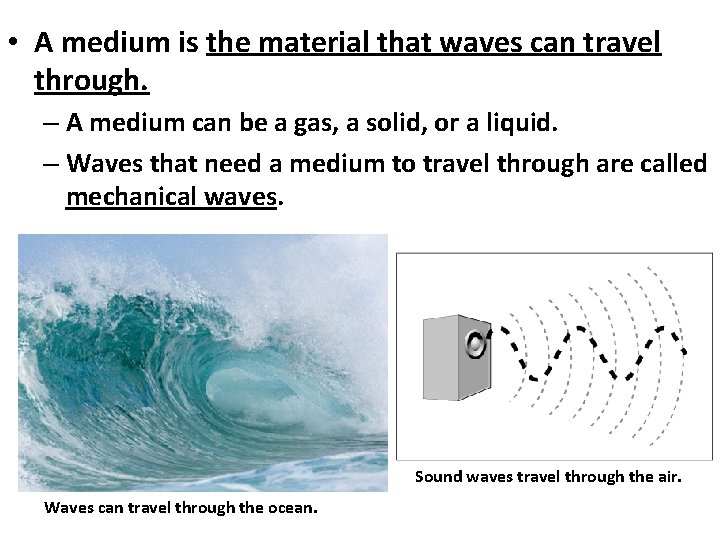
• A medium is the material that waves can travel through. – A medium can be a gas, a solid, or a liquid. – Waves that need a medium to travel through are called mechanical waves. Sound waves travel through the air. Waves can travel through the ocean.
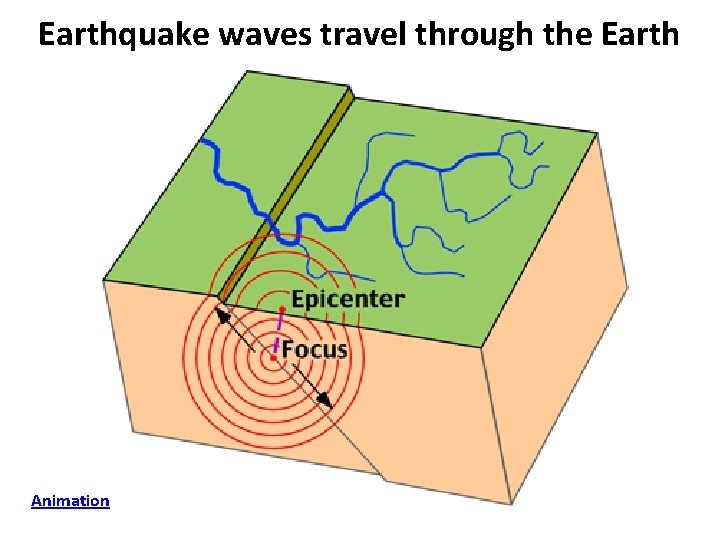
Earthquake waves travel through the Earth Animation
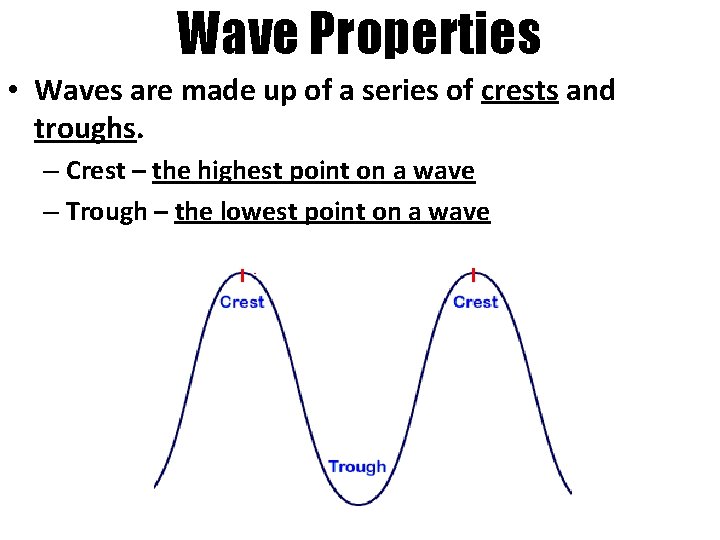
Wave Properties • Waves are made up of a series of crests and troughs. – Crest – the highest point on a wave – Trough – the lowest point on a wave
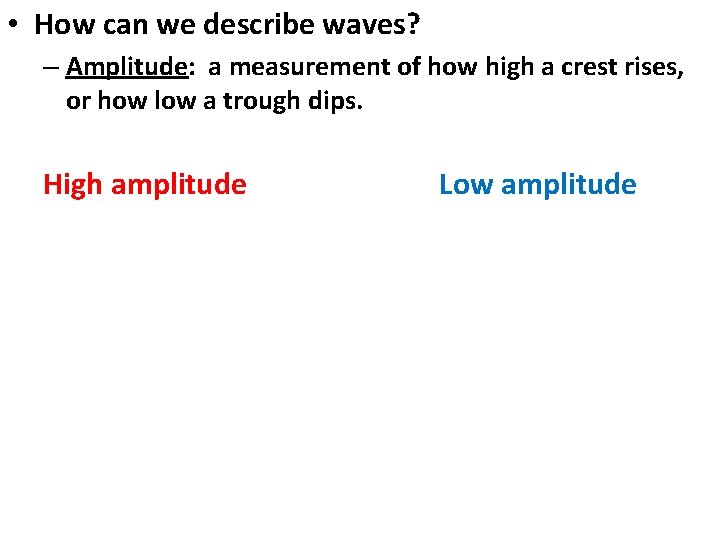
• How can we describe waves? – Amplitude: a measurement of how high a crest rises, or how low a trough dips. High amplitude Low amplitude
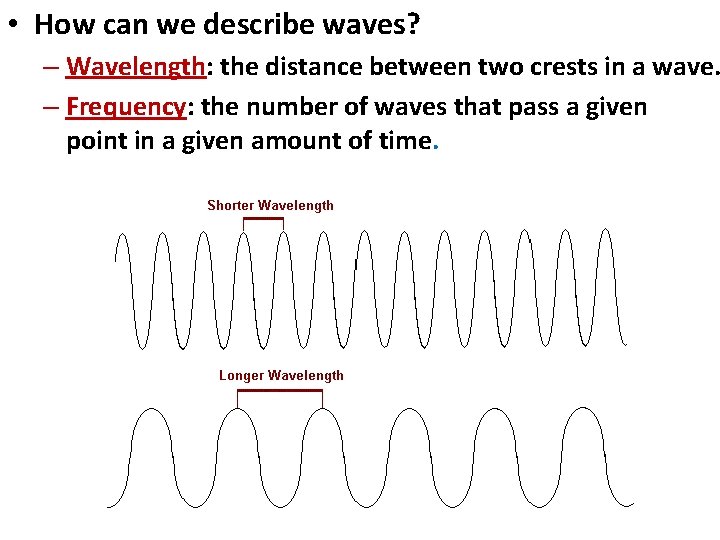
• How can we describe waves? – Wavelength: the distance between two crests in a wave. – Frequency: the number of waves that pass a given point in a given amount of time.
Sound Waves • Sound waves are waves of vibrations in the air. – Frequency determines the pitch of a sound (how high or low a sound seems) – Amplitude determines how loud a sound is.

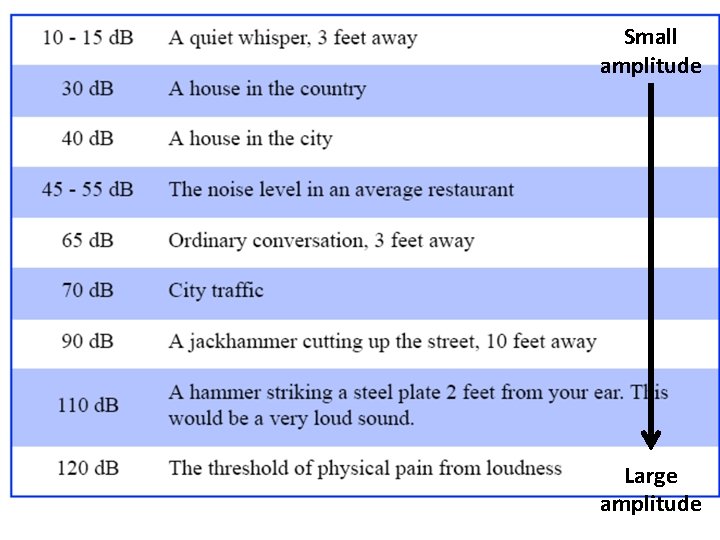
Small amplitude Large amplitude
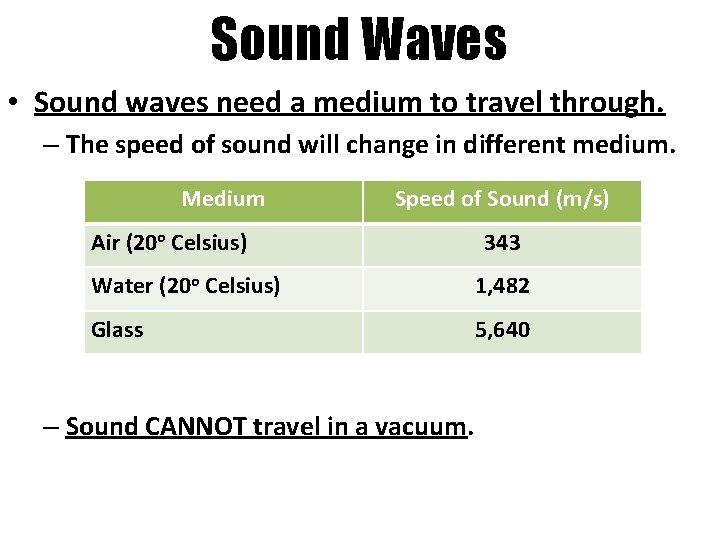
Sound Waves • Sound waves need a medium to travel through. – The speed of sound will change in different medium. Medium Speed of Sound (m/s) Air (20 o Celsius) 343 Water (20 o Celsius) 1, 482 Glass 5, 640 – Sound CANNOT travel in a vacuum.
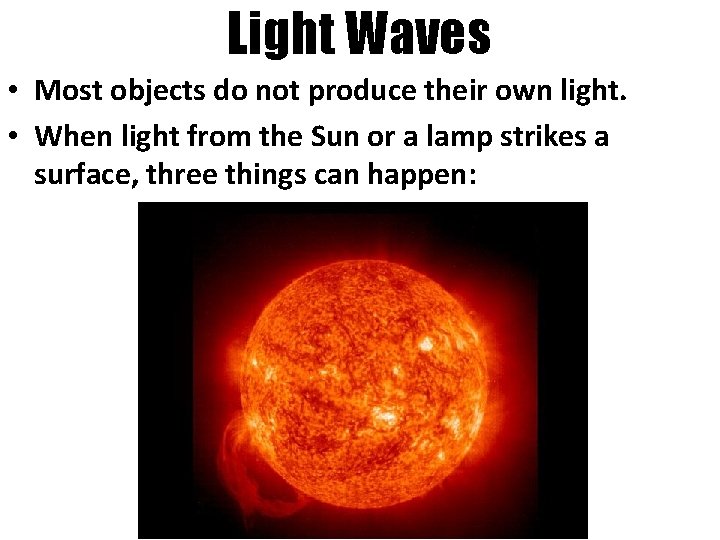
Light Waves • Most objects do not produce their own light. • When light from the Sun or a lamp strikes a surface, three things can happen:
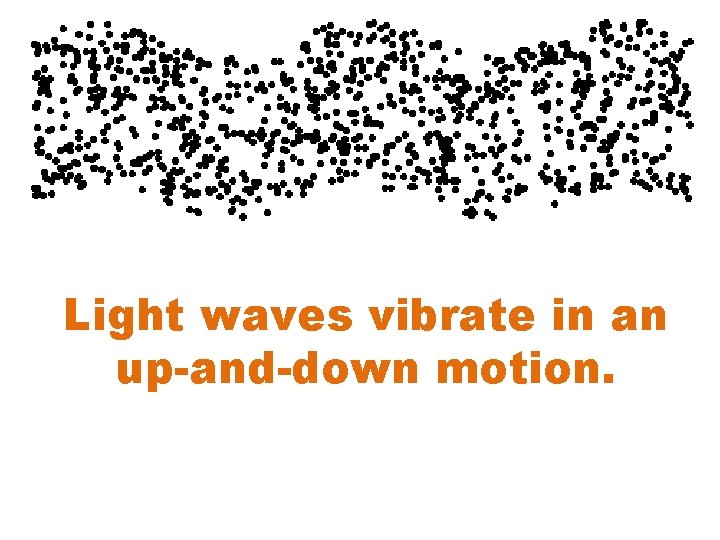
Light waves vibrate in an up-and-down motion.
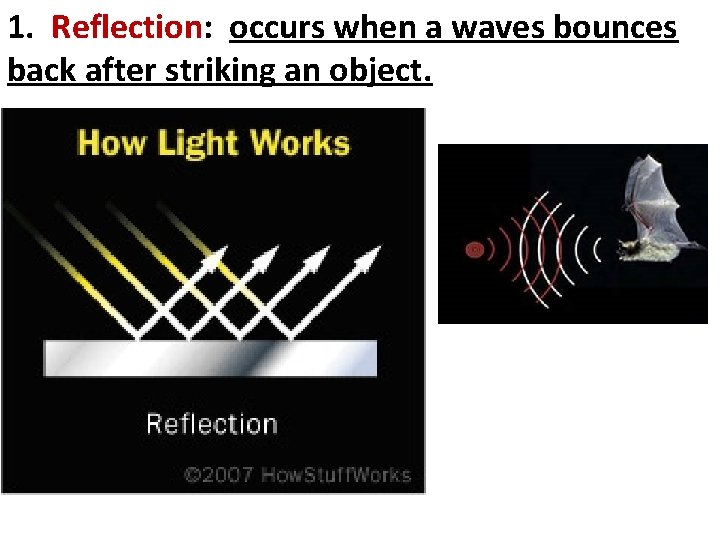
1. Reflection: occurs when a waves bounces back after striking an object.
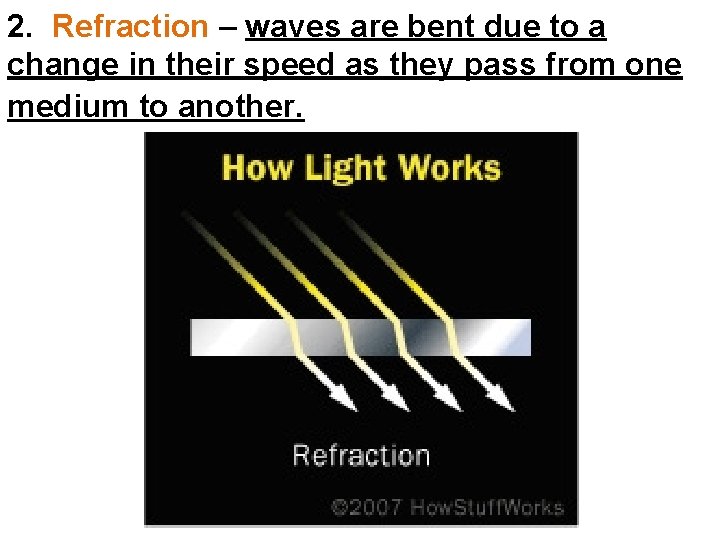
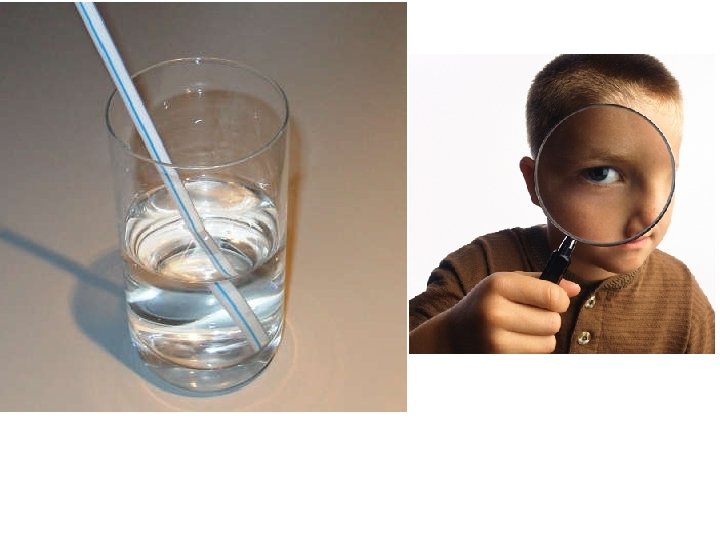
2. Refraction – waves are bent due to a change in their speed as they pass from one medium to another.
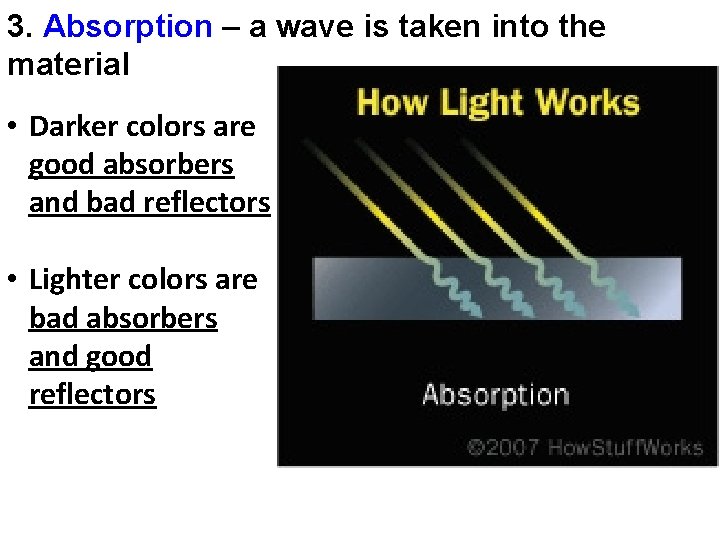
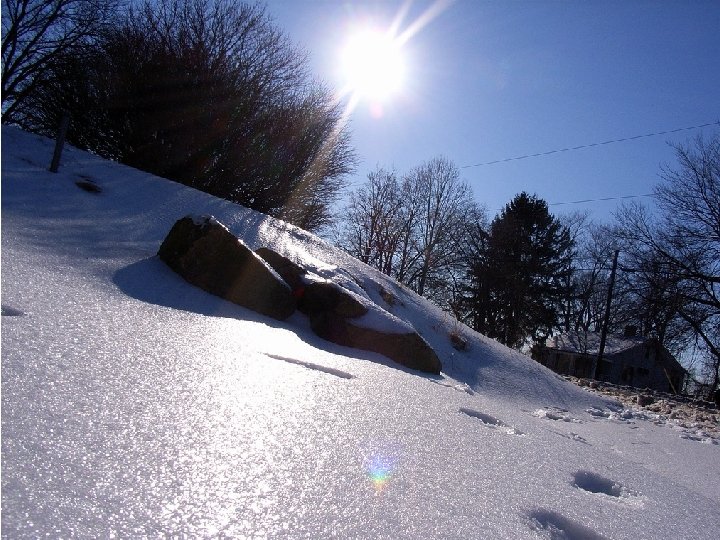
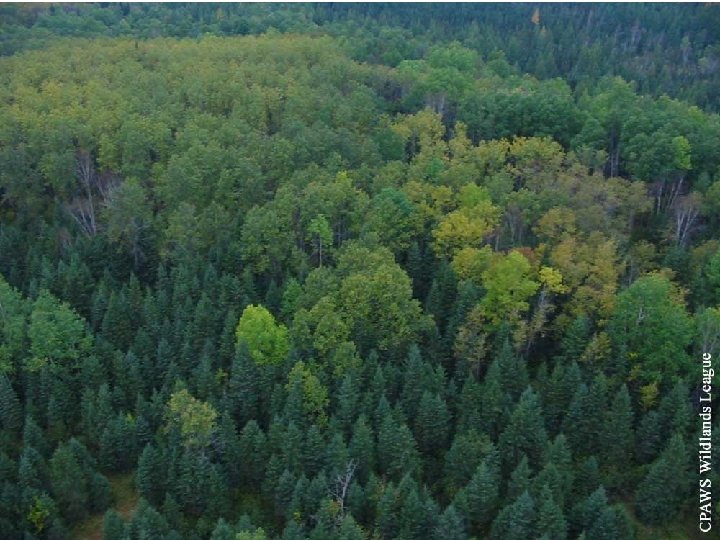
3. Absorption – a wave is taken into the material • Darker colors are good absorbers and bad reflectors • Lighter colors are bad absorbers and good reflectors
- Slides: 20