
Aim How can stress impact our health Do
- Slides: 45
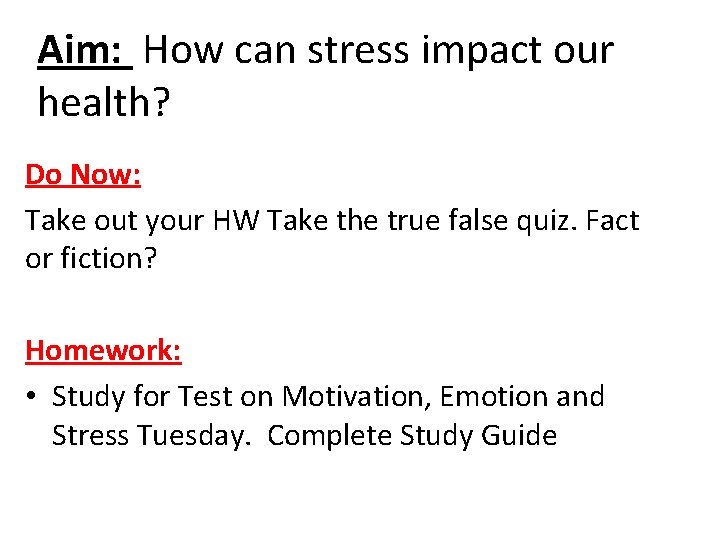
Aim: How can stress impact our health? Do Now: Take out your HW Take the true false quiz. Fact or fiction? Homework: • Study for Test on Motivation, Emotion and Stress Tuesday. Complete Study Guide
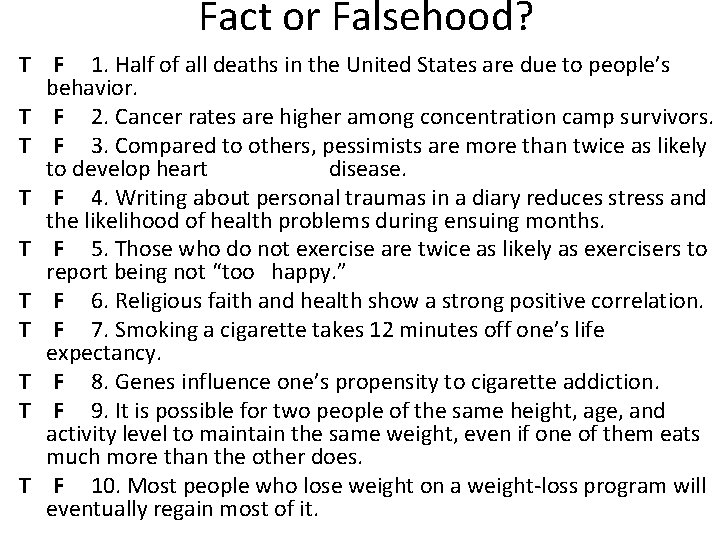
Fact or Falsehood? T F 1. Half of all deaths in the United States are due to people’s behavior. T F 2. Cancer rates are higher among concentration camp survivors. T F 3. Compared to others, pessimists are more than twice as likely to develop heart disease. T F 4. Writing about personal traumas in a diary reduces stress and the likelihood of health problems during ensuing months. T F 5. Those who do not exercise are twice as likely as exercisers to report being not “too happy. ” T F 6. Religious faith and health show a strong positive correlation. T F 7. Smoking a cigarette takes 12 minutes off one’s life expectancy. T F 8. Genes influence one’s propensity to cigarette addiction. T F 9. It is possible for two people of the same height, age, and activity level to maintain the same weight, even if one of them eats much more than the other does. T F 10. Most people who lose weight on a weight-loss program will eventually regain most of it.
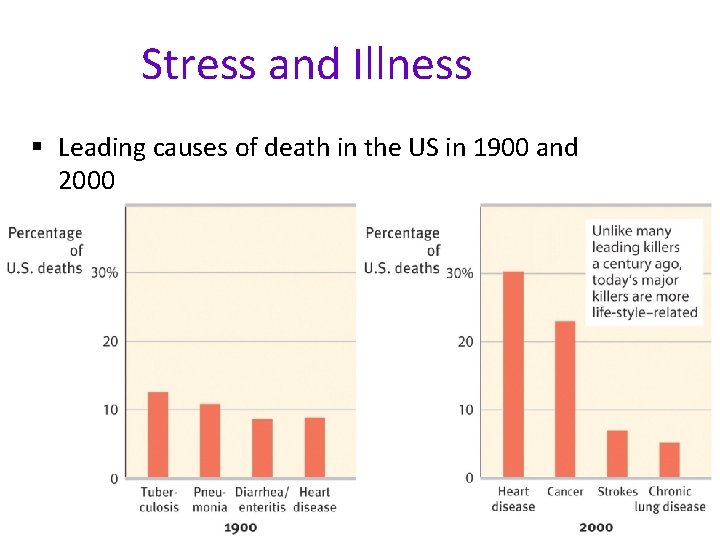
Stress and Illness § Leading causes of death in the US in 1900 and 2000
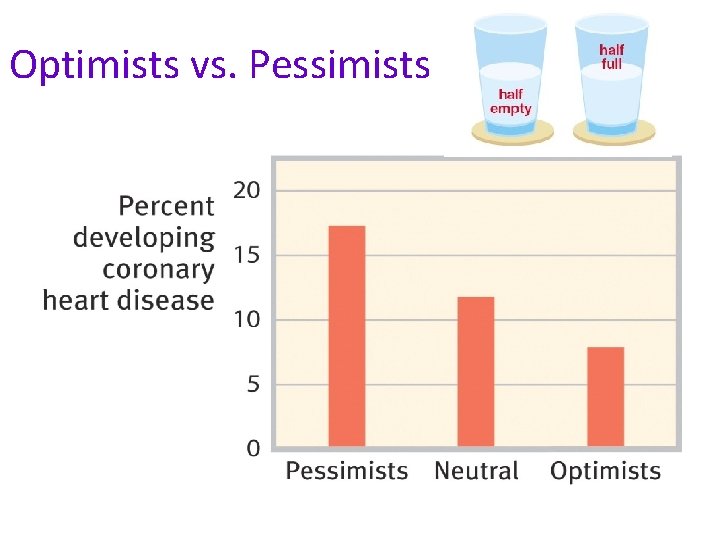
Optimists vs. Pessimists
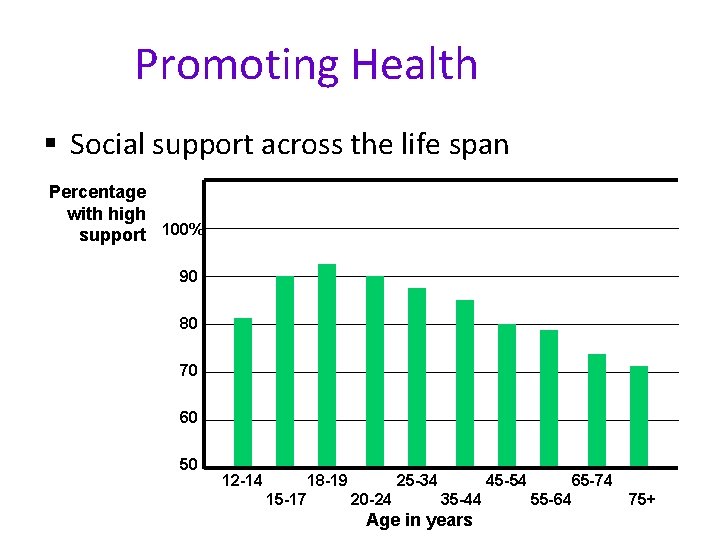
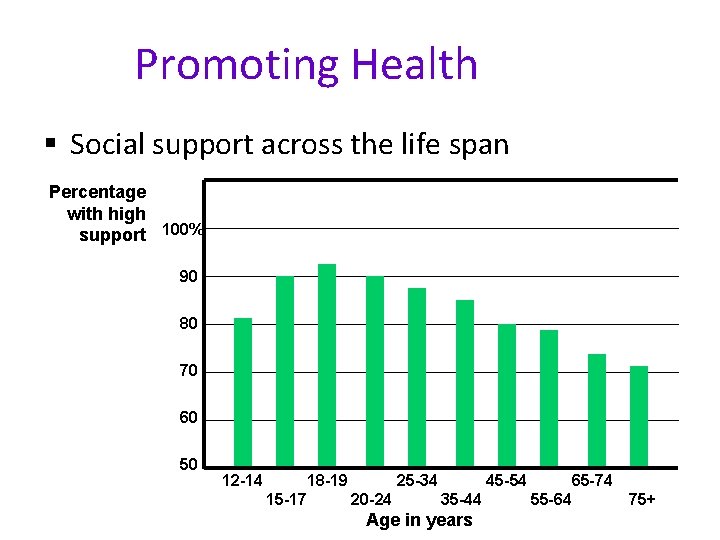
Promoting Health § Social support across the life span Percentage with high support 100% 90 80 70 60 50 12 -14 18 -19 15 -17 25 -34 20 -24 45 -54 35 -44 Age in years 65 -74 55 -64 75+
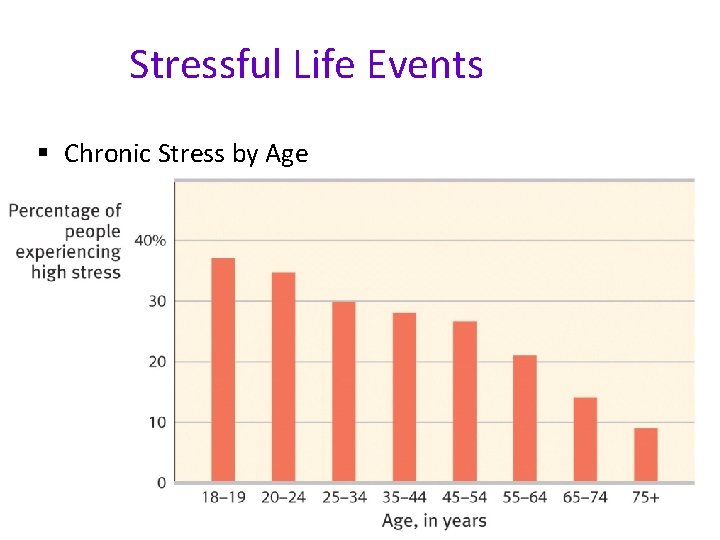
Stressful Life Events § Chronic Stress by Age
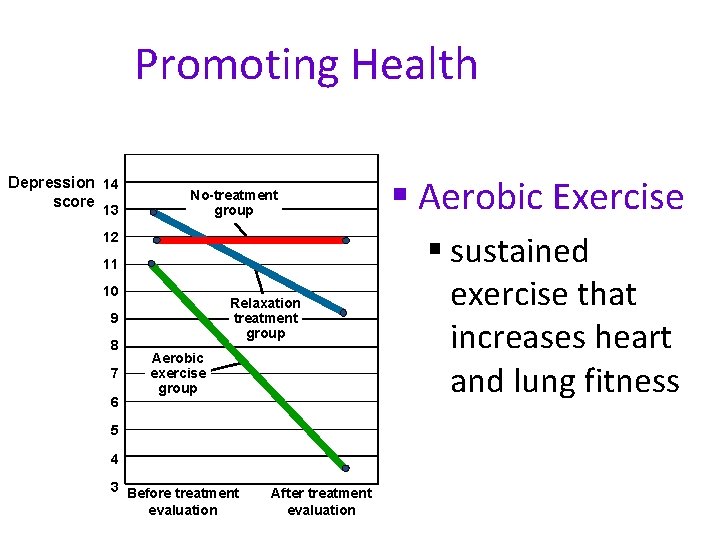
Promoting Health Depression 14 score 13 No-treatment group 12 11 10 Relaxation treatment group 9 8 7 6 Aerobic exercise group 5 4 3 Before treatment evaluation After treatment evaluation § Aerobic Exercise § sustained exercise that increases heart and lung fitness
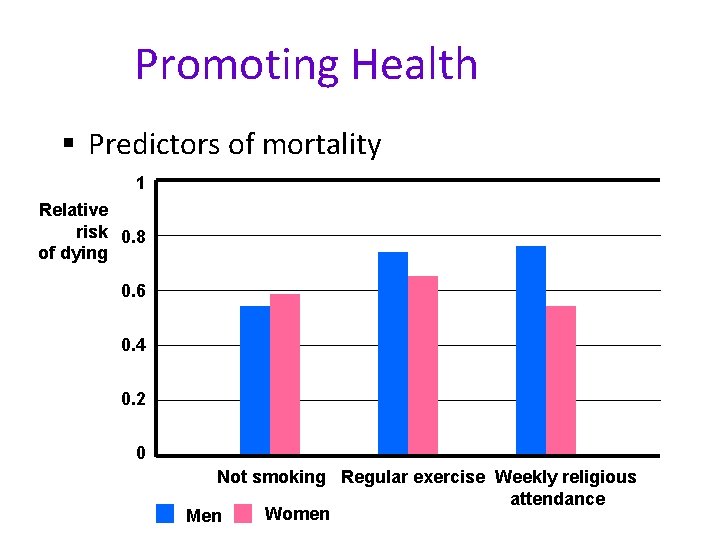
Promoting Health § Predictors of mortality 1 Relative risk 0. 8 of dying 0. 6 0. 4 0. 2 0 Not smoking Regular exercise Weekly religious attendance Women Men
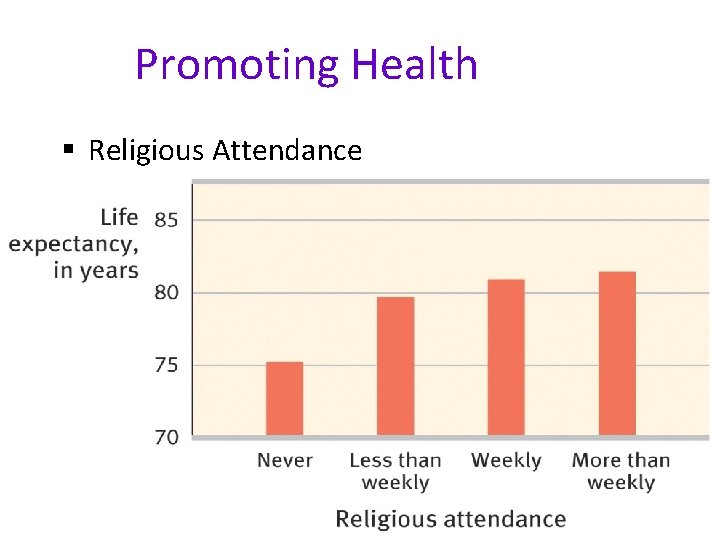
Promoting Health § Religious Attendance
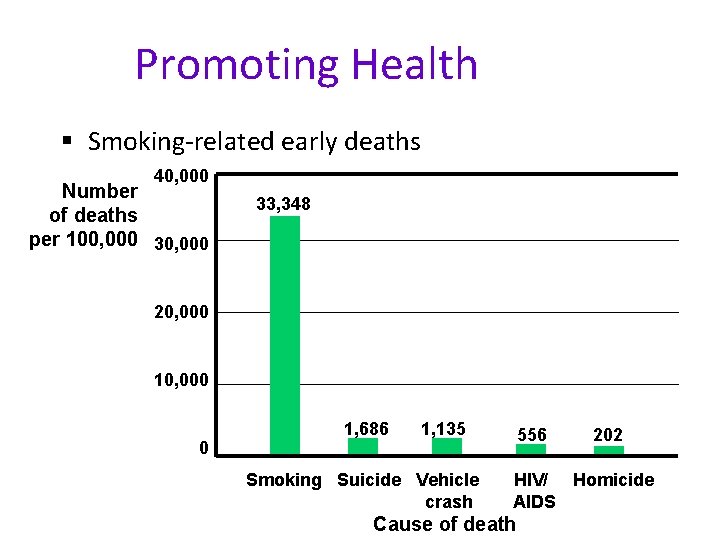
Promoting Health § Smoking-related early deaths 40, 000 Number of deaths per 100, 000 33, 348 20, 000 10, 000 0 1, 686 1, 135 Smoking Suicide Vehicle crash 556 202 HIV/ Homicide AIDS Cause of death
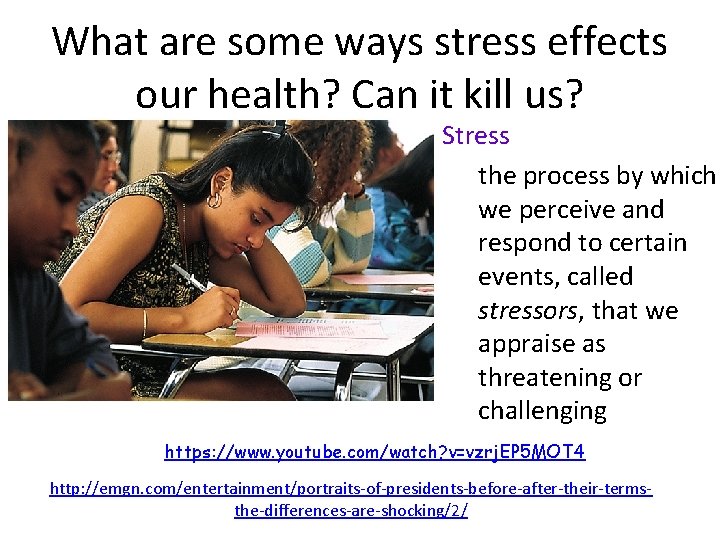
What are some ways stress effects our health? Can it kill us? Stress the process by which we perceive and respond to certain events, called stressors, that we appraise as threatening or challenging https: //www. youtube. com/watch? v=vzrj. EP 5 MOT 4 http: //emgn. com/entertainment/portraits-of-presidents-before-after-their-termsthe-differences-are-shocking/2/
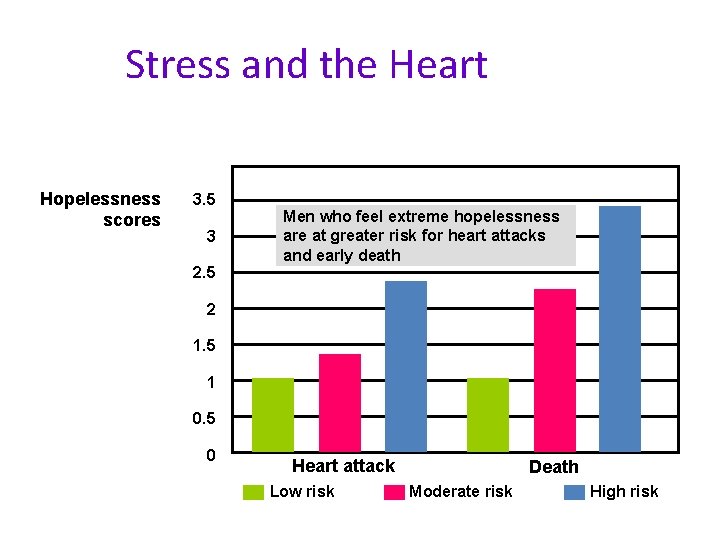
Stress and the Heart Hopelessness scores 3. 5 3 2. 5 Men who feel extreme hopelessness are at greater risk for heart attacks and early death 2 1. 5 1 0. 5 0 Heart attack Low risk Death Moderate risk High risk
Promoting Health § Social support across the life span Percentage with high support 100% 90 80 70 60 50 12 -14 18 -19 15 -17 25 -34 20 -24 45 -54 35 -44 Age in years 65 -74 55 -64 75+
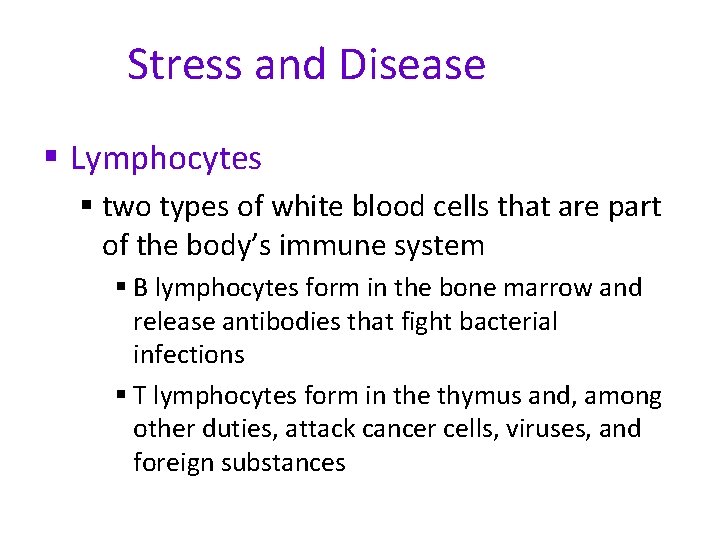
Stress and Disease § Lymphocytes § two types of white blood cells that are part of the body’s immune system § B lymphocytes form in the bone marrow and release antibodies that fight bacterial infections § T lymphocytes form in the thymus and, among other duties, attack cancer cells, viruses, and foreign substances
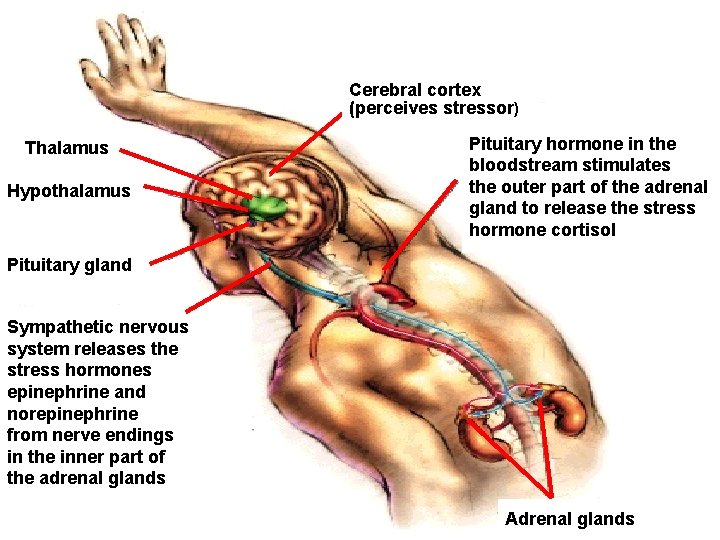
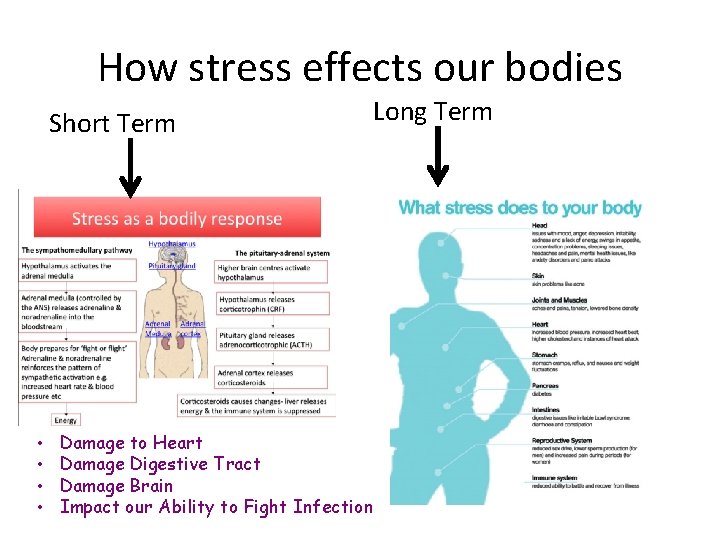
Cerebral cortex (perceives stressor) Thalamus Hypothalamus Pituitary hormone in the bloodstream stimulates the outer part of the adrenal gland to release the stress hormone cortisol Pituitary gland Sympathetic nervous system releases the stress hormones epinephrine and norepinephrine from nerve endings in the inner part of the adrenal glands Adrenal glands
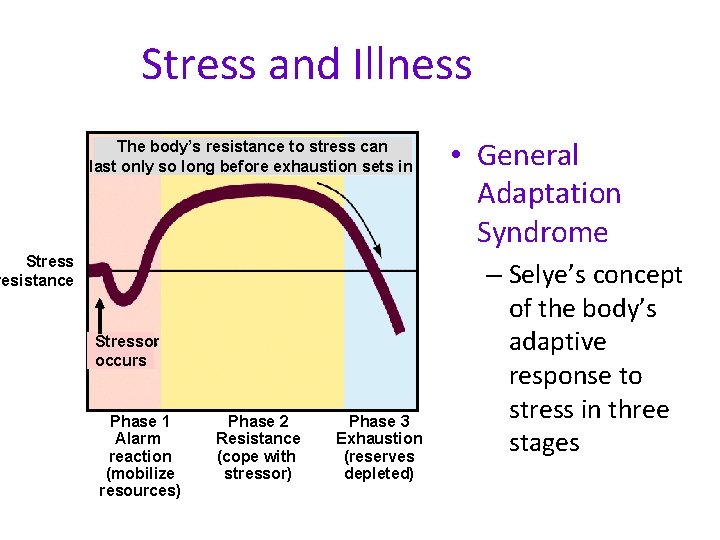
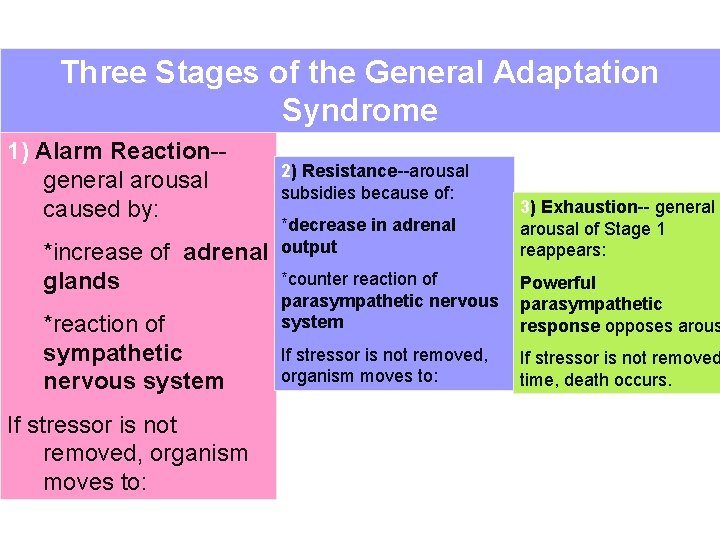
Stress and Illness The body’s resistance to stress can last only so long before exhaustion sets in Stress resistance Stressor occurs Phase 1 Alarm reaction (mobilize resources) Phase 2 Resistance (cope with stressor) Phase 3 Exhaustion (reserves depleted) • General Adaptation Syndrome – Selye’s concept of the body’s adaptive response to stress in three stages
Three Stages of the General Adaptation Syndrome 1) Alarm Reaction-general arousal caused by: *increase of adrenal glands *reaction of sympathetic nervous system If stressor is not removed, organism moves to: 2) Resistance--arousal subsidies because of: *decrease in adrenal output 3) Exhaustion-- general arousal of Stage 1 reappears: *counter reaction of parasympathetic nervous system Powerful parasympathetic response opposes arous If stressor is not removed, organism moves to: If stressor is not removed time, death occurs.
How stress effects our bodies Short Term • • Damage to Heart Damage Digestive Tract Damage Brain Impact our Ability to Fight Infection Long Term
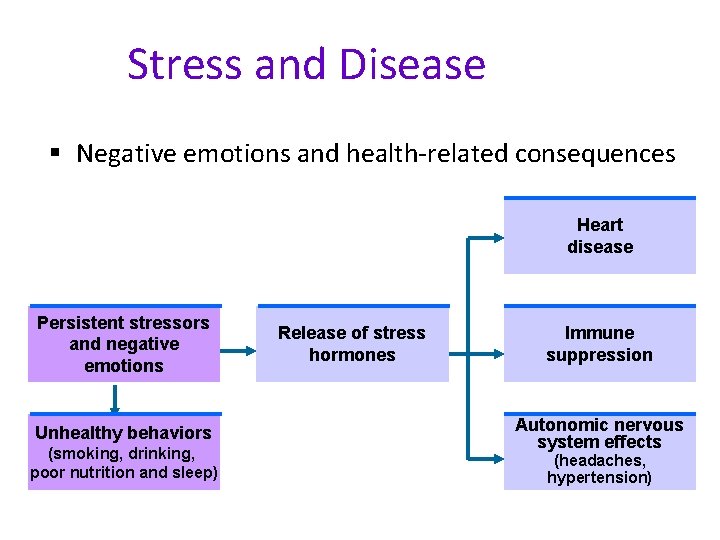
Stress and Disease § Negative emotions and health-related consequences Heart disease Persistent stressors and negative emotions Unhealthy behaviors (smoking, drinking, poor nutrition and sleep) Release of stress hormones Immune suppression Autonomic nervous system effects (headaches, hypertension)
1. Brainstorm all the things that stress you out. 2. Rank them from least to worst.
Role of Perception in Stress
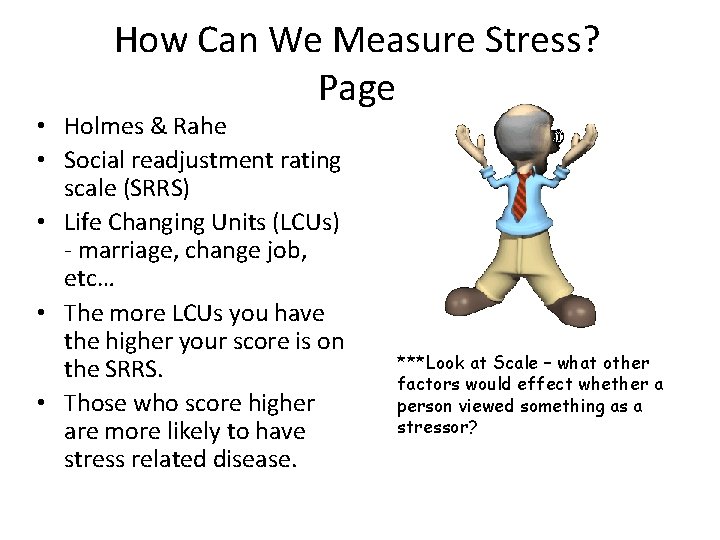
How Can We Measure Stress? Page • Holmes & Rahe • Social readjustment rating scale (SRRS) • Life Changing Units (LCUs) - marriage, change job, etc… • The more LCUs you have the higher your score is on the SRRS. • Those who score higher are more likely to have stress related disease. ***Look at Scale – what other factors would effect whether a person viewed something as a stressor?
Criticism • Included + and – events in the scale • Included events you have control over vs. no control over • Scale does not take into account interpretation of events • Other research shows the relationship between stress and illness is a small one – not a great predictor. (TBA – more studies are being done)
Aim: How does perception impact stress? Review for Test Do Now: FRQ – how can the following effect stress? • Men vs. women • Coping styles • Perception (internal v. external locus of control) • Personality Type (A v. B) Homework: • Study for Test on Motivation, Emotion and Stress tomorrow. Study Guide Due
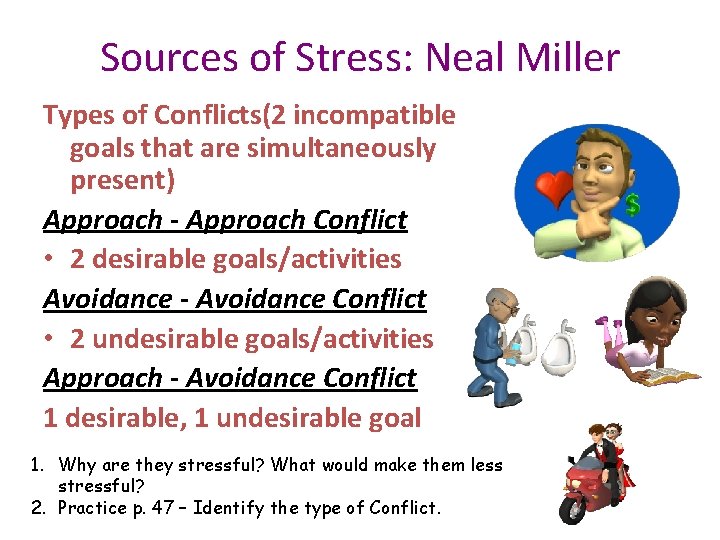
Sources of Stress: Neal Miller Types of Conflicts(2 incompatible goals that are simultaneously present) Approach - Approach Conflict • 2 desirable goals/activities Avoidance - Avoidance Conflict • 2 undesirable goals/activities Approach - Avoidance Conflict 1 desirable, 1 undesirable goal 1. Why are they stressful? What would make them less stressful? 2. Practice p. 47 – Identify the type of Conflict.
Kahoot
How does perception impact stress? https: //www. ted. com/talks/kelly_mcgonigal_h ow_to_make_stress_your_friend? language=en
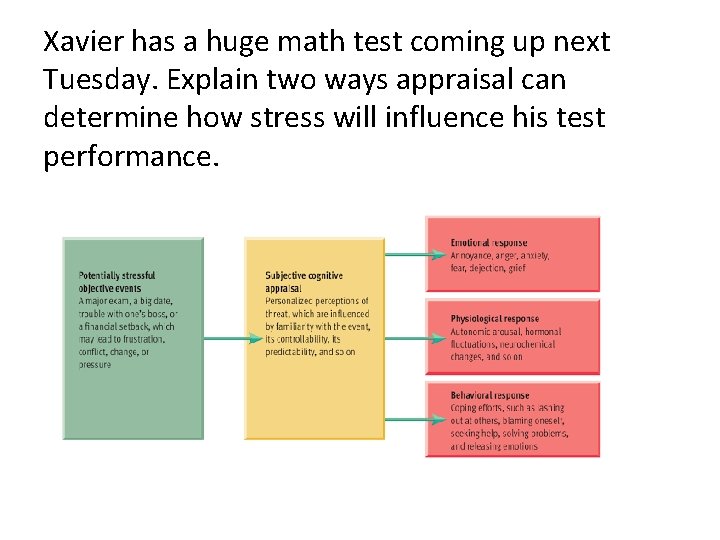
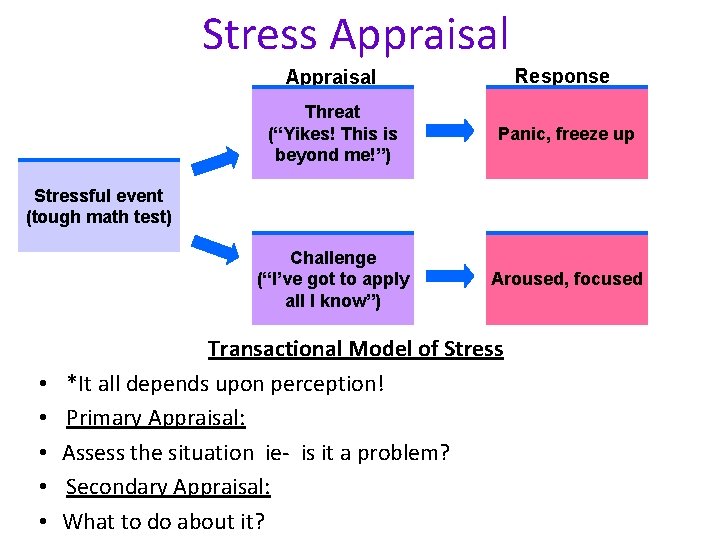
Xavier has a huge math test coming up next Tuesday. Explain two ways appraisal can determine how stress will influence his test performance.
Stress Appraisal Response Threat (“Yikes! This is beyond me!”) Panic, freeze up Challenge (“I’ve got to apply all I know”) Aroused, focused Stressful event (tough math test) • • • Transactional Model of Stress *It all depends upon perception! Primary Appraisal: Assess the situation ie- is it a problem? Secondary Appraisal: What to do about it?
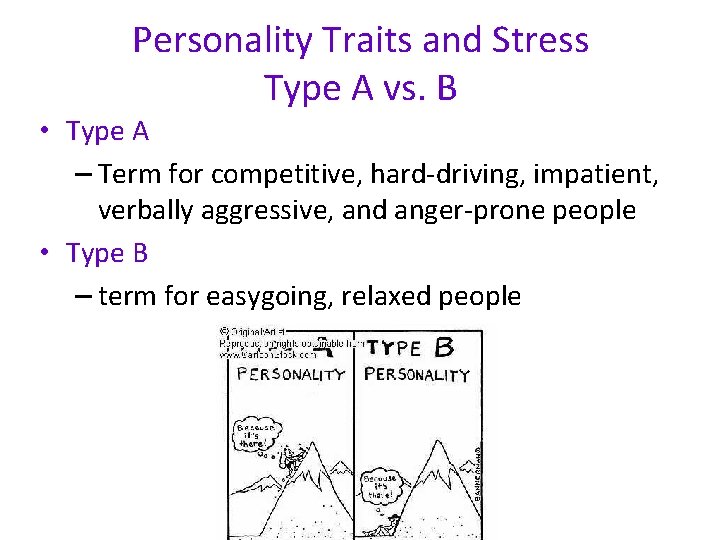
Personality Traits and Stress Type A vs. B • Type A – Term for competitive, hard-driving, impatient, verbally aggressive, and anger-prone people • Type B – term for easygoing, relaxed people
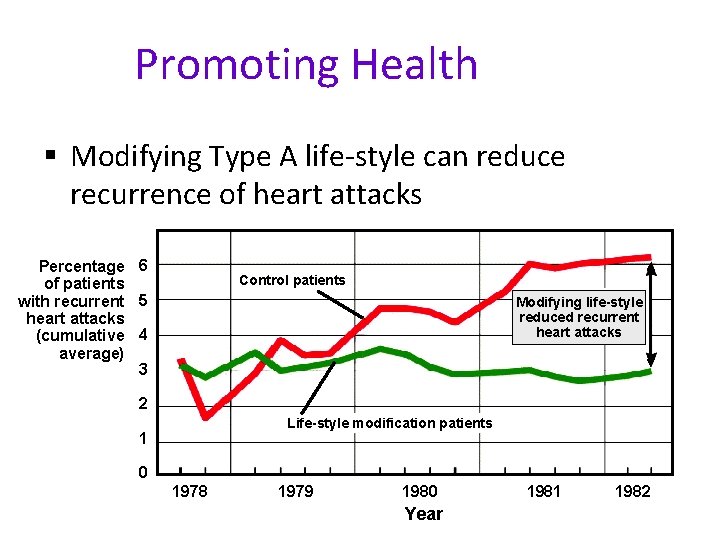
Promoting Health § Modifying Type A life-style can reduce recurrence of heart attacks Percentage 6 of patients with recurrent 5 heart attacks (cumulative 4 average) 3 Control patients Modifying life-style reduced recurrent heart attacks 2 Life-style modification patients 1 0 1978 1979 1980 Year 1981 1982
Personal Factors in Reactions to Stress: Gender Differences § Women more likely to have lasting reactions to traumatic events; at more risk for exposure § Marriage and committed relationships have health benefits § Social buffer against stress § Live healthier, longer lives on average § Loss of spouse affects men more § Maybe marriage is choice of healthier people
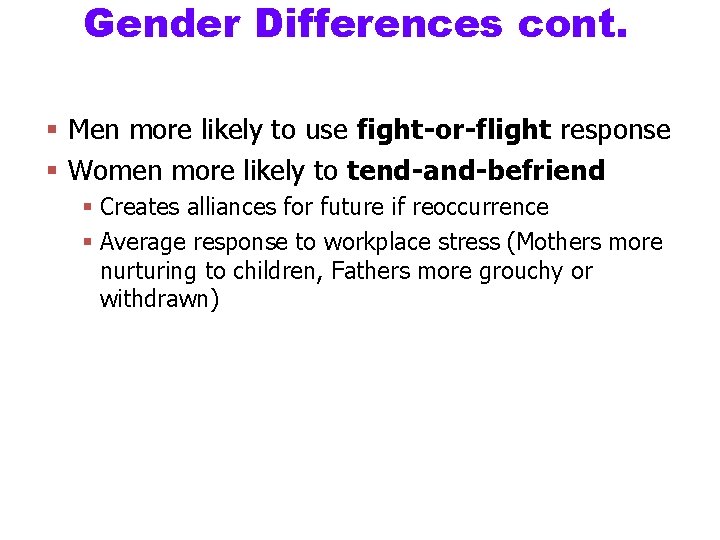
Gender Differences cont. § Men more likely to use fight-or-flight response § Women more likely to tend-and-befriend § Creates alliances for future if reoccurrence § Average response to workplace stress (Mothers more nurturing to children, Fathers more grouchy or withdrawn)
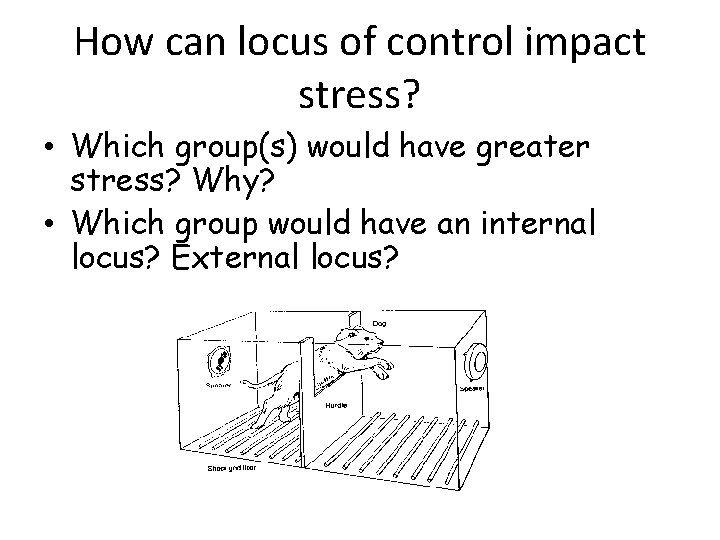
How can locus of control impact stress? • Which group(s) would have greater stress? Why? • Which group would have an internal locus? External locus?
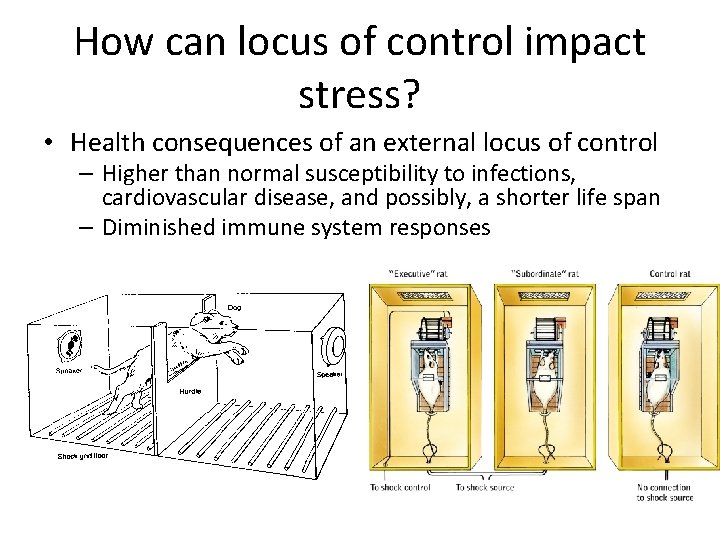
How can locus of control impact stress? • Health consequences of an external locus of control – Higher than normal susceptibility to infections, cardiovascular disease, and possibly, a shorter life span – Diminished immune system responses
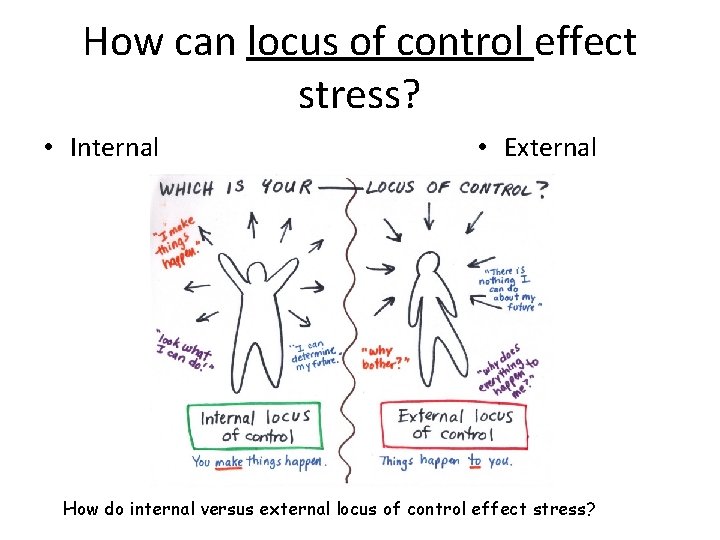
How can locus of control effect stress? • Internal • External How do internal versus external locus of control effect stress?
What can we do to reduce stress related illnesses?
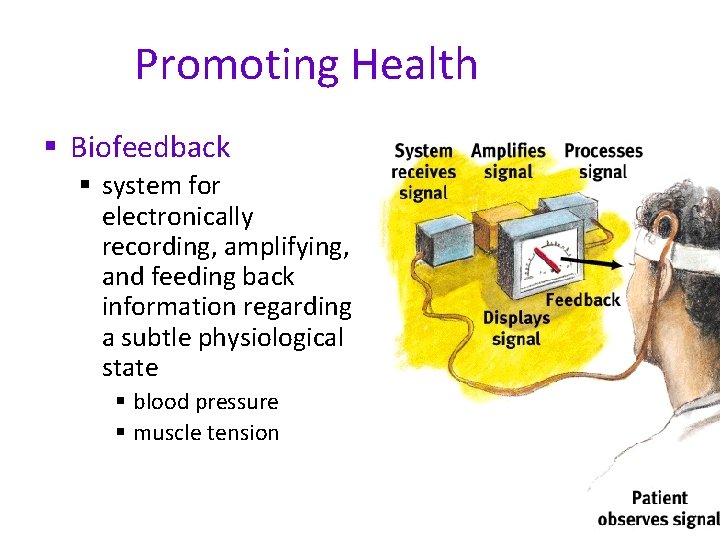
Promoting Health § Biofeedback § system for electronically recording, amplifying, and feeding back information regarding a subtle physiological state § blood pressure § muscle tension
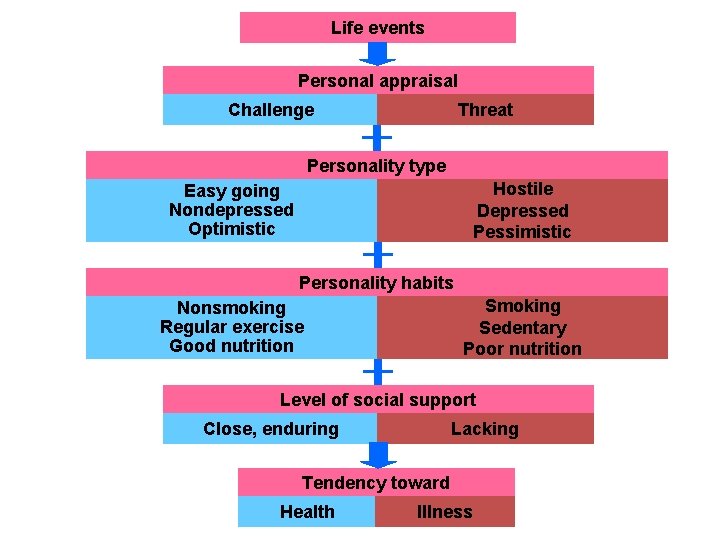
Life events Personal appraisal Challenge Threat Personality type Hostile Depressed Pessimistic Easy going Nondepressed Optimistic Personality habits Smoking Sedentary Poor nutrition Nonsmoking Regular exercise Good nutrition Level of social support Close, enduring Lacking Tendency toward Health Illness
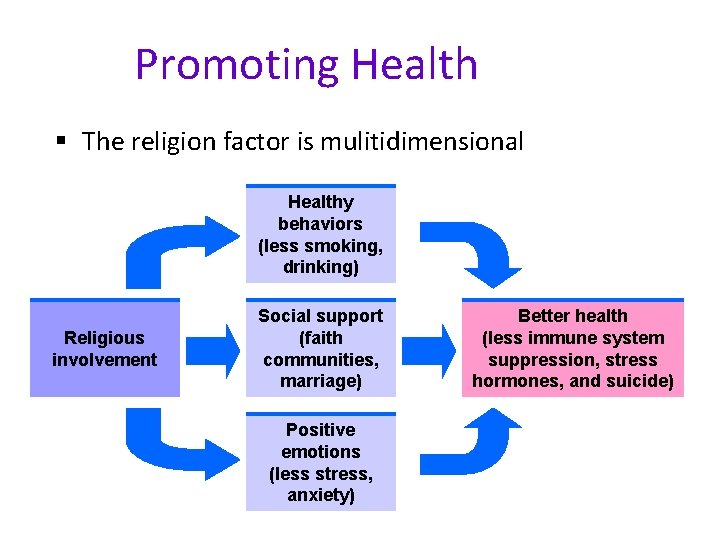
Promoting Health § The religion factor is mulitidimensional Healthy behaviors (less smoking, drinking) Religious involvement Social support (faith communities, marriage) Positive emotions (less stress, anxiety) Better health (less immune system suppression, stress hormones, and suicide)
Promoting Health § Complementary and Alternative Medicine § unproven health care treatments not taught widely in medical schools, not used in hospitals, and not usually reimbursed by insurance companies
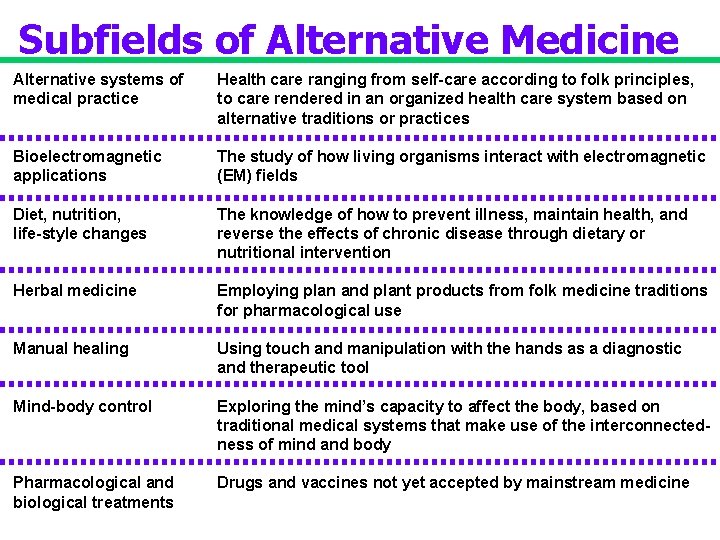
Subfields of Alternative Medicine Alternative systems of medical practice Health care ranging from self-care according to folk principles, to care rendered in an organized health care system based on alternative traditions or practices Bioelectromagnetic applications The study of how living organisms interact with electromagnetic (EM) fields Diet, nutrition, life-style changes The knowledge of how to prevent illness, maintain health, and reverse the effects of chronic disease through dietary or nutritional intervention Herbal medicine Employing plan and plant products from folk medicine traditions for pharmacological use Manual healing Using touch and manipulation with the hands as a diagnostic and therapeutic tool Mind-body control Exploring the mind’s capacity to affect the body, based on traditional medical systems that make use of the interconnectedness of mind and body Pharmacological and biological treatments Drugs and vaccines not yet accepted by mainstream medicine
Discuss… • Certain kinds of stressors change from one generation to another. • 1. Give three reasons for concluding that life was more stressful when your grandparents were young adults than it is now. • 2. Give three examples of how life is more stressful today.
How does stress affect us physically? • http: //www. youtube. com/watch? v=Ry. P 8 L 3 q. T W 9 Q&safety_mode=true&persist_safety_mo de=1 • http: //www. youtube. com/watch? v=c 5 WLPe 54 uk&safety_mode=true&persist_safety_mode =1
Strategies used to cope with stress • Emotional inhibition: suppress bad thoughts or feeling (but by avoiding a thought you are processing it more!) • Confession: sharing private thoughts and feelings with a confident. At first negative feelings increase but shows long term health benefits