
Aim How are ionic compounds formed Do Now
- Slides: 14
Aim: How are ionic compounds formed? Do Now: 1. Draw the Lewis dot structures for Li+1 and O-2. 2. How many electrons does lithium need to lose to have an octet in the outer shell? How many electrons would oxygen need to gain in order to have an octet in the outer shell?
Chemical Bonding • Elements that do not have a complete octet, tend to react. • When the elements react, bonds are formed.
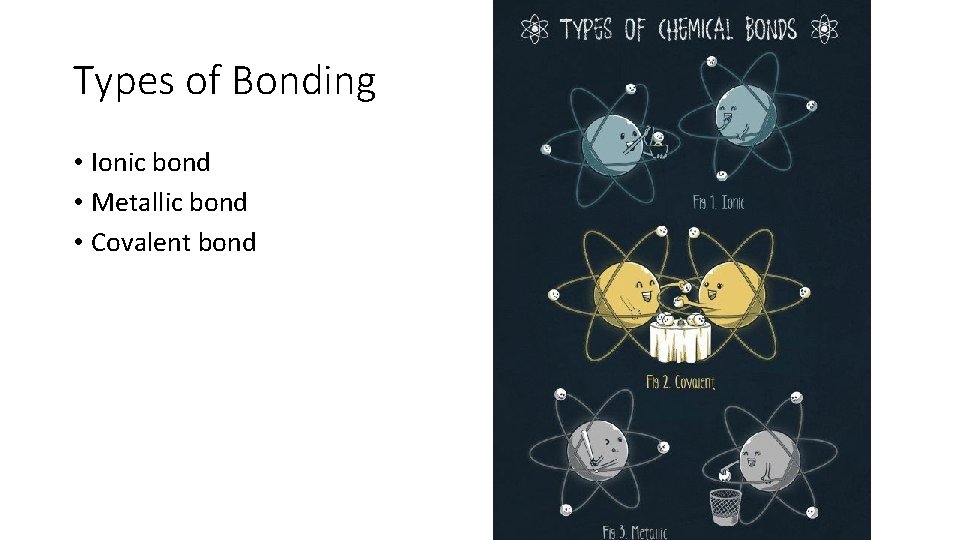
Types of Bonding • Ionic bond • Metallic bond • Covalent bond
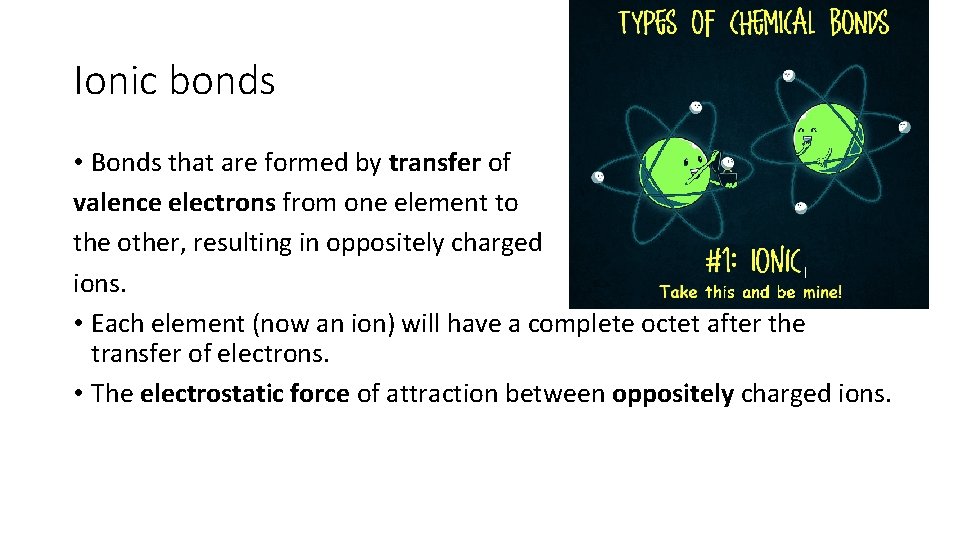
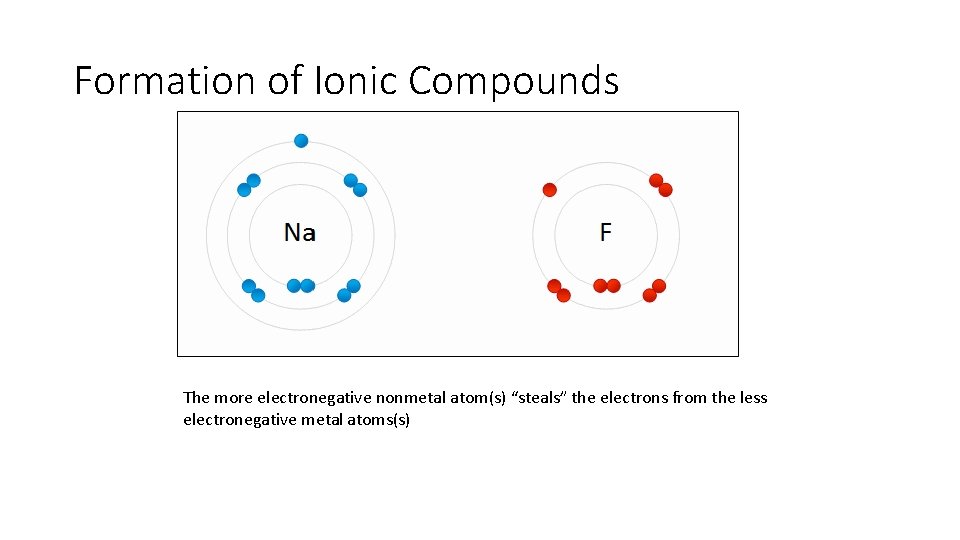
Ionic bonds • Bonds that are formed by transfer of valence electrons from one element to the other, resulting in oppositely charged ions. • Each element (now an ion) will have a complete octet after the transfer of electrons. • The electrostatic force of attraction between oppositely charged ions.
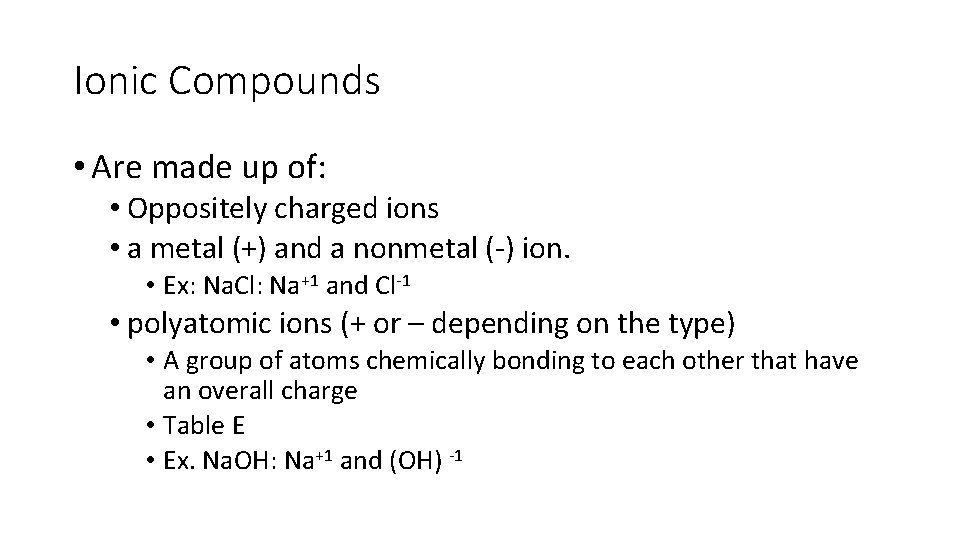
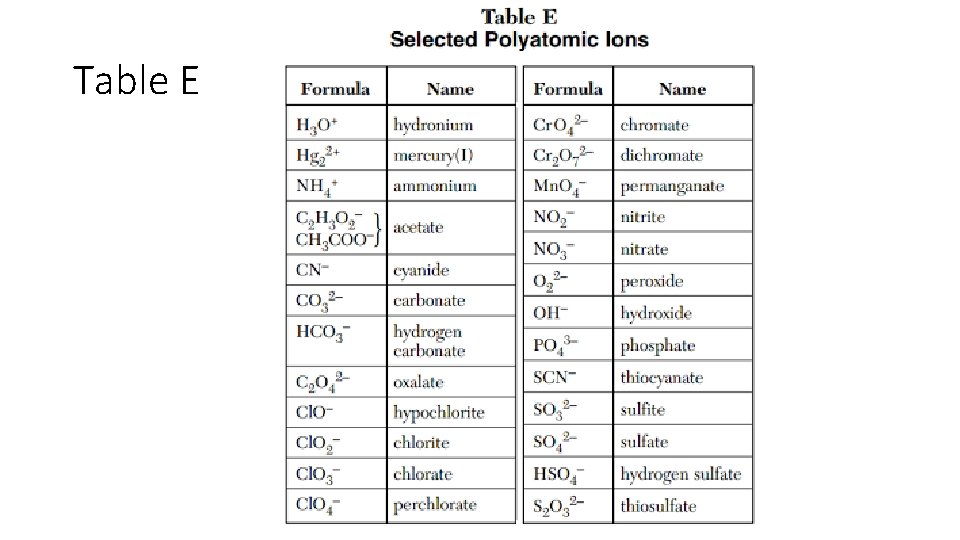
Ionic Compounds • Are made up of: • Oppositely charged ions • a metal (+) and a nonmetal (-) ion. • Ex: Na. Cl: Na+1 and Cl-1 • polyatomic ions (+ or – depending on the type) • A group of atoms chemically bonding to each other that have an overall charge • Table E • Ex. Na. OH: Na+1 and (OH) -1
Table E
Formation of Ionic Compounds The more electronegative nonmetal atom(s) “steals” the electrons from the less electronegative metal atoms(s)
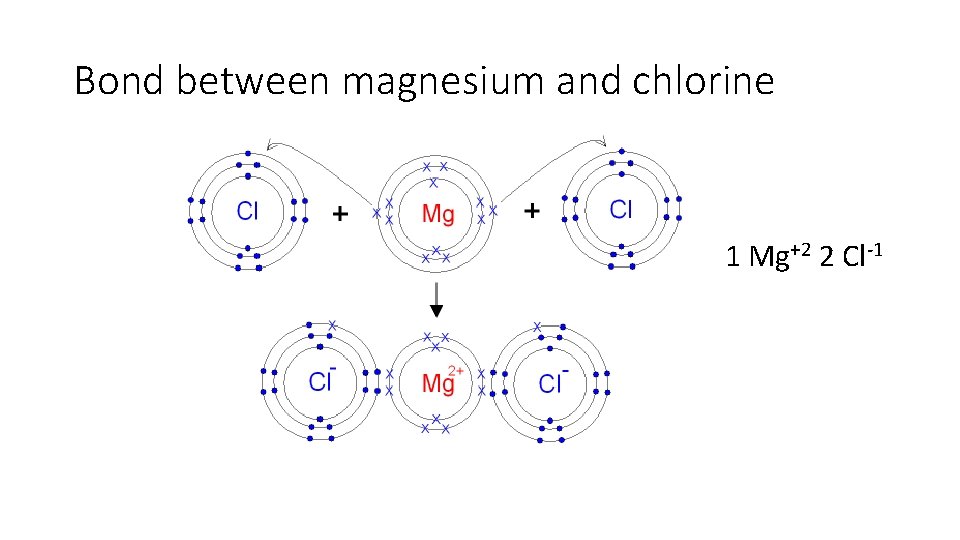
Bond between magnesium and chlorine 1 Mg+2 2 Cl-1
Create a bond between magnesium and nitrogen • Each magnesium gives up 2 electrons, and each nitrogen accepts 3 electrons. Determine how many atoms of magnesium need to react with how many atoms of nitrogen.
Is an Ionic Compound Electrically Neutral or Charged? • ALL compounds are electrically neutral. • The charge of the sum of the ions in the compound must be equal to zero. • Ex: • 1 Na + 1 Cl 1 Na+1 1 Cl-1 1 (+1) + 1 (-1) = 0 • 3 Mg + 2 N 3 Mg+2 2 N-3 3 (+2) + 2 (-3) = 0
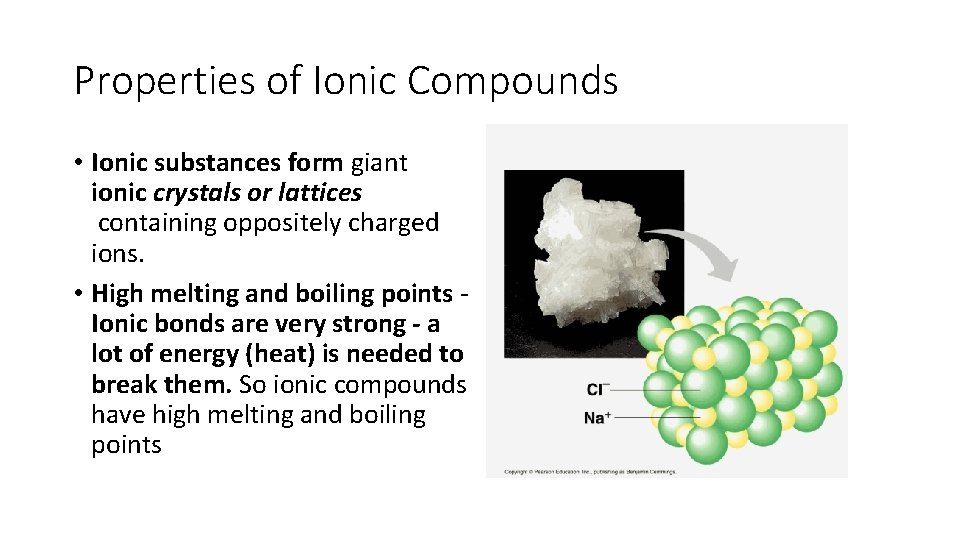
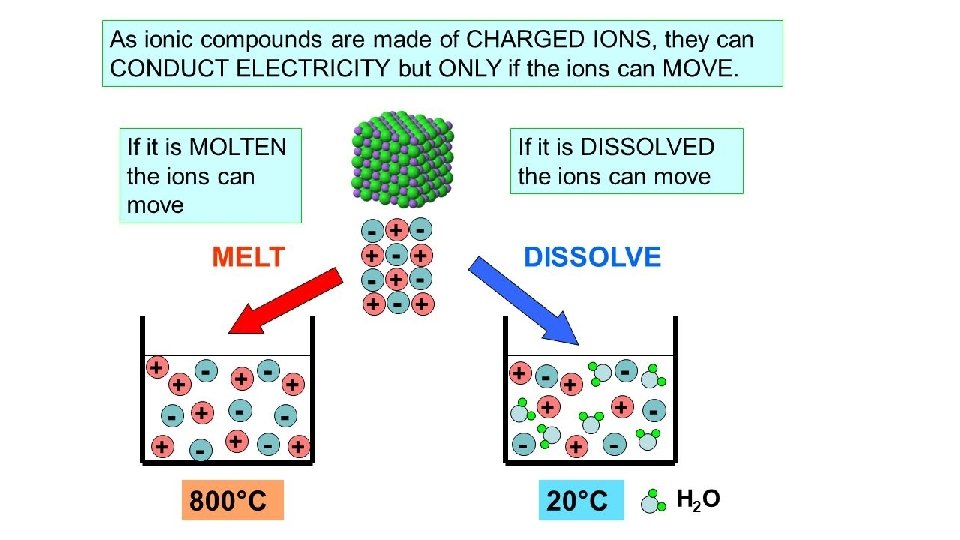
Properties of Ionic Compounds • Ionic substances form giant ionic crystals or lattices containing oppositely charged ions. • High melting and boiling points - Ionic bonds are very strong - a lot of energy (heat) is needed to break them. So ionic compounds have high melting and boiling points
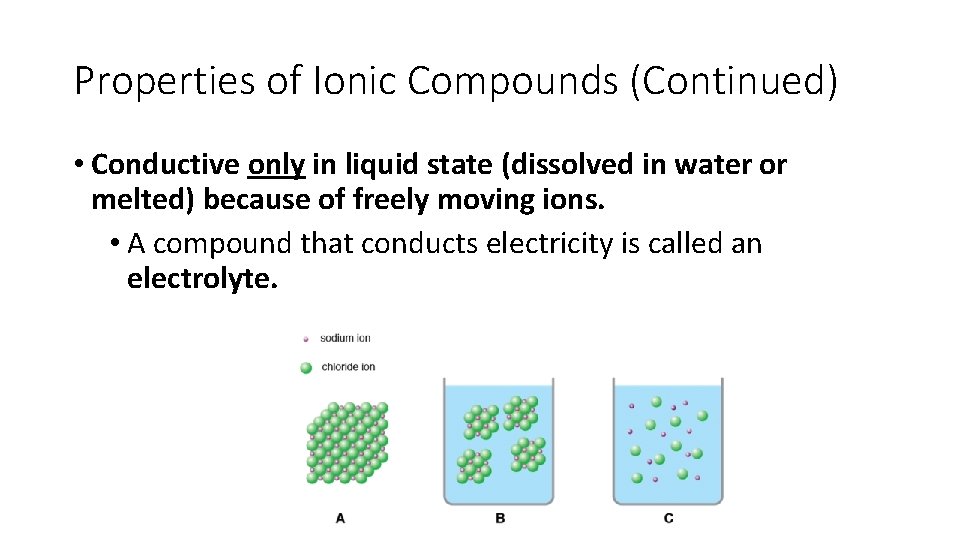
Properties of Ionic Compounds (Continued) • Conductive only in liquid state (dissolved in water or melted) because of freely moving ions. • A compound that conducts electricity is called an electrolyte.
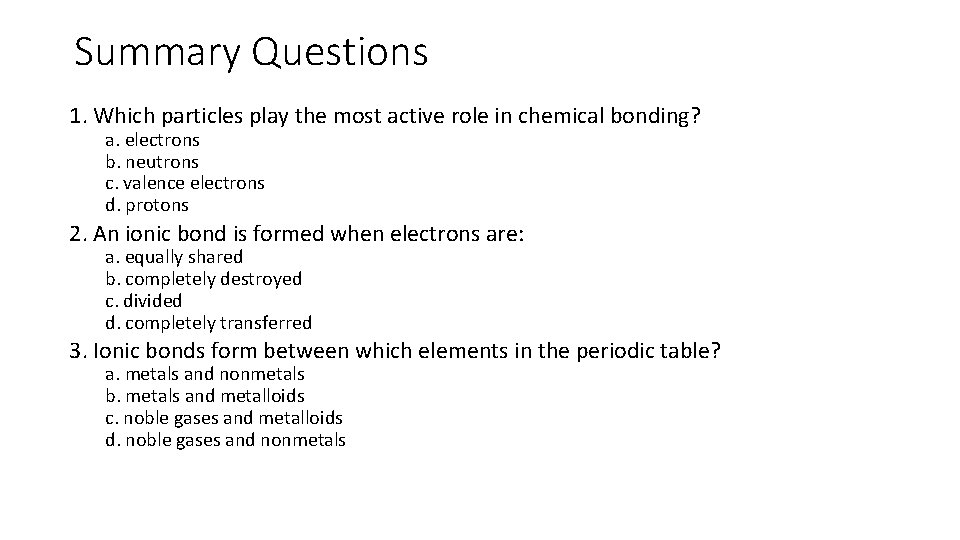
Summary Questions 1. Which particles play the most active role in chemical bonding? a. electrons b. neutrons c. valence electrons d. protons 2. An ionic bond is formed when electrons are: a. equally shared b. completely destroyed c. divided d. completely transferred 3. Ionic bonds form between which elements in the periodic table? a. metals and nonmetals b. metals and metalloids c. noble gases and metalloids d. noble gases and nonmetals