
Aim Does Russia owe its heritage to the
- Slides: 14
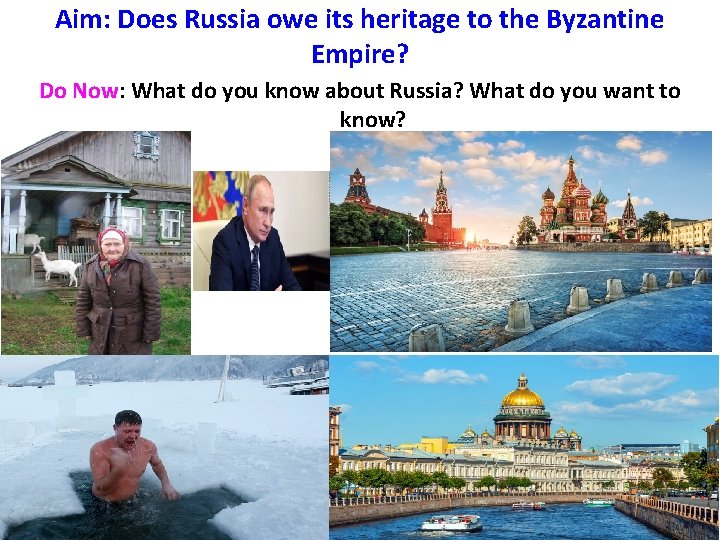
Aim: Does Russia owe its heritage to the Byzantine Empire? Do Now: What do you know about Russia? What do you want to know?
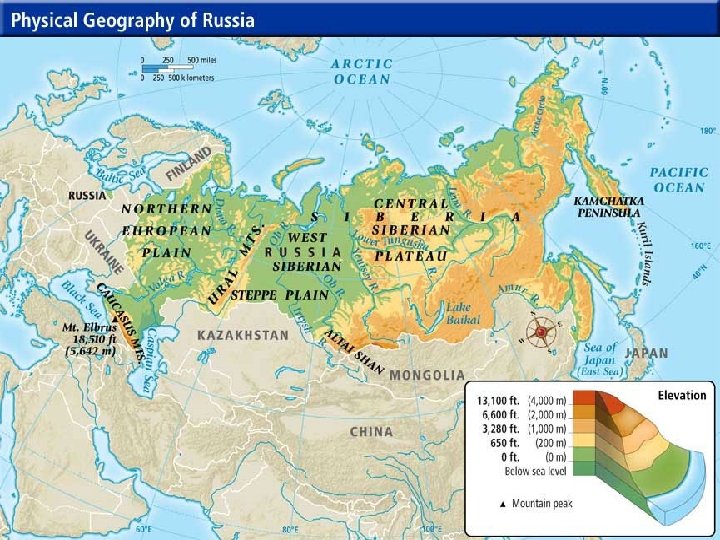
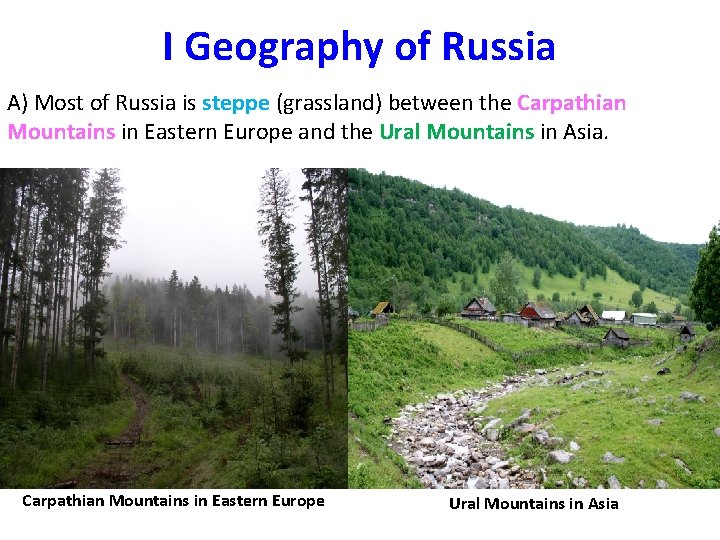
I Geography of Russia A) Most of Russia is steppe (grassland) between the Carpathian Mountains in Eastern Europe and the Ural Mountains in Asia. Carpathian Mountains in Eastern Europe Ural Mountains in Asia
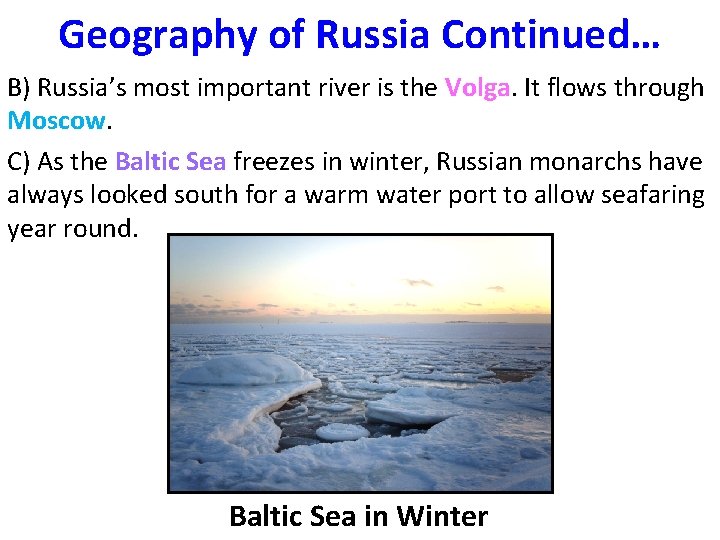
Geography of Russia Continued… B) Russia’s most important river is the Volga. It flows through Moscow. C) As the Baltic Sea freezes in winter, Russian monarchs have always looked south for a warm water port to allow seafaring year round. Baltic Sea in Winter
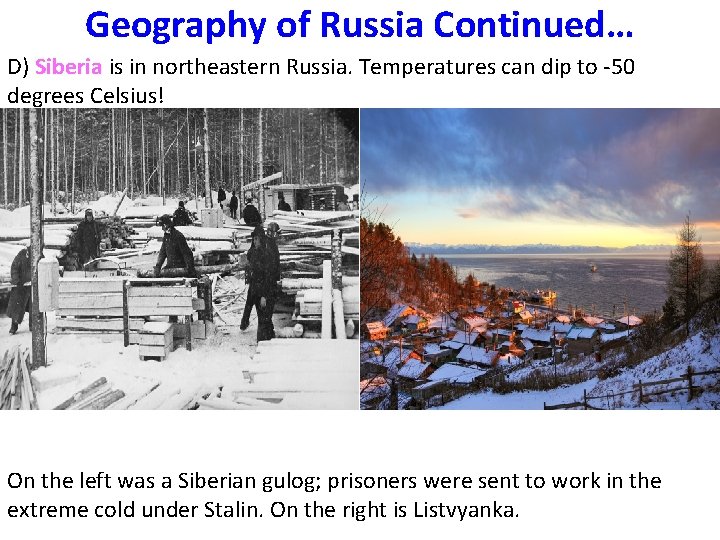
Geography of Russia Continued… D) Siberia is in northeastern Russia. Temperatures can dip to -50 degrees Celsius! On the left was a Siberian gulog; prisoners were sent to work in the extreme cold under Stalin. On the right is Listvyanka.
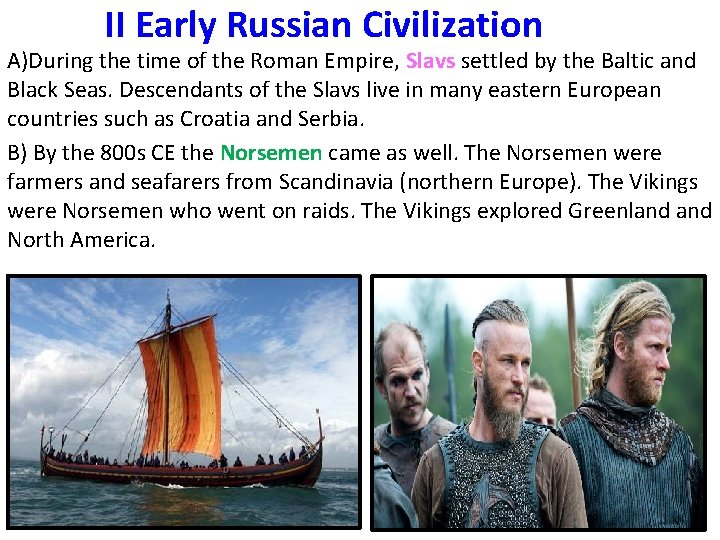
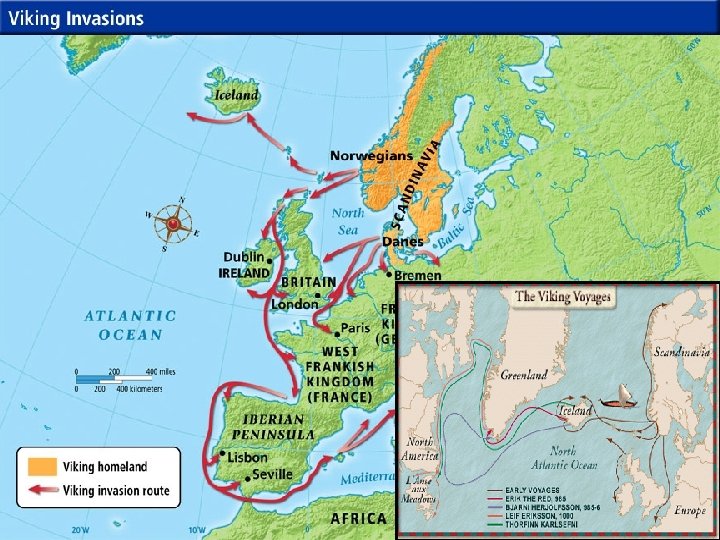
II Early Russian Civilization A)During the time of the Roman Empire, Slavs settled by the Baltic and Black Seas. Descendants of the Slavs live in many eastern European countries such as Croatia and Serbia. B) By the 800 s CE the Norsemen came as well. The Norsemen were farmers and seafarers from Scandinavia (northern Europe). The Vikings were Norsemen who went on raids. The Vikings explored Greenland North America.
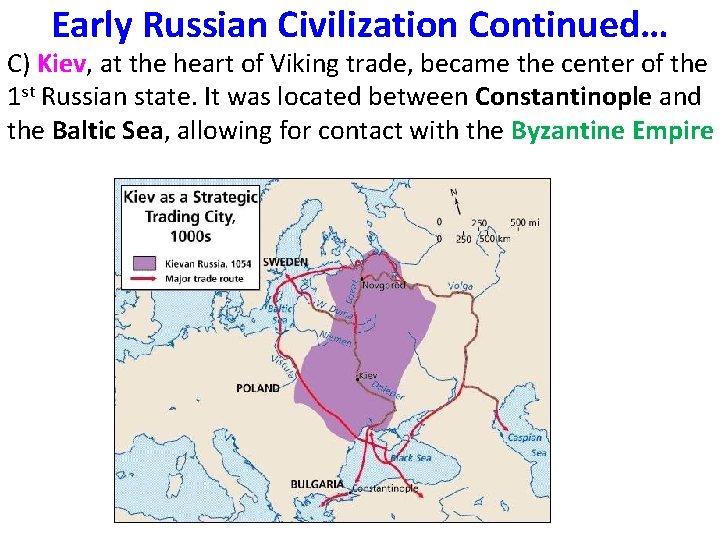
Early Russian Civilization Continued… C) Kiev, at the heart of Viking trade, became the center of the 1 st Russian state. It was located between Constantinople and the Baltic Sea, allowing for contact with the Byzantine Empire
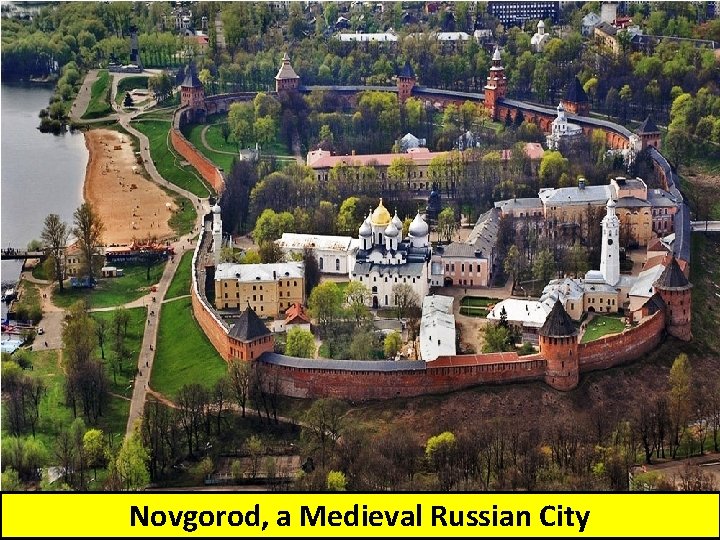
Novgorod, a Medieval Russian City
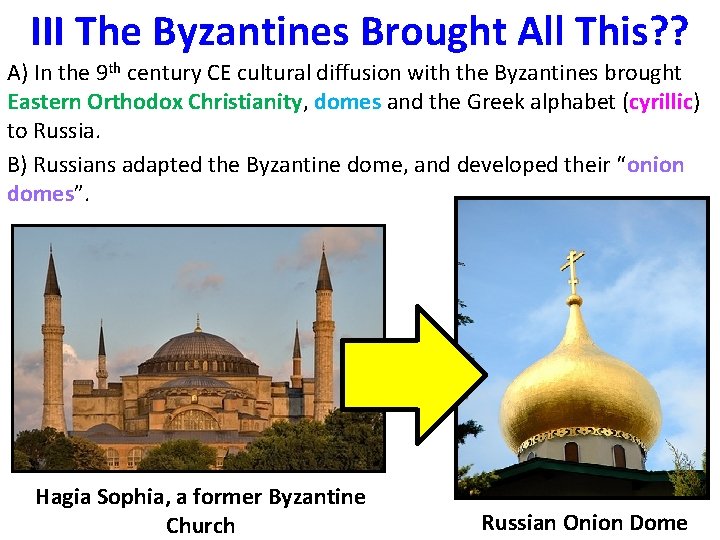
III The Byzantines Brought All This? ? A) In the 9 th century CE cultural diffusion with the Byzantines brought Eastern Orthodox Christianity, domes and the Greek alphabet (cyrillic) to Russia. B) Russians adapted the Byzantine dome, and developed their “onion domes”. Hagia Sophia, a former Byzantine Church Russian Onion Dome
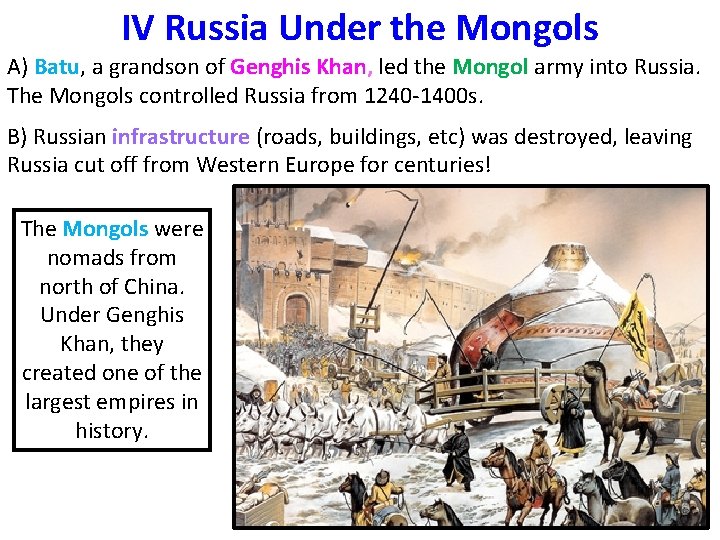
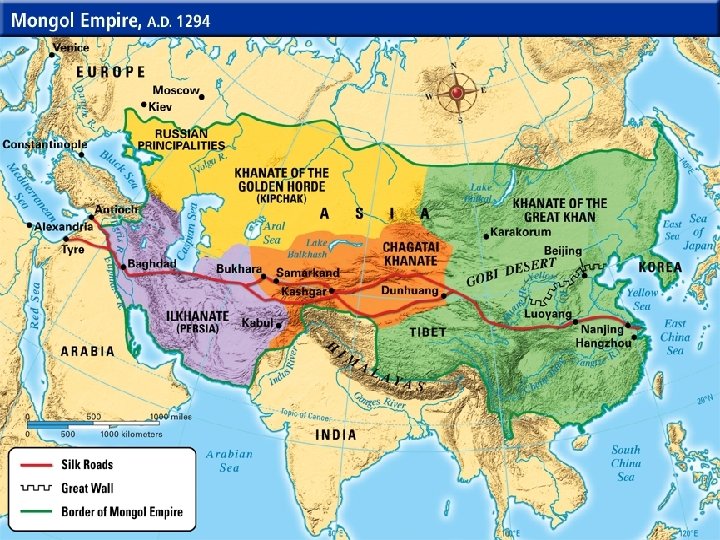
IV Russia Under the Mongols A) Batu, a grandson of Genghis Khan, led the Mongol army into Russia. The Mongols controlled Russia from 1240 -1400 s. B) Russian infrastructure (roads, buildings, etc) was destroyed, leaving Russia cut off from Western Europe for centuries! The Mongols were nomads from north of China. Under Genghis Khan, they created one of the largest empires in history.
Summary Questions 1. How did Russia’s geography positively affect Russian civilization? How did it negatively affect Russian civilization? 2. Where and how did early Russian civilization begin? What was the impact of the Slavs and Vikings in Russia’s development? 3. How did the Byzantine Empire impact Russian civilization? 4. How did the Mongols impact Russian civilization? 5. Was early Russian civilization more similar or different from the Byzantine Empire? How do you know?
Key Vocabulary ü ü ü Baltic Sea Batu Byzantine Empire Carpathian Mountains Cyrillic Alphabet Eastern Orthodox Christianity Kiev Mongols Moscow Norsemen Onion Domes Siberia ü ü ü Slavs Steppe Ural Mountains Vikings Volga River Warm Water Port