
Ailimentary Canal Gastrointestinal GI tract tube that the
![Ailimentary Canal (Gastrointestinal [GI] tract) – tube that the food passes through Mouth pharynx](https://slidetodoc.com/presentation_image_h2/61999ecfd3352fe9d8e16e1890910faa/image-1.jpg "Ailimentary Canal (Gastrointestinal [GI] tract) – tube that the food passes through Mouth pharynx")
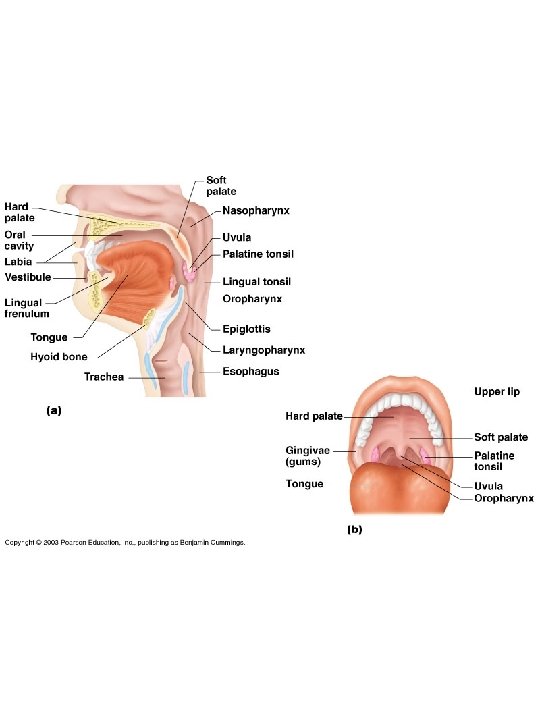
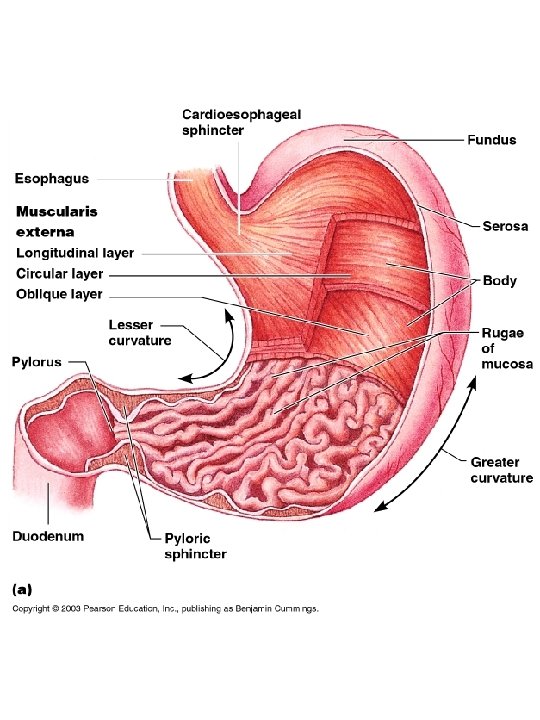
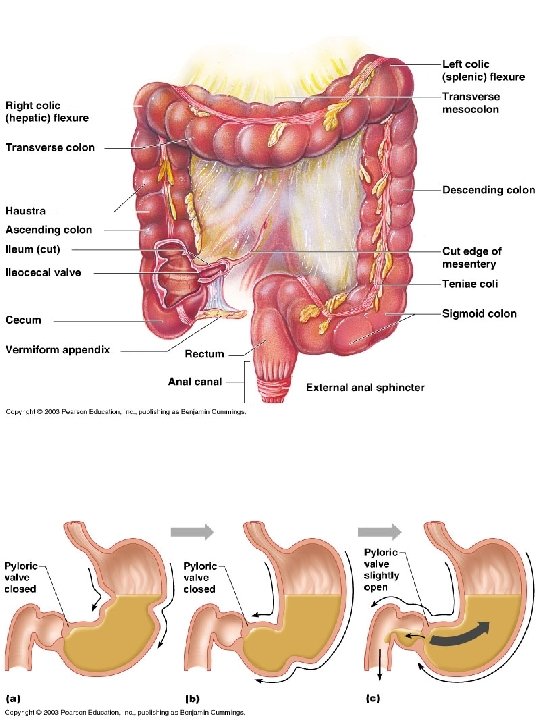
Ailimentary Canal (Gastrointestinal [GI] tract) – tube that the food passes through Mouth pharynx esophagus stomach small intestine large intestine anus Assesory digestive organs Teeth, tongue, salivary glands, pancreas, liver, gallbladder Mouth and Throat Teeth – cut and grind the food Tongue – mixes food and saliva(amylase), forms bolus, swallowing, taste buds Pharynx – back of mouth where nasal cavities and mouth meet Esophagus – collapsible tube that connects the mouth and stomach Stomach – cardiac sphincter keeps food from re-entering esophagus causing “heartburn” or acid reflux stomach is 6 -10 inches long can hold about 1 gallon has circular, longitudinal, and oblique muscles to churn food and mix with gastric juices – HCl, pepsin (proteins), intrinsic factor (B 12) food leaves as chyme – a creamy slurry pyloric sphincter – “gatekeeper” - controls when food leaves the stomach 4 -6 hours for meal to leave stomach Gallbladder –collects bile from the liver which breaks down RBC’s Water removed – Gallstones form out of cholesterol Blockage causes bilirubin to back into blood stream causing jaundice.
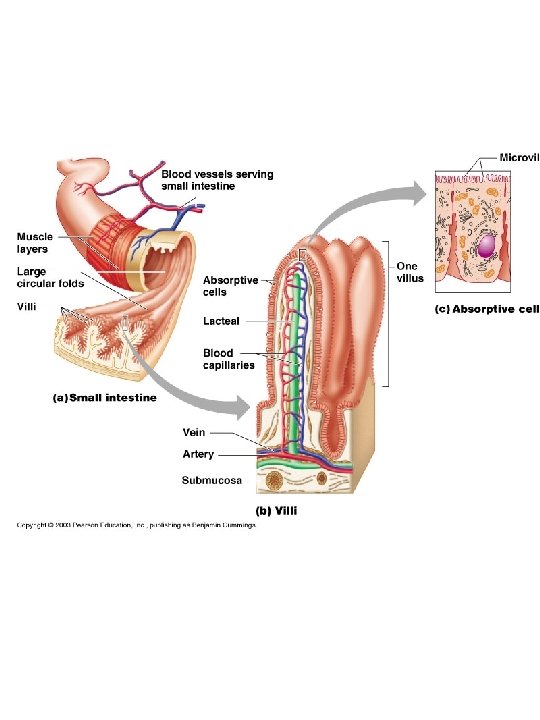
Gall bladder contracts and Bile is secreted to duodenum – emulsifies the fats, allows fat-soluble vitamins to be absorbed Pancreas – secrete pancreatic juices that digest the protein, fats, NA’s, and CHO’s -They are alkaline and lower the acidic p. H Secretes insulin – when hyper glycemic Diabetes Type I and Type II – insulin glucagon - hypoglycemic Small intestine – 7 to 13 feet long – small not short duodenum – 12 finger lengths – 5% of SI jejunum – “empty” - almost 37% ileum – “twisted intestine” – almost 58% Villi, micro villi, and Peyer’s patches Large Intestine – 5 ft, Absorb water into the body and eliminate waste products Cecum/appendix colon(ascending, transverse, descending), sigmoid colon, rectum, anal canal No villi, lots of mucus Anus has externalvoluntary sphincter and internal involuntary sphincter Messentery holds intestines in place Mesenteric veins carry food to hepatic veins which carry nutrients to the liver to be stored.
- Slides: 6