
AIA Update on Integrated Project Delivery Lean Construction



- Slides: 47
AIA Update on Integrated Project Delivery Lean Construction Institute Design Forum January 8 2009 Markku Allison, AIA 1
position statement | 2007 2
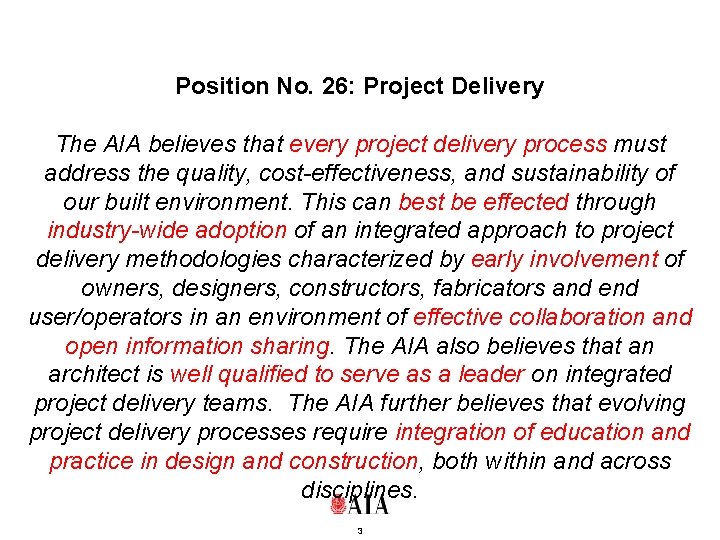
Position No. 26: Project Delivery The AIA believes that every project delivery process must address the quality, cost-effectiveness, and sustainability of our built environment. This can best be effected through industry-wide adoption of an integrated approach to project delivery methodologies characterized by early involvement of owners, designers, constructors, fabricators and end user/operators in an environment of effective collaboration and open information sharing. The AIA also believes that an architect is well qualified to serve as a leader on integrated project delivery teams. The AIA further believes that evolving project delivery processes require integration of education and practice in design and construction, both within and across disciplines. 3
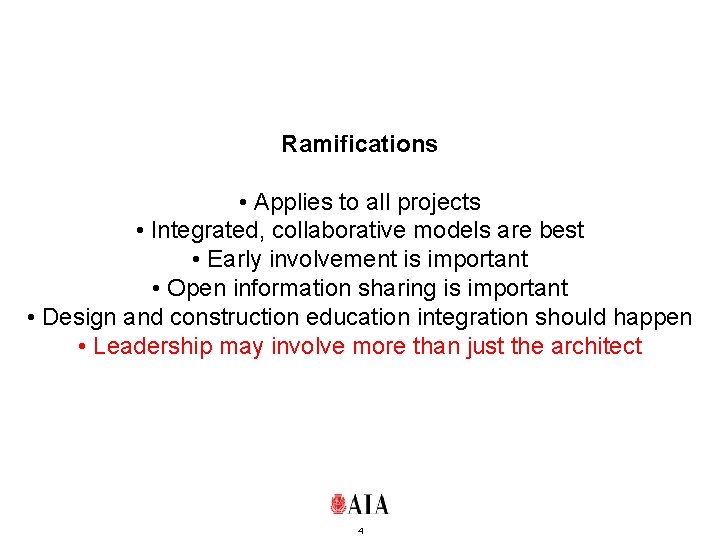
Ramifications • Applies to all projects • Integrated, collaborative models are best • Early involvement is important • Open information sharing is important • Design and construction education integration should happen • Leadership may involve more than just the architect 4
sea change for the Institute 5
integrated project delivery guide | 2007. 11. 05 6
Principles of Integrated Project Delivery (general) Mutual Respect and Trust Mutual Benefit and Reward Collaborative Innovation and Decision Making Early Involvement of Key Participants Early Goal Definition Intensified Planning Open Communication Appropriate Technology Organization and Leadership ipdg | key ideas 7
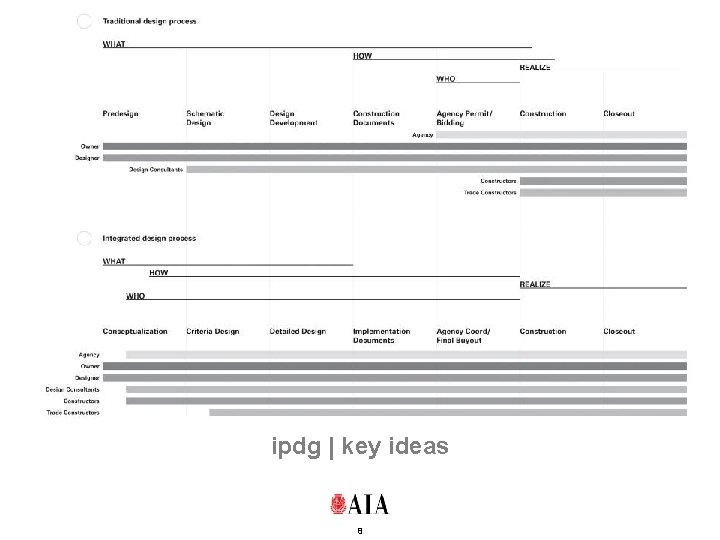
ipdg | key ideas 8
IPD principles can be applied to a variety of contractual arrangements ipdg | key ideas 9
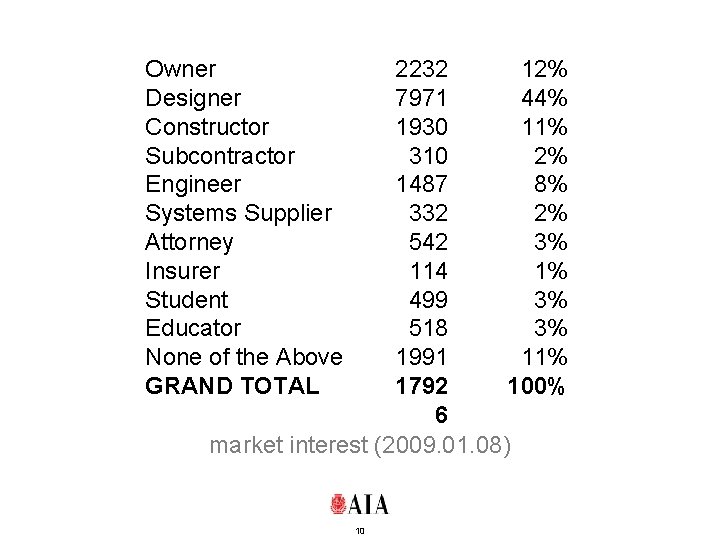
Owner Designer Constructor Subcontractor Engineer Systems Supplier Attorney Insurer Student Educator None of the Above GRAND TOTAL 2232 12% 7971 44% 1930 11% 310 2% 1487 8% 332 2% 542 3% 114 1% 499 3% 518 3% 1991 11% 1792 100% 6 market interest (2009. 01. 08) 10
research 11
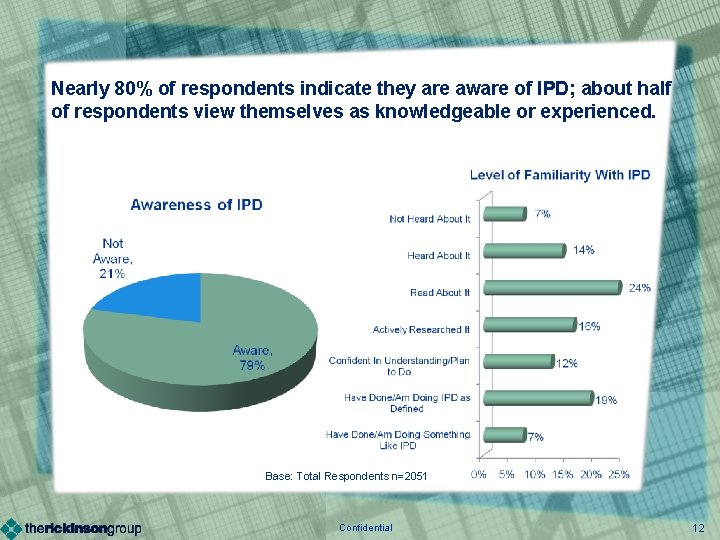
Nearly 80% of respondents indicate they are aware of IPD; about half of respondents view themselves as knowledgeable or experienced. Base: Total Respondents n=2051 Confidential 12
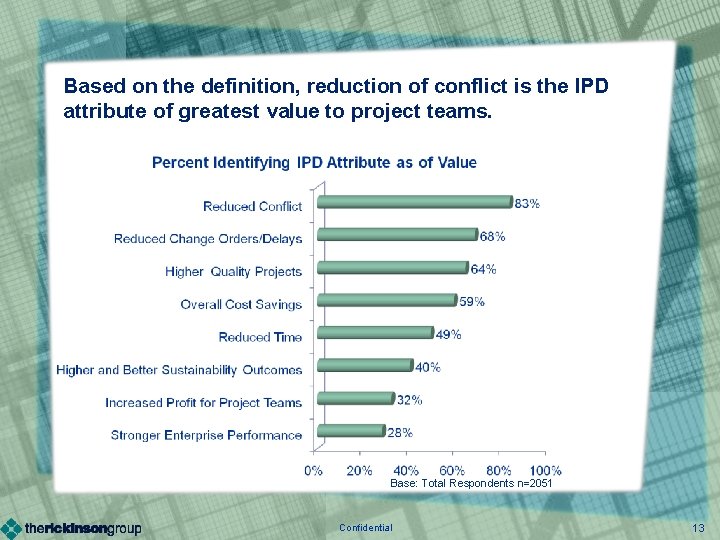
Based on the definition, reduction of conflict is the IPD attribute of greatest value to project teams. Base: Total Respondents n=2051 Confidential 13
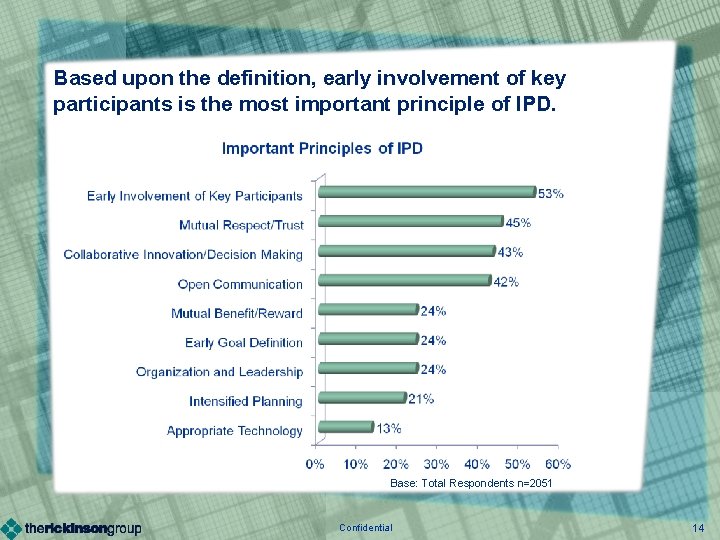
Based upon the definition, early involvement of key participants is the most important principle of IPD. Base: Total Respondents n=2051 Confidential 14
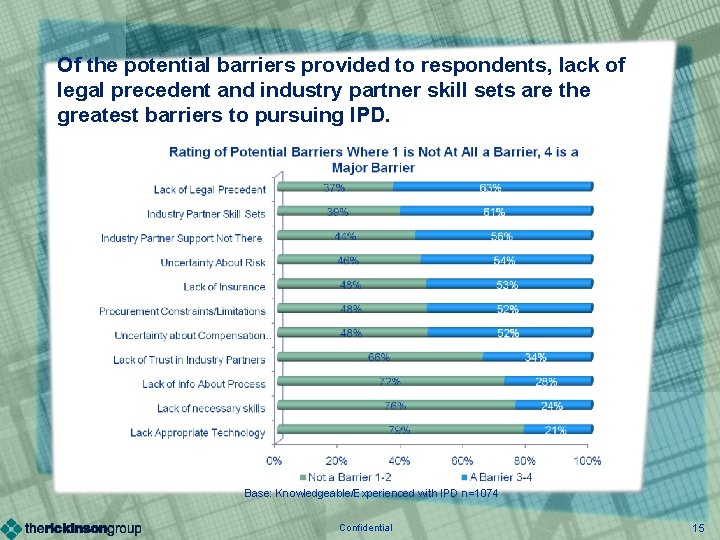
Of the potential barriers provided to respondents, lack of legal precedent and industry partner skill sets are the greatest barriers to pursuing IPD. Base: Knowledgeable/Experienced with IPD n=1074 Confidential 15
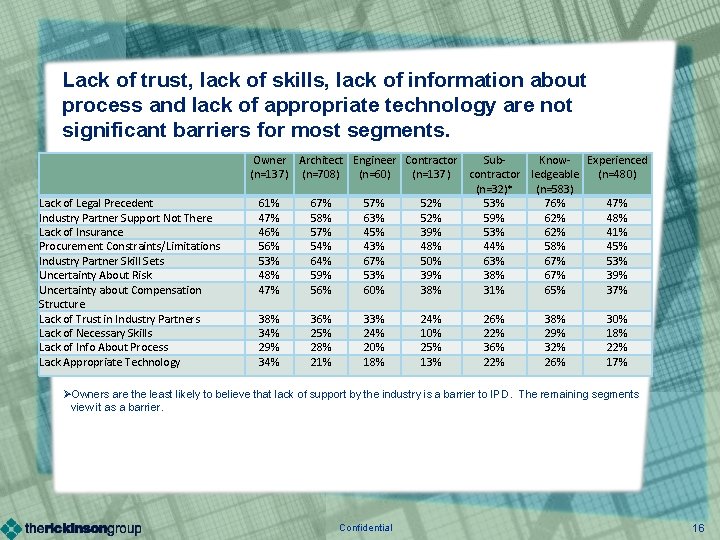
Lack of trust, lack of skills, lack of information about process and lack of appropriate technology are not significant barriers for most segments. Lack of Legal Precedent Industry Partner Support Not There Lack of Insurance Procurement Constraints/Limitations Industry Partner Skill Sets Uncertainty About Risk Uncertainty about Compensation Structure Lack of Trust in Industry Partners Lack of Necessary Skills Lack of Info About Process Lack Appropriate Technology Owner Architect Engineer Contractor Sub. Know- Experienced (n=137) (n=708) (n=60) (n=137) contractor ledgeable (n=480) (n=32)* (n=583) 61% 67% 52% 53% 76% 47% 58% 63% 52% 59% 62% 48% 46% 57% 45% 39% 53% 62% 41% 56% 54% 43% 48% 44% 58% 45% 53% 64% 67% 50% 63% 67% 53% 48% 59% 53% 39% 38% 67% 39% 47% 56% 60% 38% 31% 65% 37% 38% 34% 29% 34% 36% 25% 28% 21% 33% 24% 20% 18% 24% 10% 25% 13% 26% 22% 38% 29% 32% 26% 30% 18% 22% 17% ØOwners are the least likely to believe that lack of support by the industry is a barrier to IPD. The remaining segments view it as a barrier. Confidential 16
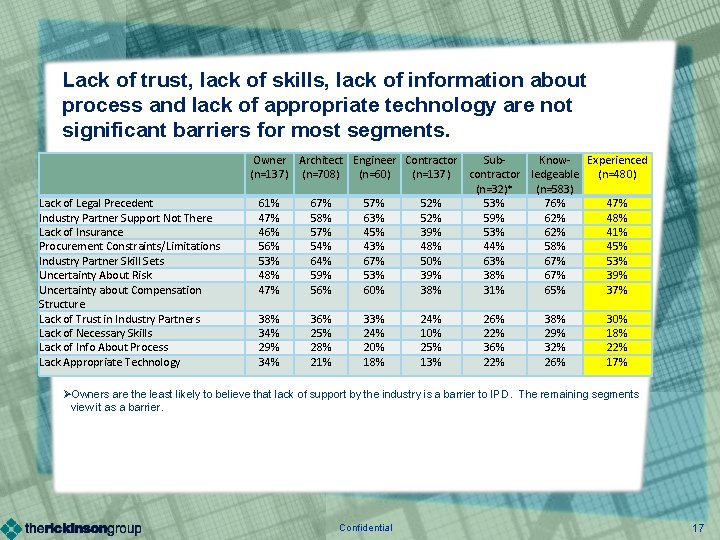
Lack of trust, lack of skills, lack of information about process and lack of appropriate technology are not significant barriers for most segments. Lack of Legal Precedent Industry Partner Support Not There Lack of Insurance Procurement Constraints/Limitations Industry Partner Skill Sets Uncertainty About Risk Uncertainty about Compensation Structure Lack of Trust in Industry Partners Lack of Necessary Skills Lack of Info About Process Lack Appropriate Technology Owner Architect Engineer Contractor Sub. Know- Experienced (n=137) (n=708) (n=60) (n=137) contractor ledgeable (n=480) (n=32)* (n=583) 61% 67% 52% 53% 76% 47% 58% 63% 52% 59% 62% 48% 46% 57% 45% 39% 53% 62% 41% 56% 54% 43% 48% 44% 58% 45% 53% 64% 67% 50% 63% 67% 53% 48% 59% 53% 39% 38% 67% 39% 47% 56% 60% 38% 31% 65% 37% 38% 34% 29% 34% 36% 25% 28% 21% 33% 24% 20% 18% 24% 10% 25% 13% 26% 22% 38% 29% 32% 26% 30% 18% 22% 17% ØOwners are the least likely to believe that lack of support by the industry is a barrier to IPD. The remaining segments view it as a barrier. Confidential 17
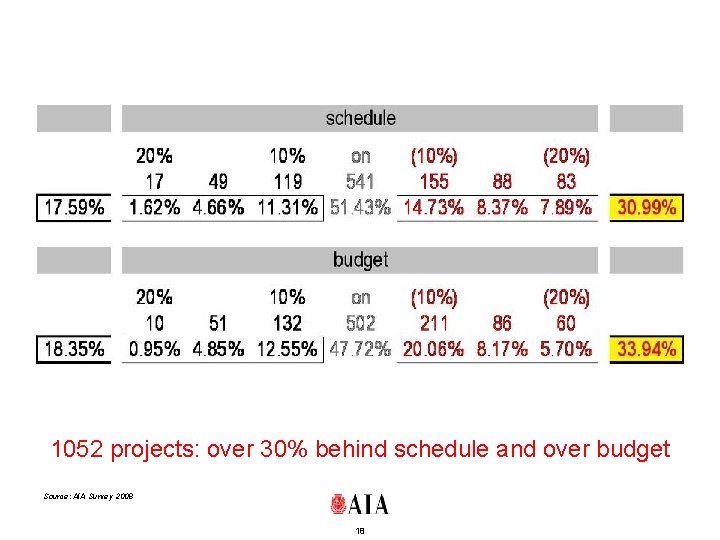
1052 projects: over 30% behind schedule and over budget Source: AIA Survey 2008 18
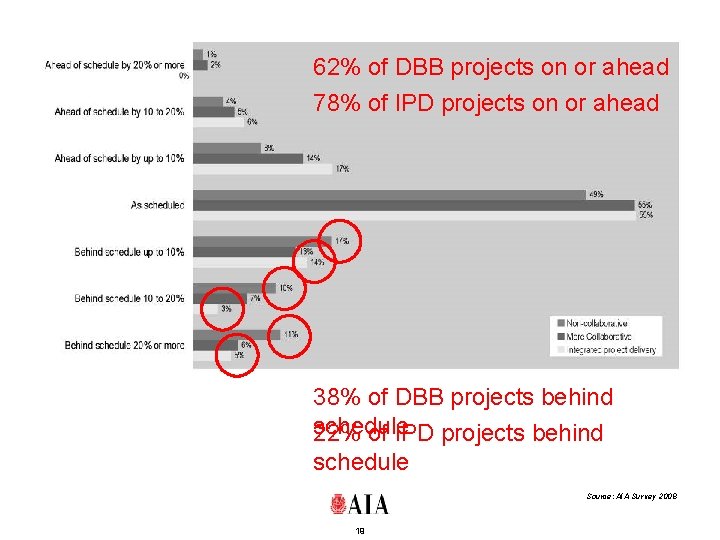
62% of DBB projects on or ahead 78% of IPD projects on or ahead 38% of DBB projects behind schedule 22% of IPD projects behind schedule Source: AIA Survey 2008 19
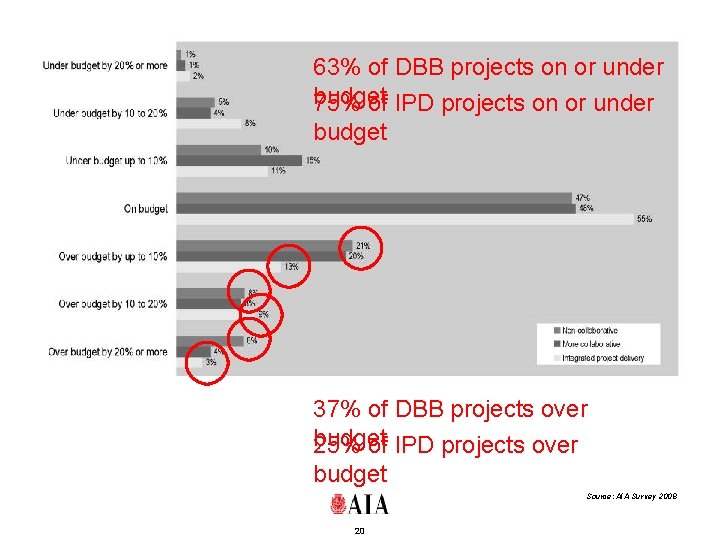
63% of DBB projects on or under budget 75% of IPD projects on or under budget 37% of DBB projects over budget 25% of IPD projects over budget Source: AIA Survey 2008 20
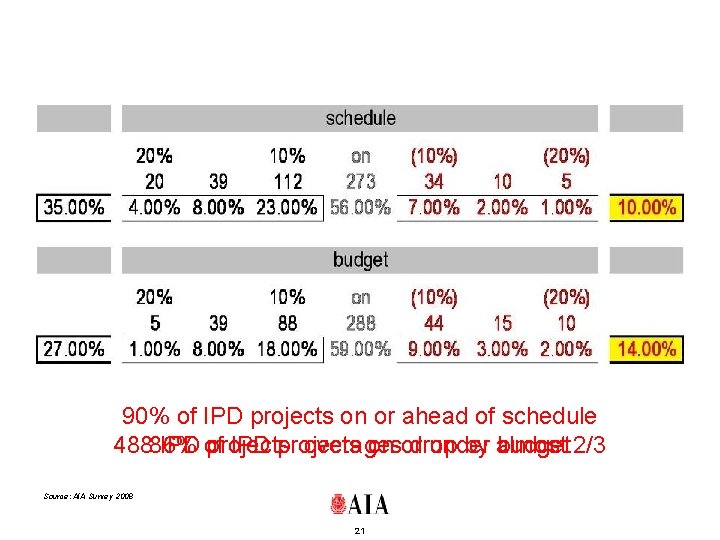
90% of IPD projects on or ahead of schedule 48886% IPD of projects: overages drop by almost IPD projects on or under budget 2/3 Source: AIA Survey 2008 21
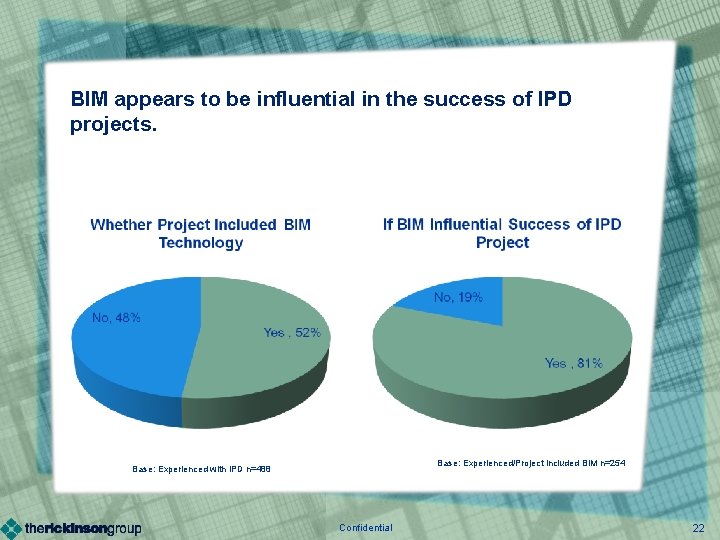
BIM appears to be influential in the success of IPD projects. Base: Experienced/Project included BIM n=254 Base: Experienced with IPD n=488 Confidential 22
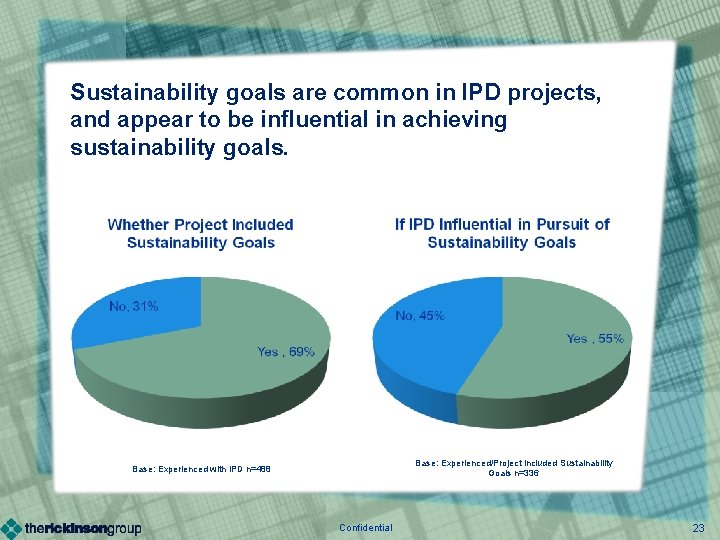
Sustainability goals are common in IPD projects, and appear to be influential in achieving sustainability goals. Base: Experienced/Project included Sustainability Goals n=336 Base: Experienced with IPD n=488 Confidential 23
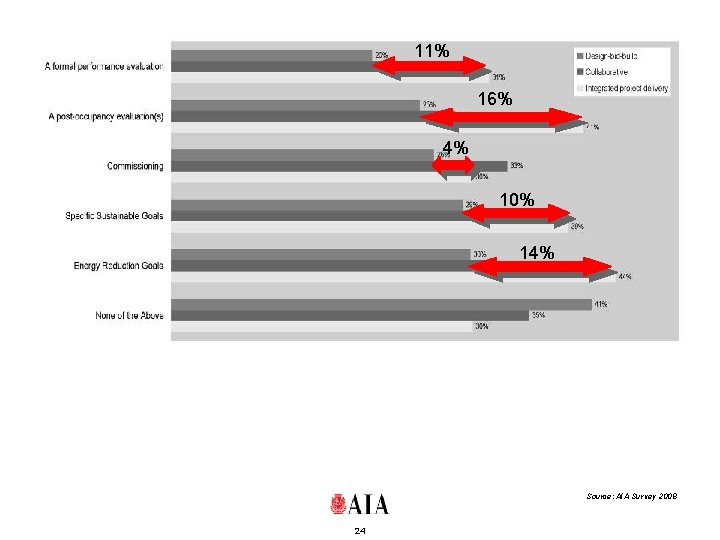
11% 16% 4% 10% 14% Source: AIA Survey 2008 24
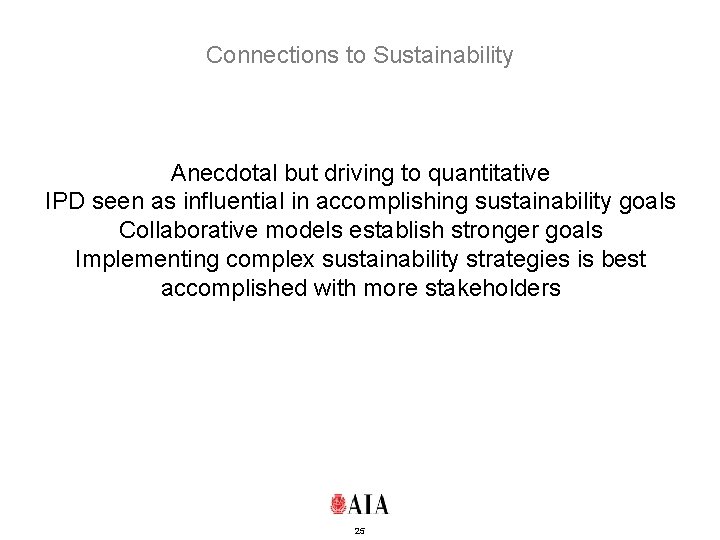
Connections to Sustainability Anecdotal but driving to quantitative IPD seen as influential in accomplishing sustainability goals Collaborative models establish stronger goals Implementing complex sustainability strategies is best accomplished with more stakeholders 25
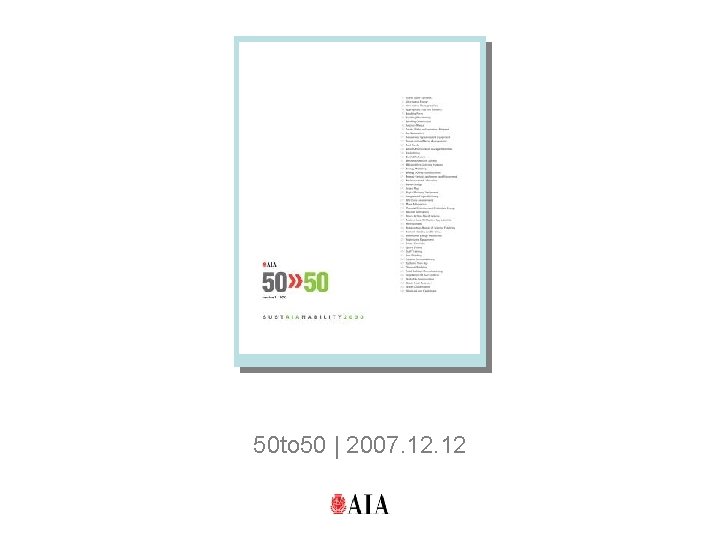
50 to 50 | 2007. 12 26
50 specific strategies to move toward carbon reduction. A how-to resource for practitioners and others. Text, diagrams, and images. 50 to 50 27
agreements 28
IPD Agreements – Two Approaches Transitional Forms | B 195, A 295 More recognizable, familiar Utilizes GMP contract with pre-construction services Immediately familiar and usable within today’s environment SPE – Full Integration | C 195 More provocative, unique approach Single Purpose Entity (Limited Liability Company) All for one and one for all 29
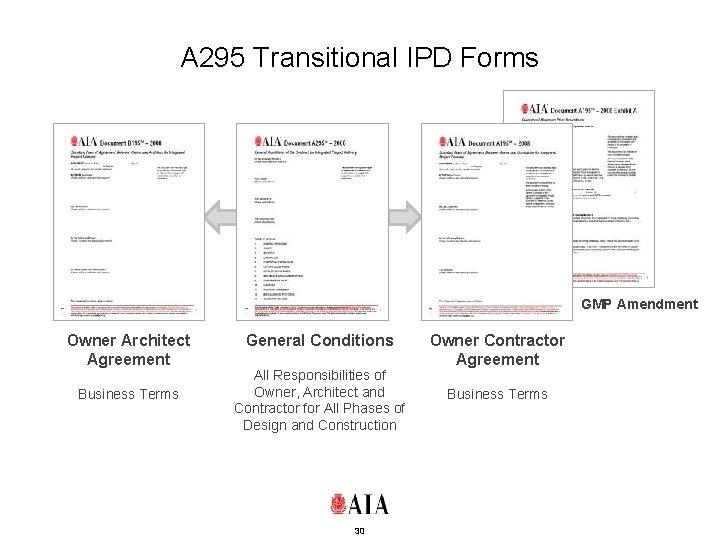
A 295 Transitional IPD Forms GMP Amendment Owner Architect Agreement Business Terms General Conditions All Responsibilities of Owner, Architect and Contractor for All Phases of Design and Construction 30 Owner Contractor Agreement Business Terms
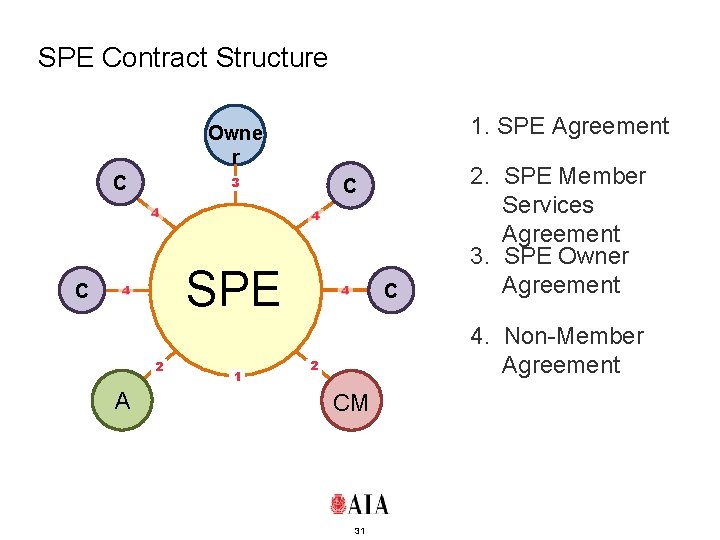
SPE Contract Structure 1. SPE Agreement Owne r C 3 C SPE C 2 A 1 C 2. SPE Member Services Agreement 3. SPE Owner Agreement 4. Non-Member Agreement 2 CM 31
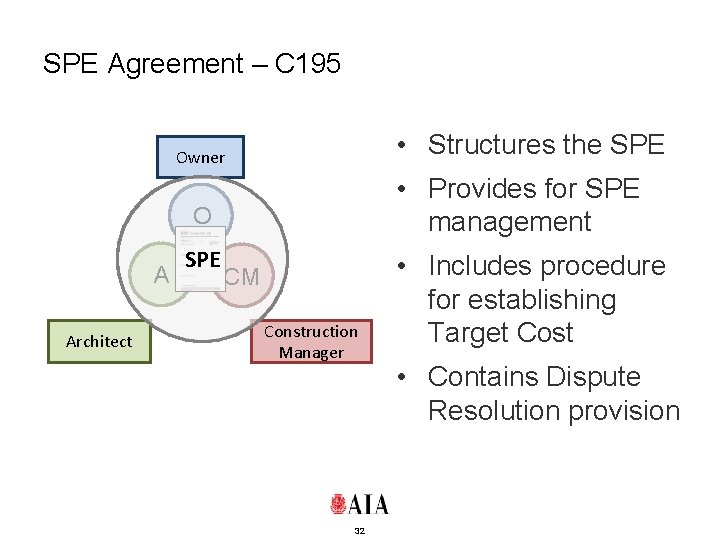
SPE Agreement – C 195 • Structures the SPE Owner • Provides for SPE management O A Architect SPE CM Construction Manager 32 • Includes procedure for establishing Target Cost • Contains Dispute Resolution provision
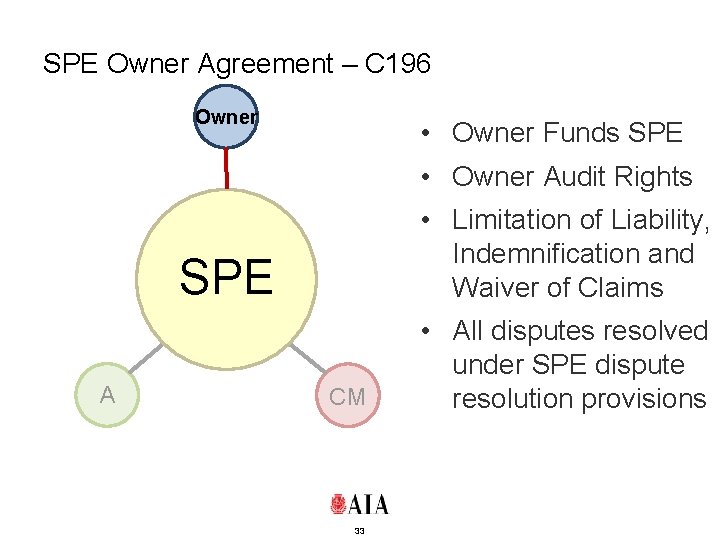
SPE Owner Agreement – C 196 Owner • Owner Funds SPE • Owner Audit Rights • Limitation of Liability, Indemnification and Waiver of Claims SPE A CM 33 • All disputes resolved under SPE dispute resolution provisions
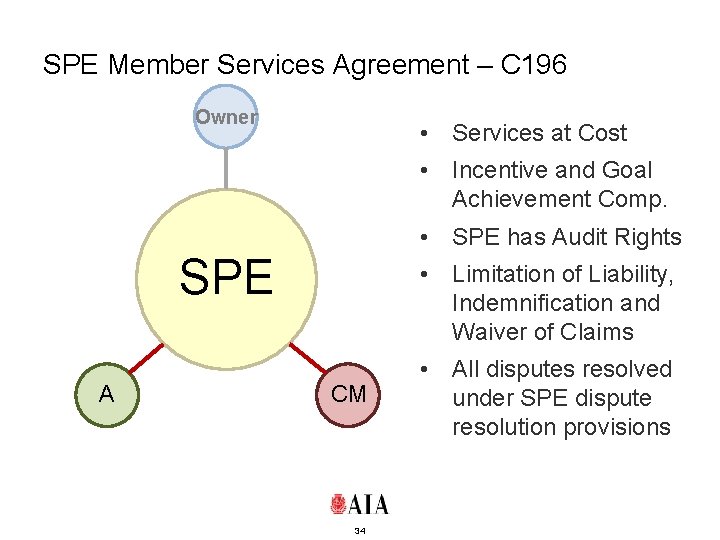
SPE Member Services Agreement – C 196 Owner • Services at Cost • Incentive and Goal Achievement Comp. • SPE has Audit Rights SPE A • Limitation of Liability, Indemnification and Waiver of Claims CM 34 • All disputes resolved under SPE dispute resolution provisions
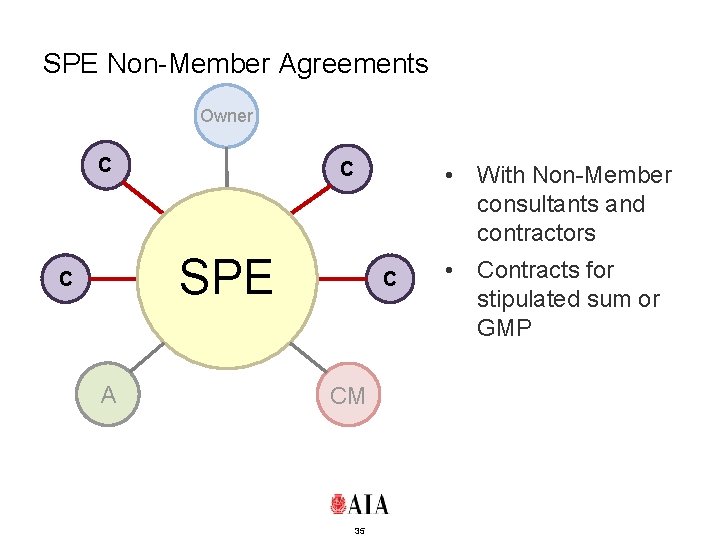
SPE Non-Member Agreements Owner C C • With Non-Member consultants and contractors SPE C A C CM 35 • Contracts for stipulated sum or GMP
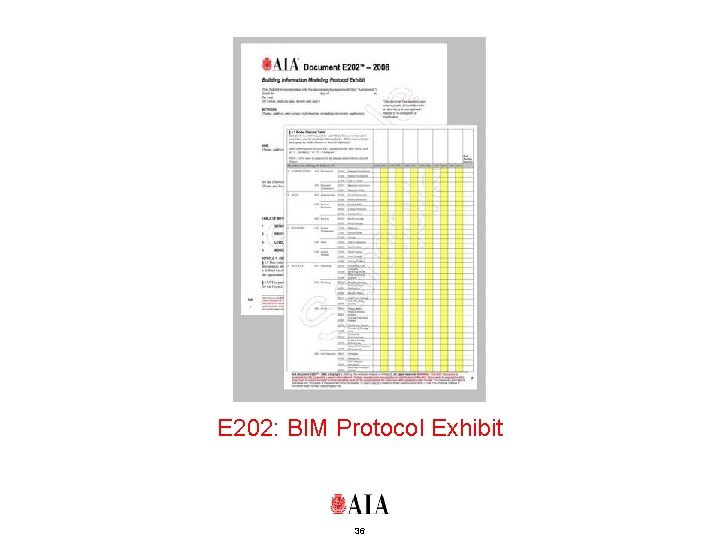
E 202: BIM Protocol Exhibit 36
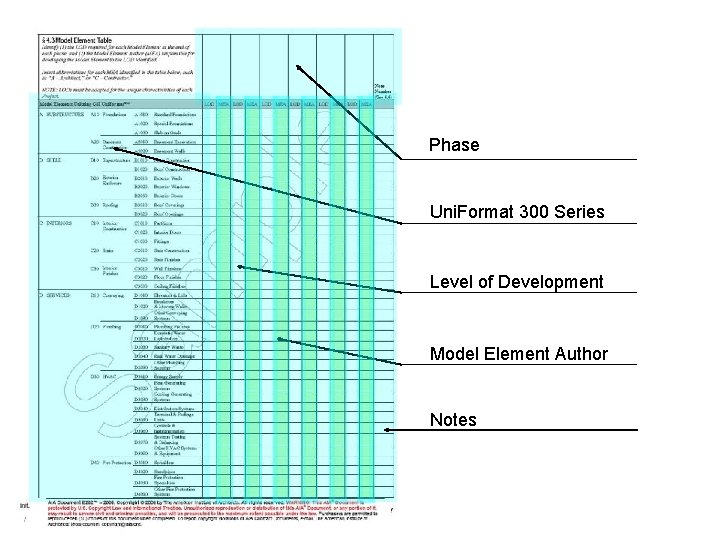
Phase Uni. Format 300 Series Level of Development Model Element Author Notes 37
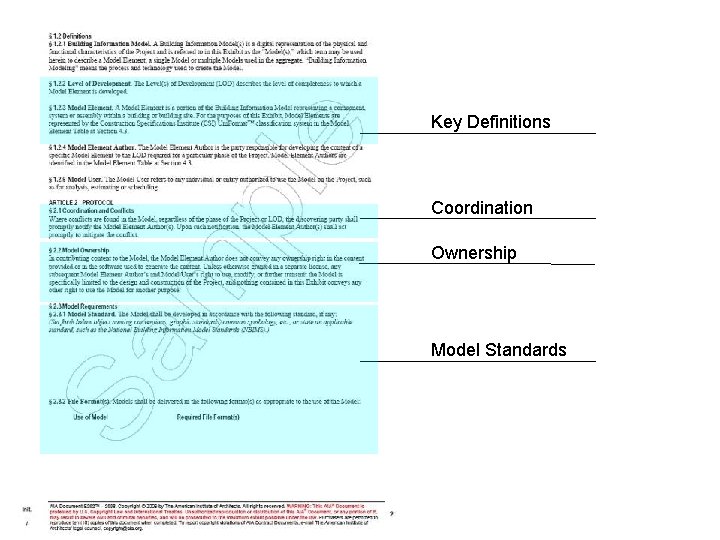
Key Definitions Coordination Ownership Model Standards 38
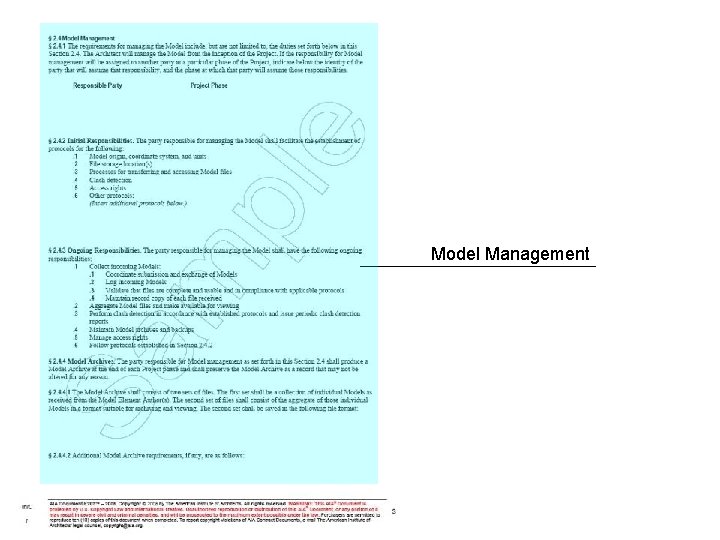
Model Management 39
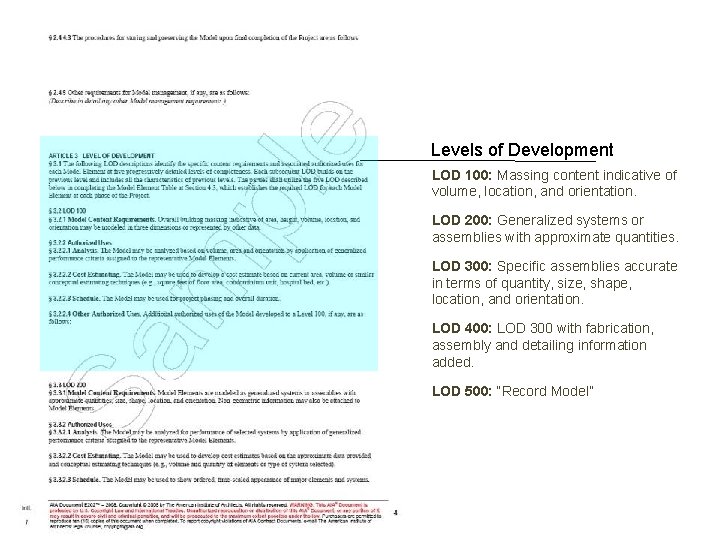
Levels of Development LOD 100: Massing content indicative of volume, location, and orientation. LOD 200: Generalized systems or assemblies with approximate quantities. LOD 300: Specific assemblies accurate in terms of quantity, size, shape, location, and orientation. LOD 400: LOD 300 with fabrication, assembly and detailing information added. LOD 500: “Record Model” 40
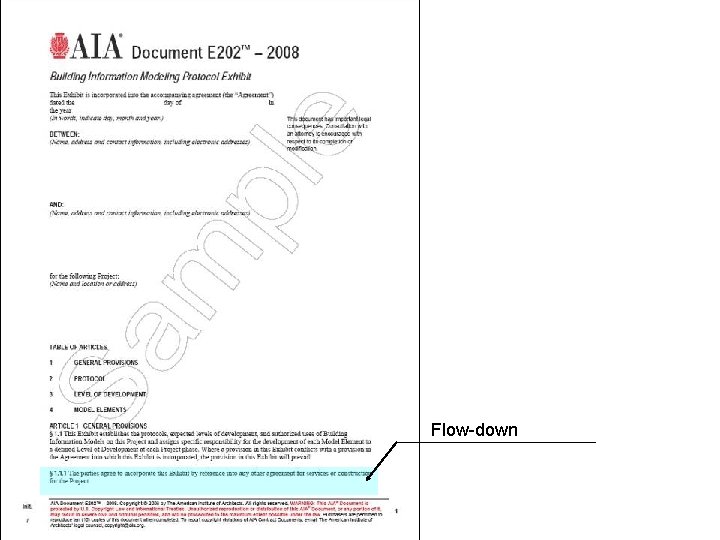
Flow-down 41
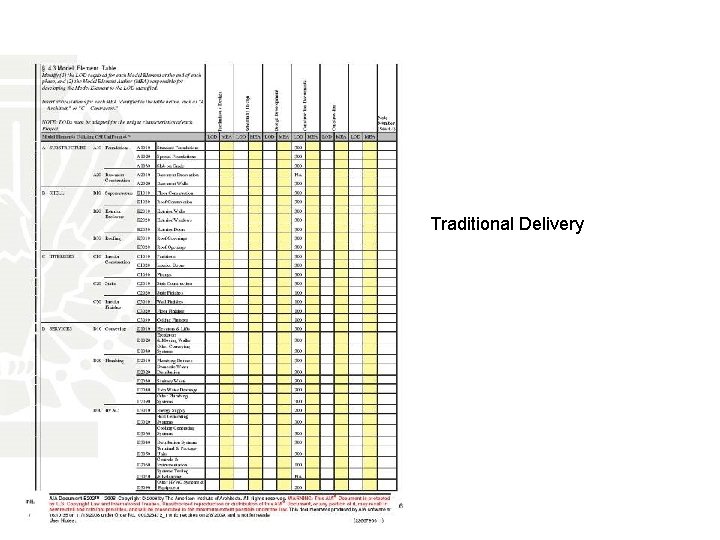
Traditional Delivery 42
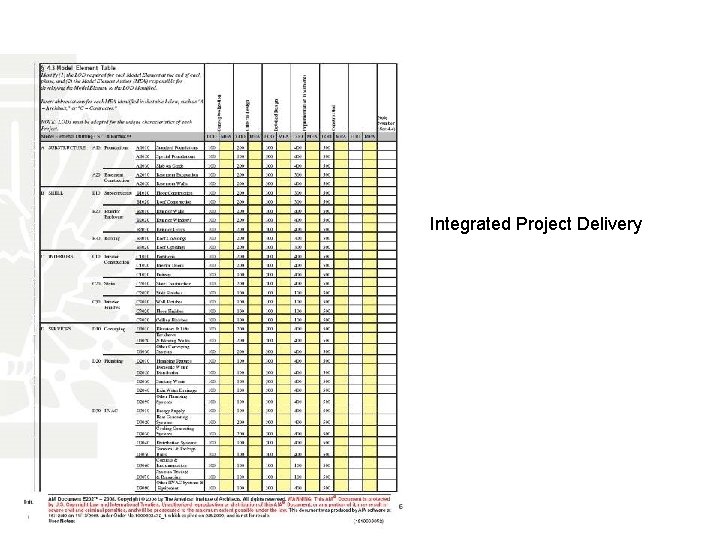
Integrated Project Delivery 43
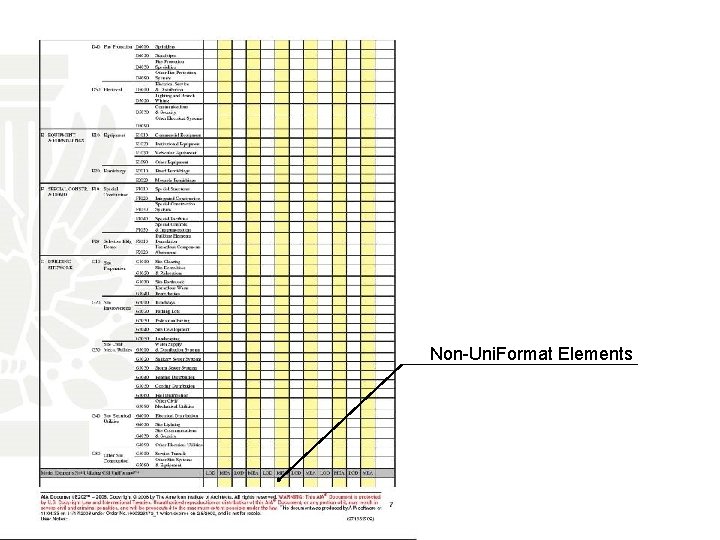
Non-Uni. Format Elements 44
2008 3 x. PT Whitepaper MHC Smart. Market Report Consensus opinions about industry change from owners, contractors, and architects 45
Coming soon! On Compensation: Considerations for Teams in a Transformed Industry Outline • Introduction • Motivations of Team Members: Why Do We Do This • Compensation for What: Ingredients of Compensation • Current Compensation Models • New Value Propositions • Appendix A: Three Sample Models • Appendix B: FAQs about Compensation 46
www. aia. org/ip www. aia. org/sustainability 47