
AHRQ Safety Program for Surgery Onboarding Building Your
AHRQ Safety Program for Surgery Onboarding Building Your SSI Prevention Bundle AHRQ Pub No. 16(18)-0004 -15 -EF December 2017
Learning Objectives After this session, you will be able to— • Develop and implement a surgical site infection (SSI) reduction goal and prevention bundle that addresses up to three surgical care processes • Build a bundle based on the results of your staff safety assessment • Review how to initiate audits of your processes • Create a team performance goal (improvement in outcome) • Proceed with improvements without strong evidence base • Locate AHRQ Safety Program for Surgery resources on the project Web site AHRQ Safety Program for Surgery -- Onboarding Building Your SSI Bundle 2
Background 1 Surgical site infections— • Are the most common nosocomial infections in the surgical patient • Are the most common colorectal abdominal surgery complications (3– 30%) • Are associated with increased length of stay, readmission, and mortality • Cost, depending on infection location, $6, 200–$15, 000 per patient (superficial vs. organ space) AHRQ Safety Program for Surgery -- Onboarding Building Your SSI Bundle 3
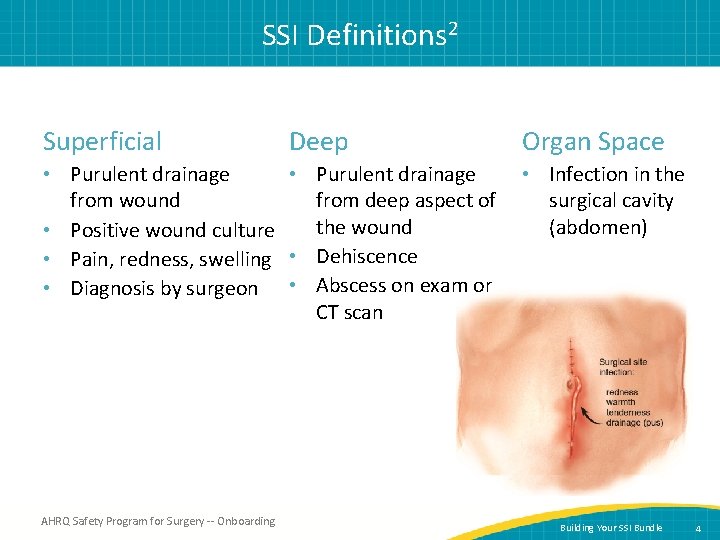
SSI Definitions 2 Superficial Deep Organ Space • Purulent drainage • Infection in the • Purulent drainage from wound surgical cavity from deep aspect of (abdomen) the wound • Positive wound culture • Pain, redness, swelling • Dehiscence • Diagnosis by surgeon • Abscess on exam or CT scan AHRQ Safety Program for Surgery -- Onboarding Building Your SSI Bundle 4
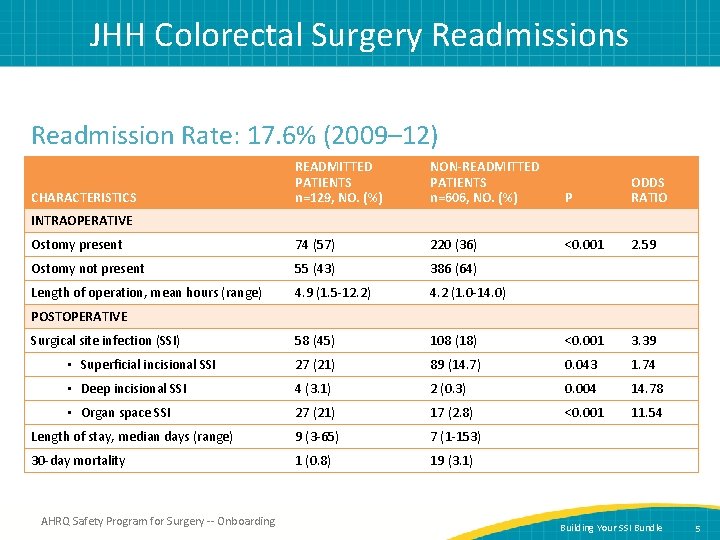
JHH Colorectal Surgery Readmissions Readmission Rate: 17. 6% (2009– 12) READMITTED PATIENTS n=129, NO. (%) NON-READMITTED PATIENTS n=606, NO. (%) P ODDS RATIO Ostomy present 74 (57) 220 (36) <0. 001 2. 59 Ostomy not present 55 (43) 386 (64) Length of operation, mean hours (range) 4. 9 (1. 5 -12. 2) 4. 2 (1. 0 -14. 0) 58 (45) 108 (18) <0. 001 3. 39 • Superficial incisional SSI 27 (21) 89 (14. 7) 0. 043 1. 74 • Deep incisional SSI 4 (3. 1) 2 (0. 3) 0. 004 14. 78 • Organ space SSI 27 (21) 17 (2. 8) <0. 001 11. 54 Length of stay, median days (range) 9 (3 -65) 7 (1 -153) 30 -day mortality 1 (0. 8) 19 (3. 1) CHARACTERISTICS INTRAOPERATIVE POSTOPERATIVE Surgical site infection (SSI) AHRQ Safety Program for Surgery -- Onboarding Building Your SSI Bundle 5
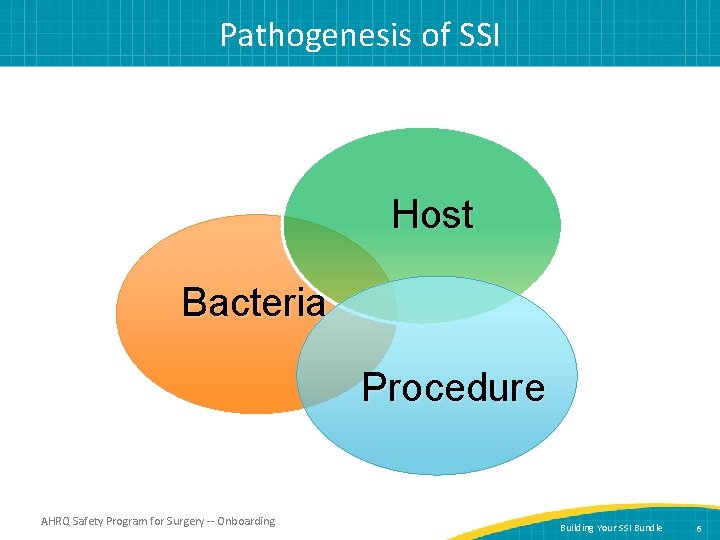
Pathogenesis of SSI Host Bacteria Procedure AHRQ Safety Program for Surgery -- Onboarding Building Your SSI Bundle 6

No Single SSI Prevention Bundle • Deeper dive into SCIP measures to identify local defects • Emerging evidence – Antibiotics redosing and weight-based dosing – Maintenance of normoglycemia – Mechanical bowel preparation with oral antibiotics – Standardization of skin preparation • Capitalize on frontline wisdom – Comprehensive Unit-based Safety Program (CUSP) – Staff Safety Assessment (SSA) AHRQ Safety Program for Surgery -- Onboarding Building Your SSI Bundle 7
DEEPER DIVE INTO SCIP MEASURES TO IDENTIFY LOCAL DEFECTS AHRQ Safety Program for Surgery -- Onboarding Building Your SSI Bundle
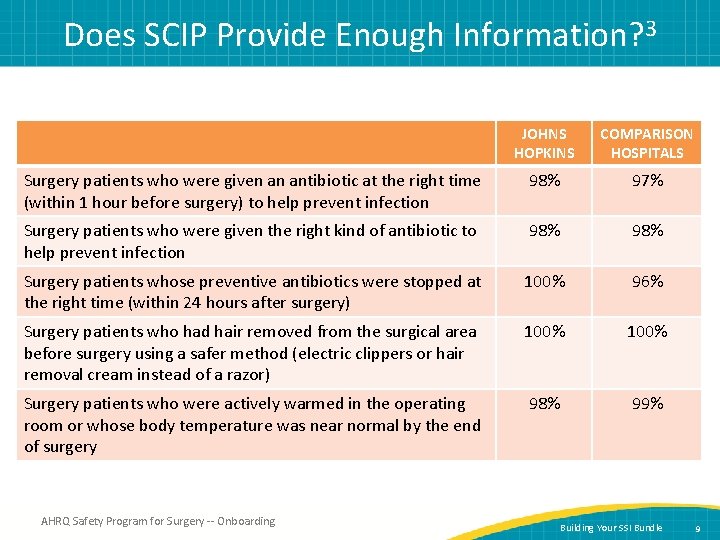
Does SCIP Provide Enough Information? 3 9 JOHNS HOPKINS COMPARISON HOSPITALS Surgery patients who were given an antibiotic at the right time (within 1 hour before surgery) to help prevent infection 98% 97% Surgery patients who were given the right kind of antibiotic to help prevent infection 98% Surgery patients whose preventive antibiotics were stopped at the right time (within 24 hours after surgery) 100% 96% Surgery patients who had hair removed from the surgical area before surgery using a safer method (electric clippers or hair removal cream instead of a razor) 100% Surgery patients who were actively warmed in the operating room or whose body temperature was near normal by the end of surgery 98% 99% AHRQ Safety Program for Surgery -- Onboarding Building Your SSI Bundle 9
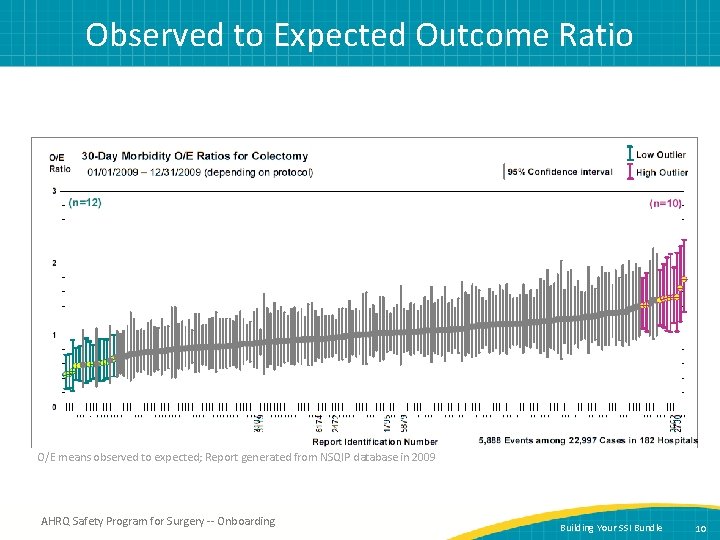
Observed to Expected Outcome Ratio O/E means observed to expected; Report generated from NSQIP database in 2009 10 AHRQ Safety Program for Surgery -- Onboarding Building Your SSI Bundle 10
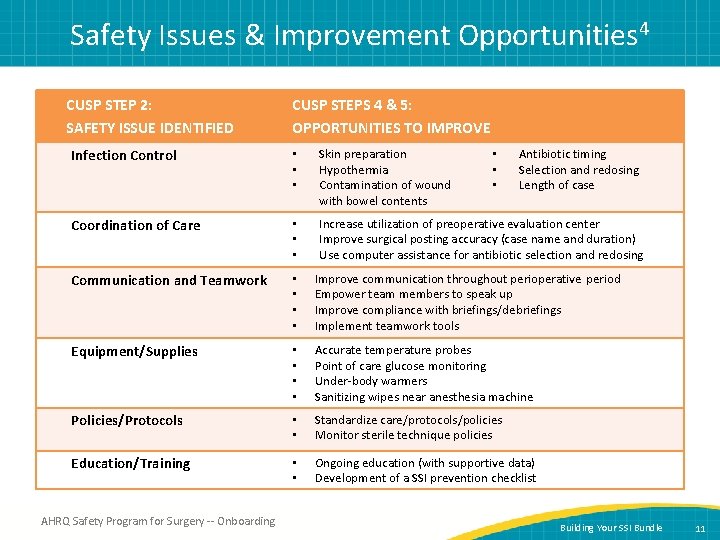
Safety Issues & Improvement Opportunities 4 CUSP STEP 2: SAFETY ISSUE IDENTIFIED CUSP STEPS 4 & 5: OPPORTUNITIES TO IMPROVE Infection Control • • • Skin preparation Hypothermia Contamination of wound with bowel contents Coordination of Care • • • Increase utilization of preoperative evaluation center Improve surgical posting accuracy (case name and duration) Use computer assistance for antibiotic selection and redosing Communication and Teamwork • • Improve communication throughout perioperative period Empower team members to speak up Improve compliance with briefings/debriefings Implement teamwork tools Equipment/Supplies • • Accurate temperature probes Point of care glucose monitoring Under-body warmers Sanitizing wipes near anesthesia machine Policies/Protocols • • Standardize care/protocols/policies Monitor sterile technique policies Education/Training • • Ongoing education (with supportive data) Development of a SSI prevention checklist AHRQ Safety Program for Surgery -- Onboarding • • • Antibiotic timing Selection and redosing Length of case Building Your SSI Bundle 11
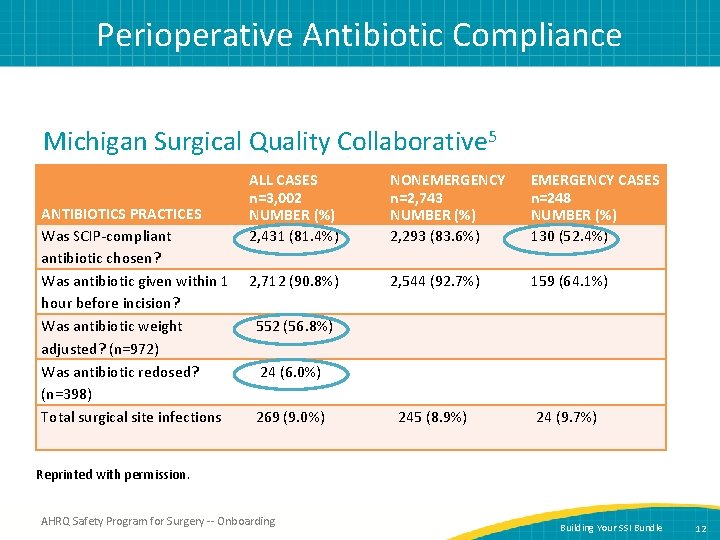
Perioperative Antibiotic Compliance Michigan Surgical Quality Collaborative 5 ANTIBIOTICS PRACTICES Was SCIP-compliant antibiotic chosen? Was antibiotic given within 1 hour before incision? Was antibiotic weight adjusted? (n=972) Was antibiotic redosed? (n=398) Total surgical site infections ALL CASES n=3, 002 NUMBER (%) 2, 431 (81. 4%) NONEMERGENCY n=2, 743 NUMBER (%) 2, 293 (83. 6%) EMERGENCY CASES n=248 NUMBER (%) 130 (52. 4%) 2, 712 (90. 8%) 2, 544 (92. 7%) 159 (64. 1%) 245 (8. 9%) 24 (9. 7%) 552 (56. 8%) 24 (6. 0%) 269 (9. 0%) Reprinted with permission. AHRQ Safety Program for Surgery -- Onboarding Building Your SSI Bundle 12
Auditing Your Practice • Evaluate a sample of patients undergoing your targeted procedure for compliance with processes your team identified as potential areas to improve – For example, the next 10– 20 patients • Adapt tool from AHRQ Web site or develop new tool • Develop practical and feasible strategy to evaluate performance and identify defects • Empower frontline staff AHRQ Safety Program for Surgery -- Onboarding Building Your SSI Bundle 13
How Do We Conduct Audits? • Retrospective chart review • Concurrent review – Place audit tool on chart – Complete over continuum of care • Audit of 5– 10 patients is recommended – Larger samples yield better estimates of performance • Data collection for internal purposes only AHRQ Safety Program for Surgery -- Onboarding Building Your SSI Bundle 14
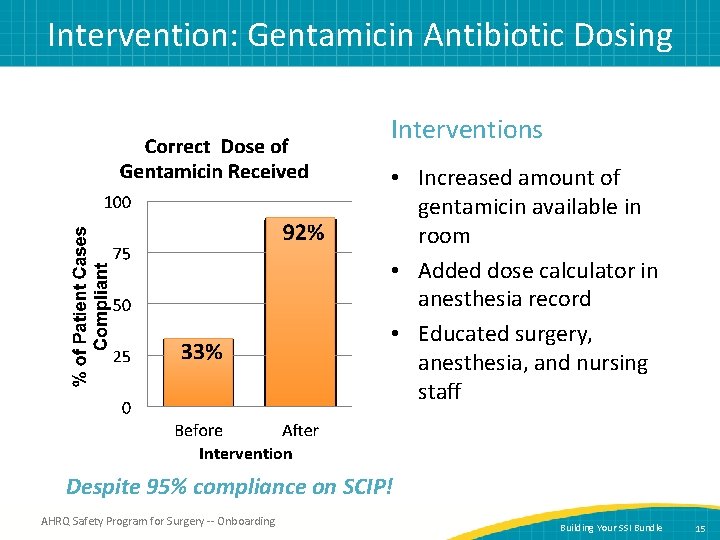
Intervention: Gentamicin Antibiotic Dosing Interventions • Increased amount of gentamicin available in room • Added dose calculator in anesthesia record • Educated surgery, anesthesia, and nursing staff Intervention Despite 95% compliance on SCIP! AHRQ Safety Program for Surgery -- Onboarding Building Your SSI Bundle 15
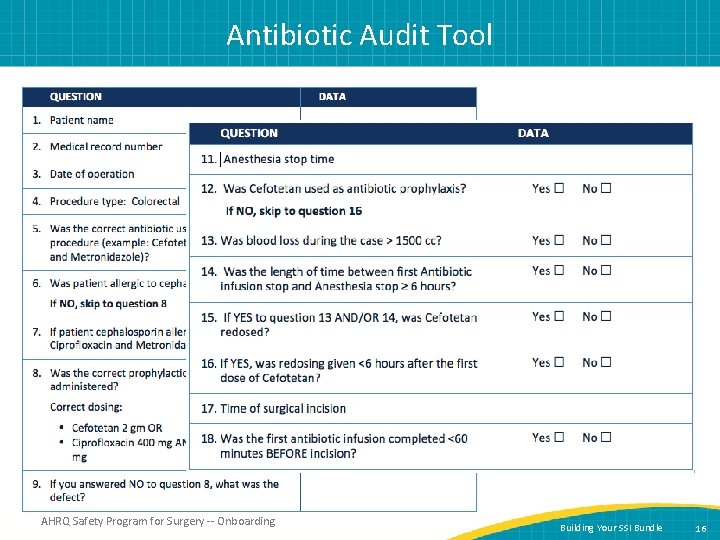
Antibiotic Audit Tool AHRQ Safety Program for Surgery -- Onboarding Building Your SSI Bundle 16
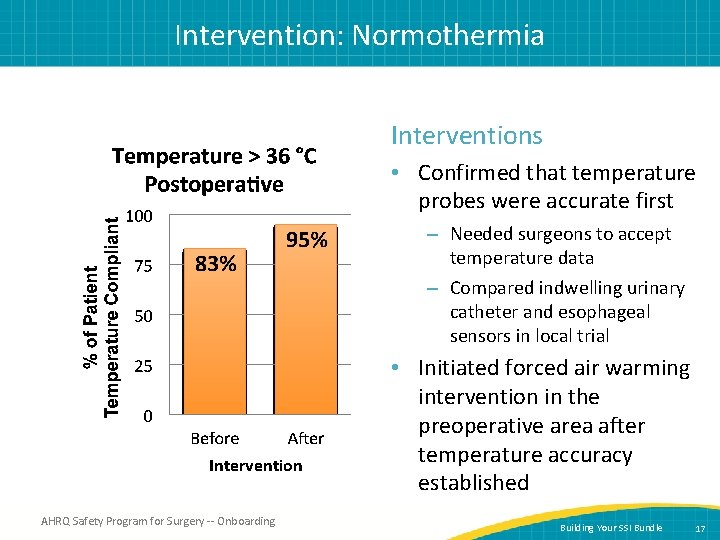
Intervention: Normothermia Interventions • Confirmed that temperature probes were accurate first – Needed surgeons to accept temperature data – Compared indwelling urinary catheter and esophageal sensors in local trial Intervention AHRQ Safety Program for Surgery -- Onboarding • Initiated forced air warming intervention in the preoperative area after temperature accuracy established Building Your SSI Bundle 17
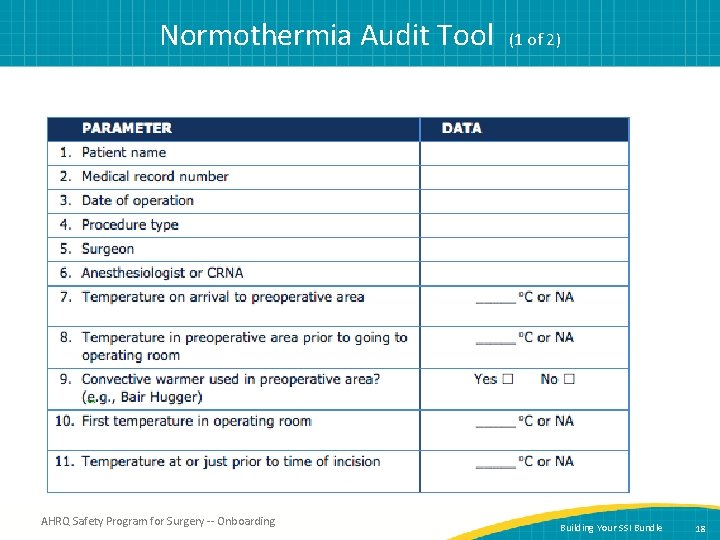
Normothermia Audit Tool (1 of 2) AHRQ Safety Program for Surgery -- Onboarding Building Your SSI Bundle 18
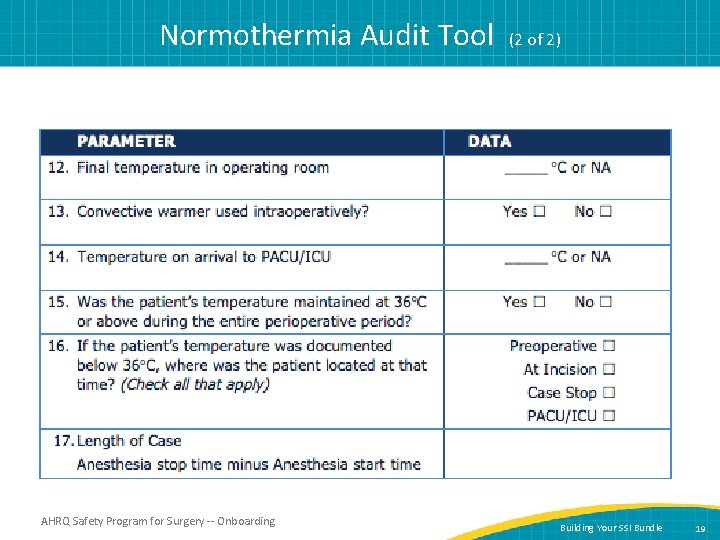
Normothermia Audit Tool (2 of 2) AHRQ Safety Program for Surgery -- Onboarding Building Your SSI Bundle 19
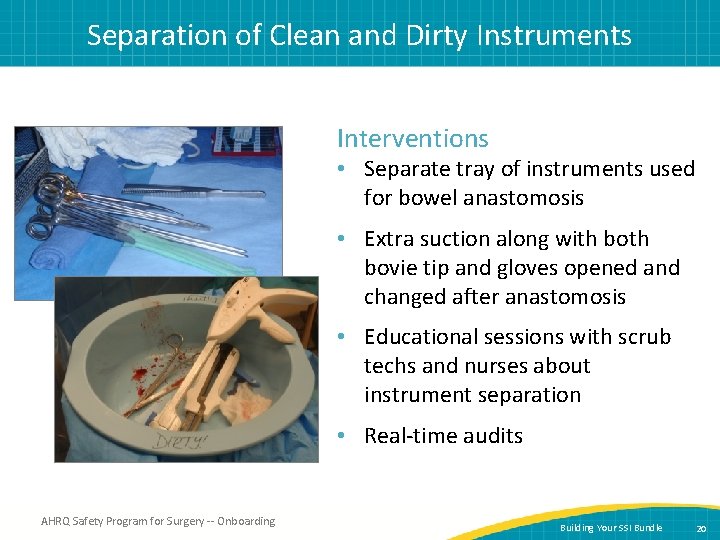
Separation of Clean and Dirty Instruments Interventions • Separate tray of instruments used for bowel anastomosis • Extra suction along with bovie tip and gloves opened and changed after anastomosis • Educational sessions with scrub techs and nurses about instrument separation • Real-time audits AHRQ Safety Program for Surgery -- Onboarding Building Your SSI Bundle 20

BRINGING EMERGING EVIDENCE FOR SSI PREVENTION TO YOUR PATIENTS AHRQ Safety Program for Surgery -- Onboarding Building Your SSI Bundle
Emerging Evidence for SSI Prevention • Antibiotic usage – Redosing – Weight-based dosing of cephalosporins • Utilization of mechanical bowel preparation with oral antibiotics • Normoglycemia/prevention of hyperglycemia • Standardization of skin preparation AHRQ Safety Program for Surgery -- Onboarding Building Your SSI Bundle 22
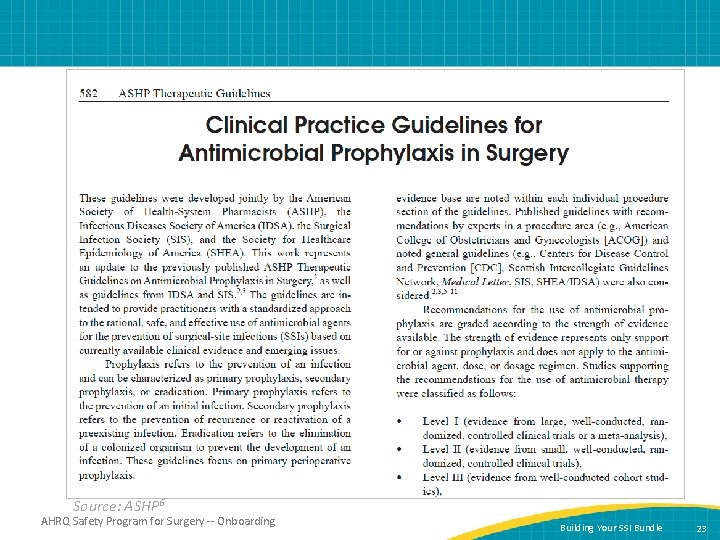
Source: ASHP 6 AHRQ Safety Program for Surgery -- Onboarding Building Your SSI Bundle 23
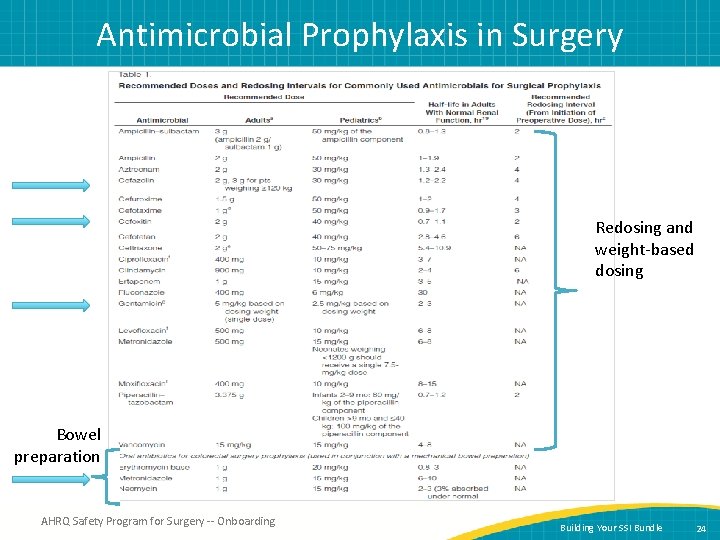
Antimicrobial Prophylaxis in Surgery Redosing and weight-based dosing Bowel preparation AHRQ Safety Program for Surgery -- Onboarding Building Your SSI Bundle 24
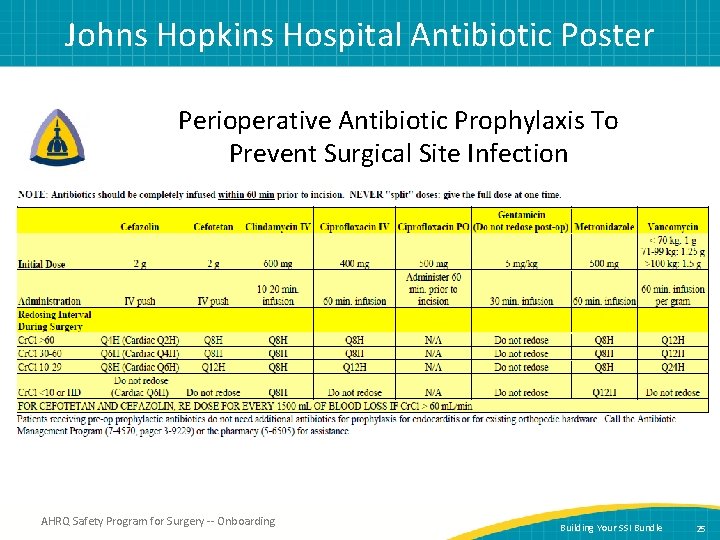
Johns Hopkins Hospital Antibiotic Poster Perioperative Antibiotic Prophylaxis To Prevent Surgical Site Infection AHRQ Safety Program for Surgery -- Onboarding Building Your SSI Bundle 25
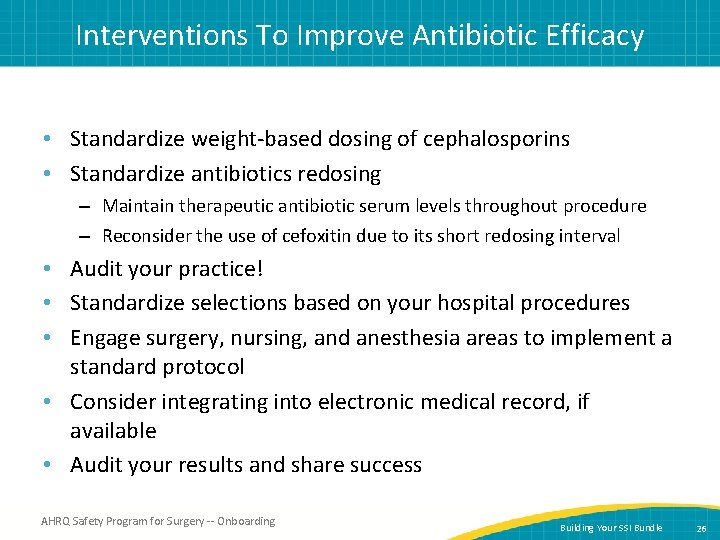
Interventions To Improve Antibiotic Efficacy • Standardize weight-based dosing of cephalosporins • Standardize antibiotics redosing – Maintain therapeutic antibiotic serum levels throughout procedure – Reconsider the use of cefoxitin due to its short redosing interval • Audit your practice! • Standardize selections based on your hospital procedures • Engage surgery, nursing, and anesthesia areas to implement a standard protocol • Consider integrating into electronic medical record, if available • Audit your results and share success AHRQ Safety Program for Surgery -- Onboarding Building Your SSI Bundle 26
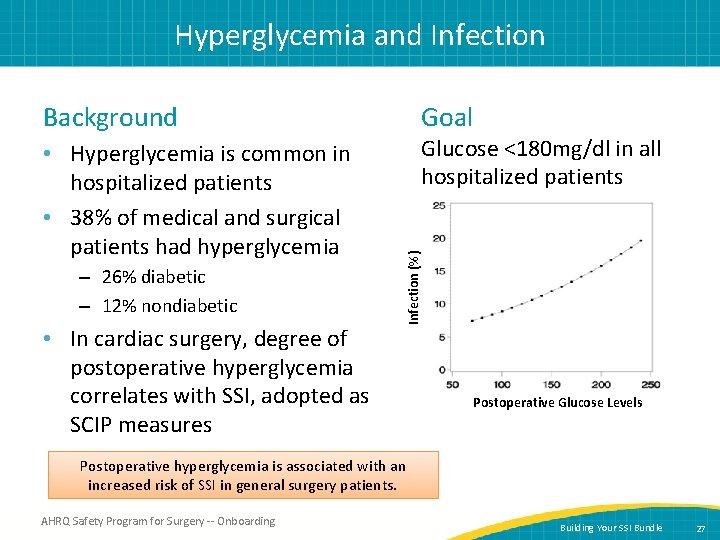
Hyperglycemia and Infection Background – 26% diabetic – 12% nondiabetic • In cardiac surgery, degree of postoperative hyperglycemia correlates with SSI, adopted as SCIP measures Glucose <180 mg/dl in all hospitalized patients Infection (%) • Hyperglycemia is common in hospitalized patients • 38% of medical and surgical patients had hyperglycemia Goal Postoperative Glucose Levels Postoperative hyperglycemia is associated with an increased risk of SSI in general surgery patients. AHRQ Safety Program for Surgery -- Onboarding Building Your SSI Bundle 27
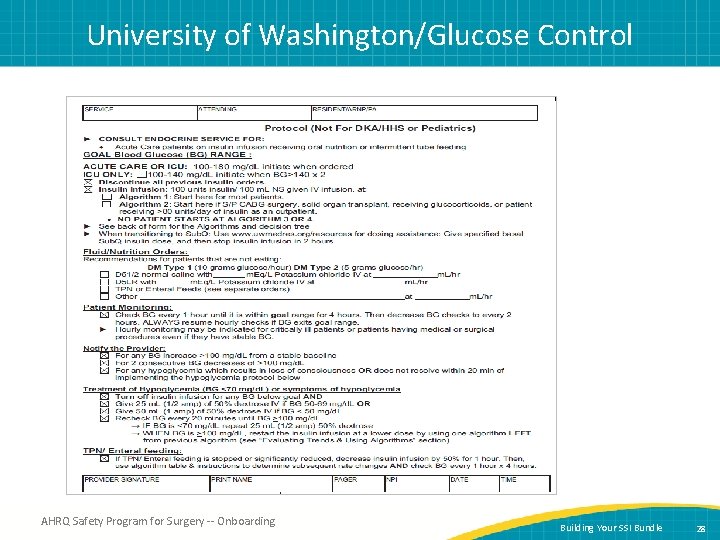
University of Washington/Glucose Control AHRQ Safety Program for Surgery -- Onboarding Building Your SSI Bundle 28
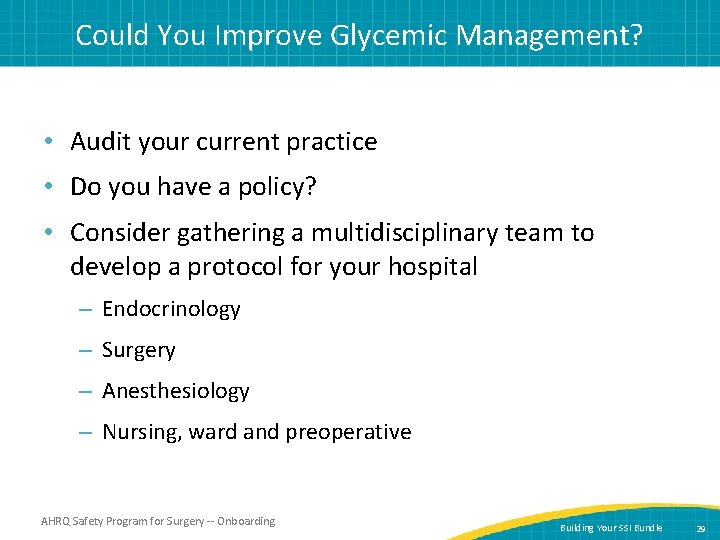
Could You Improve Glycemic Management? • Audit your current practice • Do you have a policy? • Consider gathering a multidisciplinary team to develop a protocol for your hospital – Endocrinology – Surgery – Anesthesiology – Nursing, ward and preoperative AHRQ Safety Program for Surgery -- Onboarding Building Your SSI Bundle 29
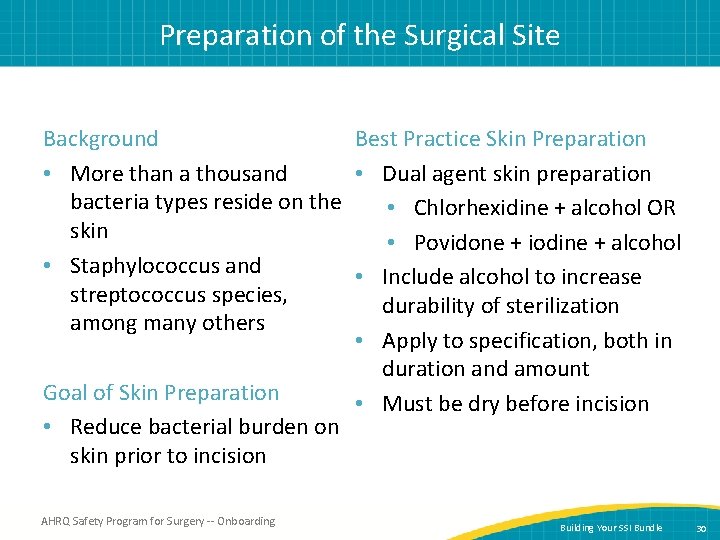
Preparation of the Surgical Site Background Best Practice Skin Preparation • More than a thousand • Dual agent skin preparation bacteria types reside on the • Chlorhexidine + alcohol OR skin • Povidone + iodine + alcohol • Staphylococcus and • Include alcohol to increase streptococcus species, durability of sterilization among many others • Apply to specification, both in duration and amount Goal of Skin Preparation • Must be dry before incision • Reduce bacterial burden on skin prior to incision AHRQ Safety Program for Surgery -- Onboarding Building Your SSI Bundle 30
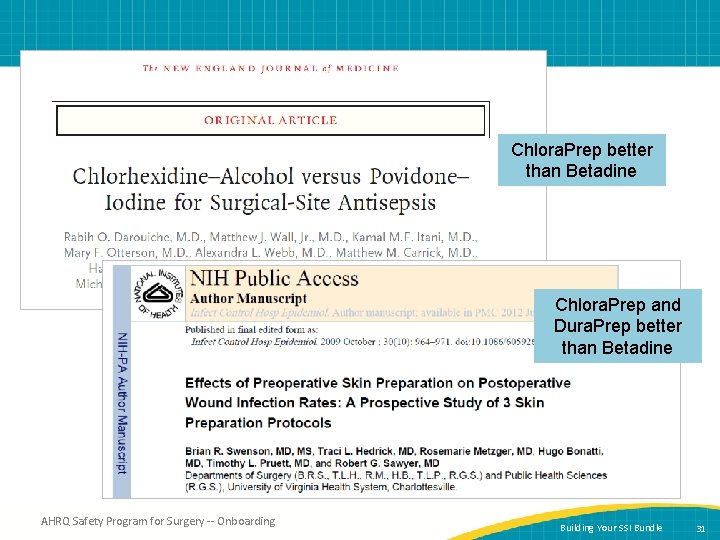
Chlora. Prep better than Betadine Chlora. Prep and Dura. Prep better than Betadine AHRQ Safety Program for Surgery -- Onboarding Building Your SSI Bundle 31
Is Skin Preparation an Area You Could Improve? Audit Your Practices • What is being used for what cases? • Who is doing the prep? • How long are they taking for the prep? Develop Standardized Educational Plan To Engage Frontline Providers • In-service training sessions Audit again after implementing your interventions. How well did you do? Share the results! • Video education • Change doctor preference cards AHRQ Safety Program for Surgery -- Onboarding Building Your SSI Bundle 32
Key Takeaways • No single SSI prevention bundle exists – You need to identify the LOCAL defects • Auditing is a practical and feasible strategy to evaluate performance and surface defects • Tools provide a guideline and are adaptable to your local environment • CUSP methodology empowers frontline staff AHRQ Safety Program for Surgery -- Onboarding Building Your SSI Bundle 33
Action Items • Review staff safety assessment results • Pick 2– 3 audit tools based on frontline feedback, SCIP measures, and emerging evidence • Audit 5– 10 patients with each tool • Create a performance goal for each intervention • Develop your bundle • Implement interventions for system changes • Share your tools, ideas for new tools, and results AHRQ Safety Program for Surgery -- Onboarding Building Your SSI Bundle 34
References 1. Wick EC, Hobson DB, Bennett JL, et al. Implementation of a surgical comprehensive unit-based safety program to reduce surgical site infections. JACS. 2012; 215(2): 193 -200. PMID: 22632912. 2. National Healthcare Safety Network. CDC/NHSN Surveillance Definitions for Specific Types of Infections. In: NHSN Patient Safety Component Manual. Atlanta: Centers for Disease Control and Prevention; January 2014: chapter 17. www. cdc. gov/nhsn/PDFs/psc. Manual/17 psc. Nos. Inf. Def_current. pdf. Accessed June 11, 2014. 3. Centers for Medicare & Medicaid Services. Hospital Compare. www. medicare. gov/hospitalcompare/profile. html#prof. Tab=2&ID=21000 9&loc=21287&lat=39. 2962372&lng=76. 5928888&name=johns%20 hopkins%20 hospital. Accessed May 30, 2010. AHRQ Safety Program for Surgery -- Onboarding Building Your SSI Bundle 35
References 4. Johns Hopkins Medicine, Health Library. Surgical Site Infections. www. hopkinsmedicine. org/healthlibrary/conditions/surgical_care/surgic al_site_infections_134, 144/. Accessed June 19, 2015. 5. Hendren S, Englesbe MJ, Brooks L, et al. Prophylactic antibiotic practices for colectomy in Michigan. Am J Surg. 2011; 201(3): 290 -293. PMID: 21367365. 6. American Society of Health-System Pharmacists. Clinical Practice Guidelines for Antimicrobial Prophylaxis in Surgery. http: //www. ashp. org/surgical-guidelines. doi: 10. 2146/ajhp 120568. Also note: Bratzler DW, Dellinger EP, Olsen KM, et al. Clinical practice guidelines for antimicrobial prophylaxis in surgery. American Journal of Health-System Pharmacy. 2013 Feb 1; 70(3): 195 -283. PMID: 23327981. http: //www. ashp. org/surgical-guidelines. AHRQ Safety Program for Surgery -- Onboarding Building Your SSI Bundle 36
- Slides: 36