
AHDL Chapters 6 7 Using TTL Library Functions
AHDL (Chapters 6 & 7)
Using TTL Library Functions with HDL l l MSI chips such as adders and ALU ICs are the building blocks of digital systems. How to use these components in HDL? macrofunction A macrofunction is a self-contained description of a logic circuit with all its inputs, outputs and operational characteristics defined. Good documentation on the macrofunction is critical.
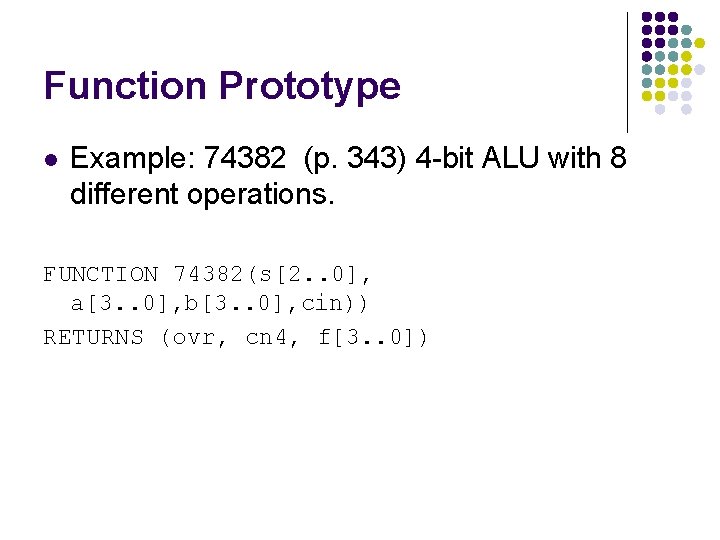
Function Prototype l Example: 74382 (p. 343) 4 -bit ALU with 8 different operations. FUNCTION 74382(s[2. . 0], a[3. . 0], b[3. . 0], cin)) RETURNS (ovr, cn 4, f[3. . 0])
AHDL Macrofunctions l l l Comments/documentation first Then Function prototype Then constant and global definitions INCLUDE derivative is allowed. Includes files with extension: . inc
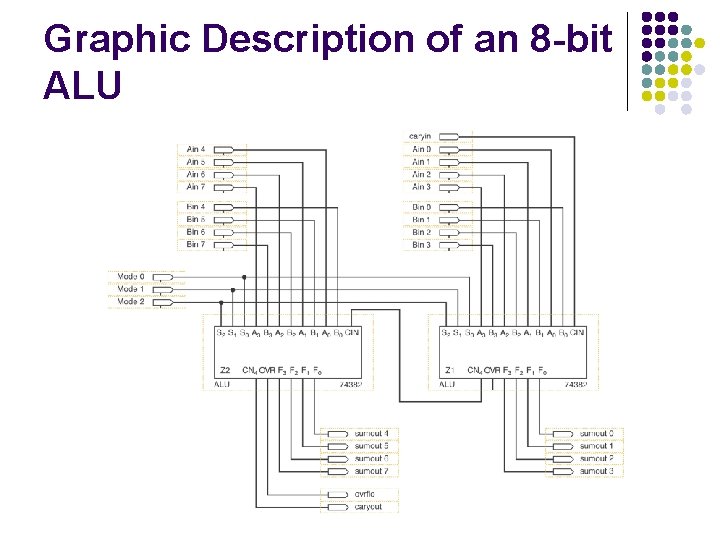
Graphic Description of an 8 -bit ALU
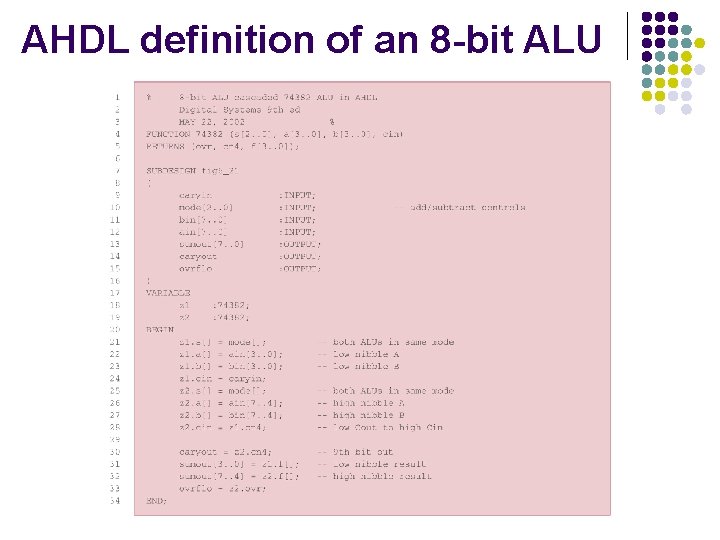
AHDL definition of an 8 -bit ALU
![Logic Operation on Bit Arrays SUBDESIGN bitwise_and ( d[3. . 0], g[3. . 0]](http://slidetodoc.com/presentation_image_h/1f737c91b6bf1200f0d644cc2f36513b/image-7.jpg "Logic Operation on Bit Arrays SUBDESIGN bitwise_and ( d[3. . 0], g[3. . 0]")
Logic Operation on Bit Arrays SUBDESIGN bitwise_and ( d[3. . 0], g[3. . 0] : INPUT; xx[3. . 0] : OUTPUT; ) BEGIN xx[]= d[] & g[]; END; -- Note: x is a reserved identifier in AHDL, use xx
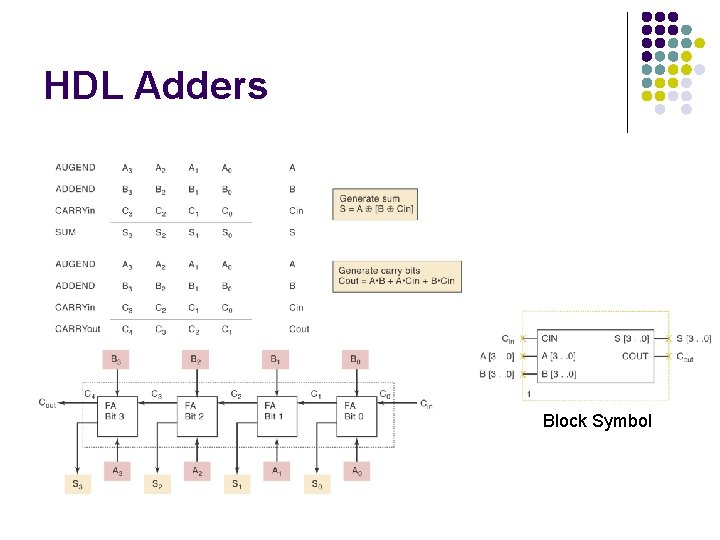
HDL Adders Block Symbol

AHDL 4 -bit Adder
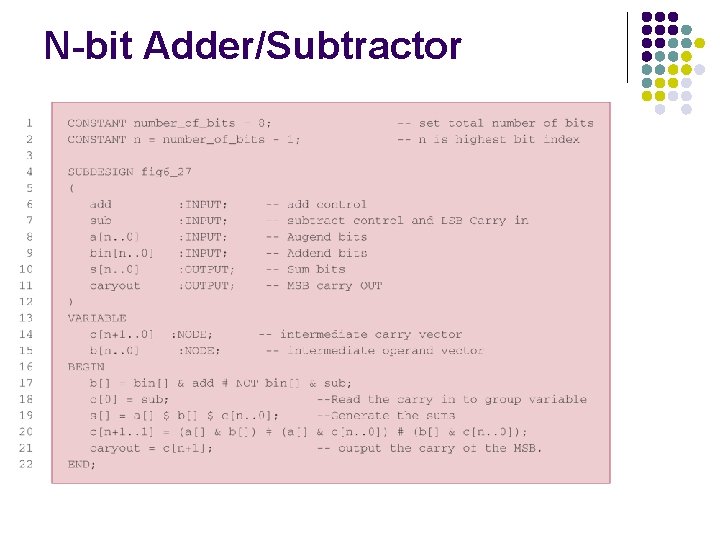
N-bit Adder/Subtractor
Library of Parameterized Modules l l Megafunctions: include a library of parameterized modules (LPMs) Offers a generic solution for the various types of logic circuits that are useful in digital systems. Parameterized means that when you instantiate a function from the library, you are specify some parameters that define certain attributes for the circuit. Example: LPM_ADD_SUB megafunction has a parameter LPM_WIDTH.
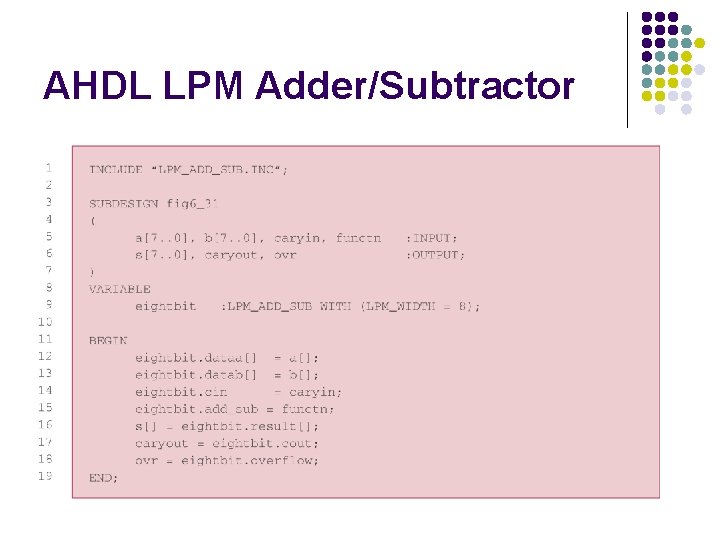
AHDL LPM Adder/Subtractor
Basic Counters in HDL l l l Counters are constructed with FFs. In Chapter 5, we describe the FFs using AHDL. Becomes too tedious if we have to use multiple FFs. Describe circuits with a higher-level of abstraction. Will consider synchronous counters only.
Synchronous Counter Design with D FF l l l Easier than using J-K FFs. The NEXT state of the D FF is the same as its PRESENT D input values. Example: Table 7 -7
State Transition Description Methods l List the PRESENT state/NEXT state table.
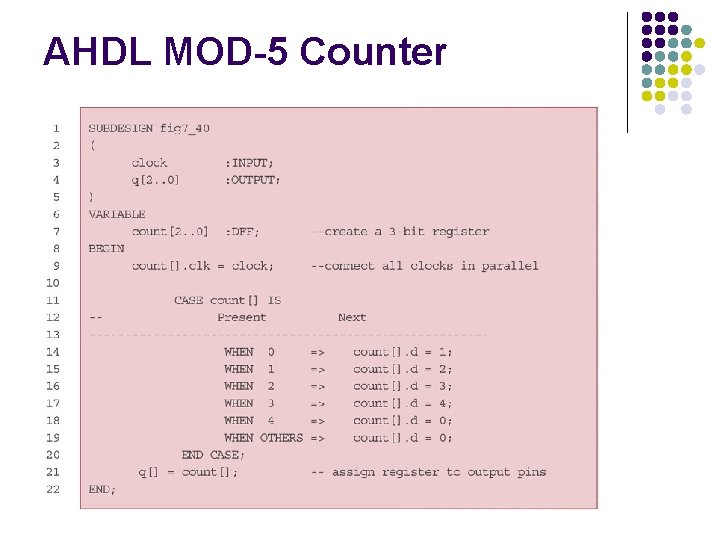
AHDL MOD-5 Counter
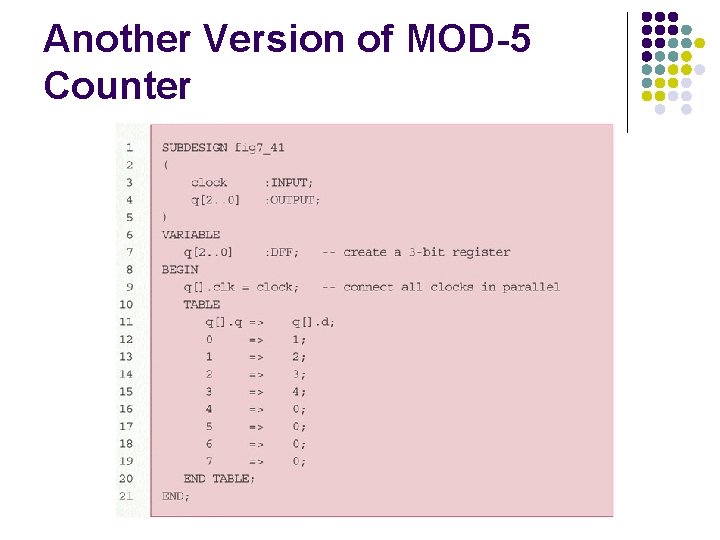
Another Version of MOD-5 Counter
Behavioral Description l l The behavioral level of abstraction is a way to describe circuit by describing its behavior in terms very similar to the way you might describe its operation in English. Deals more with the cause-and-effect relationship than with the path of data flow or wiring details.
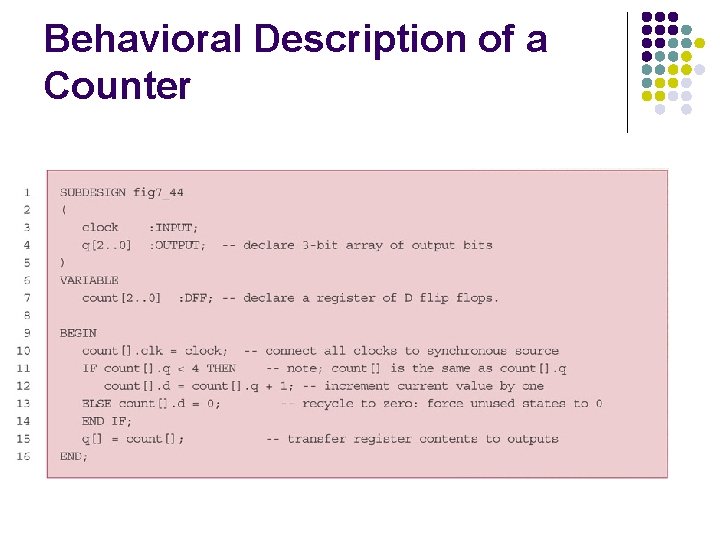
Behavioral Description of a Counter
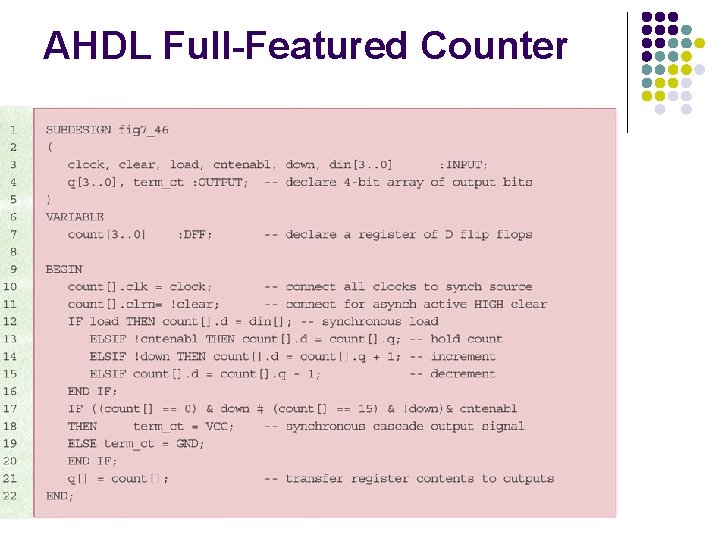
AHDL Full-Featured Counter
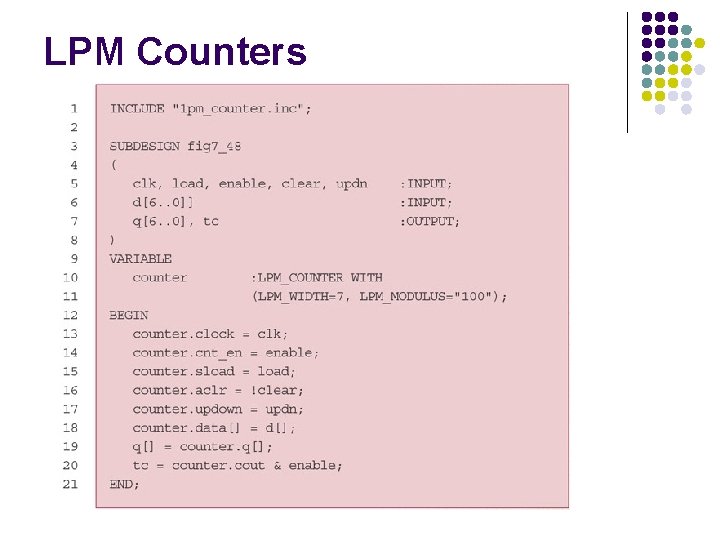
LPM Counters
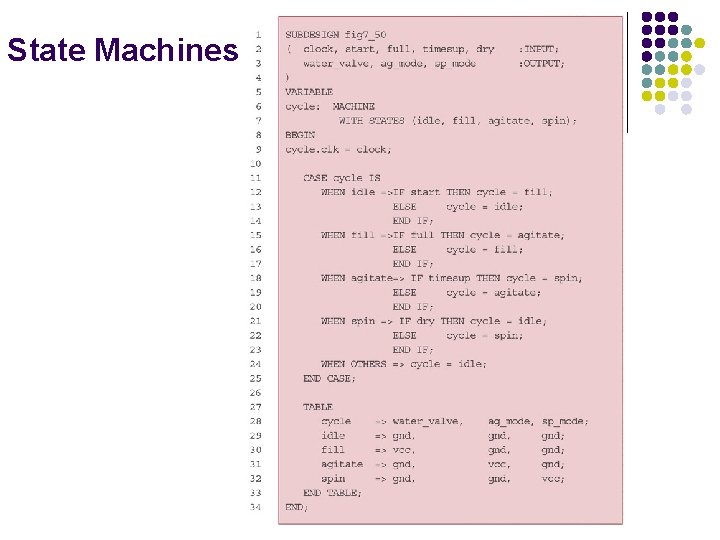
State Machines
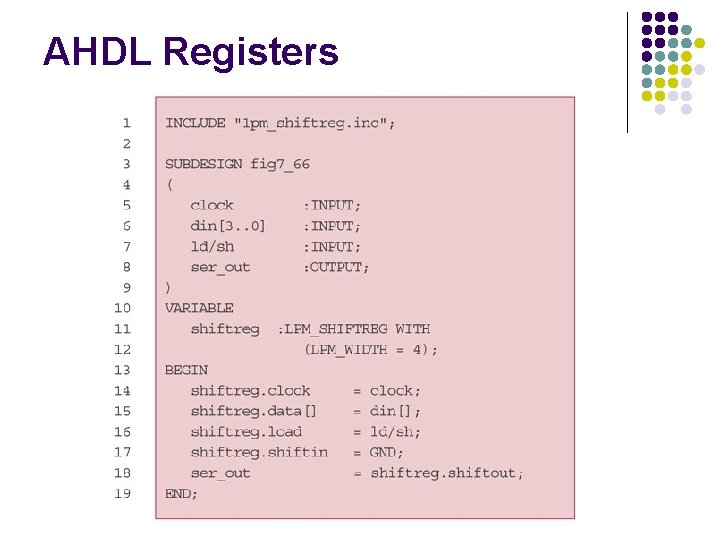
AHDL Registers
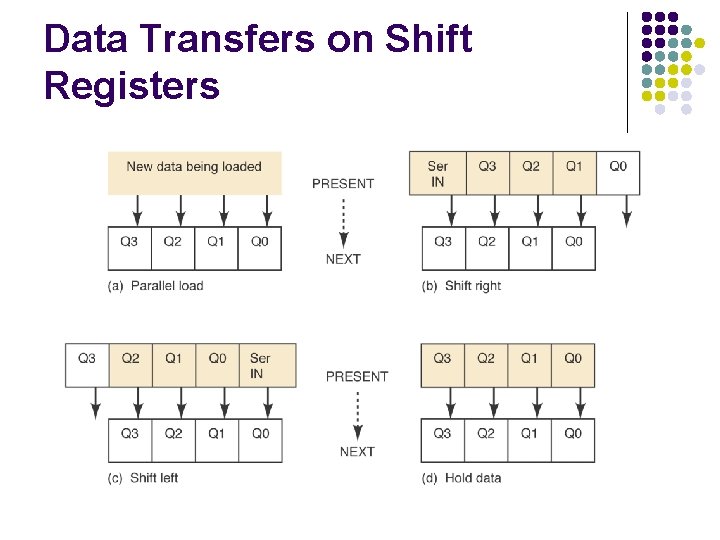
Data Transfers on Shift Registers
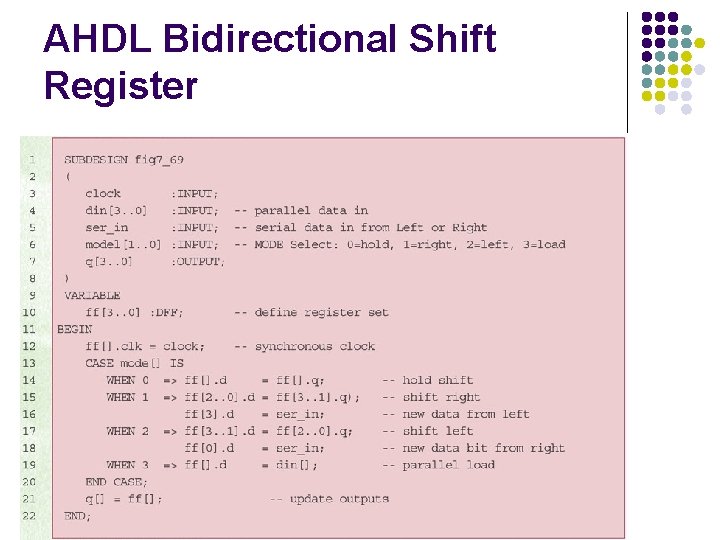
AHDL Bidirectional Shift Register
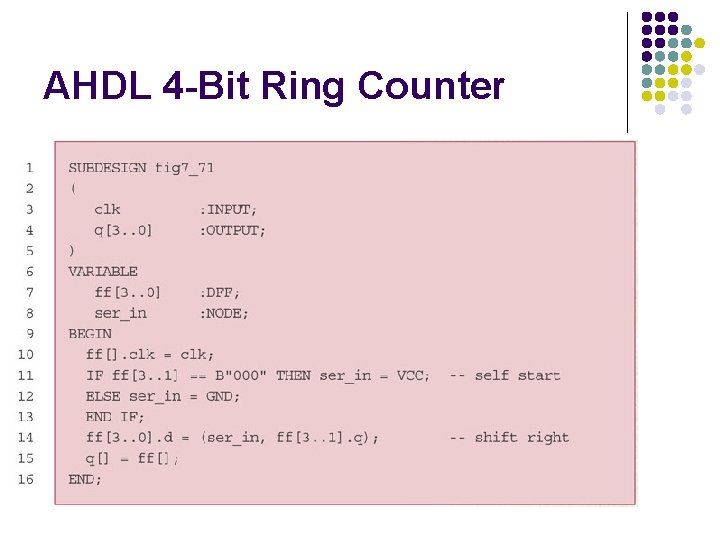
AHDL 4 -Bit Ring Counter
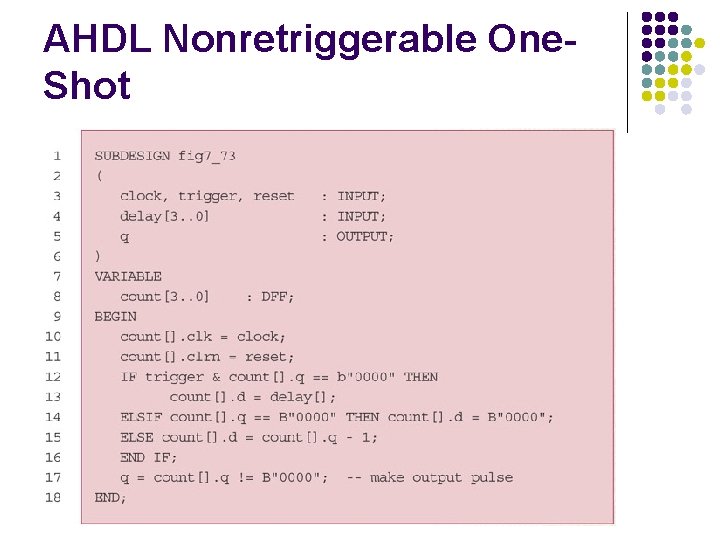
AHDL Nonretriggerable One. Shot
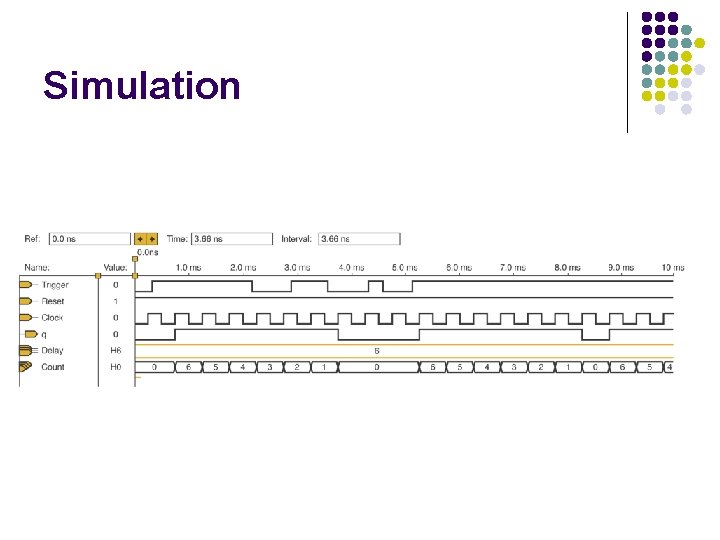
Simulation
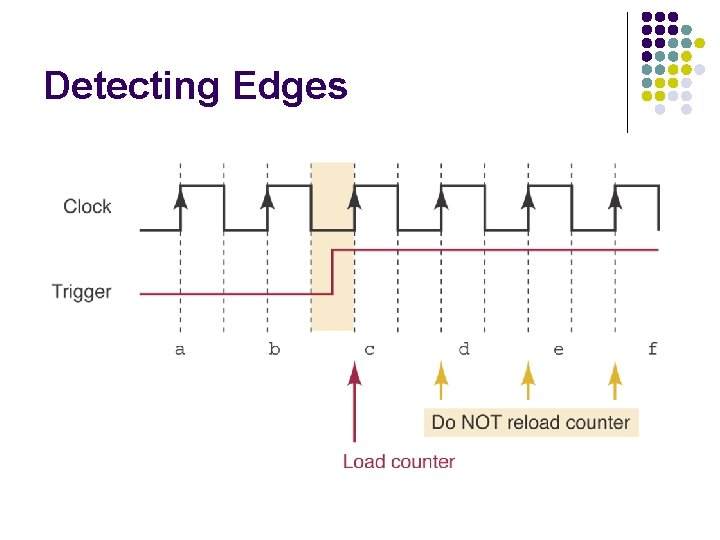
Detecting Edges
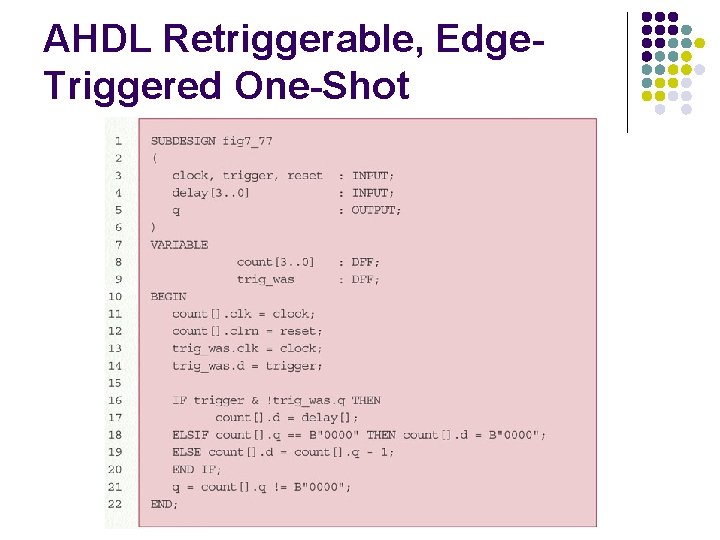
AHDL Retriggerable, Edge. Triggered One-Shot
- Slides: 30