
AH Biology Unit 1 Proteomics and Protein Structure
AH Biology: Unit 1 Proteomics and Protein Structure 4 Reversible Binding of Phosphate and Control of Conformation
Think • What conditions are affected by the permanent activation of specific proteins? • What is the charge on a phosphate group? • What effect does phosphate have on protein? • How is ATP generated by a cell? • How is ATP used by a cell?
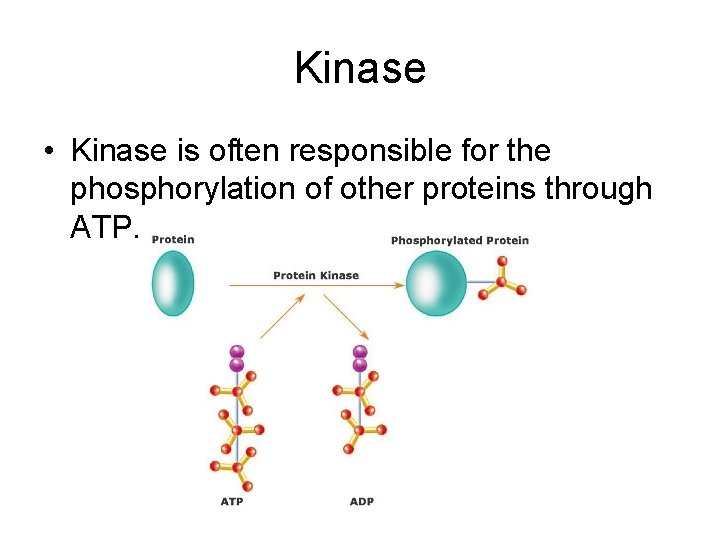
Kinase • Kinase is often responsible for the phosphorylation of other proteins through ATP.
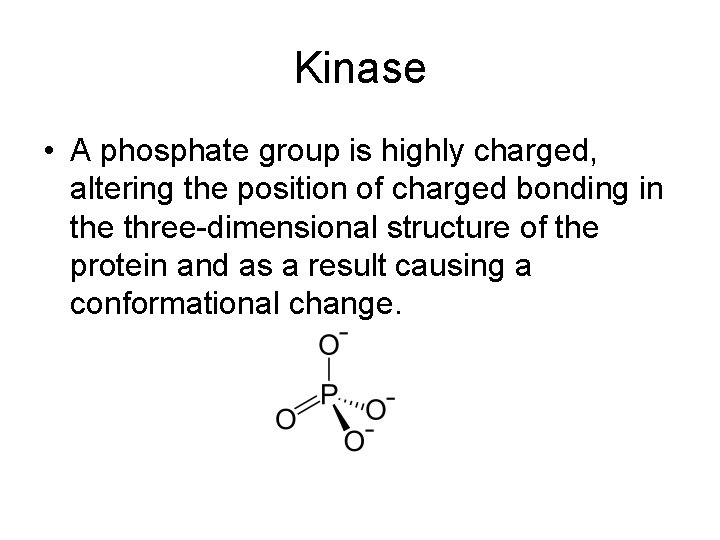
Kinase • A phosphate group is highly charged, altering the position of charged bonding in the three-dimensional structure of the protein and as a result causing a conformational change.
Kinase • Kinase animation 1 • Kinase animation 2
Kinase • Control of the cell cycle through cyclin dependent kinase Cdks. • Cyclins build up during the separate phases of the cell cycle and drive the cell into mitosis through the activation of different Cdks. • Each Cdk phosphorylates different target proteins in the cell. • Four classes of cyclin-Cdk: 1. 2. 3. 4. G 1 -Cdk G 1/S-Cdk M-Cdk + mitosis promoting factor (MPF) • Control of cell cycle game
Kinase • Now read this article: – Knight JDR, Qian B, Baker D, Kothary R (2007) Conservation, Variability and the Modeling of Active Protein Kinases. PLo. S ONE 2(10): e 982. doi: 10. 1371/journal. pone. 0000982 – Use Proteomics Tutorial 1 and answer the targeted questions in relation to this article.
Phosphatase • Phosphatase catalyses dephosphorylation of other proteins by the hydrolysis of phosphate from the protein molecule. • This again changes the conformation of the protein as a result of charge interactions of the R groups in the protein. • The cell cycle is finally pushed into the M phase by the phosphatase Cdc 25. This removes an inhibitory phosphate from MPF, activating mitosis.
Phosphatase and glycogen metabolism • Gluconeogenesis: – Glucose-6 -phosphatase is an important enzyme involved in the dephosphorylation of glucose-6 -phosphate produced from the metabolism of glycogen. – This generates glucose, which is then available for excretion from the cell or directly for respiration.
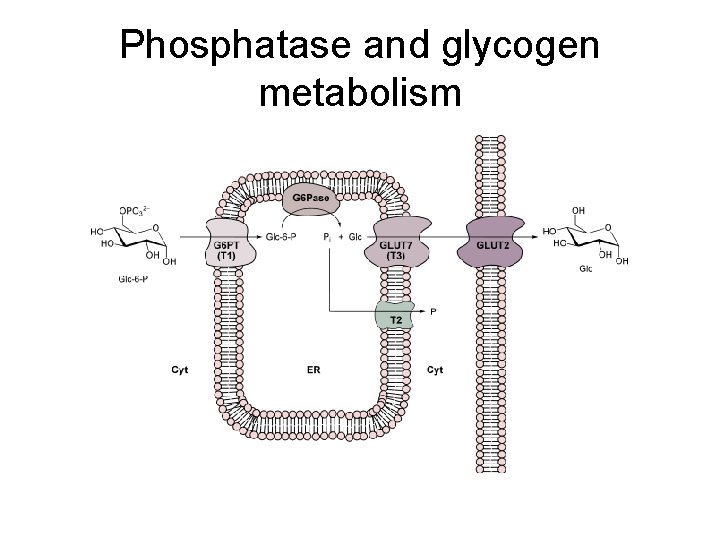
Phosphatase and glycogen metabolism
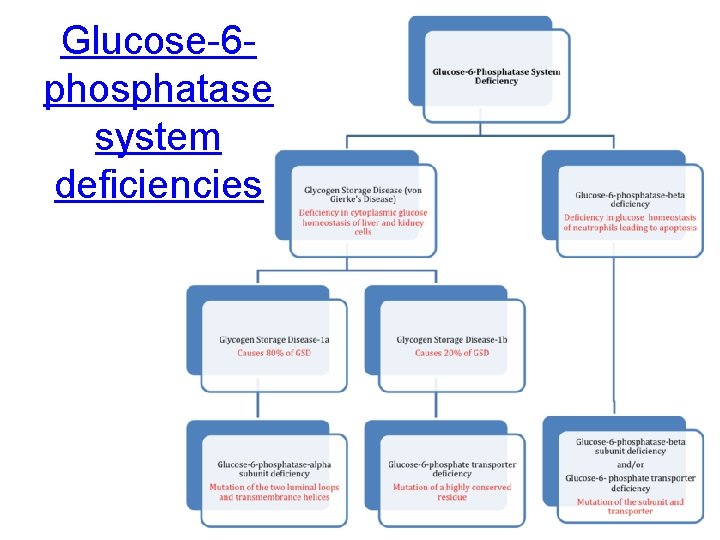
Glucose-6 phosphatase system deficiencies
Signal transduction • Extracellular hydrophilic signalling molecules are involved in the activation of extracellular receptor proteins that then interact with intracellular proteins through a series of kinases and phosphatases. • This cascade of phosphorylation and dephosphorylation quickly activates intracellular events. • Insulin and the blood sugar level are controlled in this way, as is cell death (apoptosis). • G-protein-coupled signal transduction • Cyclic AMP signalling

Kinase cascade
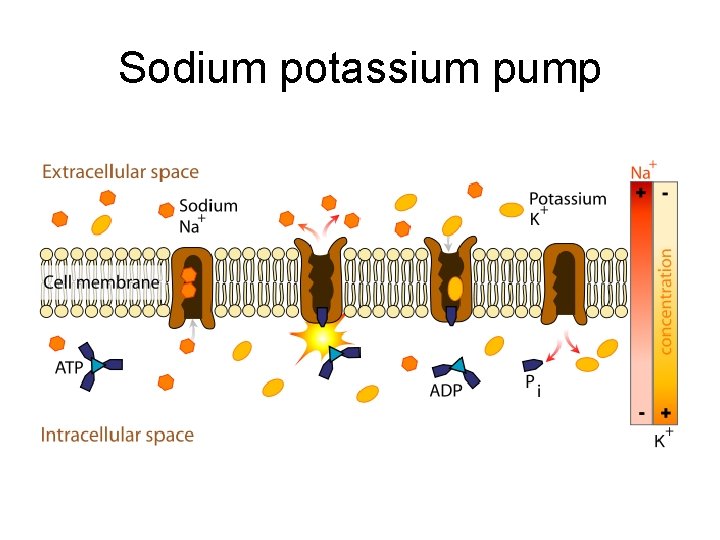
Sodium potassium pump
ATPases • Sodium potassium pump animation • Glucose co-transporter animation
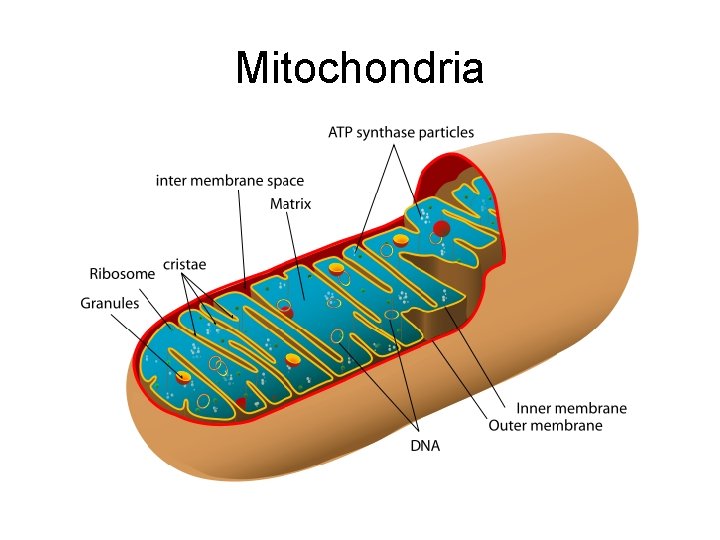
Mitochondria
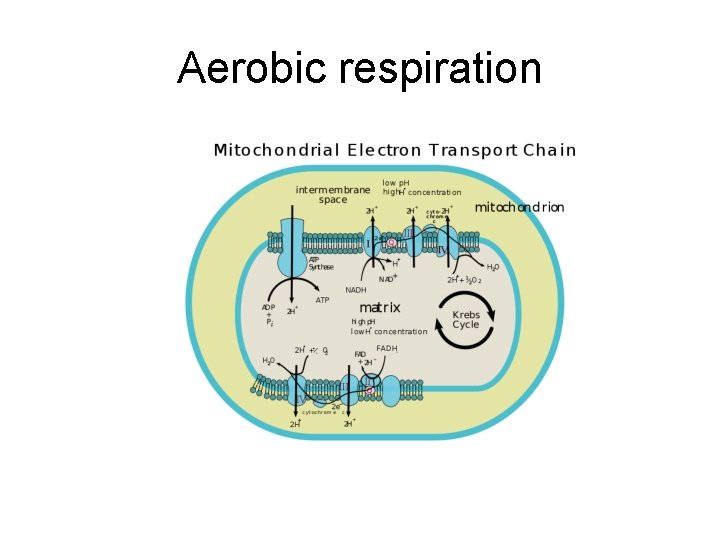
Aerobic respiration
Regeneration of ATP • ATP is regenerated in respiration. • Most respiration takes place in the mitochondria via oxidative phosphorylation. • This creates a proton gradient that is used to drive the membrane-bound enzyme ATP synthase and thus produce ATP.
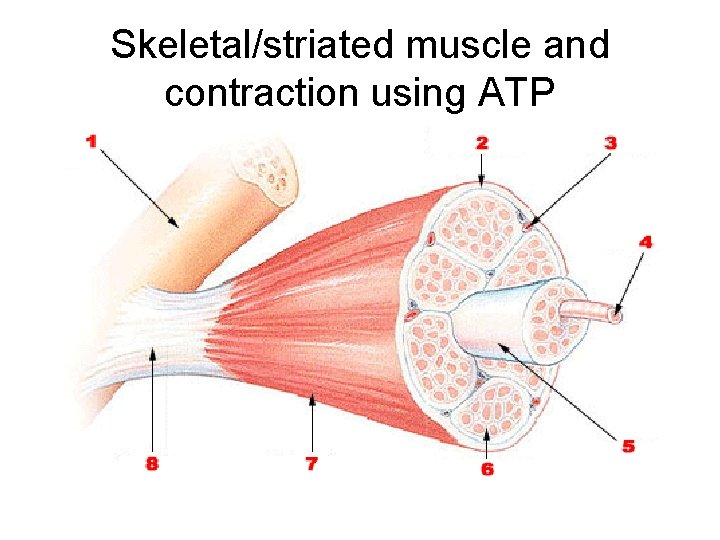
Skeletal/striated muscle and contraction using ATP
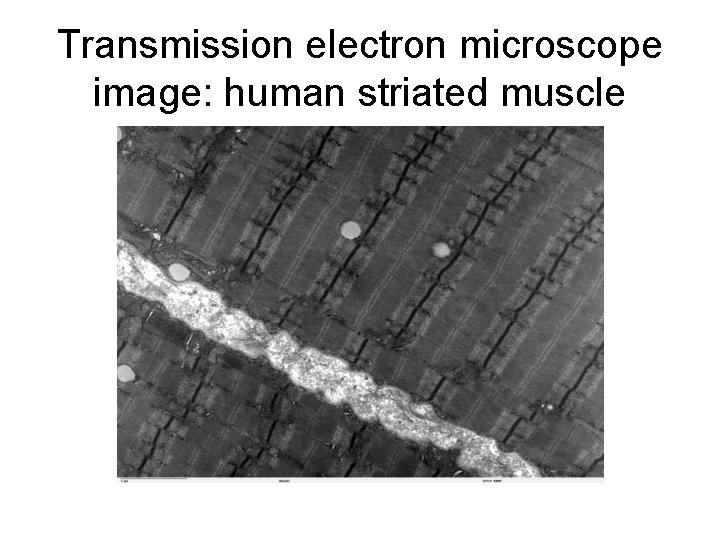
Transmission electron microscope image: human striated muscle
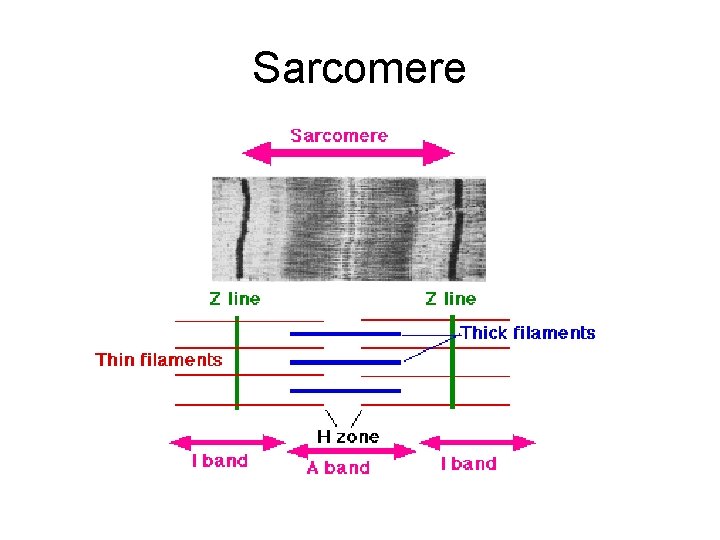
Sarcomere
Sarcomere • A muscle contracts as the actin and myosin filaments slide past each other. • The distance between the Z lines decreases during muscle contraction and as a result the muscle shortens. • This can be seen in the muscle as the A bands remain the same length but the I band H zone get shorter during the contraction. • Sarcomere contraction animation
Muscle contraction via ATPase • Myosin has heads that act as cross bridges as they bind to actin at specific binding sites and allow the muscle to contract.
Muscle contraction via ATPase • Breakdown of ATP and cross-bridge movement animation. • Actin and myosin animation: Harvard Bio. Visions in detail
Protein interactions in the cell • The following animations illustrate the importance of protein in the control of the cell’s activities: – The Inner Life of the Cell: protein interactions – pathways to cancer animation – apoptosis animation – cell signals animation
Think • What conditions are affected by the permanent activation of specific proteins? • What is the charge on a phosphate group? • What effect does phosphate have on protein? • How is ATP generated by a cell? • How is ATP used by a cell?
- Slides: 26