
AGRITOURISM AND FAIRS Animal and Public Health Education
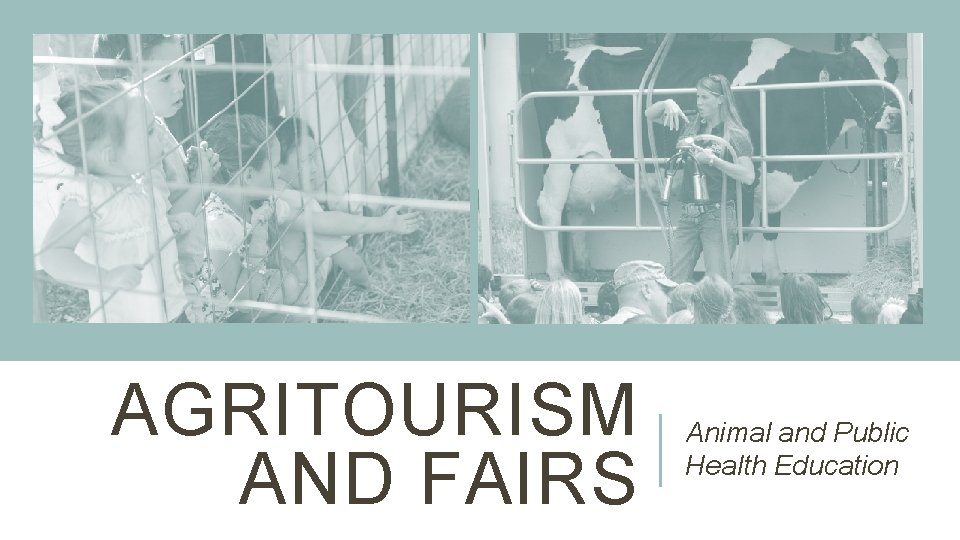
AGRITOURISM AND FAIRS Animal and Public Health Education
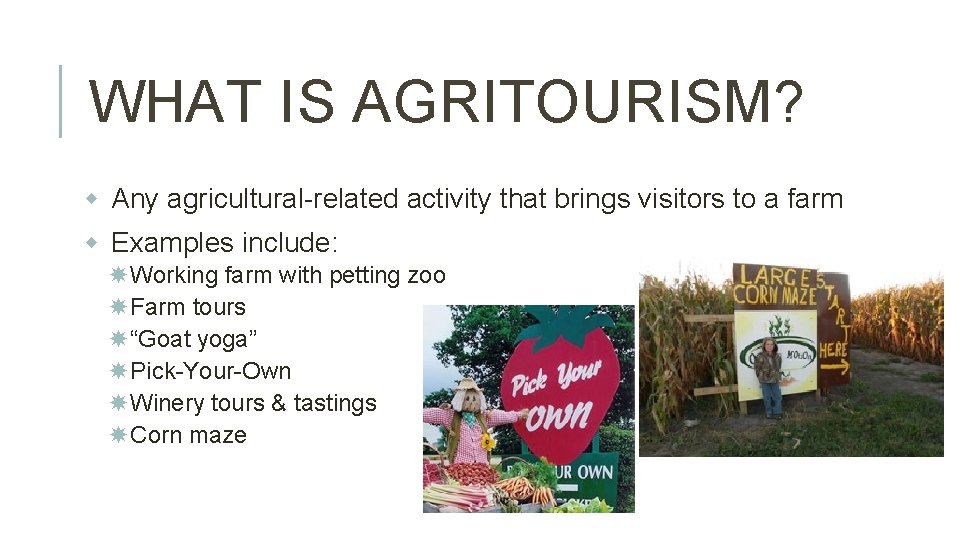
WHAT IS AGRITOURISM? w Any agricultural-related activity that brings visitors to a farm w Examples include: Working farm with petting zoo Farm tours “Goat yoga” Pick-Your-Own Winery tours & tastings Corn maze
WHY AGRITOURISM? w Farmers can market their products directly to consumers Can be more profitable than selling to retail or other indirect means w Consumers value on-farm experiences Family activity Educational opportunity Confidence in “buying local” w A rapidly growing trend in the Northeast!
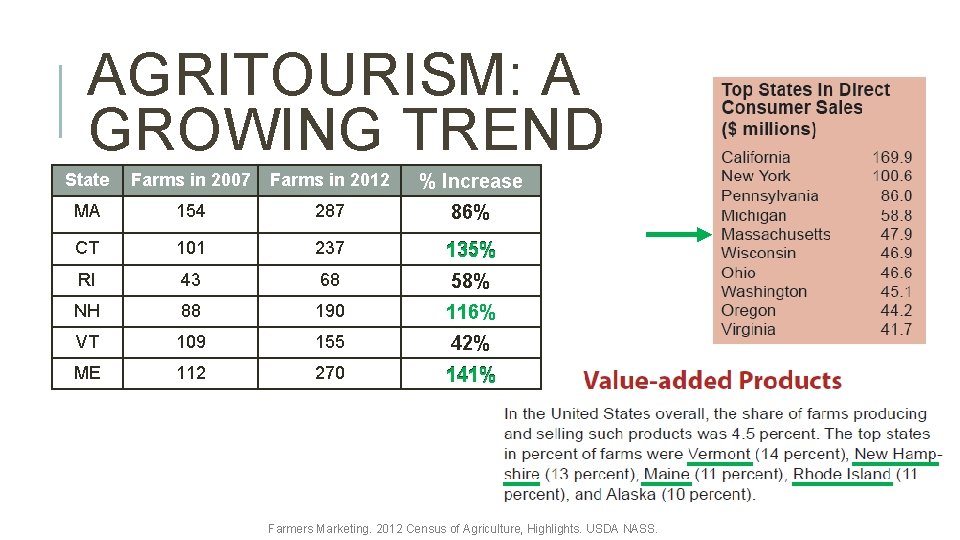
AGRITOURISM: A GROWING TREND State Farms in 2007 Farms in 2012 % Increase MA 154 287 86% CT 101 237 135% RI 43 68 58% NH 88 190 116% VT 109 155 42% ME 112 270 141% Farmers Marketing. 2012 Census of Agriculture, Highlights. USDA NASS.
FAIRS – ROLE IN AGRITOURISM w Also provide that public-livestock interaction w Allows for similar opportunities for public education and interaction with food origins and farming in general w Poses similar health risks to naïve public
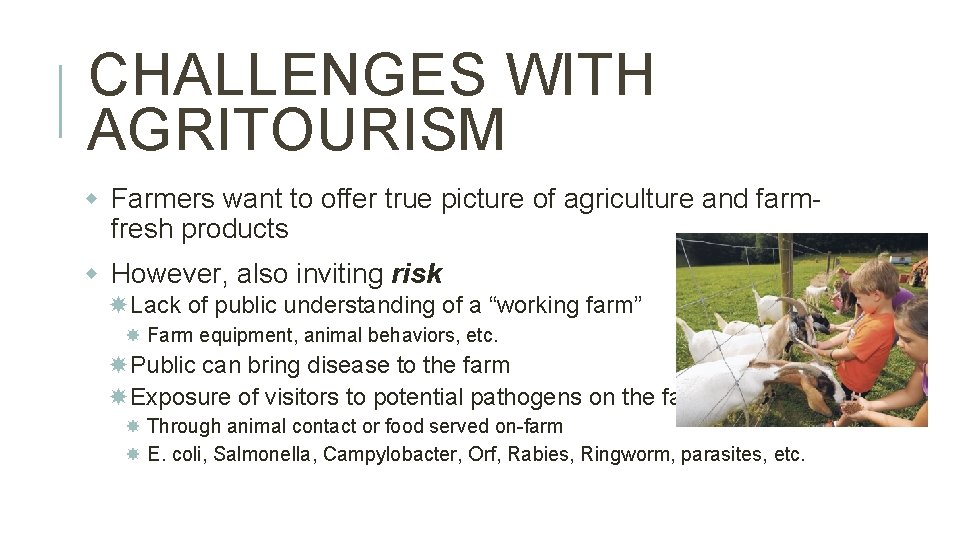
CHALLENGES WITH AGRITOURISM w Farmers want to offer true picture of agriculture and farmfresh products w However, also inviting risk Lack of public understanding of a “working farm” Farm equipment, animal behaviors, etc. Public can bring disease to the farm Exposure of visitors to potential pathogens on the farm Through animal contact or food served on-farm E. coli, Salmonella, Campylobacter, Orf, Rabies, Ringworm, parasites, etc.
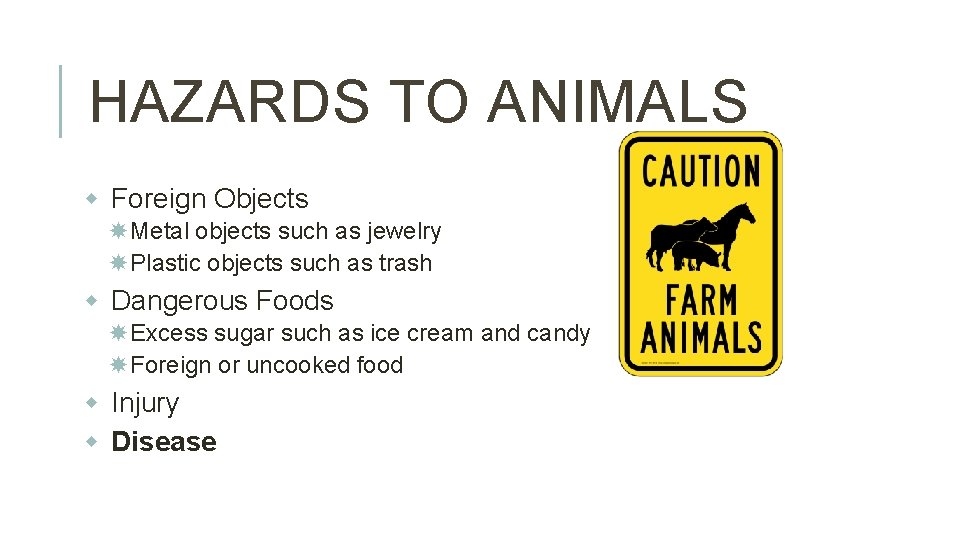
HAZARDS TO ANIMALS w Foreign Objects Metal objects such as jewelry Plastic objects such as trash w Dangerous Foods Excess sugar such as ice cream and candy Foreign or uncooked food w Injury w Disease
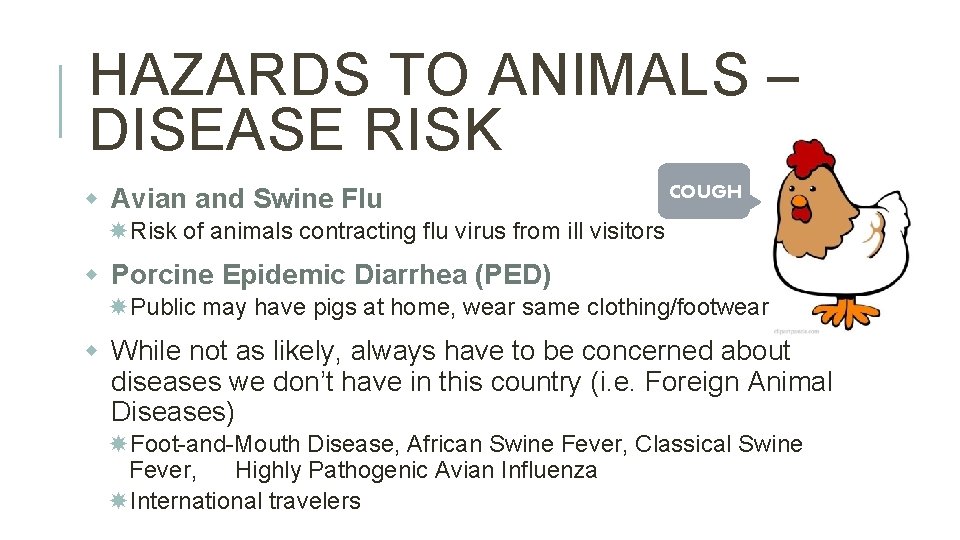
HAZARDS TO ANIMALS – DISEASE RISK w Avian and Swine Flu COUGH Risk of animals contracting flu virus from ill visitors w Porcine Epidemic Diarrhea (PED) Public may have pigs at home, wear same clothing/footwear w While not as likely, always have to be concerned about diseases we don’t have in this country (i. e. Foreign Animal Diseases) Foot-and-Mouth Disease, African Swine Fever, Classical Swine Fever, Highly Pathogenic Avian Influenza International travelers
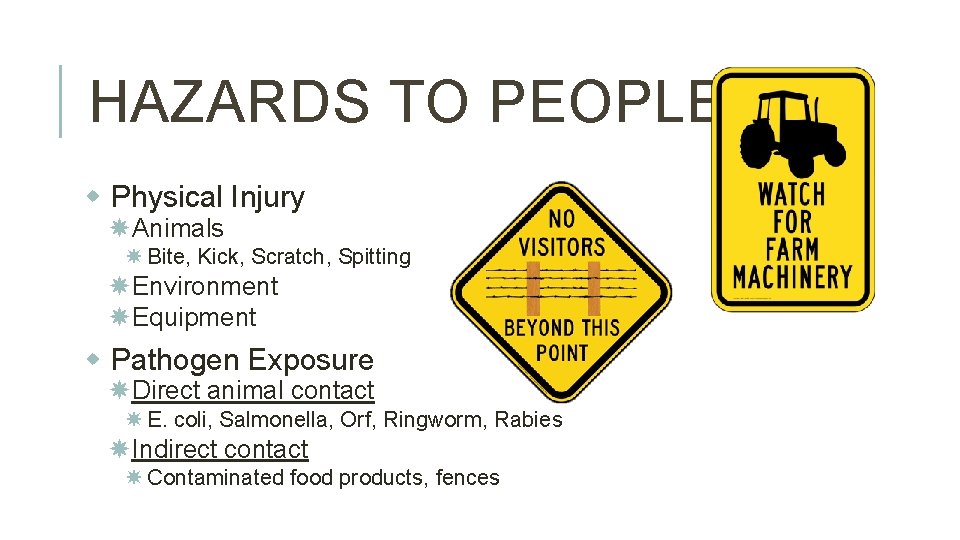
HAZARDS TO PEOPLE w Physical Injury Animals Bite, Kick, Scratch, Spitting Environment Equipment w Pathogen Exposure Direct animal contact E. coli, Salmonella, Orf, Ringworm, Rabies Indirect contact Contaminated food products, fences
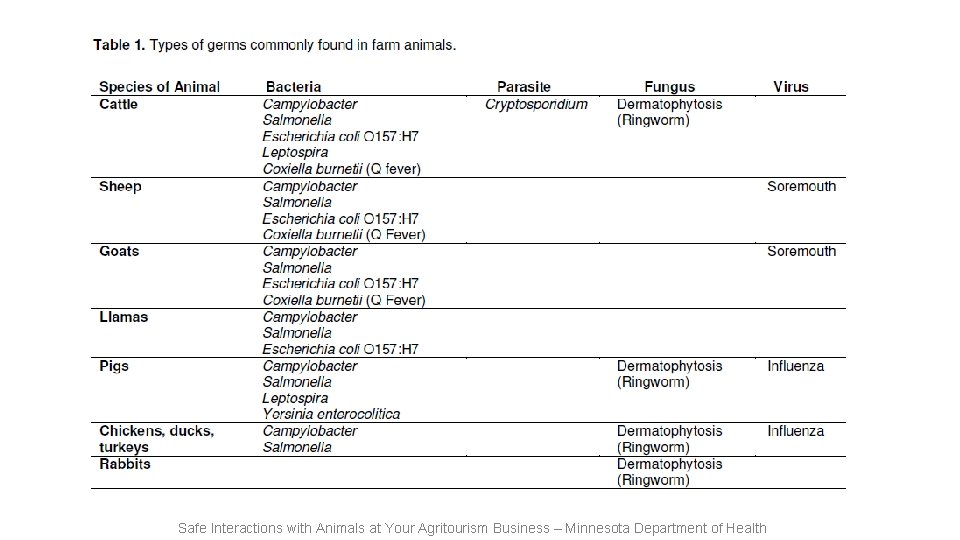
Safe Interactions with Animals at Your Agritourism Business – Minnesota Department of Health
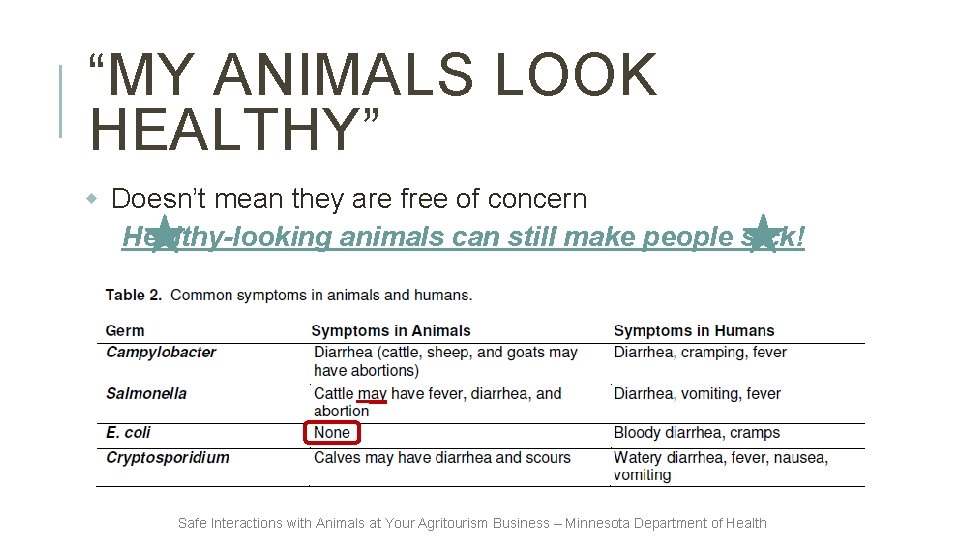
“MY ANIMALS LOOK HEALTHY” w Doesn’t mean they are free of concern Healthy-looking animals can still make people sick! Safe Interactions with Animals at Your Agritourism Business – Minnesota Department of Health
WHAT STEPS CAN BE TAKEN? w Limit Exposure w Limit Spread w Keep it Clean Animal AND public areas w Protect the Fair
LIMIT EXPOSURE – WHAT TO AVOID w Recommendations: Don’t allow visitors to go unattended Don’t allow visitors near sick or aggressive animals Don’t allow visitors to come in contact with newborn animals or animals in labor Don’t allow food or drink near animals
LIMIT SPREAD – WAYS TO SET UP w Animal health principles to follow: Assess animals everyday for health and suitability for public contact Appropriate vaccination and treatment protocols Consult a veterinarian! Animal ID tags and records w Visitor sign-in at entry – good time to inform high risk visitors
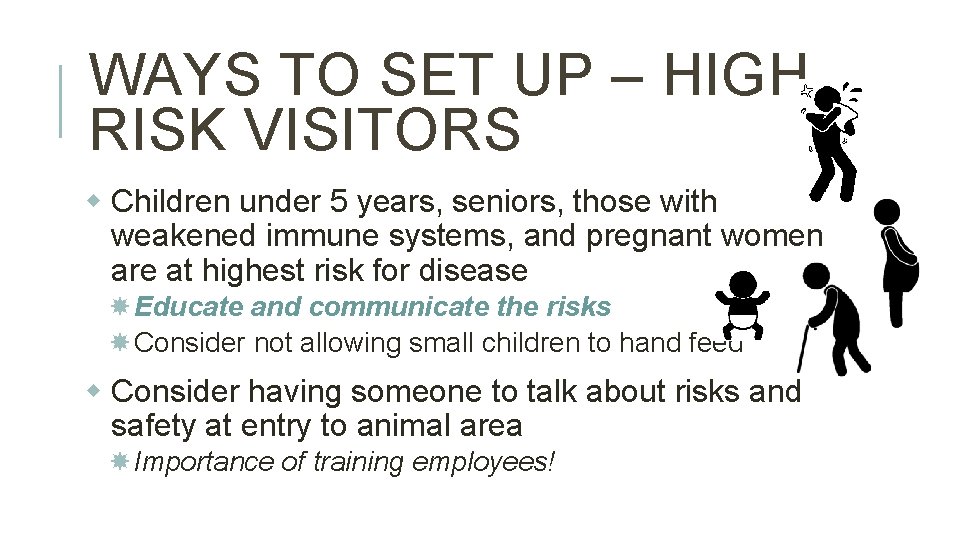
WAYS TO SET UP – HIGH RISK VISITORS w Children under 5 years, seniors, those with weakened immune systems, and pregnant women are at highest risk for disease Educate and communicate the risks Consider not allowing small children to hand feed w Consider having someone to talk about risks and safety at entry to animal area Importance of training employees!
WAYS TO MINIMIZE RISK w Many resources available to learn the risks and assess the operation or fair w Need to understand priorities and make improvements Doesn’t need to cost a lot! Many simple improvements that can make a big impact w Biosecurity!
WHY IS BIOSECURITY IMPORTANT? w Biosecurity’s goal is to: Reduce infectious disease introduction and to minimize disease spread between animals on the farm w Protects: Animals People The Farm Biosecurity Risk Assessment for Farm Visitors and Exhibitions. Penn State Extension, 2016.
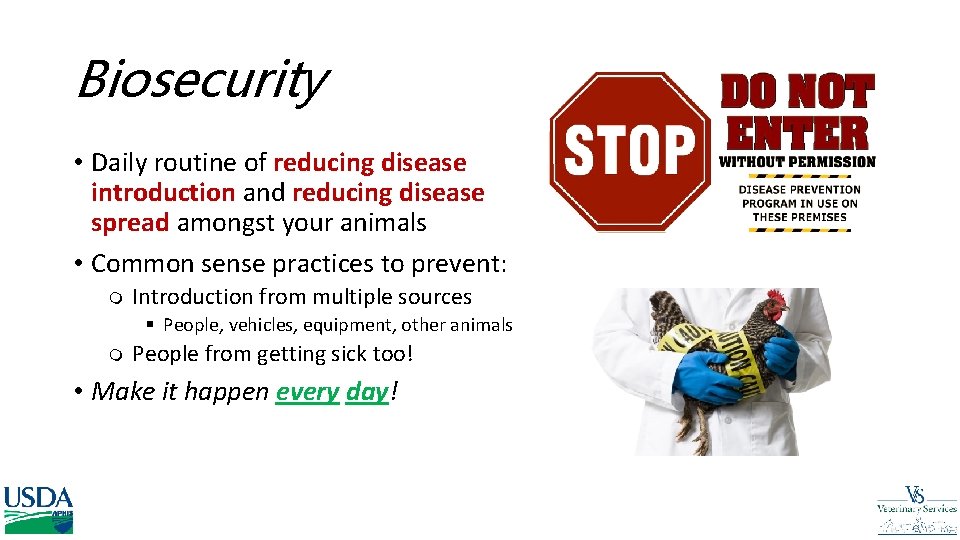
Biosecurity • Daily routine of reducing disease introduction and reducing disease spread amongst your animals • Common sense practices to prevent: Introduction from multiple sources § People, vehicles, equipment, other animals People from getting sick too! • Make it happen every day!
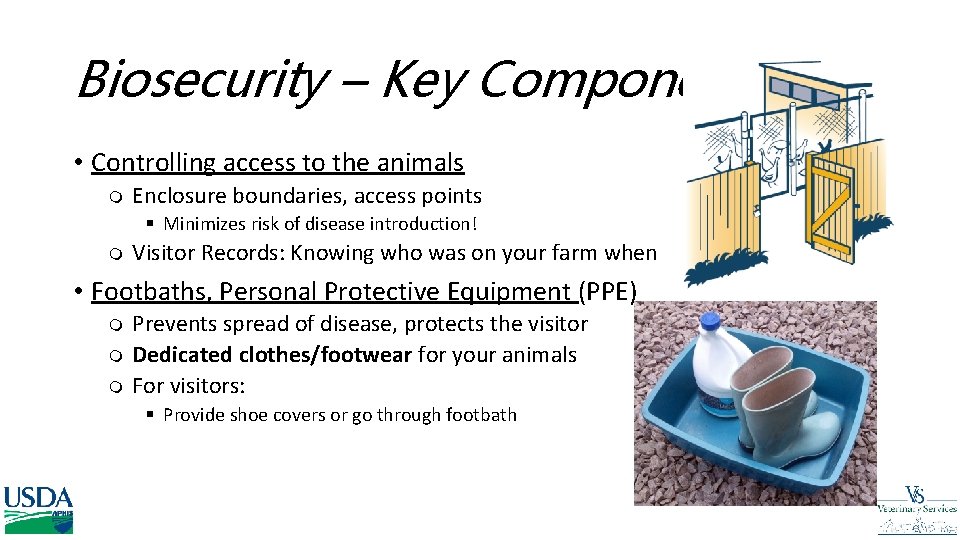
Biosecurity – Key Components • Controlling access to the animals Enclosure boundaries, access points § Minimizes risk of disease introduction! Visitor Records: Knowing who was on your farm when • Footbaths, Personal Protective Equipment (PPE) Prevents spread of disease, protects the visitor Dedicated clothes/footwear for your animals For visitors: § Provide shoe covers or go through footbath
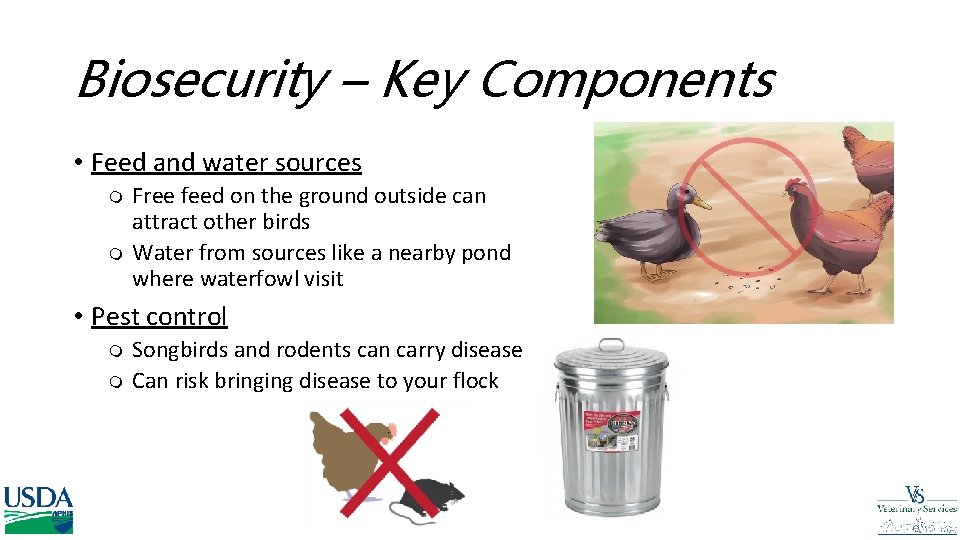
Biosecurity – Key Components • Feed and water sources Free feed on the ground outside can attract other birds Water from sources like a nearby pond where waterfowl visit • Pest control Songbirds and rodents can carry disease Can risk bringing disease to your flock
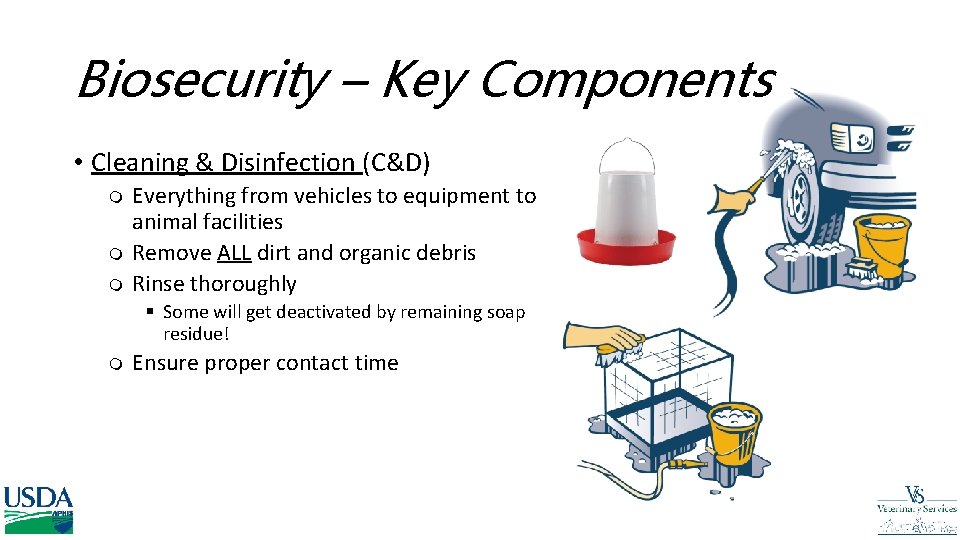
Biosecurity – Key Components • Cleaning & Disinfection (C&D) Everything from vehicles to equipment to animal facilities Remove ALL dirt and organic debris Rinse thoroughly § Some will get deactivated by remaining soap residue! Ensure proper contact time
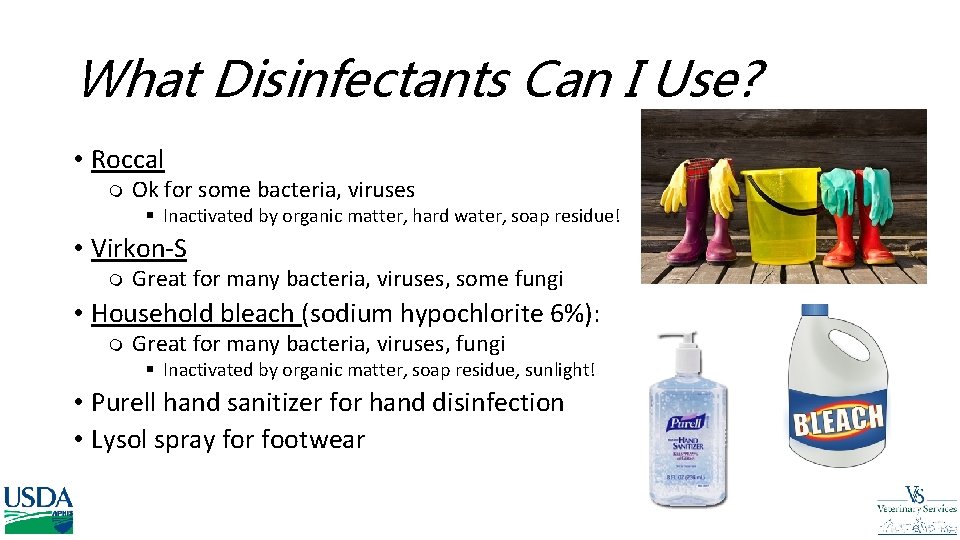
What Disinfectants Can I Use? • Roccal Ok for some bacteria, viruses § Inactivated by organic matter, hard water, soap residue! • Virkon-S Great for many bacteria, viruses, some fungi • Household bleach (sodium hypochlorite 6%): Great for many bacteria, viruses, fungi § Inactivated by organic matter, soap residue, sunlight! • Purell hand sanitizer for hand disinfection • Lysol spray for footwear
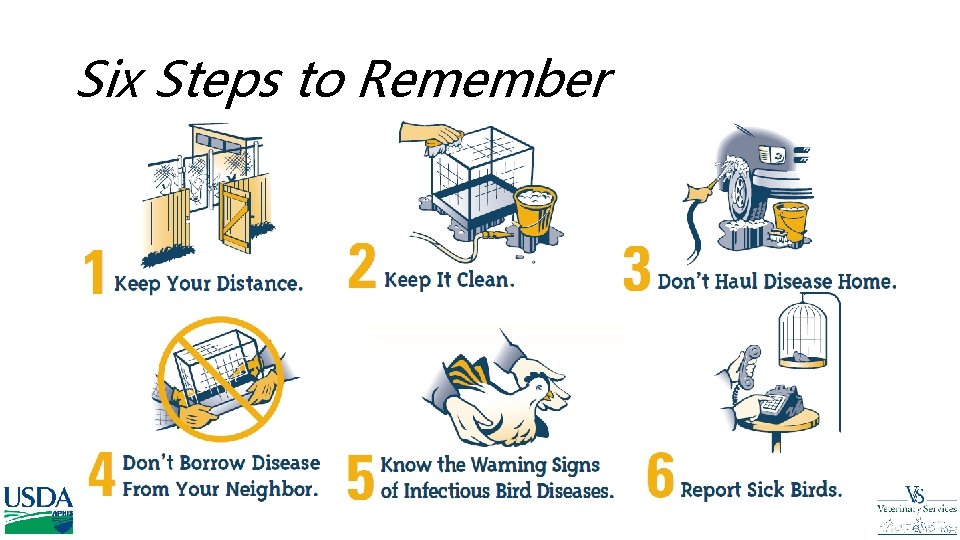
Six Steps to Remember
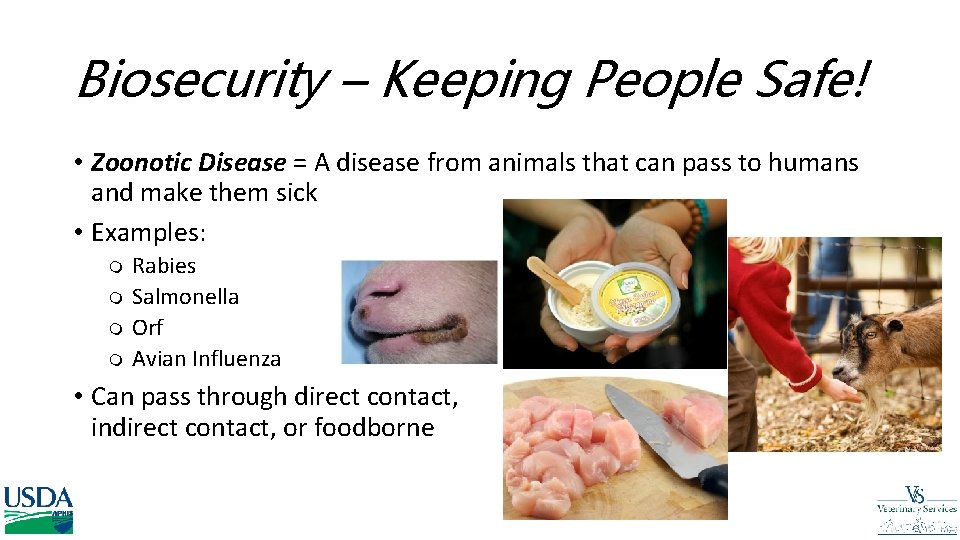
Biosecurity – Keeping People Safe! • Zoonotic Disease = A disease from animals that can pass to humans and make them sick • Examples: Rabies Salmonella Orf Avian Influenza • Can pass through direct contact, indirect contact, or foodborne
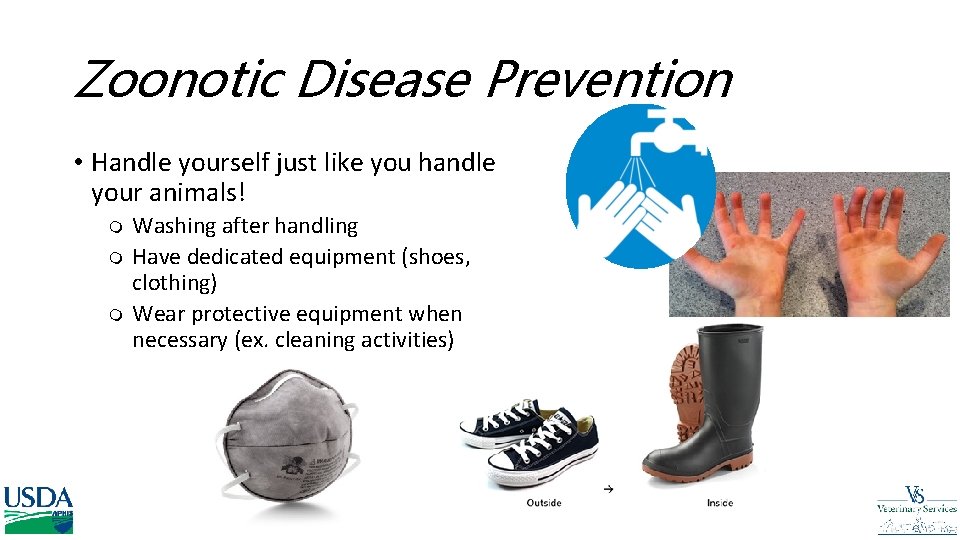
Zoonotic Disease Prevention • Handle yourself just like you handle your animals! Washing after handling Have dedicated equipment (shoes, clothing) Wear protective equipment when necessary (ex. cleaning activities)
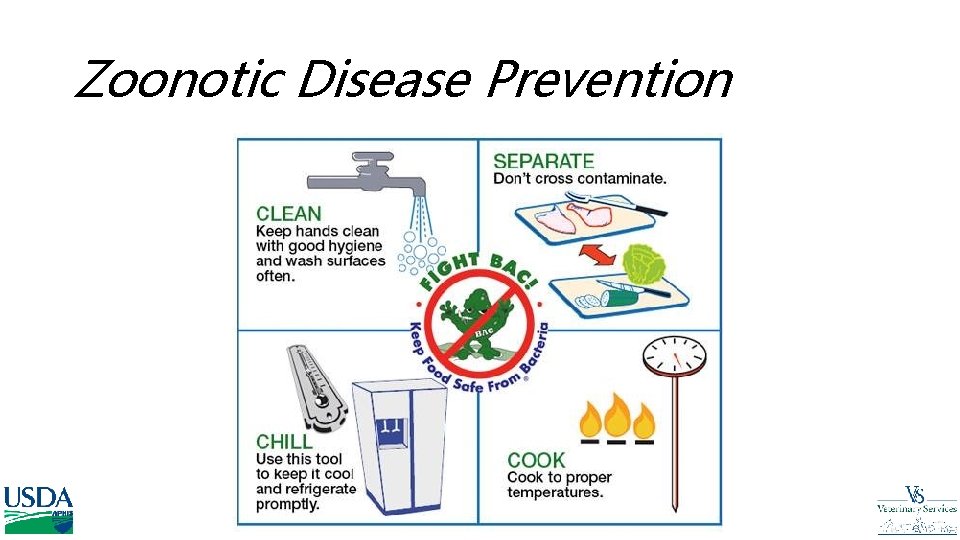
Zoonotic Disease Prevention
FEDERAL VS. STATE INVOLVEMENT w As a Federal agency, what role do we play? Public health disease outbreak prevention Working with federal and state public health colleagues No direct regulations for VS Responsible for “safeguarding animal health” Protecting agriculture in New England – “non -traditional systems”
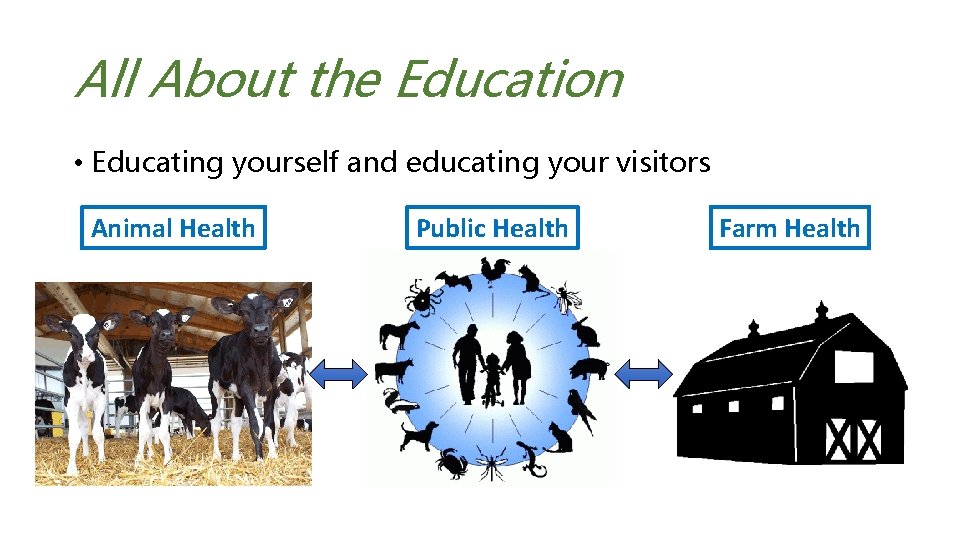
All About the Education • Educating yourself and educating your visitors Animal Health Public Health Farm Health
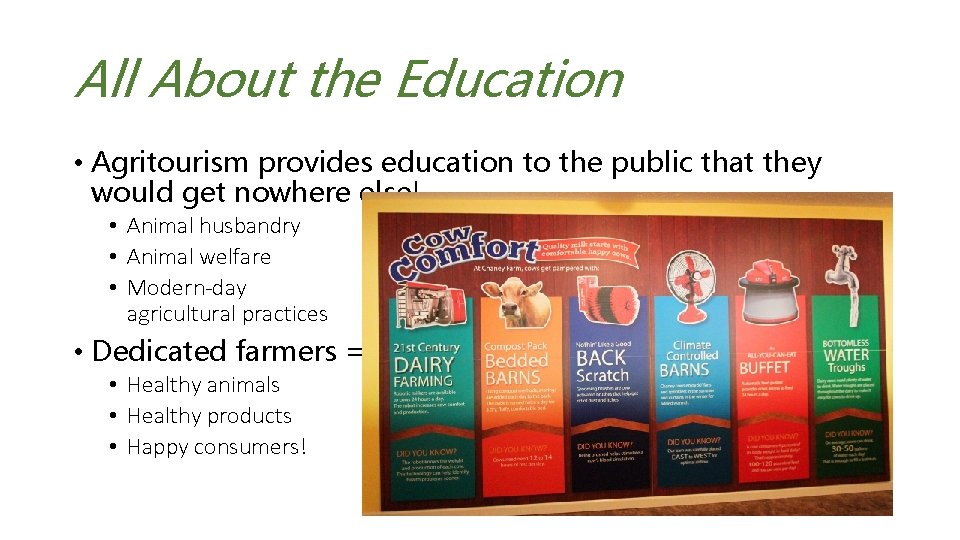
All About the Education • Agritourism provides education to the public that they would get nowhere else! • Animal husbandry • Animal welfare • Modern-day agricultural practices • Dedicated farmers = • Healthy animals • Healthy products • Happy consumers!
- Slides: 29