
Agriculture Content and Technology in an ESL Classroom

- Slides: 29
Agriculture Content and Technology in an ESL Classroom Rosita L. Rivera, Ph. D. Catherine M. Mazak, Ph. D. University of Puerto Rico, Mayagüez
Overview • The Context • The Problem • The Project • Pedagogical Implications
The Context • University of Puerto Rico in Mayaguez – Agriculture and Engineering Campus – Graduates are hired by federal and local agencies (USDA/NRCS) • Two different student populations – Bilingual students (usually from private schools) – Students who struggle with language learning (usually socially and economically disadvantaged) • We are preparing students for bilingual academic study
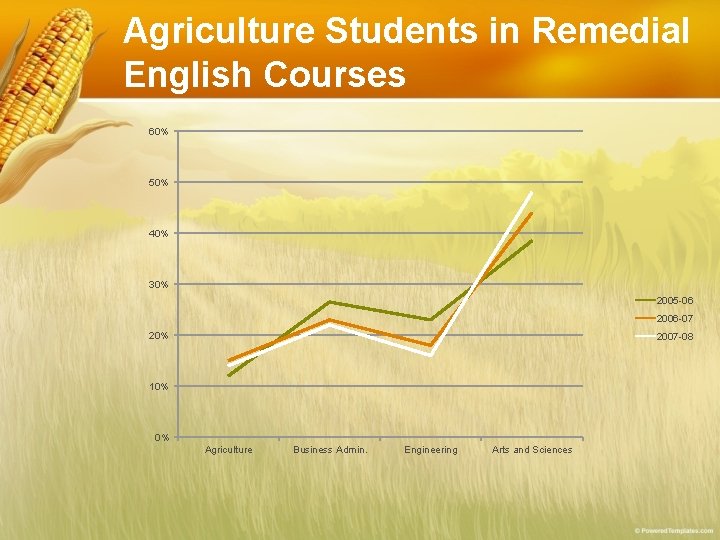
The Project • Problem – Agriculture majors over-represented in low-level English basic track courses – One-size-fits all ESL curriculum – High failure rate lengthens time to degree • Solution – Content-based curriculum – Technology-enhanced classroom – Cohort of students moves together through intensive summer, fall, and spring courses – Authentic Materials and Assessment
Agriculture Students in Remedial English Courses 60% 50% 40% 30% 2005 -06 2006 -07 20% 2007 -08 10% 0% Agriculture Business Admin. Engineering Arts and Sciences
USDA Funding • Using Technology to Advance English Language Learning for First Year Agriculture Majors • USDA/CSREES Hispanic Serving Institutions Education Grants Program • $240, 000 for two years
Research Questions • What is the relationship between language, content, strategy, and technology learning in a university-level content-based, computermediated English classroom? – How does technology use enhance English language learning? – How does access to technologies facilitate content-based language learning?
Data Collected • Focus groups with students • Technology use surveys • TA reflections • External observers focus groups and reports • Ethnographic fieldnotes (one semester) • Blog entries • Course work
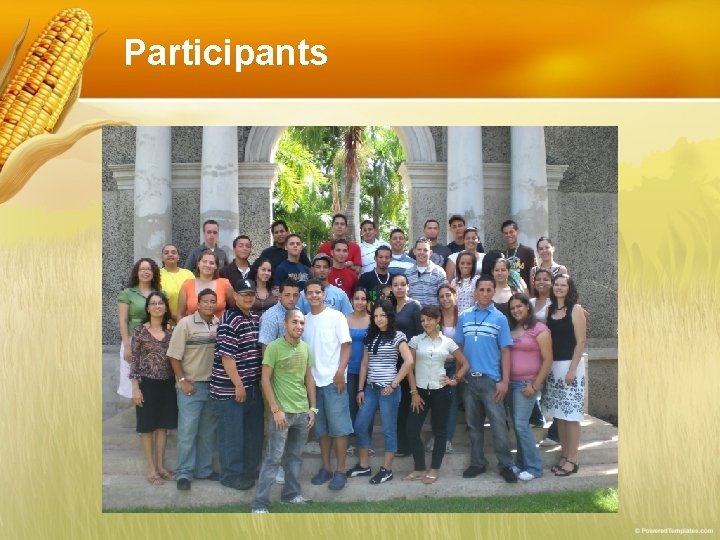
Participants
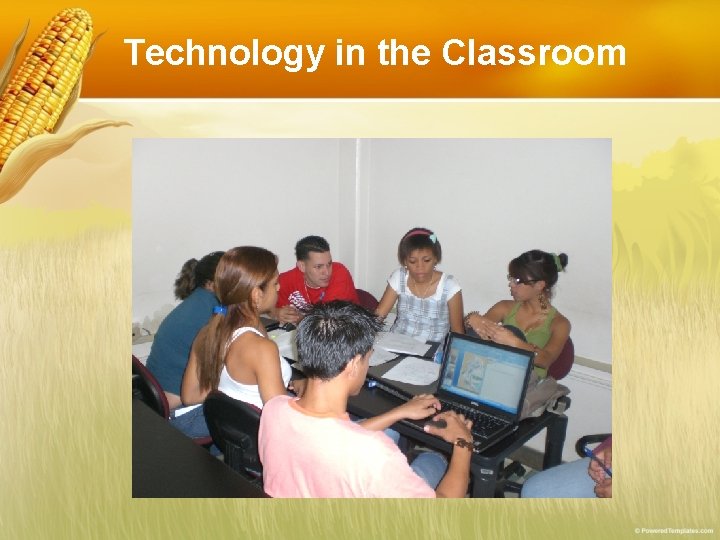
Technology in the Classroom
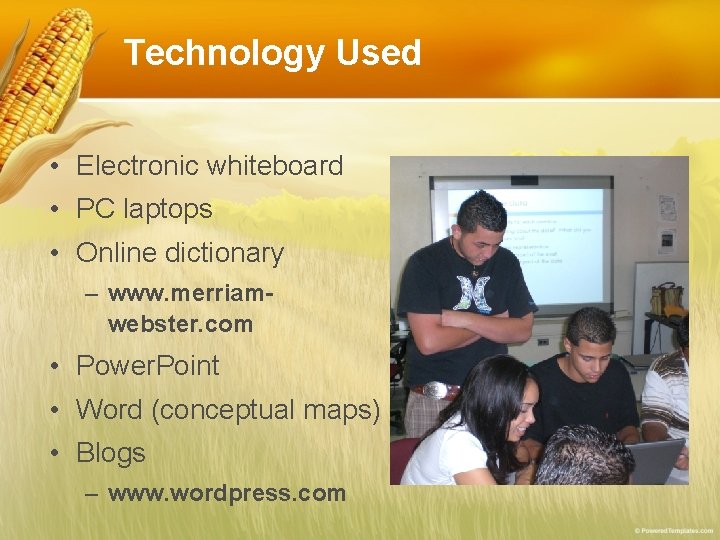
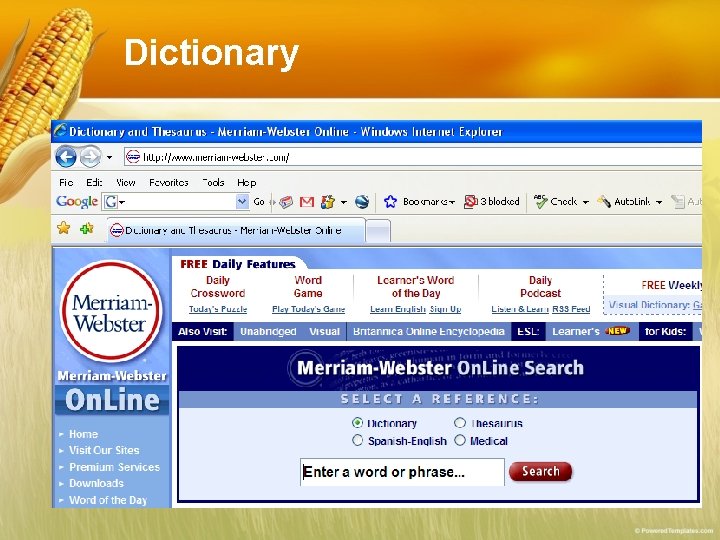
Technology Used • Electronic whiteboard • PC laptops • Online dictionary – www. merriamwebster. com • Power. Point • Word (conceptual maps) • Blogs – www. wordpress. com
Content Based Instruction (CBI) • “Dual commitment to language- and content -learning objectives. ” (Stoller, 2004) • Reinforces vocabulary, grammar, and discourse structures common in a specific discipline. (Brinton, Snow & Wesche, 1989)
Computer Mediated Instruction • Three roles of the computer: – Tutor – Tool – Medium • “There is consensus in CALL research that it is not technology per se that affects the learning of language and culture but the particular uses of technology. ” (Kern 2006)
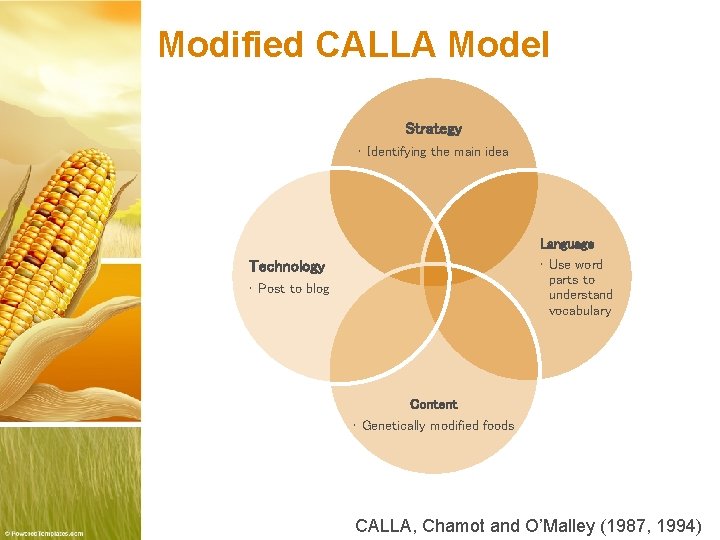
Modified CALLA Model Strategy • Identifying the main idea Language • Use word parts to understand vocabulary Technology • Post to blog Content • Genetically modified foods CALLA, Chamot and O’Malley (1987, 1994)
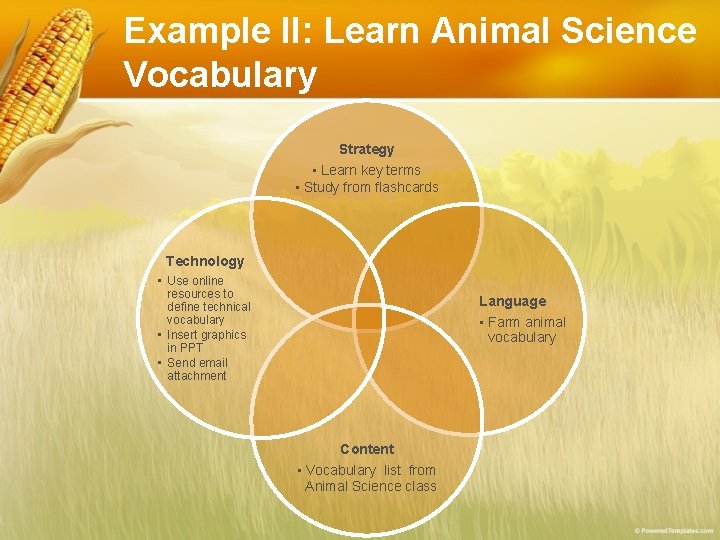
Example II: Learn Animal Science Vocabulary Strategy • Learn key terms • Study from flashcards Technology • Use online resources to define technical vocabulary • Insert graphics in PPT • Send email attachment Language • Farm animal vocabulary Content • Vocabulary list from Animal Science class
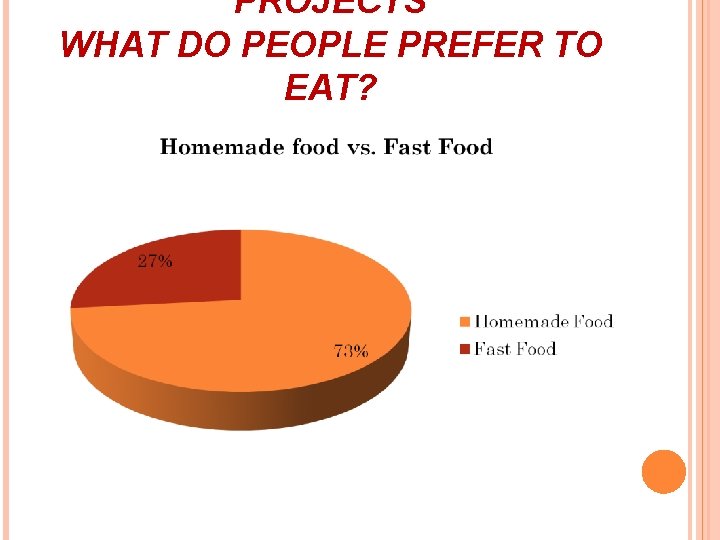
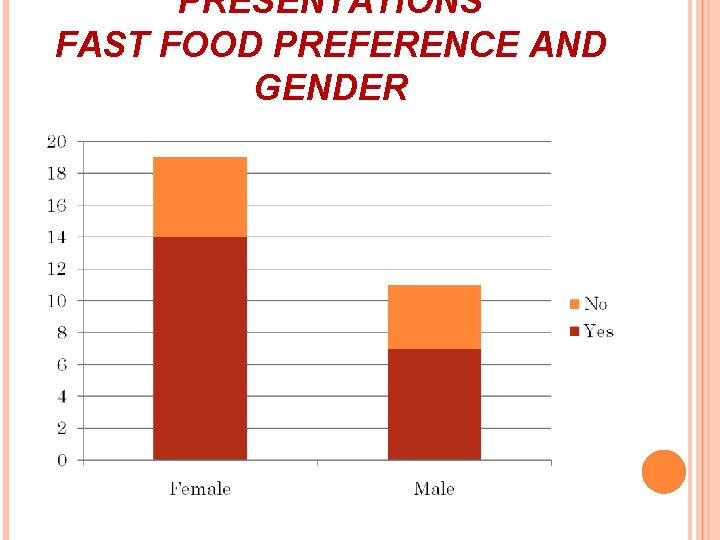
Example III: Genetically Modified Foods • Understanding the text (content) • Scanning/skimming for information (strategy) • Graphically organize information from the reading (strategy—learn to represent information from a reading first and then also use this graphic representation of data in the presentation) • Reporting data (language— 90% said that…) • Recontextualize the information by applying it to their own presentation
PROJECTS WHAT DO PEOPLE PREFER TO EAT?
PRESENTATIONS FAST FOOD PREFERENCE AND GENDER
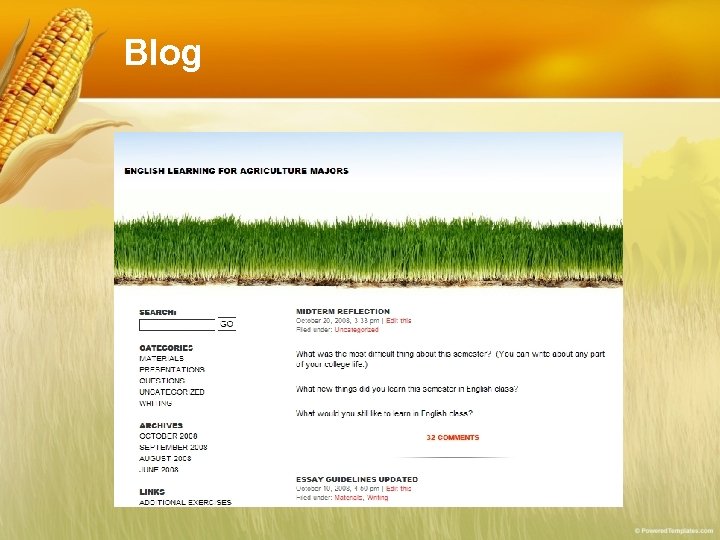
Blog
Carmen “The blog because at the same time that we use the internet we would learn about grammar because we would have to be writing everything, the errors and all the horrors that we would commit, well, we would learn to correct them and to write better and at the same time we were interacting with something different and it wasn’t the same thing all the time, reading and writing, read and write. ”
Giselle “What I liked was how I did the blog and the comments because it was all in English and everything, and everything that it said was in English, the information that it asks of you and everything is in English… Well, you practice writing the comments and reading , whatever thing you don’t understand you would ask a teacher or you would look in the very same internet in the dictionary and everything and it gave you access to everything and you could do it yourself. ”
Dictionary
Ferdinand “Truthfully I liked the dictionary too. I had never used an online dictionary where you write a word and it comes up really fast and not like in the paper dictionary. ”
Carmen “I liked that [the technology use] a lot because apart from taking the English class, well, it’s like experimenting more with the field that we are going to study here. I am sure that the great majority (of students) entered the department and they didn’t have any idea what was going to happen or with what they were going to work and, I don’t know, really, at least for me it opened my eyes…now I have , like, more security to decide in what I’m going to stay and in what I’m going to work. ”
Kristen “It’s really very good, the technology and English—or that’s to say, it’s something that you have to use and so, well, (you have ) to learn to use the two things at the same time and so it’s like beneficial for us now that we are going to enter the field in the university and the agriculture. ”
Answers to Research Questions • How does technology use enhance English language learning? – “Everything is in English” – Improved motivation – Easy, student-empowering online dictionary • How does access to technologies facilitate content-based language teaching? – Students made link between tech and university life (EAP) – Students made link between tech and content-based language learning
Pedagogical Implications • Technology promotes the integration of strategy, content, and language learning in the classroom. • Integrating technology facilitates students’ success in other academic contexts. • Technology motivates students to learn content and language. • Technology offers opportunities for individual empowerment and learning.
Issues • Students can depend too much on having materials posted to the blog (especially Power. Point). • Modeling takes a substantial amount of teaching time. • Technical assistants are needed. • Routines for technology use need to be established. • Blogs can be accessible to everyone. • Curricular development takes more time.
Contact Information Personal Info: • cathymazak@mac. com • http: //academic. uprm. edu/cmazak Project Info: • http: //academic. uprm. edu/usdaenglish • http: //usdaenglish. wordpress. com • http: //esltraining. wordpress. com