
Agriculture 101 Warm Up Think back to calculating
Agriculture 101
Warm Up Think back to calculating your personal Ecological Footprint in September… Why did the amount of meat you ate factor so greatly into your footprint? Respond in your journals
Farmlands: • Arable Land: Land used to grow crops • The United States contains more than 100 million hectares of arable land.
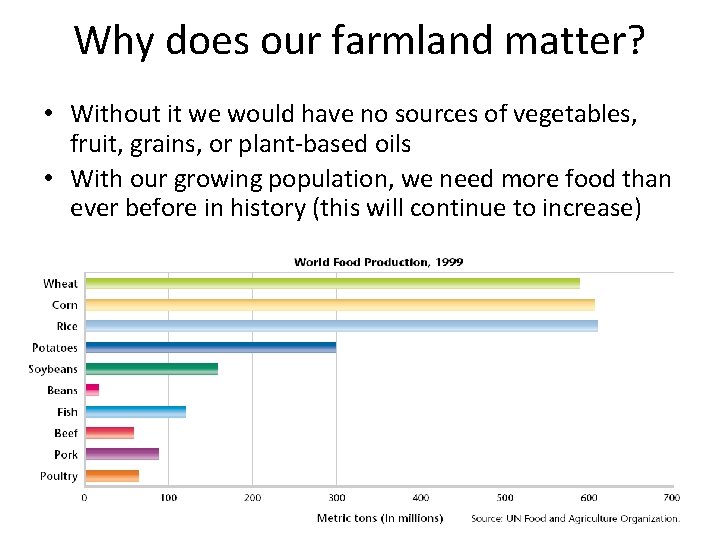
Why does our farmland matter? • Without it we would have no sources of vegetables, fruit, grains, or plant-based oils • With our growing population, we need more food than ever before in history (this will continue to increase)
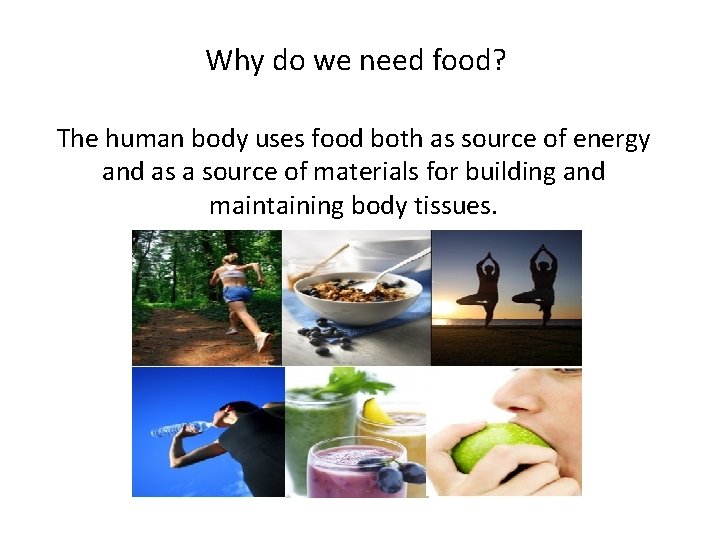
Why do we need food? The human body uses food both as source of energy and as a source of materials for building and maintaining body tissues.
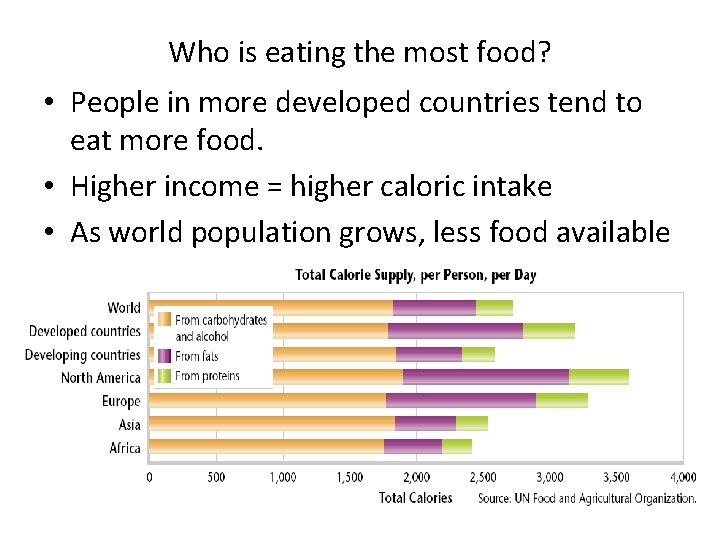
Who is eating the most food? • People in more developed countries tend to eat more food. • Higher income = higher caloric intake • As world population grows, less food available
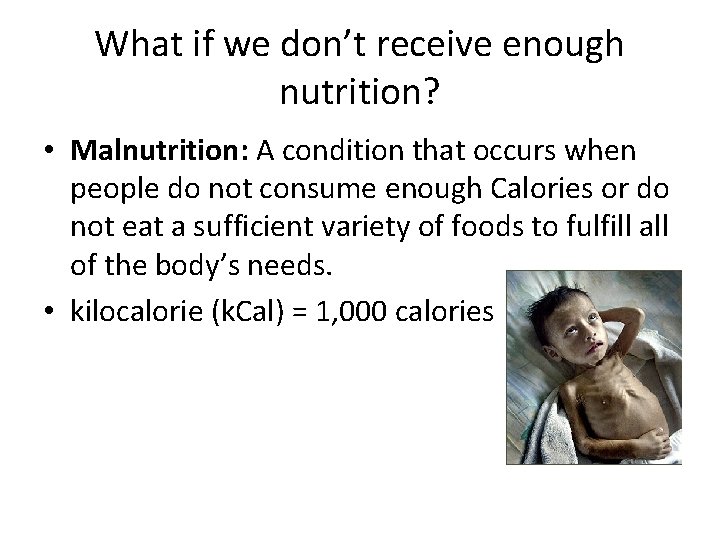
What if we don’t receive enough nutrition? • Malnutrition: A condition that occurs when people do not consume enough Calories or do not eat a sufficient variety of foods to fulfill all of the body’s needs. • kilocalorie (k. Cal) = 1, 000 calories
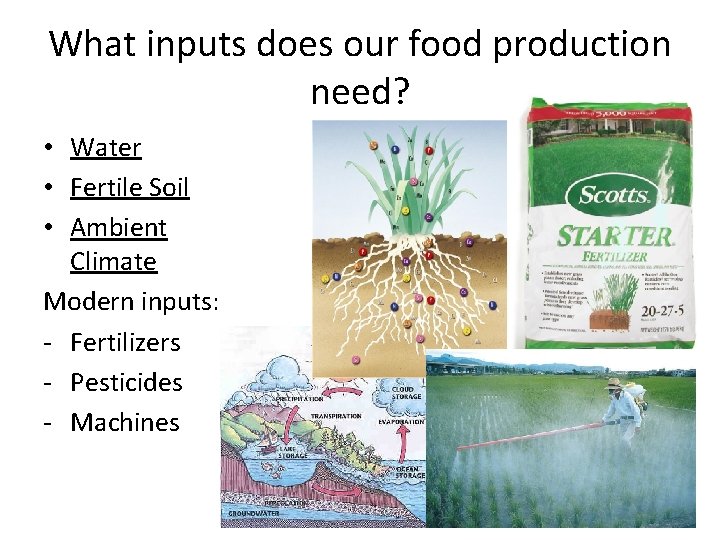
What inputs does our food production need? • Water • Fertile Soil • Ambient Climate Modern inputs: - Fertilizers - Pesticides - Machines
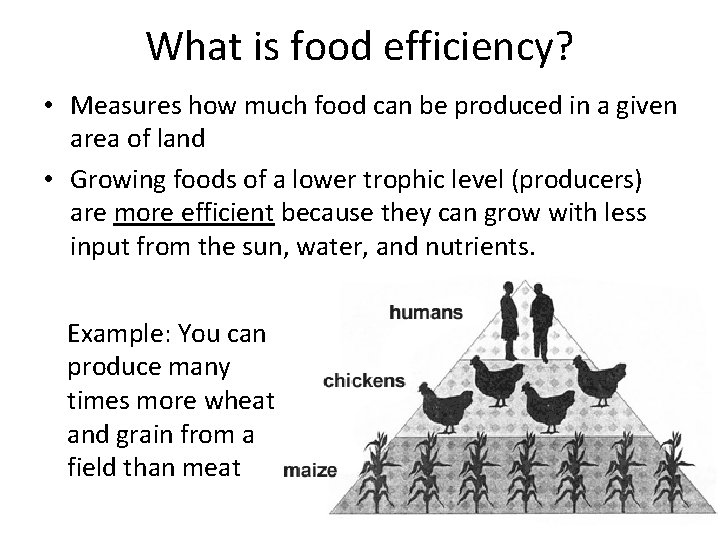
What is food efficiency? • Measures how much food can be produced in a given area of land • Growing foods of a lower trophic level (producers) are more efficient because they can grow with less input from the sun, water, and nutrients. Example: You can produce many times more wheat and grain from a field than meat
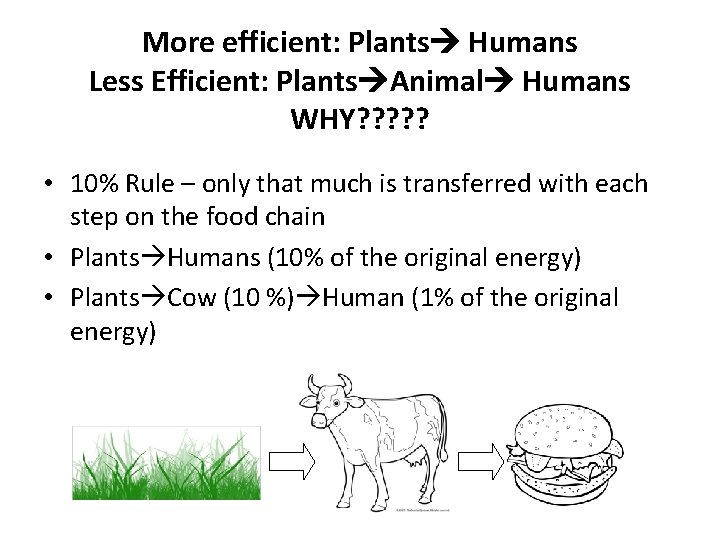
More efficient: Plants Humans Less Efficient: Plants Animal Humans WHY? ? ? • 10% Rule – only that much is transferred with each step on the food chain • Plants Humans (10% of the original energy) • Plants Cow (10 %) Human (1% of the original energy)
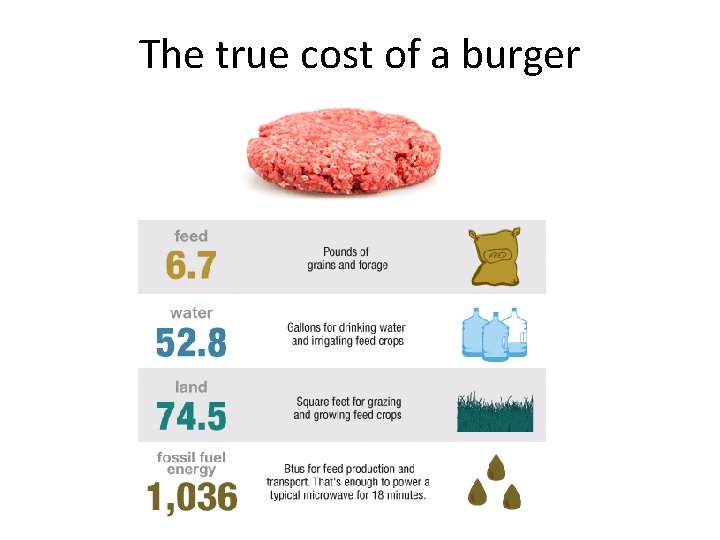
The true cost of a burger
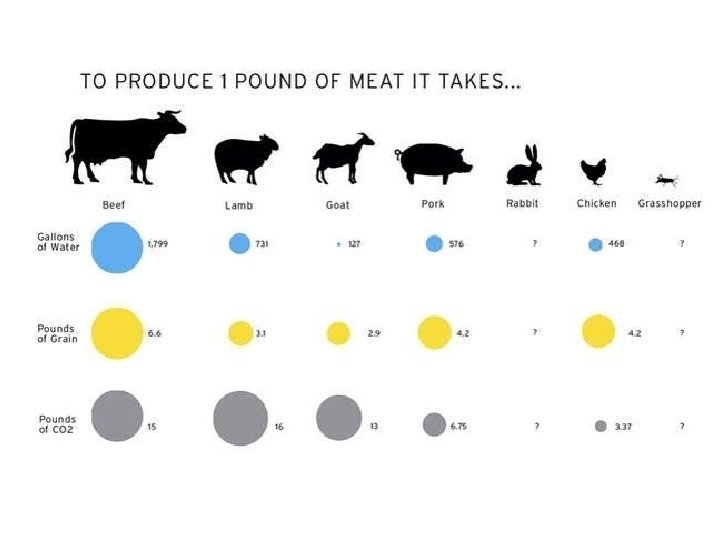
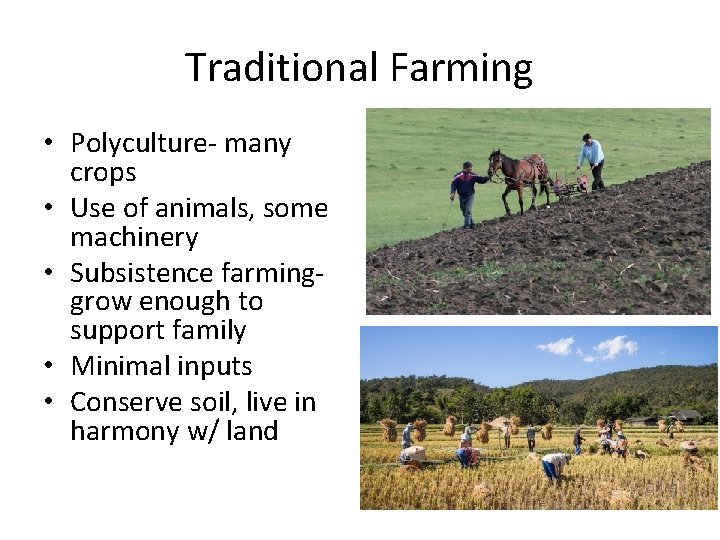
Traditional Farming • Polyculture- many crops • Use of animals, some machinery • Subsistence farminggrow enough to support family • Minimal inputs • Conserve soil, live in harmony w/ land
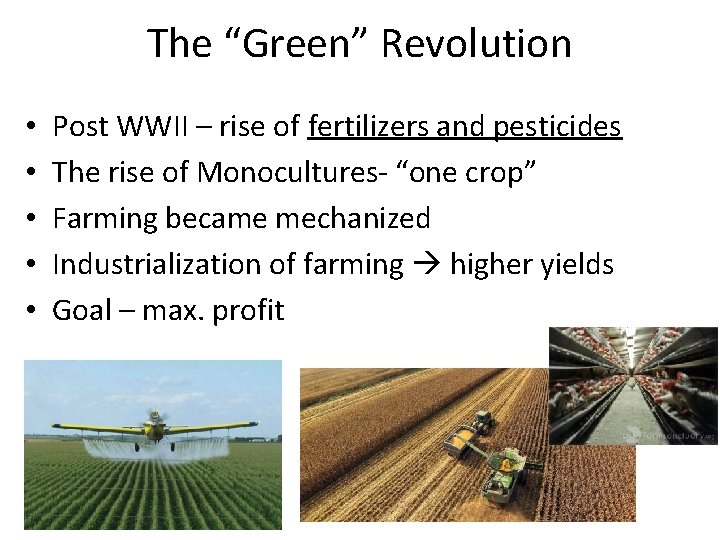
The “Green” Revolution • • • Post WWII – rise of fertilizers and pesticides The rise of Monocultures- “one crop” Farming became mechanized Industrialization of farming higher yields Goal – max. profit
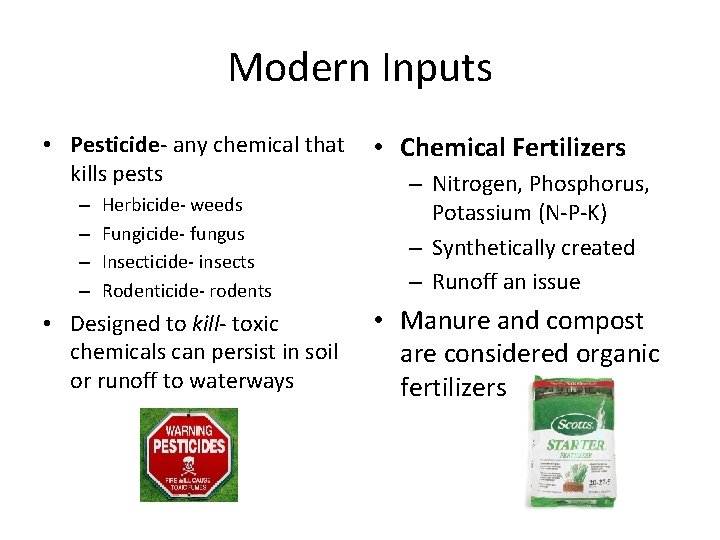
Modern Inputs • Pesticide- any chemical that kills pests – – Herbicide- weeds Fungicide- fungus Insecticide- insects Rodenticide- rodents • Designed to kill- toxic chemicals can persist in soil or runoff to waterways • Chemical Fertilizers – Nitrogen, Phosphorus, Potassium (N-P-K) – Synthetically created – Runoff an issue • Manure and compost are considered organic fertilizers
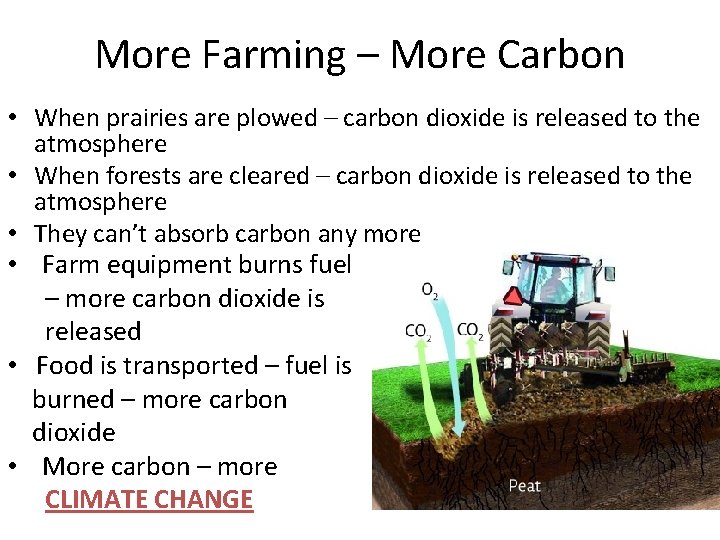
More Farming – More Carbon • When prairies are plowed – carbon dioxide is released to the atmosphere • When forests are cleared – carbon dioxide is released to the atmosphere • They can’t absorb carbon any more • Farm equipment burns fuel – more carbon dioxide is released • Food is transported – fuel is burned – more carbon dioxide • More carbon – more CLIMATE CHANGE
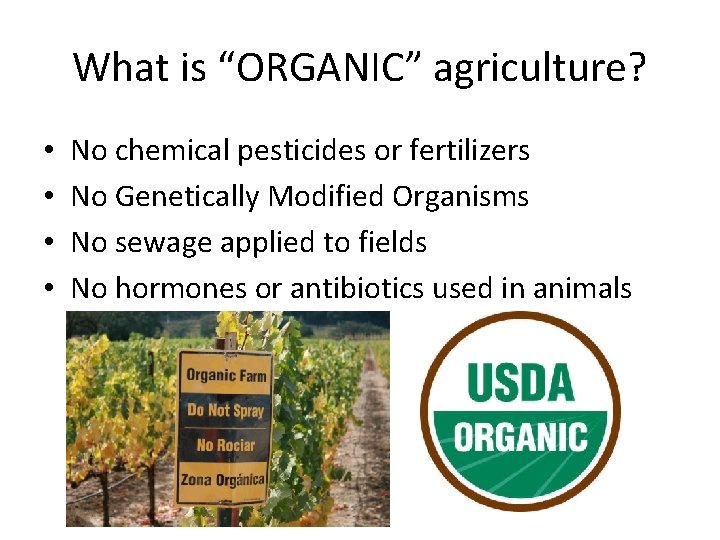
What is “ORGANIC” agriculture? • • No chemical pesticides or fertilizers No Genetically Modified Organisms No sewage applied to fields No hormones or antibiotics used in animals
Agricultural Issues? 1. Industrialization 2. Genetically Modified Organisms (GMOs) 3. Pesticides/Fertilizer Usage 4. Concentrated Animal Feeding Operations (CAFOs) and Aquaculture 5. Hormones/Antibiotics Use 6. Organic Agriculture
- Slides: 18