
AGRICULTURAL REVOLUTIONS Before Agriculture Paleolithic Old Stone Age
AGRICULTURAL REVOLUTIONS
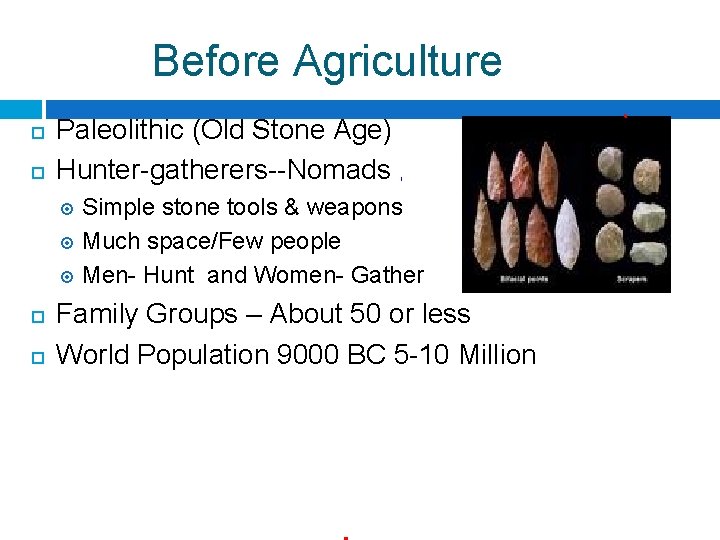
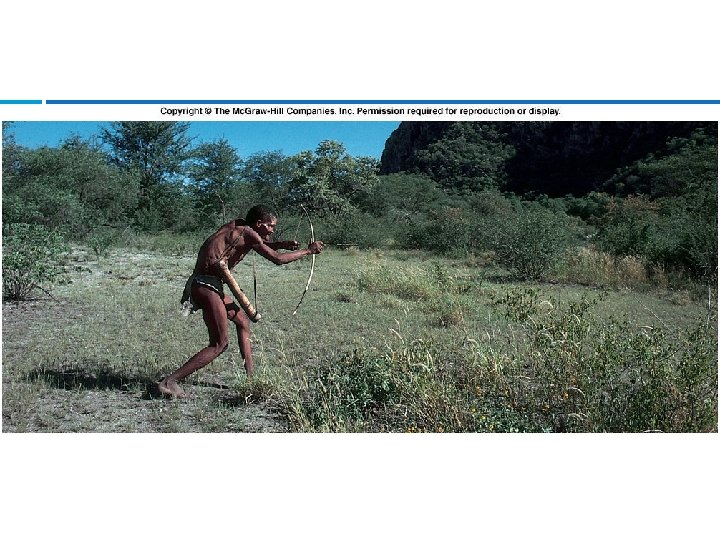
Before Agriculture Paleolithic (Old Stone Age) Hunter-gatherers--Nomads Simple stone tools & weapons Much space/Few people Men- Hunt and Women- Gather Family Groups – About 50 or less World Population 9000 BC 5 -10 Million
1 st Agricultural Revolution The emergence of subsistence Agriculture develops independently in several crop hearths. These are regions where agriculture developed independently.
1 st Agricultural Revolution Domestication – taming animals & plants, changes their genetics Pigs, Goats, Sheep, Cattle 8000 BC (10, 000 years ago!)
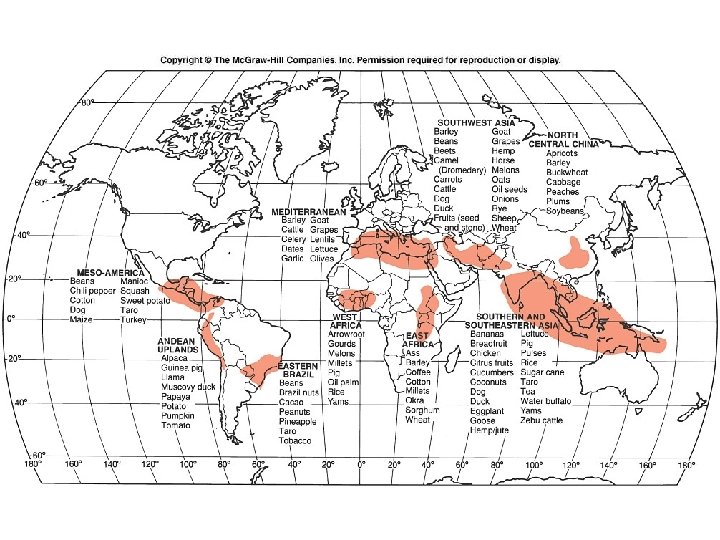
Crop Hearths
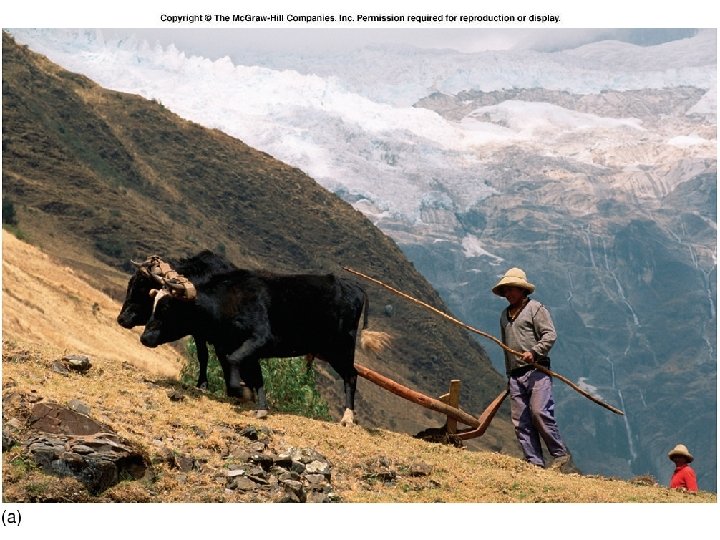
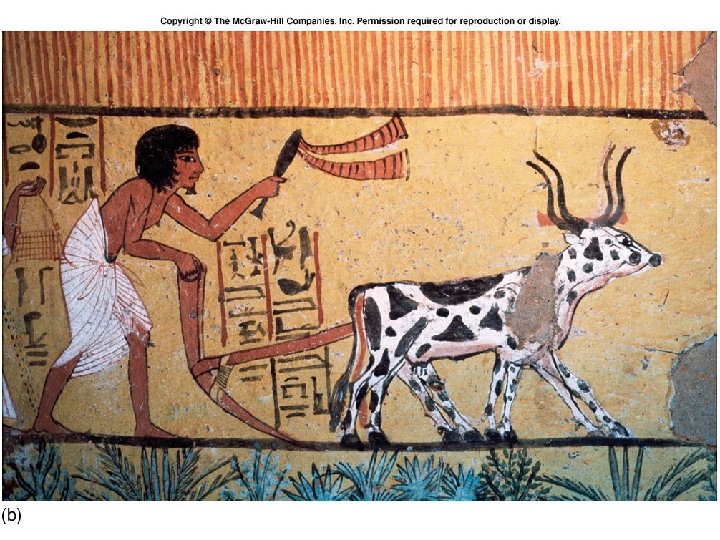
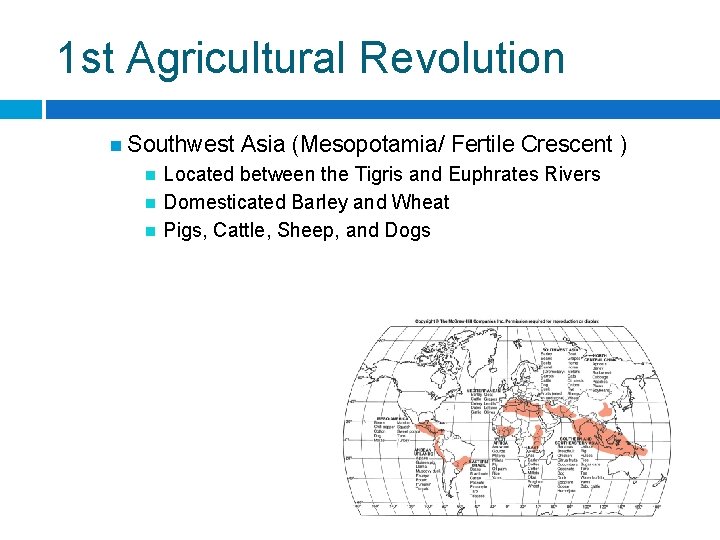
1 st Agricultural Revolution Southwest Asia (Mesopotamia/ Fertile Crescent ) Located between the Tigris and Euphrates Rivers Domesticated Barley and Wheat Pigs, Cattle, Sheep, and Dogs
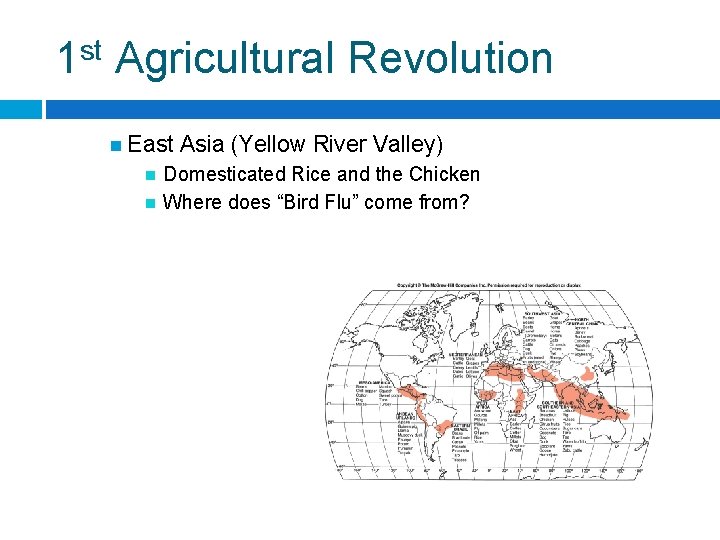
1 st Agricultural Revolution East Asia (Yellow River Valley) Domesticated Rice and the Chicken Where does “Bird Flu” come from?
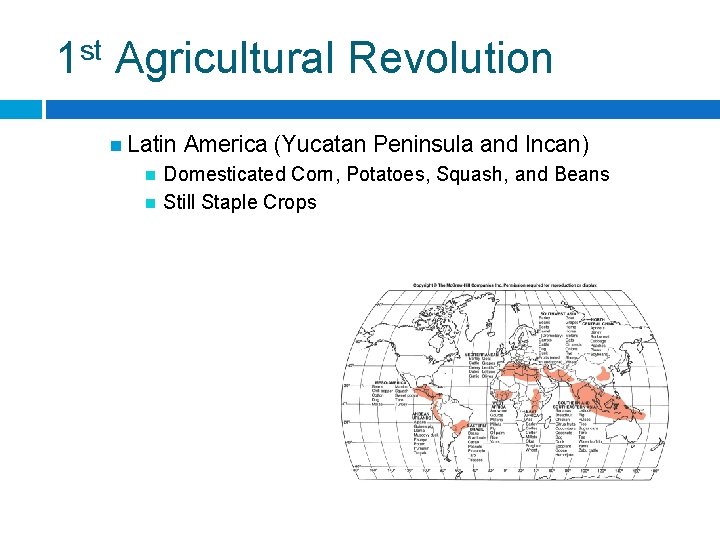
1 st Agricultural Revolution Latin America (Yucatan Peninsula and Incan) Domesticated Corn, Potatoes, Squash, and Beans Still Staple Crops
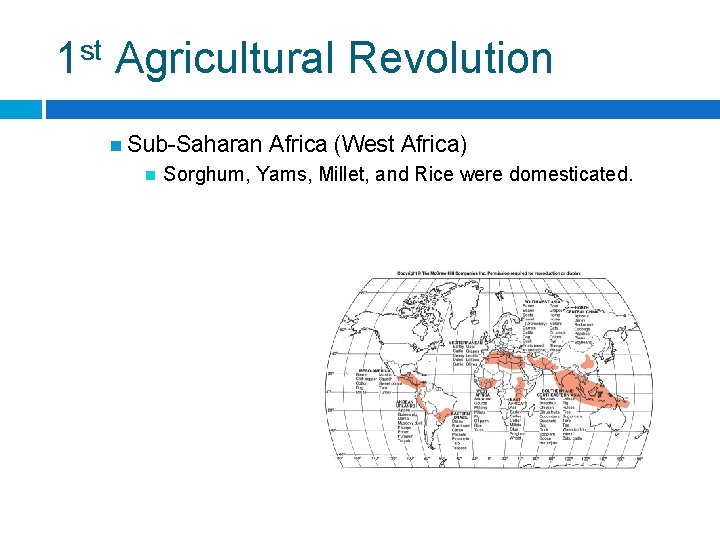
1 st Agricultural Revolution Sub-Saharan Africa (West Africa) Sorghum, Yams, Millet, and Rice were domesticated.
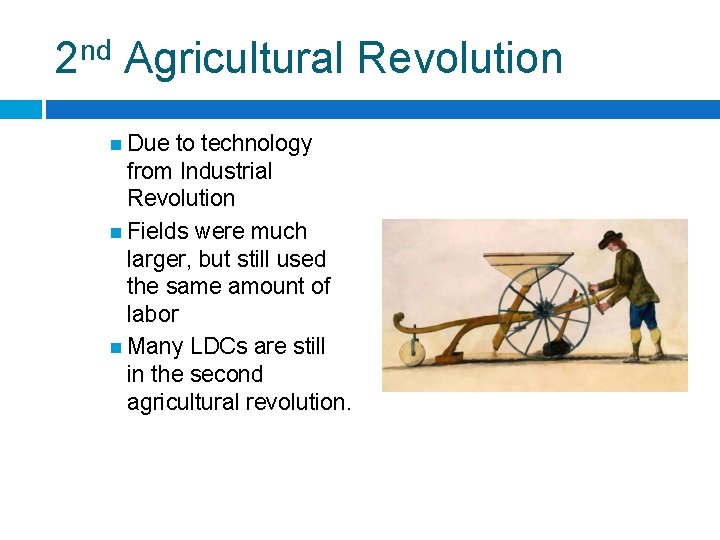
2 nd Agricultural Revolution Due to technology from Industrial Revolution Fields were much larger, but still used the same amount of labor Many LDCs are still in the second agricultural revolution.
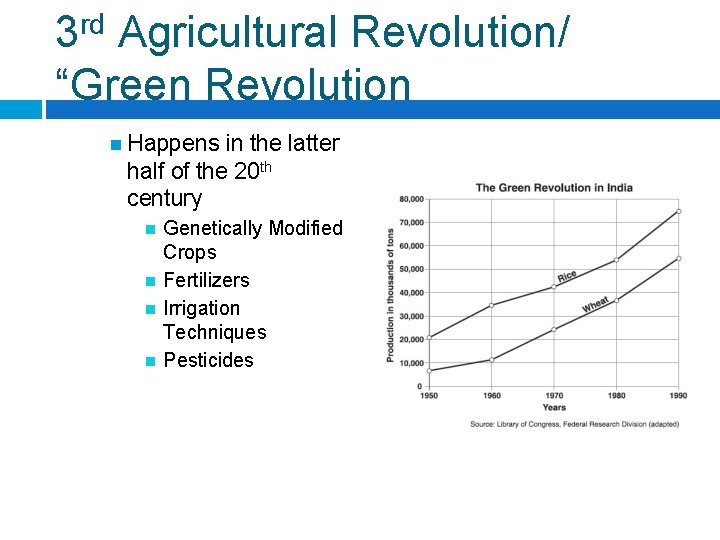
3 rd Agricultural Revolution/ “Green Revolution Happens in the latter half of the 20 th century Genetically Modified Crops Fertilizers Irrigation Techniques Pesticides
SUBSISTENCE AGRICULTURE
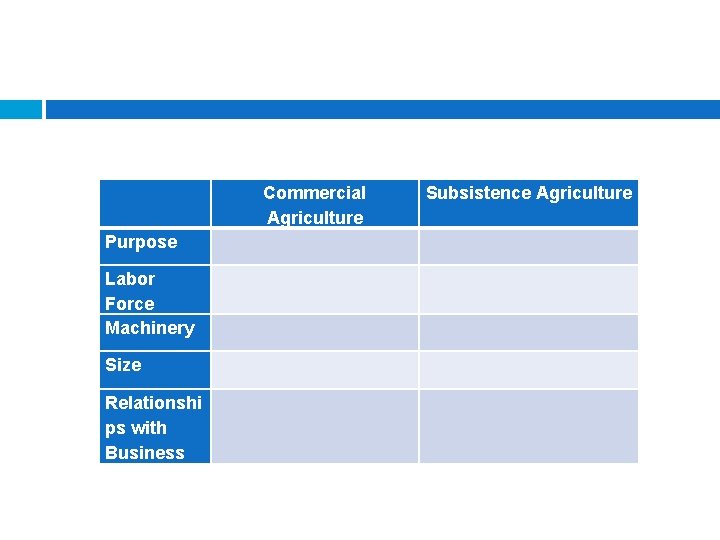
Commercial Agriculture Purpose Labor Force Machinery Size Relationshi ps with Business Subsistence Agriculture
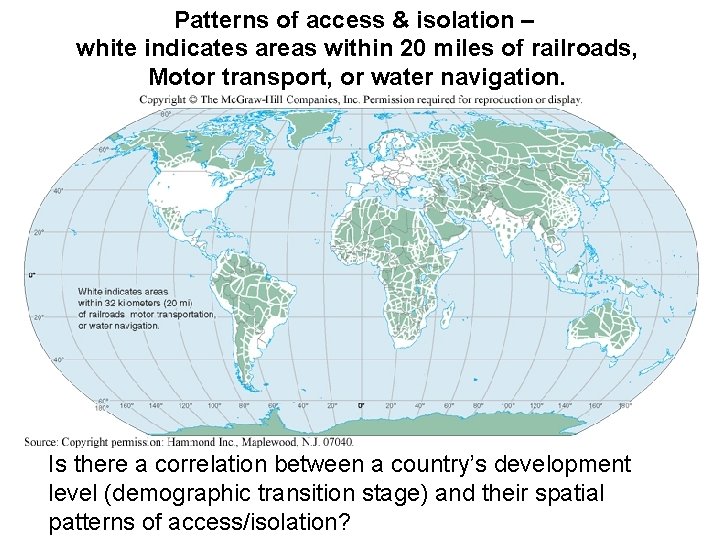
Patterns of access & isolation – white indicates areas within 20 miles of railroads, Motor transport, or water navigation. Is there a correlation between a country’s development level (demographic transition stage) and their spatial patterns of access/isolation?
Subsistence Agriculture � Producing food needed to survive on a daily basis Near total self-sufficiency – predominant occupation of mankind today 2 types: Extensive Intensive
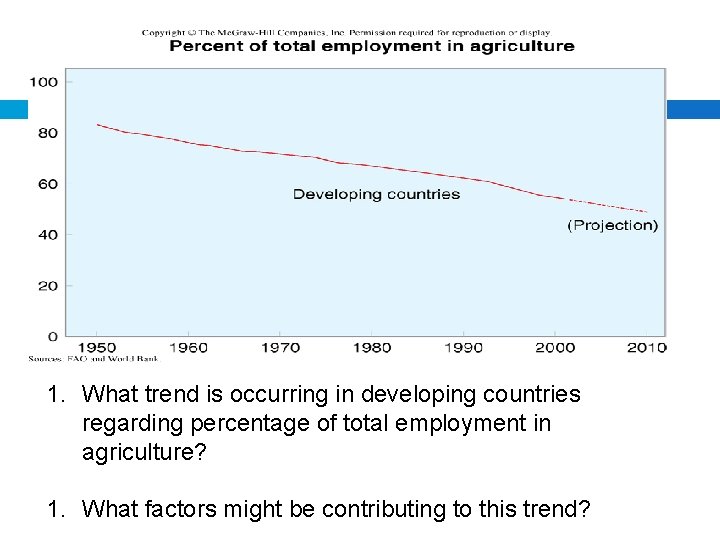
1. What trend is occurring in developing countries regarding percentage of total employment in agriculture? 1. What factors might be contributing to this trend?
Extensive Subsistence Agriculture Defn. – yields a large amount of output per acre through less intensive farming (uses a large amount of land) Represents a very small % of world population 2 groups: Nomadic herding Shifting cultivation
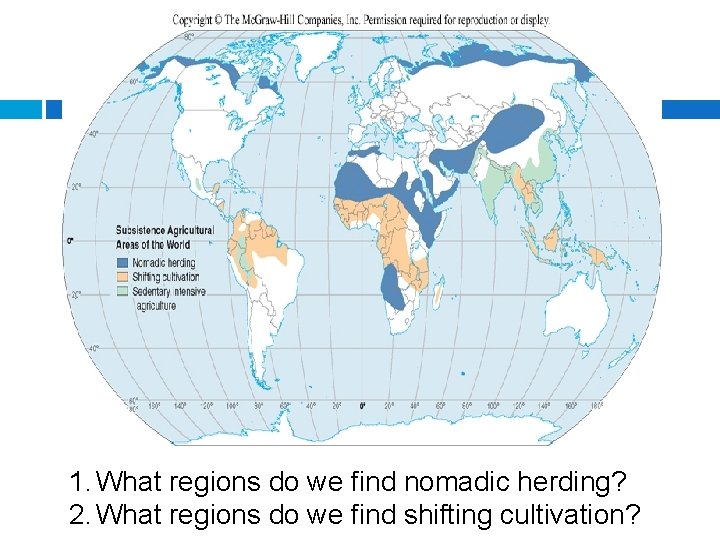
1. What regions do we find nomadic herding? 2. What regions do we find shifting cultivation?
Nomadic Herding Also called pastoral nomadism Wandering, but controlled movement of livestock Solely dependent upon natural forage Dry & cold regions Requires large expanses of land Transhumance – movement of animals Small % worldwide Prevents Desertification
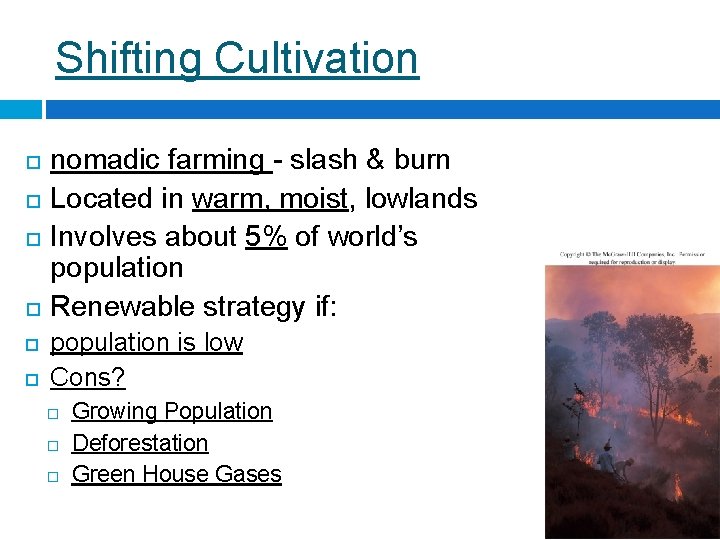
Shifting Cultivation nomadic farming - slash & burn Located in warm, moist, lowlands Involves about 5% of world’s population Renewable strategy if: population is low Cons? Growing Population Deforestation Green House Gases
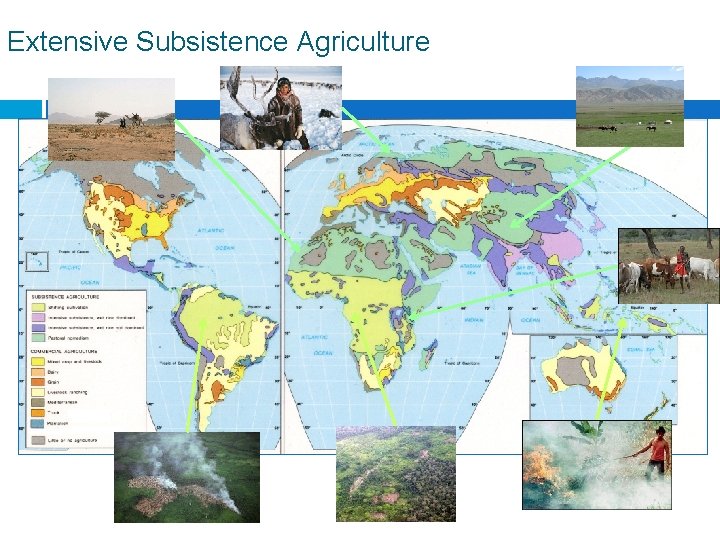
Extensive Subsistence Agriculture
Intensive Subsistence Agriculture Defn. - yields a large amount of output per acre through concentrated farming (uses a small amount of land) ¾ of people in LDCs feed themselves through this method Warm, moist climates (Asia) Labor-intensive farming, simple tools, small plots of land, often double cropped Most Frequently Rice
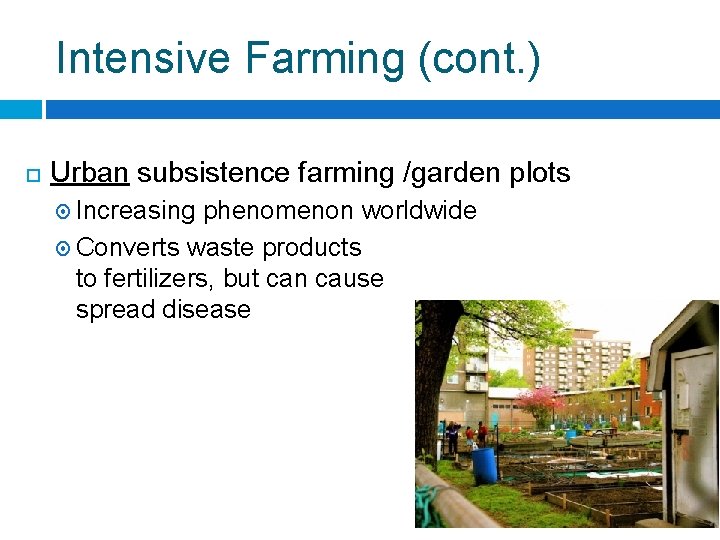
Intensive Farming (cont. ) Urban subsistence farming /garden plots Increasing phenomenon worldwide Converts waste products to fertilizers, but can cause spread disease
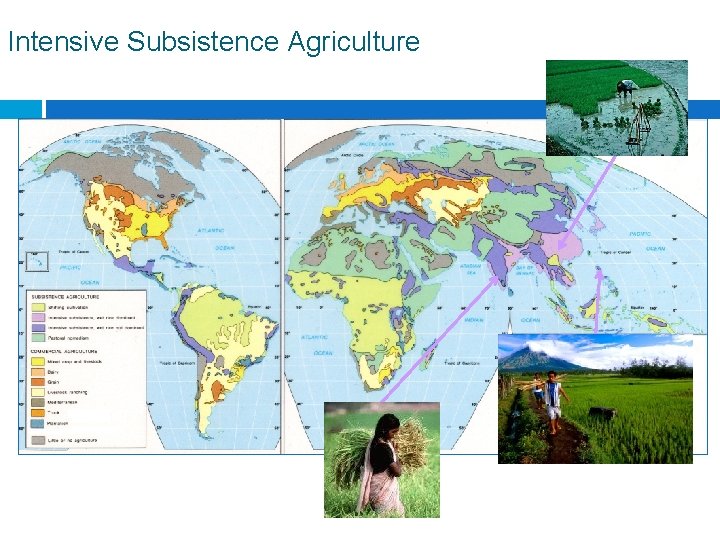
Intensive Subsistence Agriculture
Subsistence Agriculture (cont. ) Extensive Intensive
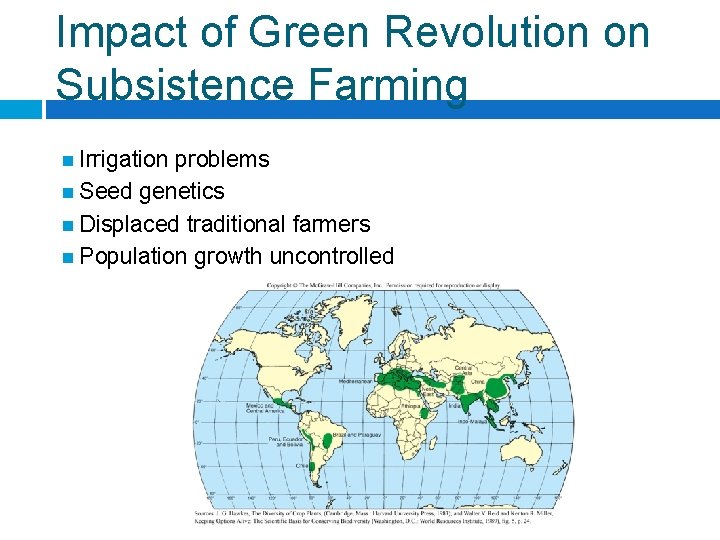
Impact of Green Revolution on Subsistence Farming Irrigation problems Seed genetics Displaced traditional farmers Population growth uncontrolled
COMMERCIAL AGRICULTURE
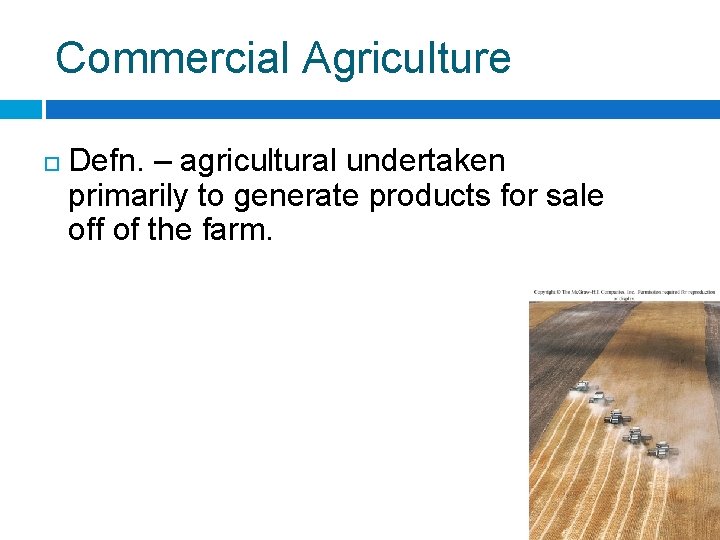
Commercial Agriculture Defn. – agricultural undertaken primarily to generate products for sale off of the farm.
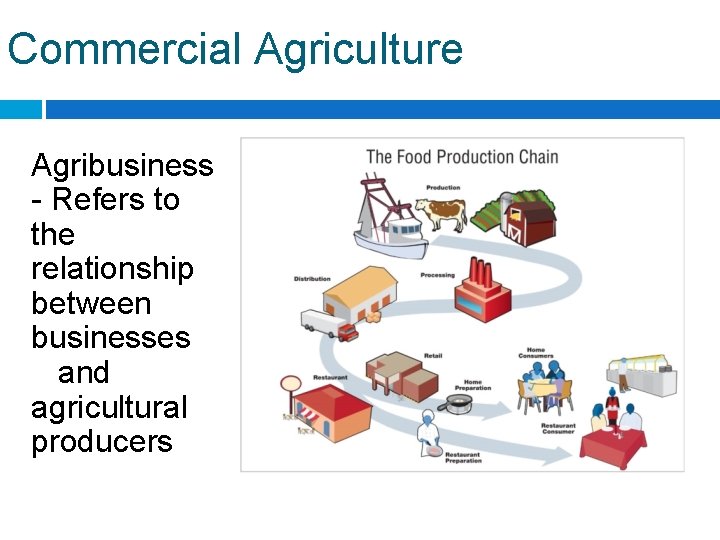
Commercial Agriculture Agribusiness - Refers to the relationship between businesses and agricultural producers
Intensive commercial agriculture High yields, high market value Highly perishable Limited field size, repeat plantings
Extensive Commercial Agriculture Farther from market, cheaper land Large land size required Dry farming / Livestock ranching Low labor requirements Marginal land quality
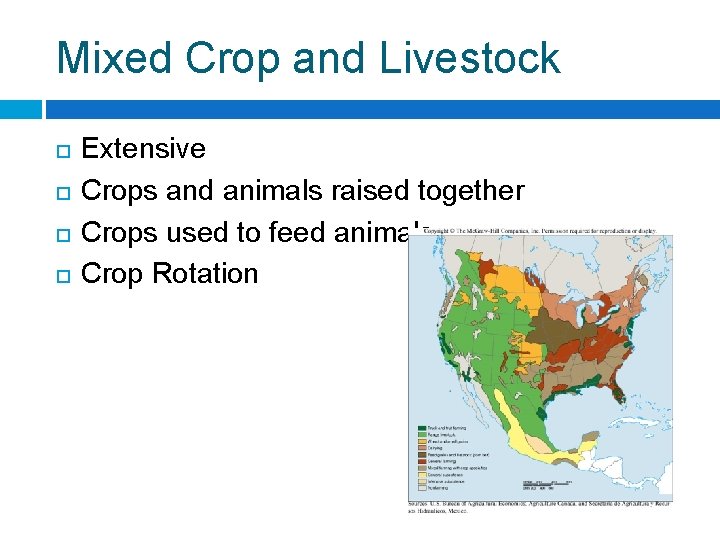
Mixed Crop and Livestock Extensive Crops and animals raised together Crops used to feed animals Crop Rotation
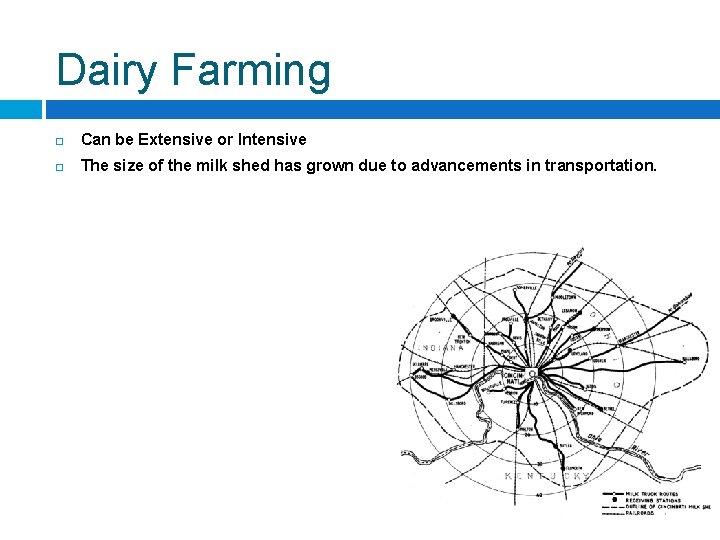
Dairy Farming Can be Extensive or Intensive The size of the milk shed has grown due to advancements in transportation.
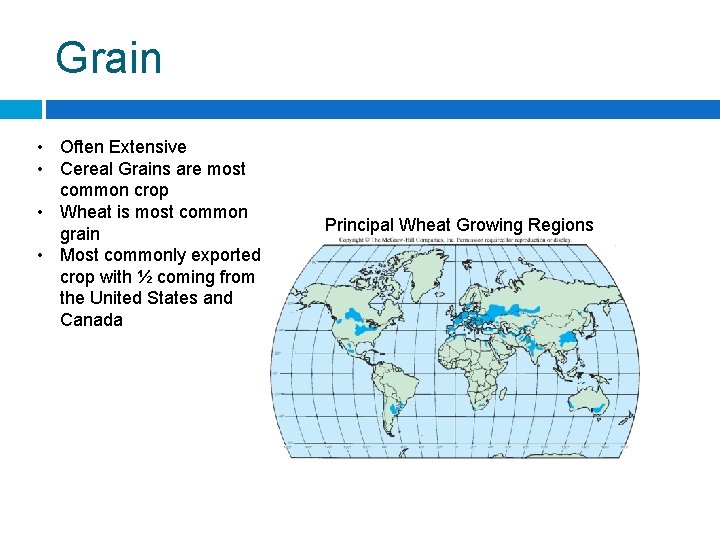
Grain • Often Extensive • Cereal Grains are most common crop • Wheat is most common grain • Most commonly exported crop with ½ coming from the United States and Canada Principal Wheat Growing Regions
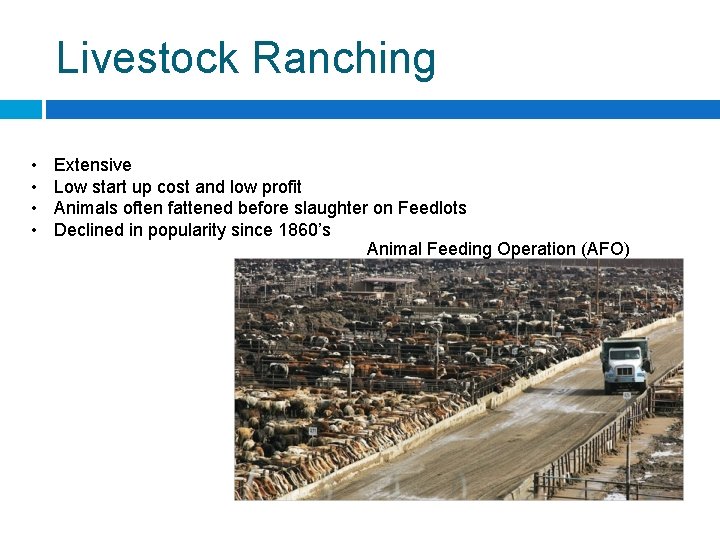
Livestock Ranching • • Extensive Low start up cost and low profit Animals often fattened before slaughter on Feedlots Declined in popularity since 1860’s Animal Feeding Operation (AFO)
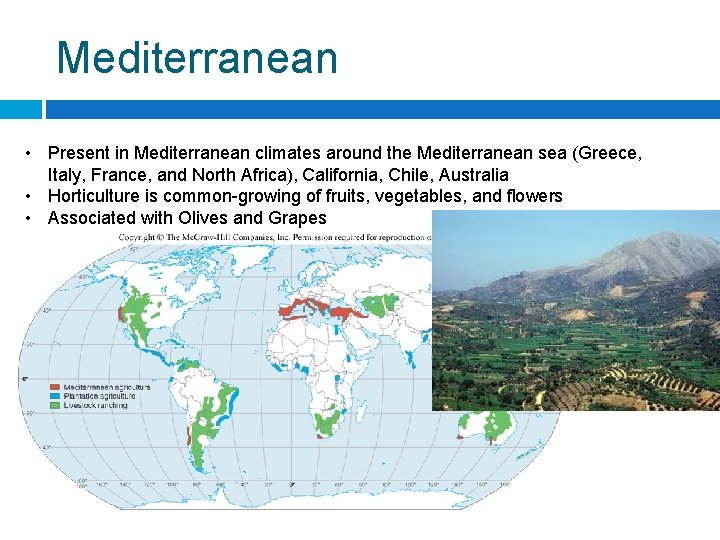
Mediterranean • Present in Mediterranean climates around the Mediterranean sea (Greece, Italy, France, and North Africa), California, Chile, Australia • Horticulture is common-growing of fruits, vegetables, and flowers • Associated with Olives and Grapes
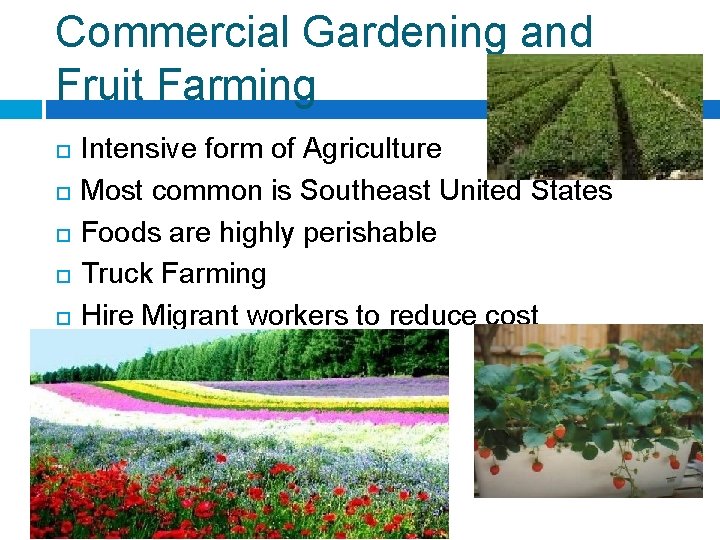
Commercial Gardening and Fruit Farming Intensive form of Agriculture Most common is Southeast United States Foods are highly perishable Truck Farming Hire Migrant workers to reduce cost
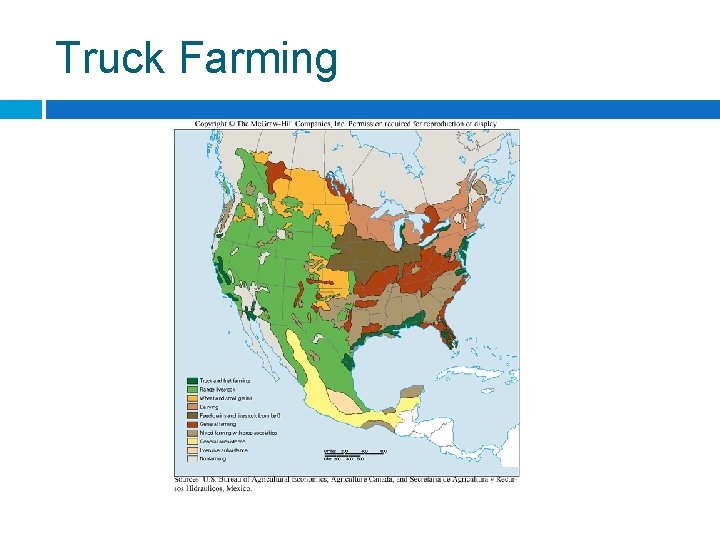
Truck Farming
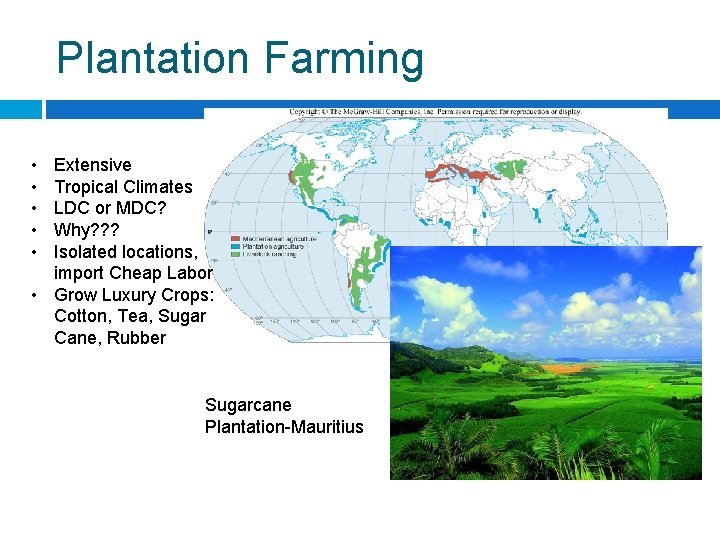
Plantation Farming • • • Extensive Tropical Climates LDC or MDC? Why? ? ? Isolated locations, import Cheap Labor • Grow Luxury Crops: Cotton, Tea, Sugar Cane, Rubber Sugarcane Plantation-Mauritius
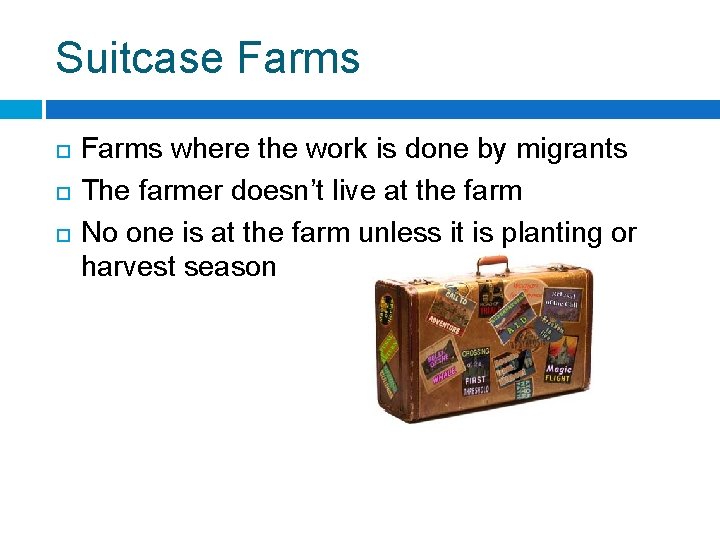
Suitcase Farms where the work is done by migrants The farmer doesn’t live at the farm No one is at the farm unless it is planting or harvest season
Arguments Pro http: //www. cleanvideosearch. com/media/ action/yt/watch? video. Id=q. Xd. Em. Qk. Ylek Con http: //www. cleanvideosearch. com/media/ action/yt/watch? video. Id=IMOAaci. ER 6 o

Bellringer Review your Vocabulary for your Quiz.
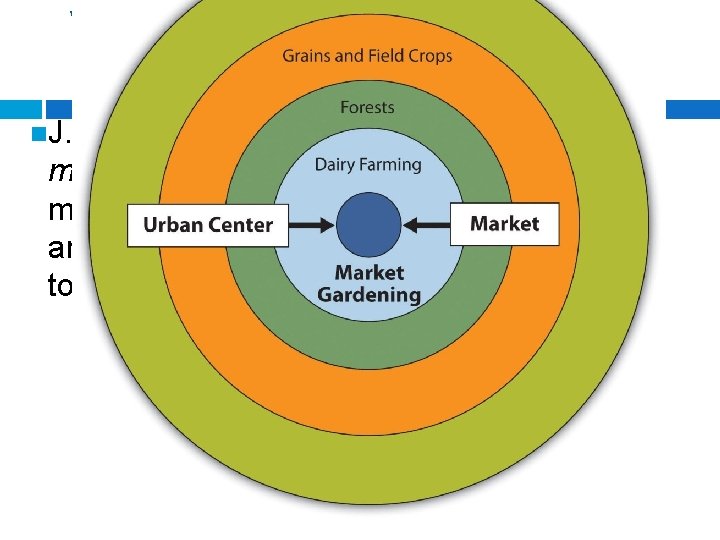
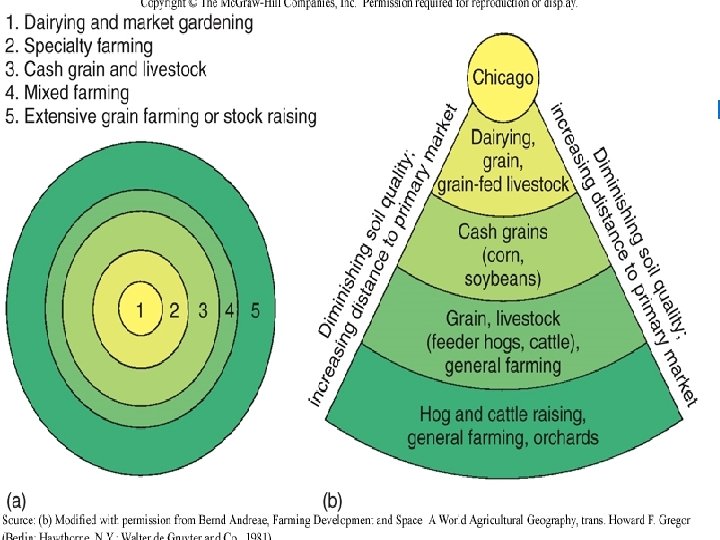
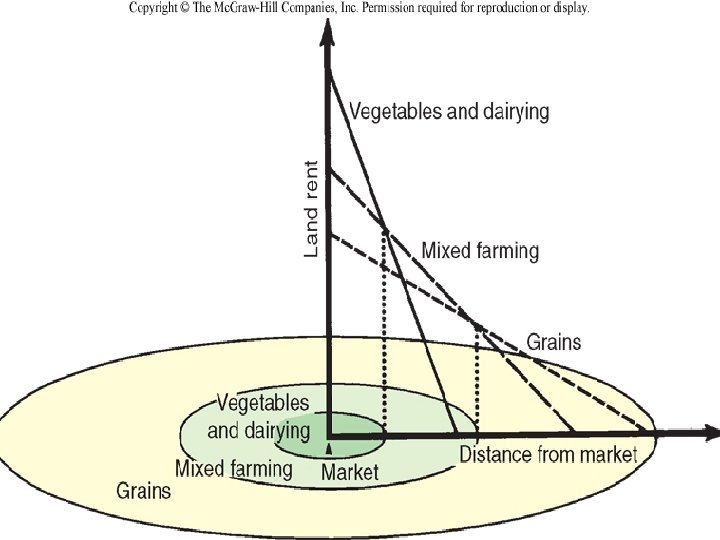
Von Thünen’s Agricultural Land Use Model (1783 -1850) J. H. Von Thuen developed the Von Thuen model of Agricultural land use in 1826. His model suggested that agricultural activities are oriented in space due to their proximity to an urban center and the price of rent.
Von Thuen Model Land near market = high-value crops, intensive land use b/c rent is higher Land farther away from market = lowvalue crops, extensive land use b/c rent is lower
Von Thuen Model The model can be affected by: topography, soil fertility, climate, changes in market
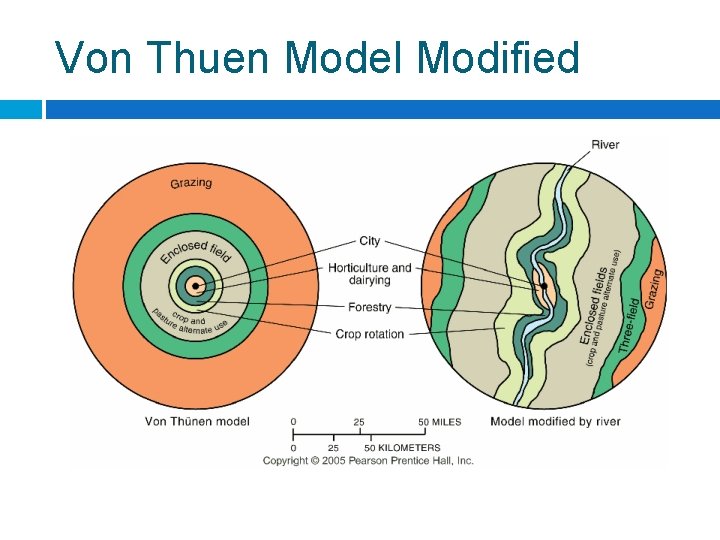
Von Thuen Model Modified
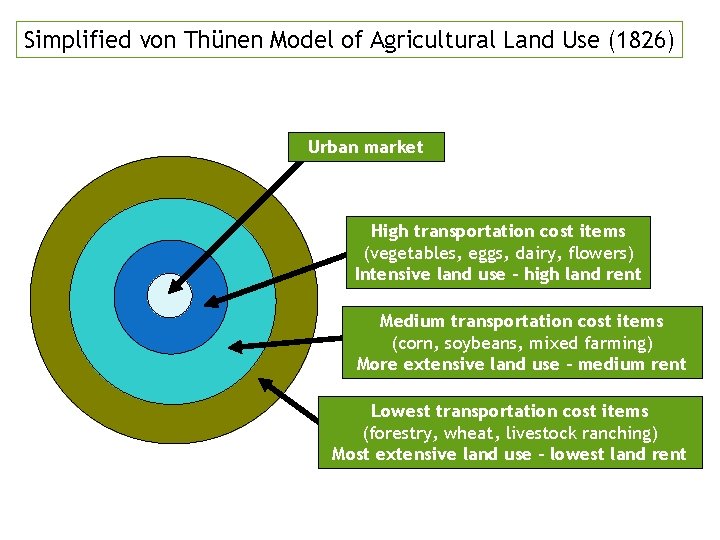
Simplified von Thünen Model of Agricultural Land Use (1826) Urban market High transportation cost items (vegetables, eggs, dairy, flowers) Intensive land use – high land rent Medium transportation cost items (corn, soybeans, mixed farming) More extensive land use – medium rent Lowest transportation cost items (forestry, wheat, livestock ranching) Most extensive land use – lowest land rent
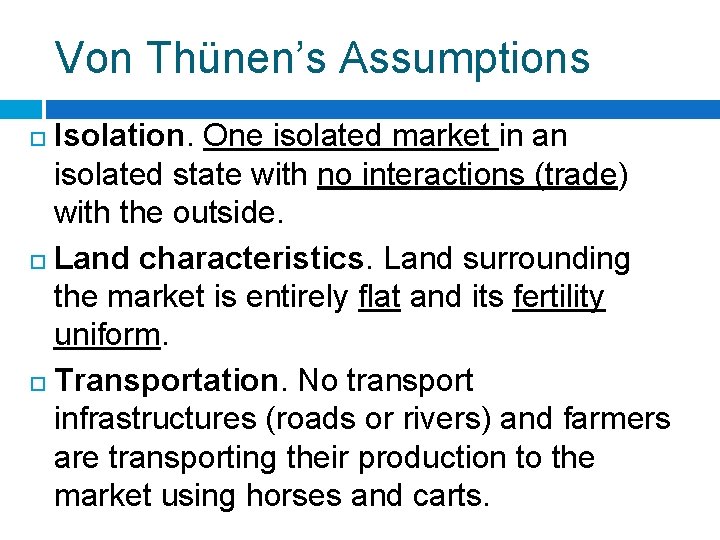
Von Thünen’s Assumptions Isolation. One isolated market in an isolated state with no interactions (trade) with the outside. Land characteristics. Land surrounding the market is entirely flat and its fertility uniform. Transportation. No transport infrastructures (roads or rivers) and farmers are transporting their production to the market using horses and carts.
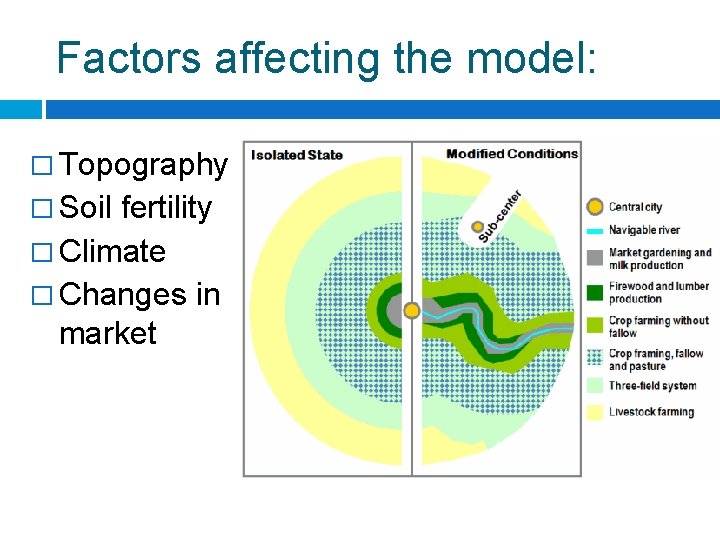
Factors affecting the model: � Topography � Soil fertility � Climate � Changes in market
Growing food for fuel? Biomass- an alternate fuel source (as opposed to mineral fuels/fossil fuels) produced from decaying plant matter. Ex. Ethanol is created by decaying plant matter US-Corn South America- Sugar Cane
PROBLEMS FACED BY FARMERS
Challenges for MDC Farmers Problem Overproduction. Due to the green revolution (pesticides, fertilizers) farmers can produce much more food than is needed Solution § Farmers are encouraged to plant less Gov. pays farmers when crop prices are low Gov. buys surplus and sells it or donates it to foreign countries
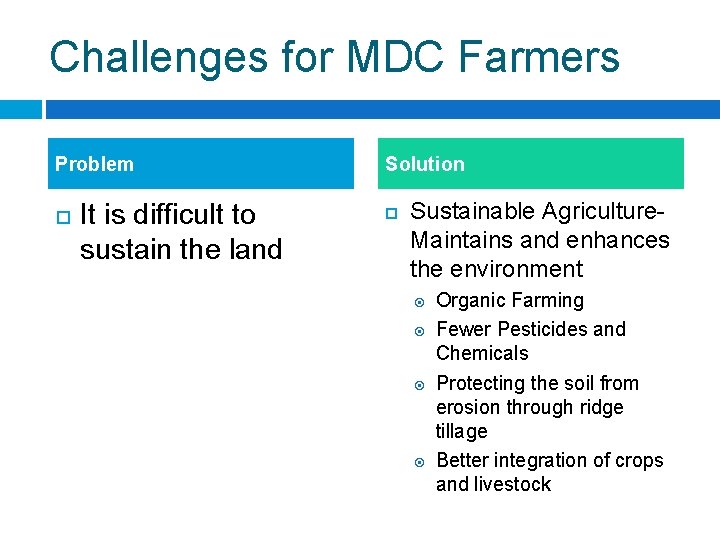
Challenges for MDC Farmers Problem It is difficult to sustain the land Solution Sustainable Agriculture. Maintains and enhances the environment Organic Farming Fewer Pesticides and Chemicals Protecting the soil from erosion through ridge tillage Better integration of crops and livestock
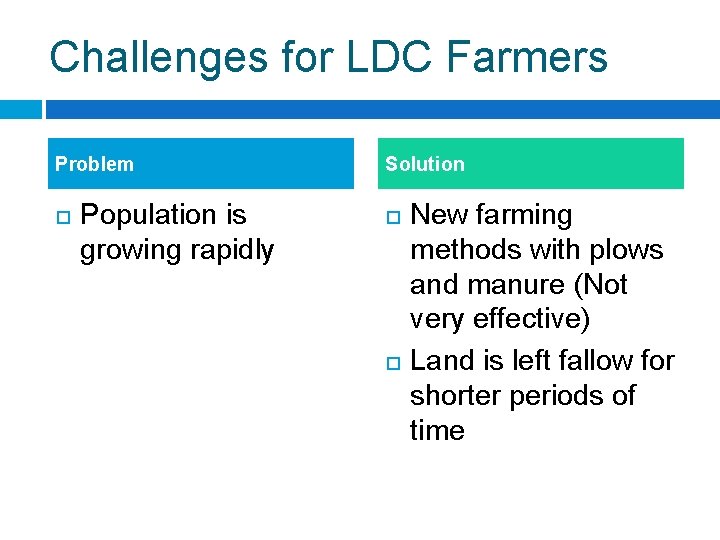
Challenges for LDC Farmers Problem Population is growing rapidly Solution New farming methods with plows and manure (Not very effective) Land is left fallow for shorter periods of time
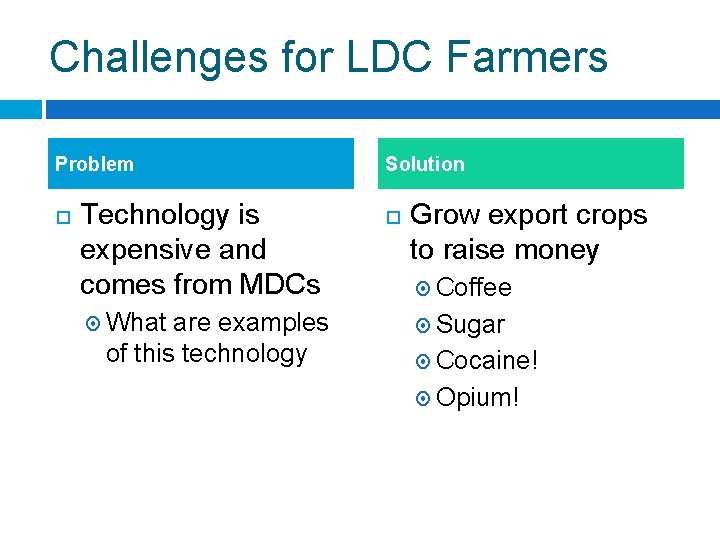
Challenges for LDC Farmers Problem Technology is expensive and comes from MDCs What are examples of this technology Solution Grow export crops to raise money Coffee Sugar Cocaine! Opium!
DECREASING FOOD SUPPLY
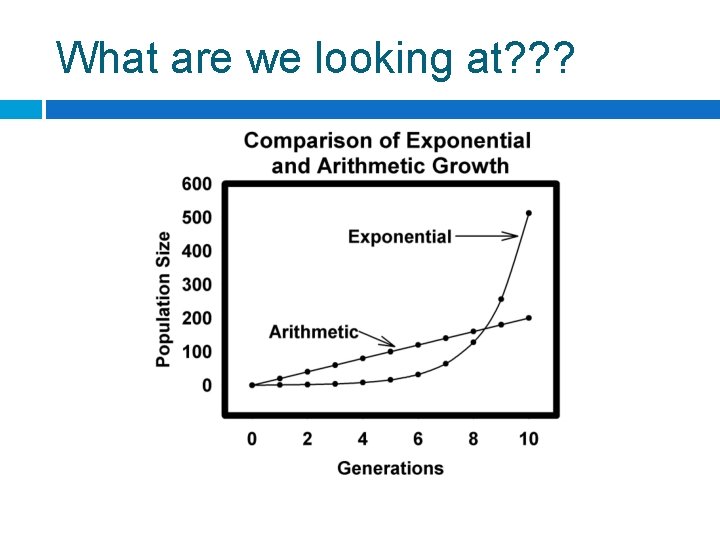
What are we looking at? ? ?
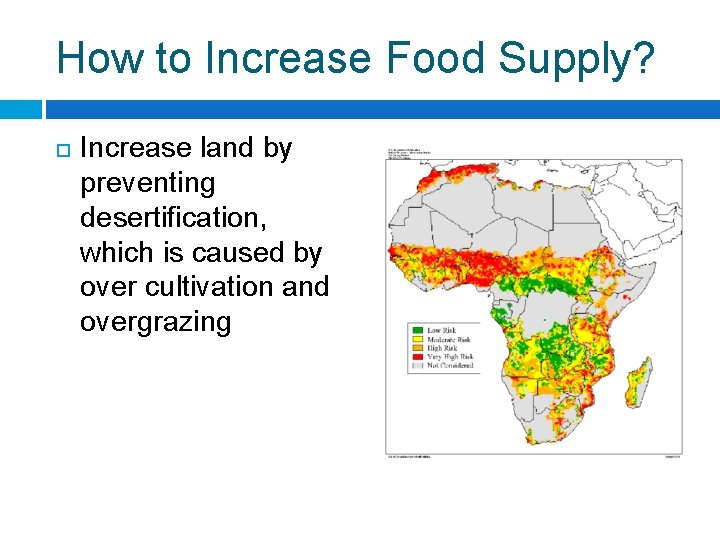
How to Increase Food Supply? Increase land by preventing desertification, which is caused by over cultivation and overgrazing
How to Increase Food Supply? Increase productivity by spreading the Green Revolutions
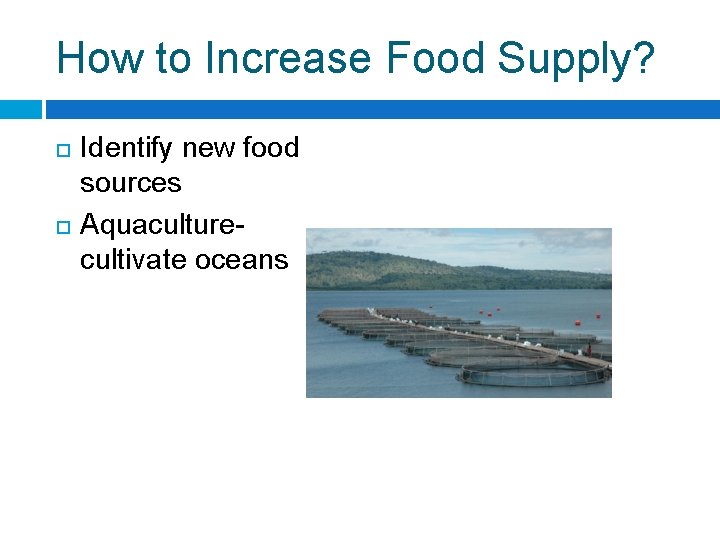
How to Increase Food Supply? Identify new food sources Aquaculturecultivate oceans
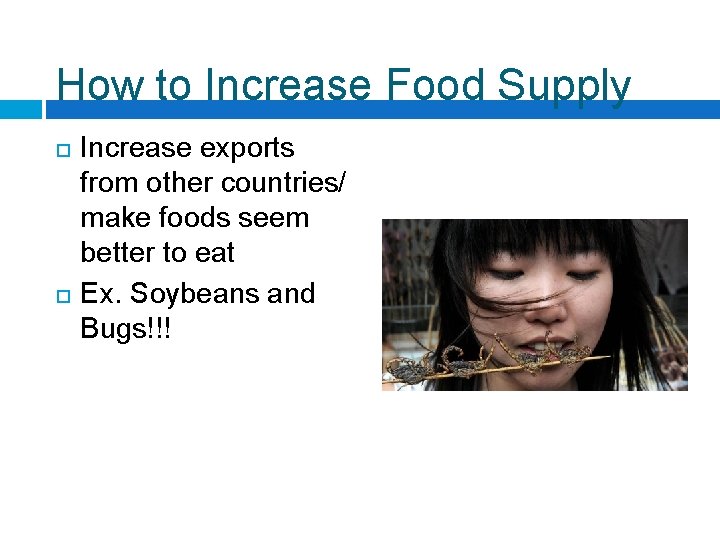
How to Increase Food Supply Increase exports from other countries/ make foods seem better to eat Ex. Soybeans and Bugs!!!
- Slides: 66