
Agricultural entrepreneurship Global Forum for Rural Advisory Services
Agricultural entrepreneurship Global Forum for Rural Advisory Services (GFRAS) Part of the New Extensionist Learning Kit
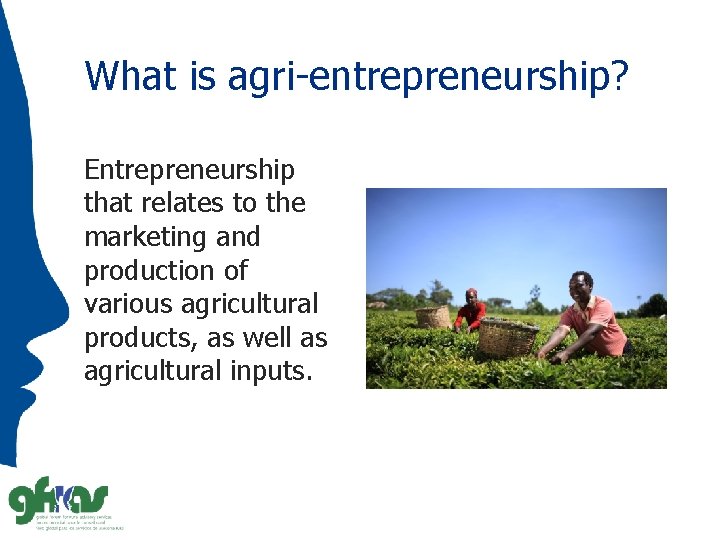
What is agri-entrepreneurship? Entrepreneurship that relates to the marketing and production of various agricultural products, as well as agricultural inputs.
Study Unit 1 Agricultural entrepreneurship
Overview § Study unit 1 is about: • The role of the extensionist in agri-enterprise development • The business idea
Why agri-entrepreneurship? § Latest trend in extension work: • Agriculture should be seen as a commercial activity • Farmers are seen as entrepreneurs • Farmer groups and cooperatives are seen as enterprises • The focus of extension services move from poverty reduction to wealth creation
Pluralistic extension Extension that is characterised by the inclusion, interaction and coordination of multiple providers and services, funding options and multiple information sources
Benefits of pluralistic extension § § § Addresses the need for specific extension services for specific contexts, economic enterprises, livelihood operations and for different farmer categories; Addresses the wide variety of demands, while making better use of the variety of service providers available; Develops better services through cooperation between community-based, public and private sector actors; Shifts the coordination and accountability between extension services and other service providers to the level of the farmers, farmer groups and organisations; and Provides a system in which the quality and content of extension services are more responsive to the needs and priorities of farmers, e. g. some services focus on enhancing the social inclusion of vulnerable groups and others focus on developing and empowering the value chain.
Role players in pluralistic extension § § § § Farmers and lead farmers Farmer groups and associations Local volunteer agents Commission agents Business support services NGO field agents Private sector service providers
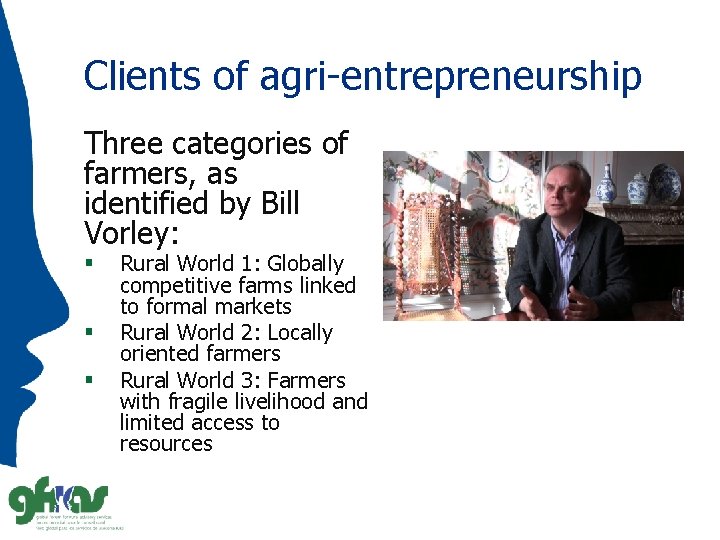
Clients of agri-entrepreneurship Three categories of farmers, as identified by Bill Vorley: § § § Rural World 1: Globally competitive farms linked to formal markets Rural World 2: Locally oriented farmers Rural World 3: Farmers with fragile livelihood and limited access to resources
Farmer types in agrientrepreneurship Within the three categories of farmers, the following farmer types are potential agrientrepreneurs: § § Women farmers Small-scale family farmers Medium-scale farmers Commercial farmers
Characteristics of a successful entrepreneur § § § § Has the initiative, drive and ability to identify and take advantage of opportunities; Is always looking for opportunities to improve and expand their businesses; Thrives on change and copes well with risk and uncertainty; Knows how to identify and evaluate risks and is willing to take calculated risks, while accepting responsibility for both profits and losses; Is a creative problem-solver, understands the decisionmaking process and enjoys making decisions; Establishes strong partnerships and other relationships and works well with other people; and Is an innovator who is always looking for better and more profitable ways to do things.
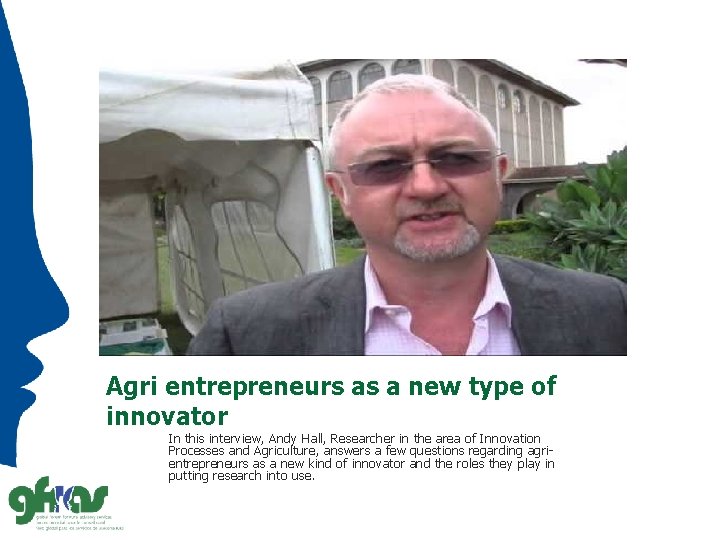
Agri entrepreneurs as a new type of innovator In this interview, Andy Hall, Researcher in the area of Innovation Processes and Agriculture, answers a few questions regarding agrientrepreneurs as a new kind of innovator and the roles they play in putting research into use.
Elements involved in starting a business § Identifying the type of farming business § Identifying resources that the farming business will require § Analyse the cost of resources § Evaluate the identified resources § Identify risks
Why become an entrepreneur? Ask the client the following questions: § § § What is the driving force behind your wish to set up a new business? Do you know exactly what your business will do? Will you be making the most of your strengths? Can you make decisions and work well on your own? Will your business make enough money for you?
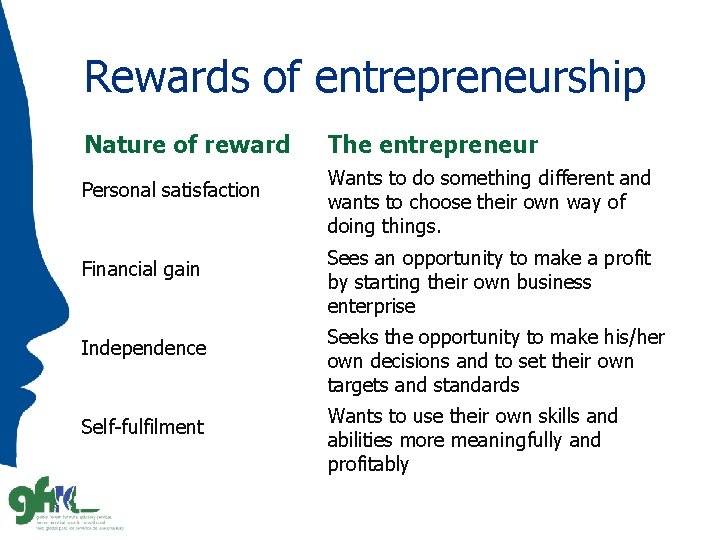
Rewards of entrepreneurship Nature of reward Personal satisfaction Financial gain Independence Self-fulfilment The entrepreneur Wants to do something different and wants to choose their own way of doing things. Sees an opportunity to make a profit by starting their own business enterprise Seeks the opportunity to make his/her own decisions and to set their own targets and standards Wants to use their own skills and abilities more meaningfully and profitably
Assess client readiness for a business approach Problem-solving: § Do you come up with solutions to problems in your farming operation or do you ask for help? Facing challenges: § Do you see failure at a task as a challenge or do you give up? Money matters: § Do you believe hard work will pay off? Communication: § Can you explain processes and procedures to others? § Can you express yourself clearly when communicating with your suppliers, buyers and other role players?
Elements of a good business opportunity § There is a demand in the market for the product; § The product meets a need or solves a problem; § The business opportunity works in a particular location; § The farmer has the resources to take on the business opportunity; § The farmer can provide the product at the right price that attracts customers, while making a profit; and § The timing for the business is right.
Individual farm plans Extension agents should develop individual plans for farmers that focus on the use of existing assets, market options and business capacity.
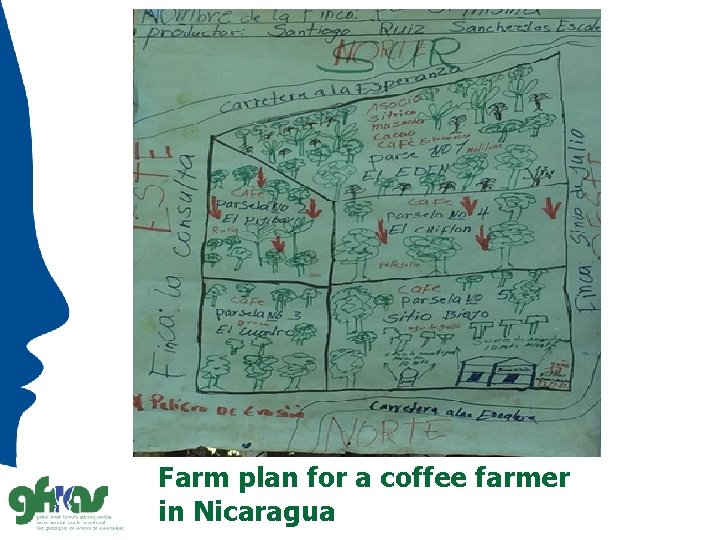
Farm plan for a coffee farmer in Nicaragua
Steps in creating a farm plan § § § § Create a profile of the farmer. List the key income crops and the main food items that are produced. Review and prioritise key challenges that the farmer is experiencing. Use visioning to map the current situation vs. goals, assets and skills. Develop a farm plan with goals for the main plots over the next seasonal cycle Prepare an implementation plan, with achievable steps, with the farmer. Develop a farm diary so that the farmer can follow the steps. Set indicators for monitoring progress.
Group plans for farmers Examples of methods for farmer organisation in market linkage include: § § § § Farmer group management; Financial skills and access to credit; Linkage to agri-dealer networks; Value chain support within the chain; Collective marketing; Agent networks; and Community fee-based service providers.
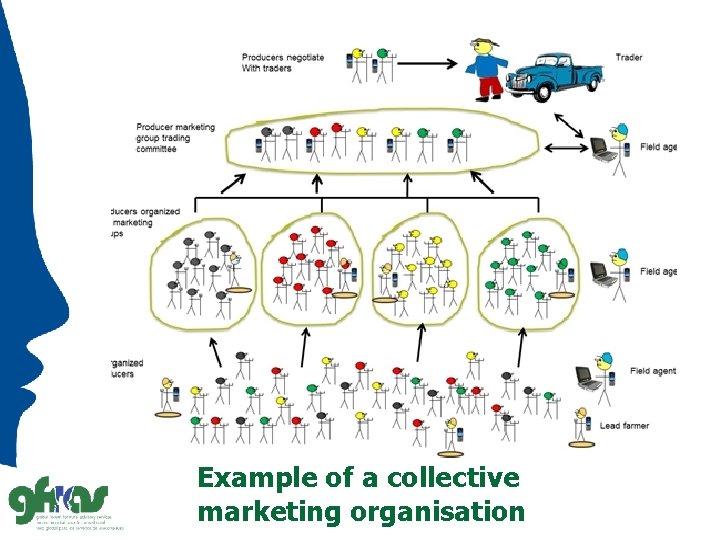
Example of a collective marketing organisation
Value chain support Where there is reluctance from farmers to work in cooperatives, modern extension services need to devise different systems of organisation that support greater collective action. NGOs have piloted a number of interim structures that support better market coordination of farmers.
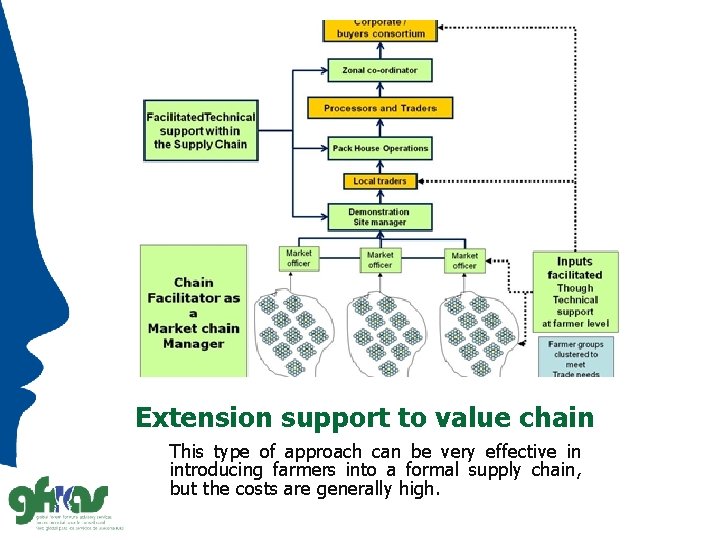
Extension support to value chain This type of approach can be very effective in introducing farmers into a formal supply chain, but the costs are generally high.
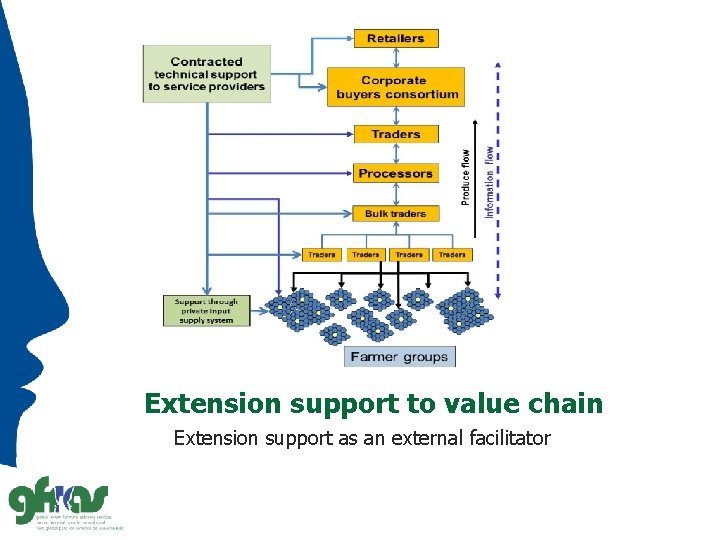
Extension support to value chain Extension support as an external facilitator
Defining a business idea § § Identify a product or service; Define the market; Identify main competitors; and Identify resources.
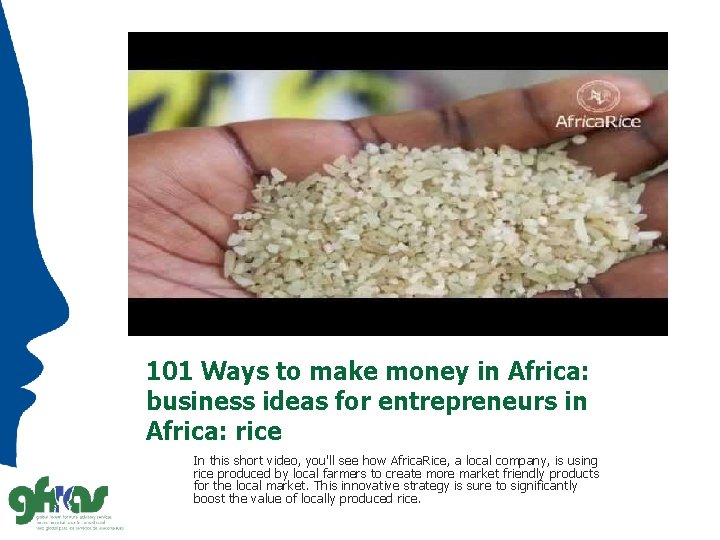
101 Ways to make money in Africa: business ideas for entrepreneurs in Africa: rice In this short video, you'll see how Africa. Rice, a local company, is using rice produced by local farmers to create more market friendly products for the local market. This innovative strategy is sure to significantly boost the value of locally produced rice.
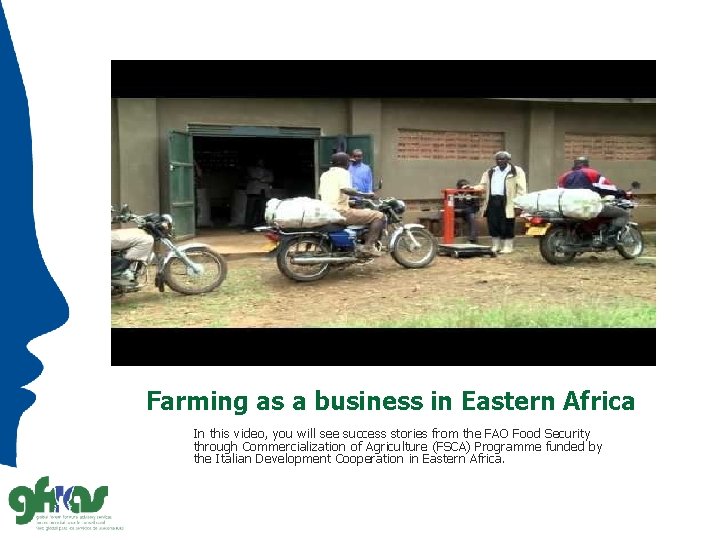
Farming as a business in Eastern Africa In this video, you will see success stories from the FAO Food Security through Commercialization of Agriculture (FSCA) Programme funded by the Italian Development Cooperation in Eastern Africa.
Viability of the business idea A viable business idea: § § Covers the expenses of producing or manufacturing a product; Generates adequate profit; Withstands business risks; and Meets the goals set by the owner.
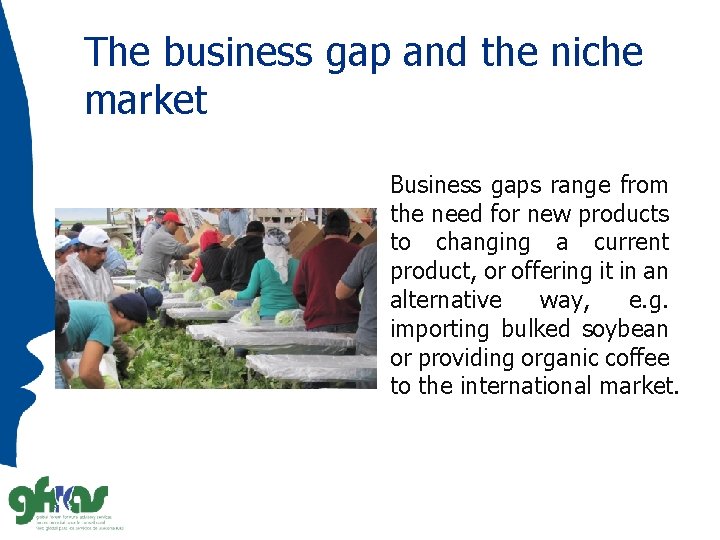
The business gap and the niche market Business gaps range from the need for new products to changing a current product, or offering it in an alternative way, e. g. importing bulked soybean or providing organic coffee to the international market.
The feasibility study is a tool to study the viability of a business idea by: § § Identifying potential problems and opportunities; Determining objectives; Defining successful outcomes; and Assessing costs and benefits involved in alternatives for solving problems.
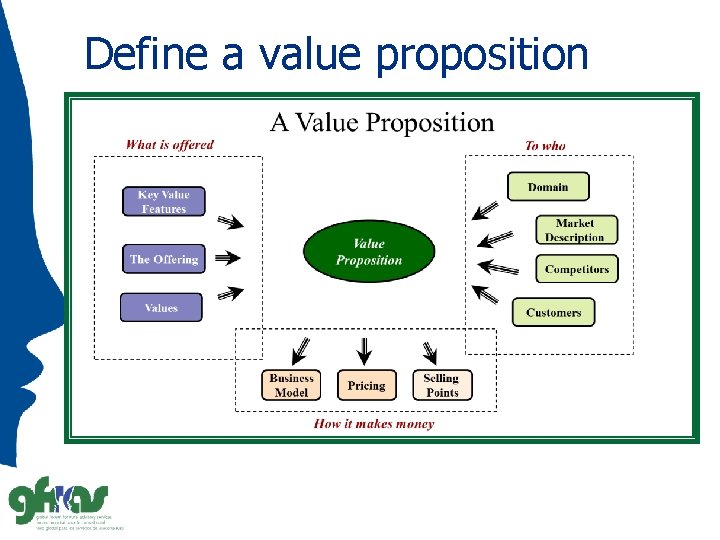
Define a value proposition
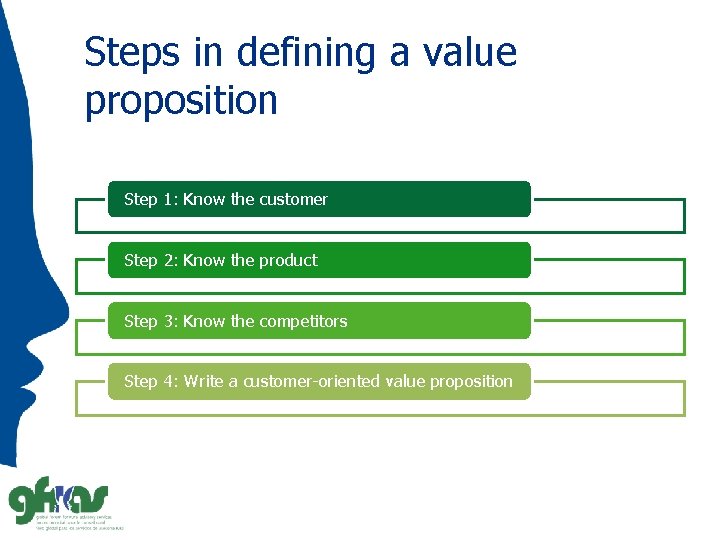
Steps in defining a value proposition Step 1: Know the customer Step 2: Know the product Step 3: Know the competitors Step 4: Write a customer-oriented value proposition
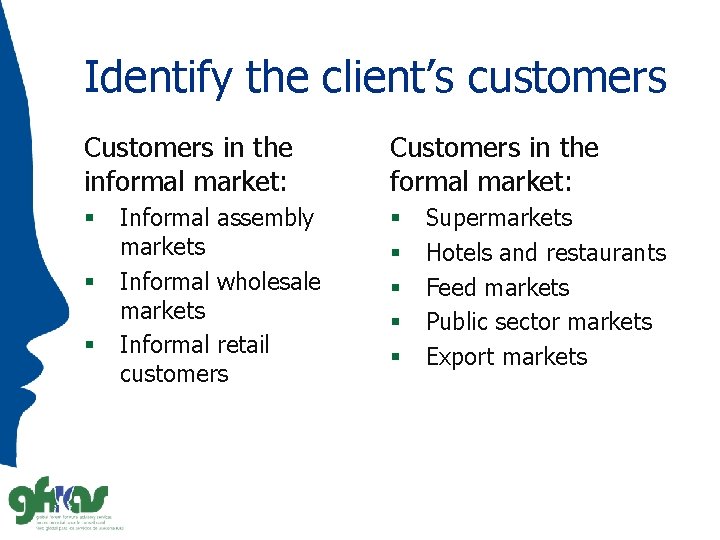
Identify the client’s customers Customers in the informal market: § § § Informal assembly markets Informal wholesale markets Informal retail customers Customers in the formal market: § § § Supermarkets Hotels and restaurants Feed markets Public sector markets Export markets
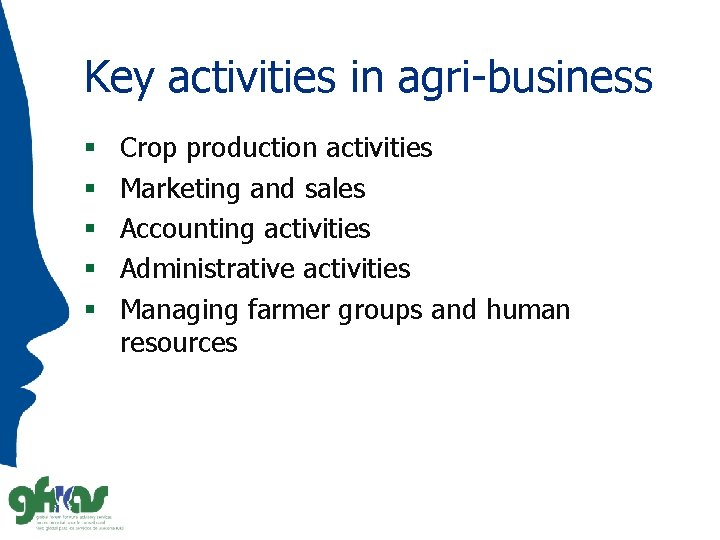
Key activities in agri-business § § § Crop production activities Marketing and sales Accounting activities Administrative activities Managing farmer groups and human resources
Study unit 2 Key skills involved in running a business
Overview § Study unit 2 is about the key skills needed to run a farming enterprise, including: • • Business planning; Market analysis, marketing and sales; Decision-making; Financial and bookkeeping basics; Production mapping and management; Negotiation with partners; Customer relationship development and management; and Employee training.
Evaluating key skills § § § § § Production operating skills; Short and long-term planning and goal setting skills; Decision-making skills; Problem identification and problem-solving skills; Communication skills; Human resource management and training skills; Negotiation skills; Calculation sills; and Bookkeeping and basic financial skills.
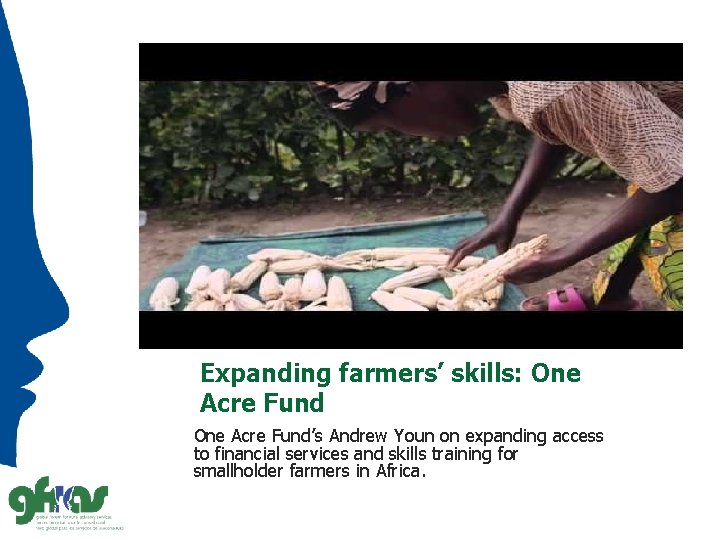
Expanding farmers’ skills: One Acre Fund’s Andrew Youn on expanding access to financial services and skills training for smallholder farmers in Africa.
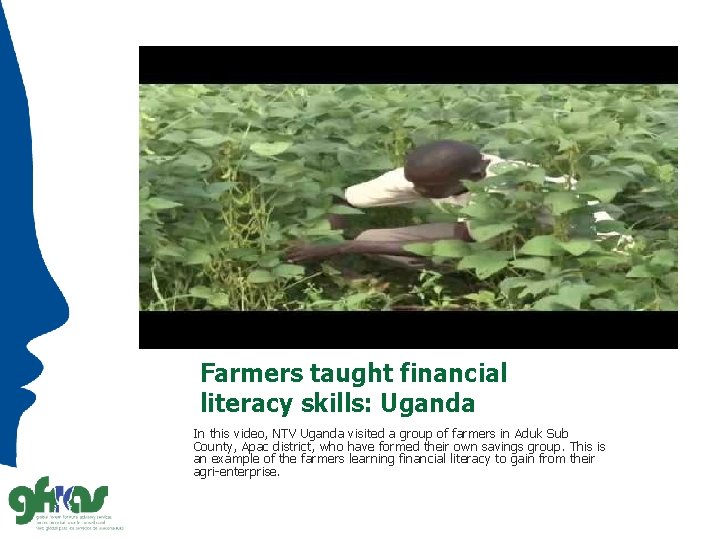
Farmers taught financial literacy skills: Uganda In this video, NTV Uganda visited a group of farmers in Aduk Sub County, Apac district, who have formed their own savings group. This is an example of the farmers learning financial literacy to gain from their agri-enterprise.
Study unit 3 Identify markets, map resources and conduct business planning
Overview § Study unit 3 is about: • Identifying market opportunities; • Managing key activities and partners in a business enterprise; and • Conducting business planning, from the business canvas to the business plan.
Market opportunity identification MOI is a systematic method that helps extension agents and farmers evaluate: § § § Market demand buying conditions for existing products with reference to collective marketing within a group; Market options for new products to encourage diversification, with an emphasis on higher value goods; and Market options for value-added products, so that service providers can assist farmers in capturing more value from their raw goods.
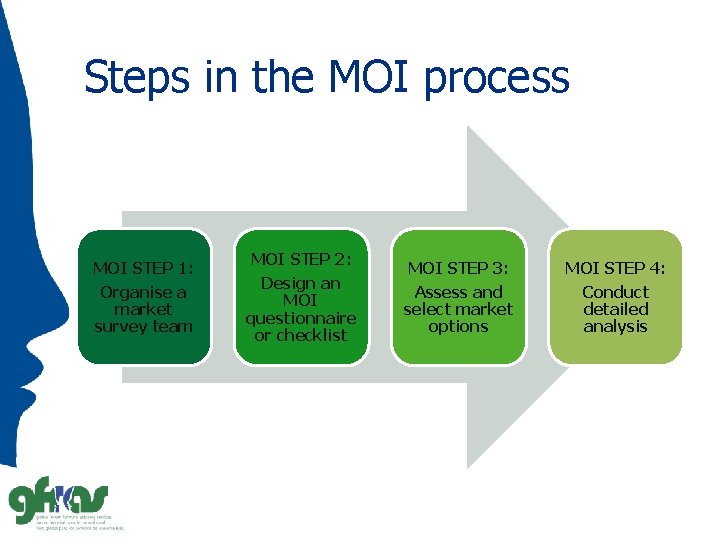
Steps in the MOI process MOI STEP 1: Organise a market survey team MOI STEP 2: Design an MOI questionnaire or checklist MOI STEP 3: Assess and select market options MOI STEP 4: Conduct detailed analysis
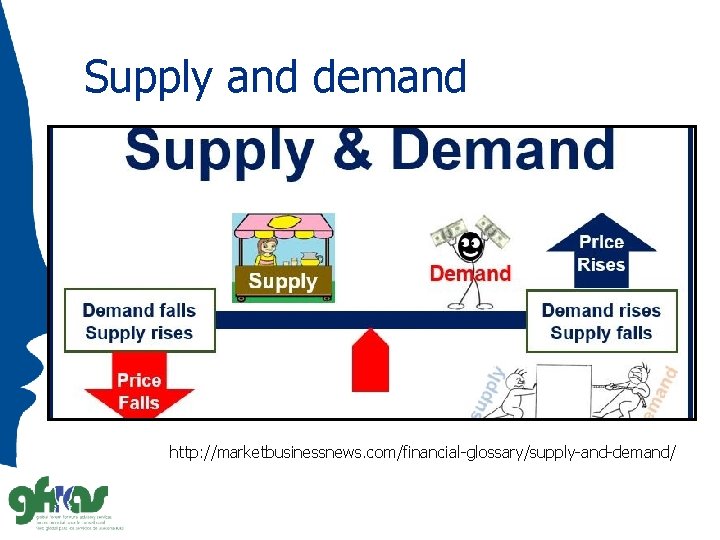
Supply and demand http: //marketbusinessnews. com/financial-glossary/supply-and-demand/
Key buying conditions § § § Crop type and variety that buyers demand; Prices that buyers are offering; Quality criteria and product grading; Volume of sales by buyers; and Frequency of purchase
Interviewing buyers DO DO NOT Be courteous Listen attentively Maintain control Probe Observe signals of nonverbal communication, such as body language § Be patient § Keep the buyer at ease § Maintain self-control § Continue an interview unnecessarily § Assume that an answer is finished or is leading nowhere § Talk instead of listen § Influence the buyer; and § Use a tape recorder: it is an indication of poor listening skills § § §
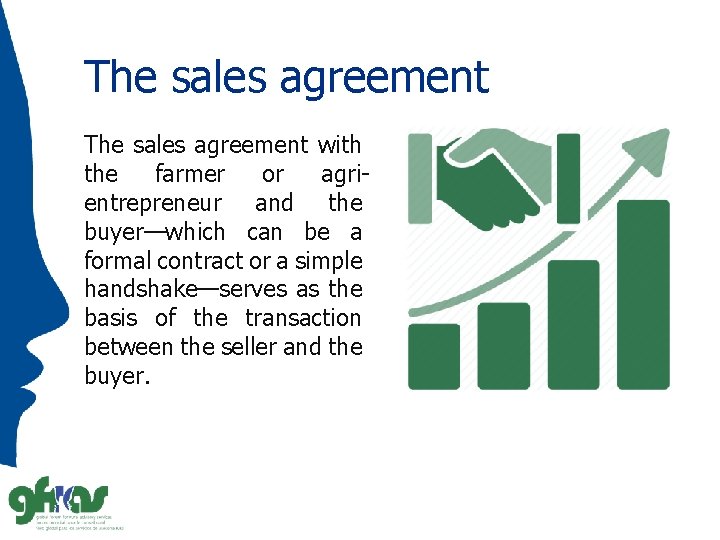
The sales agreement with the farmer or agrientrepreneur and the buyer—which can be a formal contract or a simple handshake—serves as the basis of the transaction between the seller and the buyer.
Key activities in production cycle § § § § Land preparation; Planting; Crop production and management; Pest and disease management; Soil and water management; Harvesting and drying; and Sales management
Key partners in an agri-enterprise § § § § § Local agricultural research stations; Farmers, lead farmers, farmer groups and cooperatives; Input suppliers Collectors: small, local traders, who buy directly from individual farmers; Processors; Companies and retailers that buy the product; Financial institutions, e. g. commercial banks; Extension and business development services; Regulatory agencies; and Customers who buy the final products.
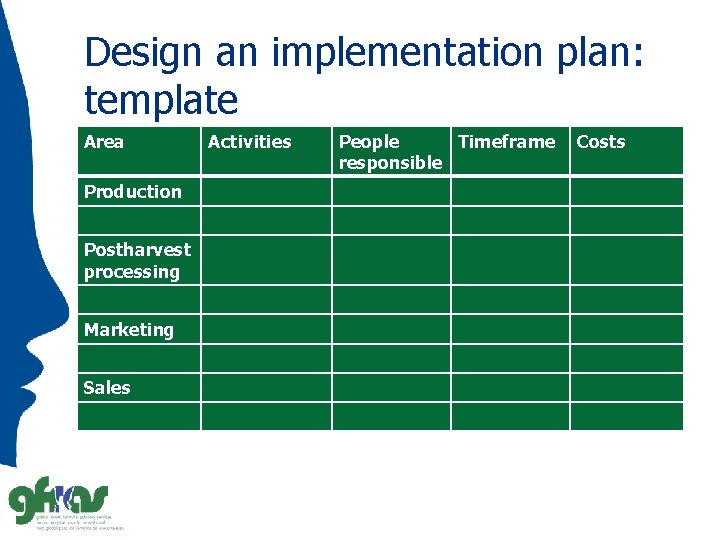
Design an implementation plan: template Area Production Postharvest processing Marketing Sales Activities People Timeframe responsible Costs
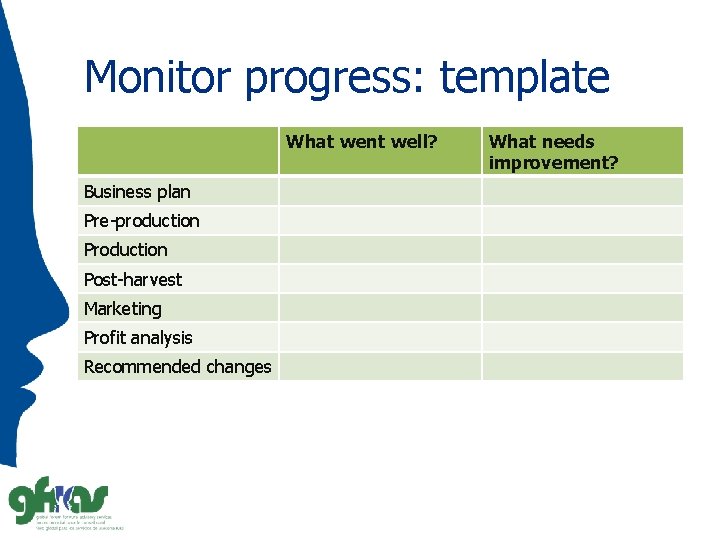
Monitor progress: template What went well? Business plan Pre-production Post-harvest Marketing Profit analysis Recommended changes What needs improvement?
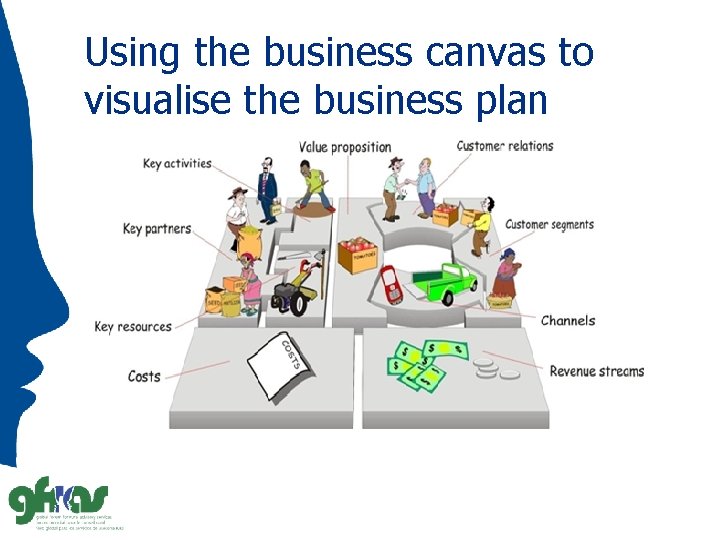
Using the business canvas to visualise the business plan
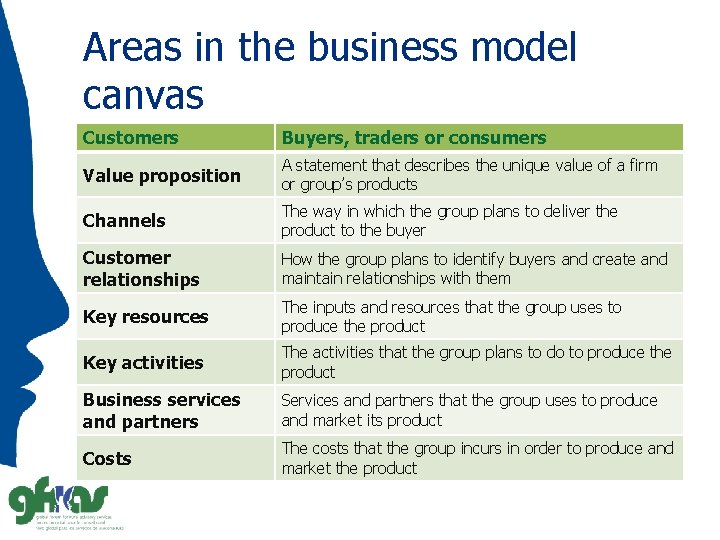
Areas in the business model canvas Customers Buyers, traders or consumers Value proposition A statement that describes the unique value of a firm or group’s products Channels The way in which the group plans to deliver the product to the buyer Customer relationships How the group plans to identify buyers and create and maintain relationships with them Key resources The inputs and resources that the group uses to produce the product Key activities The activities that the group plans to do to produce the product Business services and partners Services and partners that the group uses to produce and market its product Costs The costs that the group incurs in order to produce and market the product
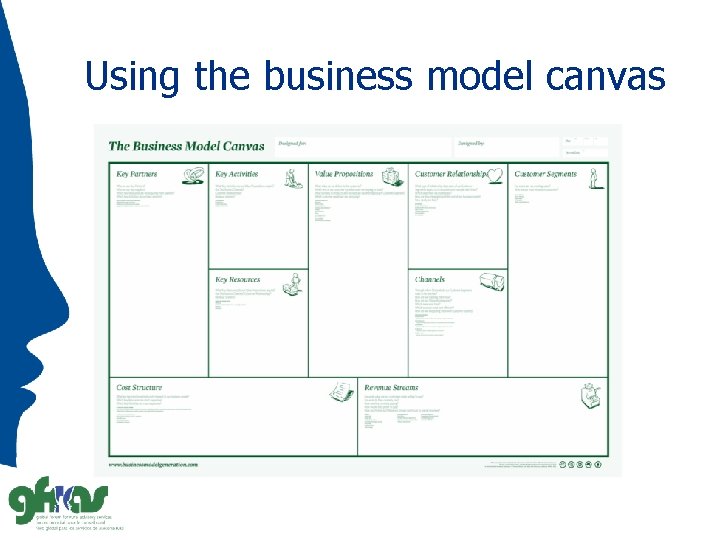
Using the business model canvas
Identify investment needs § How much money is required to start the enterprise? § How much money does the enterprise team have? § How much does it need? § When will it see its first revenue? § When will it break even? § When does it see profit?
Study unit 4 Financial management, sales and risk management
Overview § Study unit 4 is about: • Identifying sources of finance, e. g. self-help groups, SACCOs, family lending, commercial banks and e-money; • Managing financial resources; • Performing sales operations; and • Conducting risk assessment.
Savings options and services § Self-help savings groups, e. g. ROSCAs, ASCAs and SILCs; § Savings and credit cooperatives (SACCOs); § Family lending; § Local money lenders and traders; § Micro-finance institutes; § Commercial banks; and § E-money (e-credit).
Evaluating savings options § Criteria: • • • Liquidity (i. e. how easy it is to turn an asset into cash); The risks associated with savings indicate potential of savings losing their value; The cost associated with savings; The profit associated with savings; and Accumulating assets.
Household and business finances § Keep separate records for business and household needs; § Keep financial records for the business and household in separate filing systems; § Decide on a salary from and do not exceed that when making household expenses; and § Set a budget for the business by using the following steps: • Step 1: Keep track of daily income and expenses; • Step 2: Determine sources of income and estimate total income; and • Step 3: Select expenses and estimate their costs.
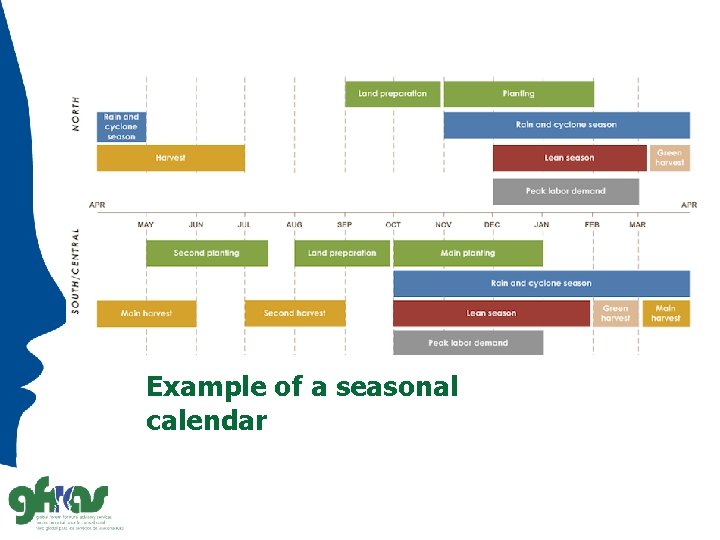
Example of a seasonal calendar
Production costs Production cost = total of all direct costs. § Direct costs relate to the production process, for example: § Costs of the materials needed to produce the product, e. g. crop), which may include seed, fertiliser, irrigation water, etc. ; and § Labour costs are the total costs involved in paying workers who are directly responsible for the production process, e. g. salaries or wages, payroll taxes and pension fund contributions.
Pricing strategies § Cost-based pricing: product price includes the operating, manufacturing or production costs; § Value-based pricing: based on the customers’ perception of the value of the product and involves customer preferences, convenience, product quality and benefits; and § Competition-based pricing: product price is based on what existing and emerging competitors are doing
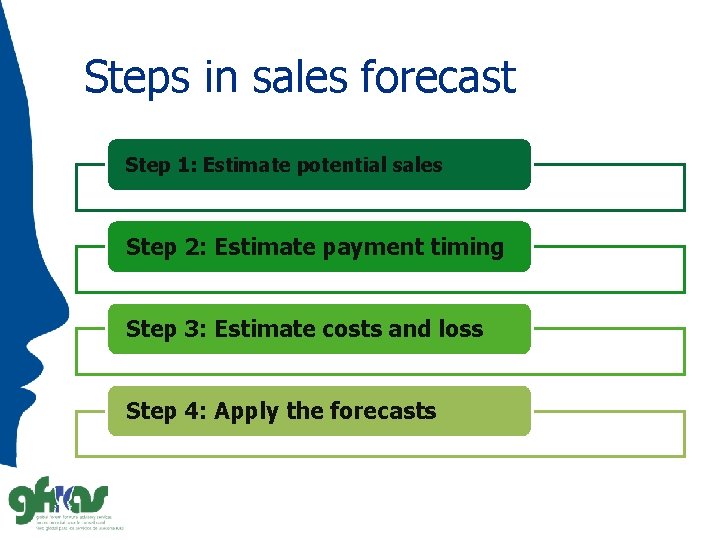
Steps in sales forecast Step 1: Estimate potential sales Step 2: Estimate payment timing Step 3: Estimate costs and loss Step 4: Apply the forecasts
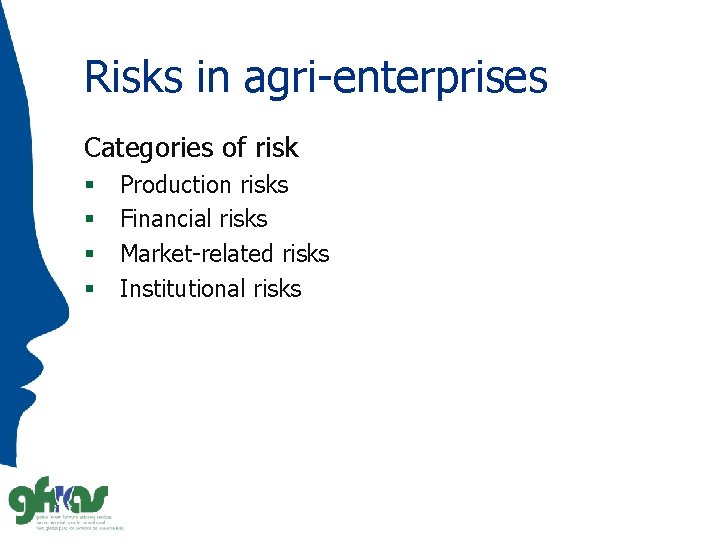
Risks in agri-enterprises Categories of risk § § Production risks Financial risks Market-related risks Institutional risks
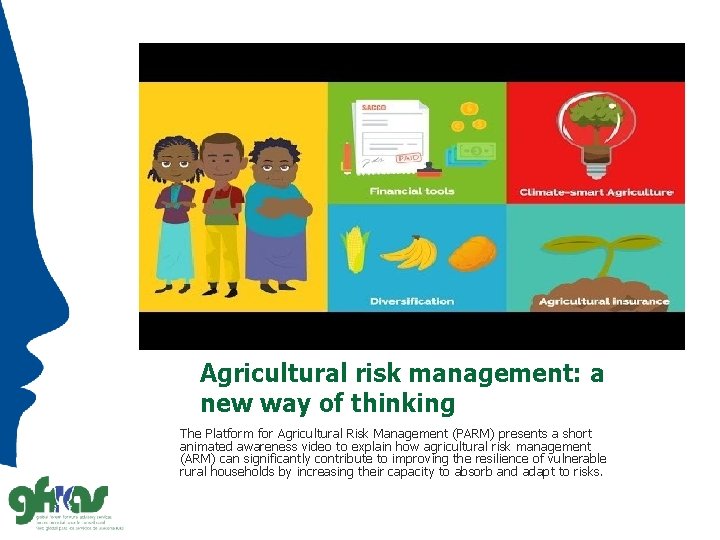
Agricultural risk management: a new way of thinking The Platform for Agricultural Risk Management (PARM) presents a short animated awareness video to explain how agricultural risk management (ARM) can significantly contribute to improving the resilience of vulnerable rural households by increasing their capacity to absorb and adapt to risks.
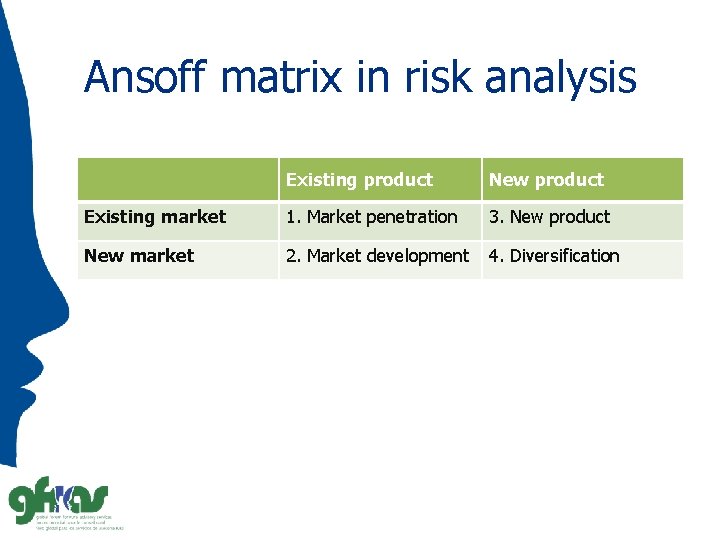
Ansoff matrix in risk analysis Existing product New product Existing market 1. Market penetration 3. New product New market 2. Market development 4. Diversification
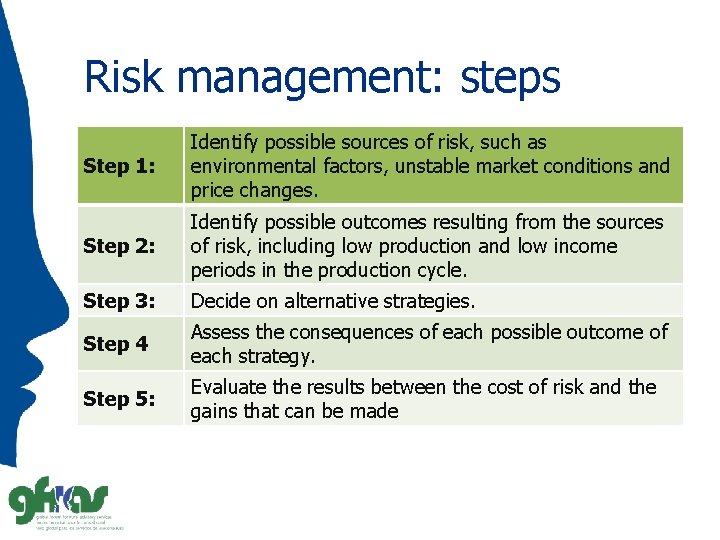
Risk management: steps Step 1: Identify possible sources of risk, such as environmental factors, unstable market conditions and price changes. Step 2: Identify possible outcomes resulting from the sources of risk, including low production and low income periods in the production cycle. Step 3: Decide on alternative strategies. Step 4 Assess the consequences of each possible outcome of each strategy. Step 5: Evaluate the results between the cost of risk and the gains that can be made

https: //www. youtube. com/watch? v=bu. UGDn. XIy. GE
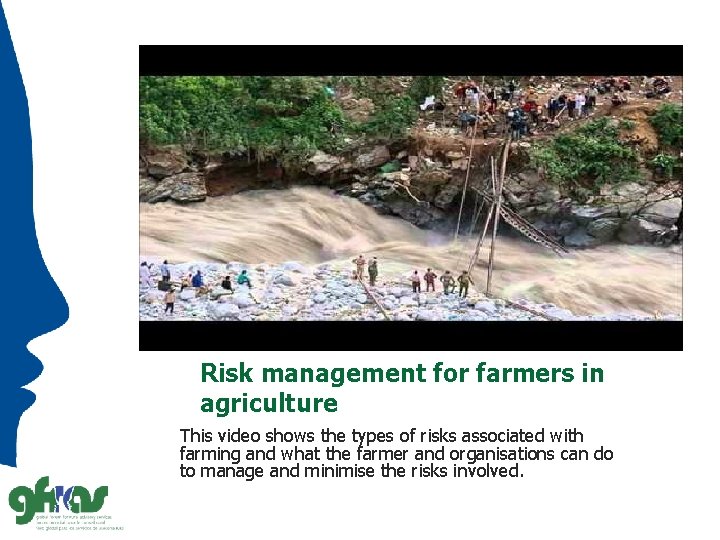
Risk management for farmers in agriculture This video shows the types of risks associated with farming and what the farmer and organisations can do to manage and minimise the risks involved.
Study unit 5 Record keeping
Overview Study unit 5 is about: § Record keeping methods for: • • Operations record keeping; and Financial record keeping
Production records § Soil conditioning record, including results of regular soil checks; § Seed-starting record, including recording of seed sources; § Planting record, which records the plot location and planting date; and § Harvesting scheduling record, which gives information on: • • • Crops and varieties harvested; Amounts harvested; The crop that is ready for harvest in every month; Post-harvesting handling methods; and The need for extra labour in the fields for a harvesting period.
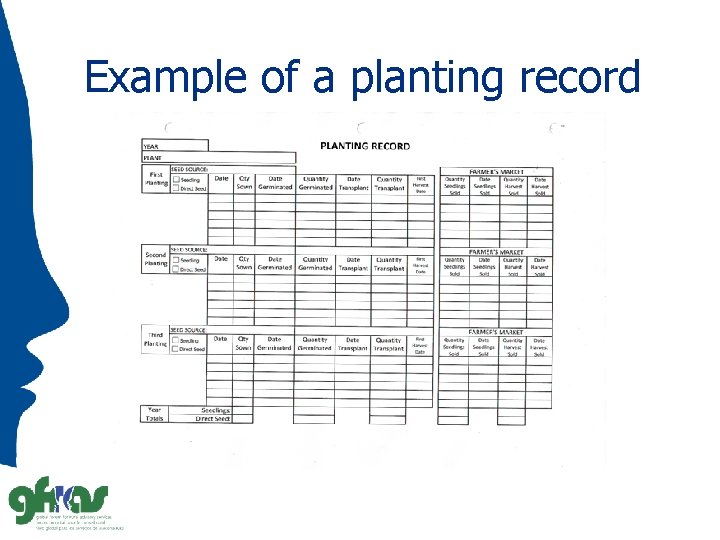
Example of a planting record
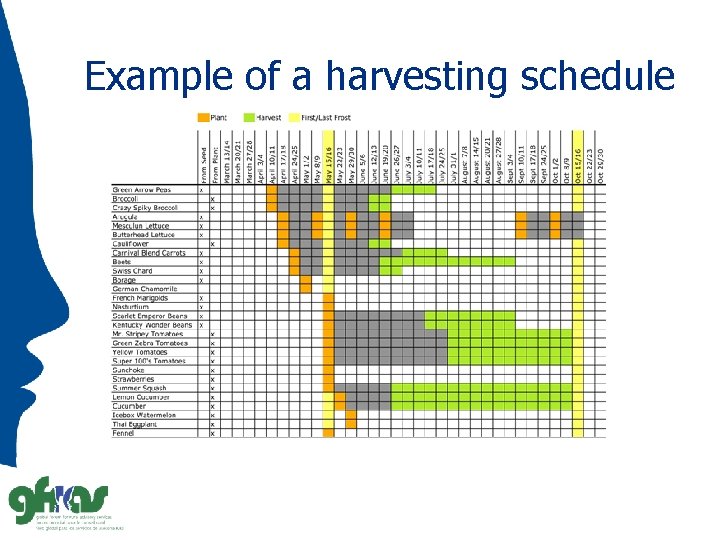
Example of a harvesting schedule
Financial records § § § § Invoices; Receipts; Cash book; Sales book; Payments; Costs; Employment records; and Accounts and investments.
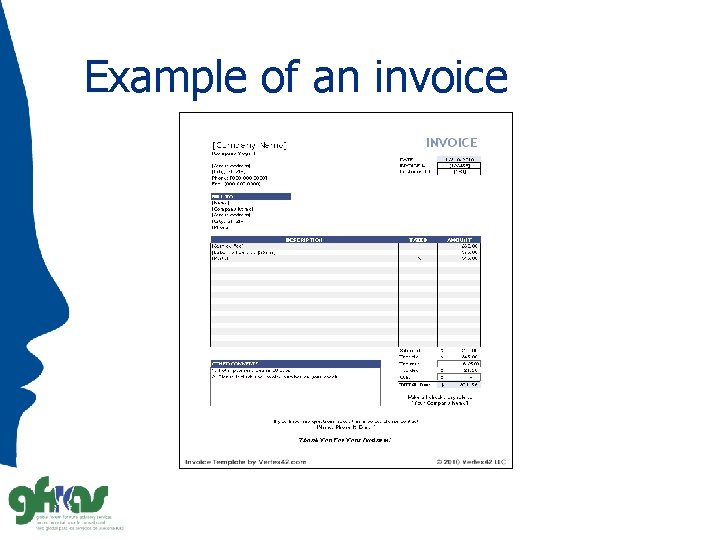
Example of an invoice
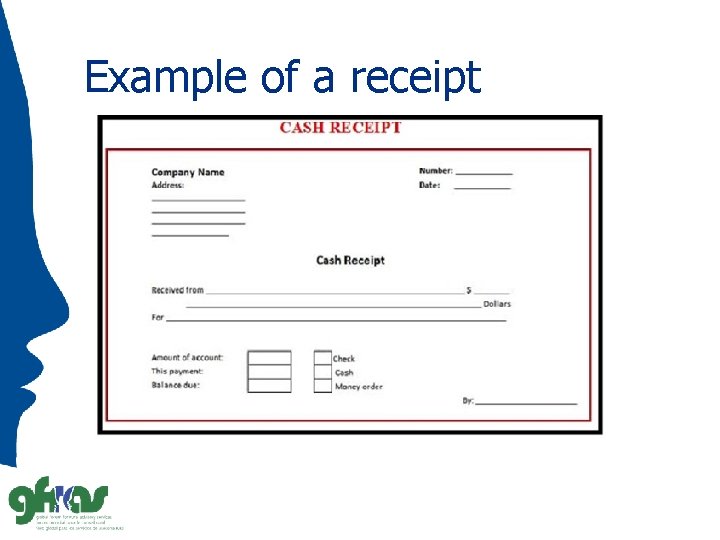
Example of a receipt
Study unit 6 Building a business and managing relationships
Overview § Study unit 6 is about: • • Putting plans together; Running an agri-enterprise or entrepreneurship; Monitoring progress; and Managing relationships with teams, service providers, value chain partners and customers.
Launching an agri-enterprise Steps: § § § § Step Step 1: 2: 3: 4: 5: 6: 7: 8: Conduct proper planning; Test the business idea; Make sure that you know the market; Make sure that you know the customer; Establish cash and other financial resources; Select a suitable business structure; Build the right team; and Prepare for problems and change.
Monitor business performance § § § § Did the target business formulate a strong business case? How well organised was the agrientrepreneur/business team? How many people were involved in the business? Did the production team meet their targets? Did the financial plan meet the needs of the agrienterprise? Did the marketing/sales team meet their targets? Did the business make a profit and, if so, how much? Will the agri-enterprise continue in the next season?
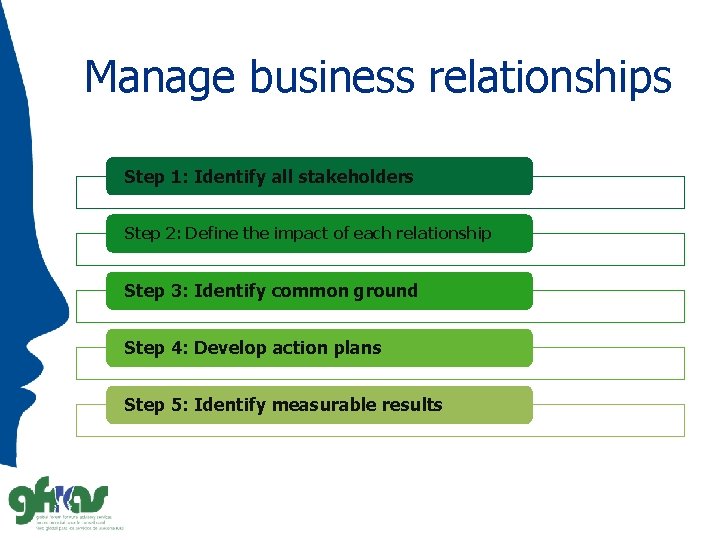
Manage business relationships Step 1: Identify all stakeholders Step 2: Define the impact of each relationship Step 3: Identify common ground Step 4: Develop action plans Step 5: Identify measurable results
Customer relationship management § § § Increase in sales and profitability; Improved placement of products; Increased customer satisfaction; Increased retention of the existing customer base, particularly during the times of economic uncertainty; and Increased chance for attracting new customers.
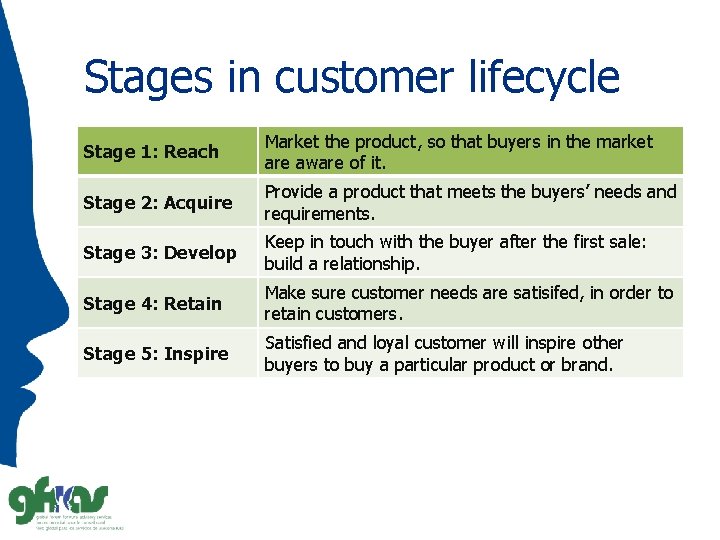
Stages in customer lifecycle Stage 1: Reach Market the product, so that buyers in the market are aware of it. Stage 2: Acquire Provide a product that meets the buyers’ needs and requirements. Stage 3: Develop Keep in touch with the buyer after the first sale: build a relationship. Stage 4: Retain Make sure customer needs are satisifed, in order to retain customers. Stage 5: Inspire Satisfied and loyal customer will inspire other buyers to buy a particular product or brand.
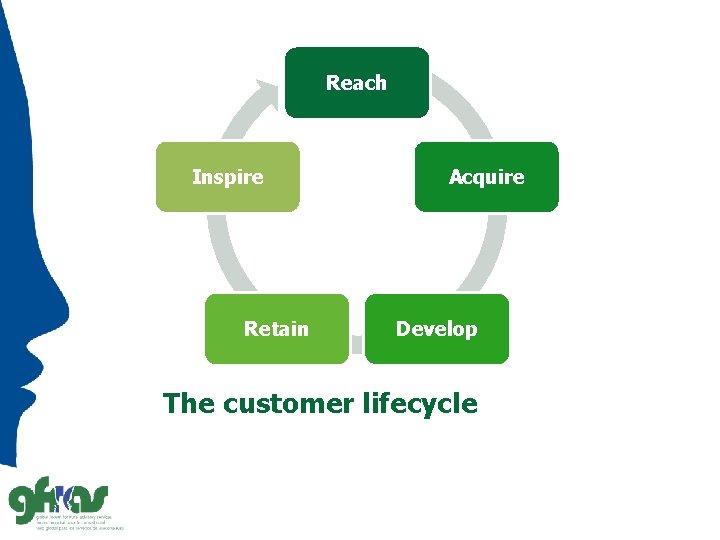
Reach Inspire Retain Acquire Develop The customer lifecycle
Acknowledgements This module was made possible through the support of the Deutsche Gesellschaft fu r Internationale Zusammenarbeit (GIZ). The contents of this module are the responsibility of the authors and do not necessarily reflect the views of GIZ or their government. All work by Global Forum for Rural Advisory Services is licensed under a CC BY-NC 3. 0 Unported License.
- Slides: 88