
Agricultural and Industrial Revolution Replacing Bobbins on Machinery
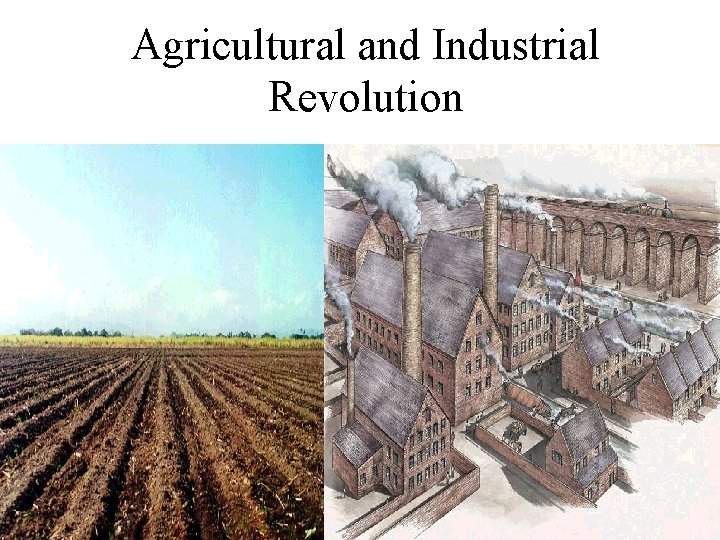
Agricultural and Industrial Revolution
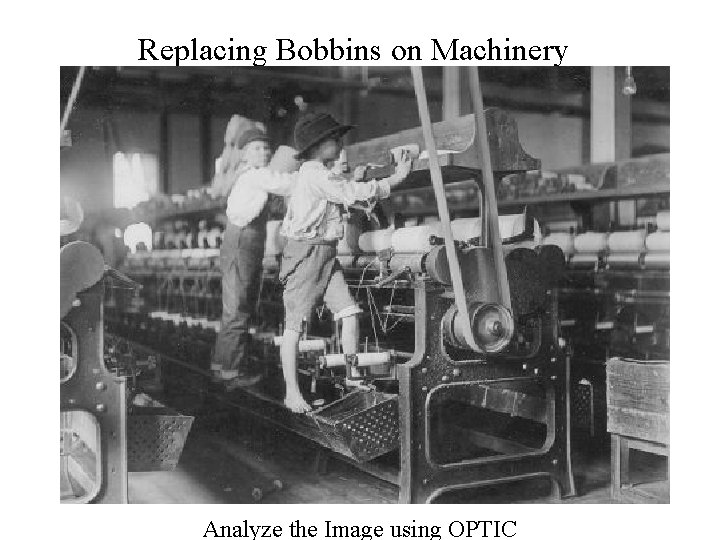
Replacing Bobbins on Machinery Analyze the Image using OPTIC
Disadvantages of Traditional Farming • Very Long Work Hours • Three-Field system was inefficient • In Farming Villages, Families grew just enough food to feed themselves.
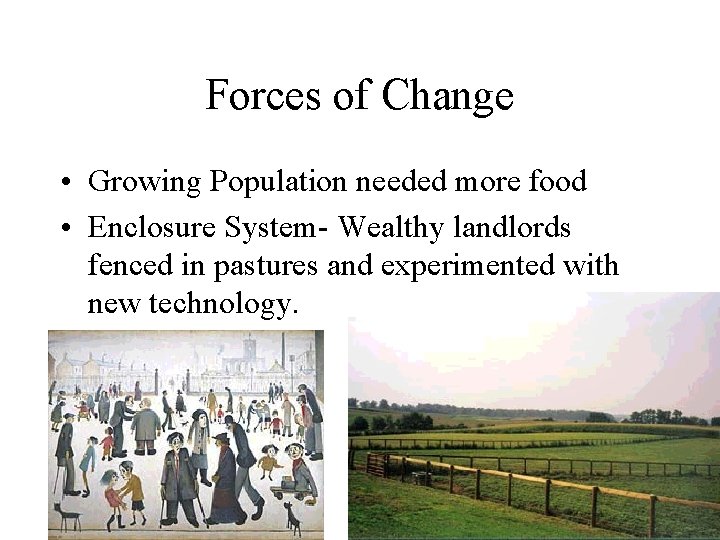
Forces of Change • Growing Population needed more food • Enclosure System- Wealthy landlords fenced in pastures and experimented with new technology.
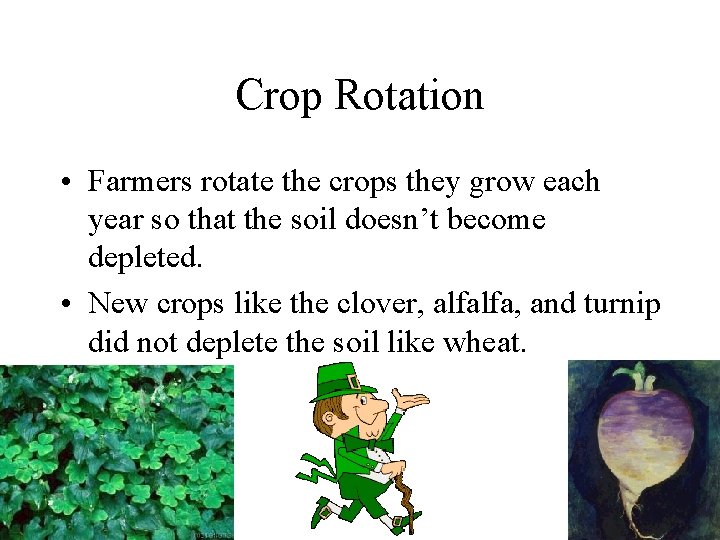
Crop Rotation • Farmers rotate the crops they grow each year so that the soil doesn’t become depleted. • New crops like the clover, alfalfa, and turnip did not deplete the soil like wheat.
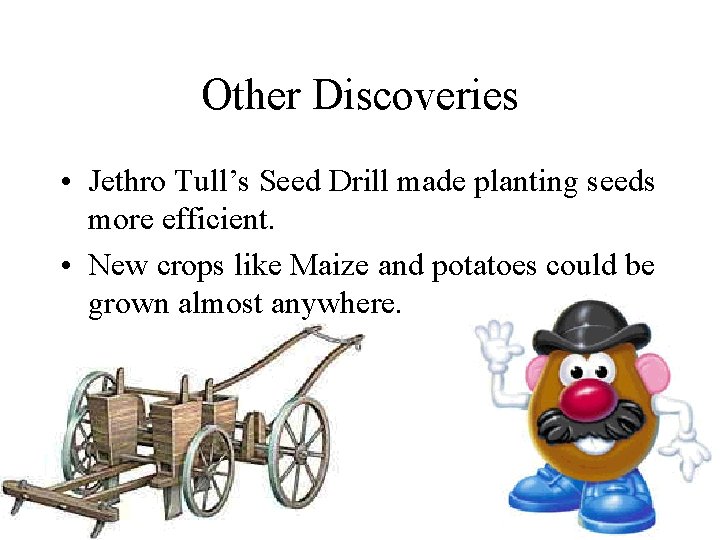
Other Discoveries • Jethro Tull’s Seed Drill made planting seeds more efficient. • New crops like Maize and potatoes could be grown almost anywhere.
Effects of the Agricultural Revolution • More food=healthier livestock • More food=population growth • Smaller farmers were forced to move to the cities to look for work
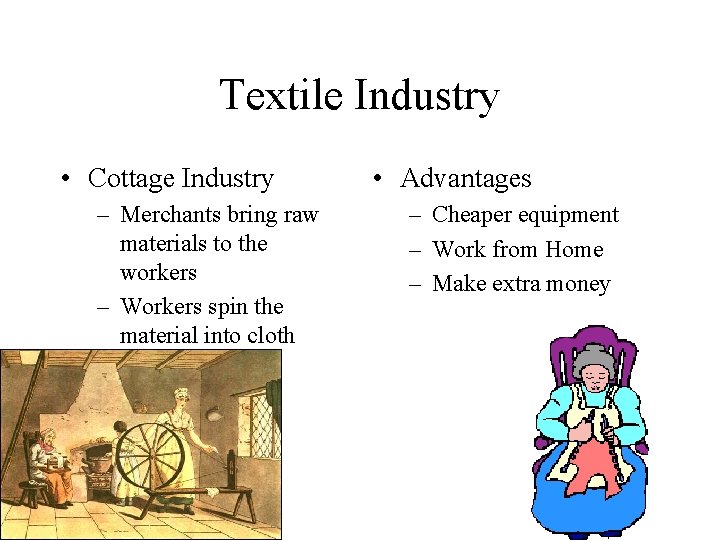
Textile Industry • Cottage Industry – Merchants bring raw materials to the workers – Workers spin the material into cloth • Advantages – Cheaper equipment – Work from Home – Make extra money
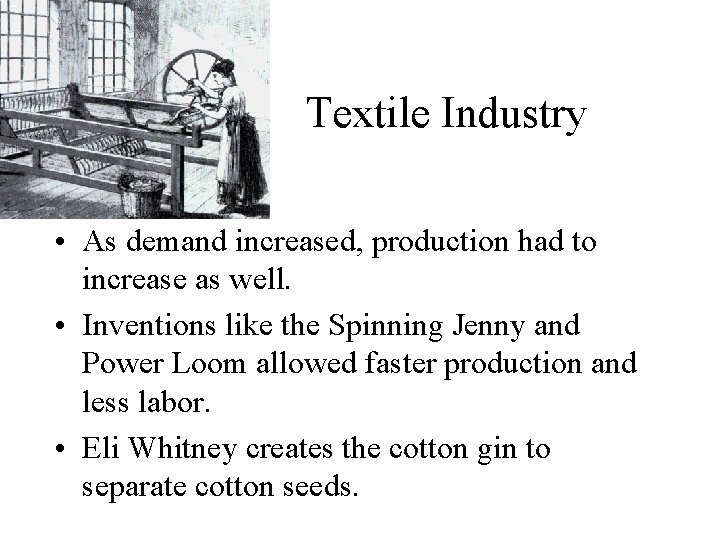
Textile Industry • As demand increased, production had to increase as well. • Inventions like the Spinning Jenny and Power Loom allowed faster production and less labor. • Eli Whitney creates the cotton gin to separate cotton seeds.
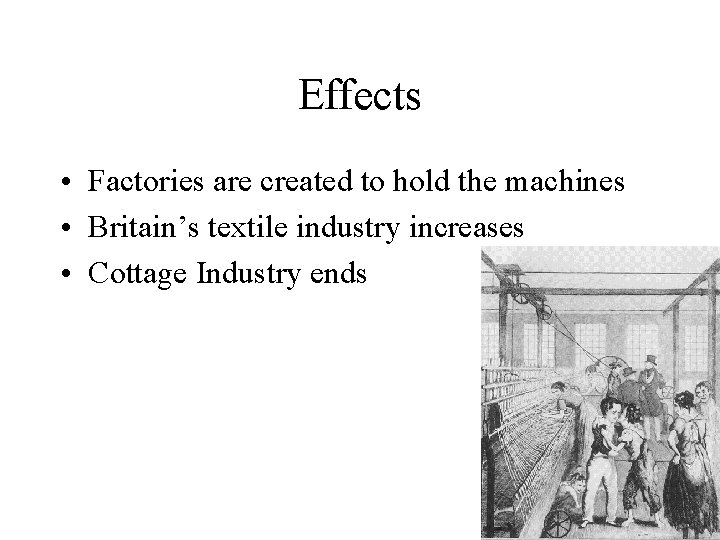
Effects • Factories are created to hold the machines • Britain’s textile industry increases • Cottage Industry ends

Power Industry • Most factories had to be located by water to run their machines • The steam engine allows factories to be built anywhere and increase production
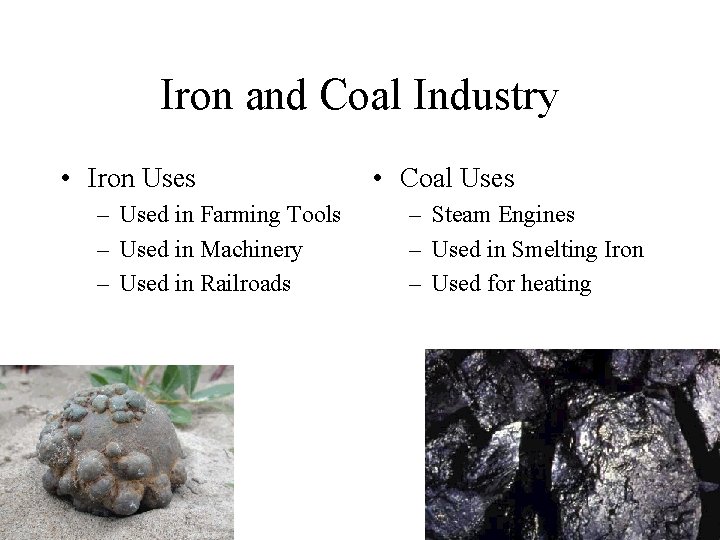
Iron and Coal Industry • Iron Uses – Used in Farming Tools – Used in Machinery – Used in Railroads • Coal Uses – Steam Engines – Used in Smelting Iron – Used for heating
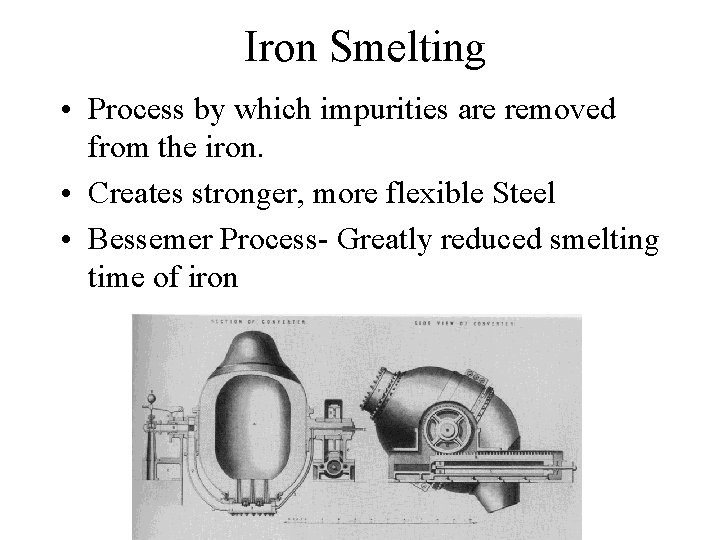
Iron Smelting • Process by which impurities are removed from the iron. • Creates stronger, more flexible Steel • Bessemer Process- Greatly reduced smelting time of iron
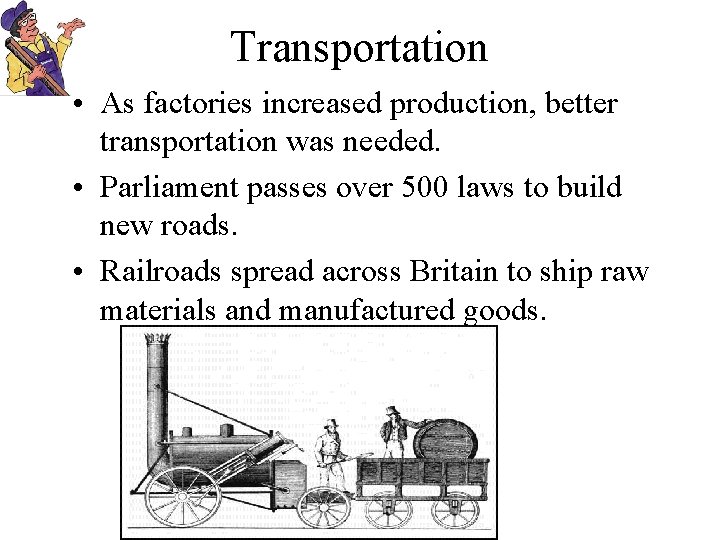
Transportation • As factories increased production, better transportation was needed. • Parliament passes over 500 laws to build new roads. • Railroads spread across Britain to ship raw materials and manufactured goods.
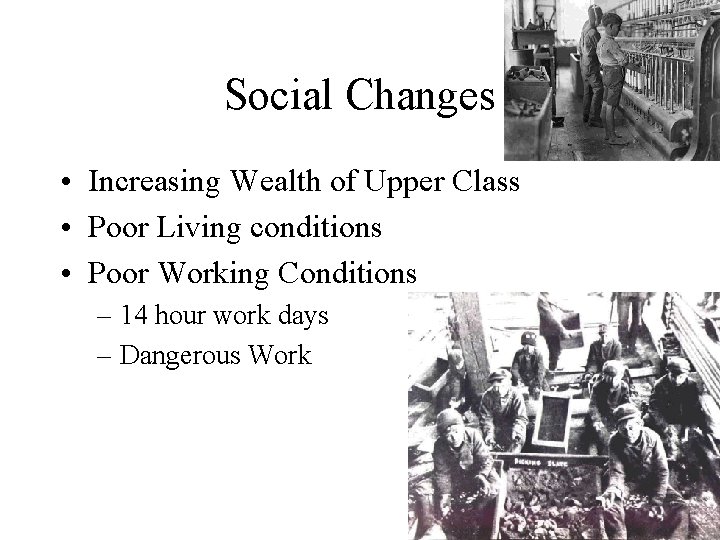
Social Changes • Increasing Wealth of Upper Class • Poor Living conditions • Poor Working Conditions – 14 hour work days – Dangerous Work

Benefits of Industrialization • General Increase of Wealth • Increasing prosperity of Middle Class • Eventual Improvements to Working Conditions
- Slides: 18