
Agrarian and Industrial Revolution Agrarian Revolution Enclosure System


- Slides: 60
Agrarian and Industrial Revolution
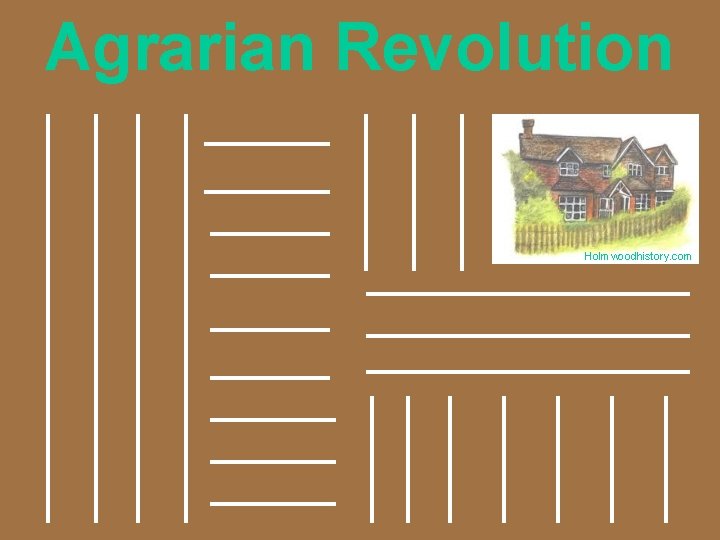
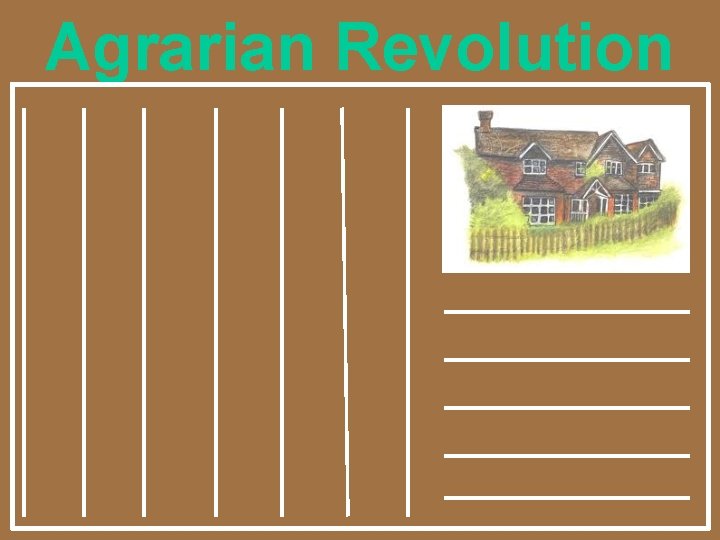
Agrarian Revolution Enclosure System The process of taking over and fencing off land formerly shared by peasant farmers.
Agrarian Revolution Holmwoodhistory. com
Agrarian Revolution
Agrarian Revolution So, Why enclosure? It increased profits especially for sheep to graze, which would result in greater wool production. Larger fields would be cultivated more efficiently.
Agrarian Revolution Consequences of enclosure --Farm laborers were out of work --Small farmers were forced off their land because they couldn’t compete. --Villages shrank and people moved to cities
Agrarian Revolution Farming Methods Aside from enclosure other farming methods were changing as well. Some important ones follow on the next slides.
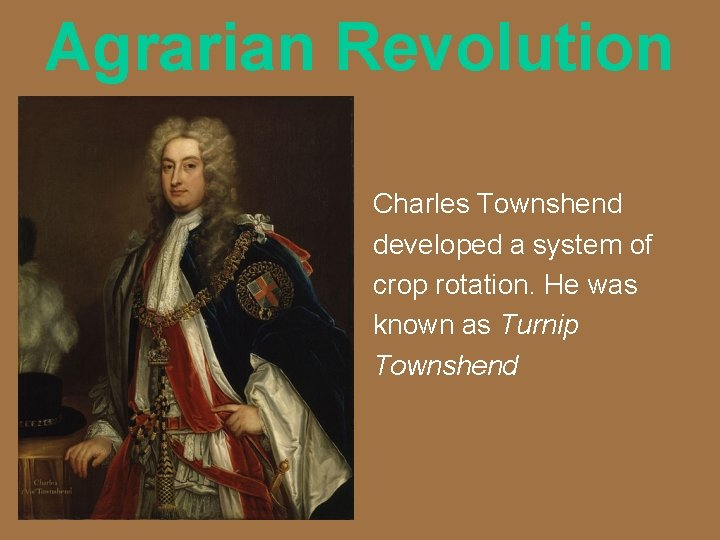
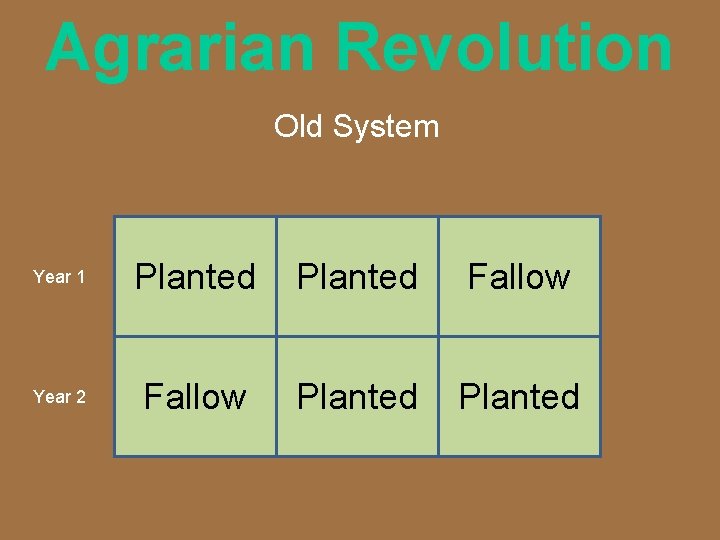
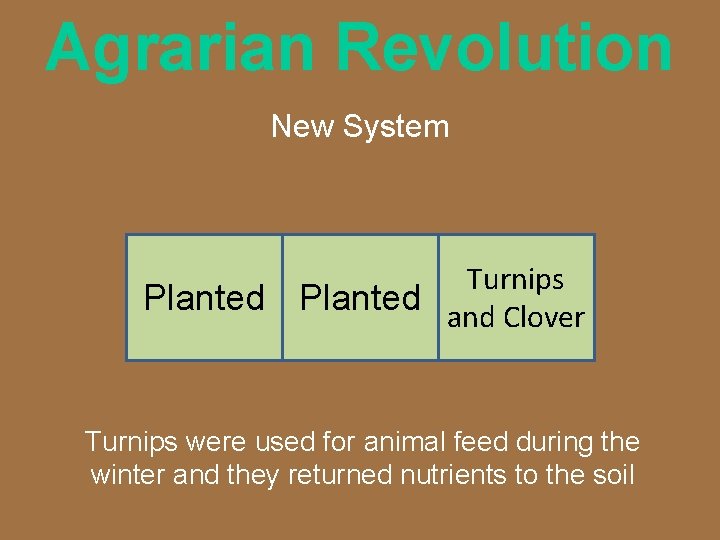
Agrarian Revolution Charles Townshend developed a system of crop rotation. He was known as Turnip Townshend
Agrarian Revolution Old System Year 1 Planted Fallow Year 2 Fallow Planted
Agrarian Revolution New System Planted Turnips Planted and Clover Turnips were used for animal feed during the winter and they returned nutrients to the soil
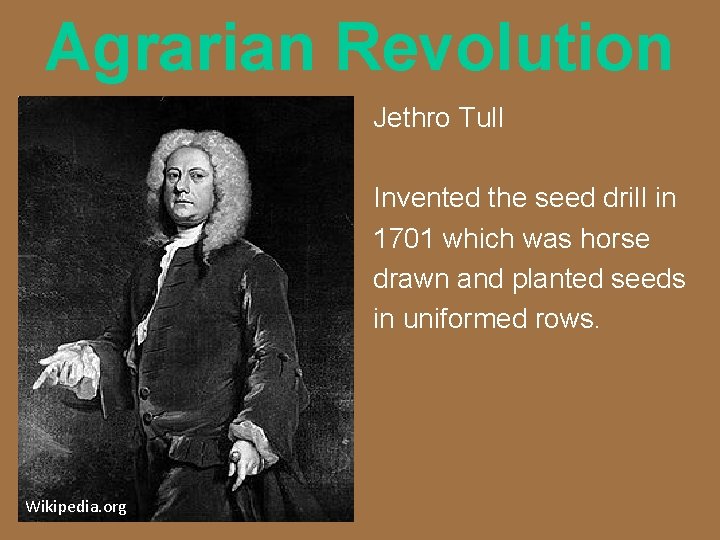
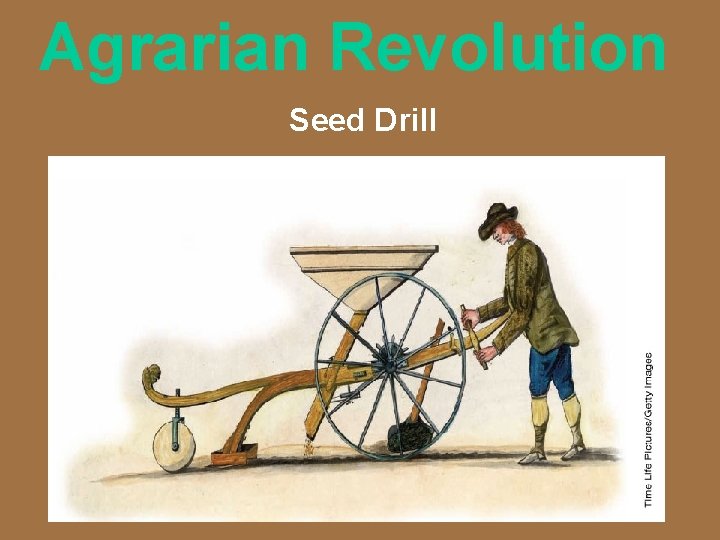
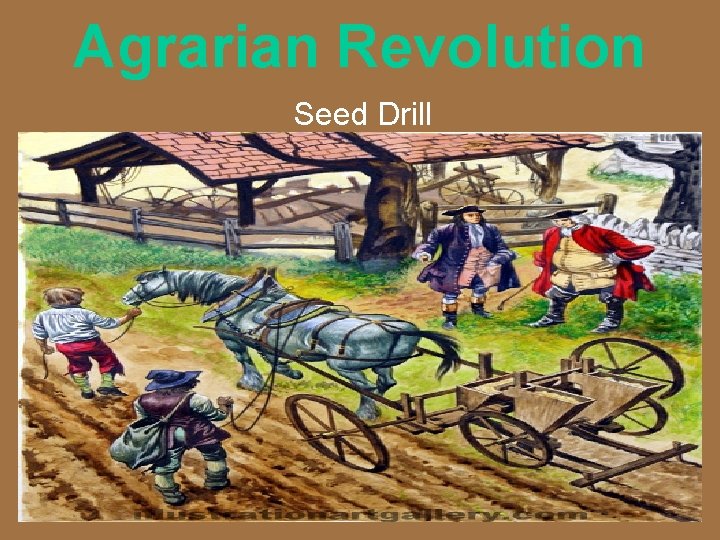
Agrarian Revolution Jethro Tull Invented the seed drill in 1701 which was horse drawn and planted seeds in uniformed rows. Wikipedia. org
Agrarian Revolution Seed Drill
Agrarian Revolution Seed Drill
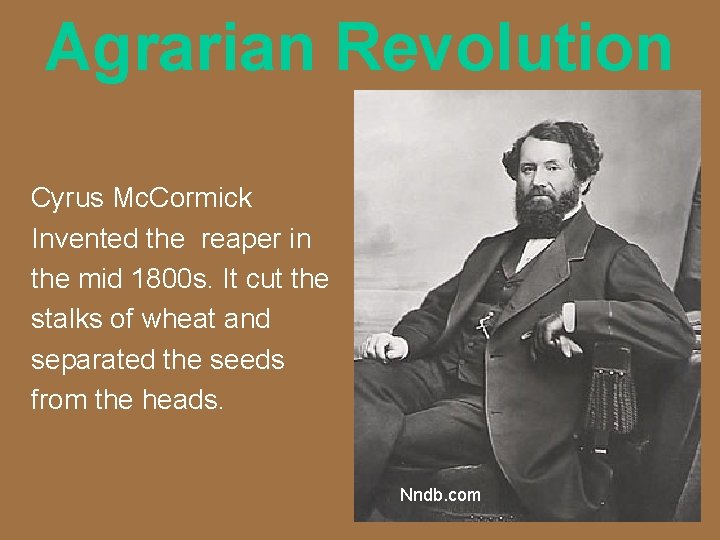
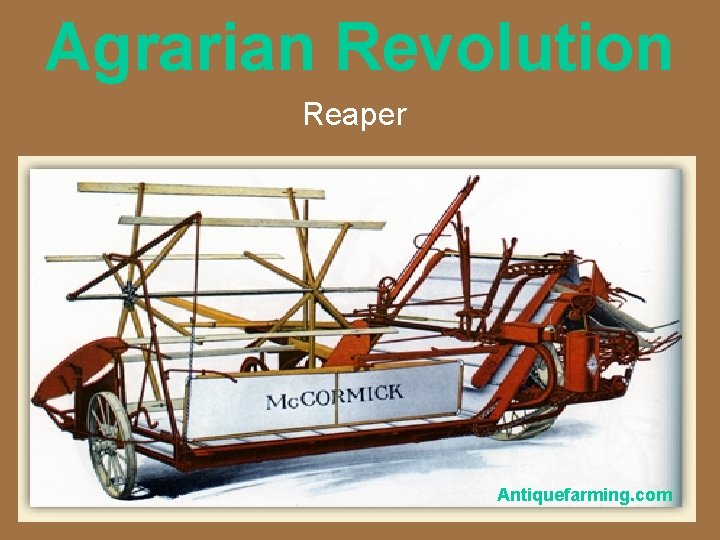
Agrarian Revolution Cyrus Mc. Cormick Invented the reaper in the mid 1800 s. It cut the stalks of wheat and separated the seeds from the heads. Nndb. com
Agrarian Revolution Reaper Antiquefarming. com
Agrarian Revolution http: //www. youtube. com/watch? v=q. WYm 0 T 8 RLo 4
Industrial Revolution Europe moved from a primarily agricultural and rural economy to a capitalist and urban economy from a household, family based economy to an industrial-based economy.
Industrial Revolution Why does it happen in Europe? Globalization of the European Economy
Industrial Revolution Increase of the European Population Was the IR started by population growth or did the IR start an rise in population?
Industrial Revolution Increase of Food Production
Industrial Revolution http: //www. youtube. com/watch? v=AT-To. V 5 heso
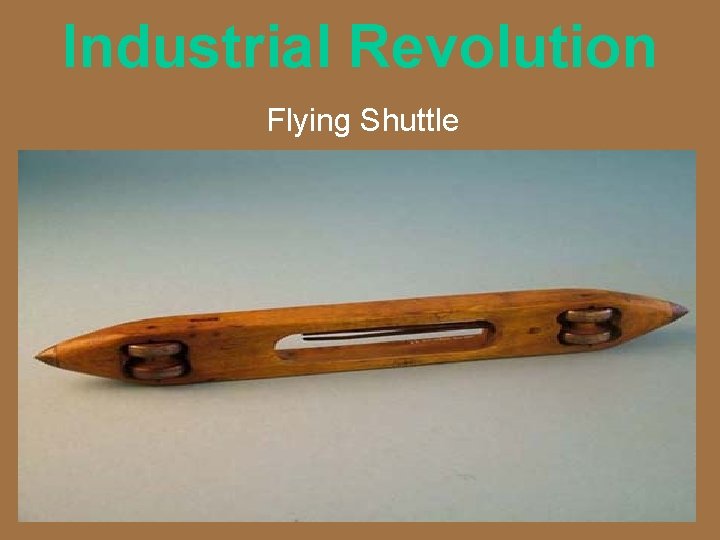
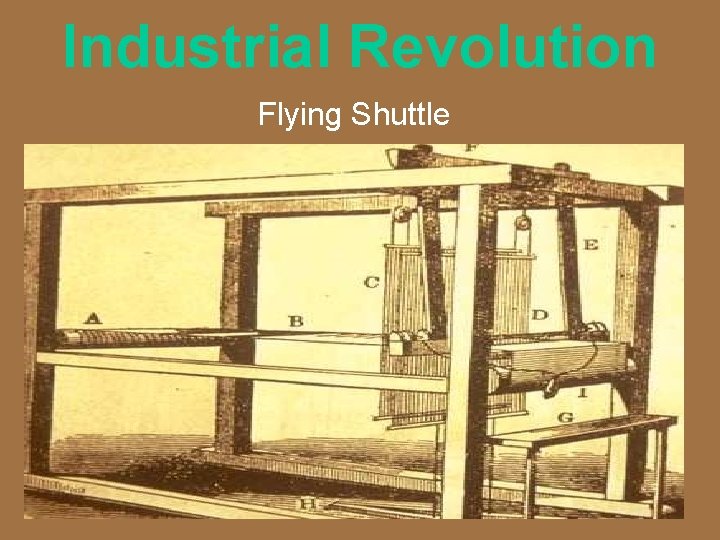
Industrial Revolution Flying Shuttle
Industrial Revolution Flying Shuttle
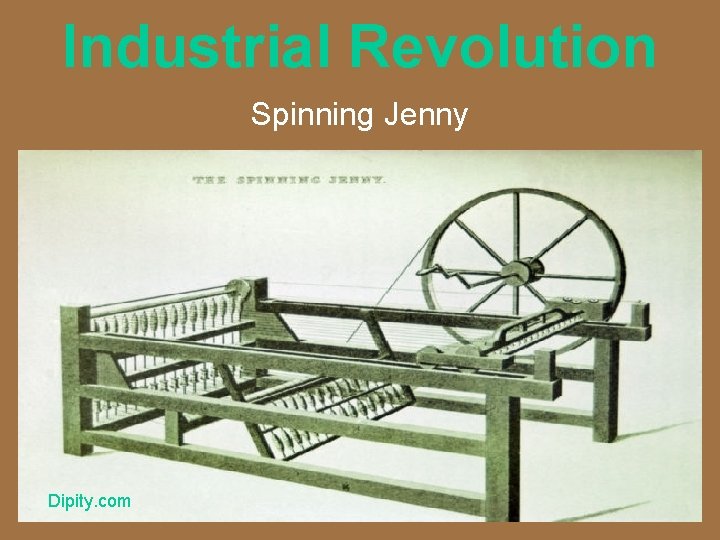
Industrial Revolution Spinning Jenny Dipity. com
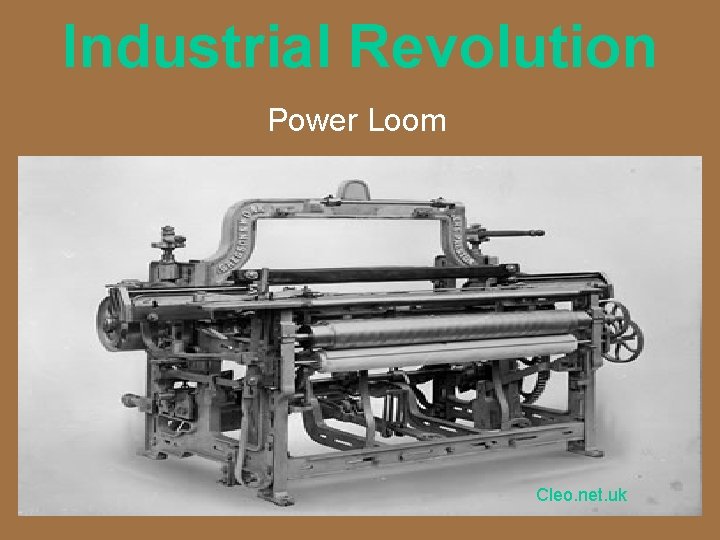
Industrial Revolution Power Loom Cleo. net. uk
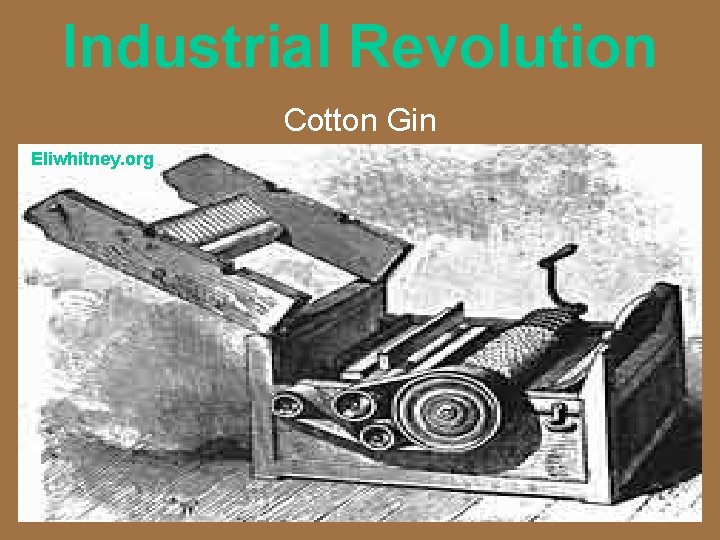
Industrial Revolution Cotton Gin Eliwhitney. org
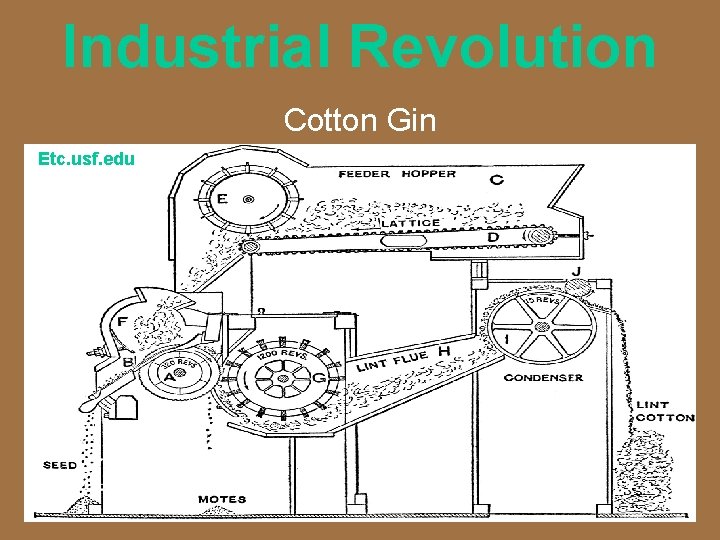
Industrial Revolution Cotton Gin Etc. usf. edu
Industrial Revolution http: //www. youtube. com/watch? v=Lb. AOse. Ds 3 KY
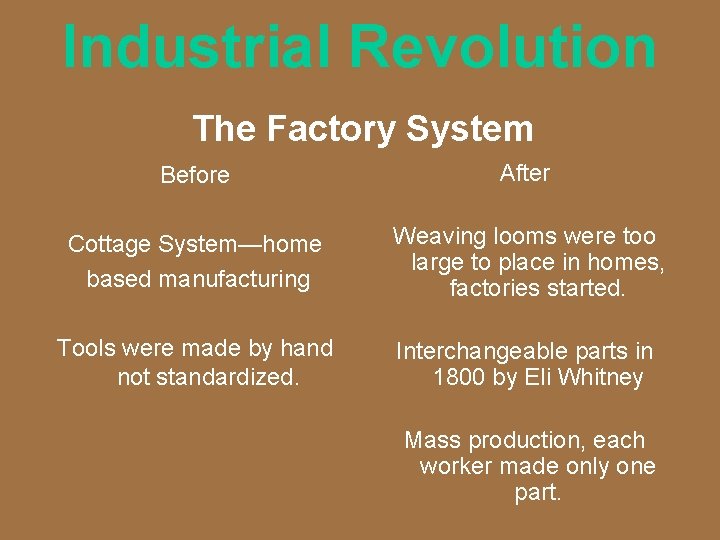
Industrial Revolution The Factory System Before After Cottage System—home based manufacturing Weaving looms were too large to place in homes, factories started. Tools were made by hand not standardized. Interchangeable parts in 1800 by Eli Whitney Mass production, each worker made only one part.
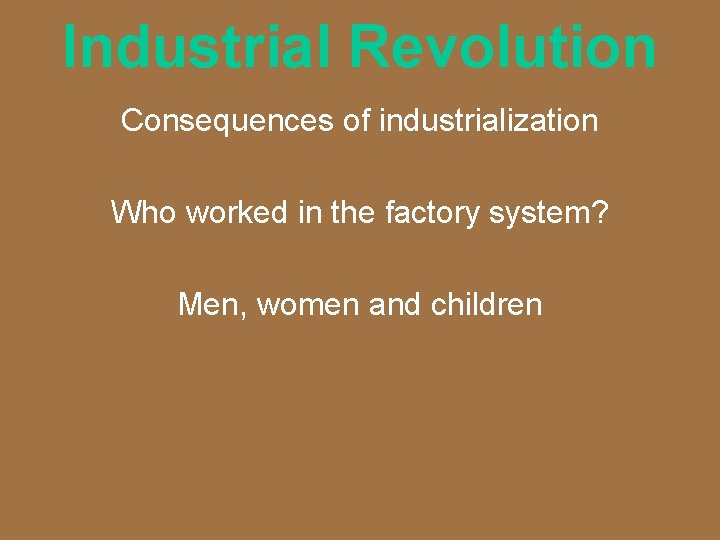
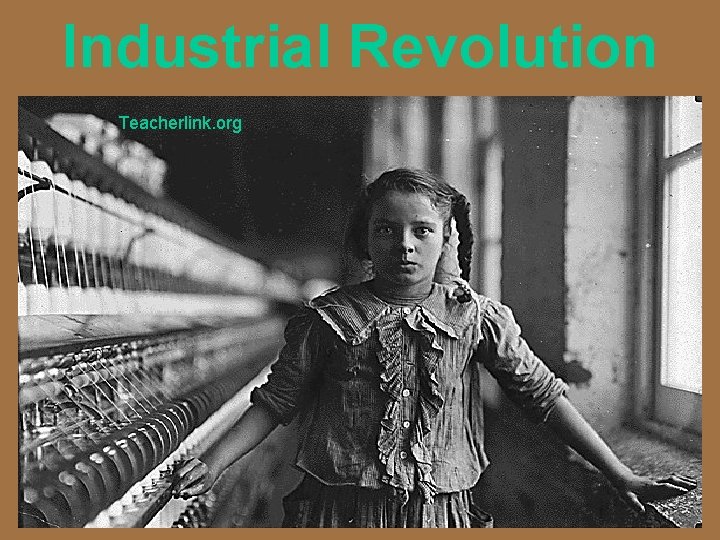
Industrial Revolution Consequences of industrialization Who worked in the factory system? Men, women and children
Industrial Revolution Teacherlink. org
Industrial Revolution When were factories open? Daylight hours, sun up to sun down Six days a week
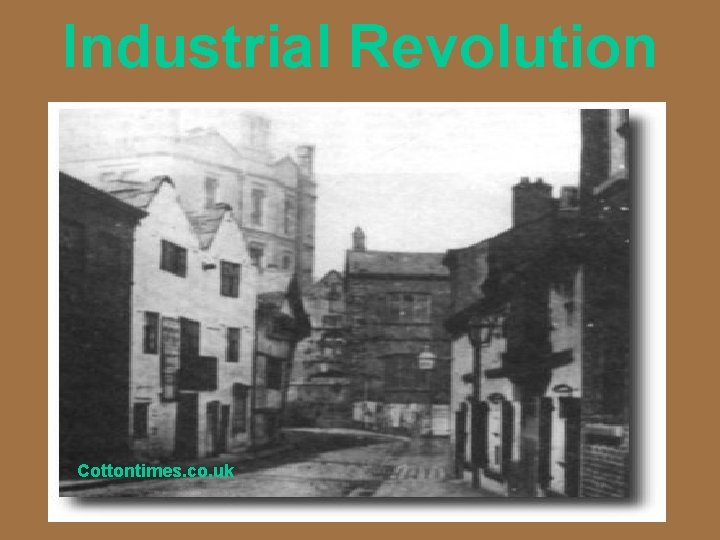
Industrial Revolution Where did many workers live? Outskirts of the towns and cities in slums with no internal plumbing or running water.
Industrial Revolution Cottontimes. co. uk
Industrial Revolution Additional information about life during the Industrial Revolution http: //www. cottontimes. co. uk/
Industrial Revolution Response and Reforms Entrepreneurs/Aristocratic—conservative, they wanted to maintain their power structure and preserve their rights. Middle Class—liberals, freedom and equality should be expanded, laissez-faire Socialists—people as a whole to own factories, farms and mines, the means of production. Government to serve the needs of the people not just the wealthy
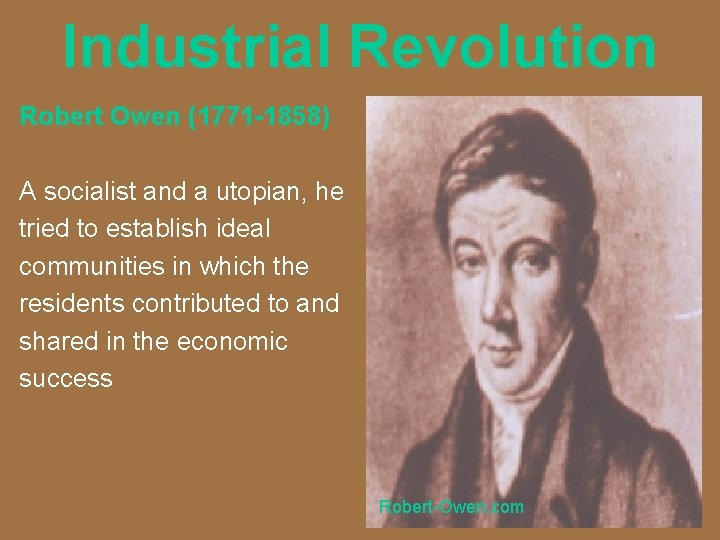
Industrial Revolution Robert Owen (1771 -1858) A socialist and a utopian, he tried to establish ideal communities in which the residents contributed to and shared in the economic success Robert-Owen. com
Industrial Revolution The story of New Lanark begins with the River Clyde. In 1784, an enterprising and far-sighted Scot, David Dale embarked on an ambitious plan to found cotton mills powered by the natural energy of the powerful Falls of Clyde in Lanarkshire.
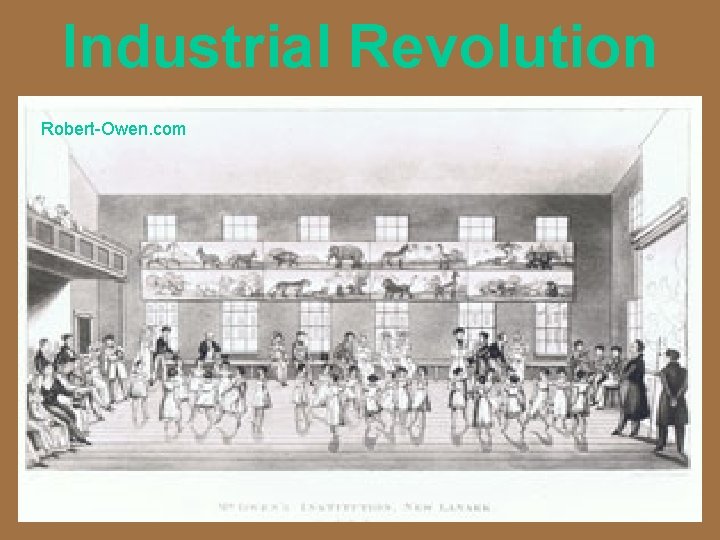
Industrial Revolution According to Owen, education was the key to a happier society and universal harmony. By 1816, Owen had opened the New Lanark community's Institute for the Formation of Character, which served variously as a school, religious meeting place, dance hall and community centre - another step, he considered, towards his dream of a classless society.
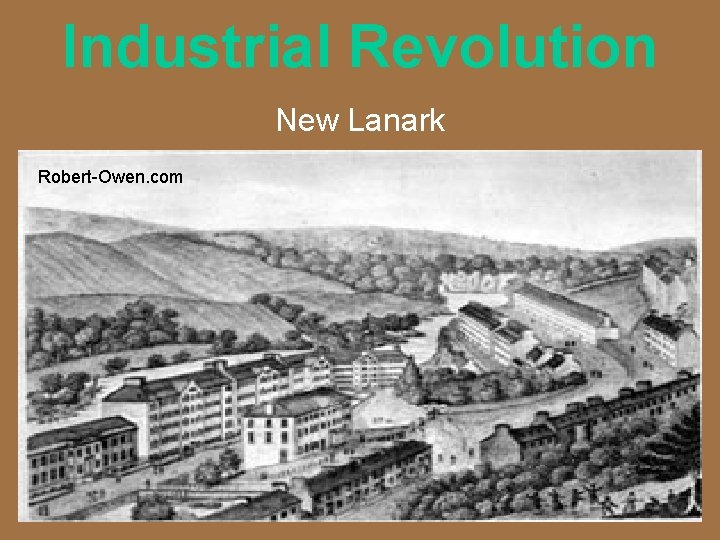
Industrial Revolution New Lanark Robert-Owen. com
Industrial Revolution Under Robert Owen’s management from 1800 to 1825, the cotton mills and village of New Lanark became a model community. New Lanark had the first Infant School in the world, a creche for working mothers, free medical care, and a comprehensive education system for children, including evening classes for adults. Children under 10 were not allowed to work in the Mill.
Industrial Revolution Robert-Owen. com
Industrial Revolution On his deathbed in 1858, he said: "I gave Important truths to the world, and it was only for want of understanding that they were disregarded. I have been ahead of my time. "
Industrial Revolution Robert Owen http: //www. youtube. com/watch? v=F 1 nl. Aj. Jge_w
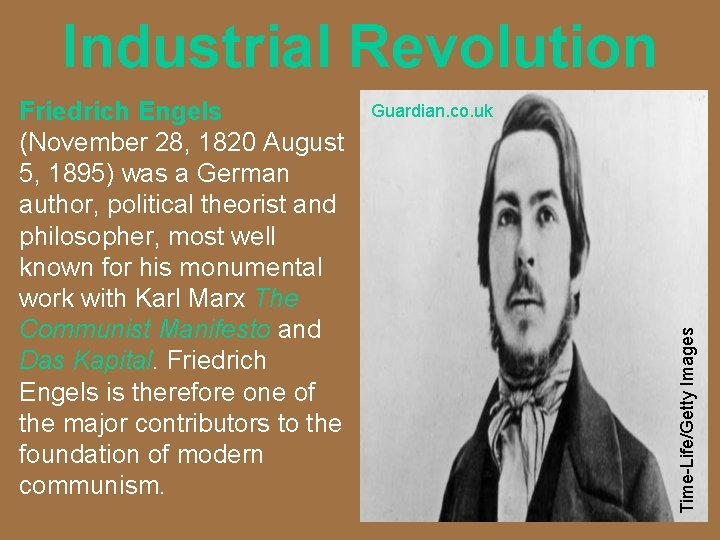
Industrial Revolution Guardian. co. uk Time-Life/Getty Images Friedrich Engels (November 28, 1820 August 5, 1895) was a German author, political theorist and philosopher, most well known for his monumental work with Karl Marx The Communist Manifesto and Das Kapital. Friedrich Engels is therefore one of the major contributors to the foundation of modern communism.
Industrial Revolution Friedrich Engels By day, Engels was a diligent businessman, representing his father at the Victoria Mill of Ermen and Engels at Weaste, in Salford. But by night he became a social investigator, prowling the mean, dangerous streets of Manchester's slum areas gathering material for what was to become his classic book, The Condition of the Working Class in England.
Industrial Revolution The book The Condition of the Working Class In England was a damning indictment of social attitudes of the 1830 s and 40 s, pointing up the horrors of back-to-back housing, cellar dwellings and poor sanitation.
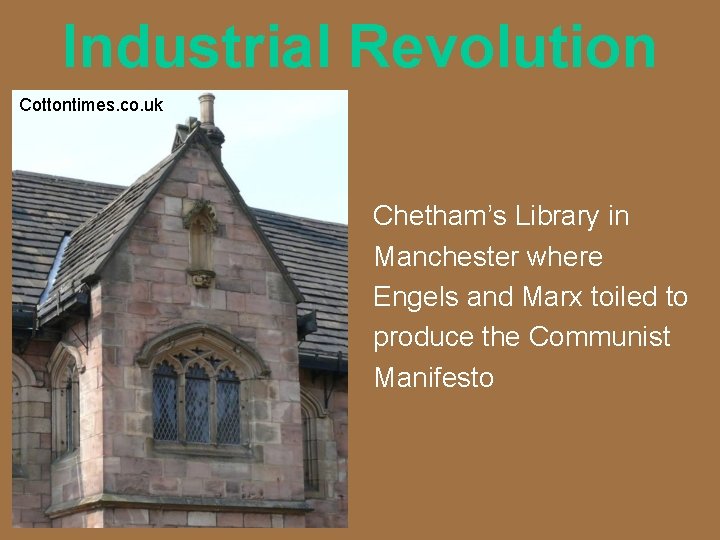
Industrial Revolution Cottontimes. co. uk Chetham’s Library in Manchester where Engels and Marx toiled to produce the Communist Manifesto
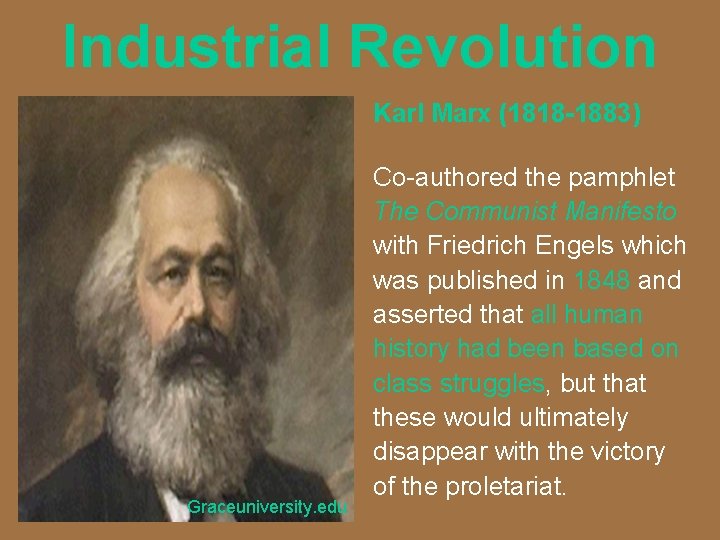
Industrial Revolution Karl Marx (1818 -1883) Graceuniversity. edu Co-authored the pamphlet The Communist Manifesto with Friedrich Engels which was published in 1848 and asserted that all human history had been based on class struggles, but that these would ultimately disappear with the victory of the proletariat.
Industrial Revolution Proletariat Who were the proletariat? They were the working class. They lived entirely from the sale of its labor and did not draw a profit from any kind of capital. The bourgeoisie were the business owners
Industrial Revolution So, what was the outcome of this work? Marx and Engels proposed that there would be a revolution where the working class proletariat would rise up and take over the means of production.
Industrial Revolution Communist Smurfs http: //www. youtube. com/watch? v=Qra 0 hl. O 6 h. Zk
Industrial Revolution Reform Mines and Collieries Act 1842 (Ashley Mines Commission) It prohibited all females and boys under the age of ten from working underground in coal mines. It was a response to the working conditions of children revealed in the Children Employment Commission 1842 report
Industrial Revolution Reform Factory Act 1819 barred children under the age of nine from working in mills, and reduced to 12 the hours that could be worked by children aged between nine and 16.
Industrial Revolution Population Theory Thomas Malthus—an Enlightenement economist First Essay on Population (1798) His focus is on future improvements of society
Industrial Revolution Core Principles 1. Food is necessary for human existence
Industrial Revolution 2. Human population grows faster than the power to produce food
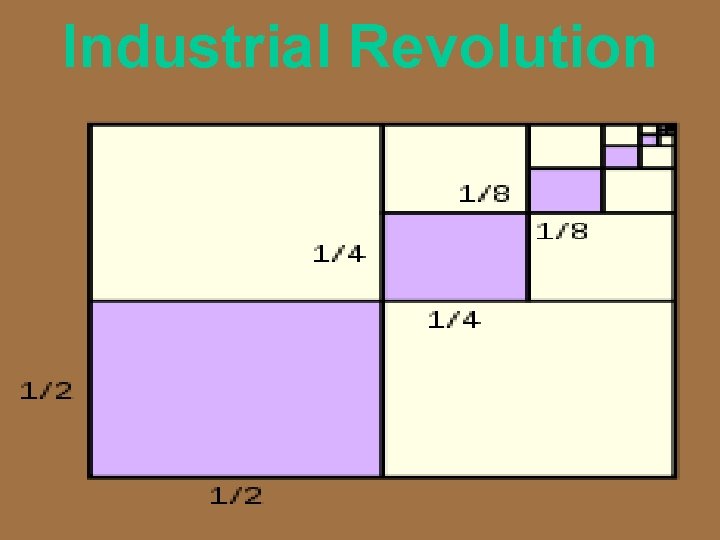
Industrial Revolution 3. Population, when unchecked increase in a geometrical ratio. Subsistence increases only in an arithmetical ratio meaning it increases one number at a time.
Industrial Revolution
Industrial Revolution 4. Humans tend not to limit their population voluntarily. He believed in positive checks, which raise death rates, war, famine and disease. Preventative checks were to lower birth rates.