
Agnosia and Perceptual Disturbances March 27 2006 Visual
Agnosia and Perceptual Disturbances March 27, 2006
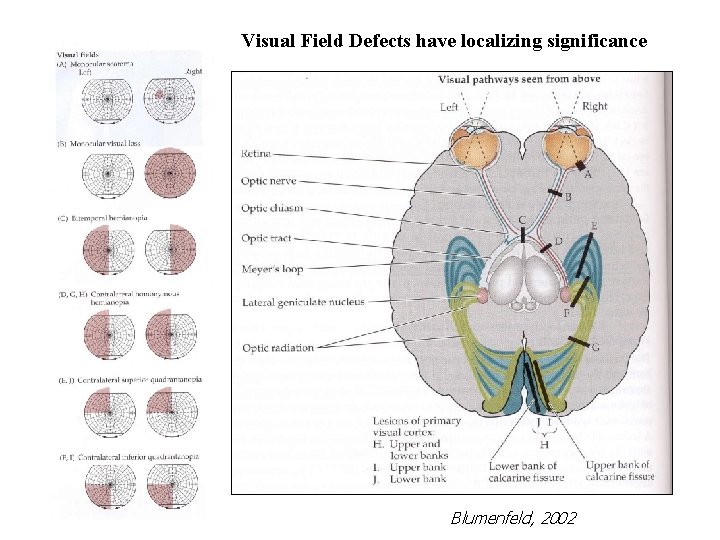
Visual Field Defects have localizing significance Blumenfeld, 2002
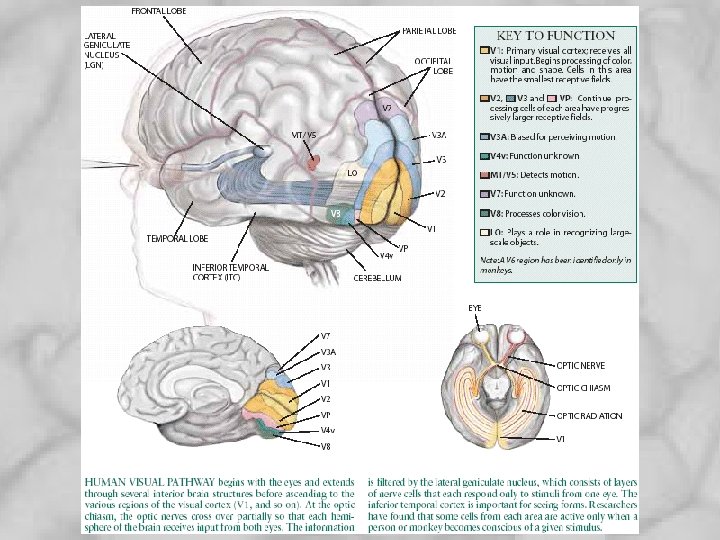
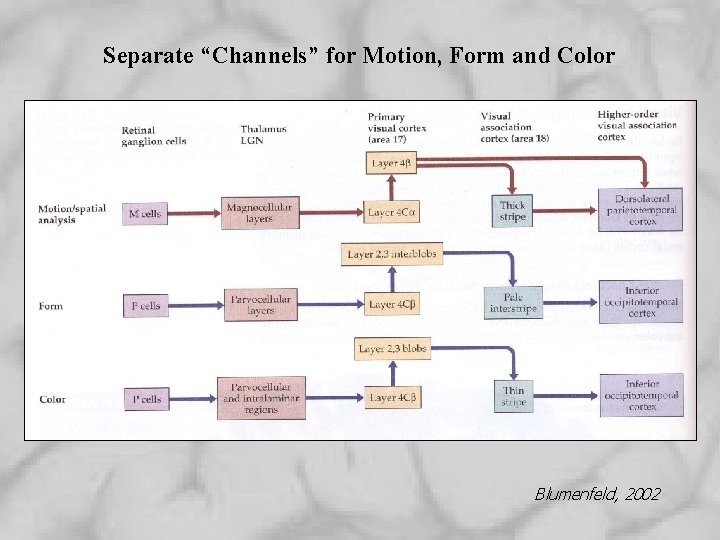
Separate “Channels” for Motion, Form and Color Blumenfeld, 2002
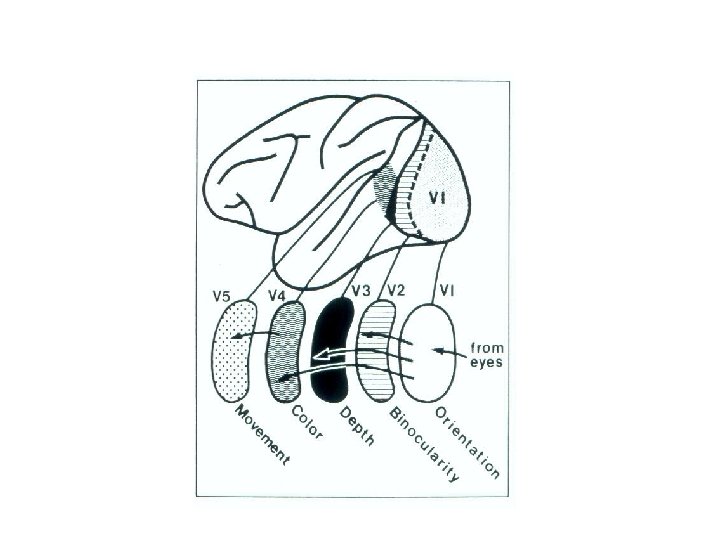

Multiple Visual Areas in the Monkey
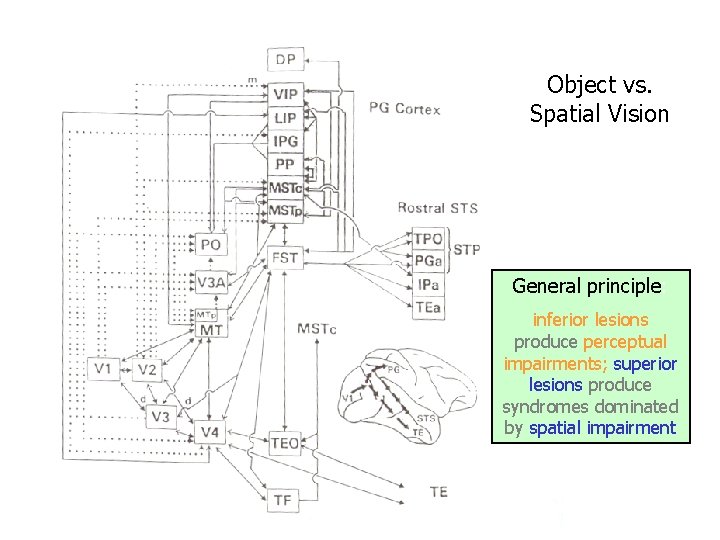
Object vs. Spatial Vision General principle: inferior lesions produce perceptual impairments; superior lesions produce syndromes dominated by spatial impairment
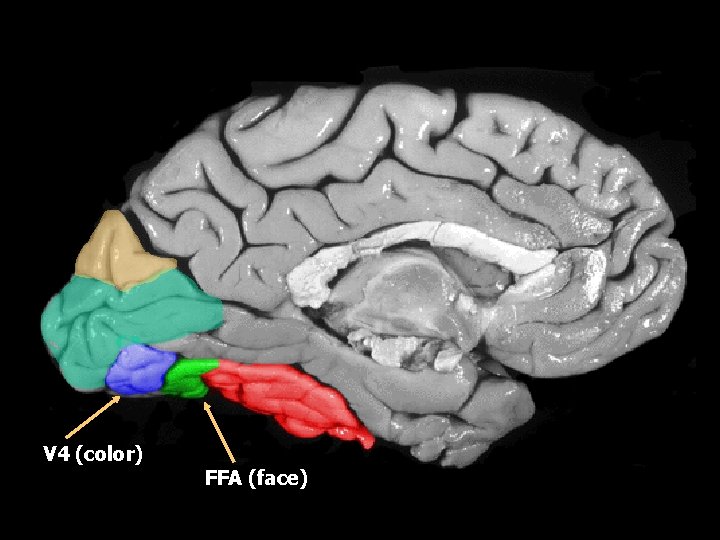
V 4 (color) FFA (face)

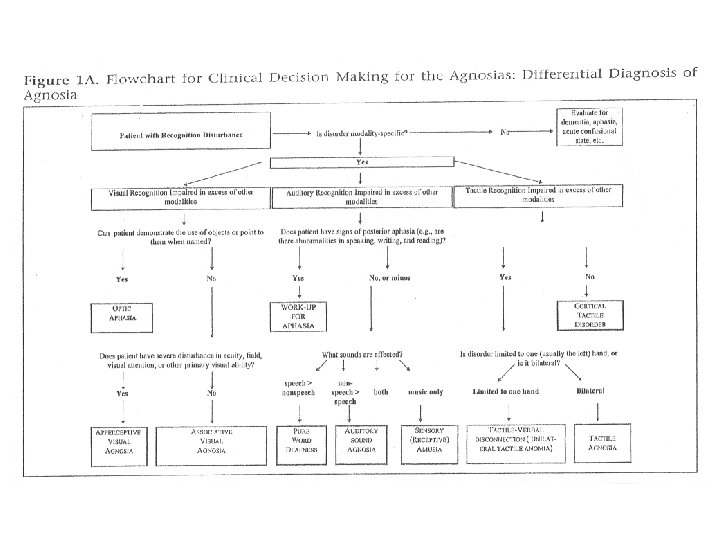
Agnosia • Failure to recognize previously familiar stimuli • Modality-specific • Not due to dementia, aphasia, or unfamiliarity with stimulus • May be limited to particular classes of stimuli
Agnosia Examples • Prosopagnosia (impairment in recognizing familiar faces) • Auditory Sound Agnosia (impairment in recognizing sounds of common objects) • Phonagnosia (impairment in recognizing familiar people by their voices) • Tactile agnosia (impairment in recognizing what’s placed in the hand)
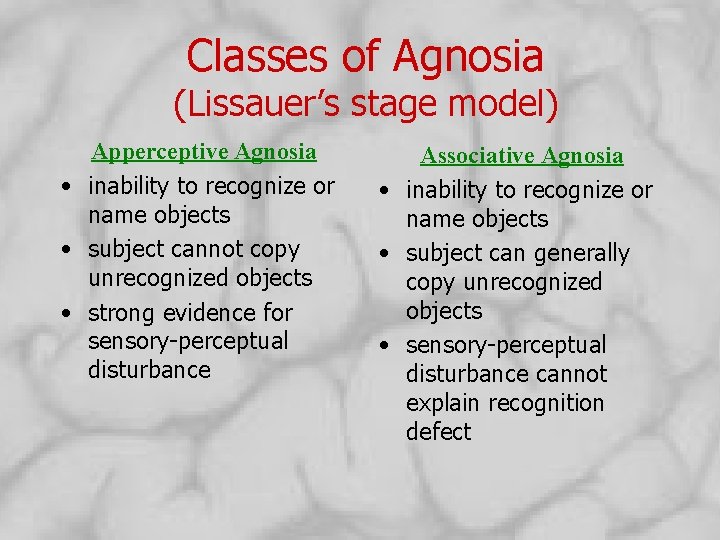
Classes of Agnosia (Lissauer’s stage model) Apperceptive Agnosia • inability to recognize or name objects • subject cannot copy unrecognized objects • strong evidence for sensory-perceptual disturbance Associative Agnosia • inability to recognize or name objects • subject can generally copy unrecognized objects • sensory-perceptual disturbance cannot explain recognition defect
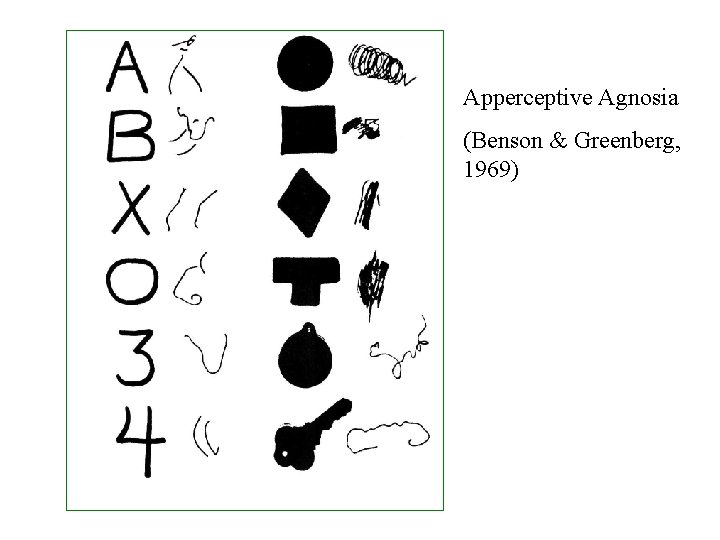
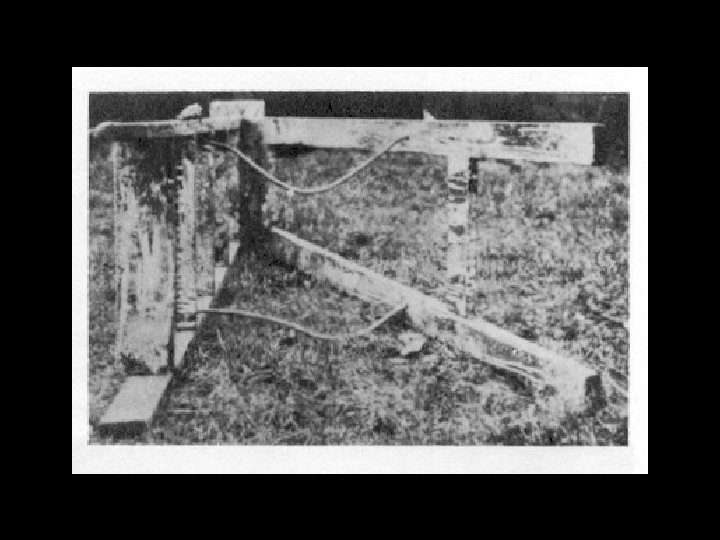
Apperceptive Agnosia (Benson & Greenberg, 1969)

Associative Agnosia (Farah, Hammond, Levine, et al. , 1988)
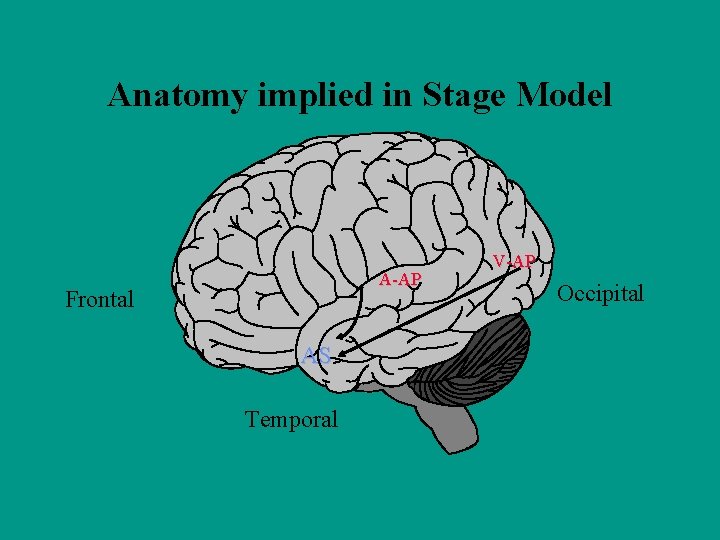
Anatomy implied in Stage Model A-AP Frontal AS Temporal V-AP Occipital

Another way of Classifying Agnosia • • • Stage/level (apperceptive, associative) Function (shape/form, integrative) Modality (visual, auditory, tactile) Domain (objects, faces, colors, sounds) Category (living things, moving things)
Explanations • Failure of perception to contact memory • Failure of perception to contact language (visual-verbal disconnection) • Impairment/degradation of a stored representation of an object in memory • Sensory-perceptual impairment
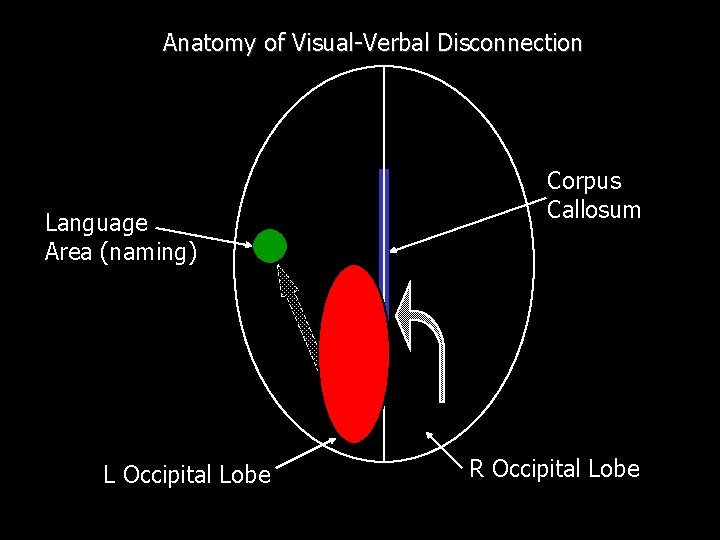
Anatomy of Visual-Verbal Disconnection Language Area (naming) L Occipital Lobe Corpus Callosum R Occipital Lobe
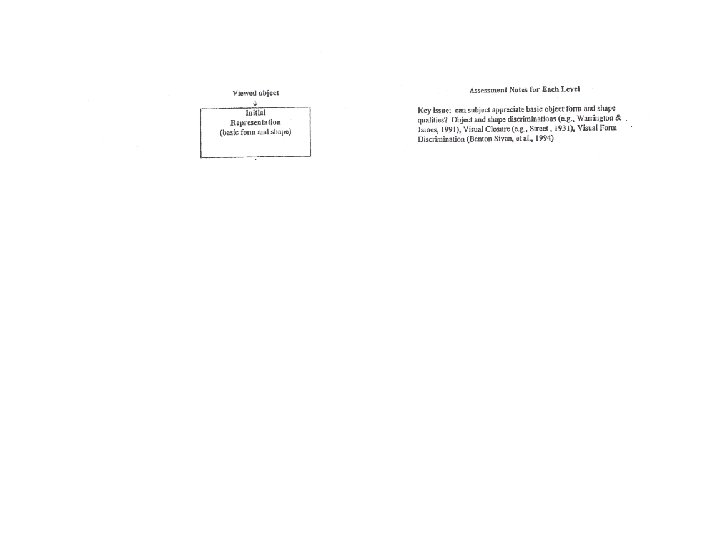
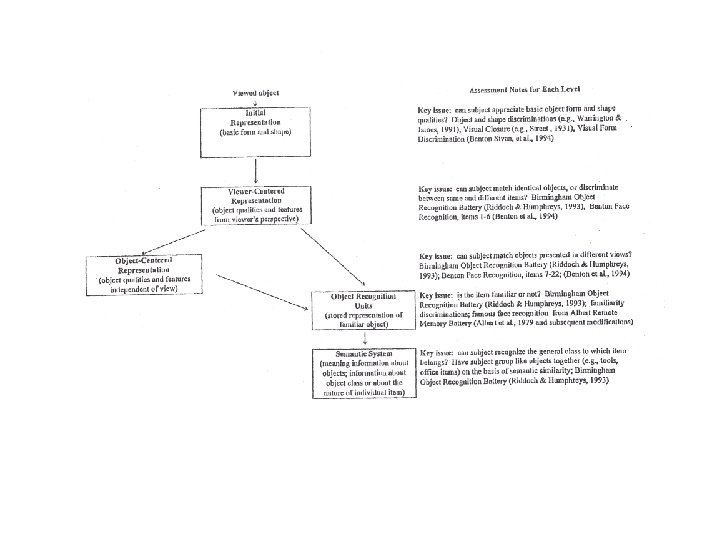
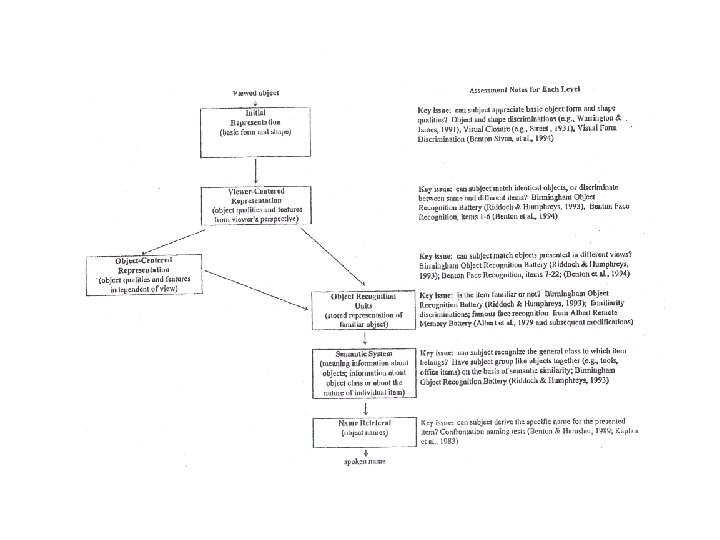
Cognitive Models of Object Recognition • Provide “box-models” of stages of information processing • Proposed stages derived from cognitive performance data in normals and brainimpaired patients • Help to decompose complex abilities into their constituent components

Steps in Assessment of Agnosia • Determine whether, in fact, the deficit is “agnosic” – Test for “boundary” conditions (aphasia, amnesia, dementia; modality specificity) • Qualify the nature of the deficit (determine conditions under which recognition succeeds and fails) • Determine the functional locus of the deficit
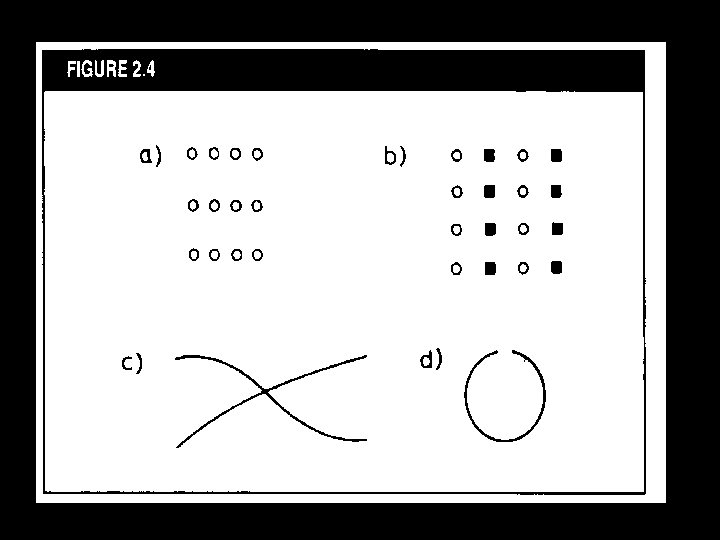
proximity similarity good continuation closure
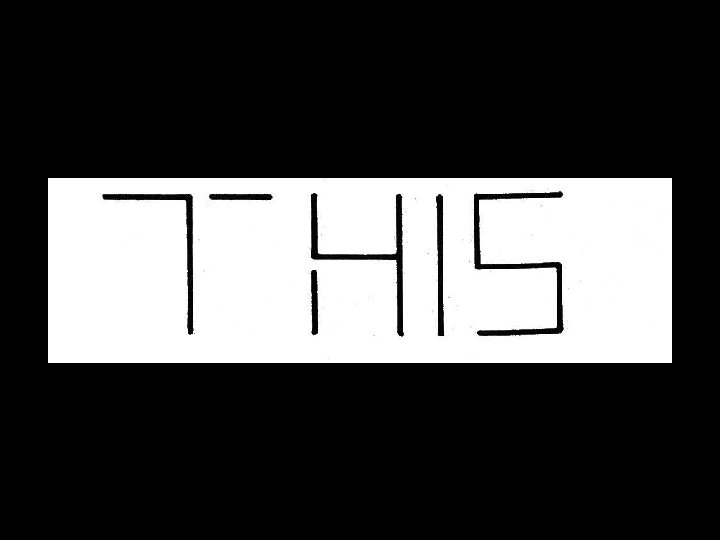
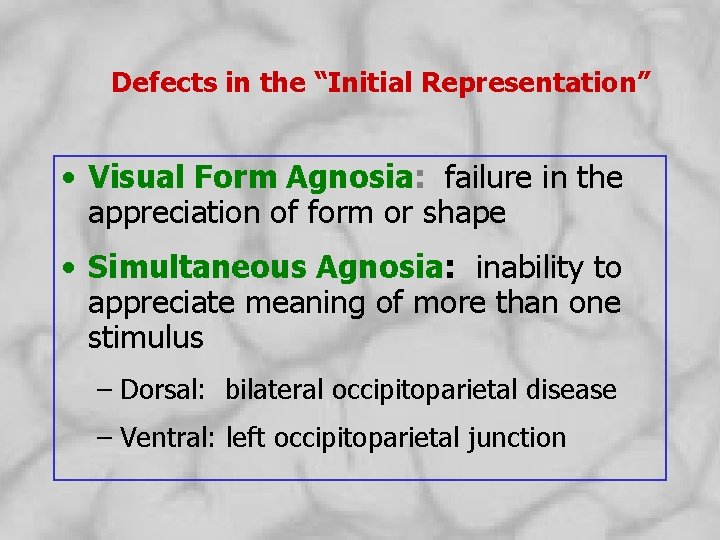
Defects in the “Initial Representation” • Visual Form Agnosia: failure in the appreciation of form or shape • Simultaneous Agnosia: inability to appreciate meaning of more than one stimulus – Dorsal: bilateral occipitoparietal disease – Ventral: left occipitoparietal junction
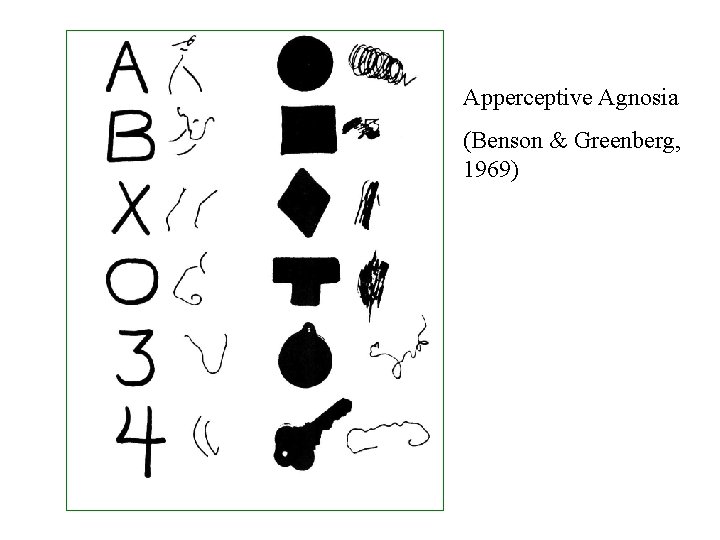
Apperceptive Agnosia (Benson & Greenberg, 1969)
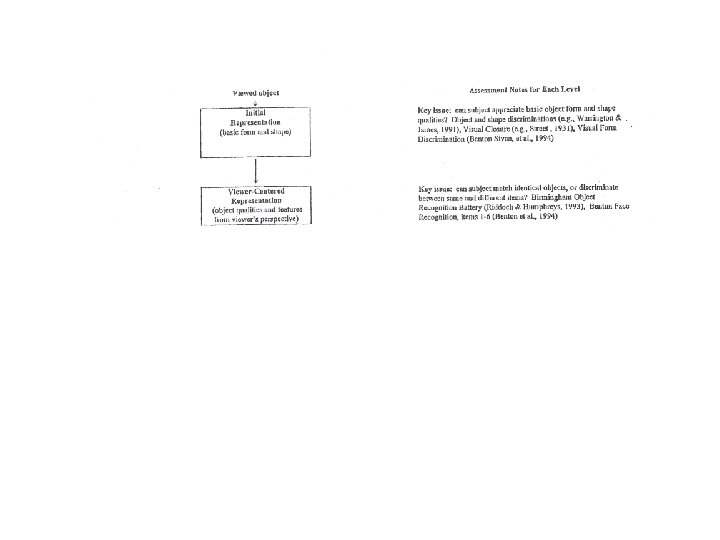
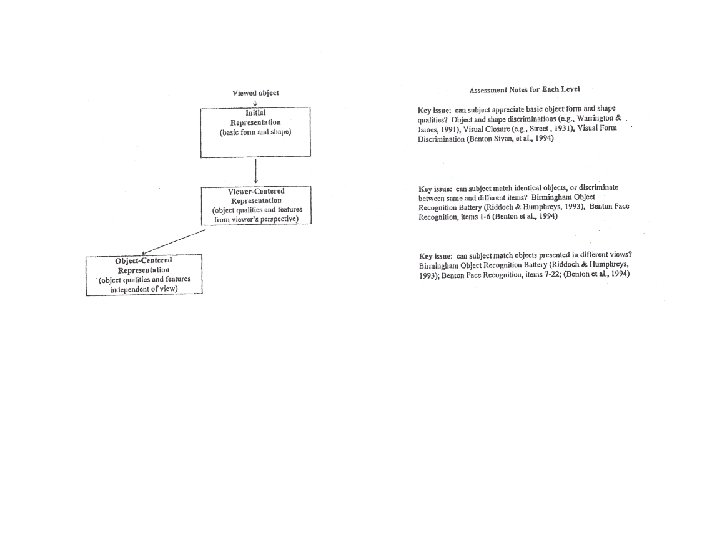
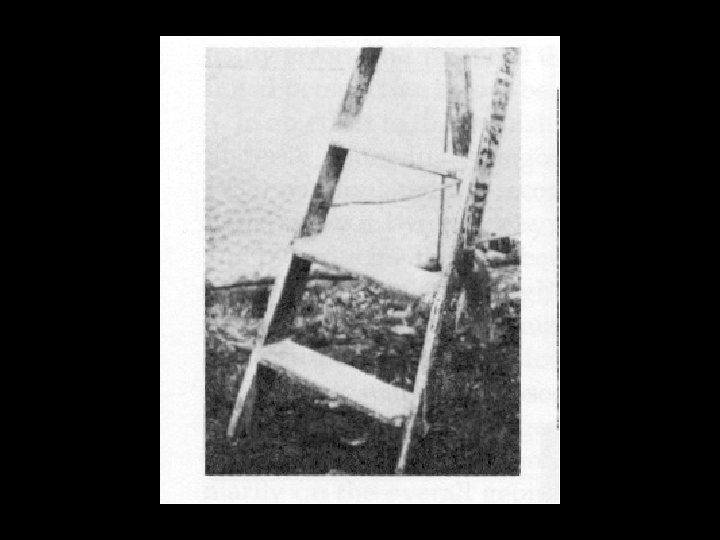
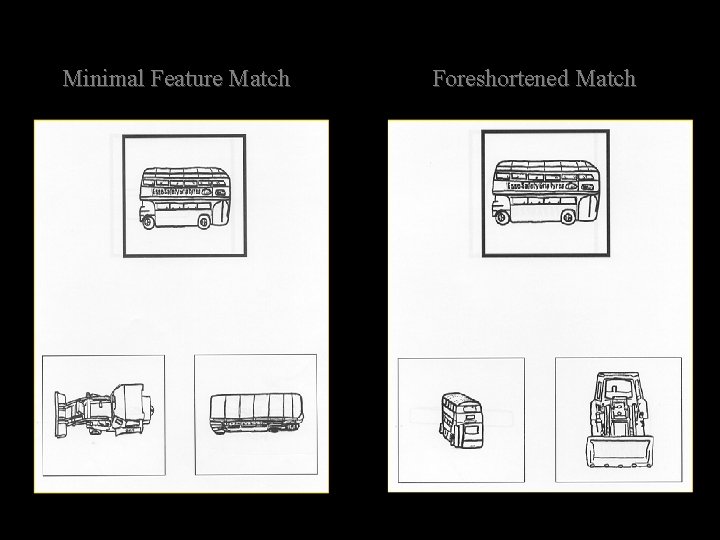
Minimal Feature Match Foreshortened Match
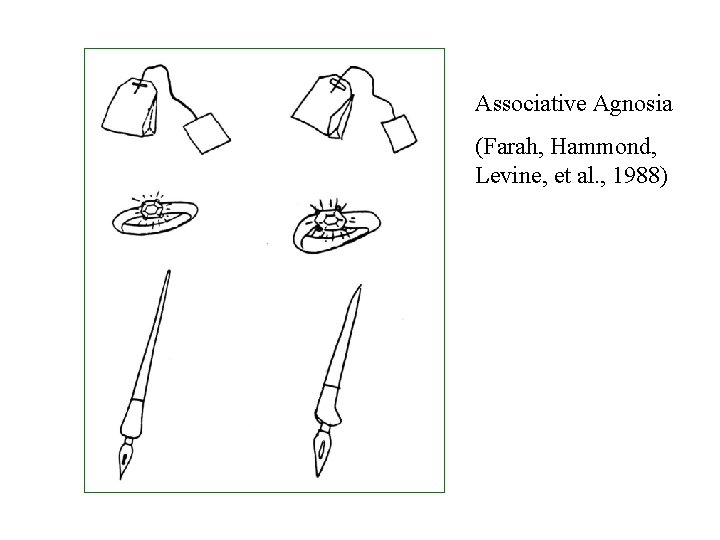
Associative Agnosia (Farah, Hammond, Levine, et al. , 1988)
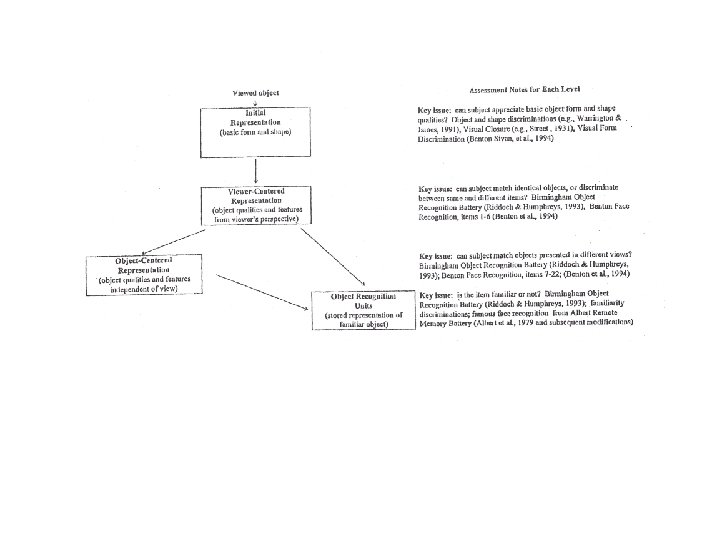

BORB Object Decision Task
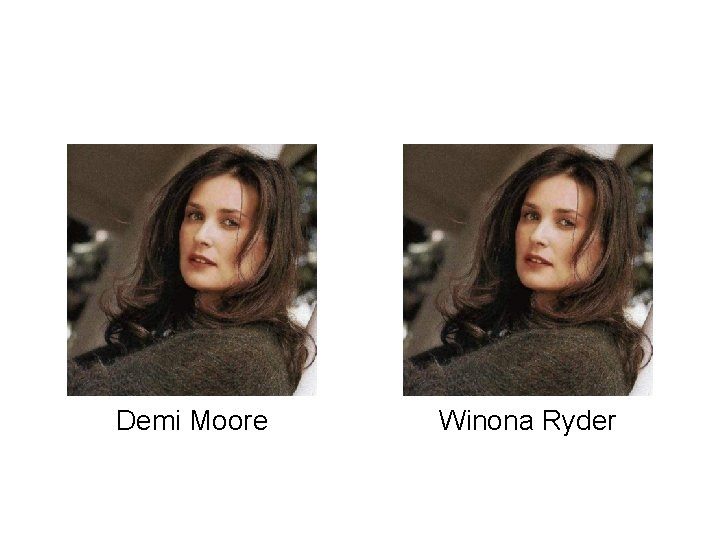
Face-Name Learning vs. Demi Moore Winona Ryder
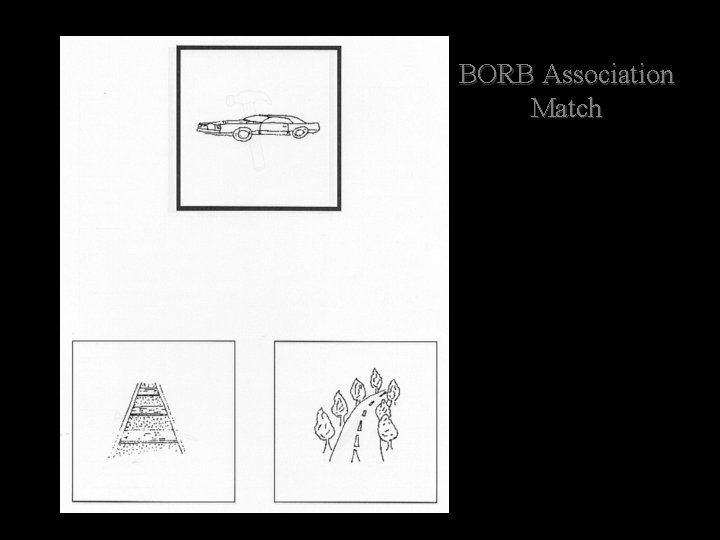
BORB Association Match
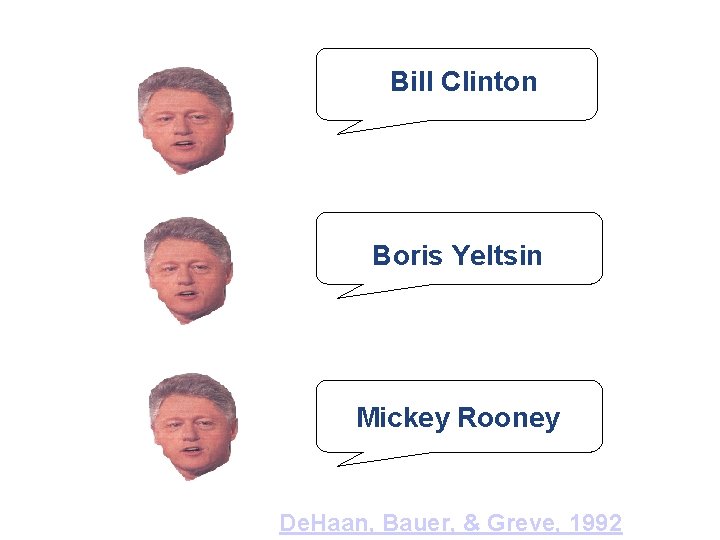
Bill Clinton Boris Yeltsin Mickey Rooney De. Haan, Bauer, & Greve, 1992
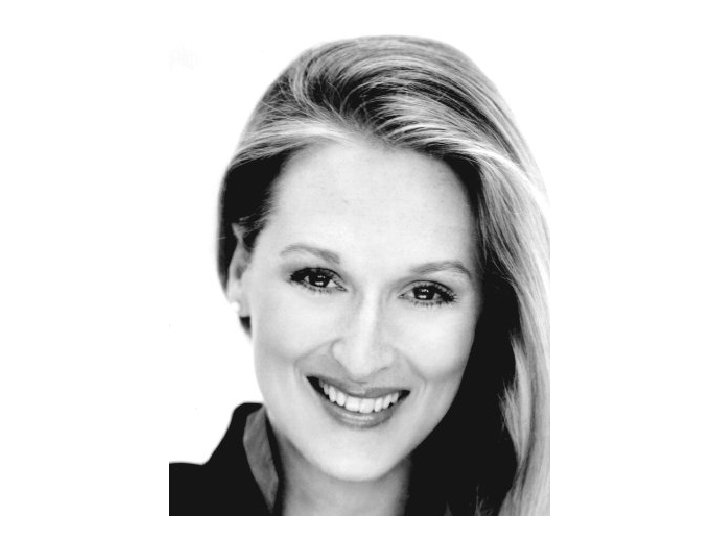

Meryl Streep
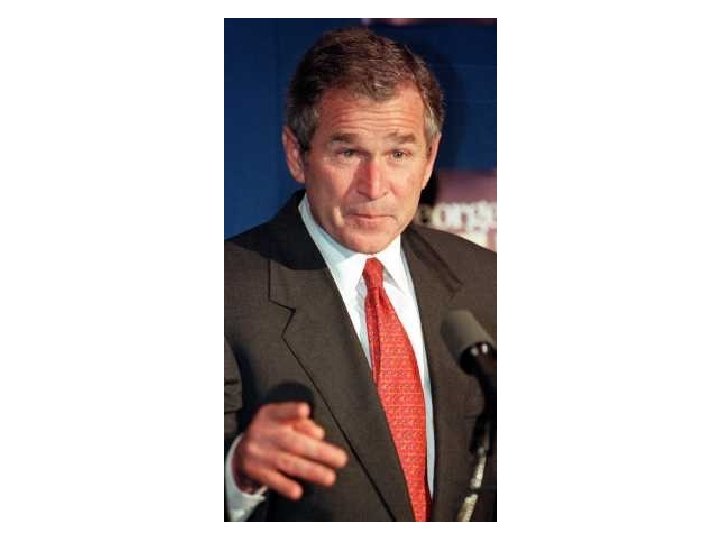

Saddam Hussein
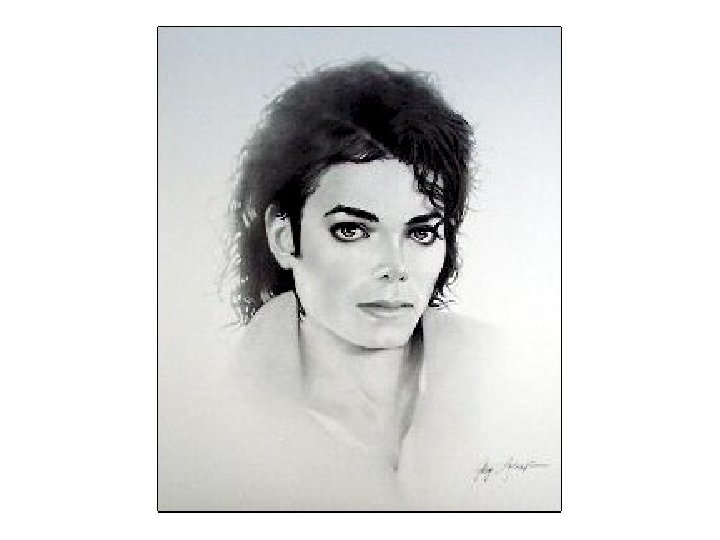

John Kerry
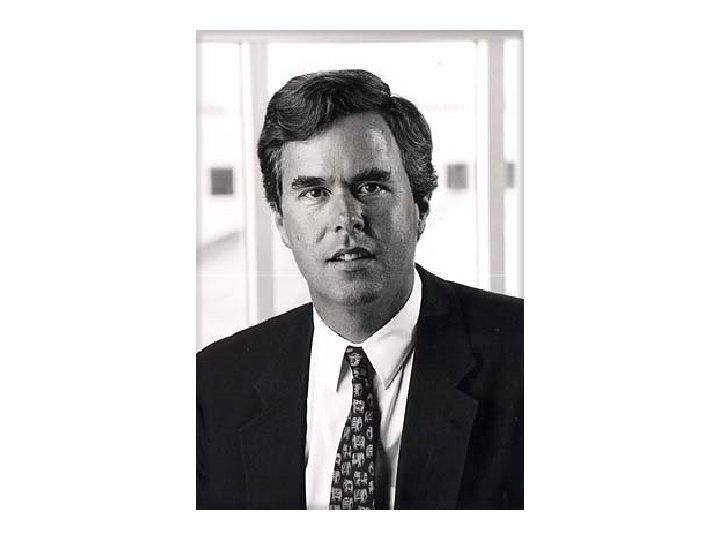
Sebastian Weisdorf

Richard Nixon

John F. Kennedy
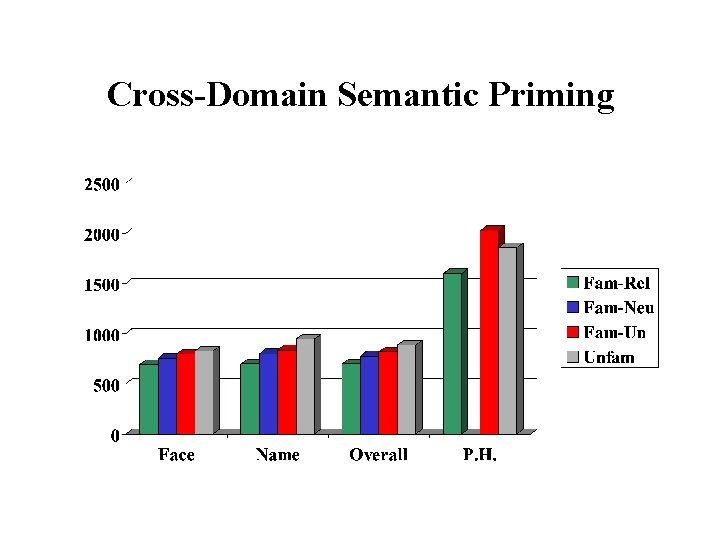
Cross-Domain Semantic Priming
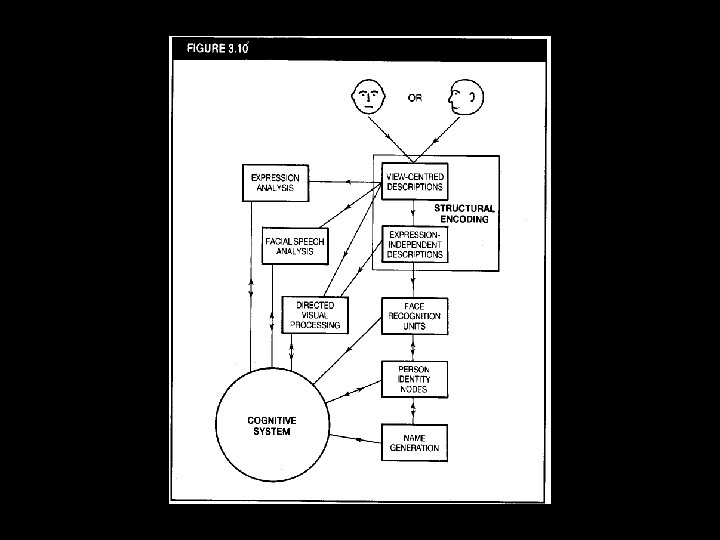
Clinical Features of Prosopagnosia • Inability to identify previously familiar people by facial features alone • Intact ability to identify people using nonfacial features (voice) • May extend to nonfacial stimuli • May co-exist with object agnosia • May take apperceptive and associative forms

Frequent Co-existing Signs • Object agnosia • Visual recent memory loss, and other signs of visual-limbic disconnection • Superior visual field defects – Altitudinal hemianopia – Superior quadrantanopia • Achromatopsia • Topographical agnosia
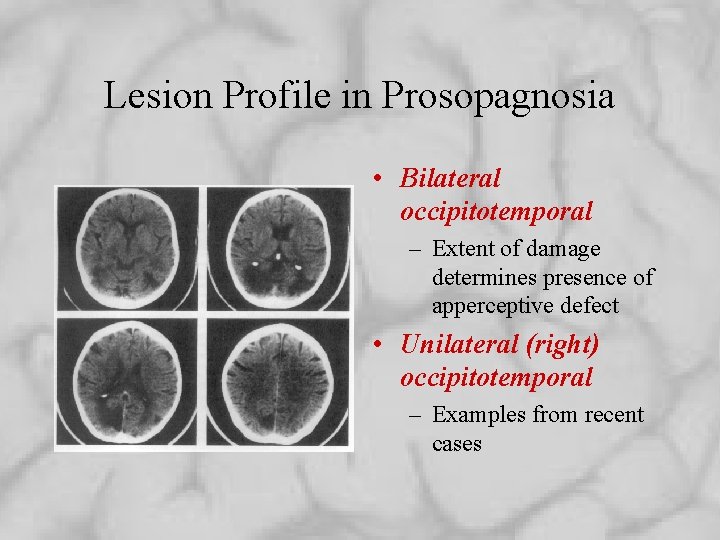
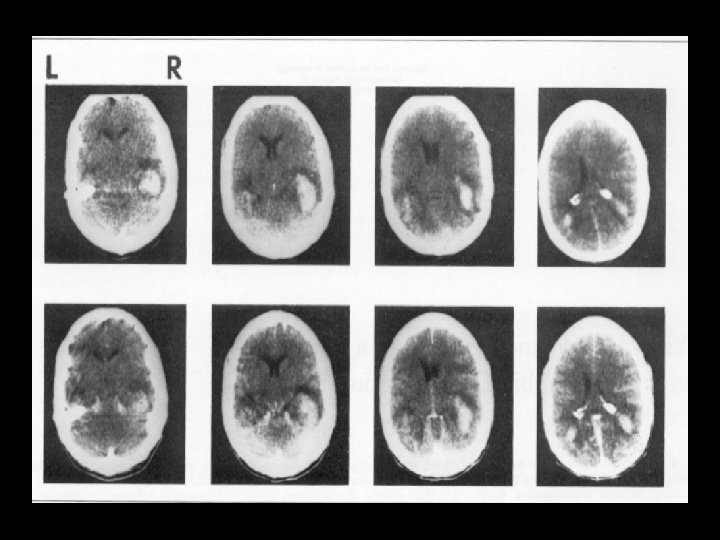
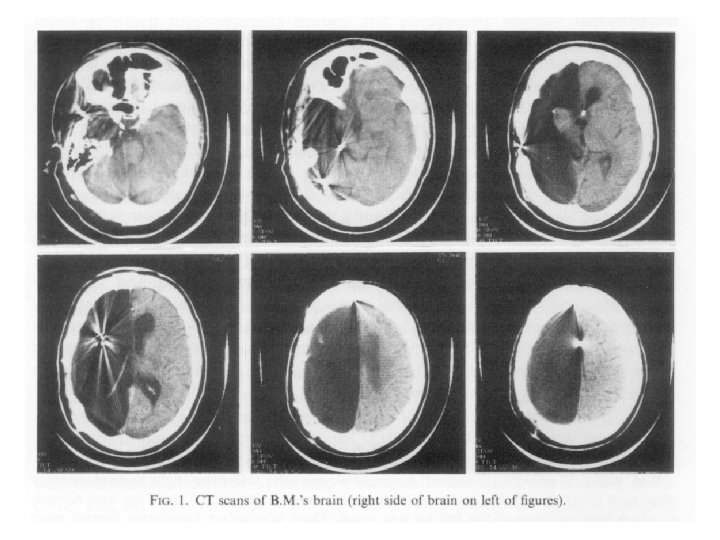
Lesion Profile in Prosopagnosia • Bilateral occipitotemporal – Extent of damage determines presence of apperceptive defect • Unilateral (right) occipitotemporal – Examples from recent cases
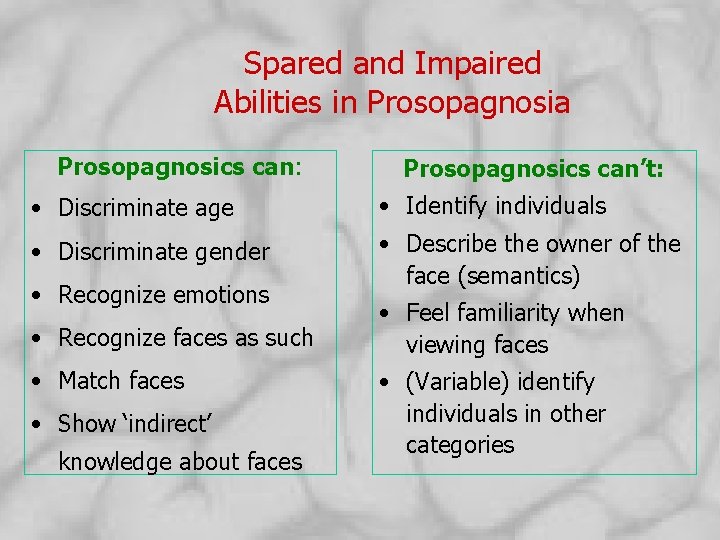
Spared and Impaired Abilities in Prosopagnosia Prosopagnosics can: Prosopagnosics can’t: • Discriminate age • Identify individuals • Discriminate gender • Describe the owner of the face (semantics) • Recognize emotions • Recognize faces as such • Match faces • Show ‘indirect’ knowledge about faces • Feel familiarity when viewing faces • (Variable) identify individuals in other categories

- Slides: 59