
AGING WITH DISABILITIES Do people with disabilities face
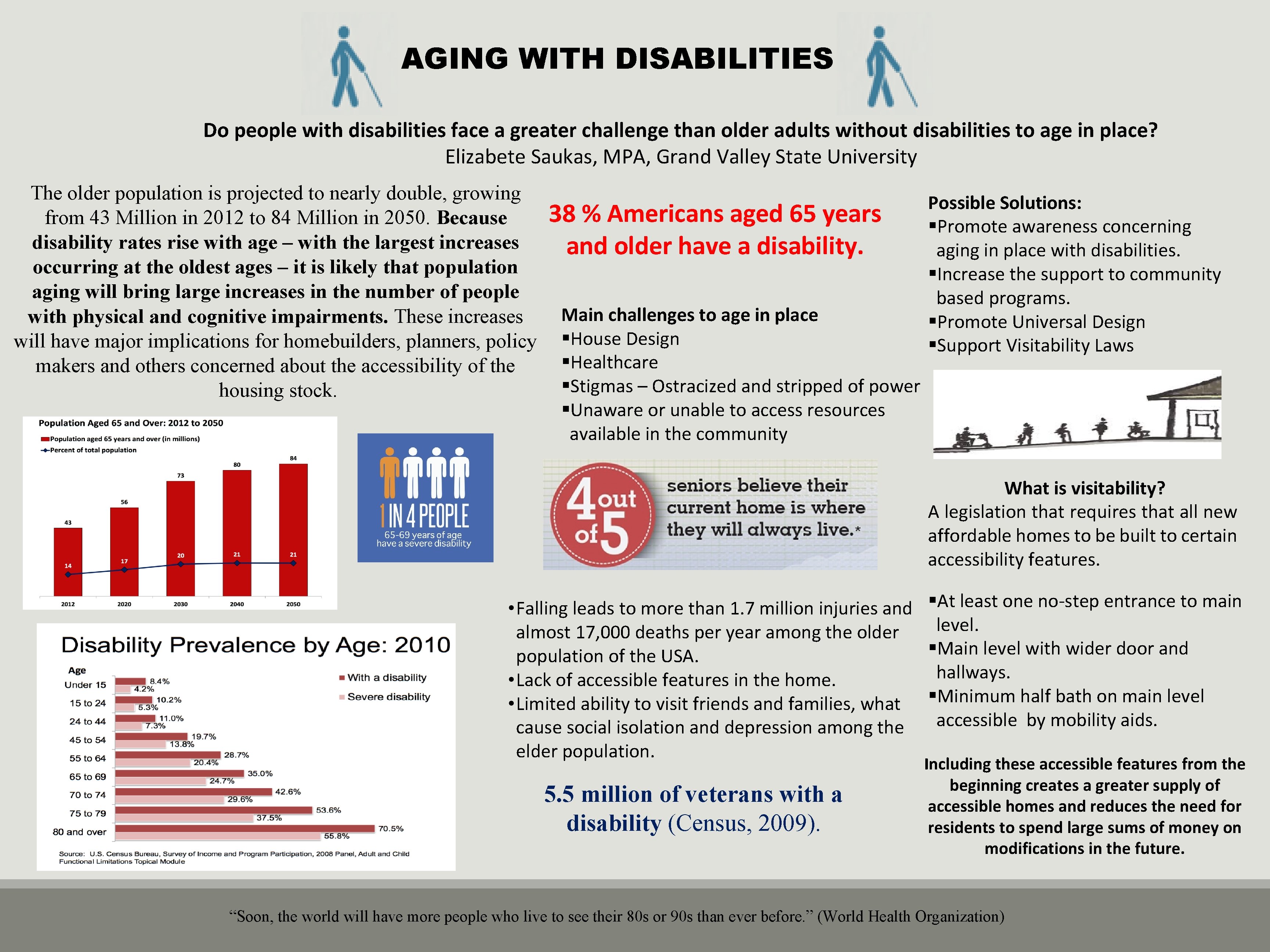
AGING WITH DISABILITIES Do people with disabilities face a greater challenge than older adults without disabilities to age in place? Elizabete Saukas, MPA, Grand Valley State University The older population is projected to nearly double, growing from 43 Million in 2012 to 84 Million in 2050. Because disability rates rise with age – with the largest increases occurring at the oldest ages – it is likely that population aging will bring large increases in the number of people with physical and cognitive impairments. These increases will have major implications for homebuilders, planners, policy makers and others concerned about the accessibility of the housing stock. 38 % Americans aged 65 years and older have a disability. Main challenges to age in place §House Design §Healthcare §Stigmas – Ostracized and stripped of power §Unaware or unable to access resources available in the community Possible Solutions: §Promote awareness concerning aging in place with disabilities. §Increase the support to community based programs. §Promote Universal Design §Support Visitability Laws What is visitability? A legislation that requires that all new affordable homes to be built to certain accessibility features. § At least one no-step entrance to main • Falling leads to more than 1. 7 million injuries and level. almost 17, 000 deaths per year among the older § Main level with wider door and population of the USA. hallways. • Lack of accessible features in the home. § Minimum half bath on main level • Limited ability to visit friends and families, what accessible by mobility aids. cause social isolation and depression among the elder population. 5. 5 million of veterans with a disability (Census, 2009). Including these accessible features from the beginning creates a greater supply of accessible homes and reduces the need for residents to spend large sums of money on modifications in the future. “Soon, the world will have more people who live to see their 80 s or 90 s than ever before. ” (World Health Organization)
- Slides: 1