
Aging of the Nervous System Structural Changes Chapters

- Slides: 21
Aging of the Nervous System: Structural Changes Chapters 7, 8, 9 PS Timiras
Brain Plasticity and CNS Regenerative Potential § From the beginning of the 20 th Century until the 1990 s, it was stated that neurons DID NOT proliferate. § The fact that they COULD NOT proliferate did not exclude the possibility of proliferation under “specific conditions. ” § In fact, the CNS has a considerable regenerative potential depending on the special conditions of the neuronal environment.
Neurons that may proliferate into adulthood include: § Progenitor “precursor” neurons lining the cerebral ventricules § Neurons in the hippocampus § Neurons usually “dormant” with potential for neuron and glia proliferation § Neuroglia (astrocytes, oligodentrocytes) and microglia (immune cells) with the ability to perpetually self renew and produce three types of neural cells
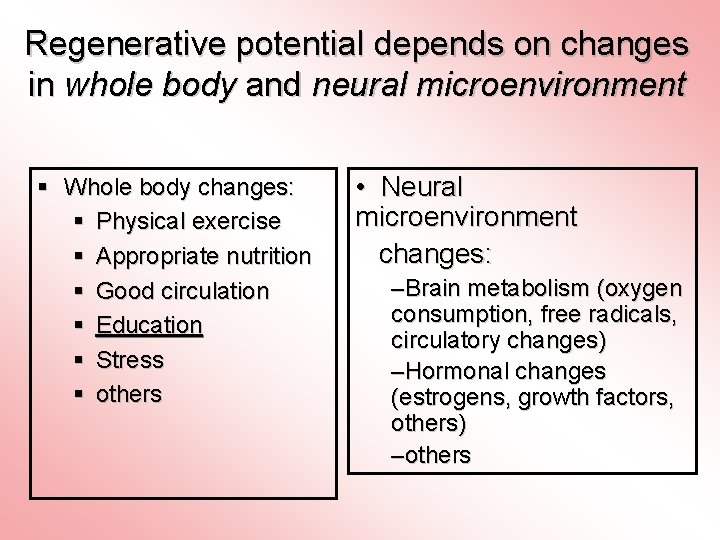
Regenerative potential depends on changes in whole body and neural microenvironment § Whole body changes: § Physical exercise § Appropriate nutrition § Good circulation § Education § Stress § others • Neural microenvironment changes: –Brain metabolism (oxygen consumption, free radicals, circulatory changes) –Hormonal changes (estrogens, growth factors, others) –others
Major Function of the Nervous System The major function of the CNS is to communicate & to connect: • with other CNS cells • with peripheral tissues (outside CNS) • with the external environment (including physical and social environments)
Major Function of the Nervous System, II This communication regulates: • Mobility • Sensory information • Cognition • Affect and mood • Functions of whole-body systems Cogito Ergo Sum “ I think, therefore I am” -René Descartes (1596 -1650)
Figure 3. 2: Comparison of the relationship of brain weight to life span in vertebrates
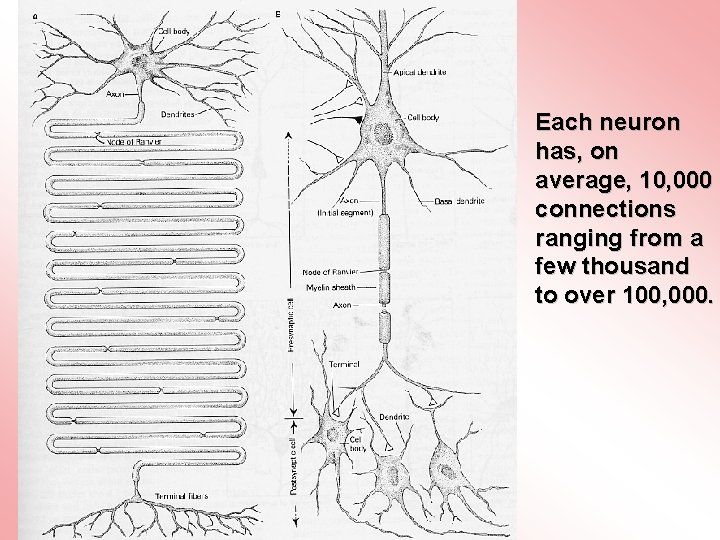
Each neuron has, on average, 10, 000 connections ranging from a few thousand to over 100, 000.
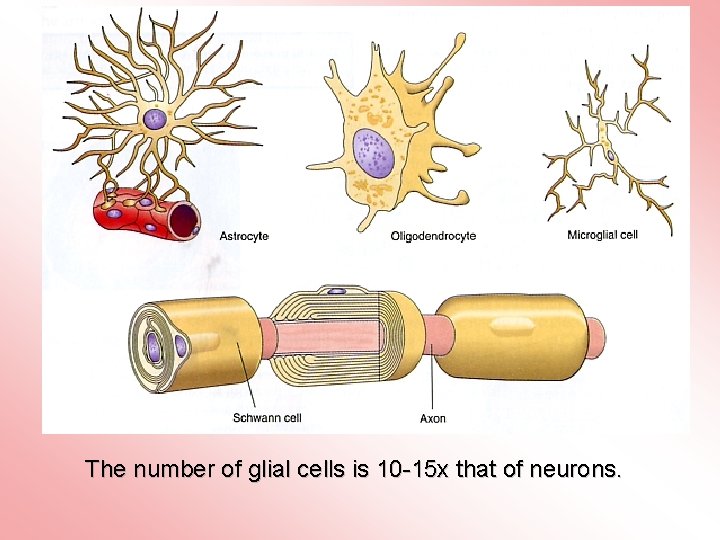
The number of glial cells is 10 -15 x that of neurons.
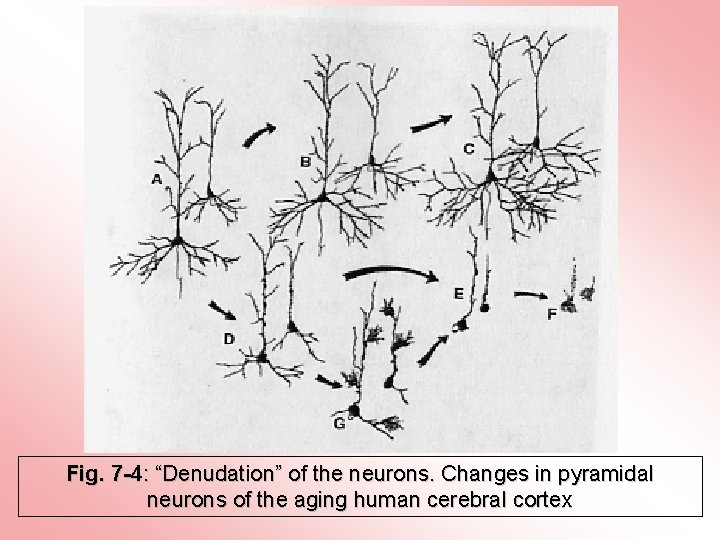
Fig. 7 -4: “Denudation” of the neurons. Changes in pyramidal neurons of the aging human cerebral cortex
In normal aging, the loss of neurons is moderate & occurs in specific brain areas: § Locus ceruleus (catecholaminergic neurons) § Substantia nigra (dopaminergic neurons) § Nucleus basalis of Meynert (cholinergic neurons) § Hippocampus (cholinergic neurons)
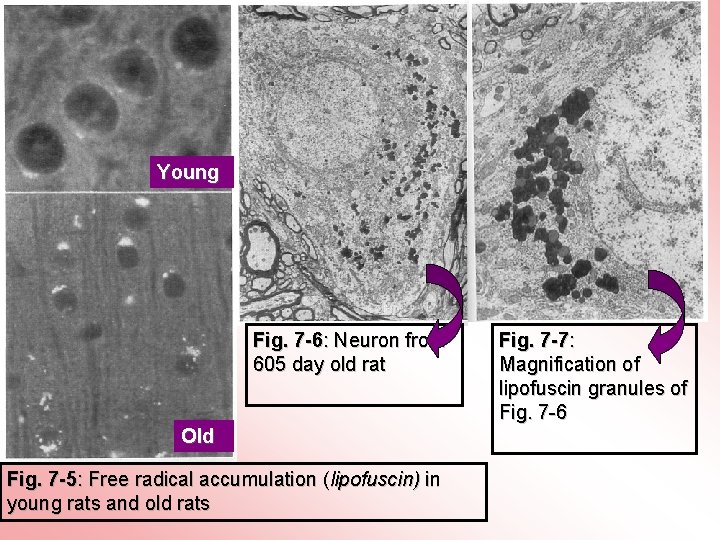
Young Fig. 7 -6: Neuron from 605 day old rat Old Fig. 7 -5: Free radical accumulation (lipofuscin) in young rats and old rats Fig. 7 -7: Magnification of lipofuscin granules of Fig. 7 -6
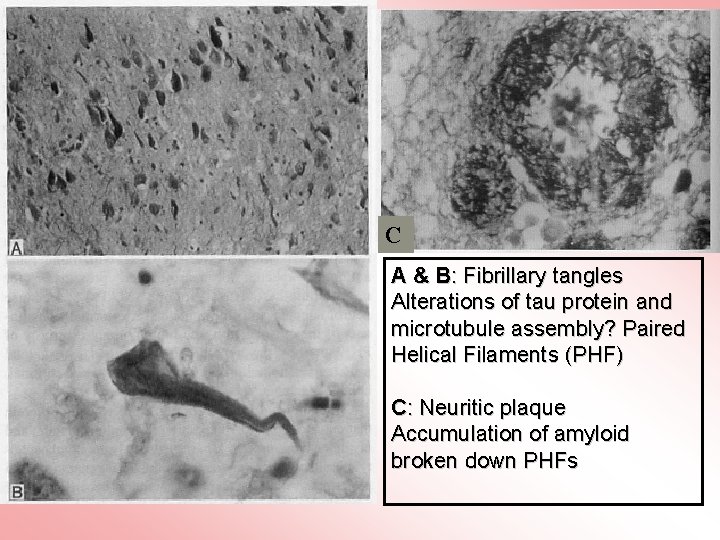
C A & B: Fibrillary tangles Alterations of tau protein and microtubule assembly? Paired Helical Filaments (PHF) C: Neuritic plaque Accumulation of amyloid broken down PHFs
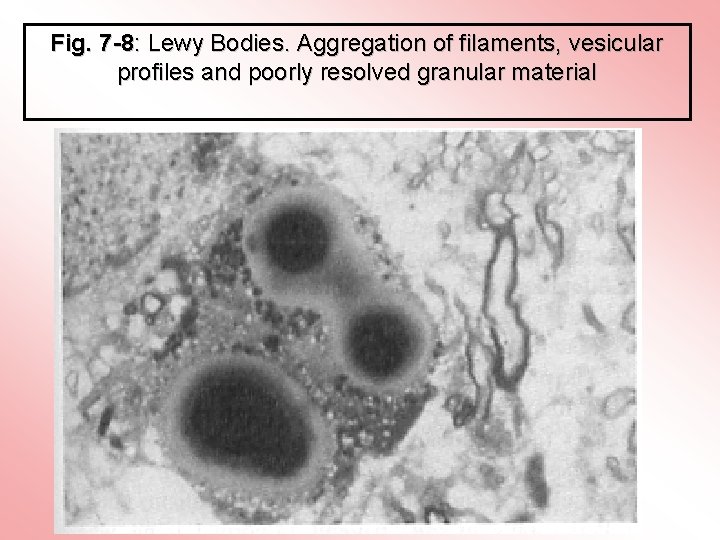
Fig. 7 -8: Lewy Bodies. Aggregation of filaments, vesicular profiles and poorly resolved granular material
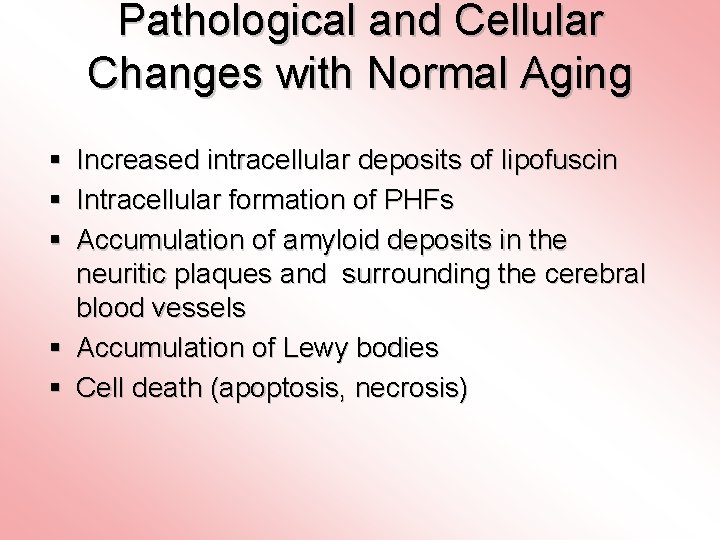
Pathological and Cellular Changes with Normal Aging § Increased intracellular deposits of lipofuscin § Intracellular formation of PHFs § Accumulation of amyloid deposits in the neuritic plaques and surrounding the cerebral blood vessels § Accumulation of Lewy bodies § Cell death (apoptosis, necrosis)
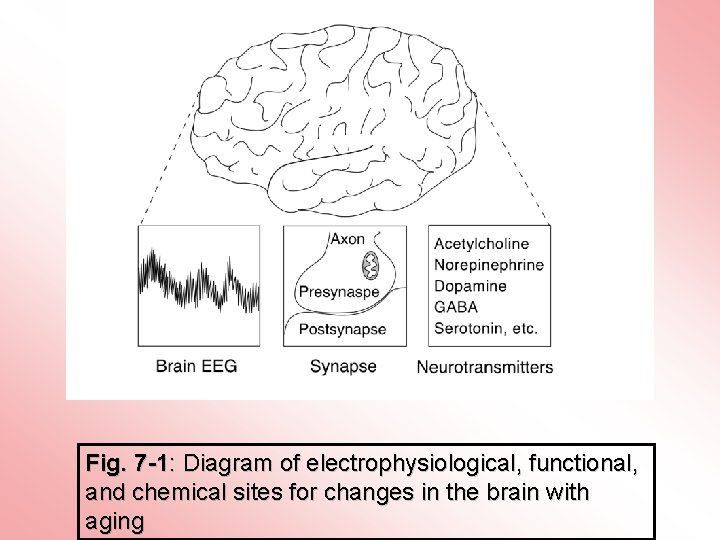
Fig. 7 -1: Diagram of electrophysiological, functional, and chemical sites for changes in the brain with aging
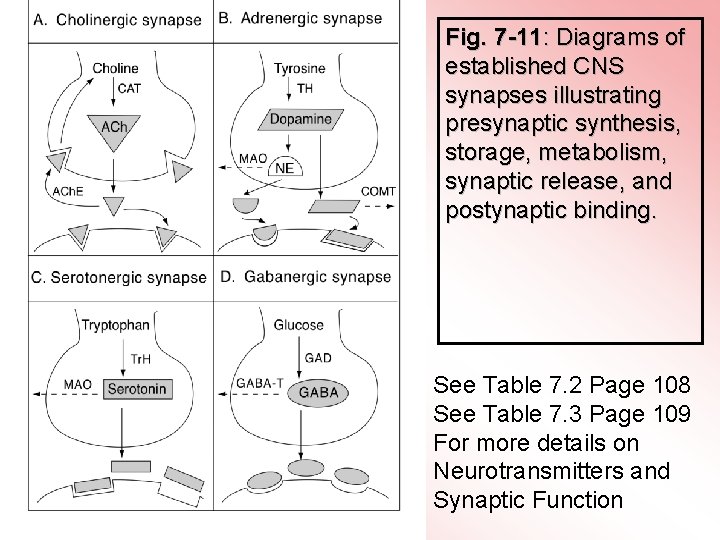
Fig. 7 -11: Diagrams of established CNS synapses illustrating presynaptic synthesis, storage, metabolism, synaptic release, and postynaptic binding. See Table 7. 2 Page 108 See Table 7. 3 Page 109 For more details on Neurotransmitters and Synaptic Function
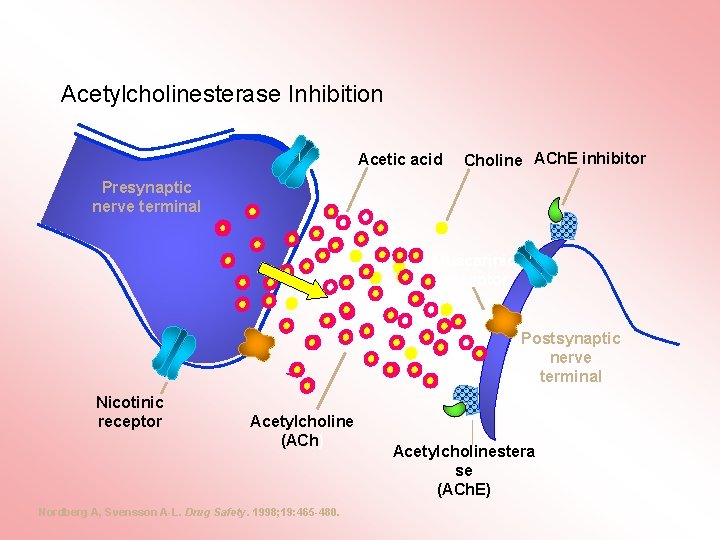
Acetylcholinesterase Inhibition Acetic acid Choline ACh. E inhibitor Presynaptic nerve terminal Muscarinic receptor Postsynaptic nerve terminal Nicotinic receptor Acetylcholine (ACh) Nordberg A, Svensson A-L. Drug Safety. 1998; 19: 465 -480. Acetylcholinestera se (ACh. E)