
Aging of the Cardiovascular System continued Chapter 16




- Slides: 18
Aging of the Cardiovascular System (continued) Chapter 16 P. S. Timiras
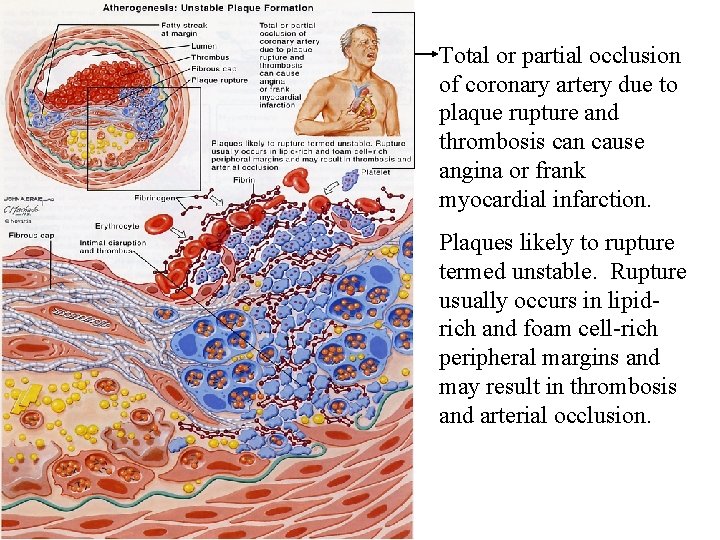
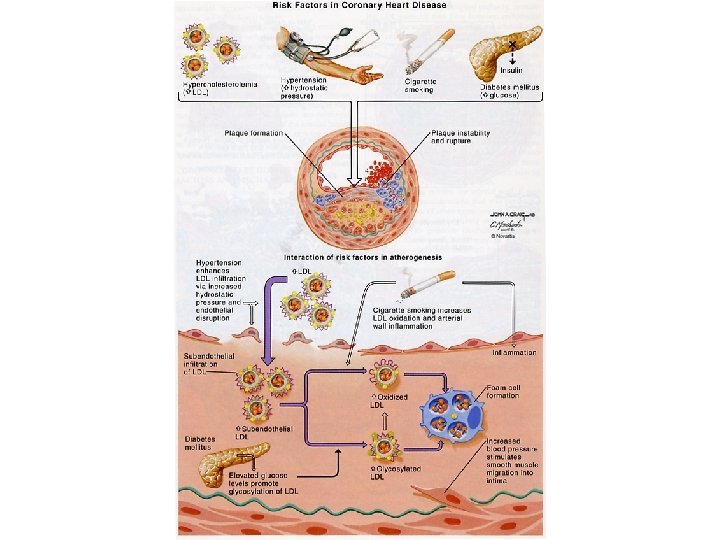
Total or partial occlusion of coronary artery due to plaque rupture and thrombosis can cause angina or frank myocardial infarction. Plaques likely to rupture termed unstable. Rupture usually occurs in lipidrich and foam cell-rich peripheral margins and may result in thrombosis and arterial occlusion.
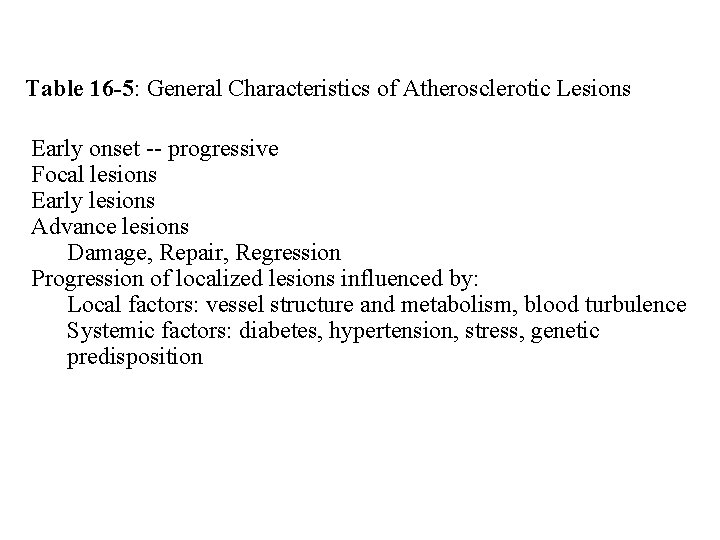
Table 16 -5: General Characteristics of Atherosclerotic Lesions Early onset -- progressive Focal lesions Early lesions Advance lesions Damage, Repair, Regression Progression of localized lesions influenced by: Local factors: vessel structure and metabolism, blood turbulence Systemic factors: diabetes, hypertension, stress, genetic predisposition
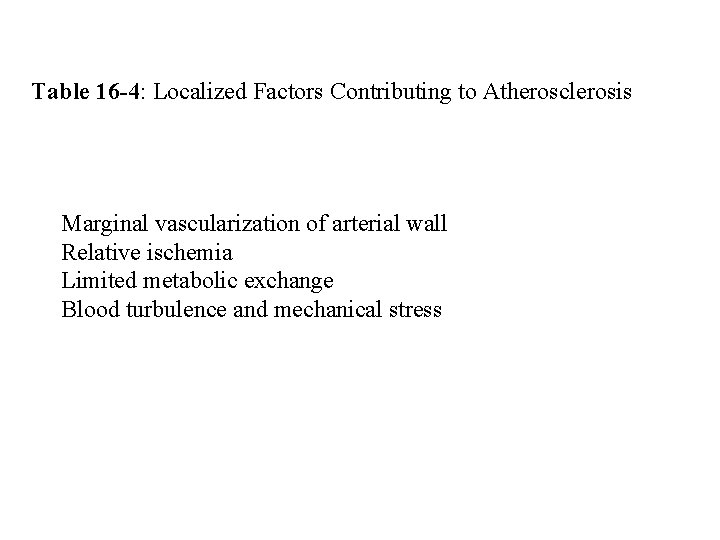
Table 16 -4: Localized Factors Contributing to Atherosclerosis Marginal vascularization of arterial wall Relative ischemia Limited metabolic exchange Blood turbulence and mechanical stress
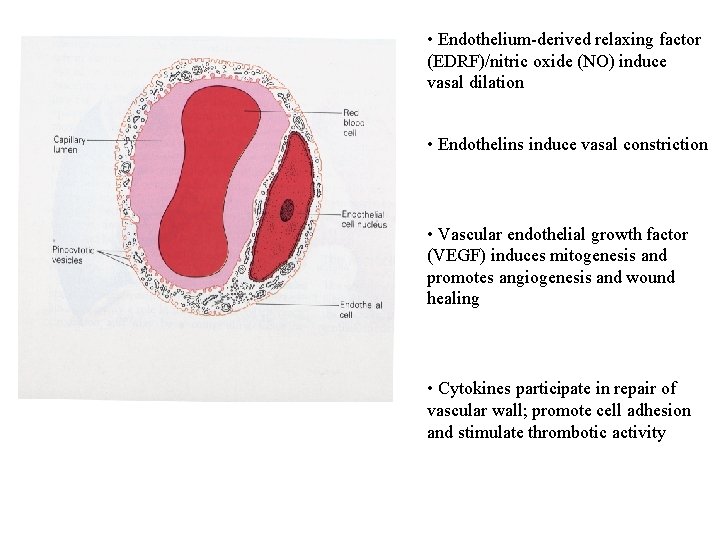
• Endothelium-derived relaxing factor (EDRF)/nitric oxide (NO) induce vasal dilation • Endothelins induce vasal constriction • Vascular endothelial growth factor (VEGF) induces mitogenesis and promotes angiogenesis and wound healing • Cytokines participate in repair of vascular wall; promote cell adhesion and stimulate thrombotic activity
Significance of Age Changes in the Vascular Endothelium *Table 16 -2, page 293* • Endothelial cells line the internal wall (intima) of the blood vessels. • While the muscle cells and the elastic fibers in the vascular wall regulate blood vessel motility (contraction and relaxation), the endothelial cells, serve as protective lining against trauma, infections, etc, • Endothelial cells undergo significant changes with aging indicative of abnormal function. • These alterations by themselves may induce pathology or may predispose with other factors to atherosclerosis
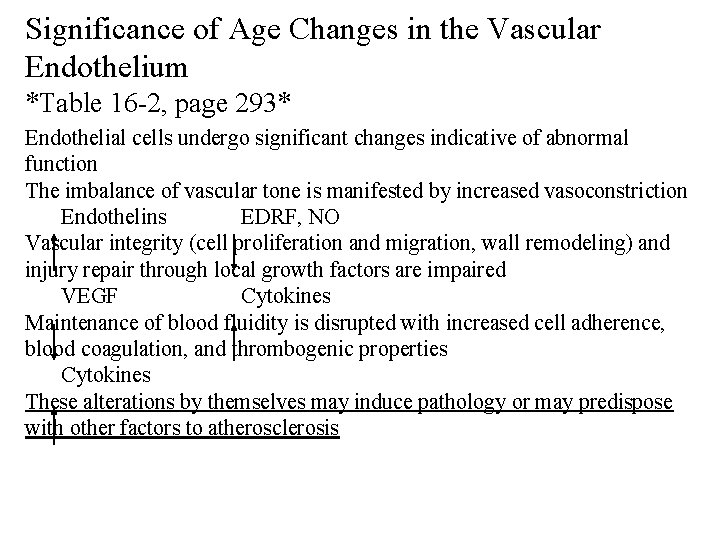
Significance of Age Changes in the Vascular Endothelium *Table 16 -2, page 293* Endothelial cells undergo significant changes indicative of abnormal function The imbalance of vascular tone is manifested by increased vasoconstriction Endothelins EDRF, NO Vascular integrity (cell proliferation and migration, wall remodeling) and injury repair through local growth factors are impaired VEGF Cytokines Maintenance of blood fluidity is disrupted with increased cell adherence, blood coagulation, and thrombogenic properties Cytokines These alterations by themselves may induce pathology or may predispose with other factors to atherosclerosis
Table 16 -8: Theories of Atherosclerosis • Lipid accumulation • Myoclonal • Thrombogenic • Inflammation • Free Radicals **See page 299**
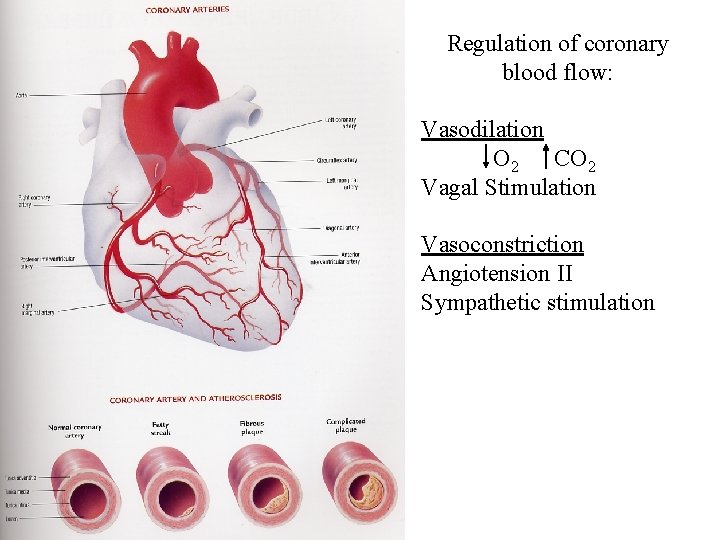
Regulation of coronary blood flow: Vasodilation O 2 CO 2 Vagal Stimulation Vasoconstriction Angiotension II Sympathetic stimulation
High homocysteinemia and Protein C