
Aging Globally Aging Subcultures Sociology 431 Chapter Two
Aging Globally & Aging Subcultures Sociology 431 Chapter Two
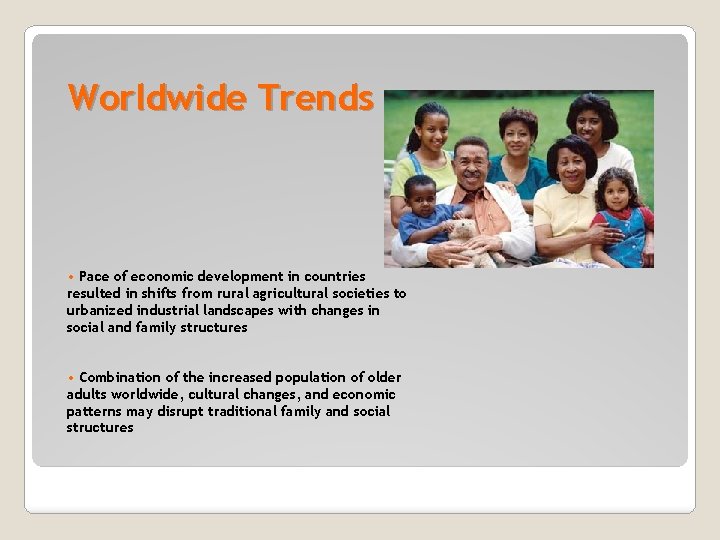
Worldwide Trends • Pace of economic development in countries resulted in shifts from rural agricultural societies to urbanized industrial landscapes with changes in social and family structures • Combination of the increased population of older adults worldwide, cultural changes, and economic patterns may disrupt traditional family and social structures
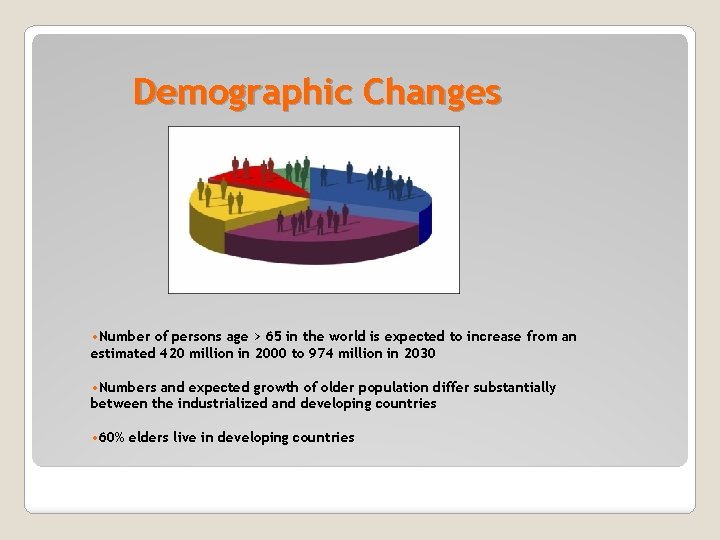
Demographic Changes • Number of persons age > 65 in the world is expected to increase from an estimated 420 million in 2000 to 974 million in 2030 • Numbers and expected growth of older population differ substantially between the industrialized and developing countries • 60% elders live in developing countries
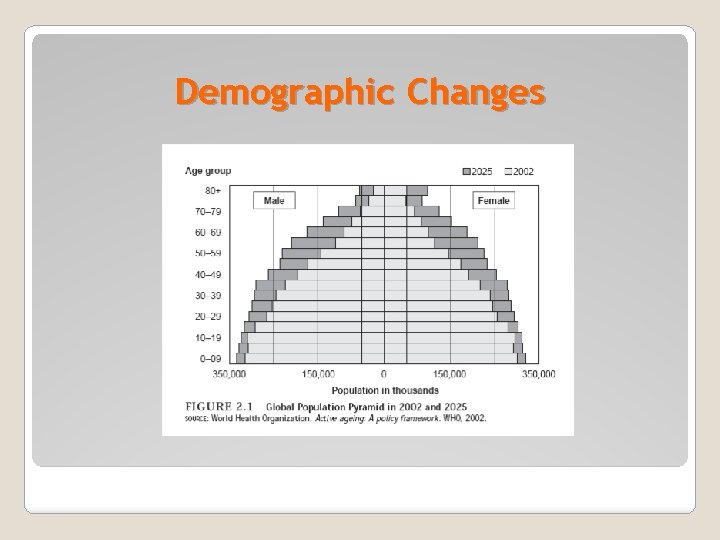
Demographic Changes
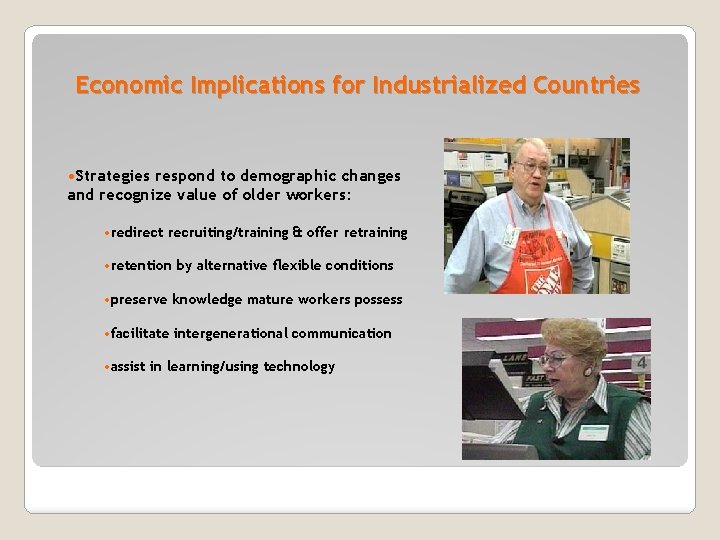
Economic Implications for Industrialized Countries • Strategies respond to demographic changes and recognize value of older workers: • redirect recruiting/training & offer retraining • retention by alternative flexible conditions • preserve knowledge mature workers possess • facilitate intergenerational communication • assist in learning/using technology
The Effects of Modernization • Modernization Theory • advances in technology, applied sciences, urbanization, and literacy which, in this context are related to a decline in the status of older people

The Effects of Modernization • Characteristics of Modernization that have led to lower status for elders • Health technology • Scientific technology • Urbanization • Literacy and mass education
Alternatives to Modernization Theory • Healthy filial piety • Strong cultural values • Reciprocal intergenerational relationships
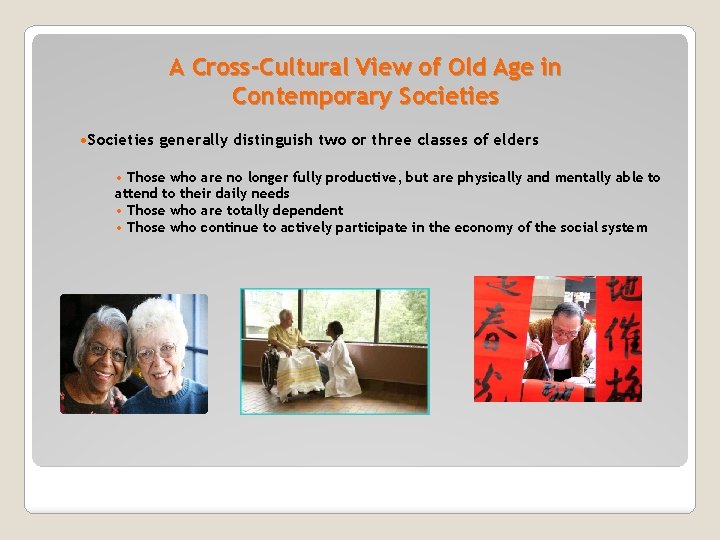
A Cross-Cultural View of Old Age in Contemporary Societies • Societies generally distinguish two or three classes of elders • Those who are no longer fully productive, but are physically and mentally able to attend to their daily needs • Those who are totally dependent • Those who continue to actively participate in the economy of the social system
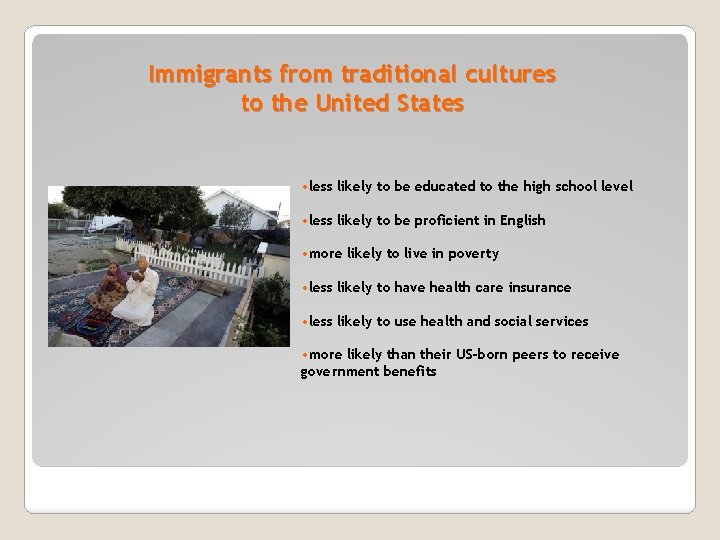
Immigrants from traditional cultures to the United States • less likely to be educated to the high school level • less likely to be proficient in English • more likely to live in poverty • less likely to have health care insurance • less likely to use health and social services • more likely than their US-born peers to receive government benefits
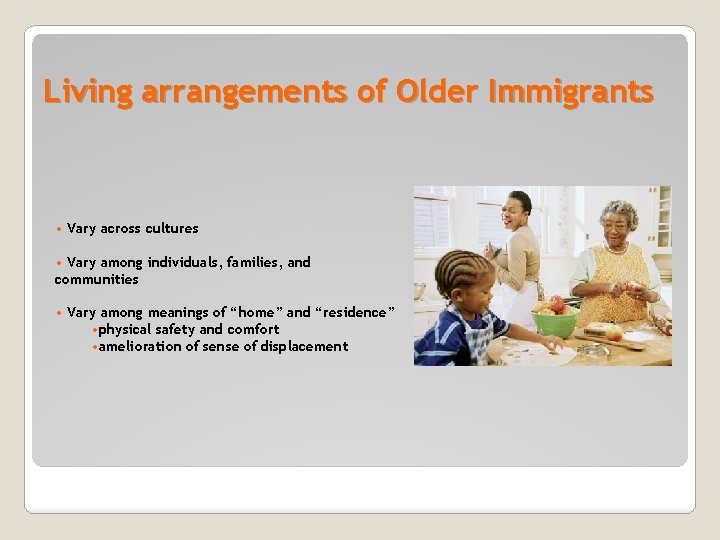
Living arrangements of Older Immigrants • Vary across cultures • Vary among individuals, families, and communities • Vary among meanings of “home” and “residence” • physical safety and comfort • amelioration of sense of displacement
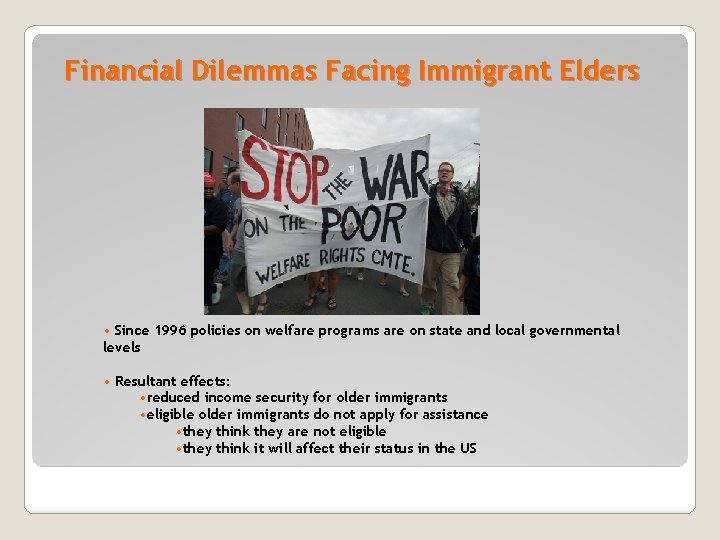
Financial Dilemmas Facing Immigrant Elders • Since 1996 policies on welfare programs are on state and local governmental levels • Resultant effects: • reduced income security for older immigrants • eligible older immigrants do not apply for assistance • they think they are not eligible • they think it will affect their status in the US
- Slides: 12