
Aging and the Workforce in Colorado Workforce Development
- Slides: 34
Aging and the Workforce in Colorado Workforce Development Council Greeley, CO September 27, 2018 Wade Buchanan Senior Advisor on Aging Christian Itin and Tony Tapia Co-Chairs, SAPGA Committee on Workforce
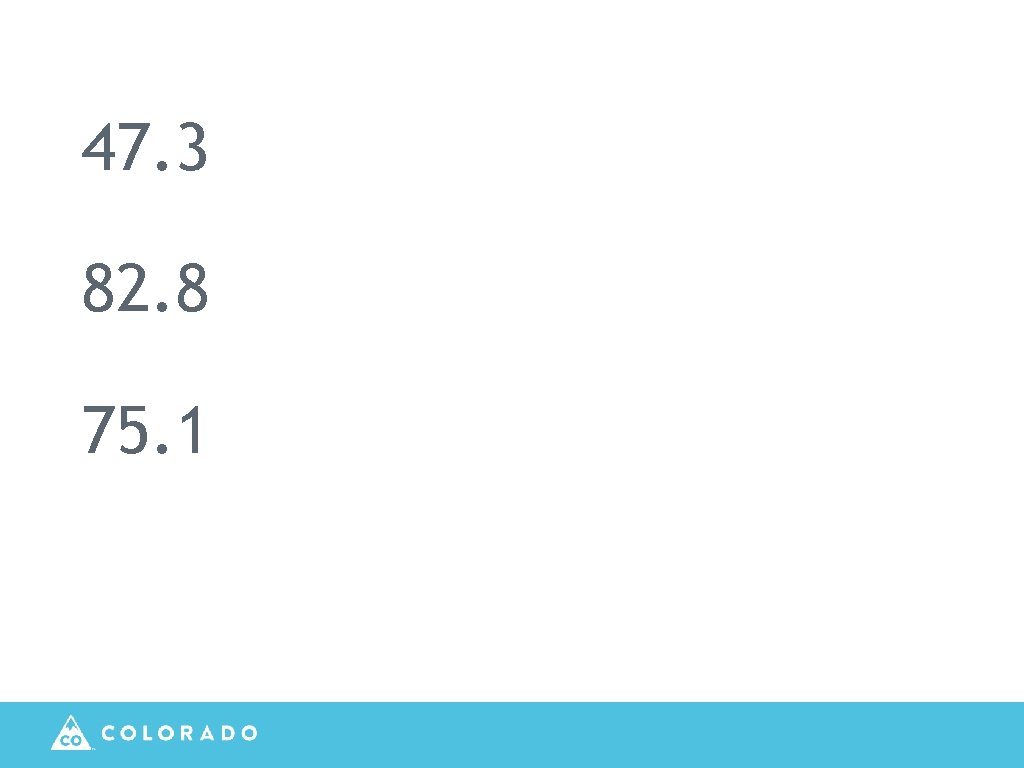
47. 3 82. 8 75. 1
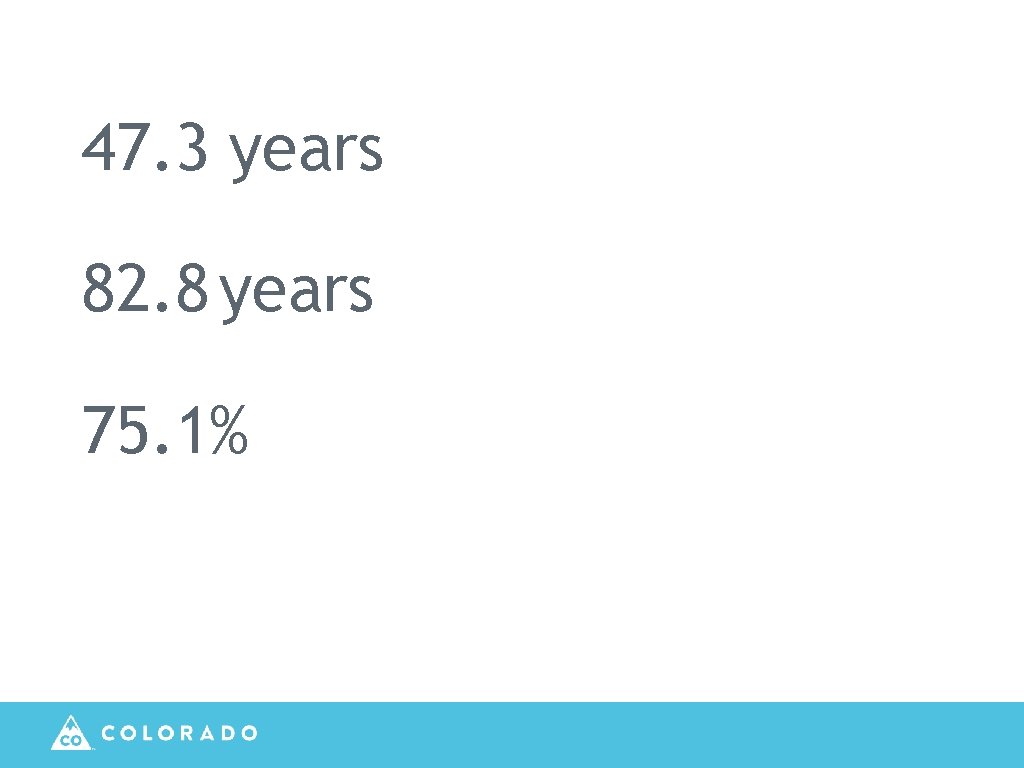
47. 3 years 82. 8 years 75. 1%
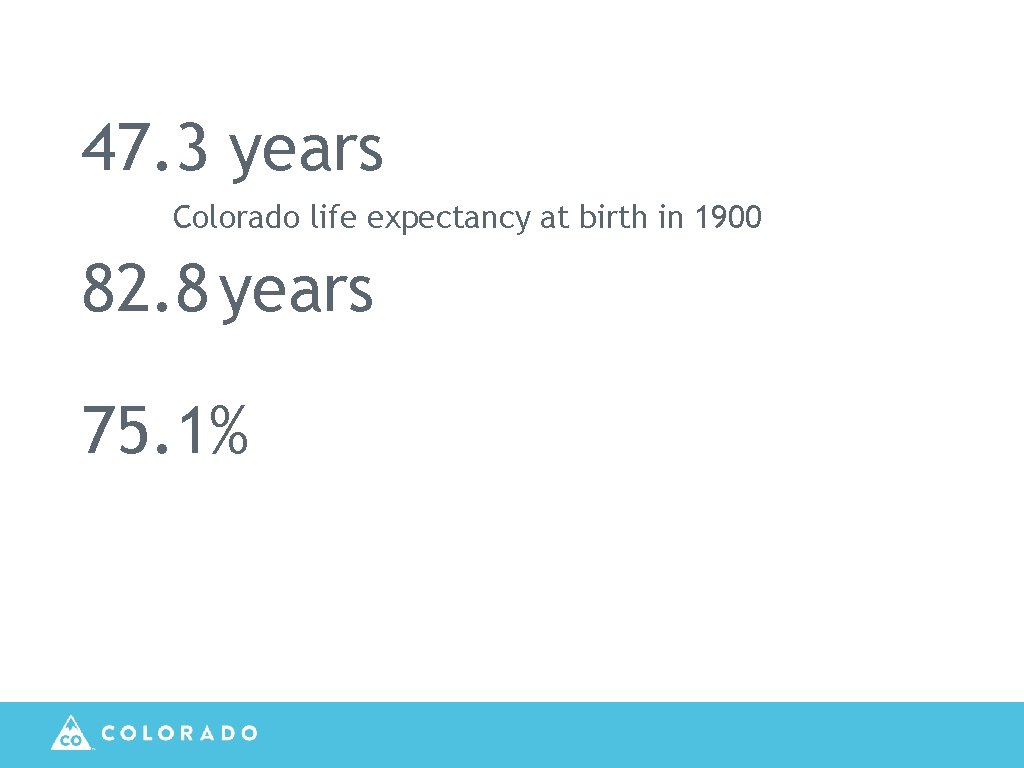
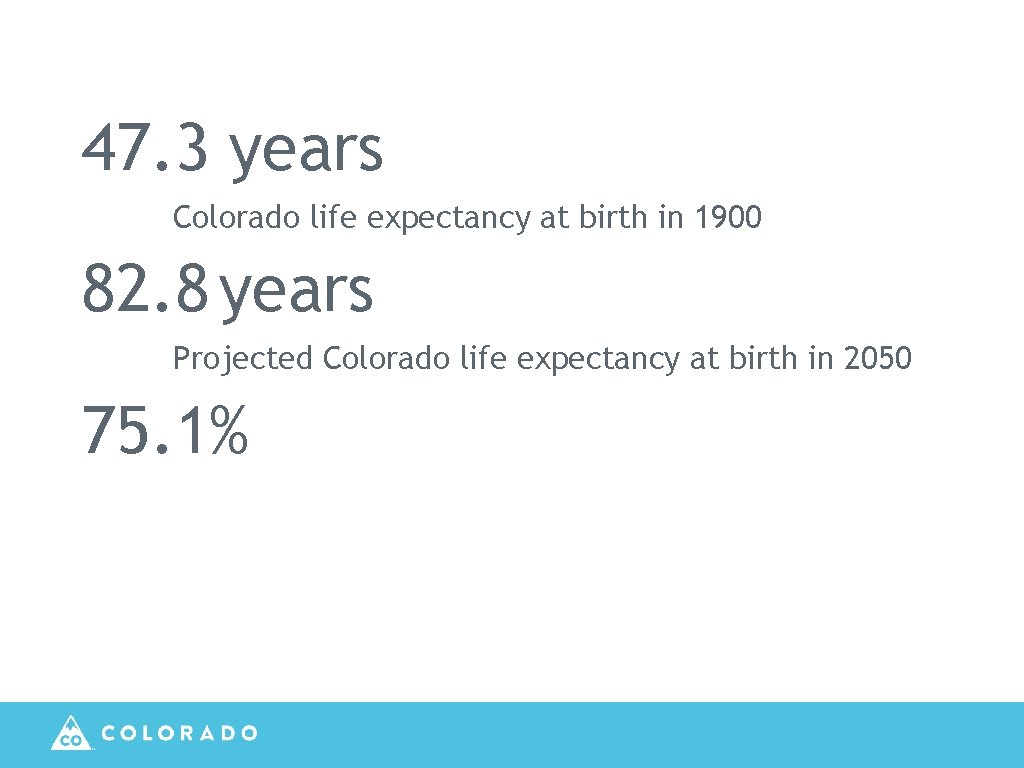
47. 3 years Colorado life expectancy at birth in 1900 82. 8 years 75. 1%
47. 3 years Colorado life expectancy at birth in 1900 82. 8 years Projected Colorado life expectancy at birth in 2050 75. 1%
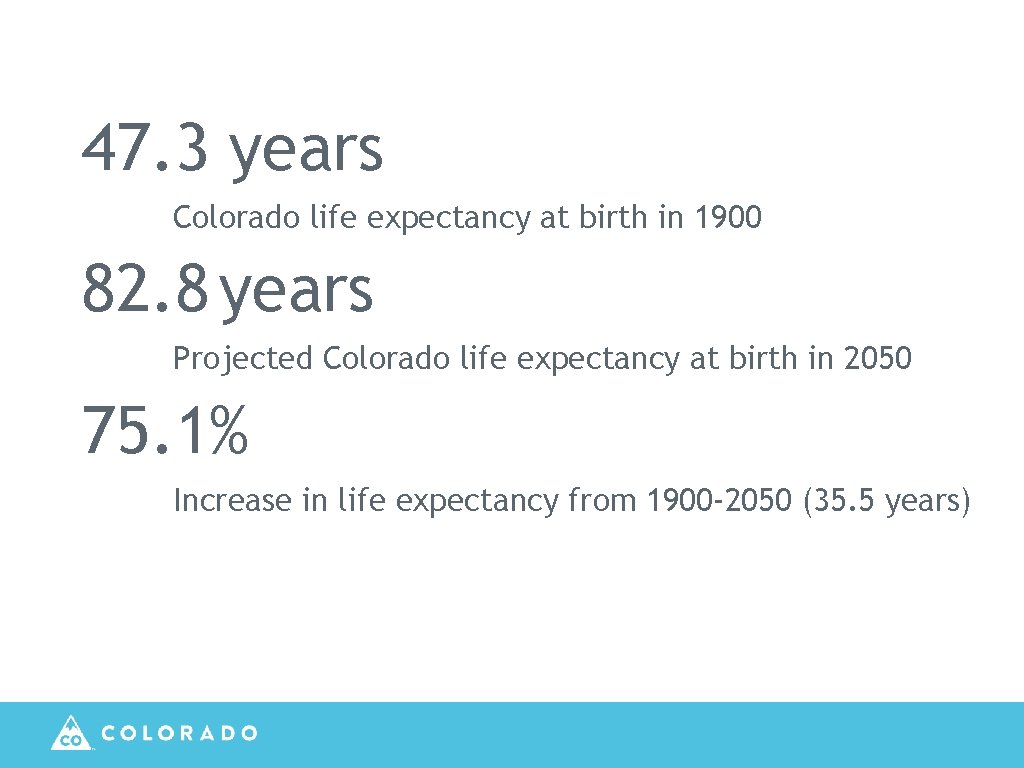
47. 3 years Colorado life expectancy at birth in 1900 82. 8 years Projected Colorado life expectancy at birth in 2050 75. 1% Increase in life expectancy from 1900 -2050 (35. 5 years)
47. 3 years Colorado life expectancy at birth in 1900 82. 8 years Projected Colorado life expectancy at birth in 2050 75. 1% Increase in life expectancy from 1900 -2050 (35. 5 years) This is Good News
47. 3 years Colorado life expectancy at birth in 1900 82. 8 years Projected Colorado life expectancy at birth in 2050 75. 1% Increase in life expectancy from 1900 -2050 (35. 5 years) This is Good News It’s also a HUGE Challenge
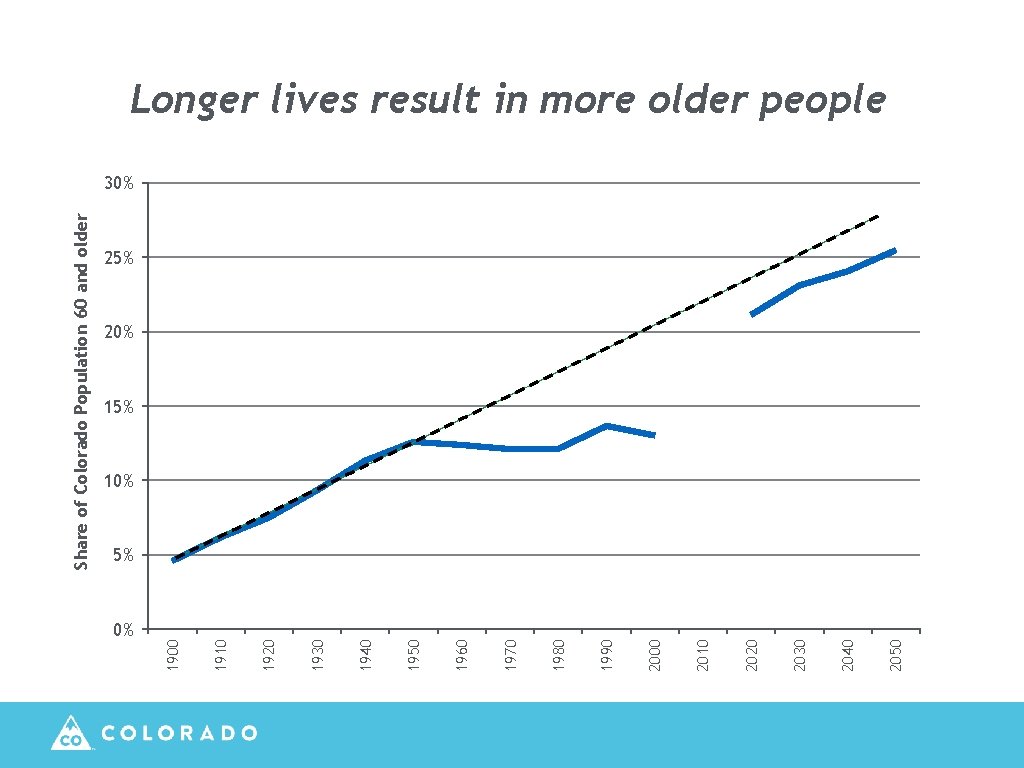
0% 2050 2040 2030 2020 2010 2000 1990 1980 1970 1960 1950 1940 1930 1920 1910 1900 Share of Colorado Population 60 and older Longer lives result in more older people 30% 25% 20% 15% 10% 5%
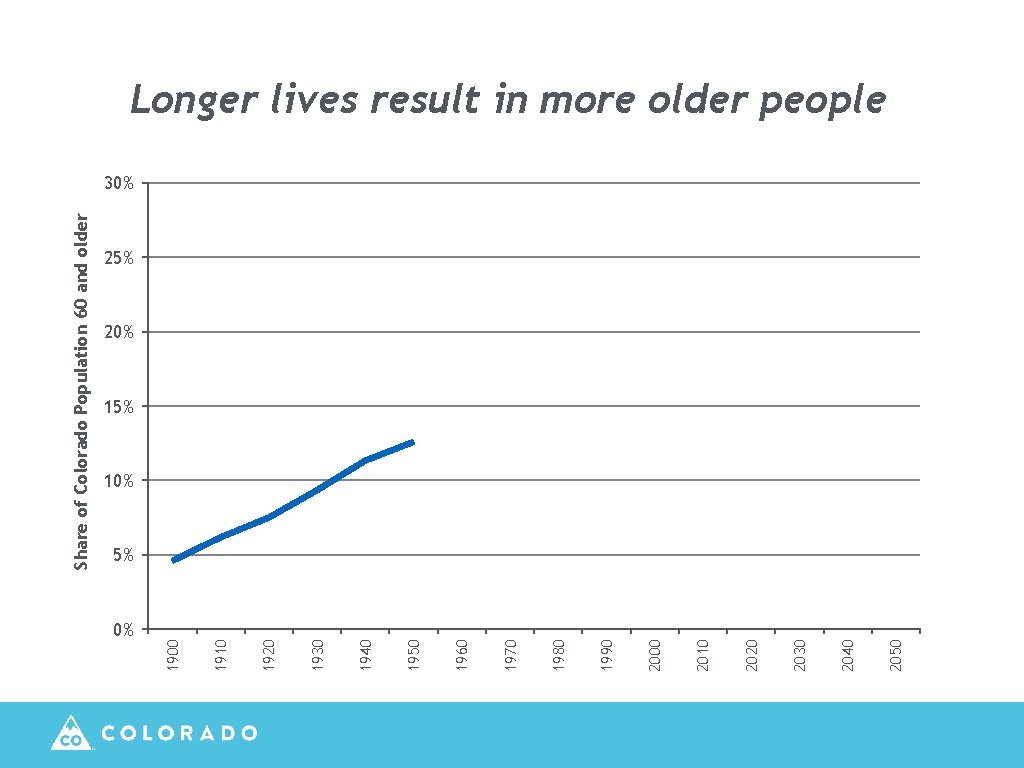
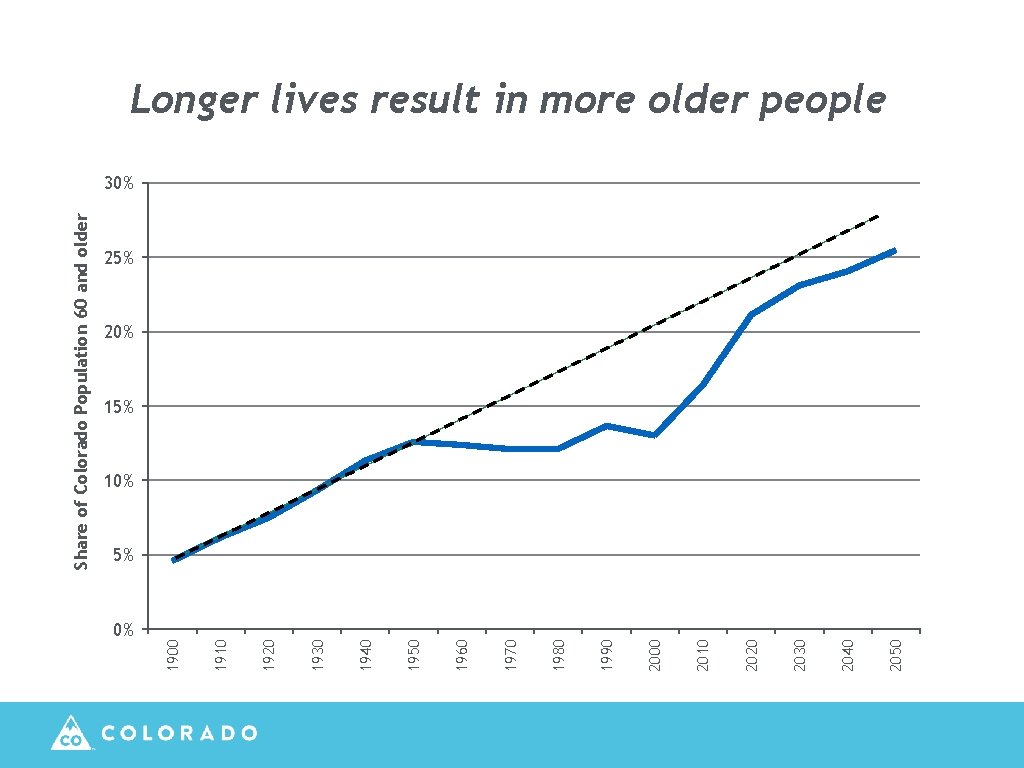
0% 2050 2040 2030 2020 2010 2000 1990 1980 1970 1960 1950 1940 1930 1920 1910 1900 Share of Colorado Population 60 and older Longer lives result in more older people 30% 25% 20% 15% 10% 5%
0% 2050 2040 2030 2020 2010 2000 1990 1980 1970 1960 1950 1940 1930 1920 1910 1900 Share of Colorado Population 60 and older Longer lives result in more older people 30% 25% 20% 15% 10% 5%
0% 2050 2040 2030 2020 2010 2000 1990 1980 1970 1960 1950 1940 1930 1920 1910 1900 Share of Colorado Population 60 and older Longer lives result in more older people 30% 25% 20% 15% 10% 5%
0% 2050 2040 2030 2020 2010 2000 1990 1980 1970 1960 1950 1940 1930 1920 1910 1900 Share of Colorado Population 60 and older Longer lives result in more older people 30% 25% 20% 15% 10% 5%
0% 2050 2040 2030 2020 2010 2000 1990 1980 1970 1960 1950 1940 1930 1920 1910 1900 Share of Colorado Population 60 and older Longer lives result in more older people 30% 25% 20% 15% 10% 5%
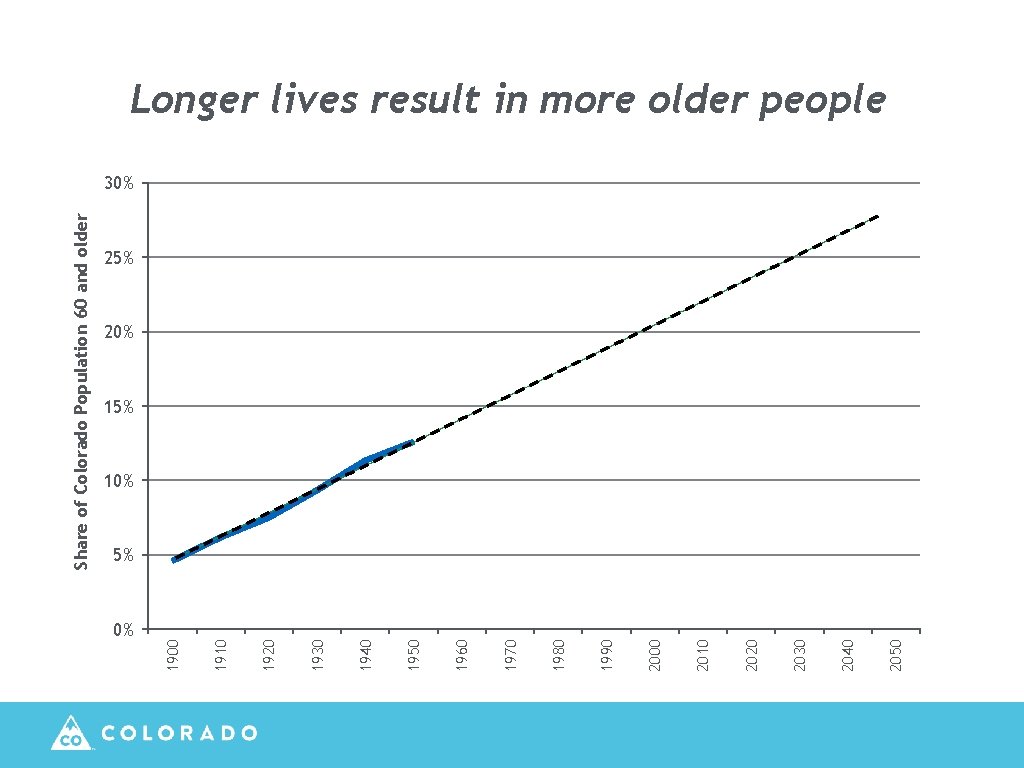
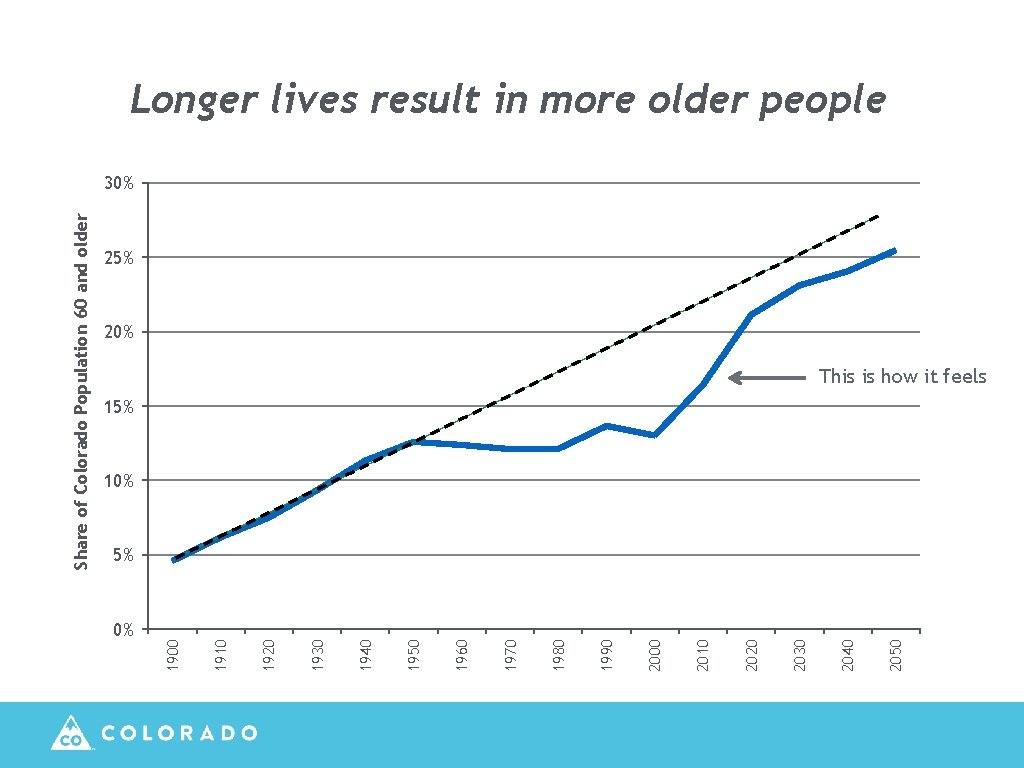
0% 2050 2040 2030 2020 2010 2000 1990 1980 1970 1960 1950 1940 1930 1920 1910 1900 Share of Colorado Population 60 and older Longer lives result in more older people 30% 25% 20% This is how it feels 15% 10% 5%
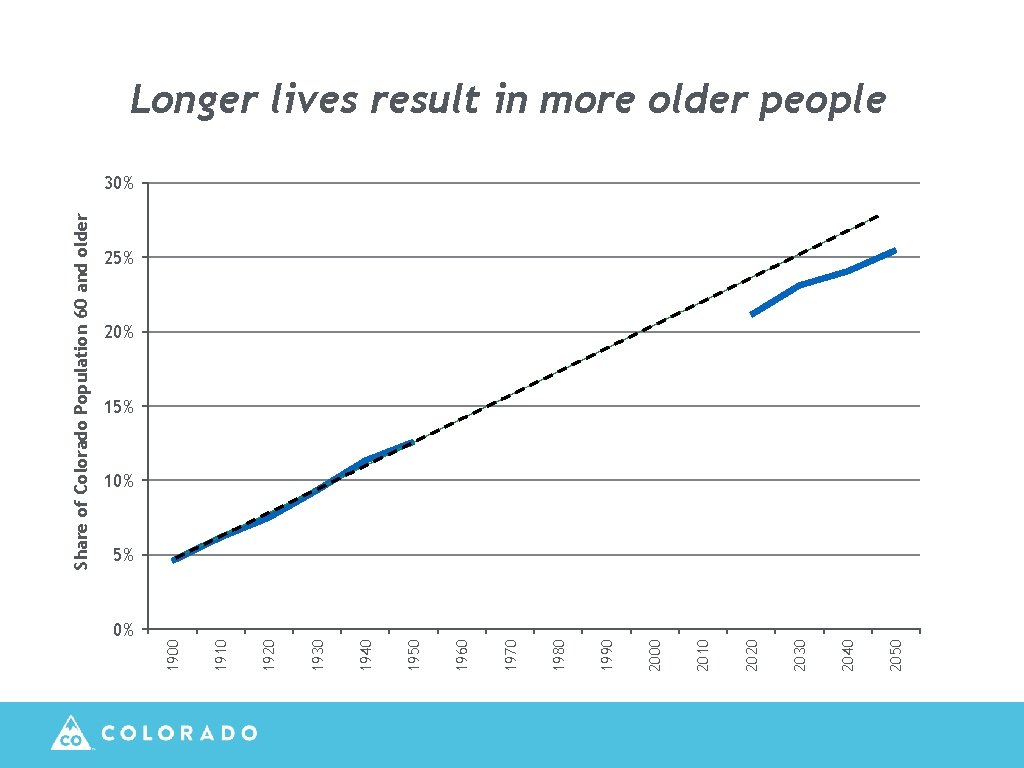
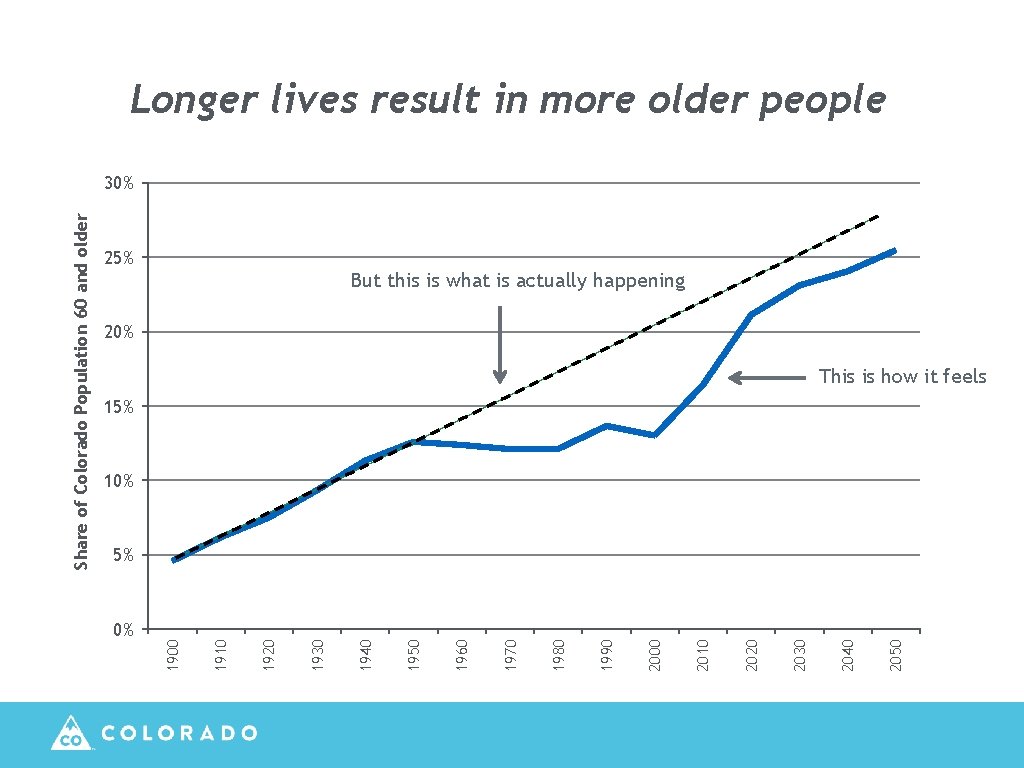
Longer lives result in more older people 25% But this is what is actually happening 20% This is how it feels 15% 10% 2050 2040 2030 2020 2010 2000 1990 1980 1970 1960 1950 1940 1930 1920 0% 1910 5% 1900 Share of Colorado Population 60 and older 30%
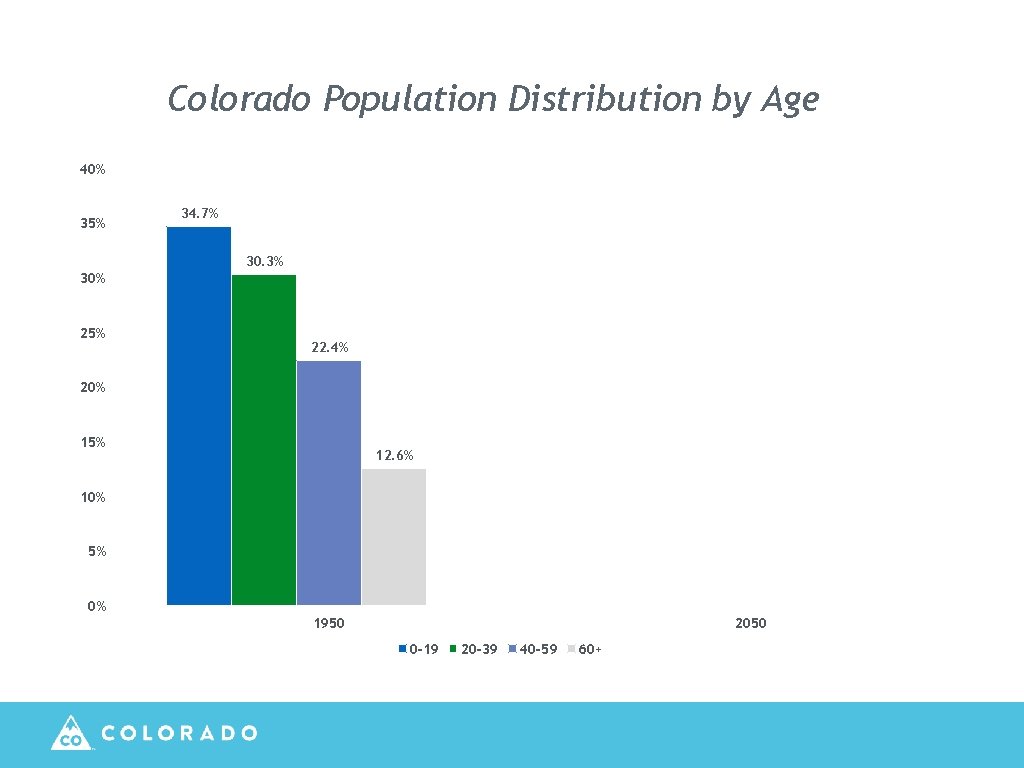
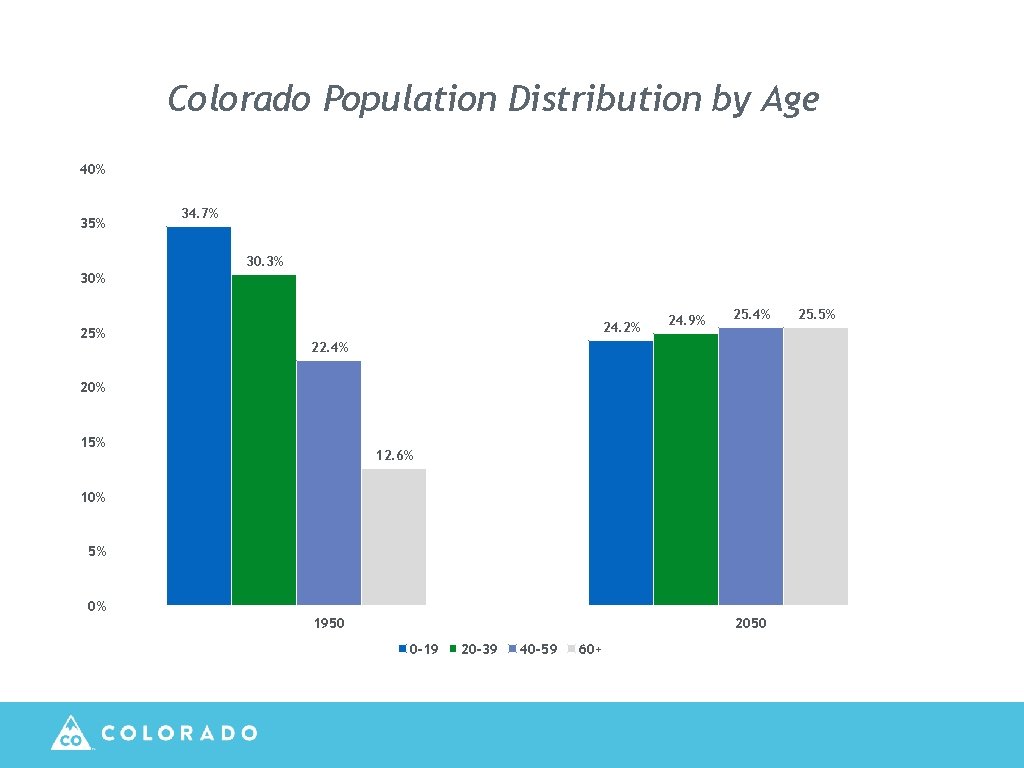
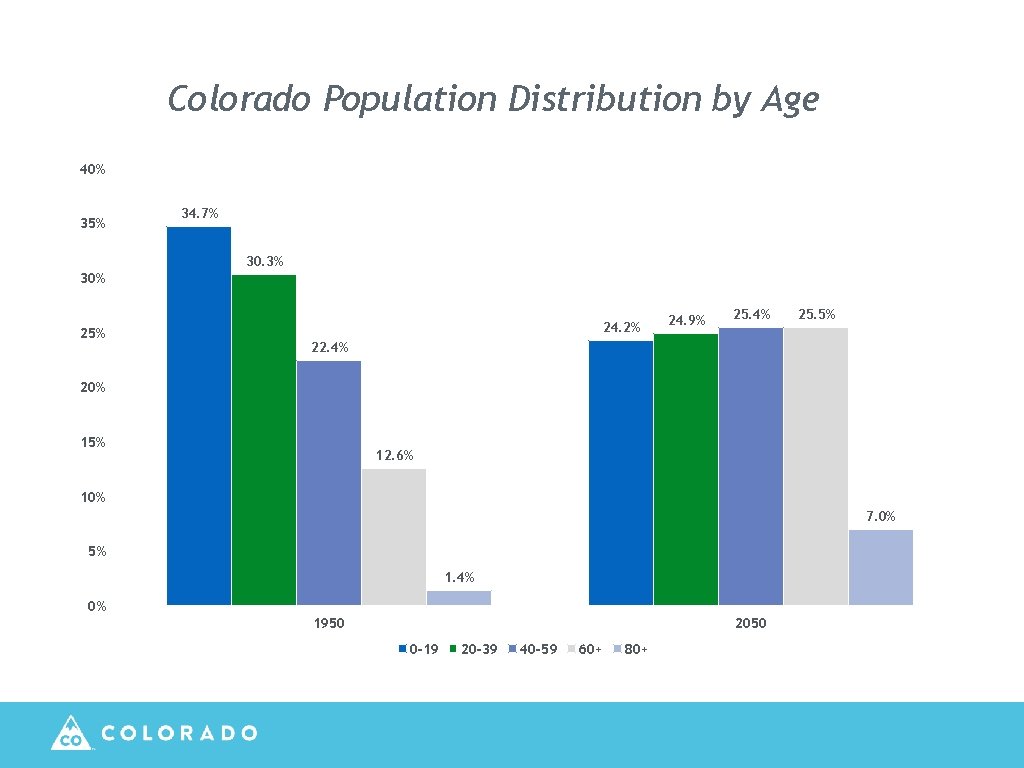
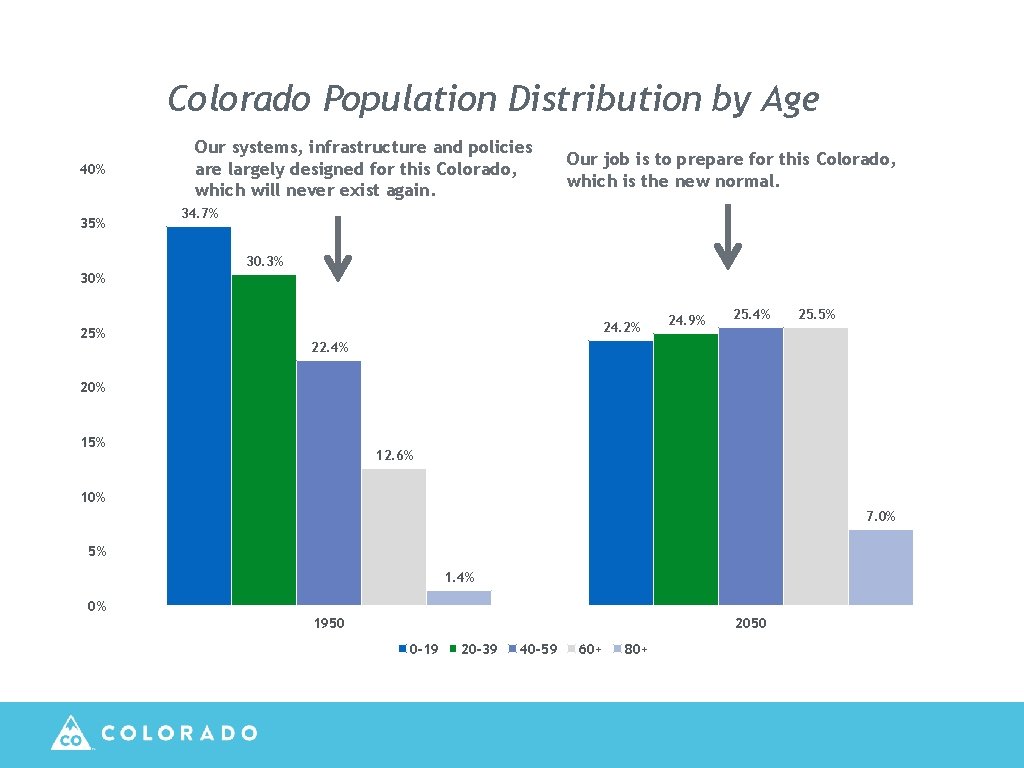
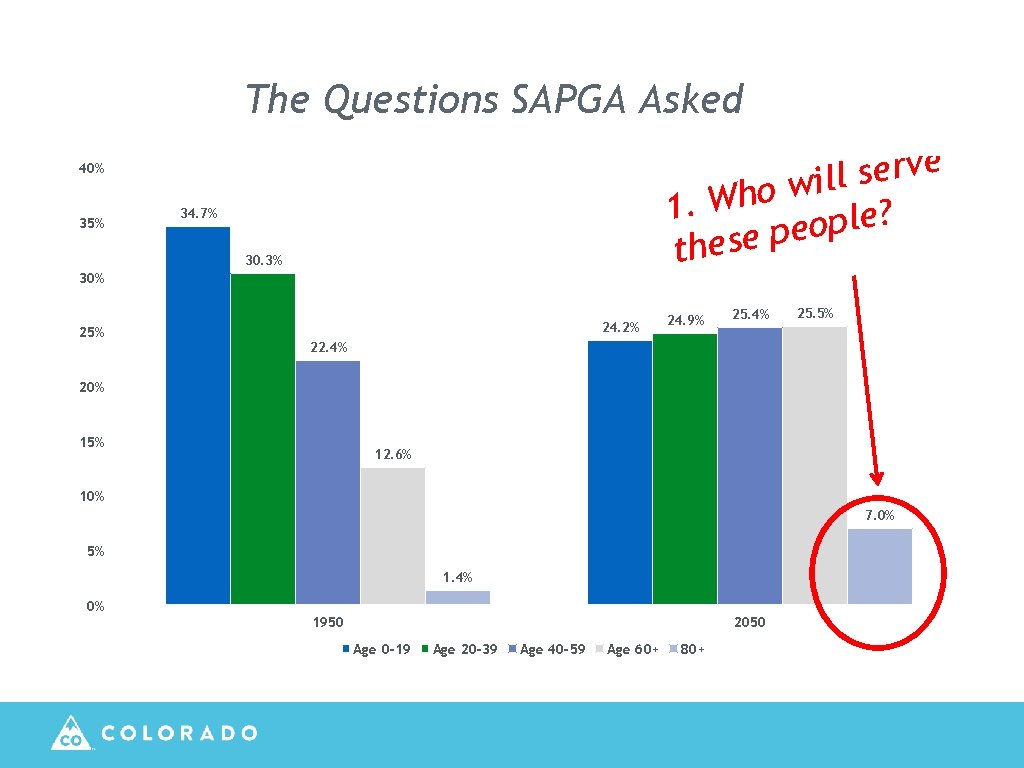
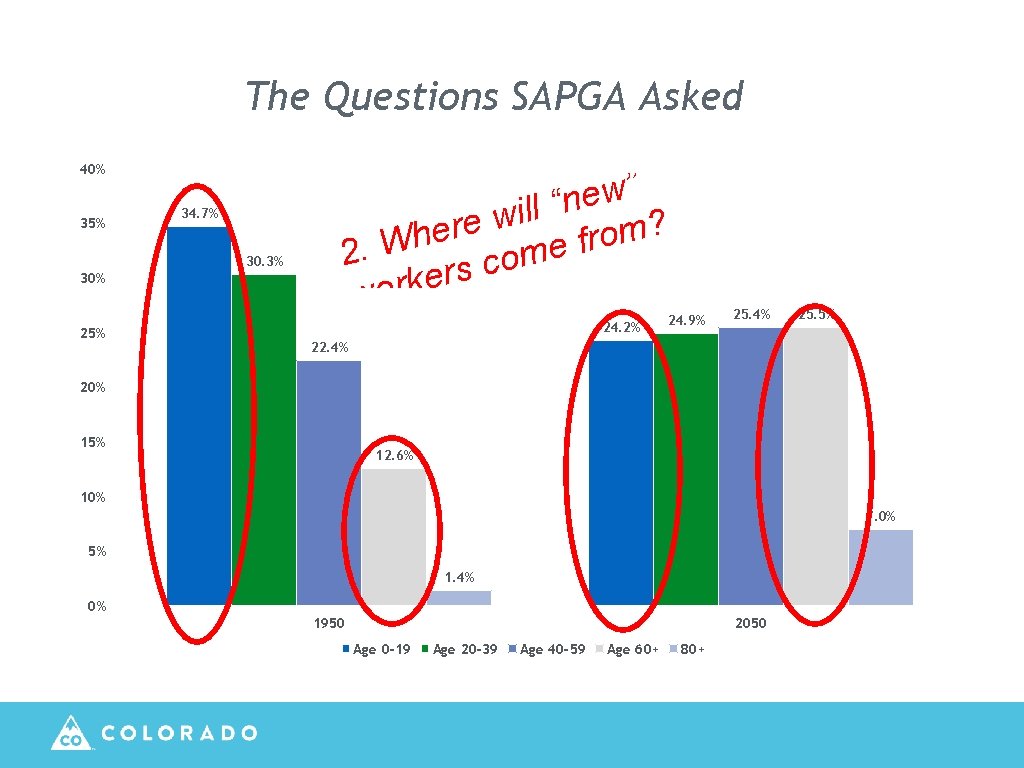
Colorado Population Distribution by Age 40% 35% 34. 7% 30. 3% 30% 25% 24. 2% 24. 9% 25. 4% 25. 5% 22. 4% 20% 15% 12. 6% 10% 7. 0% 5% 1. 4% 0% 1950 2050 0 -19 20 -39 40 -59 60+ 80+
Colorado Population Distribution by Age 40% 35% 34. 7% 30. 3% 30% 25% 24. 2% 24. 9% 25. 4% 25. 5% 22. 4% 20% 15% 12. 6% 10% 7. 0% 5% 1. 4% 0% 1950 2050 0 -19 20 -39 40 -59 60+ 80+
Colorado Population Distribution by Age 40% 35% 34. 7% 30. 3% 30% 25% 24. 2% 24. 9% 25. 4% 25. 5% 22. 4% 20% 15% 12. 6% 10% 7. 0% 5% 1. 4% 0% 1950 2050 0 -19 20 -39 40 -59 60+ 80+
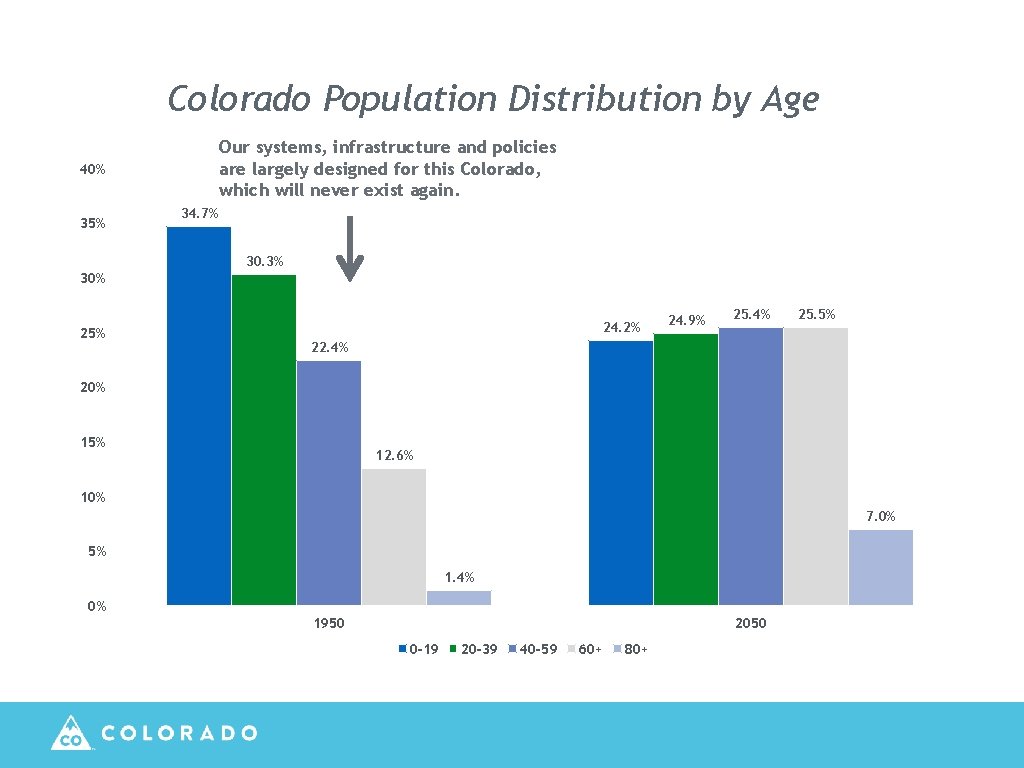
Colorado Population Distribution by Age Our systems, infrastructure and policies are largely designed for this Colorado, which will never exist again. 40% 35% 34. 7% 30. 3% 30% 25% 24. 2% 24. 9% 25. 4% 25. 5% 22. 4% 20% 15% 12. 6% 10% 7. 0% 5% 1. 4% 0% 1950 2050 0 -19 20 -39 40 -59 60+ 80+
Colorado Population Distribution by Age 40% 35% Our systems, infrastructure and policies are largely designed for this Colorado, which will never exist again. Our job is to prepare for this Colorado, which is the new normal. 34. 7% 30. 3% 30% 25% 24. 2% 24. 9% 25. 4% 25. 5% 22. 4% 20% 15% 12. 6% 10% 7. 0% 5% 1. 4% 0% 1950 2050 0 -19 20 -39 40 -59 60+ 80+
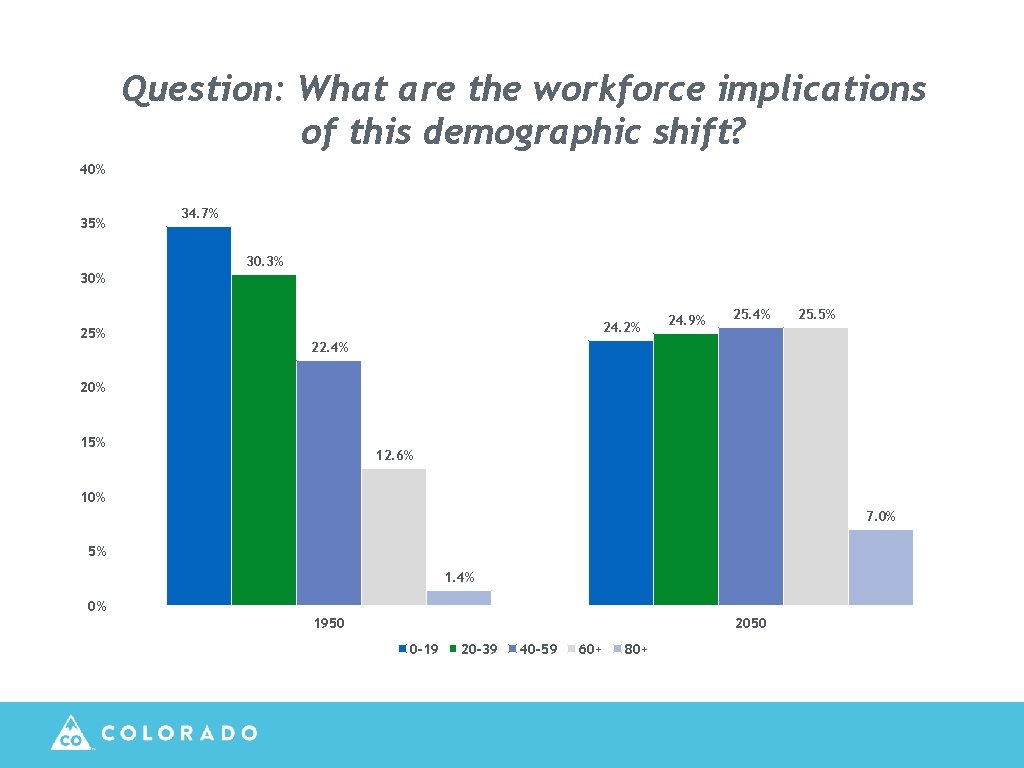
Question: What are the workforce implications of this demographic shift? 40% 35% 34. 7% 30. 3% 30% 25% 24. 2% 24. 9% 25. 4% 25. 5% 22. 4% 20% 15% 12. 6% 10% 7. 0% 5% 1. 4% 0% 1950 2050 0 -19 20 -39 40 -59 60+ 80+
Strategic Action Planning Group on Aging • House Bill 15 -1033 created SAPGA as “a multi-disciplinary private and public sector stakeholders' group. ” • 23 members appointed by the Governor. • Charged with developing “a comprehensive strategic action plan on aging in Colorado through the year 2030. ” • The first iteration of plan was submitted in November, 2016. Two additional iterations of the plan are due in November of 2018 and November of 2020.
Strategic Action Planning Group on Aging • Charged with providing “comprehensive data on and specific recommendations regarding private and public options for addressing this demographic shift, ” with the expressed intent that these recommendations “will lead to the implementation of programs, services, projects, policies, and procedures. . . in both the public and private sectors. ” • Explicitly identifies workforce issues as a priority area for data collection and policy analysis, and suggests that one of SAPGA’s “special purpose subcommittees” focus on “workforce development. ” • SAPGA has had an active workforce subcommittee since it began its work in 2015.
Strategic Action Planning Group on Aging Current chairs of SAPGA Workforce Committee: • Christian Itin, professor, Department of Social Work, Metropolitan State University • Tony Tapia, program consultant, Colorado Latino Age Wave, Latino Community Foundation of Colorado. Partial list of stakeholders engaged in process: • • • Greater Metro Denver Healthcare Partnership Society for Human Resource Management State Demographer’s Office Department of Regulatory Agencies Metropolitan State University Programs Colorado Workforce Development Council Colorado Health Care Association & Center for Assisted Living Innov. Age Boomers Leading Change
The Questions SAPGA Asked e v r e s l l i w o h W. 1 ? e l p o e p e s the 40% 35% 34. 7% 30. 3% 30% 25% 24. 2% 24. 9% 25. 4% 25. 5% 22. 4% 20% 15% 12. 6% 10% 7. 0% 5% 1. 4% 0% 1950 2050 Age 0 -19 Age 20 -39 Age 40 -59 Age 60+ 80+
SAPGA Goal 5 (of 8) “There will be enough skilled, educated and trained workers, paid commensurate to their abilities and training, to meet the needs of employers and industries serving Colorado’s growing senior population. ”
Who Will Care for Us? “Without a direct care workforce, there is no way to meet the looming need, yet today these workers are poorly trained, poorly compensated, disrespected and restricted in their duties. This state of affairs is problematic for several reasons. First, we will need to attract more people to the field as demand grows, but today’s pay and work conditions make that a hard sell. Second, . . . improving the jobs would improve care and reduce health care costs, neither of which is likely to happen without such improvement. Finally, with no shift in the nature of direct care work, these workers will continue to swell America’s low-wage workforce, and the corrosive inequality that characterizes the job market will become even more entrenched. ” -- Paul Osterman, Who Will Care for Us? (Underlining added)
The Questions SAPGA Asked 40% 35% 34. 7% 30. 3% 30% 25% ” w e n “ l l i w e ? r m e o h r 2. W s come f r e k r wo 24. 2% 24. 9% 25. 4% 25. 5% 22. 4% 20% 15% 12. 6% 10% 7. 0% 5% 1. 4% 0% 1950 2050 Age 0 -19 Age 20 -39 Age 40 -59 Age 60+ 80+
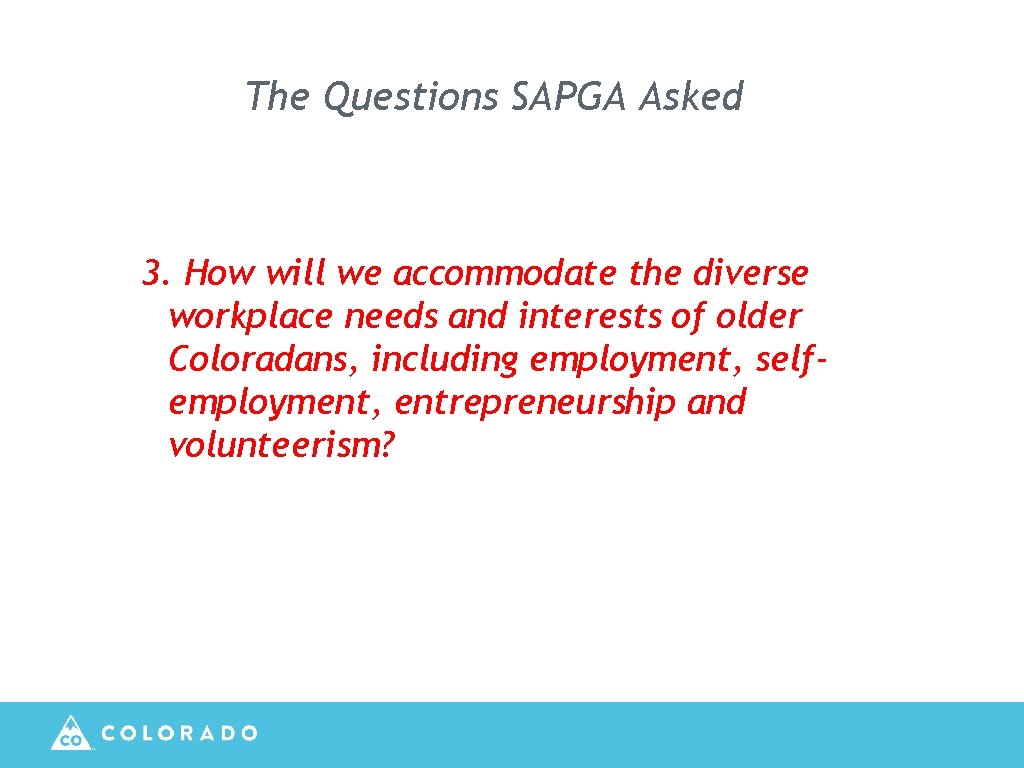
The Questions SAPGA Asked 3. How will we accommodate the diverse workplace needs and interests of older Coloradans, including employment, selfemployment, entrepreneurship and volunteerism?
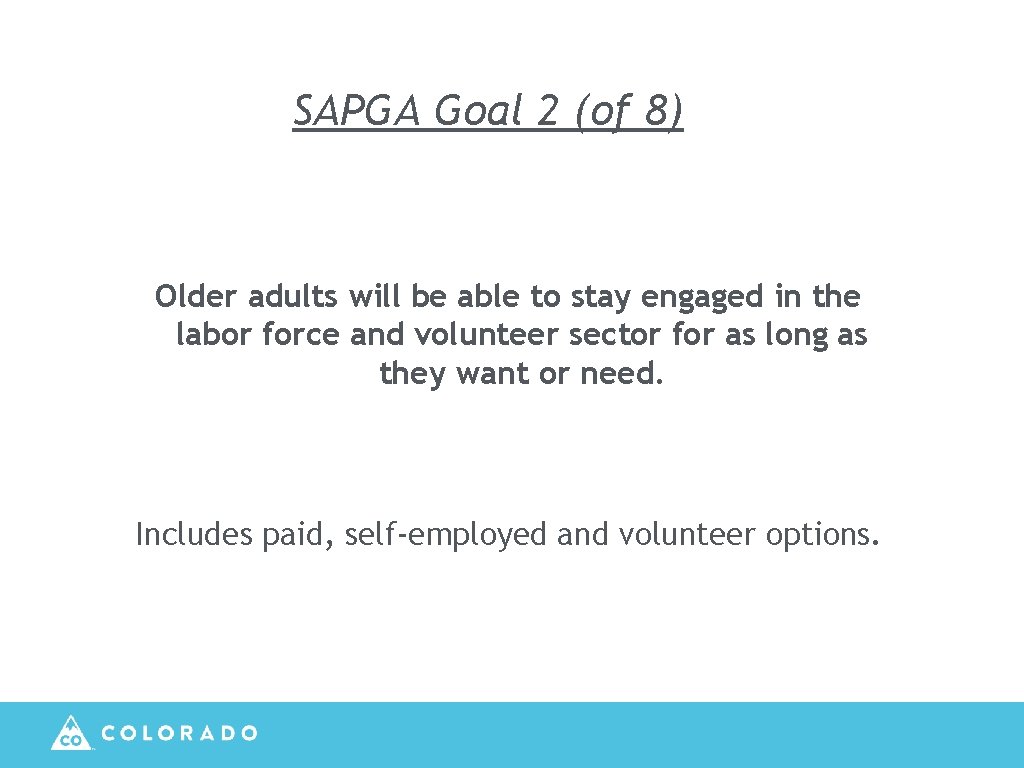
SAPGA Goal 2 (of 8) Older adults will be able to stay engaged in the labor force and volunteer sector for as long as they want or need. Includes paid, self-employed and volunteer options.
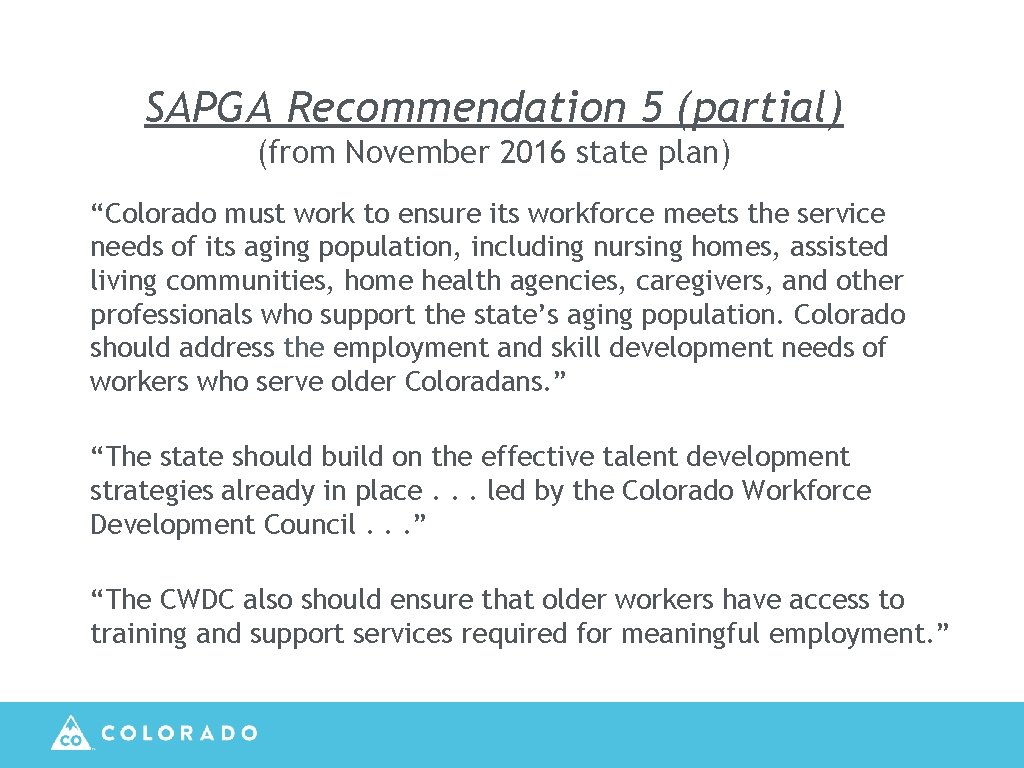
SAPGA Recommendation 5 (partial) (from November 2016 state plan) “Colorado must work to ensure its workforce meets the service needs of its aging population, including nursing homes, assisted living communities, home health agencies, caregivers, and other professionals who support the state’s aging population. Colorado should address the employment and skill development needs of workers who serve older Coloradans. ” “The state should build on the effective talent development strategies already in place. . . led by the Colorado Workforce Development Council. . . ” “The CWDC also should ensure that older workers have access to training and support services required for meaningful employment. ”
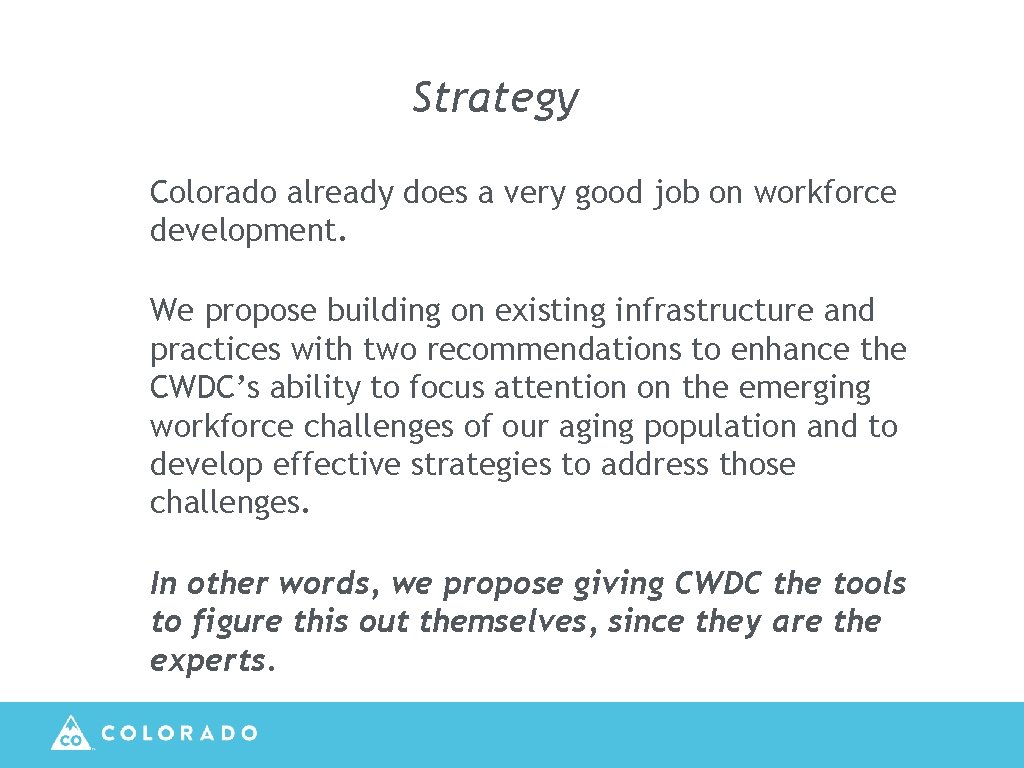
Strategy Colorado already does a very good job on workforce development. We propose building on existing infrastructure and practices with two recommendations to enhance the CWDC’s ability to focus attention on the emerging workforce challenges of our aging population and to develop effective strategies to address those challenges. In other words, we propose giving CWDC the tools to figure this out themselves, since they are the experts.
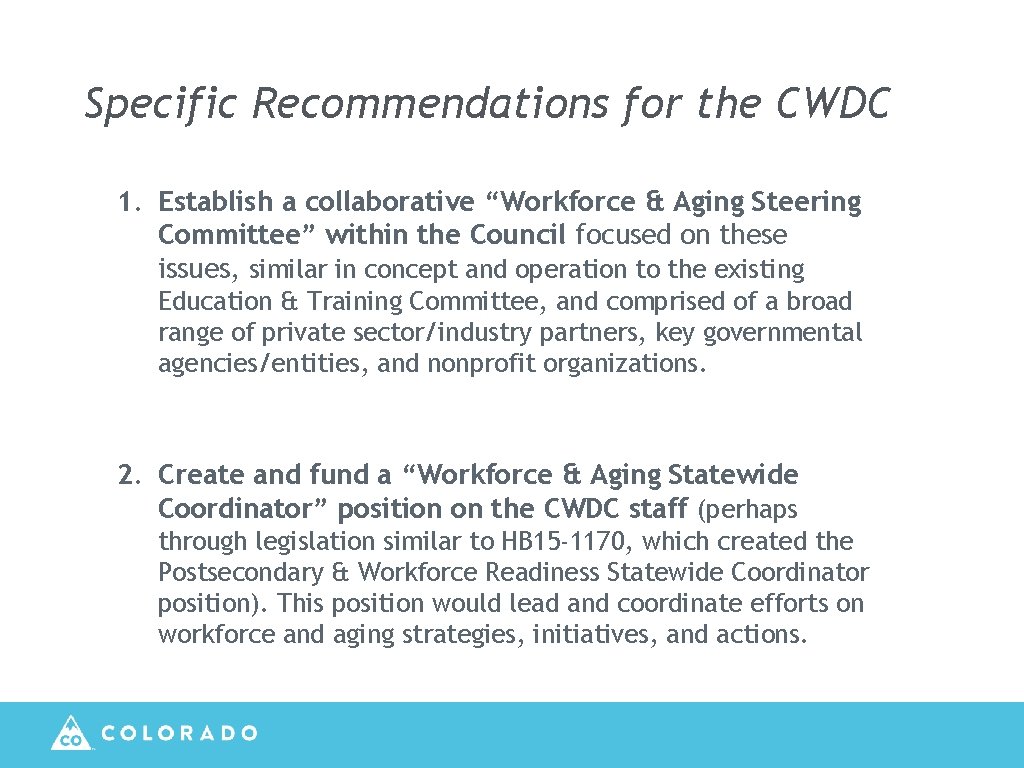
Specific Recommendations for the CWDC 1. Establish a collaborative “Workforce & Aging Steering Committee” within the Council focused on these issues, similar in concept and operation to the existing Education & Training Committee, and comprised of a broad range of private sector/industry partners, key governmental agencies/entities, and nonprofit organizations. 2. Create and fund a “Workforce & Aging Statewide Coordinator” position on the CWDC staff (perhaps through legislation similar to HB 15 -1170, which created the Postsecondary & Workforce Readiness Statewide Coordinator position). This position would lead and coordinate efforts on workforce and aging strategies, initiatives, and actions.