
Agile or lean High Lean works best in
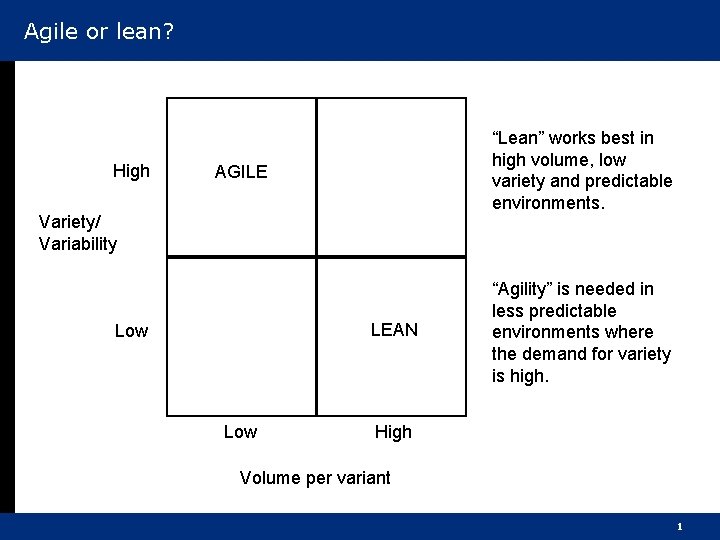
Agile or lean? High “Lean” works best in high volume, low variety and predictable environments. AGILE Variety/ Variability LEAN Low “Agility” is needed in less predictable environments where the demand for variety is high. High Volume per variant 1
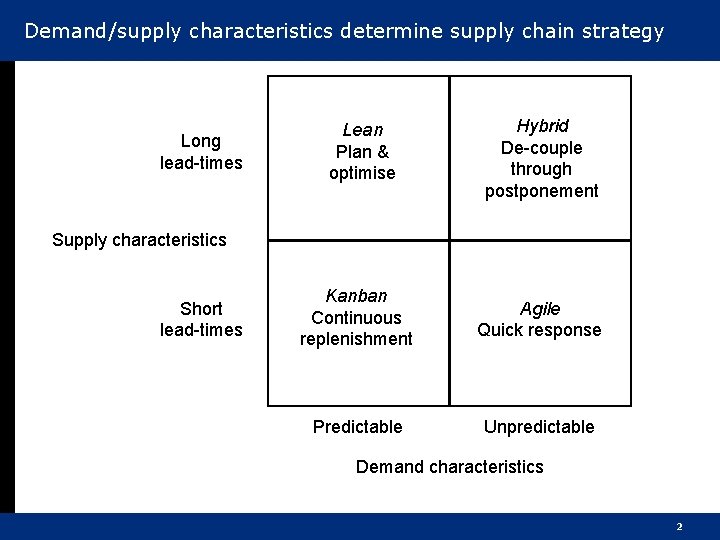
Demand/supply characteristics determine supply chain strategy Long lead-times Lean Plan & optimise Hybrid De-couple through postponement Supply characteristics Short lead-times Kanban Continuous replenishment Agile Quick response Predictable Unpredictable Demand characteristics 2
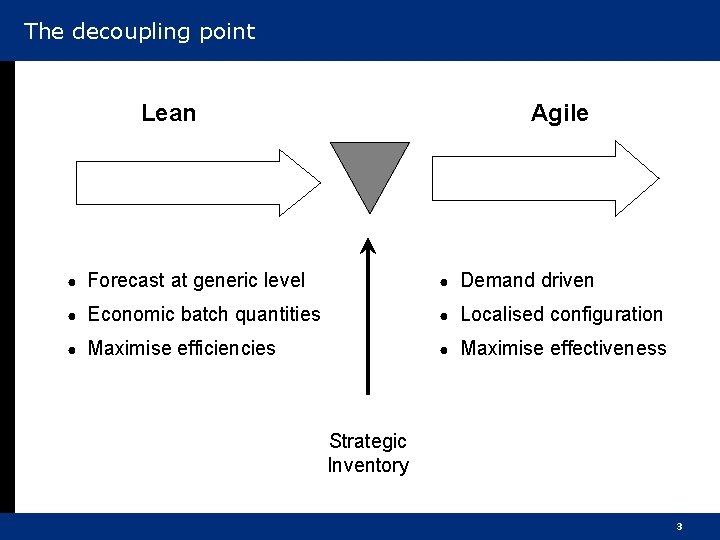
The decoupling point Lean Agile ● Forecast at generic level ● Demand driven ● Economic batch quantities ● Localised configuration ● Maximise efficiencies ● Maximise effectiveness Strategic Inventory 3
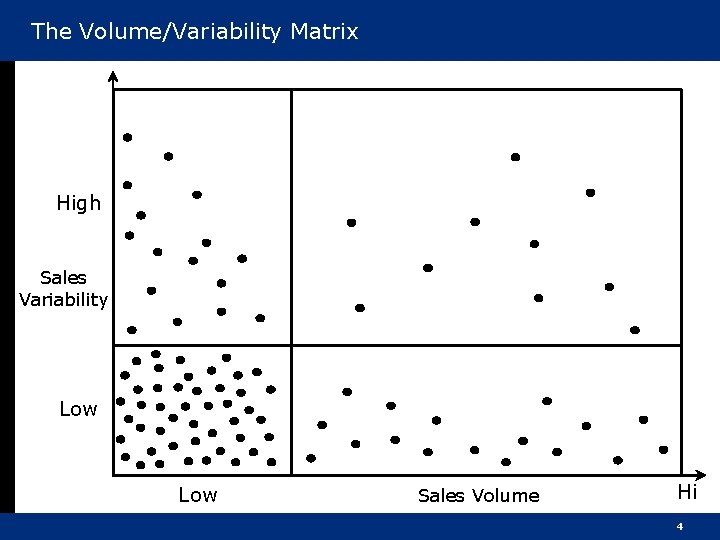
The Volume/Variability Matrix High Sales Variability Low Sales Volume Hi 4
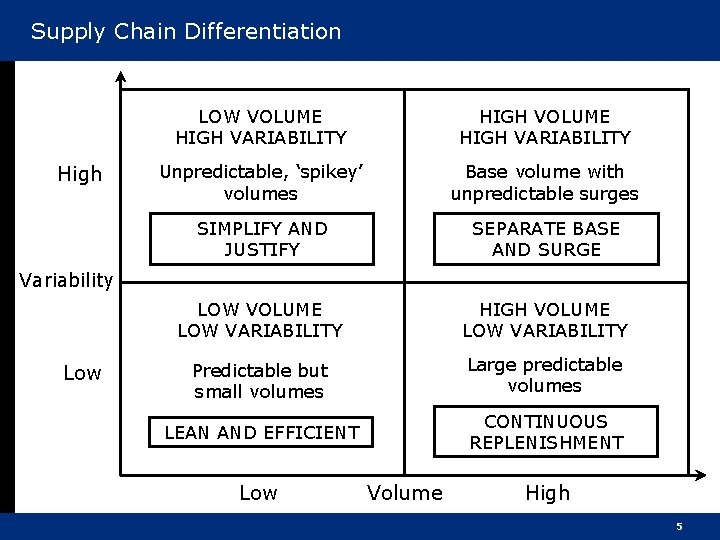
Supply Chain Differentiation High LOW VOLUME HIGH VARIABILITY HIGH VOLUME HIGH VARIABILITY Unpredictable, ‘spikey’ volumes Base volume with unpredictable surges SIMPLIFY AND JUSTIFY SEPARATE BASE AND SURGE LOW VOLUME LOW VARIABILITY HIGH VOLUME LOW VARIABILITY Predictable but small volumes Large predictable volumes LEAN AND EFFICIENT CONTINUOUS REPLENISHMENT Variability Low Volume High 5
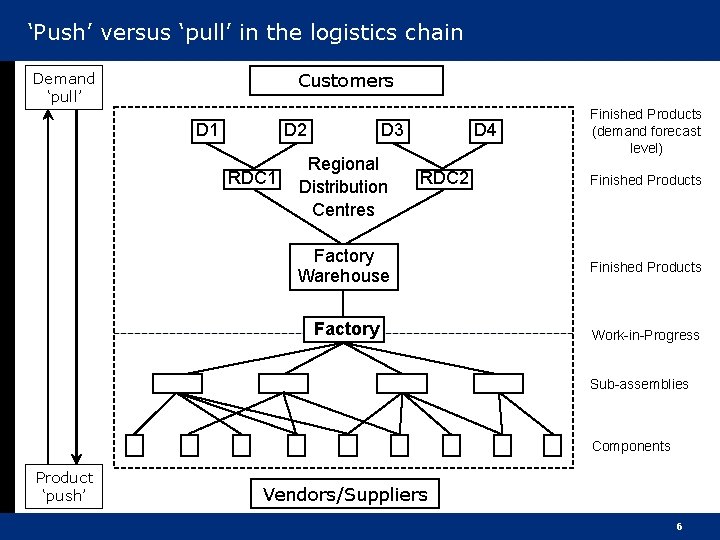
‘Push’ versus ‘pull’ in the logistics chain Customers Demand ‘pull’ D 1 D 2 RDC 1 D 3 Regional Distribution Centres D 4 RDC 2 Finished Products (demand forecast level) Finished Products Factory Warehouse Finished Products Factory Work-in-Progress Sub-assemblies Components Product ‘push’ Vendors/Suppliers 6
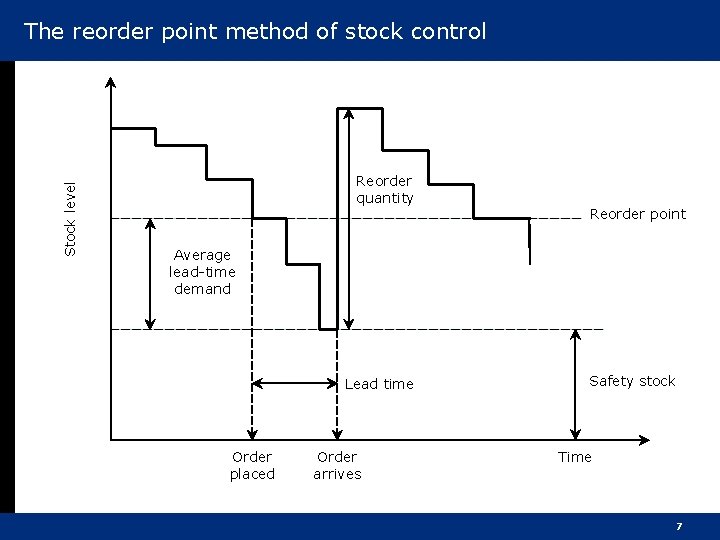
Stock level The reorder point method of stock control Reorder quantity Reorder point Average lead-time demand Lead time Order placed Order arrives Safety stock Time 7
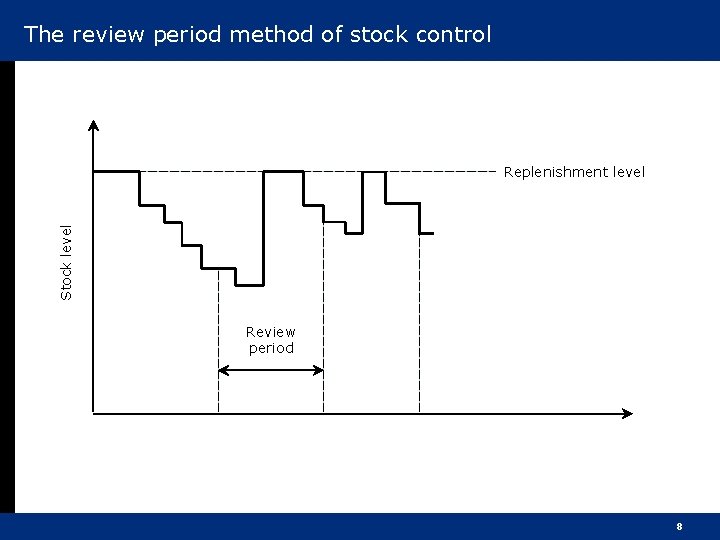
The review period method of stock control Stock level Replenishment level Review period 8
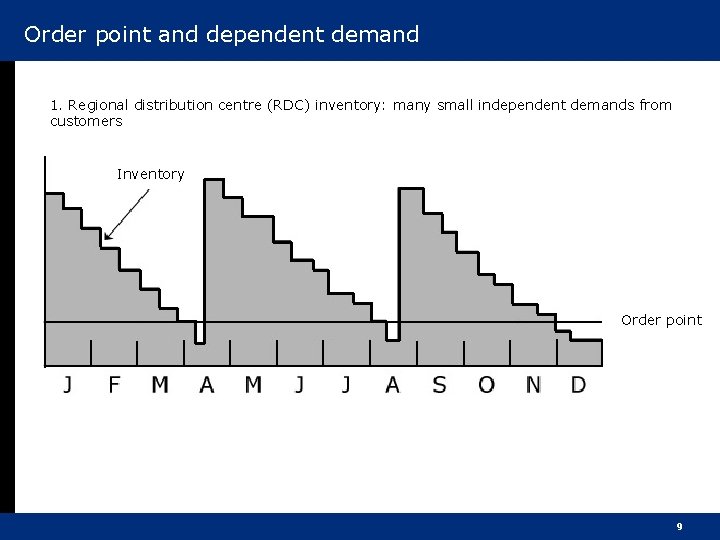
Order point and dependent demand 1. Regional distribution centre (RDC) inventory: many small independent demands from customers Inventory Order point 9
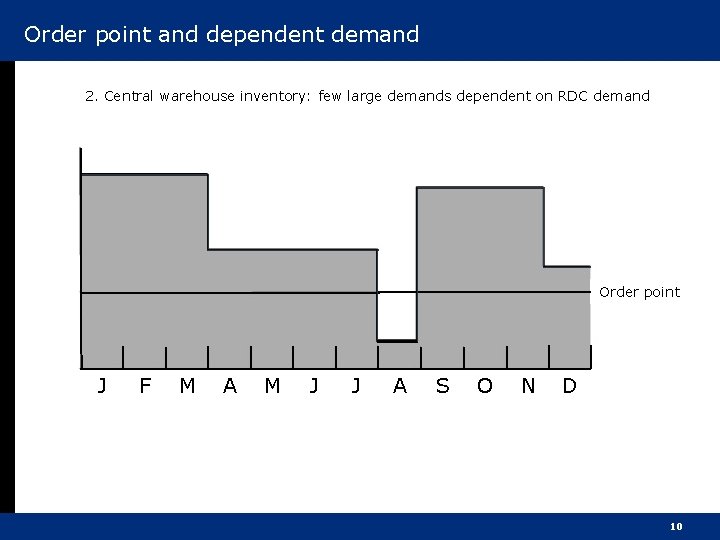
Order point and dependent demand 2. Central warehouse inventory: few large demands dependent on RDC demand Order point J F M A M J J A S O N D 10
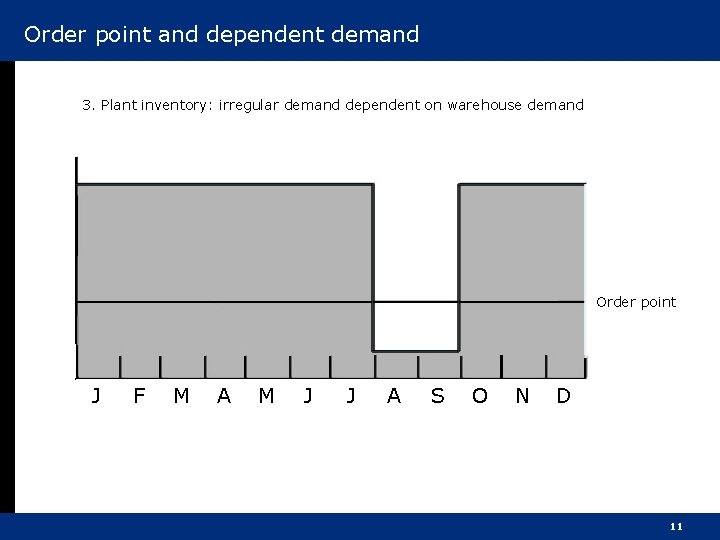
Order point and dependent demand 3. Plant inventory: irregular demand dependent on warehouse demand Order point J F M A M J J A S O N D 11
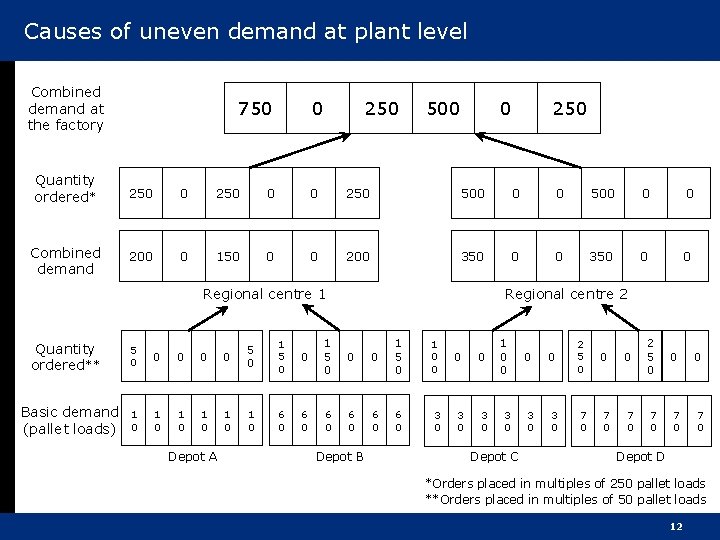
Causes of uneven demand at plant level Combined demand at the factory 750 0 250 500 0 250 Quantity ordered* 250 0 0 250 500 0 0 Combined demand 200 0 150 0 0 200 350 0 0 Regional centre 1 Quantity ordered** Basic demand (pallet loads) 5 0 0 1 0 1 0 Depot A 0 5 0 1 0 1 0 6 0 Regional centre 2 0 1 5 0 0 6 0 6 0 Depot B 0 1 5 0 1 0 0 0 6 0 3 0 0 1 0 0 0 3 0 3 0 Depot C 0 2 5 0 0 3 0 7 0 0 2 5 0 0 0 7 0 7 0 Depot D *Orders placed in multiples of 250 pallet loads **Orders placed in multiples of 50 pallet loads 12
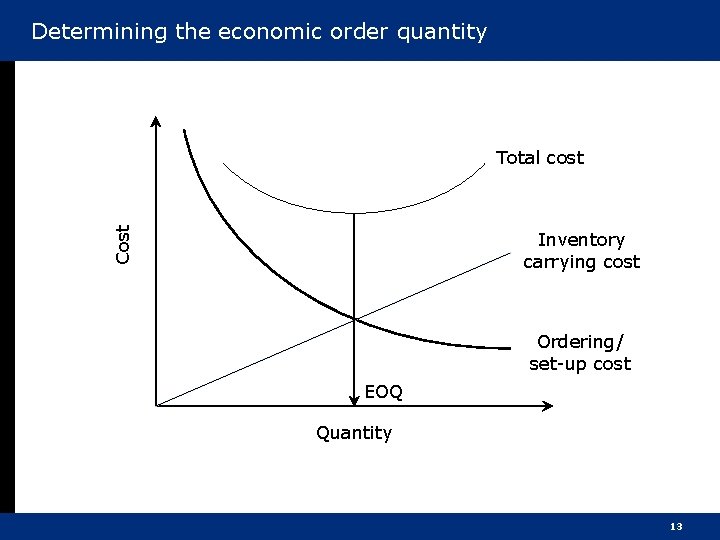
Determining the economic order quantity Cost Total cost Inventory carrying cost Ordering/ set-up cost EOQ Quantity 13
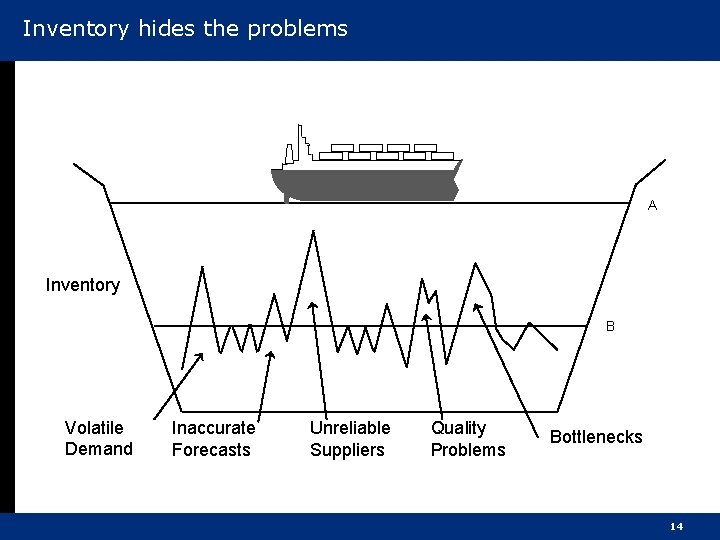
Inventory hides the problems A Inventory B Volatile Demand Inaccurate Forecasts Unreliable Suppliers Quality Problems Bottlenecks 14
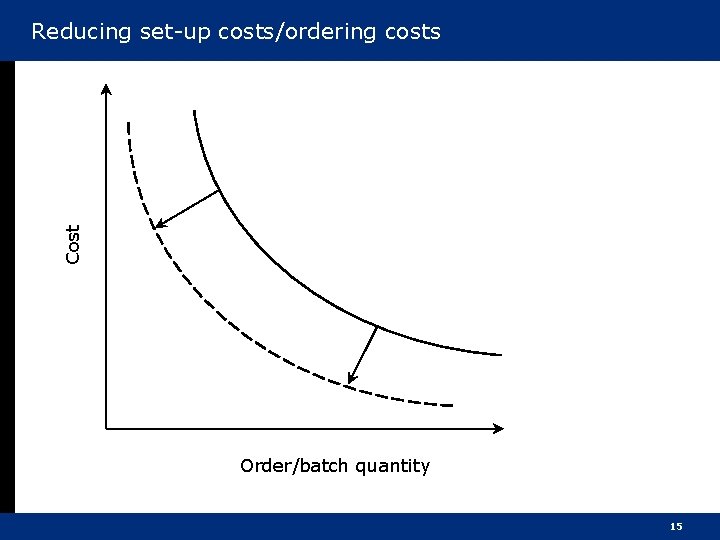
Cost Reducing set-up costs/ordering costs Order/batch quantity 15
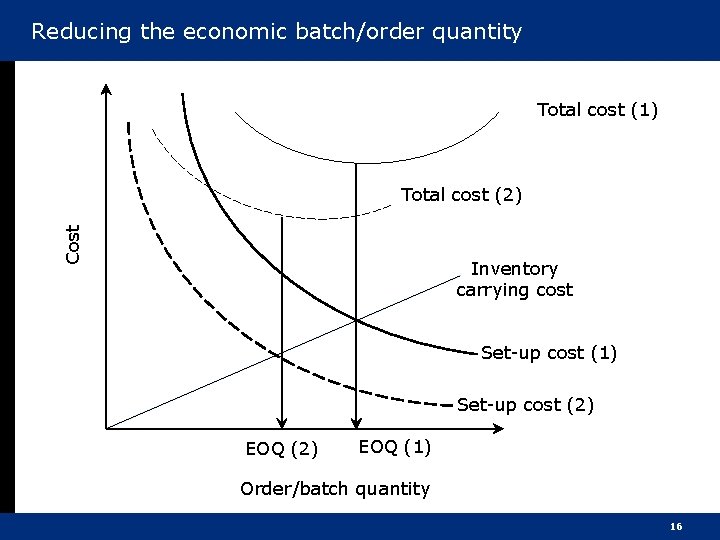
Reducing the economic batch/order quantity Total cost (1) Cost Total cost (2) Inventory carrying cost Set-up cost (1) Set-up cost (2) EOQ (1) Order/batch quantity 16
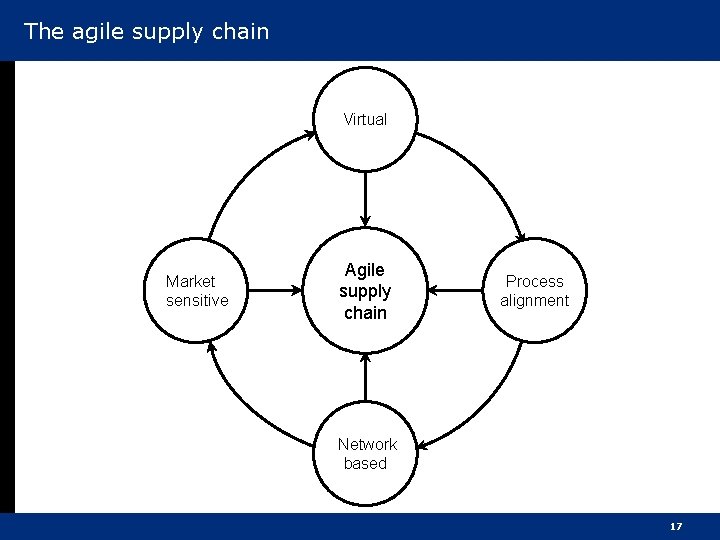
The agile supply chain Virtual Market sensitive Agile supply chain Process alignment Network based 17
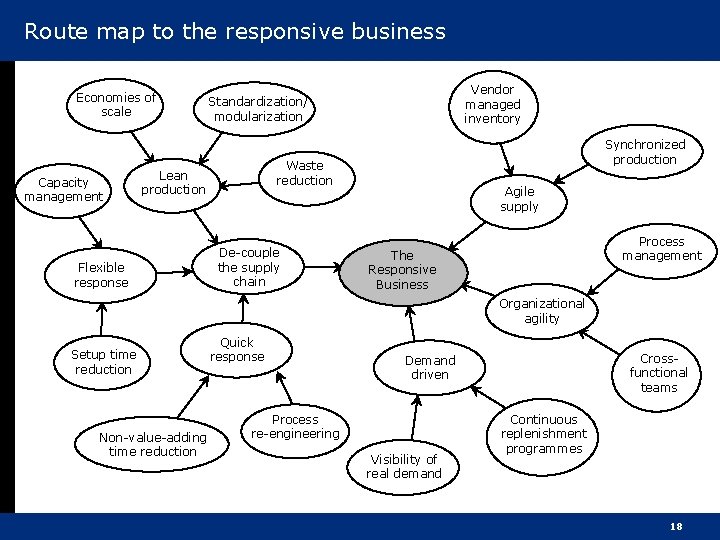
Route map to the responsive business Economies of scale Capacity management Synchronized production Waste reduction Lean production Flexible response Vendor managed inventory Standardization/ modularization De-couple the supply chain Agile supply Process management The Responsive Business Organizational agility Setup time reduction Non-value-adding time reduction Quick response Crossfunctional teams Demand driven Process re-engineering Visibility of real demand Continuous replenishment programmes 18
- Slides: 18