
Agile Cambridge 2017 Square pegs in round holes
Agile Cambridge 2017 Square pegs in round holes: beyond pre-canned Agile Carlo Volpi Mary-Ann Johnson
Objective of this session Share our experience in iteratively designing our own Lean/Agile processes for our context
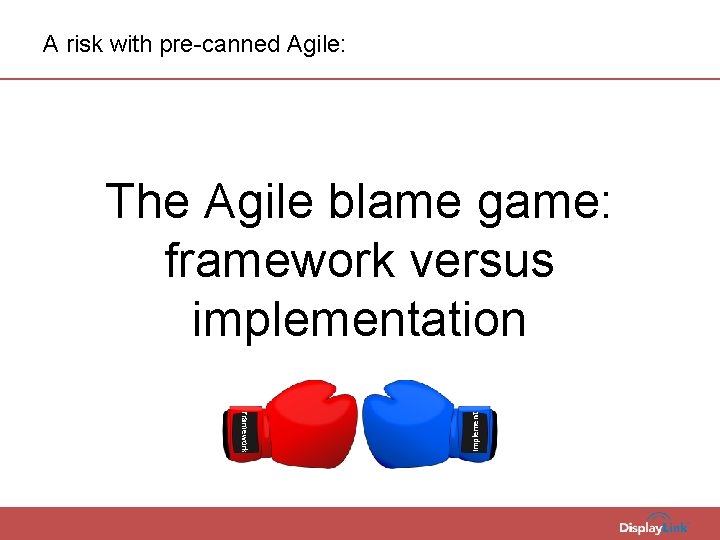
A risk with pre-canned Agile: Framework Implement The Agile blame game: framework versus implementation
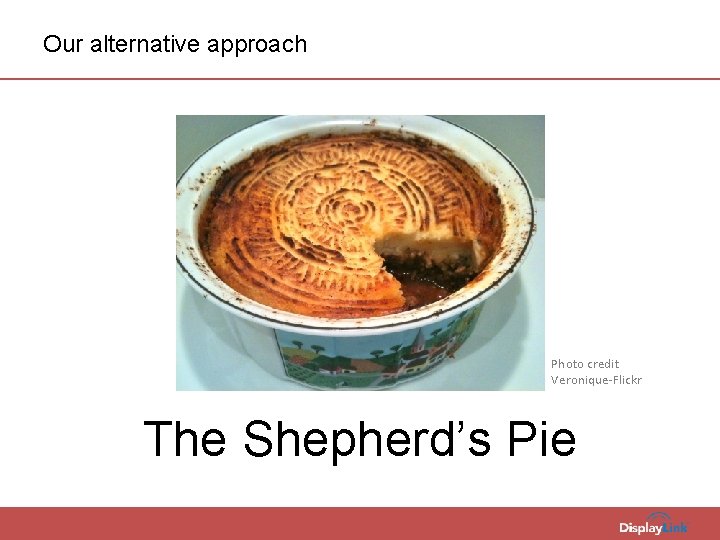
Our alternative approach Photo credit Veronique-Flickr The Shepherd’s Pie
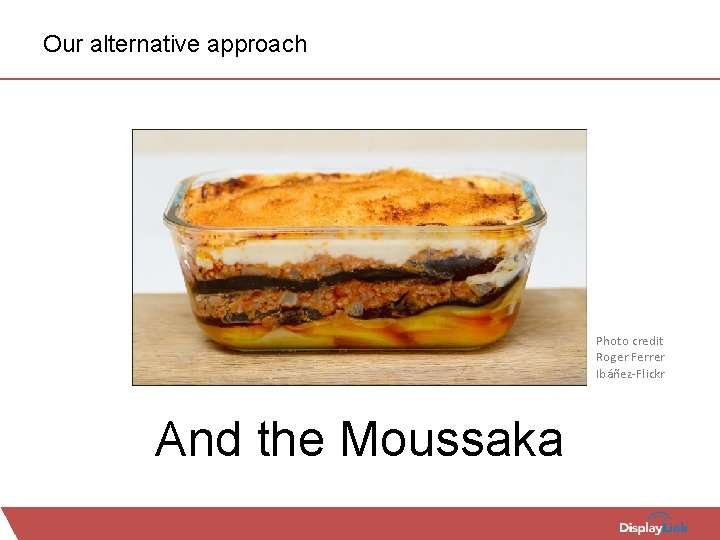
Our alternative approach Photo credit Roger Ferrer Ibáñez-Flickr And the Moussaka
Our context - not the typical SW shop? Display. Link Fabless semiconductor company
Display. Link We develop integrated circuits, hardware, embedded software and PC software
While working in our context we have come to value: Universal principles over pre-canned frameworks Research and experimentation over certainty Constructive criticism over consensus Variety and empowerment over uniformity That is, while there is value in the items on the right, we value the items on the left more.
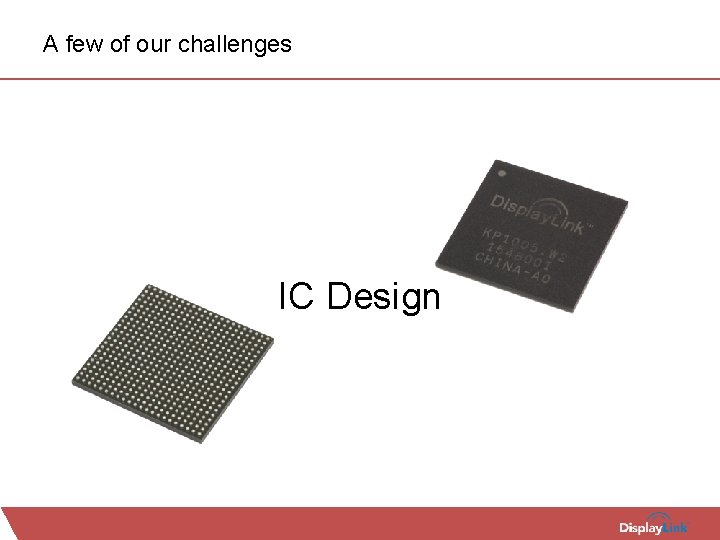
A few of our challenges IC Design
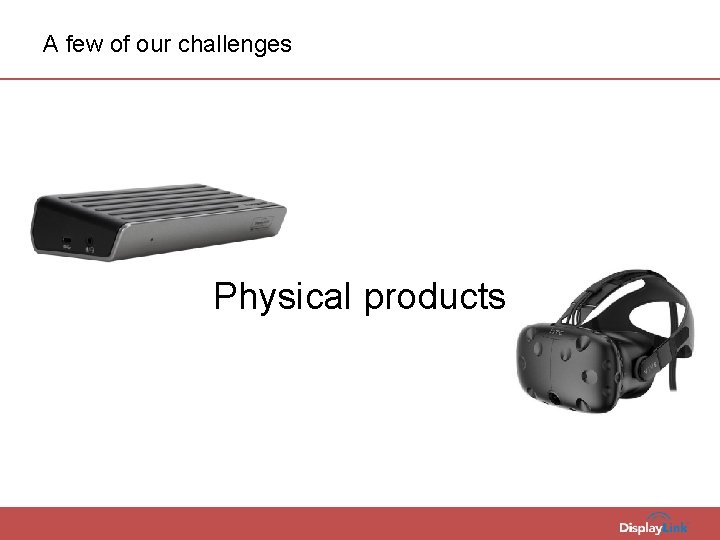
A few of our challenges Physical products
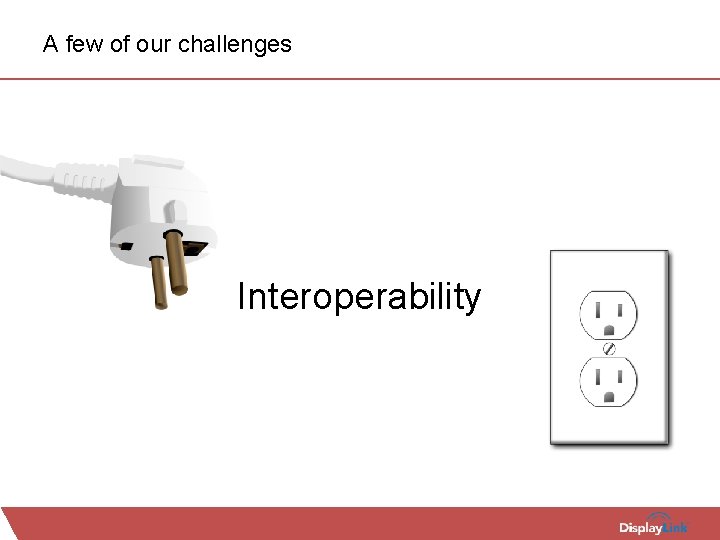
A few of our challenges Interoperability
A few of our challenges Highly technical, complex backlogs
A few of our challenges ? ? ? Novel, potentially unfeasible features ? ? ?
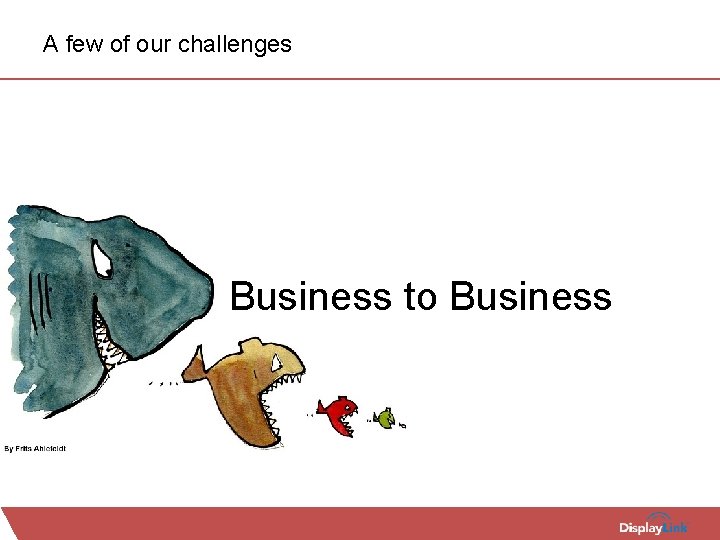
A few of our challenges Business to Business
Going beyond a single pre-canned solution What we have tried Photograph: Muppets Holding Company, LLC
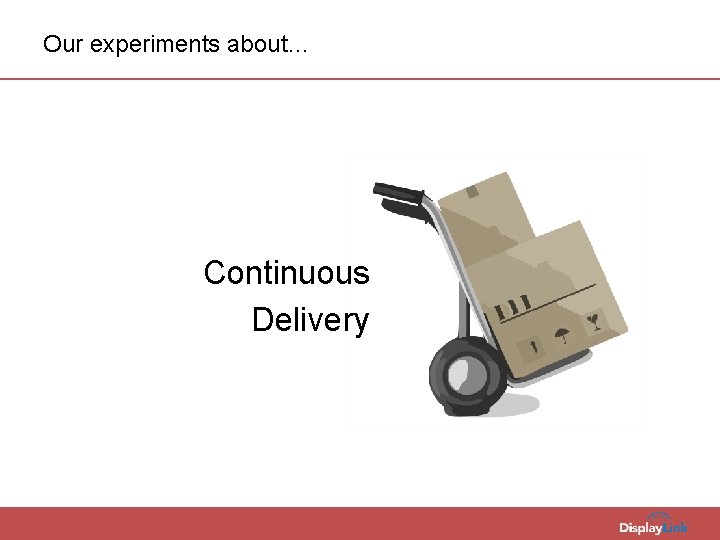
Our experiments about… Continuous Delivery
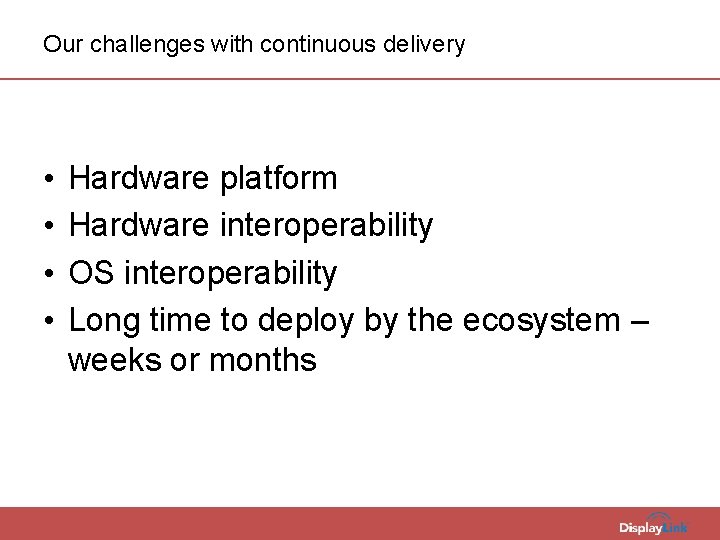
Our challenges with continuous delivery • • Hardware platform Hardware interoperability OS interoperability Long time to deploy by the ecosystem – weeks or months
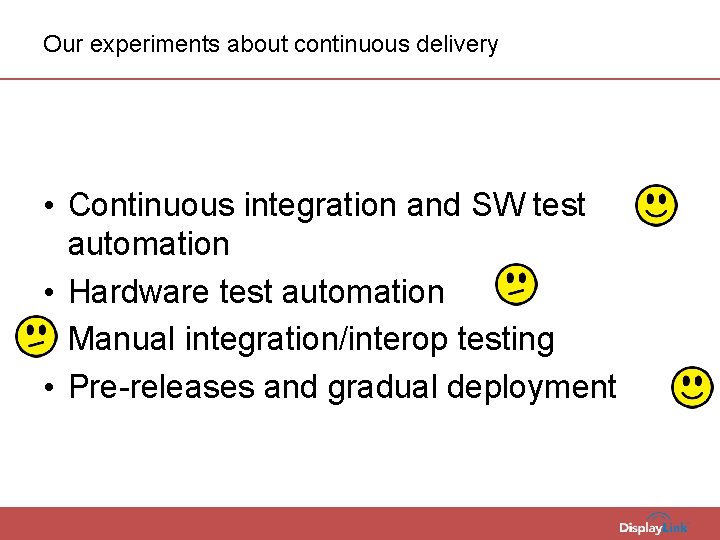
Our experiments about continuous delivery • Continuous integration and SW test automation • Hardware test automation • Manual integration/interop testing • Pre-releases and gradual deployment
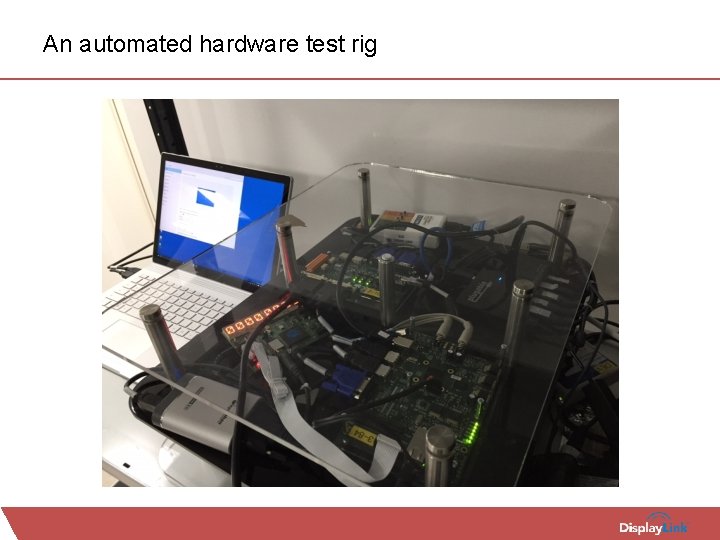
An automated hardware test rig
Our experiments about… Product Ownership
Our challenges with product ownership • Highly technical backlogs • Customers across timezones • Technical prioritisation = full-time job • Customer management = full-time job
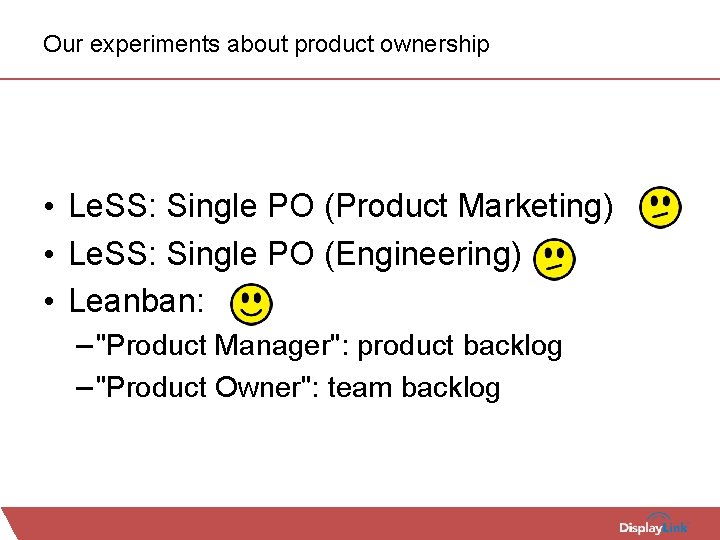
Our experiments about product ownership • Le. SS: Single PO (Product Marketing) • Le. SS: Single PO (Engineering) • Leanban: – "Product Manager": product backlog – "Product Owner": team backlog
Our experiments about… ! ! ! High discovery rate ! ! !
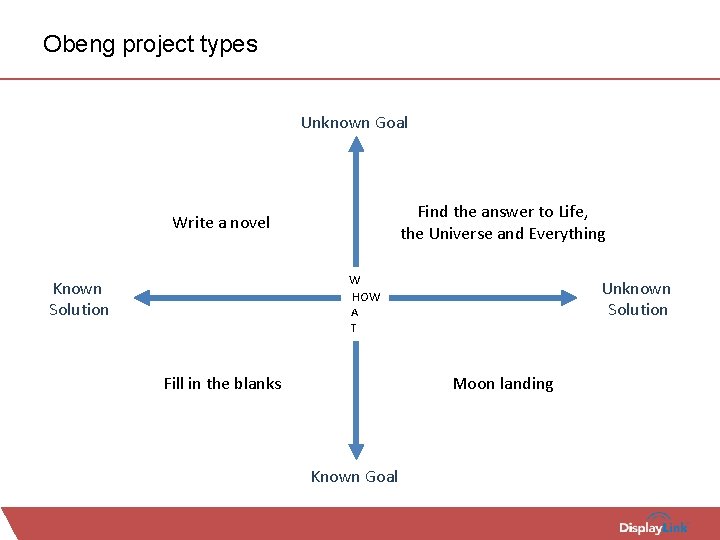
Obeng project types Unknown Goal Find the answer to Life, the Universe and Everything Write a novel W H HOW A T Known Solution Fill in the blanks Unknown Solution Moon landing Known Goal
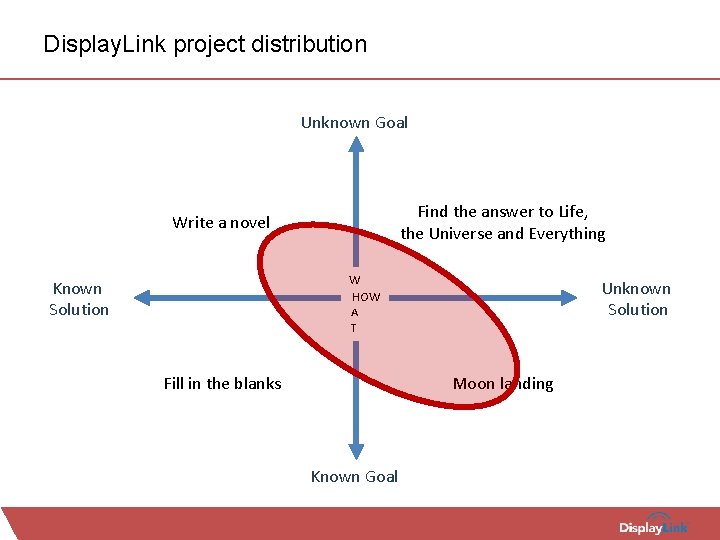
Display. Link project distribution Unknown Goal Find the answer to Life, the Universe and Everything Write a novel W H HOW A T Known Solution Fill in the blanks Unknown Solution Moon landing Known Goal
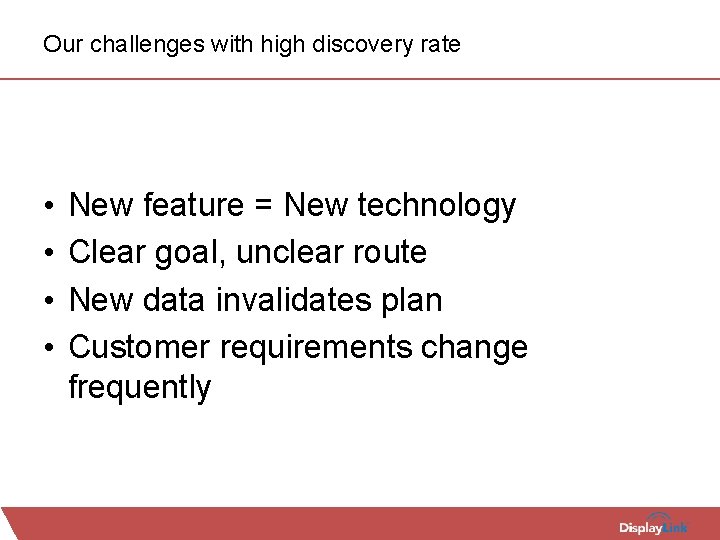
Our challenges with high discovery rate • • New feature = New technology Clear goal, unclear route New data invalidates plan Customer requirements change frequently
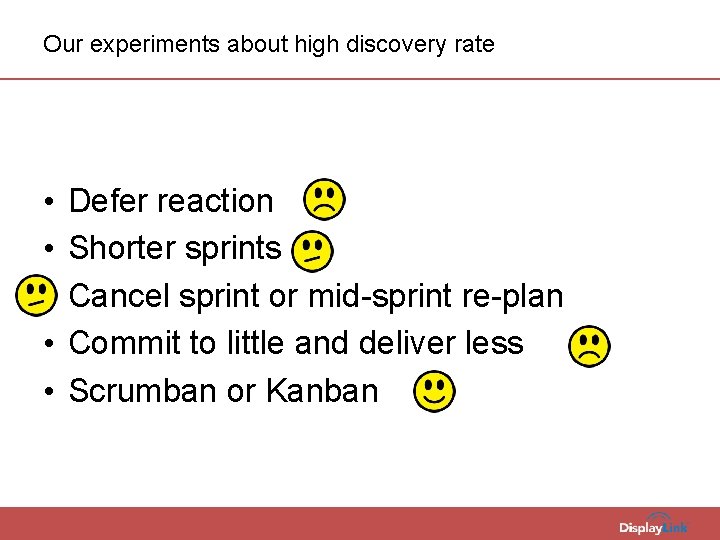
Our experiments about high discovery rate • • • Defer reaction Shorter sprints Cancel sprint or mid-sprint re-plan Commit to little and deliver less Scrumban or Kanban
Our experiments about… ? ? ? Feature start and analysis ? ? ?
Our challenges with feature start and analysis • • Feasibility uncertain Prolonged high rate of discovery Specific skill set required Past learning applies poorly
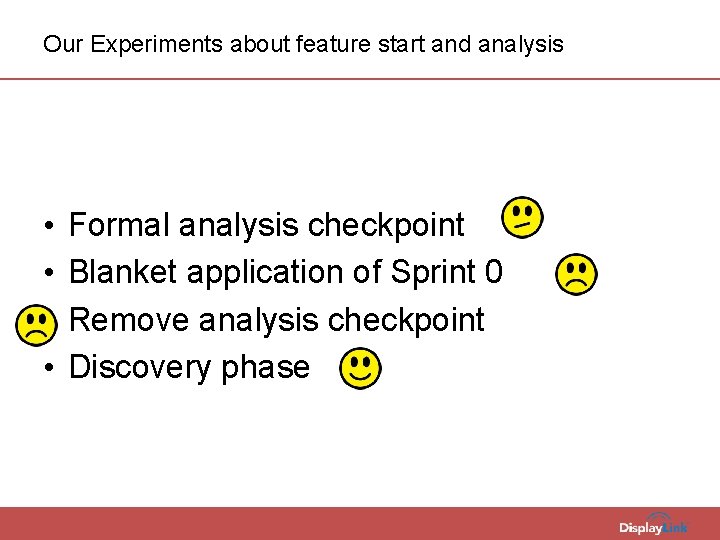
Our Experiments about feature start and analysis • • Formal analysis checkpoint Blanket application of Sprint 0 Remove analysis checkpoint Discovery phase
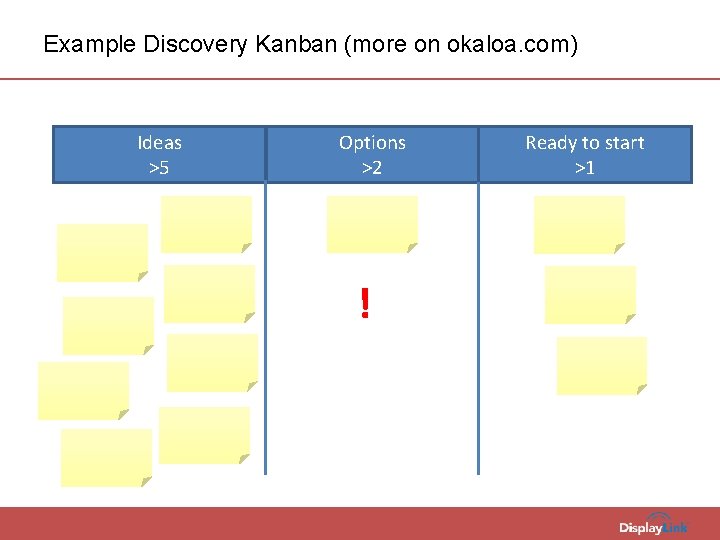
Example Discovery Kanban (more on okaloa. com) Ideas >5 Options >2 ! Ready to start >1
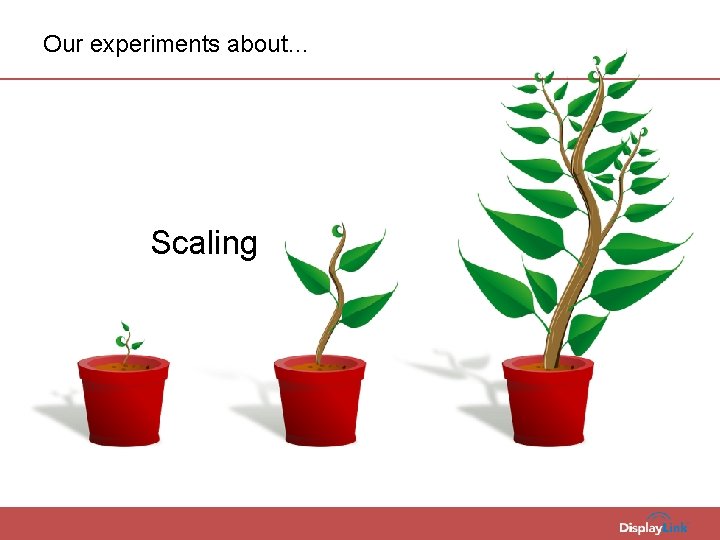
Our experiments about… Scaling
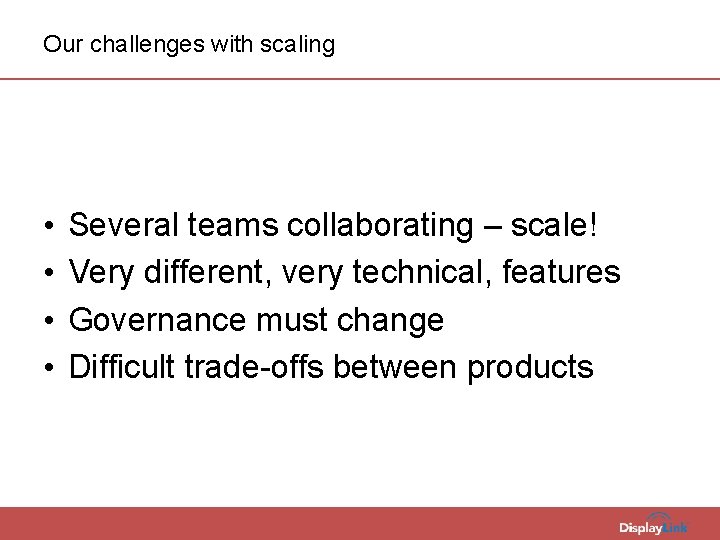
Our challenges with scaling • • Several teams collaborating – scale! Very different, very technical, features Governance must change Difficult trade-offs between products
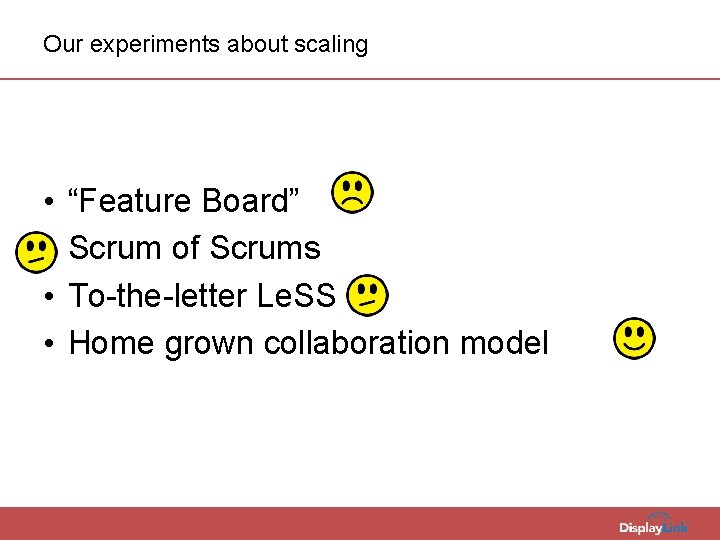
Our experiments about scaling • • “Feature Board” Scrum of Scrums To-the-letter Le. SS Home grown collaboration model
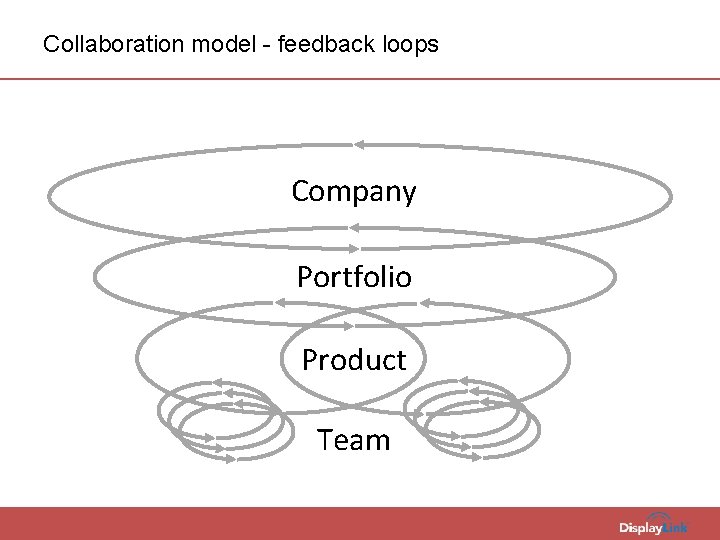
Collaboration model - feedback loops Company Portfolio Product Team
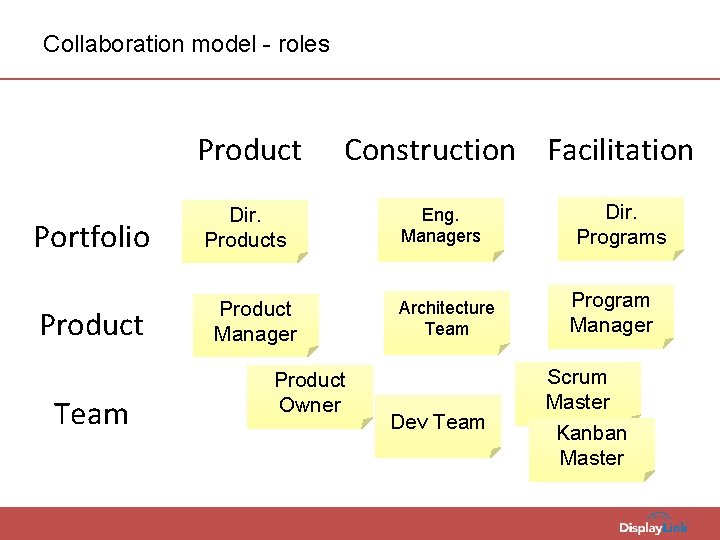
Collaboration model - roles Product Portfolio Product Team Construction Facilitation Dir. Products Product Manager Product Owner Eng. Managers Architecture Team Dev Team Dir. Programs Program Manager Scrum Master Kanban Master
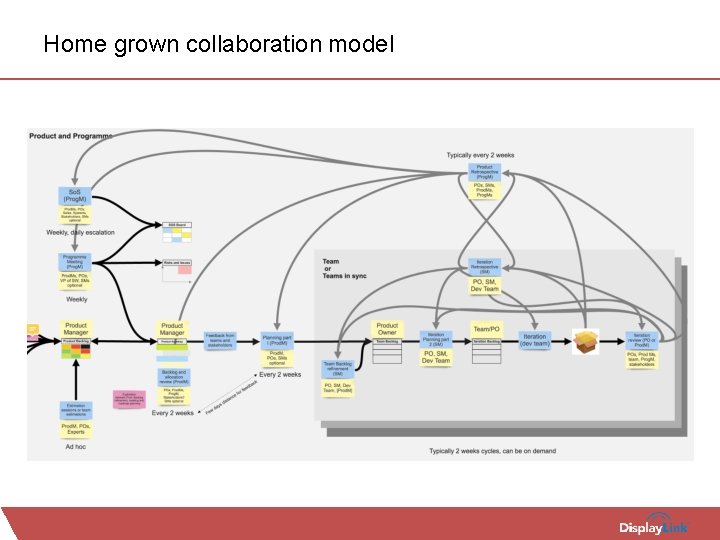
Home grown collaboration model
The steps we recommend to create your own framework • Find the right people • Modelling & transparency • Start the feedback cycle(s). . .
Feedback loop activities • Improve the model • Identify areas of research or innovation • Run safe-to-fail experiments • Learn from experiments
Why Agile? “It’s all about learning” David Hargreaves, Display. Link’s VP of Software
Many thanks to Mike Doris Simon Lawrence Seb Matysik all the Display. Link teams the Agile and Lean communities
First meetup Thursday 26 th October 19: 00@ Display. Link, 140 Cambridge Science Park 42
- Slides: 42