
AGGREGATES DEFINITION Inert or chemically inactive materials which
- Slides: 30
AGGREGATES
DEFINITION: Inert or chemically inactive materials which when bonded together with cement forms concrete
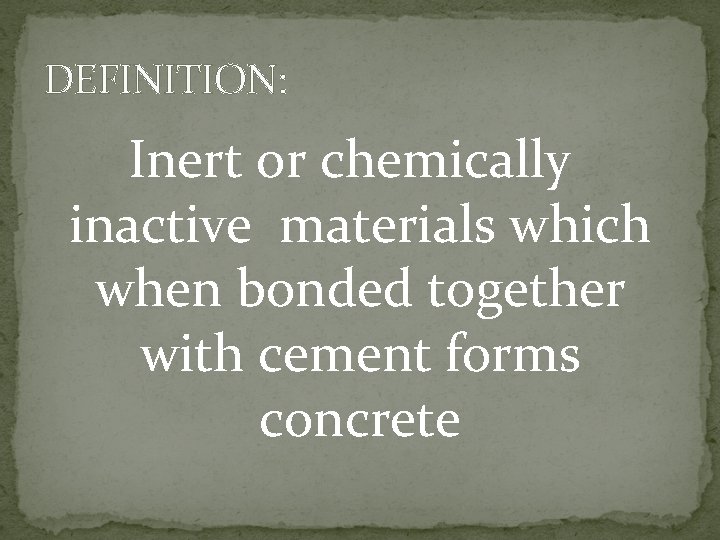
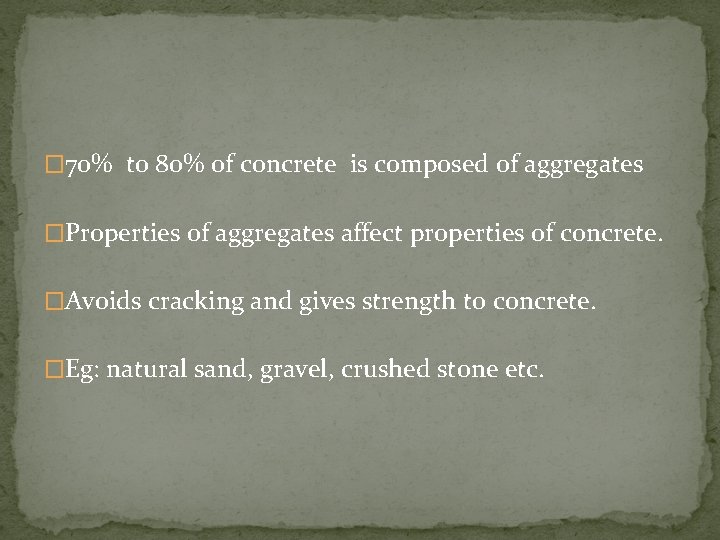
� 70% to 80% of concrete is composed of aggregates �Properties of aggregates affect properties of concrete. �Avoids cracking and gives strength to concrete. �Eg: natural sand, gravel, crushed stone etc.
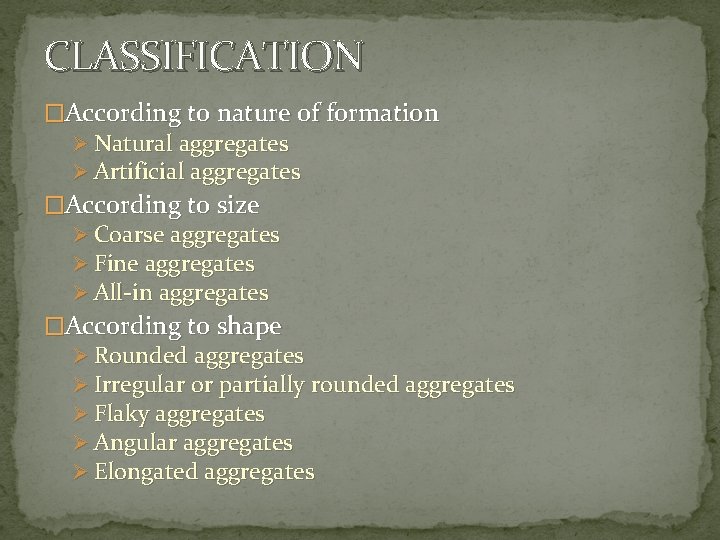
CLASSIFICATION �According to nature of formation Ø Natural aggregates Ø Artificial aggregates �According to size Ø Coarse aggregates Ø Fine aggregates Ø All-in aggregates �According to shape Ø Rounded aggregates Ø Irregular or partially rounded aggregates Ø Flaky aggregates Ø Angular aggregates Ø Elongated aggregates
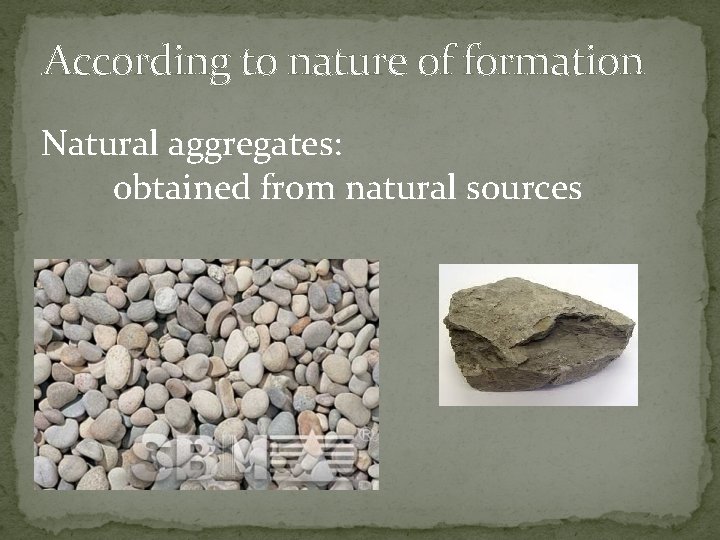
According to nature of formation Natural aggregates: obtained from natural sources
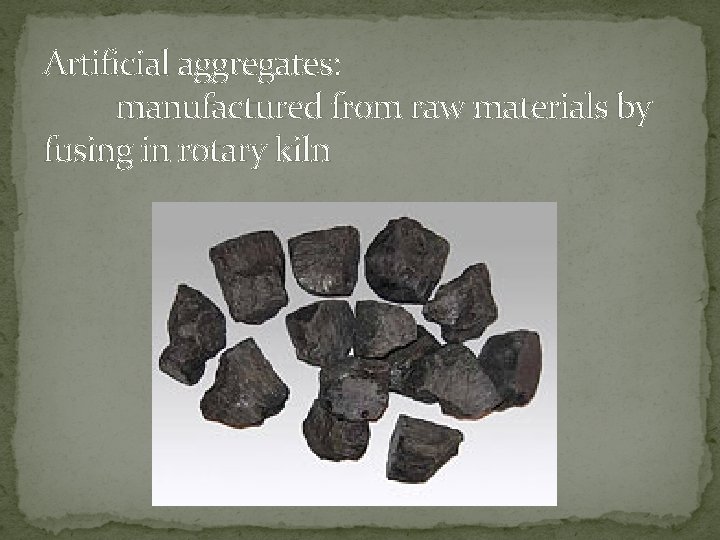
Artificial aggregates: manufactured from raw materials by fusing in rotary kiln
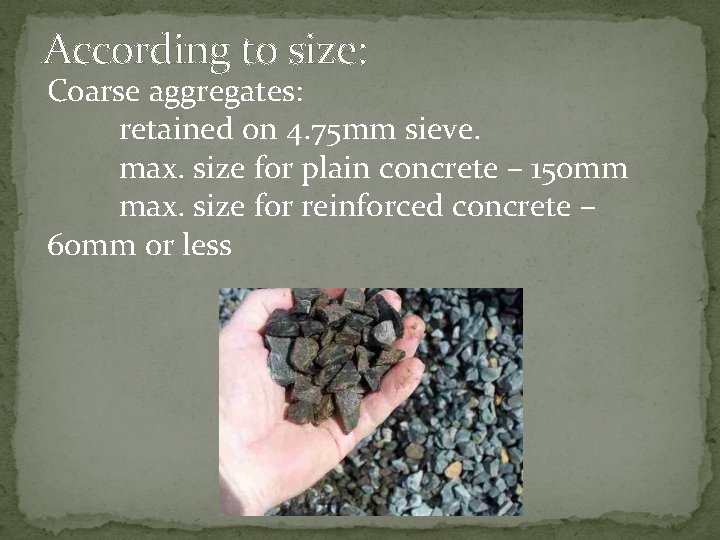
According to size: Coarse aggregates: retained on 4. 75 mm sieve. max. size for plain concrete – 150 mm max. size for reinforced concrete – 60 mm or less
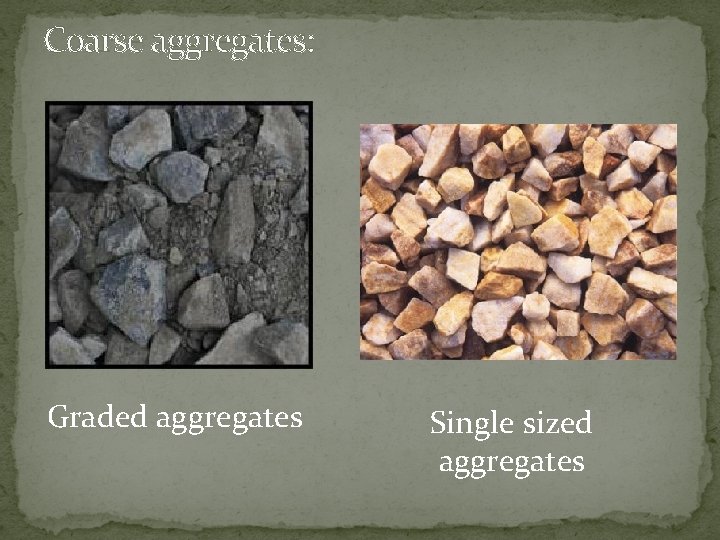
Coarse aggregates: Graded aggregates Single sized aggregates
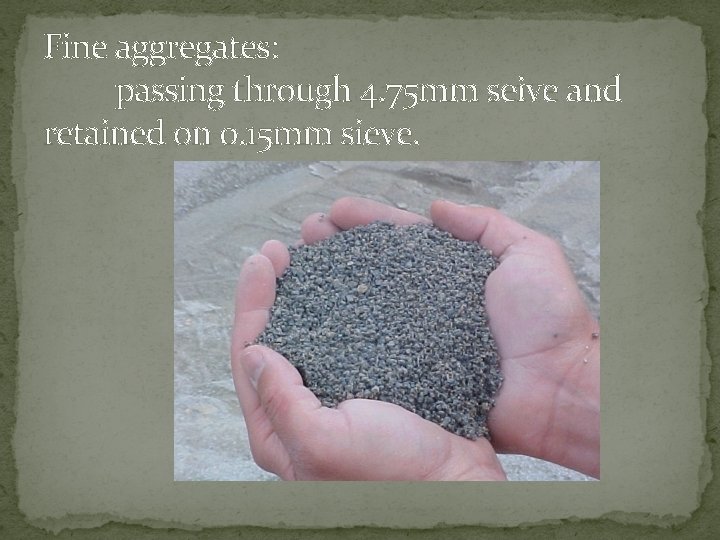
Fine aggregates: passing through 4. 75 mm seive and retained on 0. 15 mm sieve.
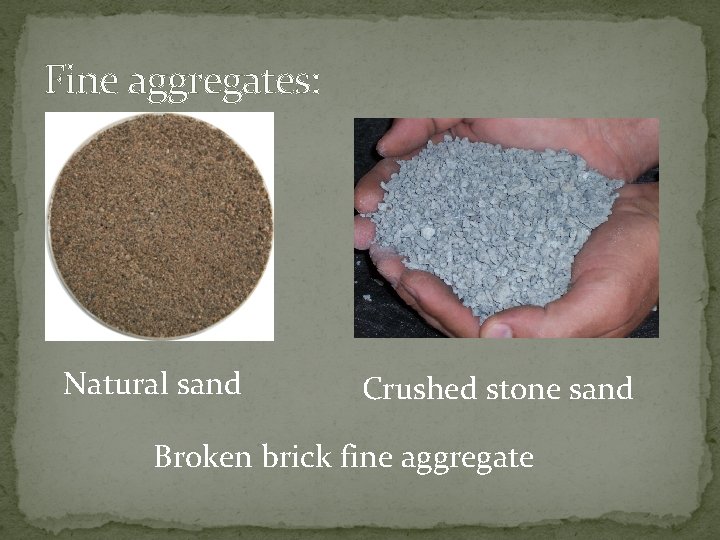
Fine aggregates: Natural sand Crushed stone sand Broken brick fine aggregate
All – in aggregates �Comes from pit or river bed �Used without seperating into different sizes. �Contains fine and coarse aggregates �Used for unimportant works
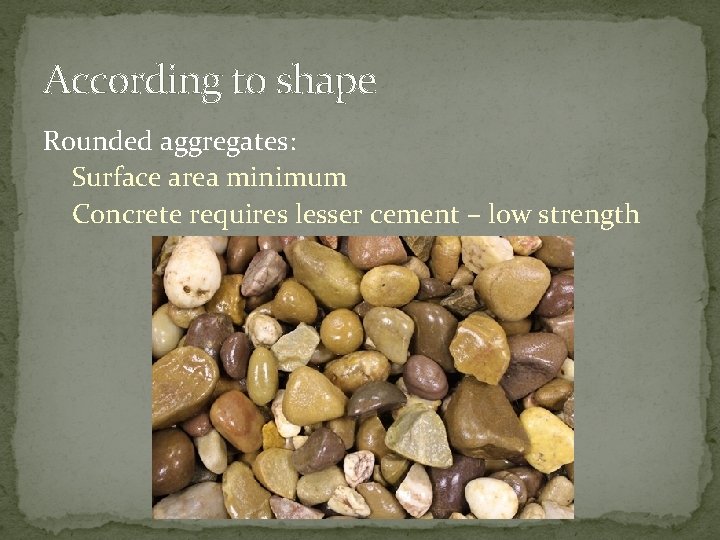
According to shape Rounded aggregates: Surface area minimum Concrete requires lesser cement – low strength
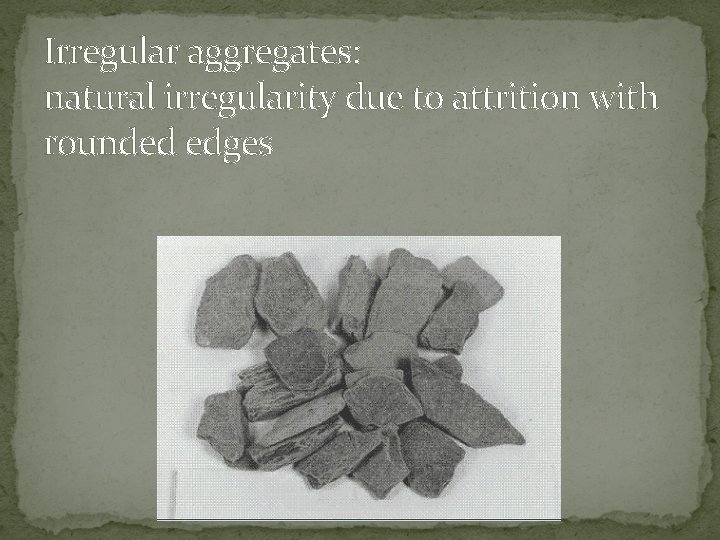
Irregular aggregates: natural irregularity due to attrition with rounded edges
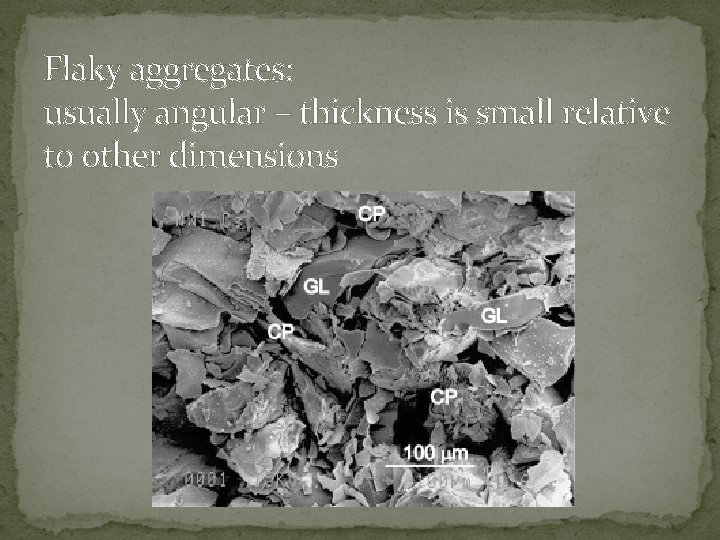
Flaky aggregates: usually angular – thickness is small relative to other dimensions
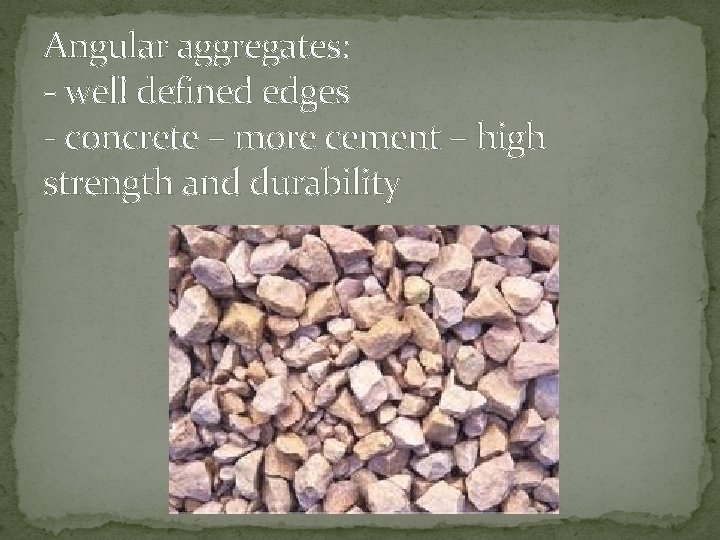
Angular aggregates: - well defined edges - concrete – more cement – high strength and durability
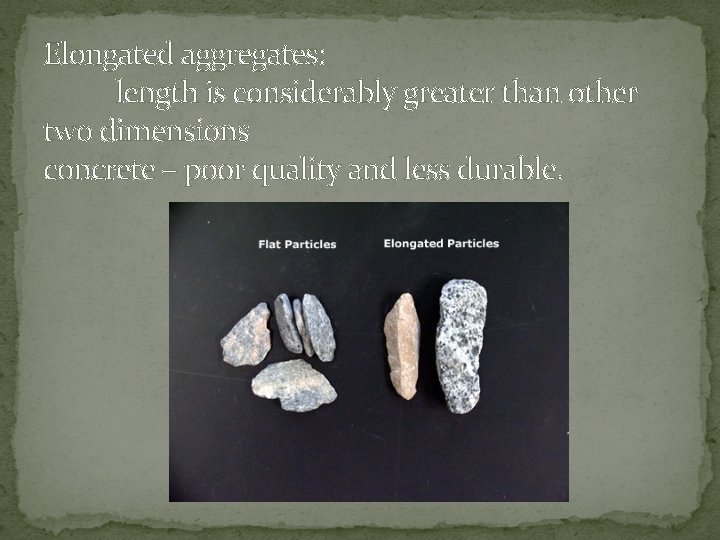
Elongated aggregates: length is considerably greater than other two dimensions concrete – poor quality and less durable.
Sources of aggregates: �Pit Sand �River Sand �Sea Sand
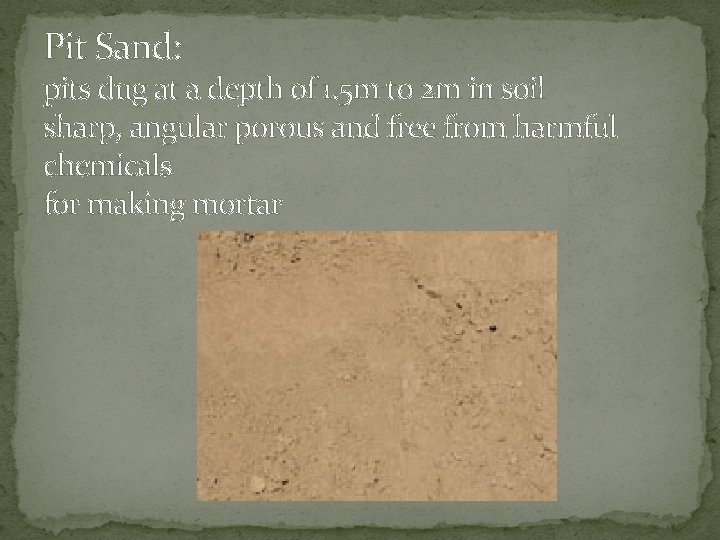
Pit Sand: pits dug at a depth of 1. 5 m to 2 m in soil sharp, angular porous and free from harmful chemicals for making mortar
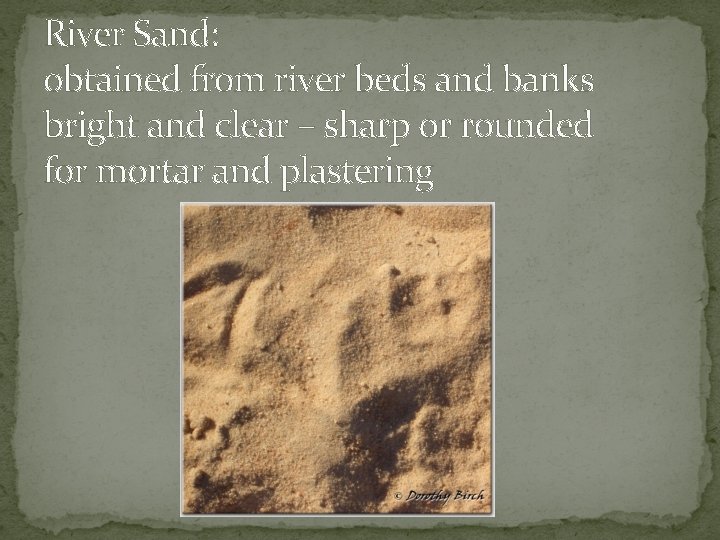
River Sand: obtained from river beds and banks bright and clear – sharp or rounded for mortar and plastering
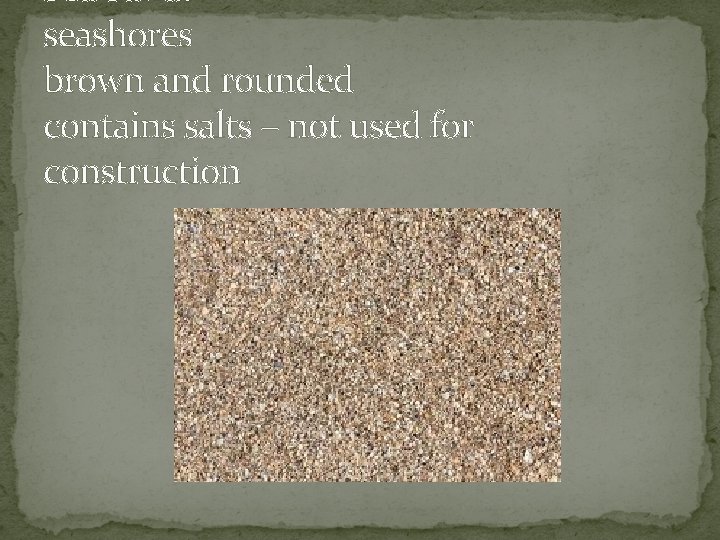
Sea Sand: seashores brown and rounded contains salts – not used for construction
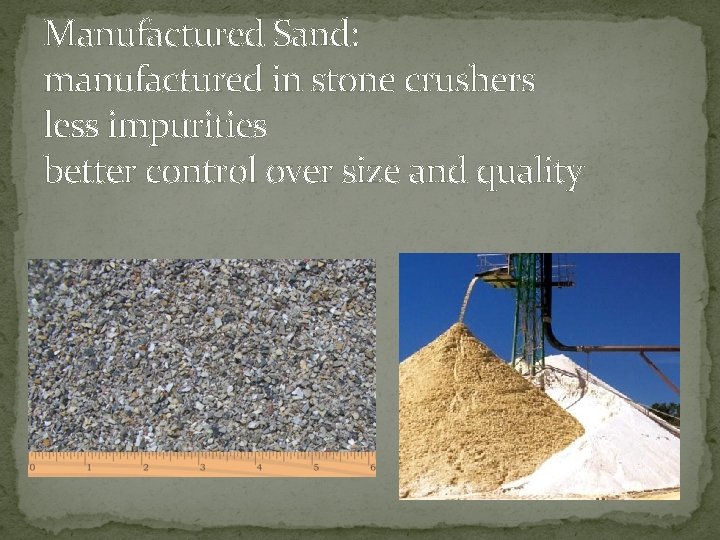
Manufactured Sand: manufactured in stone crushers less impurities better control over size and quality
Requirements: �Hard, strong, durable �Should not react with cement or steel �Angular and rough surface �Free from organic substances �Contains stone gravels and sand or in various combinations
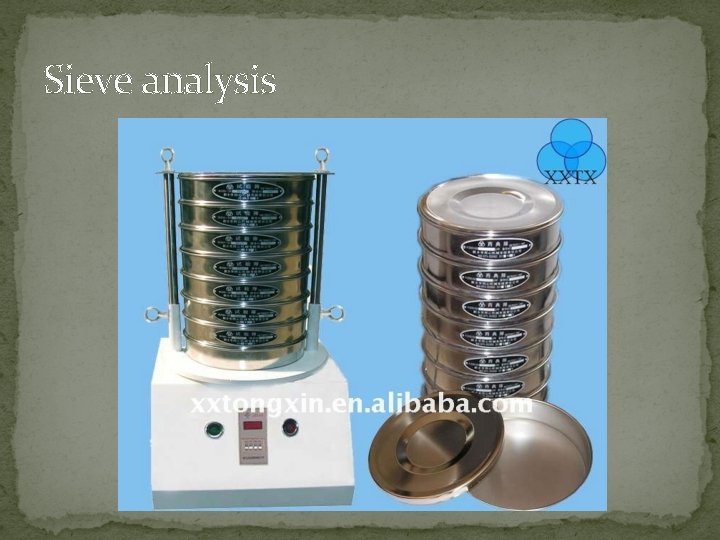
Grading of aggregates �Representation of particle size in a sample of aggregates �Good grading – all standard sizes in required proportions �Sieve analysis – determination of proportions of particles in an aggregate by seperation on sieves
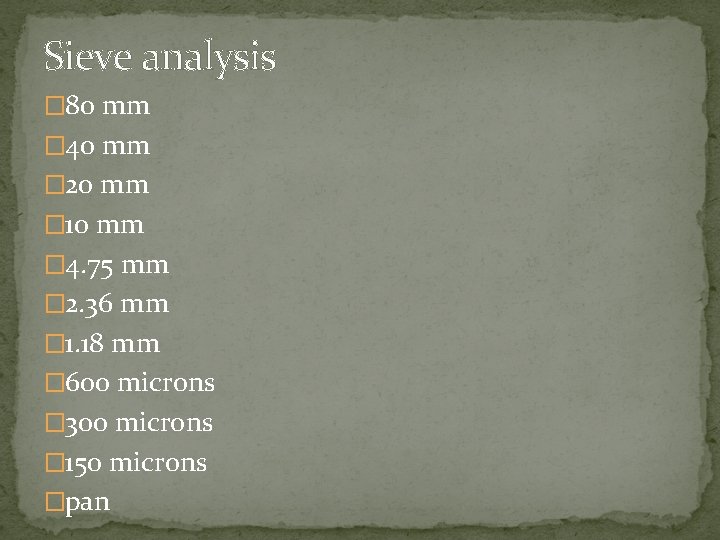
Sieve analysis � 80 mm � 40 mm � 20 mm � 10 mm � 4. 75 mm � 2. 36 mm � 1. 18 mm � 600 microns � 300 microns � 150 microns �pan
Sieve analysis
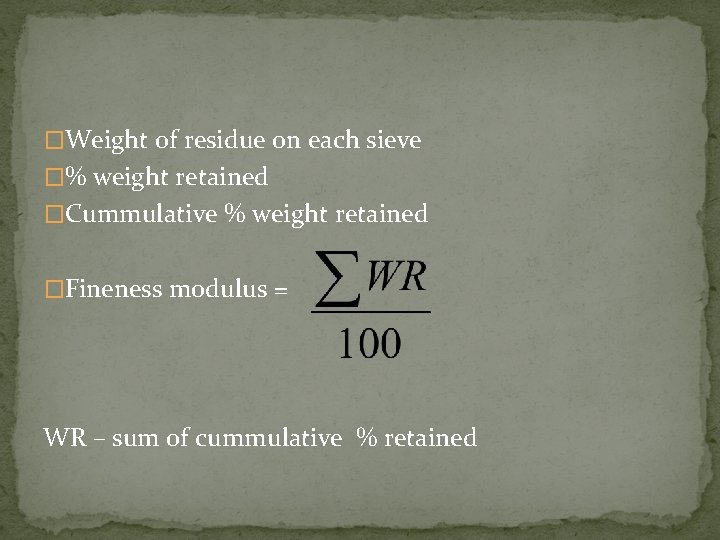
�Weight of residue on each sieve �% weight retained �Cummulative % weight retained �Fineness modulus = WR – sum of cummulative % retained
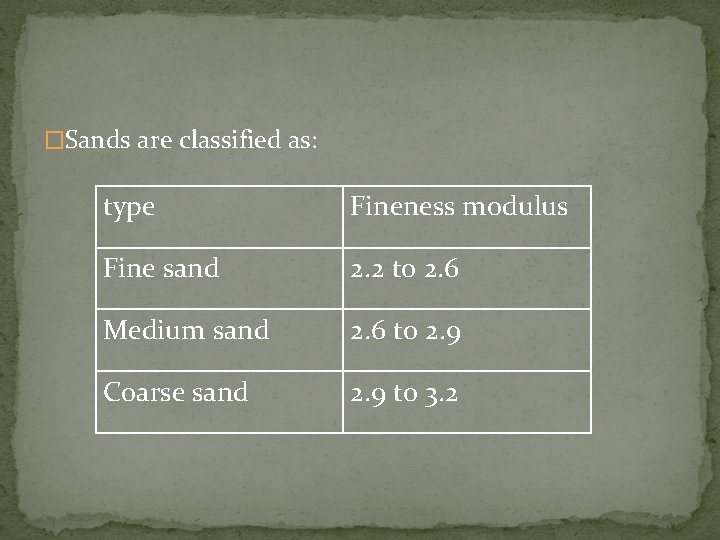
�Sands are classified as: type Fineness modulus Fine sand 2. 2 to 2. 6 Medium sand 2. 6 to 2. 9 Coarse sand 2. 9 to 3. 2
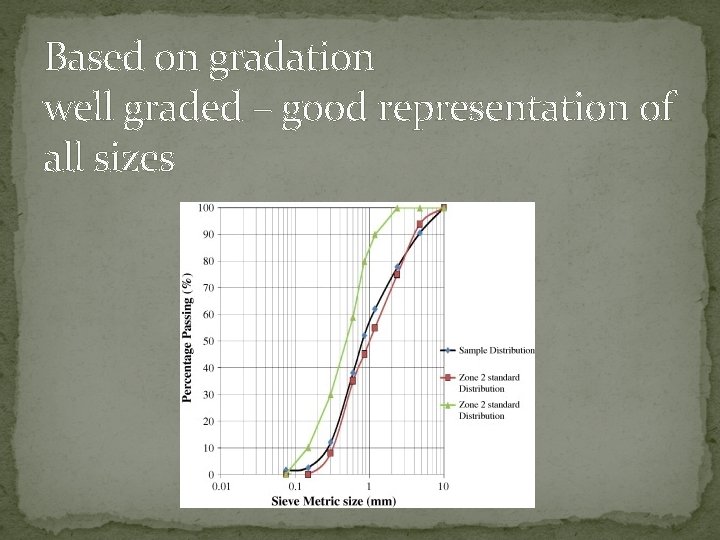
Based on gradation well graded – good representation of all sizes
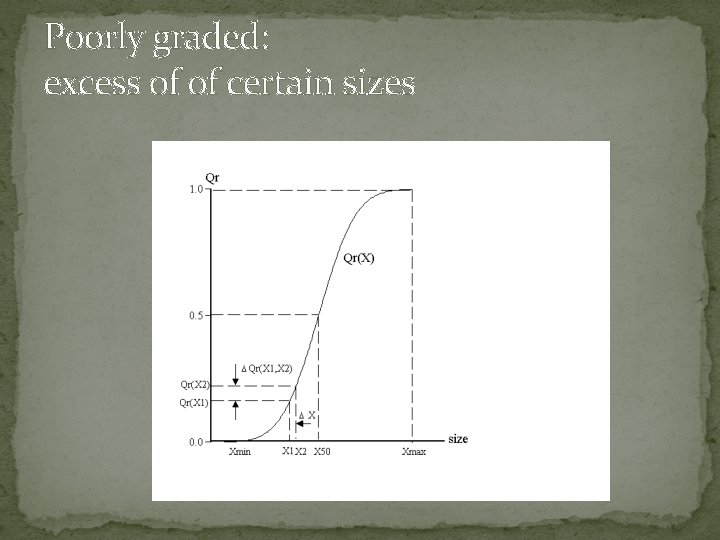
Poorly graded: excess of of certain sizes
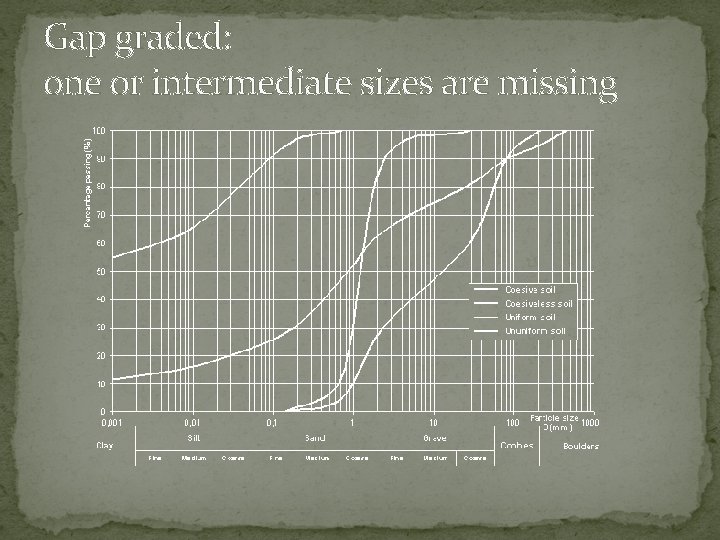
Gap graded: one or intermediate sizes are missing