
AGGREGATES BMC 3 rd A DEFINITION Construction aggregate
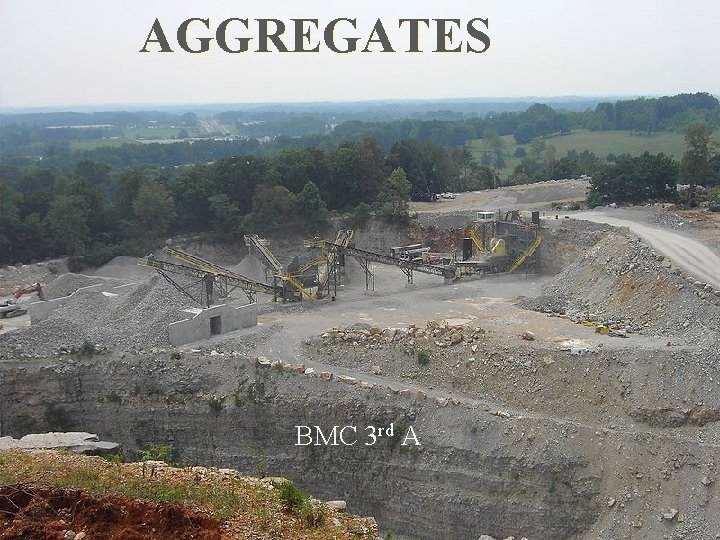
AGGREGATES BMC 3 rd A
DEFINITION Construction aggregate, or simply "aggregate", is a broad category of coarse particulate material used in construction, including sand, gravel, crushed stone, slag, recycled concrete aggregates etc. Ø Aggregates are the most mined materials in the world. Ø They make 70 -80% of concrete

USES OF AGGREGATES Ø Used as an underlying material for foundations and pavements. Ø Used as an ingredients in Portland cement concrete.
SELECTION OF AGGREGATES ØAggregates shall be hard, durable and clean and free from adherent coatings and organic matter and shall not contain appreciable amount of clay. ØAggregates shall not contain harmful impurities such as iron pyrites, alkalis, salts, coal, mica, shale or other materials which will affect hardening and attack reinforcement.
CLASSIFICATION OF AGGREGATES Based on size classified into 2 categories: ØFine aggregates - those aggregates which pass through 4. 75 mm IS sieve are called FA ØCoarse aggregates – those aggregates which will not Pass through 4. 75 mm IS Sieve are called CA. ØAll in aggregates Ø Well graded aggregates
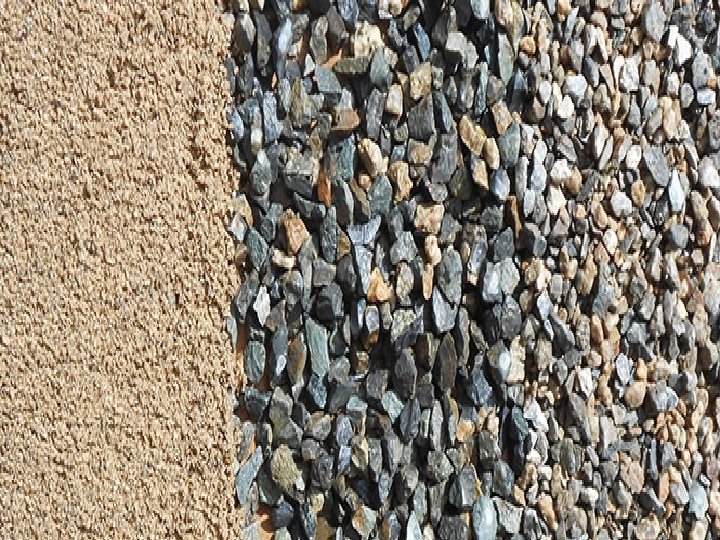
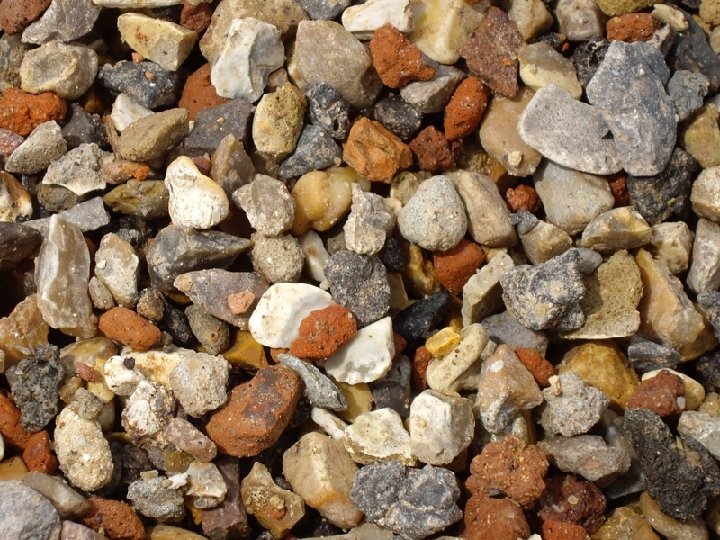
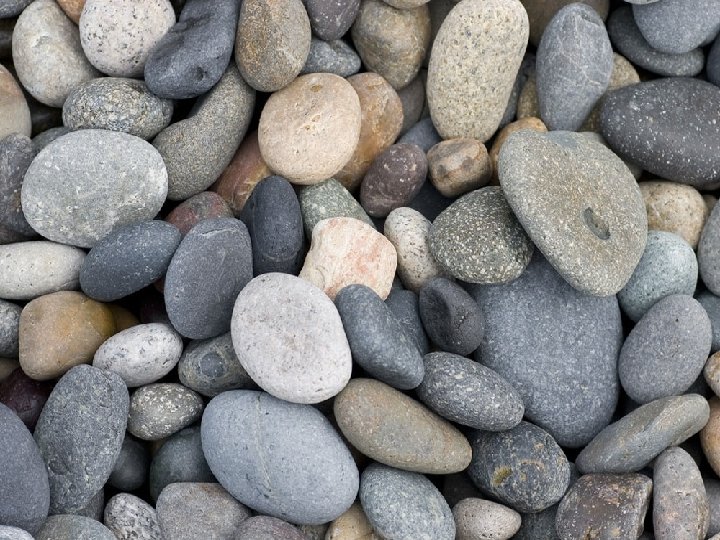
CLASSIFICATION OF AGGREGATES Based on source or method of manufacture ØNatural aggregate/uncrushed aggregate- Those from the river beds, river sand ex-mines. Normally rounded in shape and have smooth surface texture. ØManufactured aggregate / crushed aggregate – those obtained by mechanically crushing rocks, boulders. Normally angular in shape and have rough surface texture
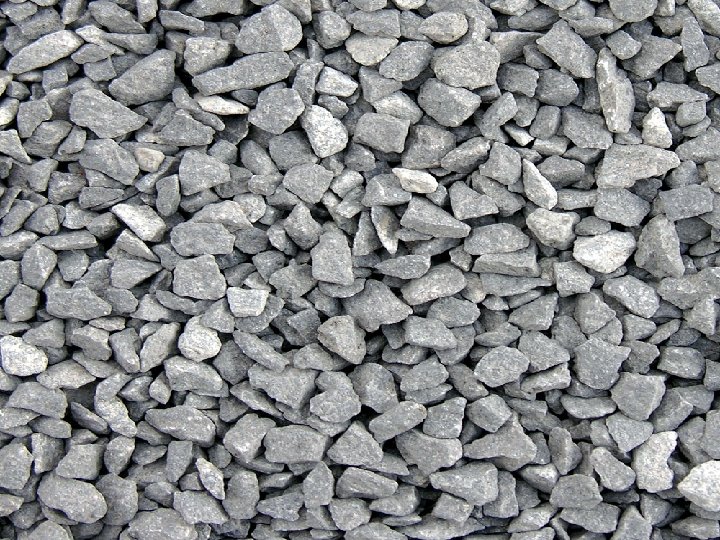
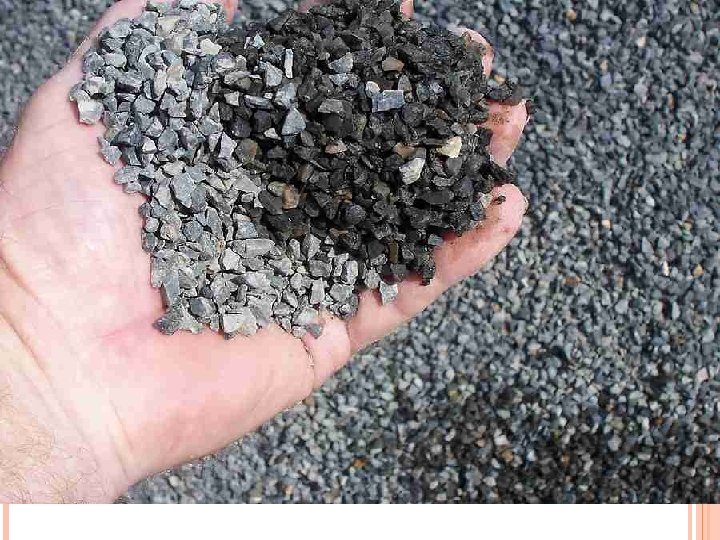

CLASSIFICATION OF AGGREGATES Based on Density: Based on specific gravity or density measured in bulk, aggregate is divided into 3 types: Ø Lightweight aggregate Ø Normal-weight aggregate Ø Heavyweight aggregate
NORMAL-WEIGHT AGGREGATE Ø Crushed stone, gravel and ordinary sand are examples of normal weight aggregate. Ø They are commonly used in manufacture of normal weight concrete and roadway sub-base. Ø The Specific Gravity of aggregates generally lies between 2. 5 and 2. 7. Bulk density of normal weight aggregate is around 1520 to 1680 kg/m 3.
LIGHTWEIGHT AGGREGATE Ø Lightweight fine aggregate is any aggregate with bulk density less than 1120 kg/m 3 and lightweight coarse aggregate is any aggregate with bulk density less than 880 kg/m 3. Ø They are commonly used as ingredients in the manufacture of lightweight concrete, for making lightweight masonry blocks (to improved their thermal and insulating properties), and lightweight floor and roof slabs. Ø 2 types of lightweight aggregate: Natural lightweight aggregates (eg: palm oil shell, rice husk, etc. ) Manufactured (also called synthetic) lightweight aggregates.

HEAVYWEIGHT AGGREGATE Ø Those aggregate with high density and is used primarily in the manufacture of heavyweight concrete. Ø Employed for protection against nuclear radiation and as bomb shelter. Ø The unit weight of heavyweight concrete varies from 2400 kg/m 3 with sp. gr range from 4. 0 to 4. 6. (eg: mineral ores and barite)

CLASSIFICATION OF AGGREGATES Based on shape: ØRounded aggregate (32% voids) ØAngular aggregate (40% voids) ØIrregular aggregate (36% voids) ØFlaky aggregate ØElongated aggregate
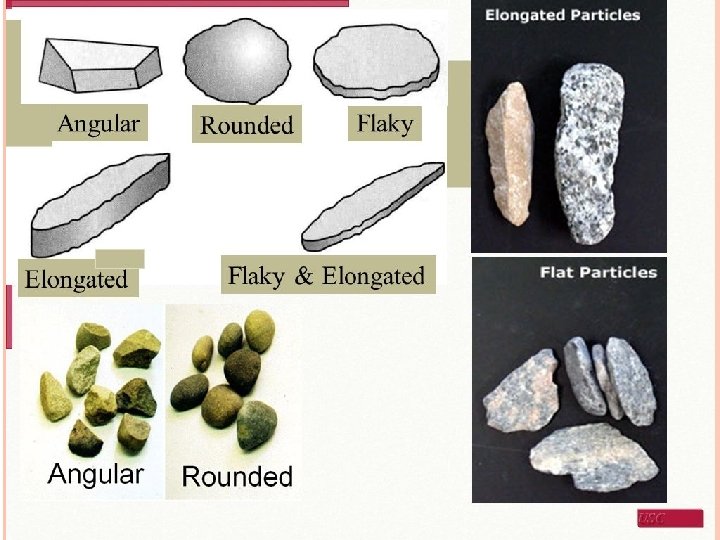
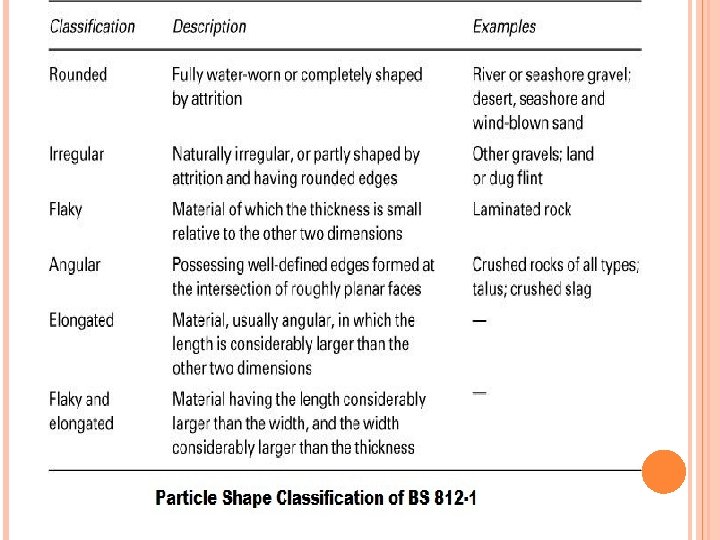
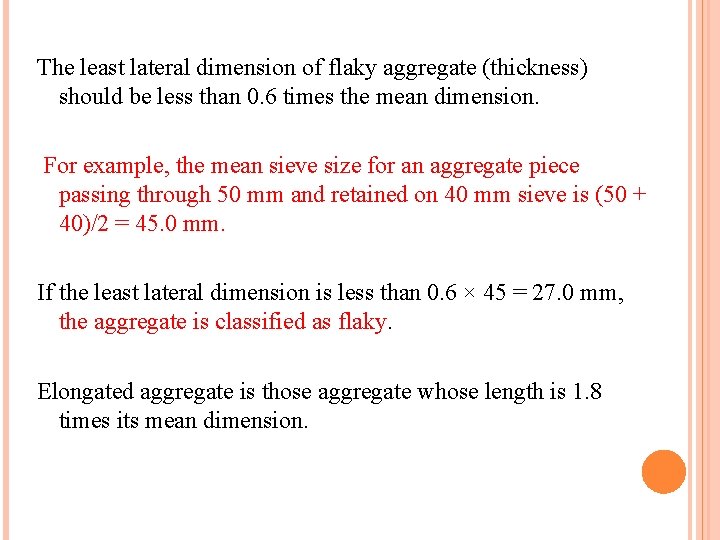
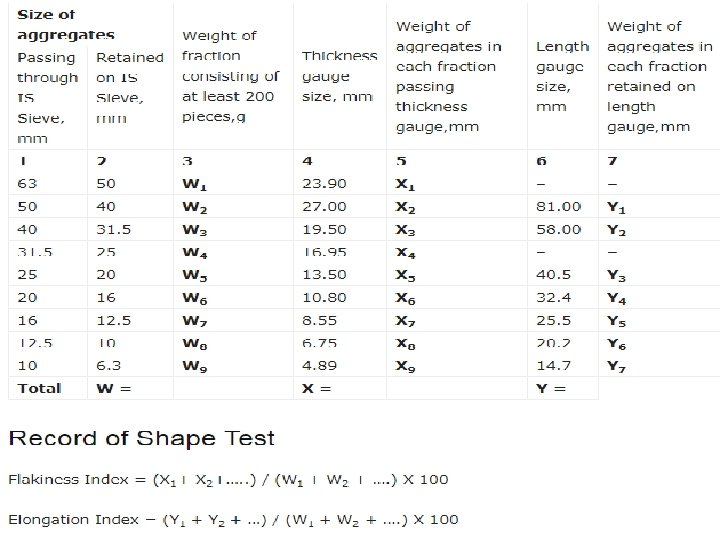
The least lateral dimension of flaky aggregate (thickness) should be less than 0. 6 times the mean dimension. For example, the mean sieve size for an aggregate piece passing through 50 mm and retained on 40 mm sieve is (50 + 40)/2 = 45. 0 mm. If the least lateral dimension is less than 0. 6 × 45 = 27. 0 mm, the aggregate is classified as flaky. Elongated aggregate is those aggregate whose length is 1. 8 times its mean dimension.
PHYSICAL PROPERTIES AND TESTS ON AGGREGATES Ø Strength Ø Hardness Ø Toughness Ø Durability Ø Porosity Ø Water absorption
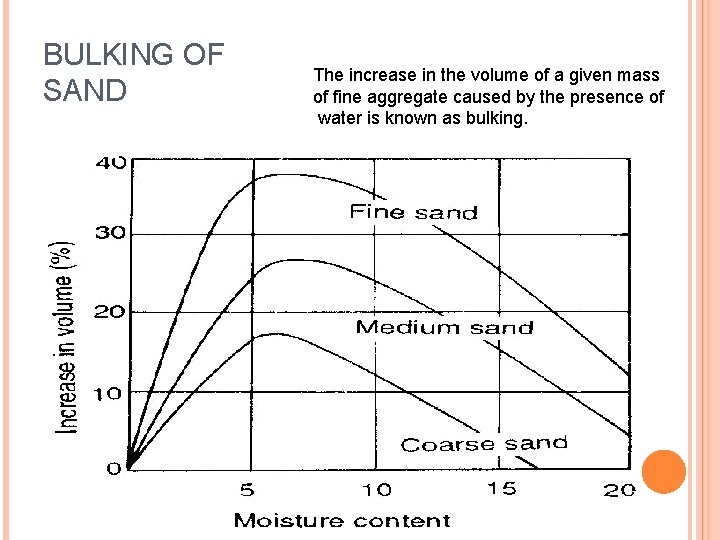
BULKING OF SAND The increase in the volume of a given mass of fine aggregate caused by the presence of water is known as bulking.

SIEVE ANALYSIS
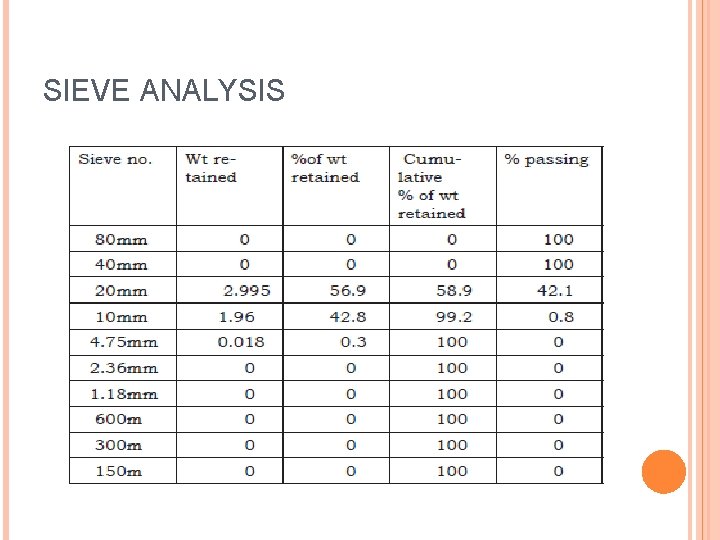
SIEVE ANALYSIS
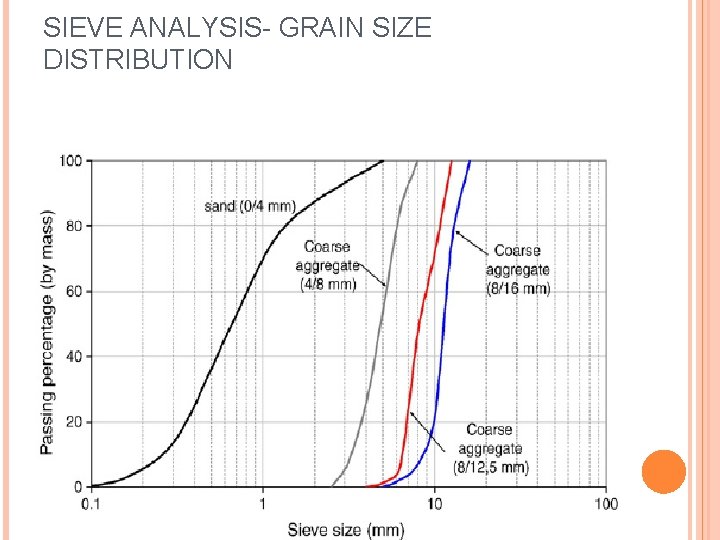
SIEVE ANALYSIS- GRAIN SIZE DISTRIBUTION
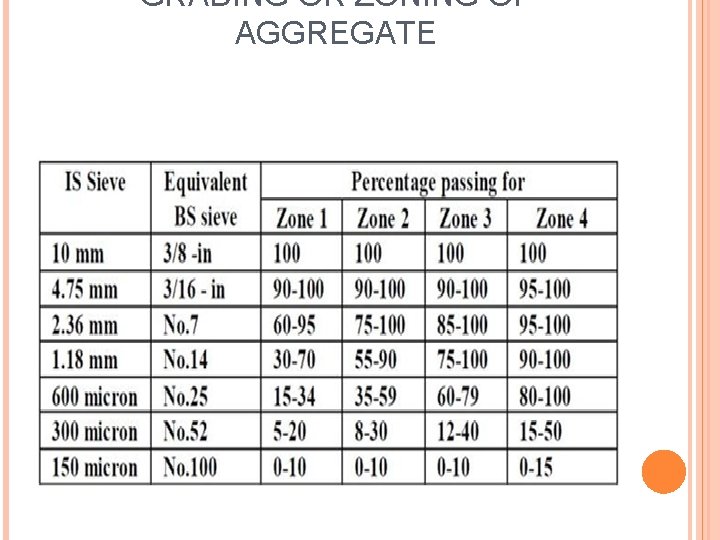
GRADING OR ZONING OF AGGREGATE
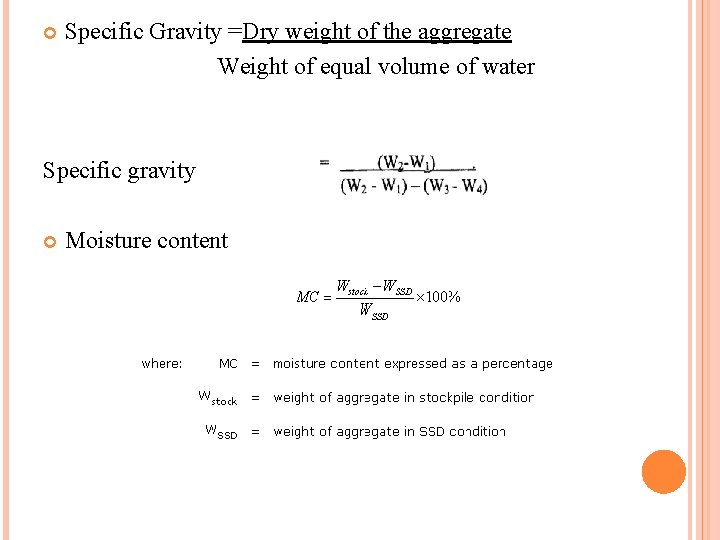
Specific Gravity =Dry weight of the aggregate Weight of equal volume of water Specific gravity Moisture content
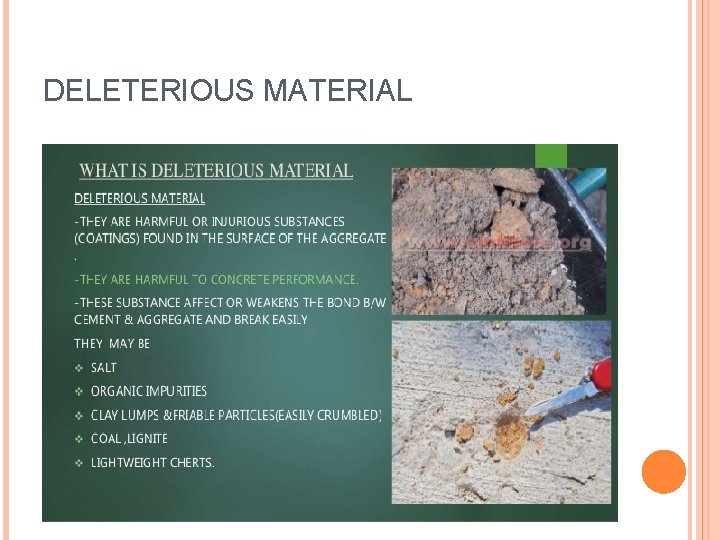
DELETERIOUS MATERIAL
STRENGTH OF AGGREGATES ØIn practice, majority of normal aggregates are considerably stronger than concrete ØA good average value of crushing strength of aggregates is 200 N/mm 2.

CRUSHING STRENGTH
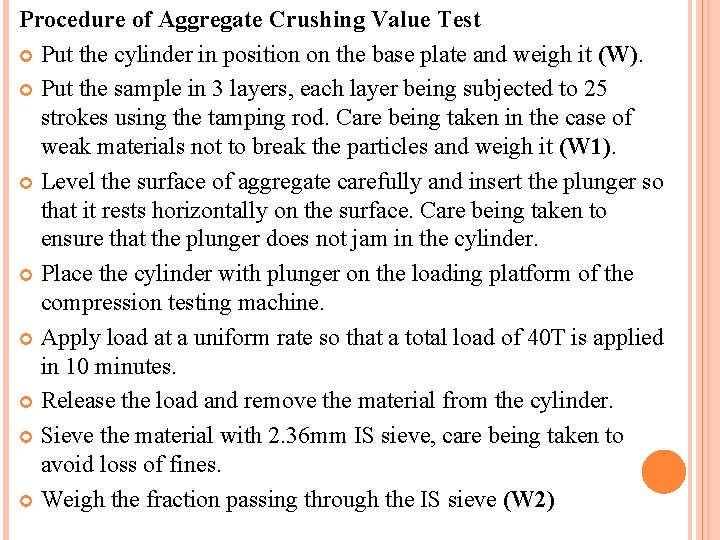
Procedure of Aggregate Crushing Value Test Put the cylinder in position on the base plate and weigh it (W). Put the sample in 3 layers, each layer being subjected to 25 strokes using the tamping rod. Care being taken in the case of weak materials not to break the particles and weigh it (W 1). Level the surface of aggregate carefully and insert the plunger so that it rests horizontally on the surface. Care being taken to ensure that the plunger does not jam in the cylinder. Place the cylinder with plunger on the loading platform of the compression testing machine. Apply load at a uniform rate so that a total load of 40 T is applied in 10 minutes. Release the load and remove the material from the cylinder. Sieve the material with 2. 36 mm IS sieve, care being taken to avoid loss of fines. Weigh the fraction passing through the IS sieve (W 2)
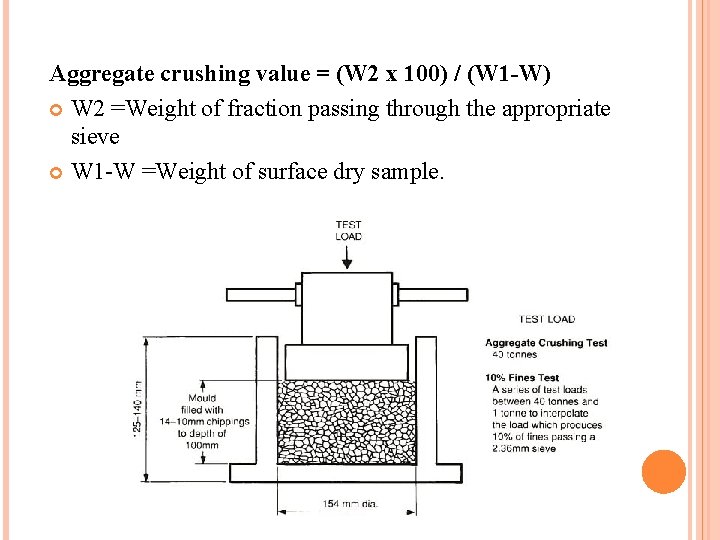
Aggregate crushing value = (W 2 x 100) / (W 1 -W) W 2 =Weight of fraction passing through the appropriate sieve W 1 -W =Weight of surface dry sample.
HARDNESS OF AGGREGATES Ø Hardness of aggregates is the ability of the aggregate to withstand wear or load or applied pressure. Ø This hardness is depending on the type of parent rock Ø The test that can obtain the hardness is the abrasion test. Ø A satisfactory aggregate should have an abrasion value of not more than 30% for aggregates used for wearing surfaces and 50% for aggregates used for non wearing surfaces.
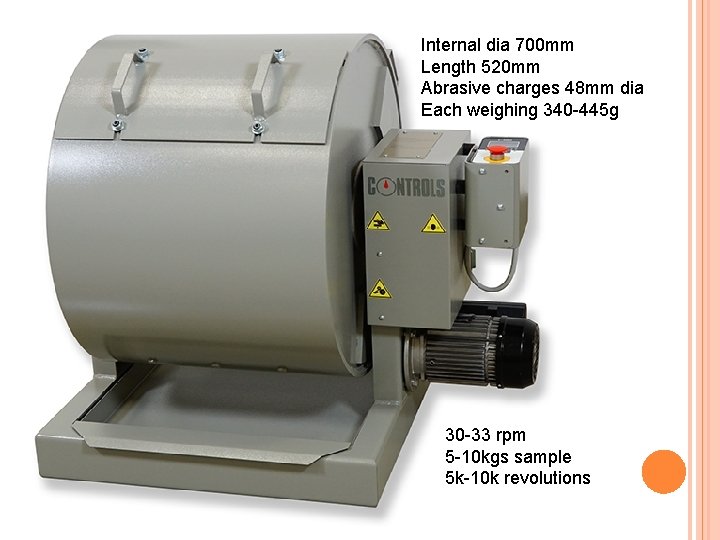
Internal dia 700 mm Length 520 mm Abrasive charges 48 mm dia Each weighing 340 -445 g 30 -33 rpm 5 -10 kgs sample 5 k-10 k revolutions
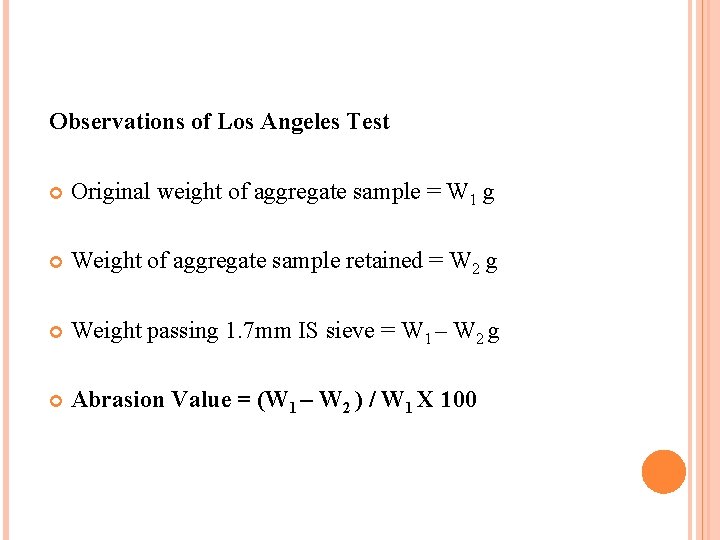
Observations of Los Angeles Test Original weight of aggregate sample = W 1 g Weight of aggregate sample retained = W 2 g Weight passing 1. 7 mm IS sieve = W 1 – W 2 g Abrasion Value = (W 1 – W 2 ) / W 1 X 100
TOUGHNESS TEST Ø Is the resistance of aggregate to failure by impact. Ø This can be determined by aggregate impact test. Ø The aggregate impact value shall not exceed 45% by weight for aggregate used for concrete other than those used for wearing surfaces and 30% for concrete for wearing surfaces.
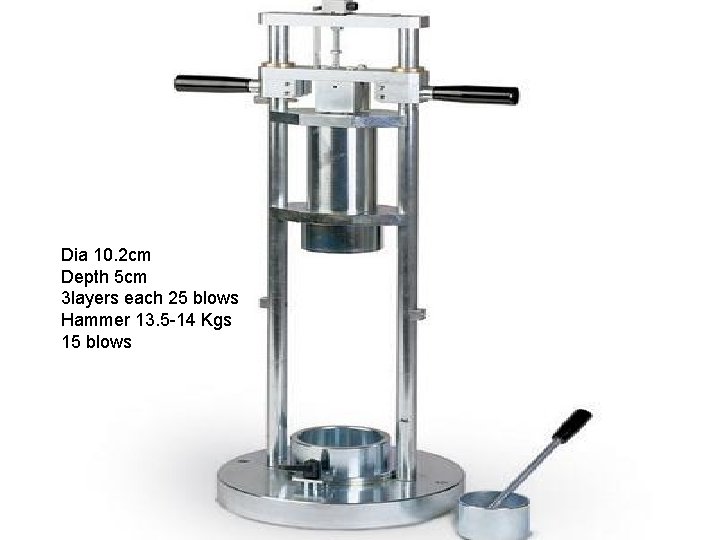
Dia 10. 2 cm Depth 5 cm 3 layers each 25 blows Hammer 13. 5 -14 Kgs 15 blows
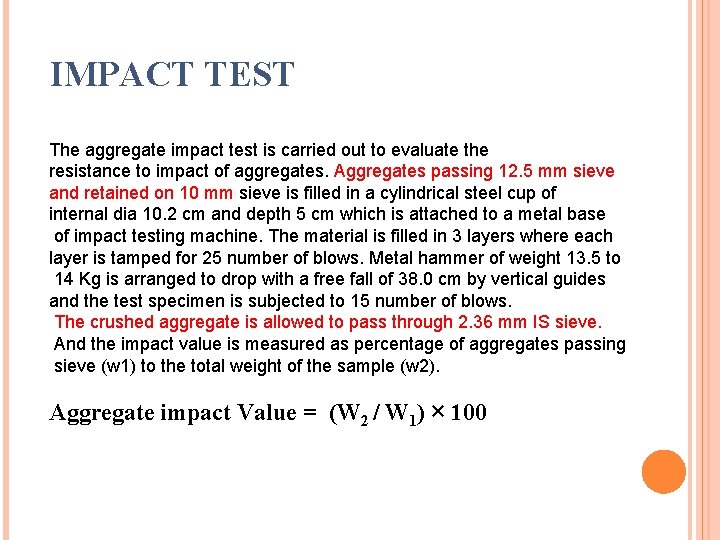
IMPACT TEST The aggregate impact test is carried out to evaluate the resistance to impact of aggregates. Aggregates passing 12. 5 mm sieve and retained on 10 mm sieve is filled in a cylindrical steel cup of internal dia 10. 2 cm and depth 5 cm which is attached to a metal base of impact testing machine. The material is filled in 3 layers where each layer is tamped for 25 number of blows. Metal hammer of weight 13. 5 to 14 Kg is arranged to drop with a free fall of 38. 0 cm by vertical guides and the test specimen is subjected to 15 number of blows. The crushed aggregate is allowed to pass through 2. 36 mm IS sieve. And the impact value is measured as percentage of aggregates passing sieve (w 1) to the total weight of the sample (w 2). Aggregate impact Value = (W 2 / W 1) × 100
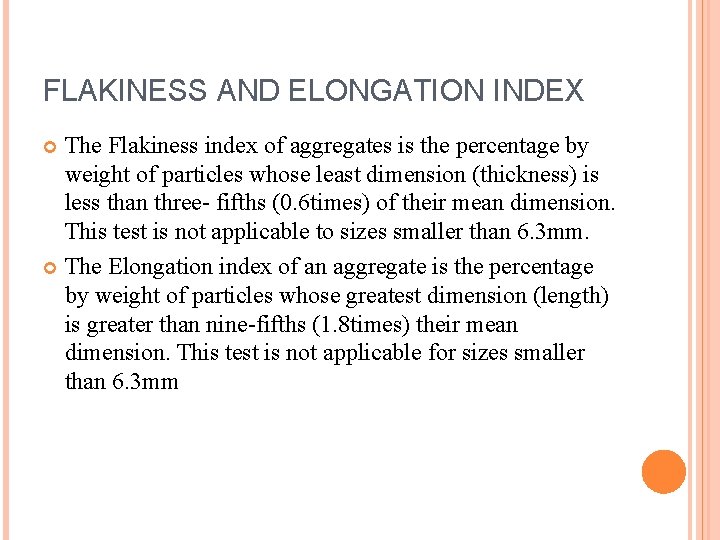
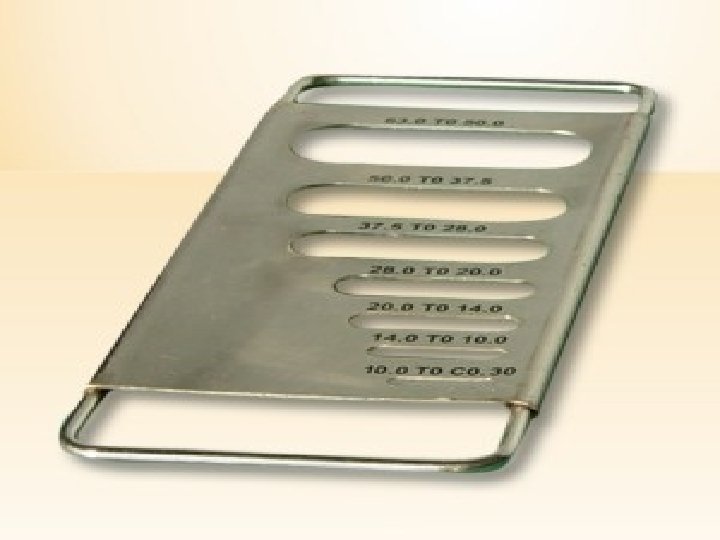
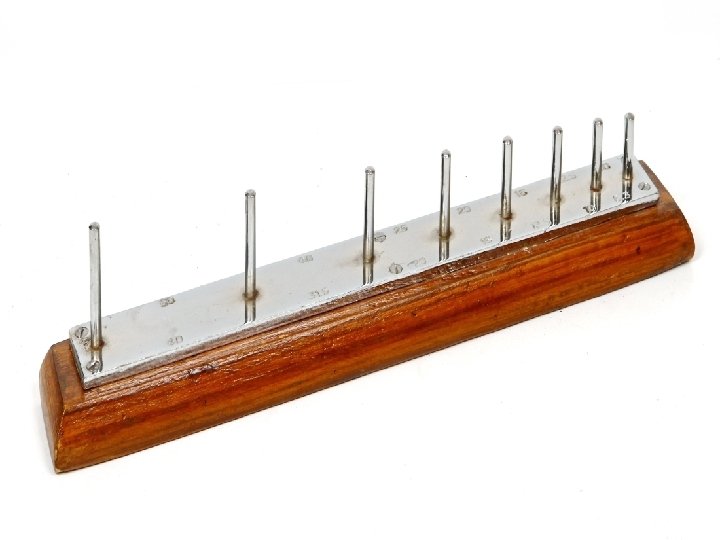
FLAKINESS AND ELONGATION INDEX The Flakiness index of aggregates is the percentage by weight of particles whose least dimension (thickness) is less than three- fifths (0. 6 times) of their mean dimension. This test is not applicable to sizes smaller than 6. 3 mm. The Elongation index of an aggregate is the percentage by weight of particles whose greatest dimension (length) is greater than nine-fifths (1. 8 times) their mean dimension. This test is not applicable for sizes smaller than 6. 3 mm
- Slides: 41