
Aggregate Supply Krugman Section 4 Module 18 Definition

- Slides: 17
Aggregate Supply Krugman Section 4 Module 18
Definition Ø AS is a schedule showing level of real domestic output available at each possible price level.
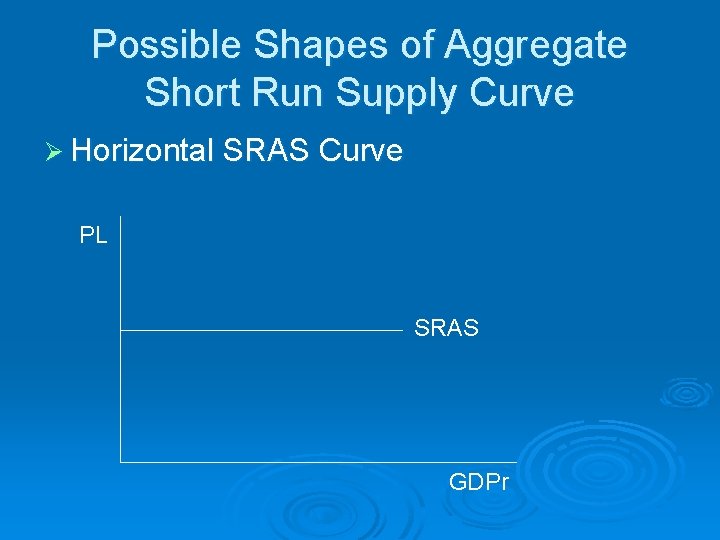
Possible Shapes of Aggregate Short Run Supply Curve Ø Horizontal SRAS Curve PL SRAS GDPr
Horizontal Ø Conditions: Ø Substantial unemployment and excess capacity Ø Might be in a recession or depression
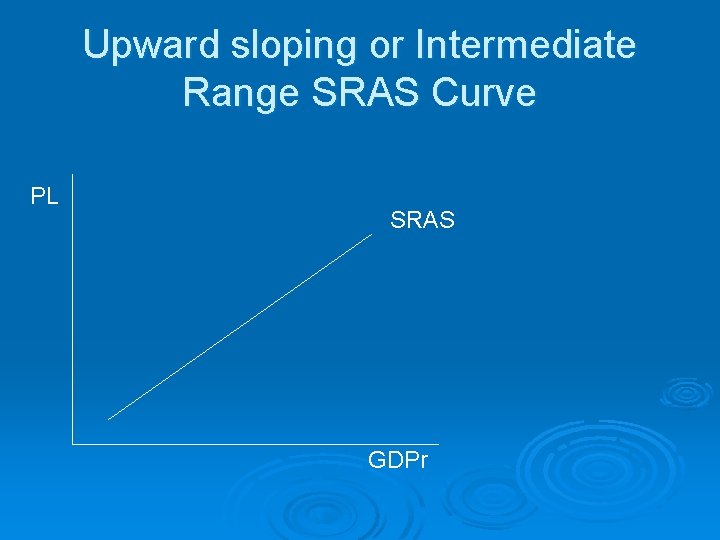
Upward sloping or Intermediate Range SRAS Curve PL SRAS GDPr
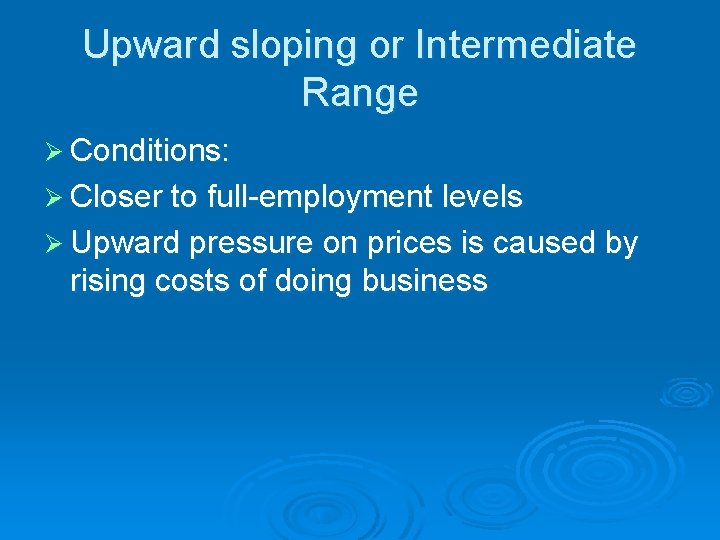
Upward sloping or Intermediate Range Ø Conditions: Ø Closer to full-employment levels Ø Upward pressure on prices is caused by rising costs of doing business
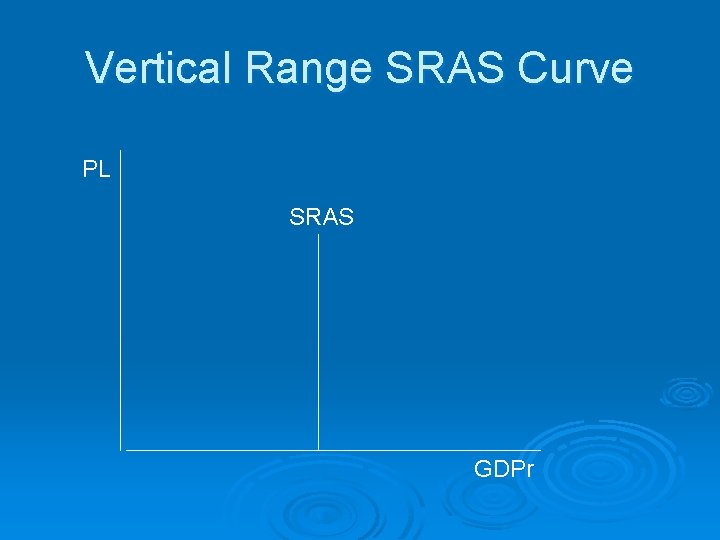
Vertical Range SRAS Curve PL SRAS GDPr
Vertical Range SRAS Curve Ø Conditions: Ø Any attempt to increase output will bid up resource and product prices Ø Full employment is assumed
Determinants of AS Ø 1. l l l Change in input prices: Availability of resources (4 factors) Prices of imported resources Market power of certain industries This was also in the eeb book This is the most common determinant
Determinants of AS cont. Ø 2. Change in productivity can cause changes in per-unit production cost l Productivity rises, unit production costs will • Shift to the right and lower prices l Productivity falls, unit production cost will • Shift to the left and increase prices
Determinants of AS cont. Ø 3. l l l Change in legal-institutional environment: Business taxes and or subsidies Tax to the left Subsidy to the right
Determinants of AS cont. Ø 4. l l Inflationary expectations Workers will ask for higher wages Banks will charge higher interest rates
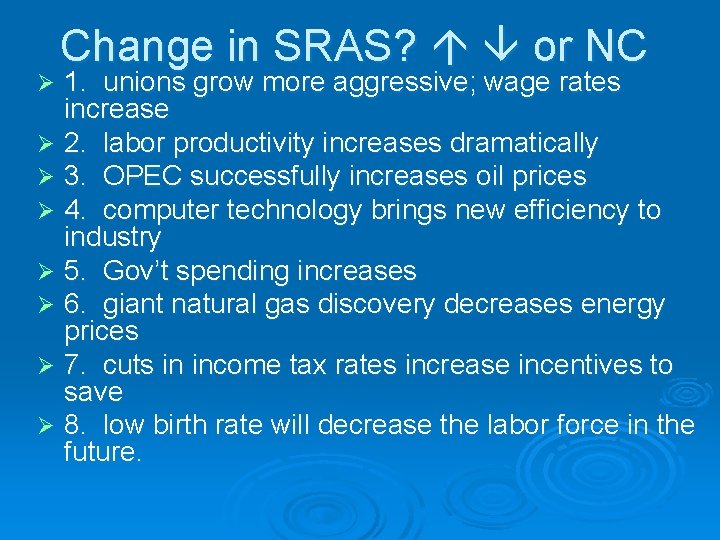
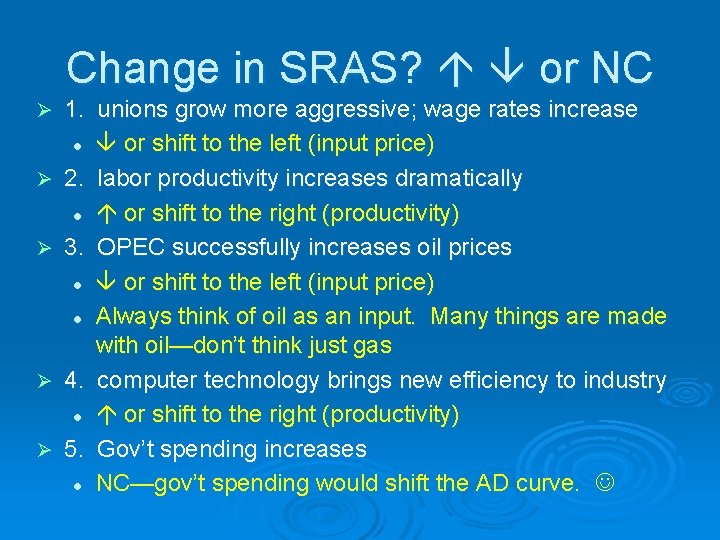
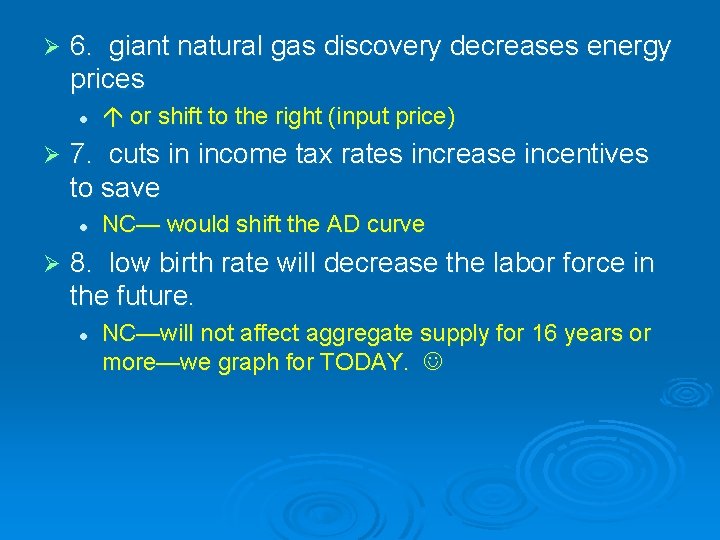
Change in SRAS? or NC 1. unions grow more aggressive; wage rates increase Ø 2. labor productivity increases dramatically Ø 3. OPEC successfully increases oil prices Ø 4. computer technology brings new efficiency to industry Ø 5. Gov’t spending increases Ø 6. giant natural gas discovery decreases energy prices Ø 7. cuts in income tax rates increase incentives to save Ø 8. low birth rate will decrease the labor force in the future. Ø
Change in SRAS? or NC Ø Ø Ø 1. unions grow more aggressive; wage rates increase l or shift to the left (input price) 2. labor productivity increases dramatically l or shift to the right (productivity) 3. OPEC successfully increases oil prices l or shift to the left (input price) l Always think of oil as an input. Many things are made with oil—don’t think just gas 4. computer technology brings new efficiency to industry l or shift to the right (productivity) 5. Gov’t spending increases l NC—gov’t spending would shift the AD curve.
Ø 6. giant natural gas discovery decreases energy prices l Ø 7. cuts in income tax rates increase incentives to save l Ø or shift to the right (input price) NC— would shift the AD curve 8. low birth rate will decrease the labor force in the future. l NC—will not affect aggregate supply for 16 years or more—we graph for TODAY.
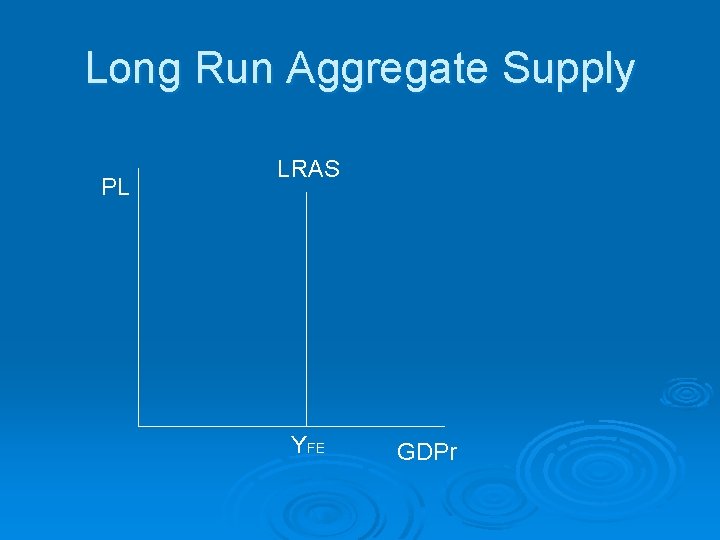
Long Run Aggregate Supply PL LRAS YFE GDPr
Ø Represents the Q of g & s a nation can produce over a sustained period of time using its productive resources efficiently Ø LRAS is at full employment Ø 4 factors of production will shift the LRAS