
Aggregate Supply Demand Model Macroeconomic Analysis 4 Types


- Slides: 12
Aggregate Supply & Demand Model Macroeconomic Analysis
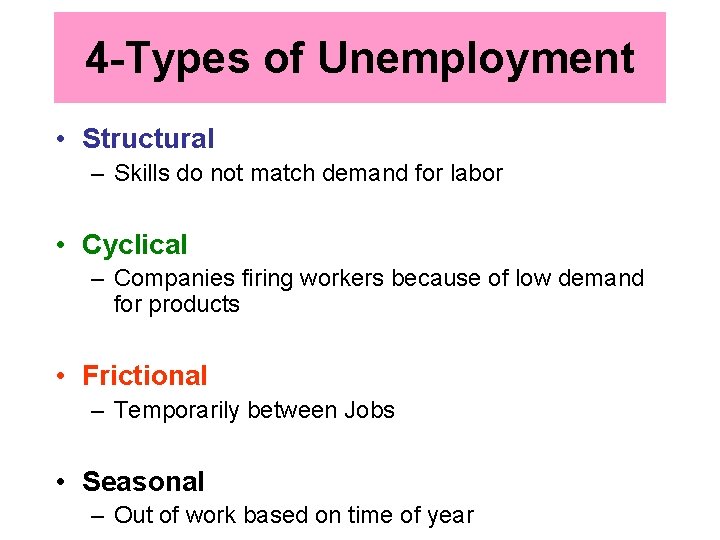
4 -Types of Unemployment • Structural – Skills do not match demand for labor • Cyclical – Companies firing workers because of low demand for products • Frictional – Temporarily between Jobs • Seasonal – Out of work based on time of year
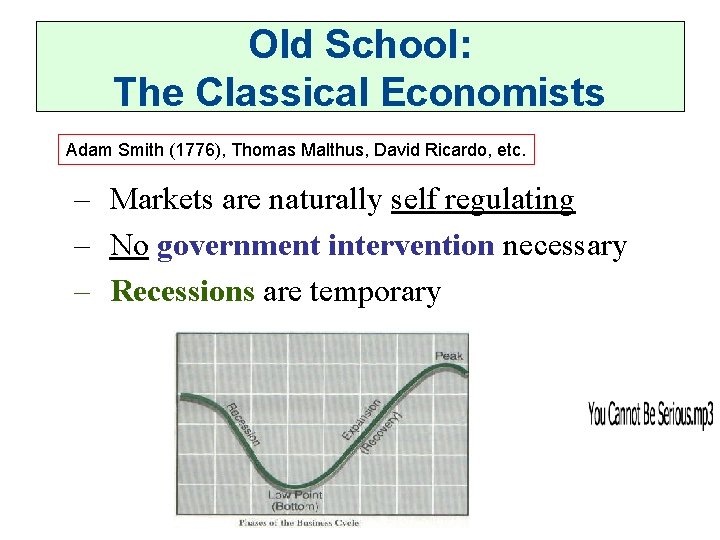
Old School: The Classical Economists Adam Smith (1776), Thomas Malthus, David Ricardo, etc. – Markets are naturally self regulating – No government intervention necessary – Recessions are temporary
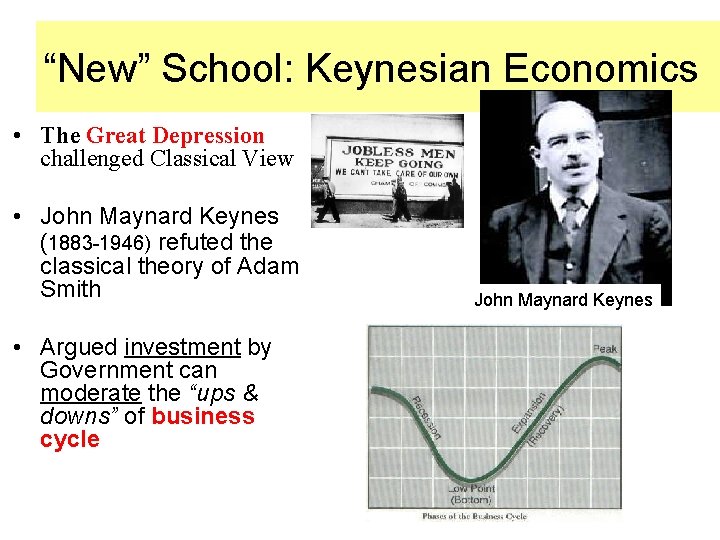
“New” School: Keynesian Economics • The Great Depression challenged Classical View • John Maynard Keynes (1883 -1946) refuted the classical theory of Adam Smith • Argued investment by Government can moderate the “ups & downs” of business cycle John Maynard Keynes
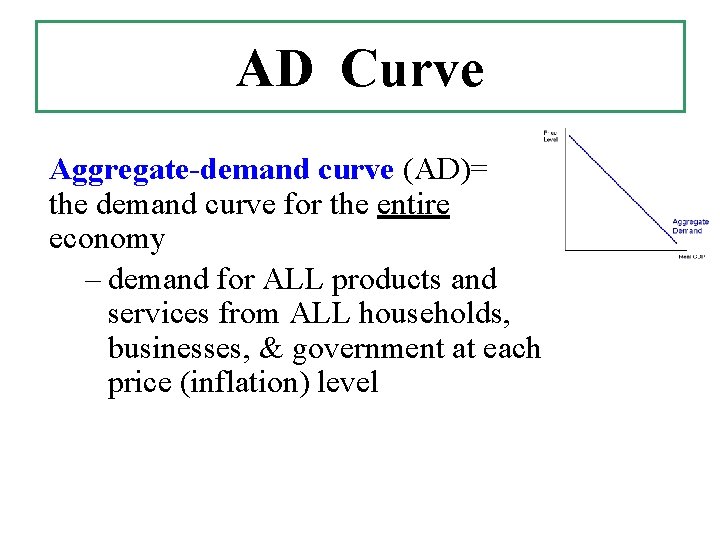
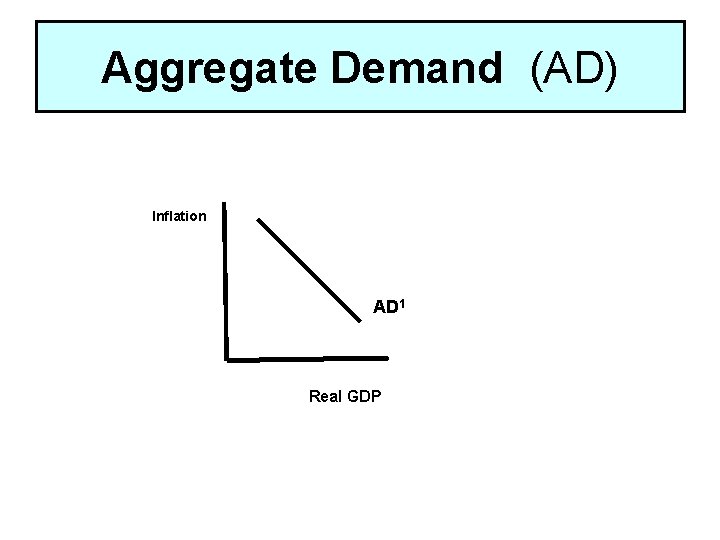
AD Curve Aggregate-demand curve (AD)= the demand curve for the entire economy – demand for ALL products and services from ALL households, businesses, & government at each price (inflation) level
AS Curve • Aggregate-supply curve (AS)= the supply curve for the entire economy – the supply of ALL goods and services produced by ALL businesses at each price level
Aggregate Demand (AD) Inflation AD 1 Real GDP
Reminder: “Full” Employment • Between 4 and 5% unemployment – allows for people temporarily out of work (frictional) and people who have skills who do not match jobs available (structural) • Levels below 4. 0% unemployment run the risk of rising inflation
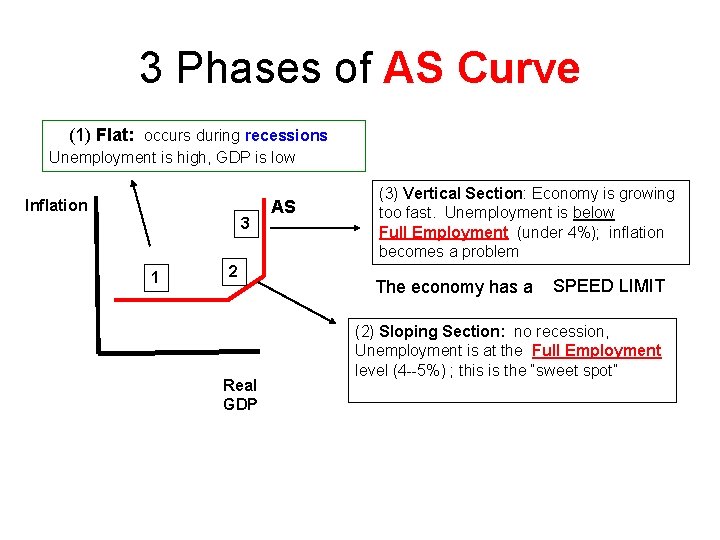
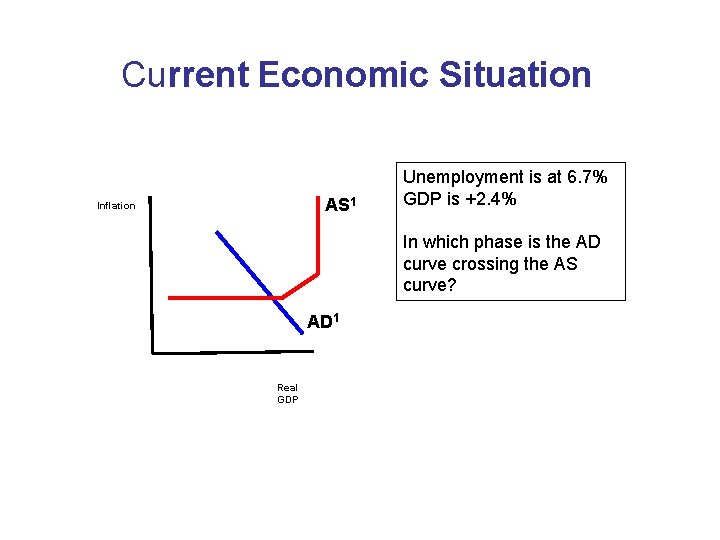
3 Phases of AS Curve (1) Flat: occurs during recessions Unemployment is high, GDP is low Inflation 3 1 2 Real GDP AS (3) Vertical Section: Economy is growing too fast. Unemployment is below Full Employment (under 4%); inflation becomes a problem The economy has a SPEED LIMIT (2) Sloping Section: no recession, Unemployment is at the Full Employment level (4 --5%) ; this is the “sweet spot”
Current Economic Situation AS 1 Inflation Unemployment is at 6. 7% GDP is +2. 4% In which phase is the AD curve crossing the AS curve? AD 1 Real GDP
AS/AD Model review sheet • See what you understand