
AGGREGATE PRODUCTION PLANNING PROCESS FOR DETERMINING MOST COSTEFFECTIVE


- Slides: 13
AGGREGATE PRODUCTION PLANNING PROCESS FOR DETERMINING MOST COSTEFFECTIVE WAY TO MATCH SUPPLY AND DEMAND OVER NEXT 12 -18 MONTHS.
AGGREGATE PLAN -
PRODUCTION PLANNING STRATEGIES • 1. CHASE STRATEGY - MATCH THE PRODCUTION RATE TO MEET THE ORDER RATE BY HIRING AND LAYING OFF EMPLOYEES AS THE ORDER RATE VARIES. • 2. STABLE WORKFORCE –VARIABLE WORK HOURS – VARY THE OUTPUT BY VARYING THE NUMBER OF HOURS WORKED THROUGH FLEXIBLE WORK SCHEDULES OR OVERTIME.
• 3. LEVEL STRATEGY – MAINTAIN A STABLE WORKFORCE WORKING AT A CONSTANT OUTPUT RATE.
MASTER SCHEDULE – SHOWS THE QUANTITY AND TIMING OF SPECIFIC GOODS/SERVICES FOR A SCHEDULE HORIZON.
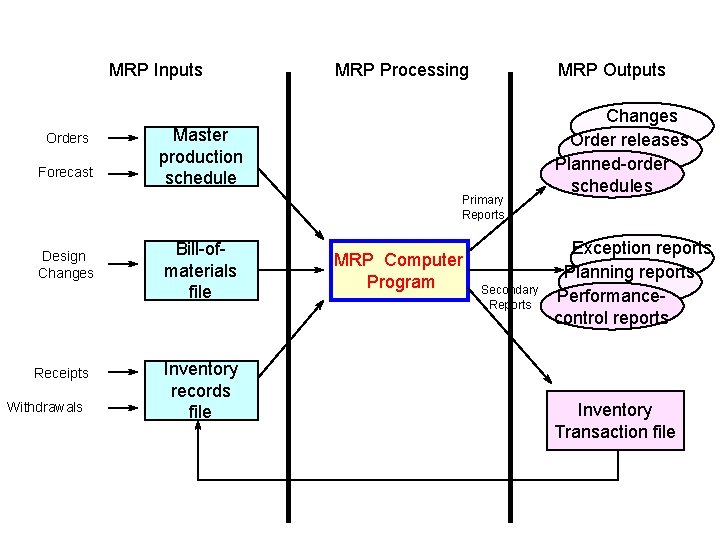
MATERIALS REQUREMENT PLANNING- A COMPUTER BASED INFORMATION SYSTEM DESIGNED TO HANDLE ORDERING AND SCHEDULING OF DEPENDENT DEMAND INVENTORIES.
MRP Inputs Orders Forecast MRP Processing MRP Outputs Master production schedule Primary Reports Design Changes Receipts Withdrawals Bill-ofmaterials file Inventory records file MRP Computer Program Secondary Reports Changes Order releases Planned-order schedules Exception reports Planning reports Performancecontrol reports Inventory Transaction file
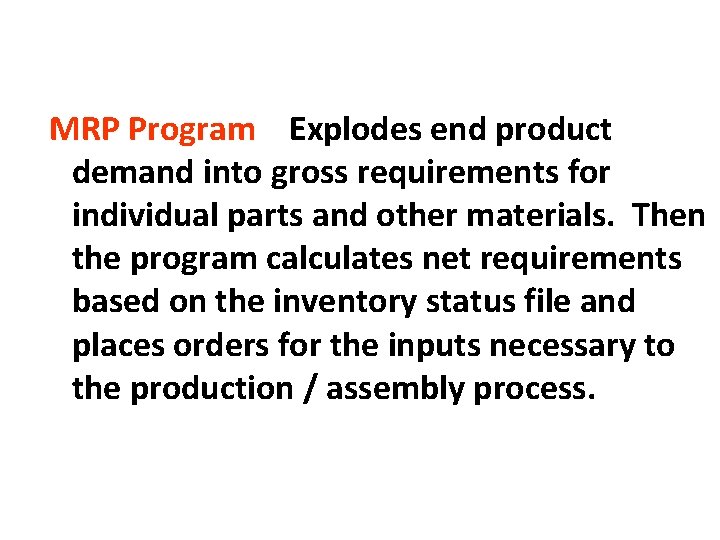
MRP Program Explodes end product demand into gross requirements for individual parts and other materials. Then the program calculates net requirements based on the inventory status file and places orders for the inputs necessary to the production / assembly process.
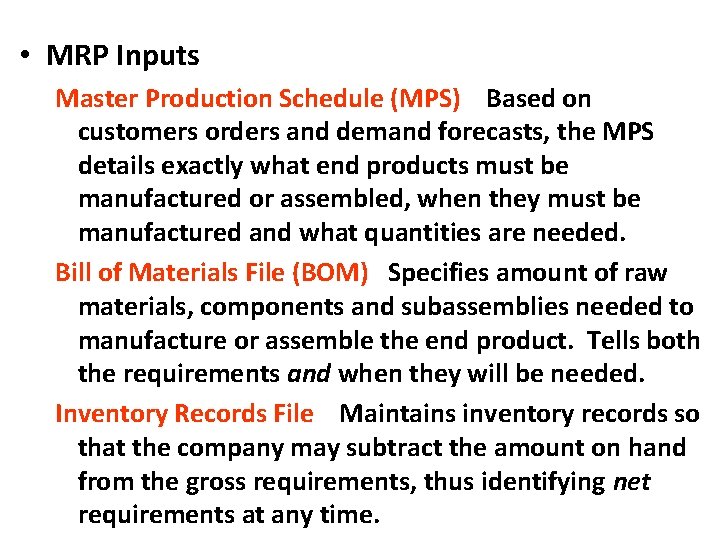
• MRP Inputs Master Production Schedule (MPS) Based on customers orders and demand forecasts, the MPS details exactly what end products must be manufactured or assembled, when they must be manufactured and what quantities are needed. Bill of Materials File (BOM) Specifies amount of raw materials, components and subassemblies needed to manufacture or assemble the end product. Tells both the requirements and when they will be needed. Inventory Records File Maintains inventory records so that the company may subtract the amount on hand from the gross requirements, thus identifying net requirements at any time.
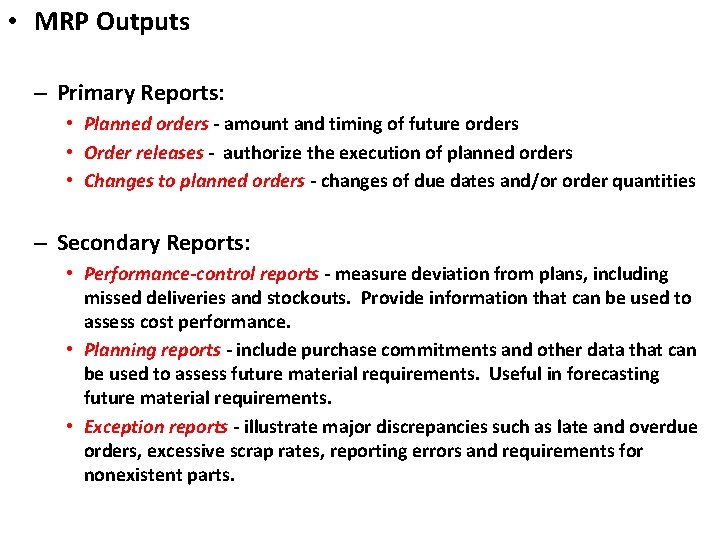
• MRP Outputs – Primary Reports: • Planned orders - amount and timing of future orders • Order releases - authorize the execution of planned orders • Changes to planned orders - changes of due dates and/or order quantities – Secondary Reports: • Performance-control reports - measure deviation from plans, including missed deliveries and stockouts. Provide information that can be used to assess cost performance. • Planning reports - include purchase commitments and other data that can be used to assess future material requirements. Useful in forecasting future material requirements. • Exception reports - illustrate major discrepancies such as late and overdue orders, excessive scrap rates, reporting errors and requirements for nonexistent parts.
• Inventory Transactions File – shows inventory transactions as they occur. Changes are a result of stock receipts and disbursements, scrap loses, wrong parts, etc.
Inventory Records File • Gross Requirements – The total expected demand for an item or raw material during each time period. • Scheduled Receipts – open orders scheduled to arrive from vendors or elsewhere in the pipeline. • Projected on Hand – the expected amount of inventory that will be on hand at the beginning of each time period. (scheduled receipts + available from last period)
• Net Requirements – the actual amount needed in each time period. • Planned-order receipts – the quantity expected to be received by the beginning of the period in which it is shown. • Planned-order release – indicates a planned amount to order in each time period.