
Aggregate Demand Supply Aggregate Demand Curve shows the

- Slides: 32
Aggregate Demand Supply
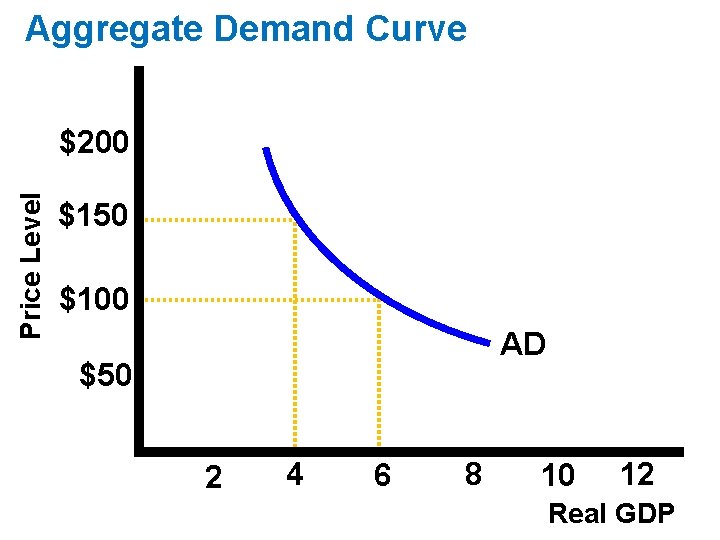
Aggregate Demand Curve shows the level of real GDP purchased by everyone at different price levels during a time period, ceteris paribus The horizontal axis measures the value of final goods and services included in real GDP measured in base year dollars The vertical axis measure is an index of the overall price level, such as the GDP deflator or the CPI Aggregate Demand Curve slopes downward to the right • Real balance wealth effect • Interest rate effect • Net exports effect
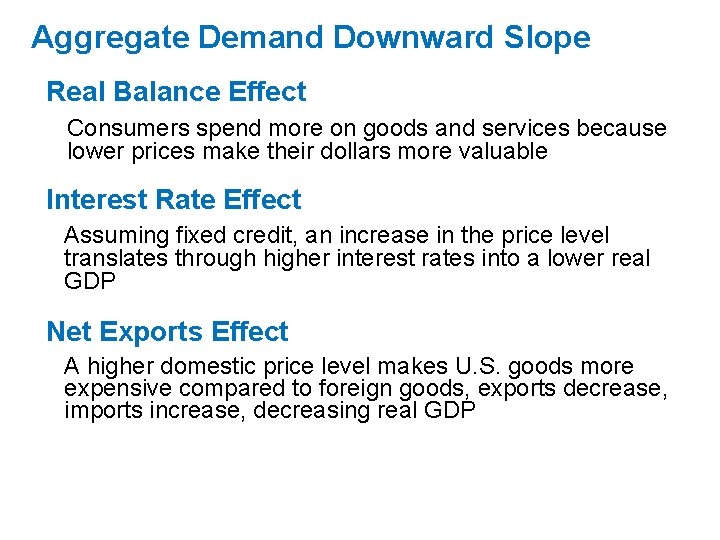
Aggregate Demand Downward Slope Real Balance Effect Consumers spend more on goods and services because lower prices make their dollars more valuable Interest Rate Effect Assuming fixed credit, an increase in the price level translates through higher interest rates into a lower real GDP Net Exports Effect A higher domestic price level makes U. S. goods more expensive compared to foreign goods, exports decrease, imports increase, decreasing real GDP
Aggregate Demand Curve Price Level $200 $150 $100 AD $50 2 4 6 8 10 12 Real GDP
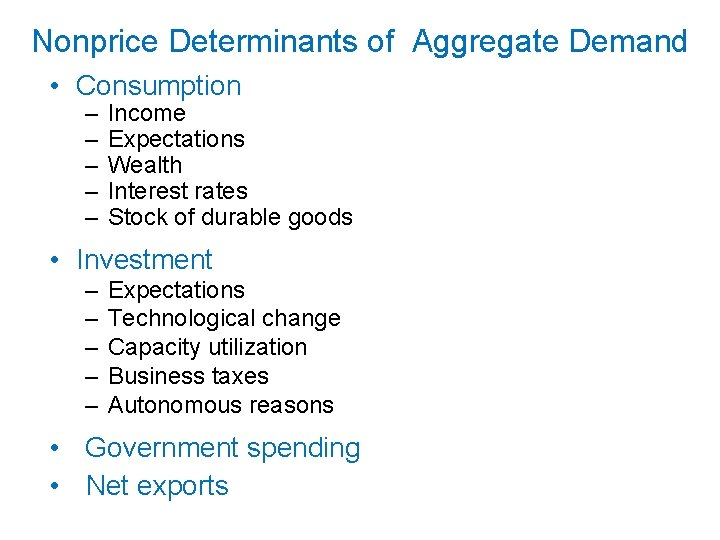
Nonprice Determinants of Aggregate Demand • Consumption – – – Income Expectations Wealth Interest rates Stock of durable goods • Investment – – – Expectations Technological change Capacity utilization Business taxes Autonomous reasons • Government spending • Net exports
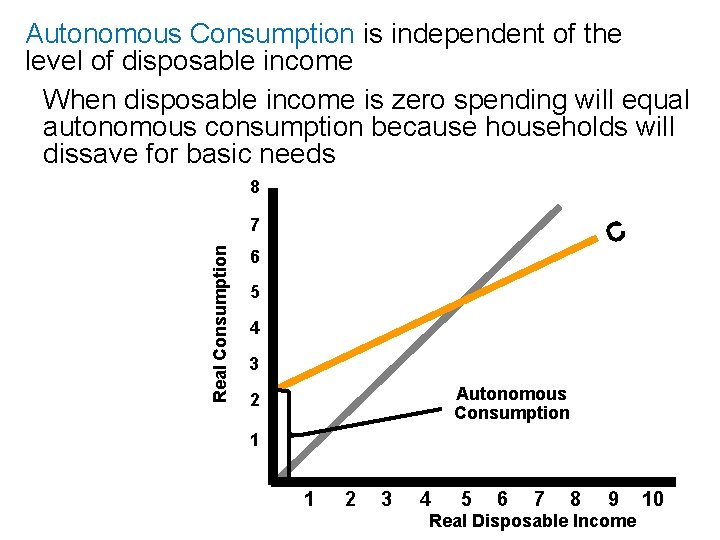
Autonomous Consumption is independent of the level of disposable income When disposable income is zero spending will equal autonomous consumption because households will dissave for basic needs 8 Real Consumption 7 C 6 5 4 3 Autonomous Consumption 2 1 1 2 3 4 5 6 7 8 9 Real Disposable Income 10
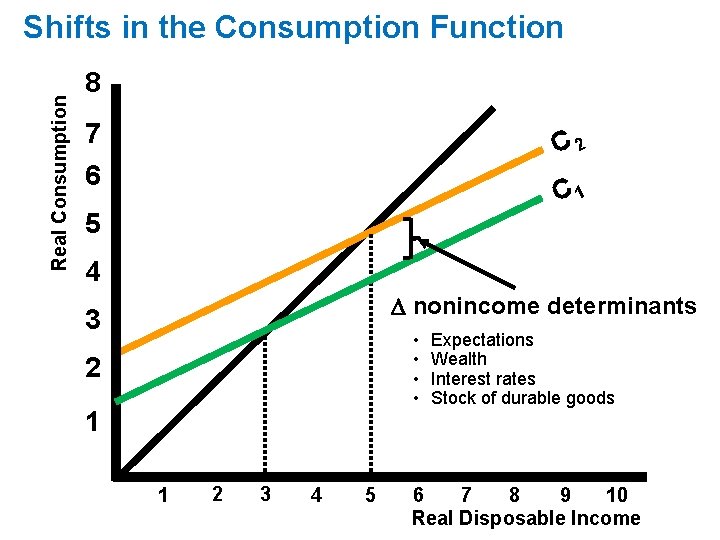
Real Consumption Shifts in the Consumption Function 8 7 C 2 6 C 1 5 4 nonincome determinants 3 • • 2 1 1 2 3 4 5 Expectations Wealth Interest rates Stock of durable goods 6 7 8 9 10 Real Disposable Income
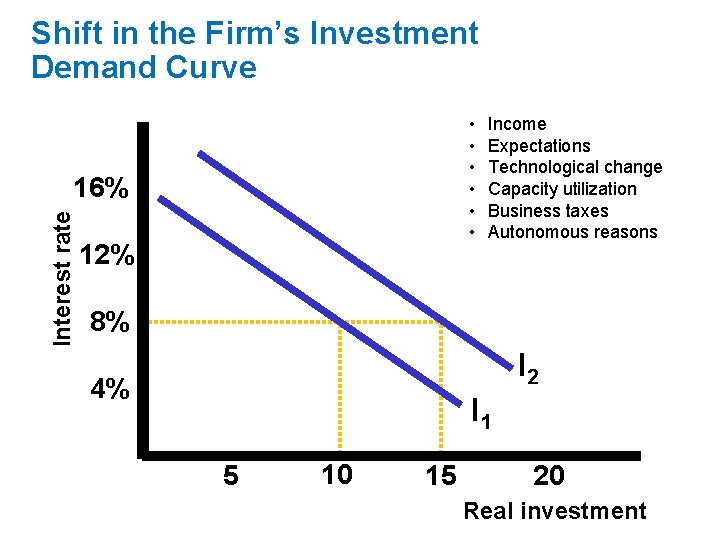
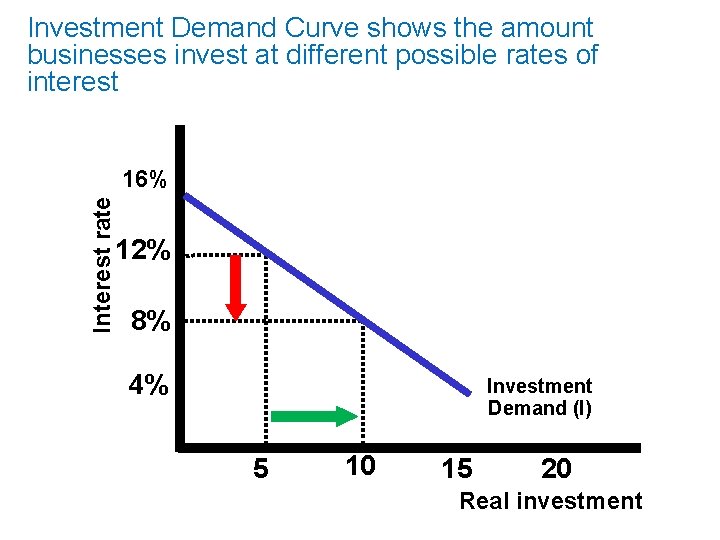
Shift in the Firm’s Investment Demand Curve • • • Interest rate 16% 12% Income Expectations Technological change Capacity utilization Business taxes Autonomous reasons 8% I 2 4% I 1 5 10 15 20 Real investment
Shifts in Aggregate Demand Curve • Consumption: – Income: there is a direct relationship between changes in real disposable income and changes in consumption – Expectations: Consumers expectations of things to happen in the future will affect their spending decisions today – Wealth: There is a direct relationship between a change in wealth and a change in consumption – Interest rates: There is an indirect relationship between a change in interest rates and a change in consumption – Stock of durable goods: When durable goods are suppressed, like during WWII, afterwards there is an increase in the demand for goods not previously made available
Shifts in Aggregate Demand Curve • Investments: – Expectations: Investors are susceptible to moods of optimism and pessimism – Technological change: New products and new ways of doing things have a big impact on investment decisions – Capacity utilization: • For low utilization firms can meet an increase in demand without expanding • For high utilization firms must increase investment to meet an increase in demand – Business taxes: Business decisions depend on the expected after-tax rate of profit – Autonomous reasons: Spending that does not vary with the current level of disposable income – Interest Rate: There is an indirect relationship between a change in interest rates and a change in investment, all else equal
Investment Demand Curve shows the amount businesses invest at different possible rates of interest Interest rate 16% 12% 8% 4% Investment Demand (I) 5 10 15 20 Real investment
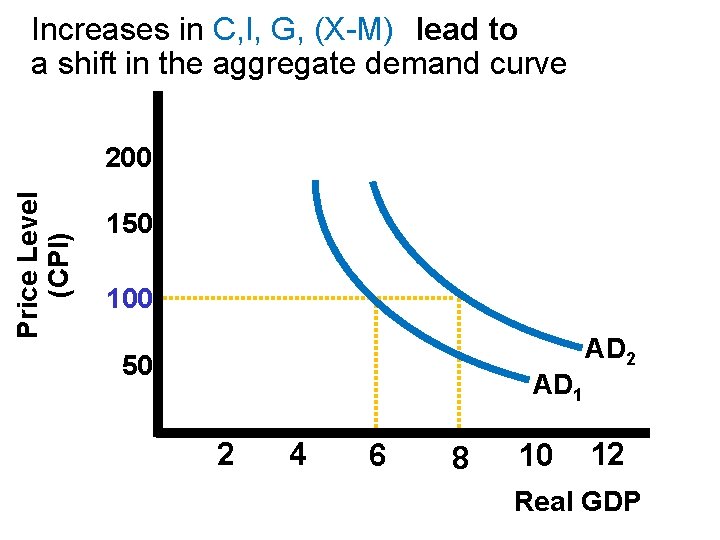
Increases in C, I, G, (X-M) lead to a shift in the aggregate demand curve Price Level (CPI) 200 150 100 AD 2 50 AD 1 2 4 6 8 10 12 Real GDP
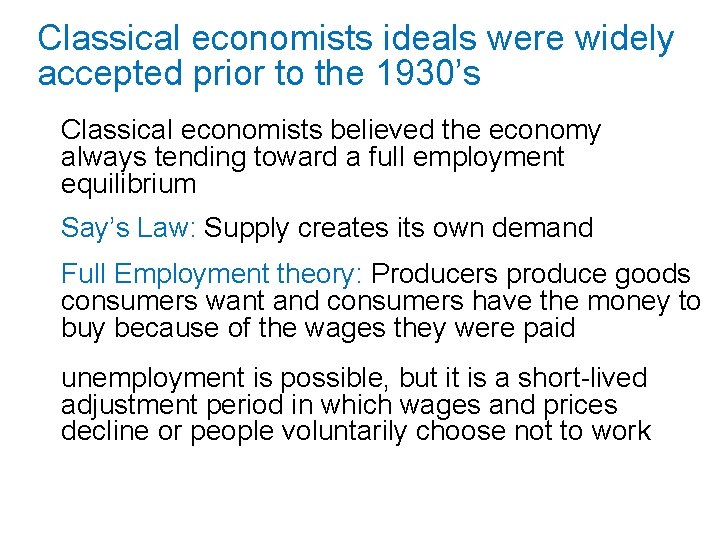
Classical economists ideals were widely accepted prior to the 1930’s Classical economists believed the economy always tending toward a full employment equilibrium Say’s Law: Supply creates its own demand Full Employment theory: Producers produce goods consumers want and consumers have the money to buy because of the wages they were paid unemployment is possible, but it is a short-lived adjustment period in which wages and prices decline or people voluntarily choose not to work
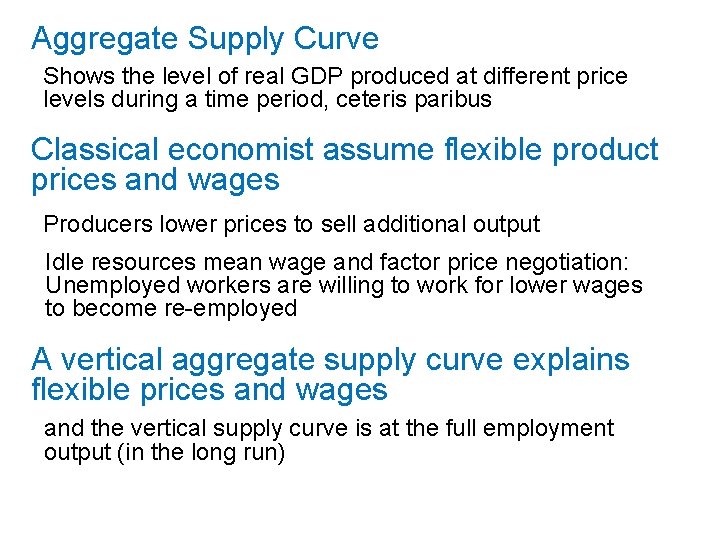
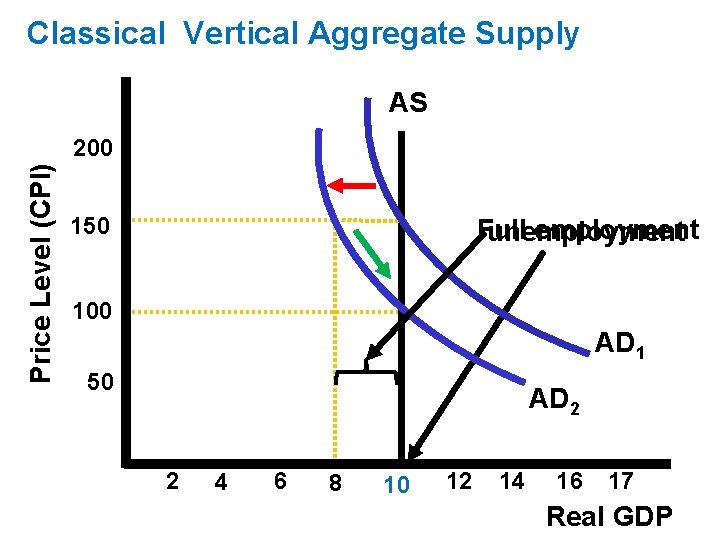
Aggregate Supply Curve Shows the level of real GDP produced at different price levels during a time period, ceteris paribus Classical economist assume flexible product prices and wages Producers lower prices to sell additional output Idle resources mean wage and factor price negotiation: Unemployed workers are willing to work for lower wages to become re-employed A vertical aggregate supply curve explains flexible prices and wages and the vertical supply curve is at the full employment output (in the long run)
Classical Vertical Aggregate Supply AS Price Level (CPI) 200 150 Full employment unemployment 100 AD 1 50 AD 2 2 4 6 8 10 12 14 16 17 Real GDP
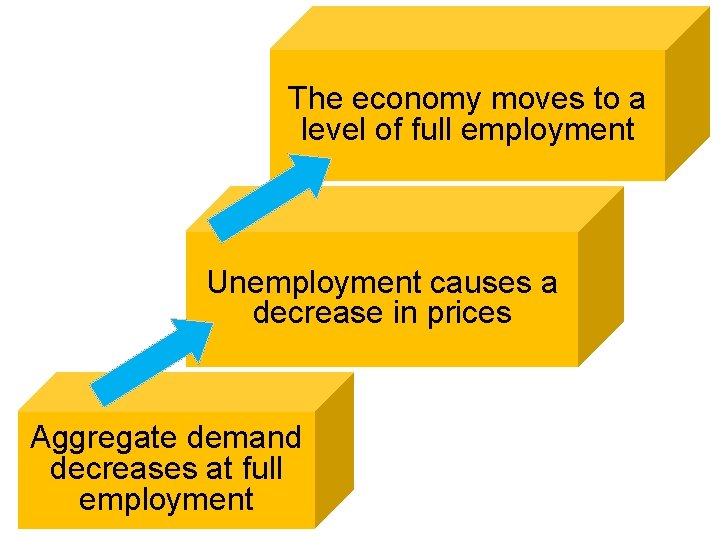
The economy moves to a level of full employment Unemployment causes a decrease in prices Aggregate demand decreases at full employment
Then comes the Great Depression of the 1930’s Extended long term unemployment for which the classical model did not explain Keynesian Model John Maynard Keynes: A British economist (18831946) who offered an explanation of the Great Depression of the 1930’s Keynes wrote the book: The General Theory of Employment, Interest, and Money Kenyes’ theory suggest demand can be forever inadequate for an economy to achieve full employment
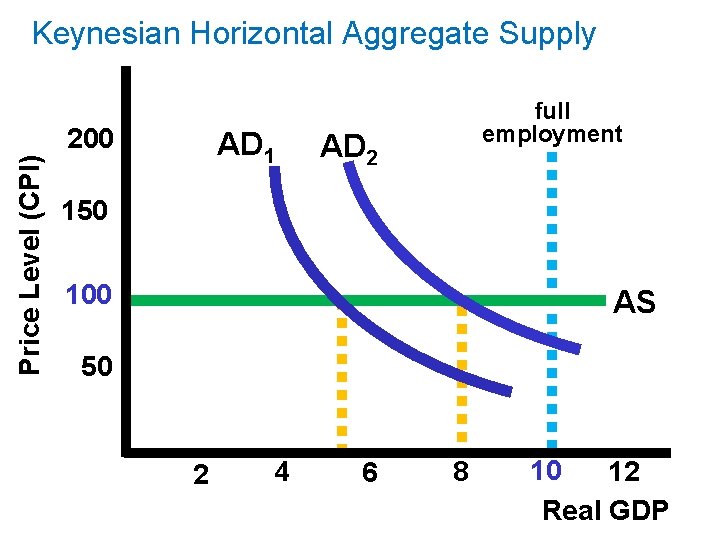
Keynesian Horizontal Aggregate Supply Price Level (CPI) 200 AD 1 full employment AD 2 150 100 AS 50 2 4 6 8 10 12 Real GDP
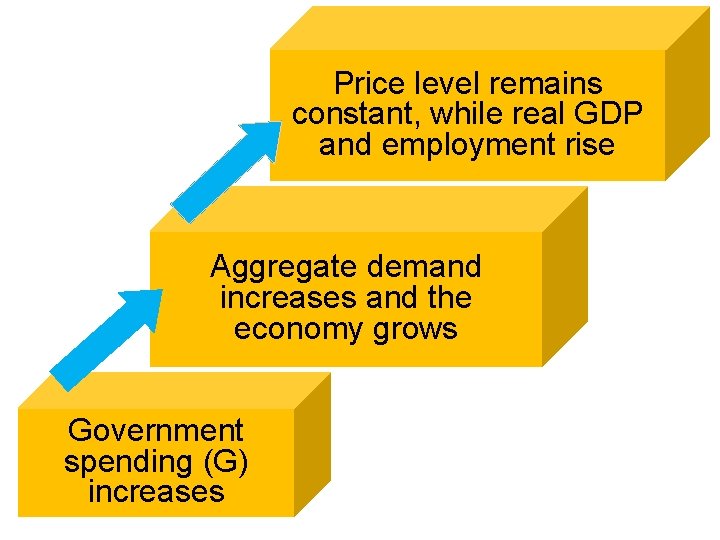
Price level remains constant, while real GDP and employment rise Aggregate demand increases and the economy grows Government spending (G) increases
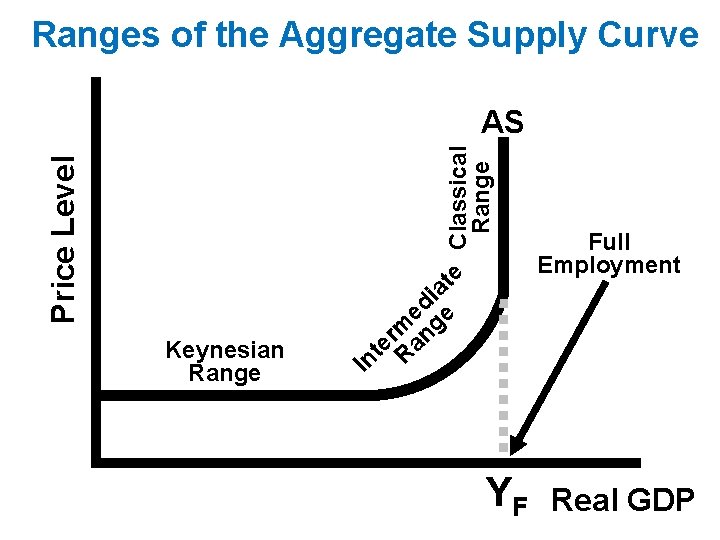
Understanding the Different Theories Classical economists believe the economy normally operates at its full employment in the long run the price level of products and production costs change by the same percentage in order to maintain full employment Supply creates it’s own demand Keynesians economists believe that because prices and wages are inflexible the economy can have long term unemployment shifts in aggregate demand will restore a depressed economy to full employment in the long run we’re all dead
Ranges of the Aggregate Supply Curve Price Level Classical Range AS Keynesian Range e t a i ed ge m n r e a t In R YF Full Employment Real GDP
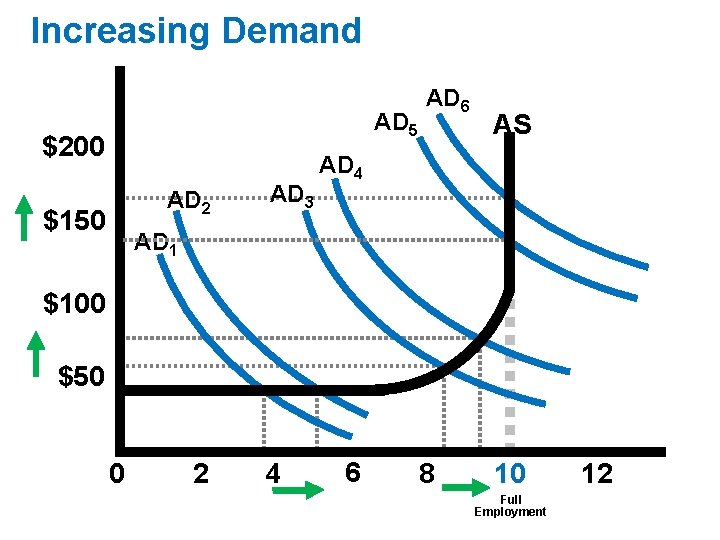
Increasing Demand AD 5 $200 AD 2 $150 AD 3 AD 6 AS AD 4 AD 1 $100 $50 0 2 4 6 8 10 Full Employment 12
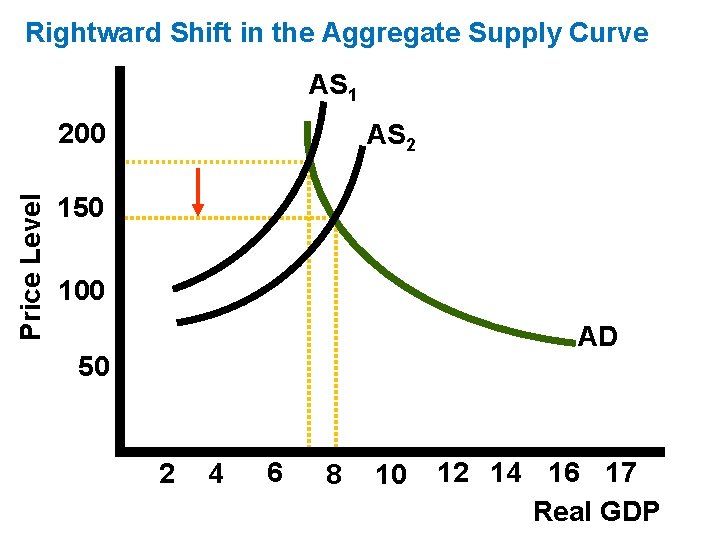
Rightward Shift in the Aggregate Supply Curve AS 1 Price Level 200 AS 2 150 100 AD 50 2 4 6 8 10 12 14 16 17 Real GDP
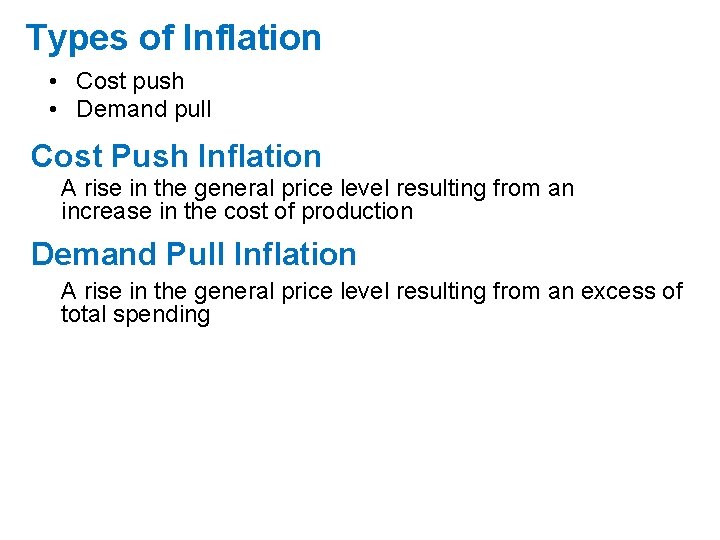
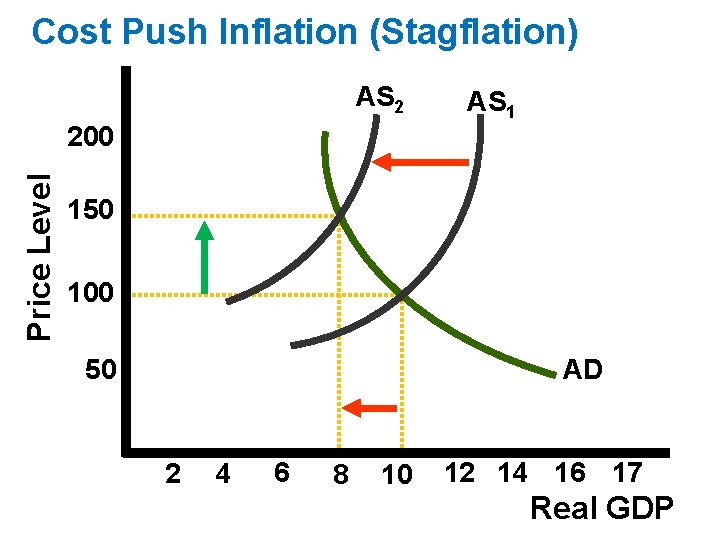
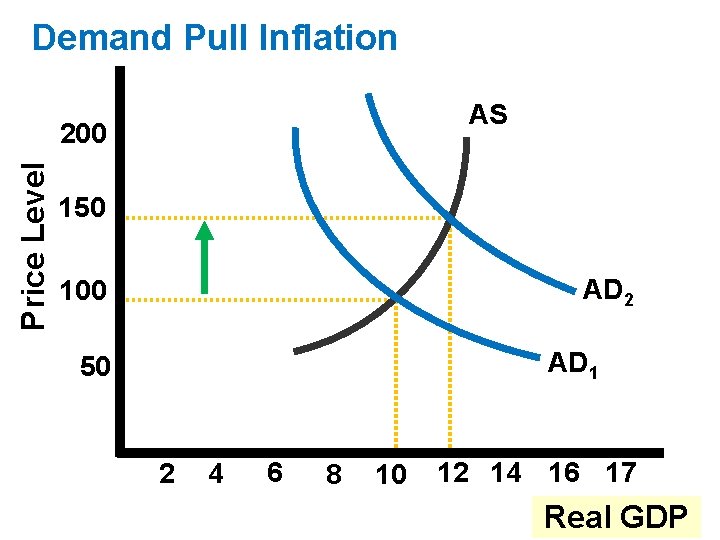
Types of Inflation • Cost push • Demand pull Cost Push Inflation A rise in the general price level resulting from an increase in the cost of production Demand Pull Inflation A rise in the general price level resulting from an excess of total spending
Cost Push Inflation (Stagflation) AS 2 Price Level 200 AS 1 150 100 50 AD 2 4 6 8 10 12 14 16 17 Real GDP
Demand Pull Inflation AS Price Level 200 150 AD 2 100 AD 1 50 2 4 6 8 10 12 14 16 17 Real GDP
Other Shifts in AD & AS Stagflation High unemployment and rapid inflation exist simultaneously The business cycle Shifts in the aggregate demand aggregate supply curves
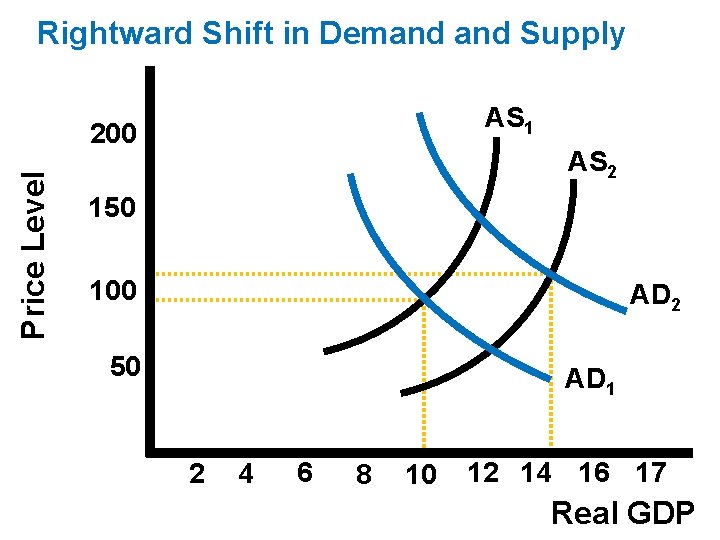
Rightward Shift in Demand Supply AS 1 Price Level 200 AS 2 150 100 AD 2 50 AD 1 2 4 6 8 10 12 14 16 17 Real GDP
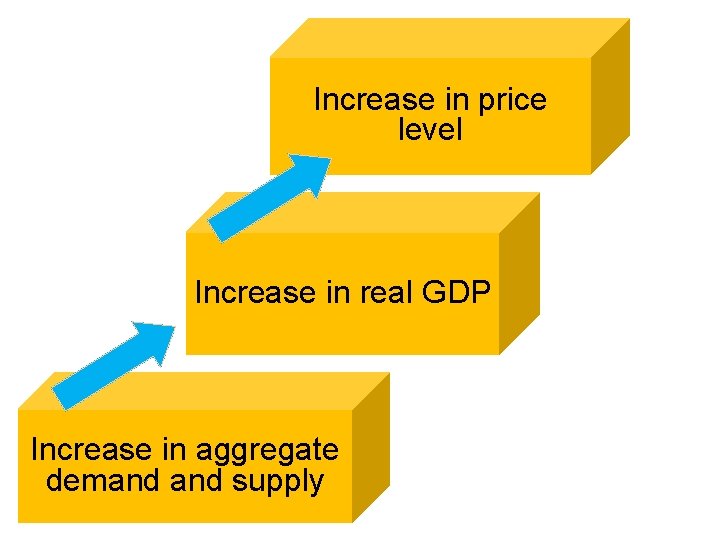
Increase in price level Increase in real GDP Increase in aggregate demand supply
Additional Material
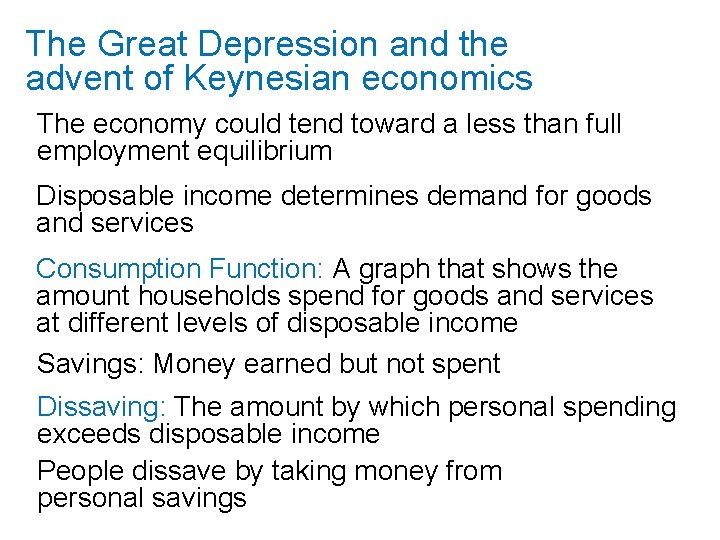
The Great Depression and the advent of Keynesian economics The economy could tend toward a less than full employment equilibrium Disposable income determines demand for goods and services Consumption Function: A graph that shows the amount households spend for goods and services at different levels of disposable income Savings: Money earned but not spent Dissaving: The amount by which personal spending exceeds disposable income People dissave by taking money from personal savings
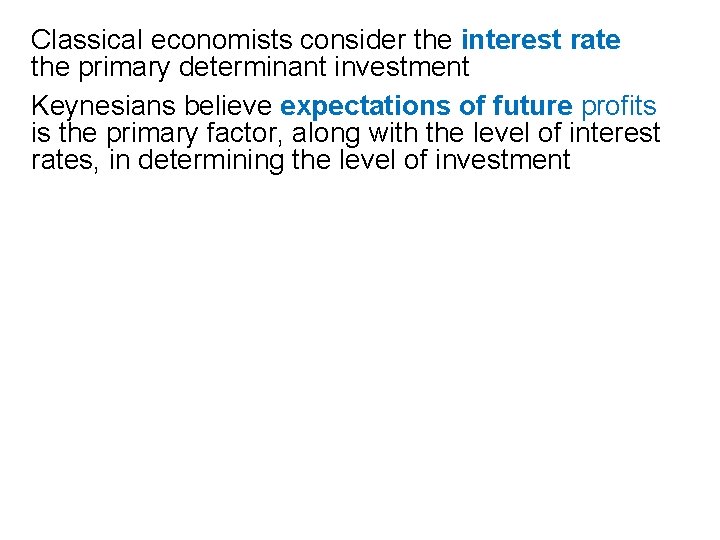
Classical economists consider the interest rate the primary determinant investment Keynesians believe expectations of future profits is the primary factor, along with the level of interest rates, in determining the level of investment