
Aggregate Demand Introduction to ADAS Model Most important
- Slides: 10
Aggregate Demand Introduction to AD/AS Model Most important model in AP Macro
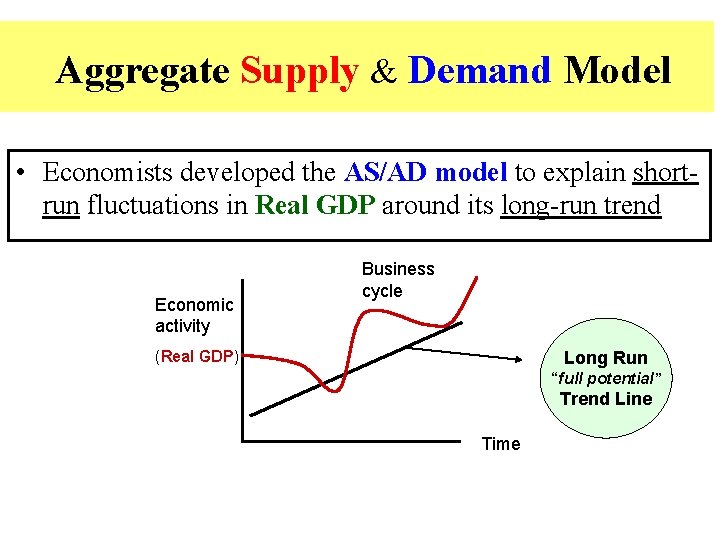
Aggregate Supply & Demand Model • Economists developed the AS/AD model to explain shortrun fluctuations in Real GDP around its long-run trend Economic activity Business cycle (Real GDP) Long Run “full potential” Trend Line Time
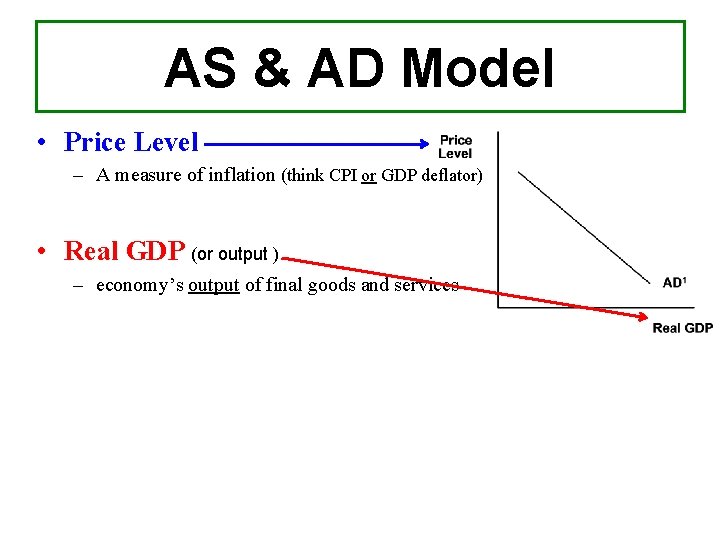
AS & AD Model • Price Level – A measure of inflation (think CPI or GDP deflator) • Real GDP (or output ) – economy’s output of final goods and services
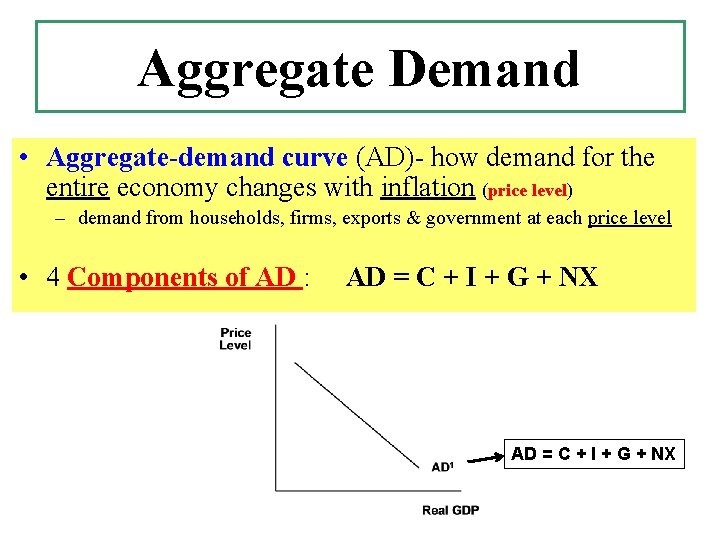
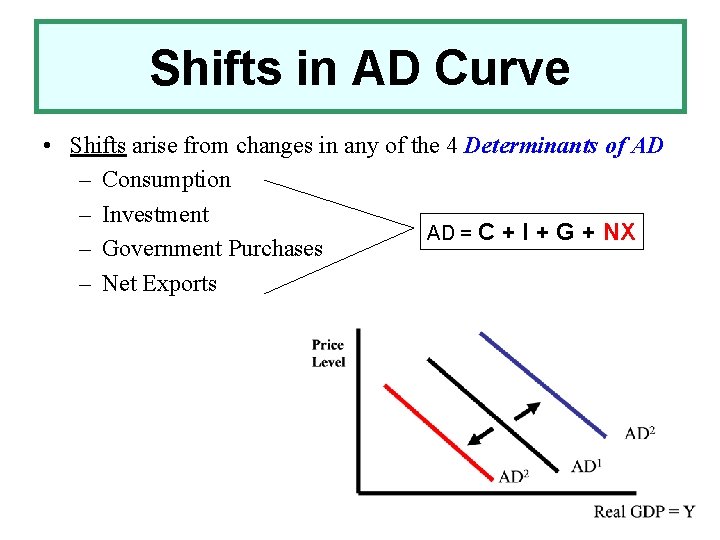
Aggregate Demand • Aggregate-demand curve (AD)- how demand for the entire economy changes with inflation (price level) – demand from households, firms, exports & government at each price level • 4 Components of AD : AD = C + I + G + NX
Shifts in AD Curve • Shifts arise from changes in any of the 4 Determinants of AD – Consumption – Investment AD = C + I + G + NX – Government Purchases – Net Exports
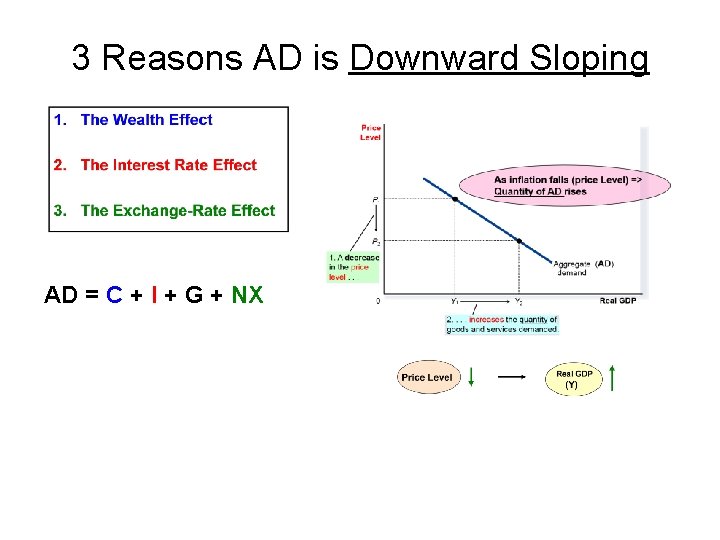
3 Reasons AD is Downward Sloping AD = C + I + G + NX
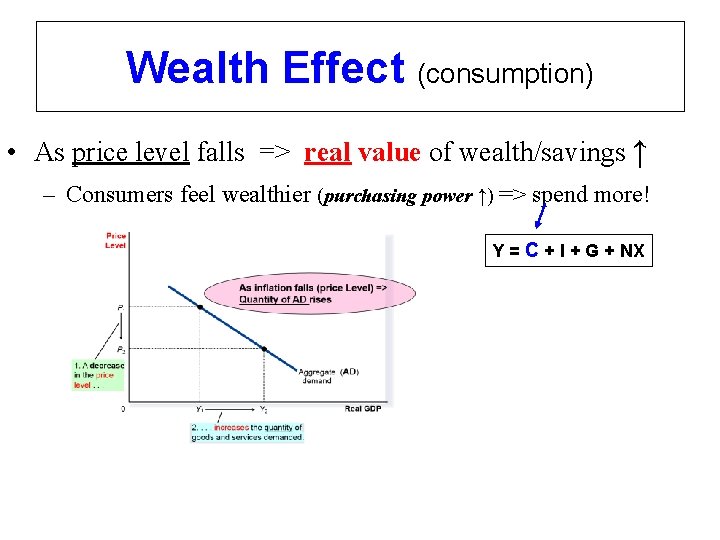
Wealth Effect (consumption) • As price level falls => real value of wealth/savings ↑ – Consumers feel wealthier (purchasing power ↑) => spend more! Y = C + I + G + NX
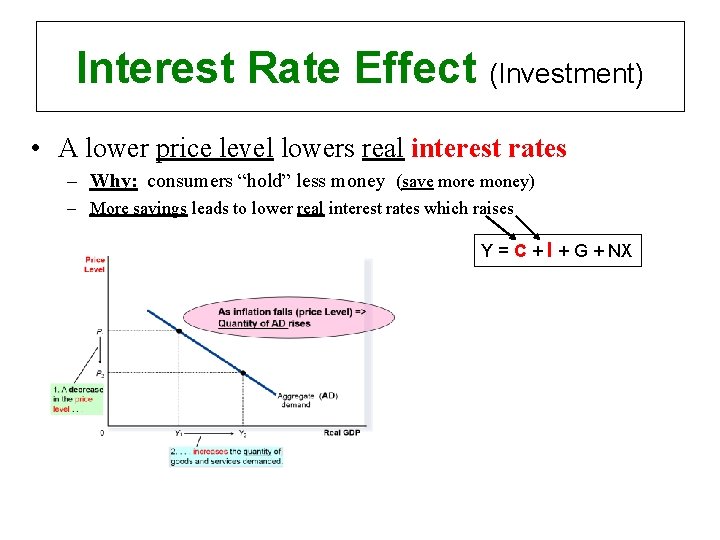
Interest Rate Effect (Investment) • A lower price level lowers real interest rates – Why: consumers “hold” less money (save more money) – More savings leads to lower real interest rates which raises Y = C + I + G + NX
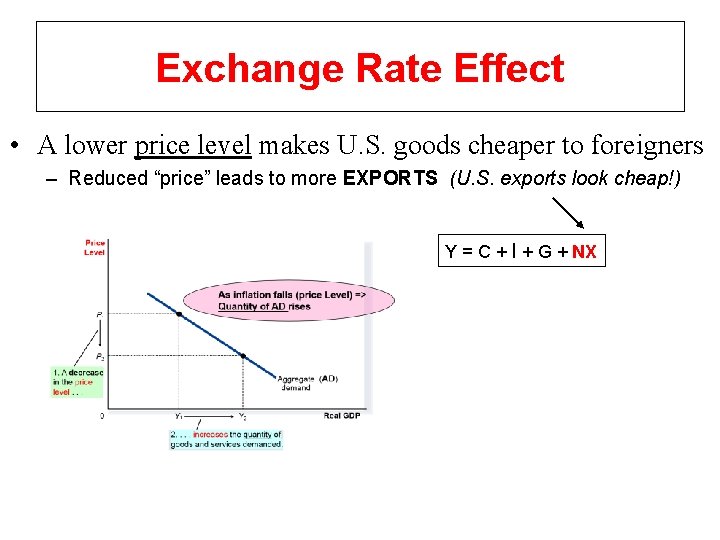
Exchange Rate Effect • A lower price level makes U. S. goods cheaper to foreigners – Reduced “price” leads to more EXPORTS (U. S. exports look cheap!) Y = C + I + G + NX NX ↑
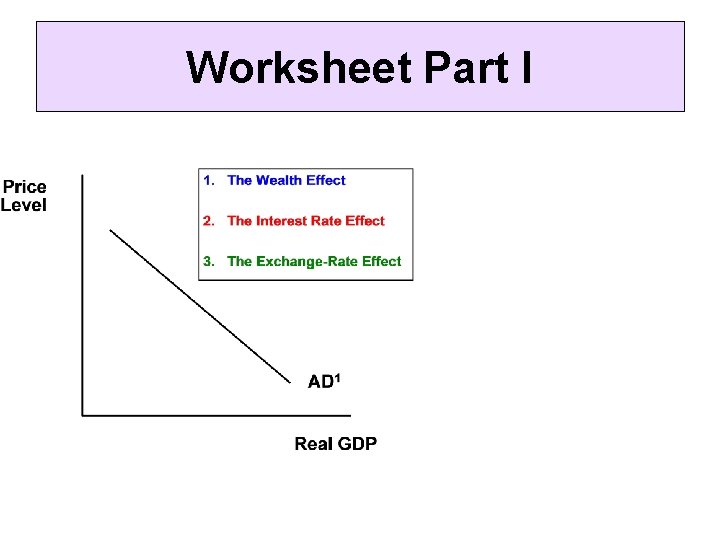
Worksheet Part I