
Ages and Stages Infants and Toddlers Family Development
- Slides: 36
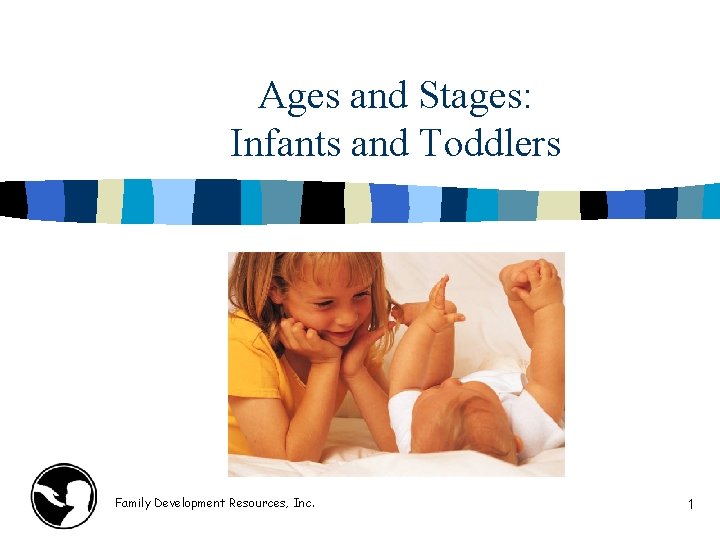
Ages and Stages: Infants and Toddlers Family Development Resources, Inc. 1
Why Learn About Developmental Stages? • • To become the best parents we can. It makes a child’s life easier and happier. To have appropriate expectations for children. So children can feel good about their capabilities. 2
Developmental Stages • There are four things we know about child development: • The brain of young children is still developing. • Each stage has certain tasks that must be accomplished to move on to the next stage. 3
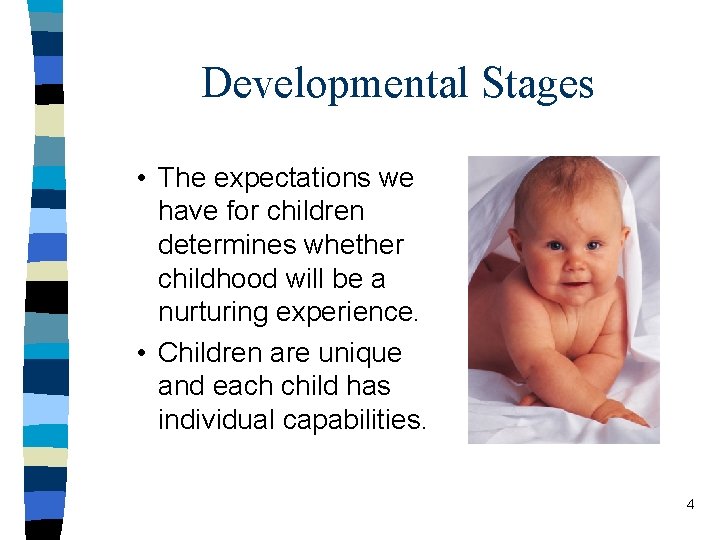
Developmental Stages • The expectations we have for children determines whether childhood will be a nurturing experience. • Children are unique and each child has individual capabilities. 4
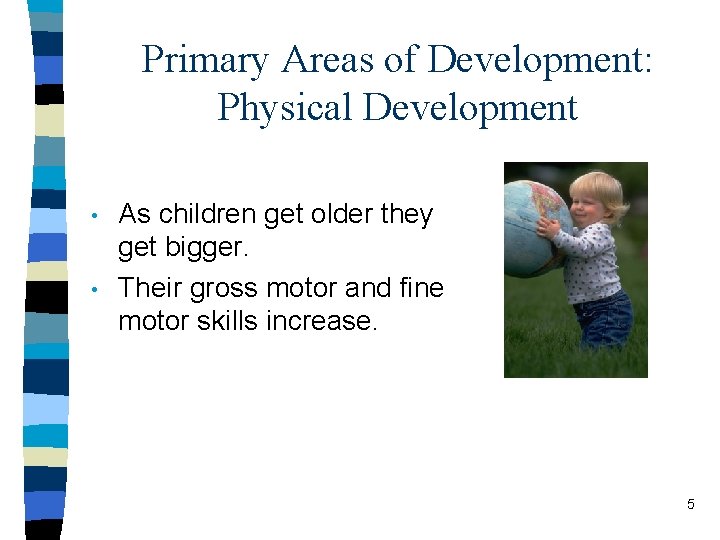
Primary Areas of Development: Physical Development • • As children get older they get bigger. Their gross motor and fine motor skills increase. 5
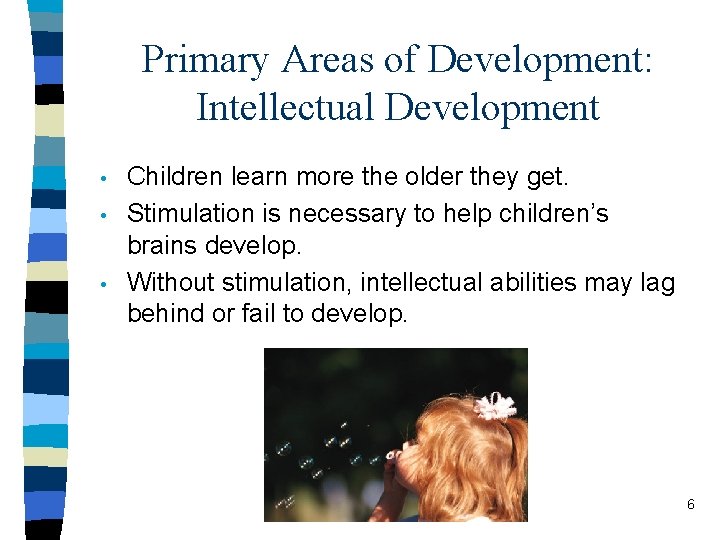
Primary Areas of Development: Intellectual Development • • • Children learn more the older they get. Stimulation is necessary to help children’s brains develop. Without stimulation, intellectual abilities may lag behind or fail to develop. 6
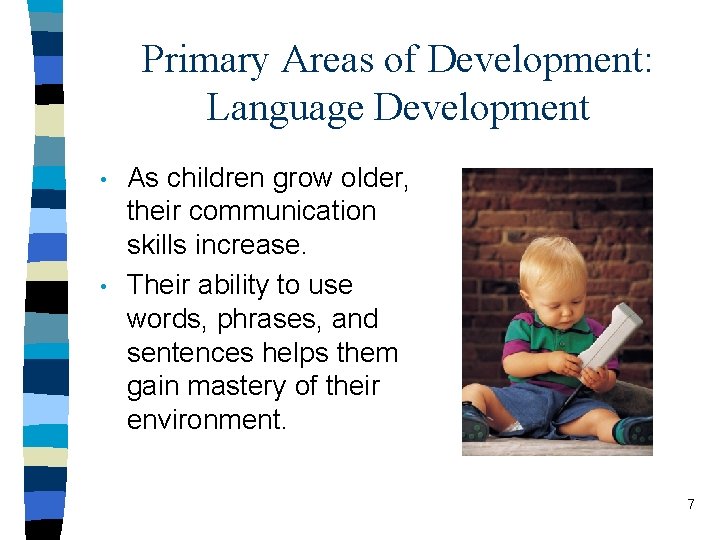
Primary Areas of Development: Language Development • • As children grow older, their communication skills increase. Their ability to use words, phrases, and sentences helps them gain mastery of their environment. 7
Primary Areas of Development: Social/Emotional Development • • The way we treat children and the care they receive affect the way they mature. The ability for children to use their physical, intellectual, and language skills depends on how well children develop socially and emotionally. 8
Developmental Stage: Infancy • • For years, psychologists thought that babies were incompetent. Today we know this is untrue. Very young infants can begin to make sense of their new environment. Infant’s skills increase rapidly during the 1 st year. 9
Developmental Stage: Infancy • Physical Development • The major part of the infant’s first year is devoted to survival. • The infant is completely helpless at birth and is totally dependent upon the parents for help. • Being fed, held, touched, looked at, and talked to have significant impact on the growth of the child. 10
What Can Babies Do? Physical Development 0 -6 months • • Automatic reflexes such as hand-to-mouth. Focus on objects 8 -15 inches away. Make cooing, crying, and grunting sounds. Will lift head when on stomach. Suck fingers. May be pulled slowly by hands to a sitting position. May be starting to teethe. 7 -12 months • • Sit up without support for a short time. Begin to crawl by pulling self forward. Can pull self up to stand. Feed self pieces of food with hands. Start practicing walking but continues crawling. Begin a tottering walk with legs wide apart. Sit independently on hard surface. 11
Developmental Stage: Infancy • Intellectual Development • Physical and intellectual development are closely related to one another. • The child learns about the world through exploration of objects, by moving around, and through interactions with the parents. • The behavior of infants during the first year helps them understand, adapt, and interact effectively with their world. 12
What Can Babies Do? Intellectual Development 0 -6 months • • • Cries to have needs met. Recognizes familiar voices or faces. Responds to strangers by crying or staring. Follows moving objects with eyes. Likes repetition of simple acts like opening and closing hands. Baby still cries but also laughs out loud. 7 -12 months • • Can imitate sounds; watches your mouth with interest when talking. Child repeats an act to observe change in the environment. Responds to and imitates facial expressions of others. Child uses responses to solve problems and to achieve some goal. 13
Developmental Stage: Infancy • Language Development • Language develops slowly during the first year of life. • An adult’s vocabulary is largely determined by the speech they heard in the first three years of life. • The first two years are the most important. • Parents who talk and respond to their babies help facilitate language development. 14
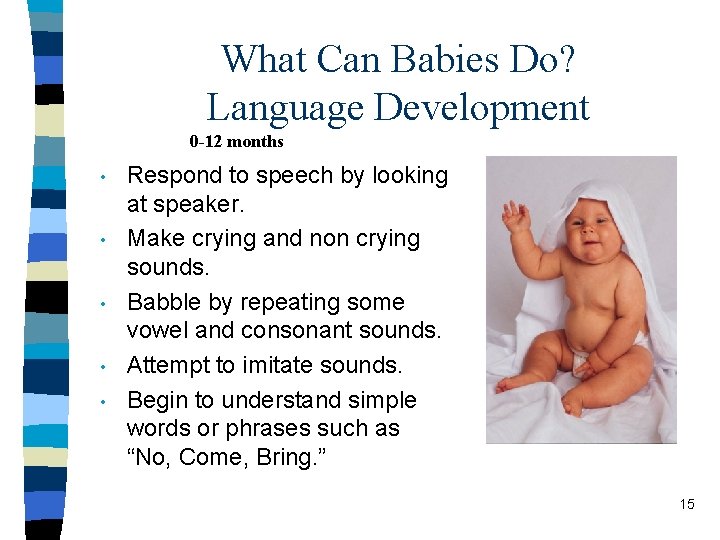
What Can Babies Do? Language Development 0 -12 months • • • Respond to speech by looking at speaker. Make crying and non crying sounds. Babble by repeating some vowel and consonant sounds. Attempt to imitate sounds. Begin to understand simple words or phrases such as “No, Come, Bring. ” 15
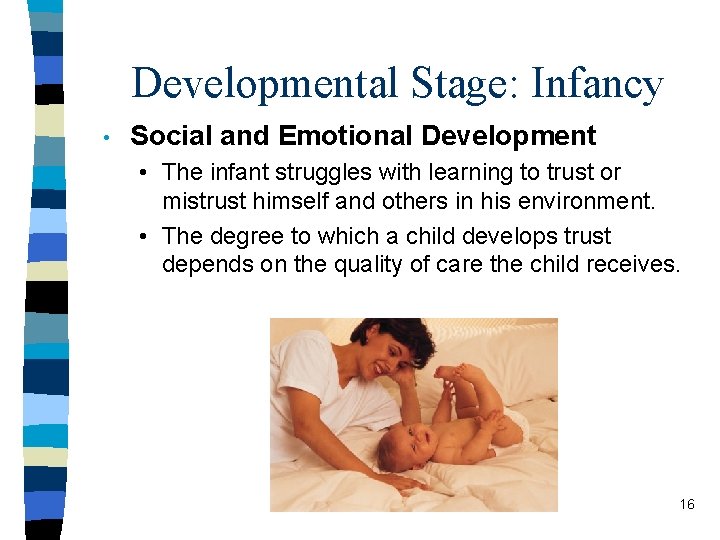
Developmental Stage: Infancy • Social and Emotional Development • The infant struggles with learning to trust or mistrust himself and others in his environment. • The degree to which a child develops trust depends on the quality of care the child receives. 16
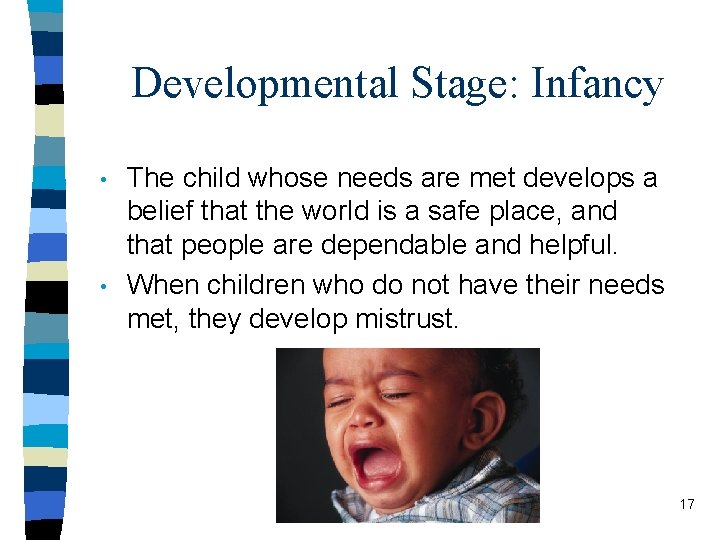
Developmental Stage: Infancy • • The child whose needs are met develops a belief that the world is a safe place, and that people are dependable and helpful. When children who do not have their needs met, they develop mistrust. 17
What Can Babies Do? Social/Emotional Development 0 -6 months • • • Likes high-pitched voices and will usually quiet down when they hear them. Smiles spontaneously. Loves to be played with and likes to be picked up. Responds differently to strangers than to familiar persons. May give joyful kicks and gurgle and laugh to engage parent in play. 7 -12 months • • • May become attached to a particular toy. Beginning to learn to be independent. May go away from you, but will quickly return. Will express frustration for failure to master a task. Loves an audience and will repeat any behavior that gets attention. Tantrums may occur. 18
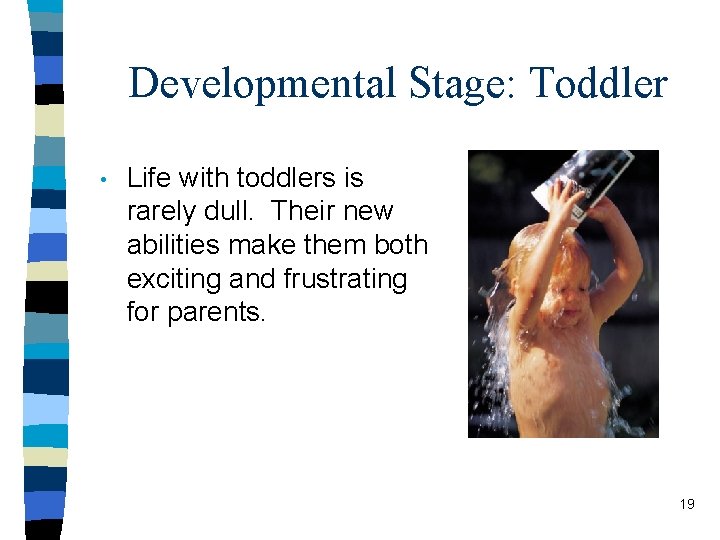
Developmental Stage: Toddler • Life with toddlers is rarely dull. Their new abilities make them both exciting and frustrating for parents. 19
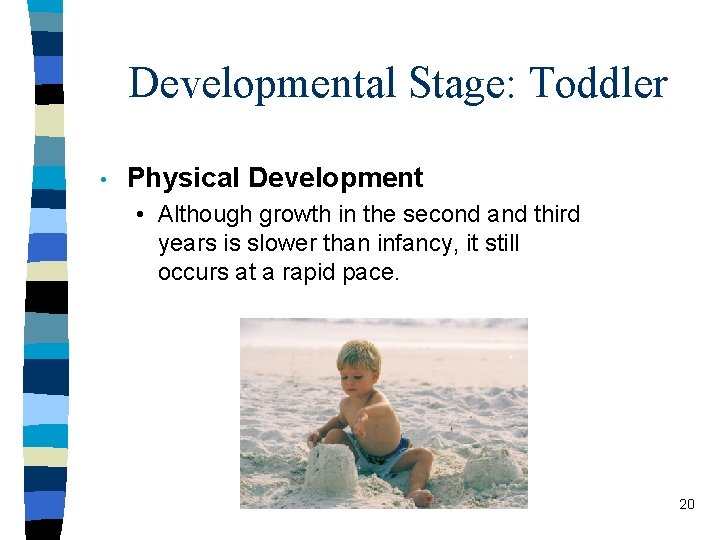
Developmental Stage: Toddler • Physical Development • Although growth in the second and third years is slower than infancy, it still occurs at a rapid pace. 20
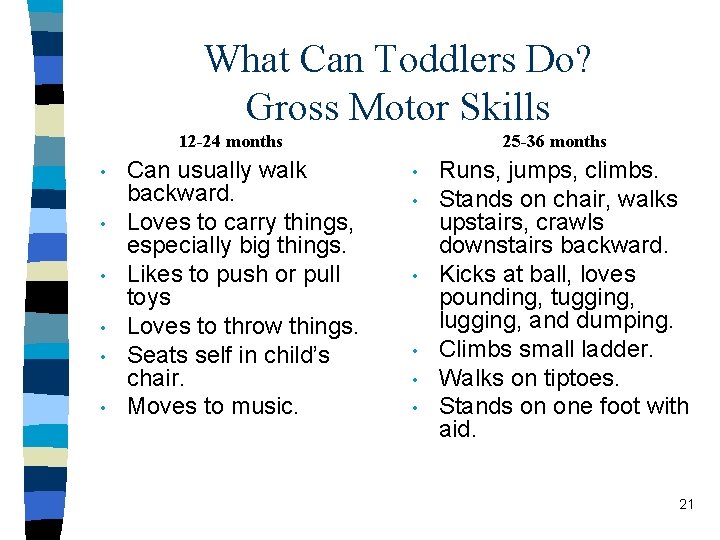
What Can Toddlers Do? Gross Motor Skills 12 -24 months • • • Can usually walk backward. Loves to carry things, especially big things. Likes to push or pull toys Loves to throw things. Seats self in child’s chair. Moves to music. 25 -36 months • • • Runs, jumps, climbs. Stands on chair, walks upstairs, crawls downstairs backward. Kicks at ball, loves pounding, tugging, lugging, and dumping. Climbs small ladder. Walks on tiptoes. Stands on one foot with aid. 21
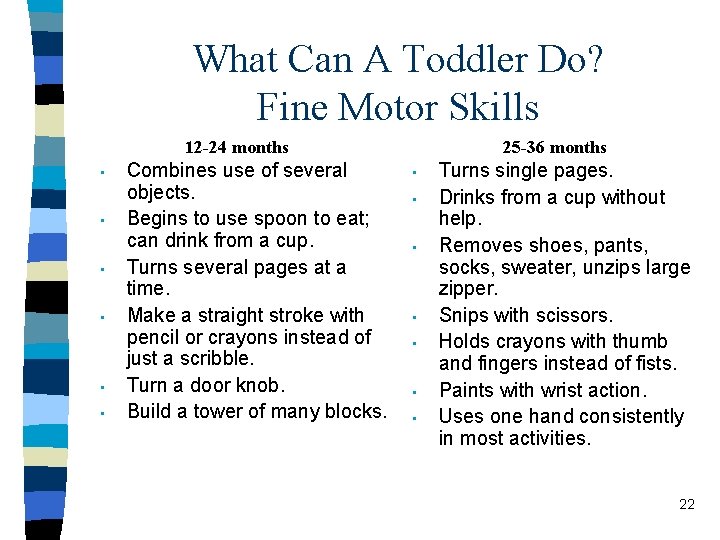
What Can A Toddler Do? Fine Motor Skills 12 -24 months • • • Combines use of several objects. Begins to use spoon to eat; can drink from a cup. Turns several pages at a time. Make a straight stroke with pencil or crayons instead of just a scribble. Turn a door knob. Build a tower of many blocks. 25 -36 months • • Turns single pages. Drinks from a cup without help. Removes shoes, pants, socks, sweater, unzips large zipper. Snips with scissors. Holds crayons with thumb and fingers instead of fists. Paints with wrist action. Uses one hand consistently in most activities. 22
Developmental Stage: Toddler • Intellectual Development • Increased exploration leads to activities that expand the child’s understanding of the world. • Toddlers begin to understand that each object has an individual use. • Such understanding leads to exploration of these objects and how they work. • Toddlers at this stage have been referred to as “little scientists. ” 23
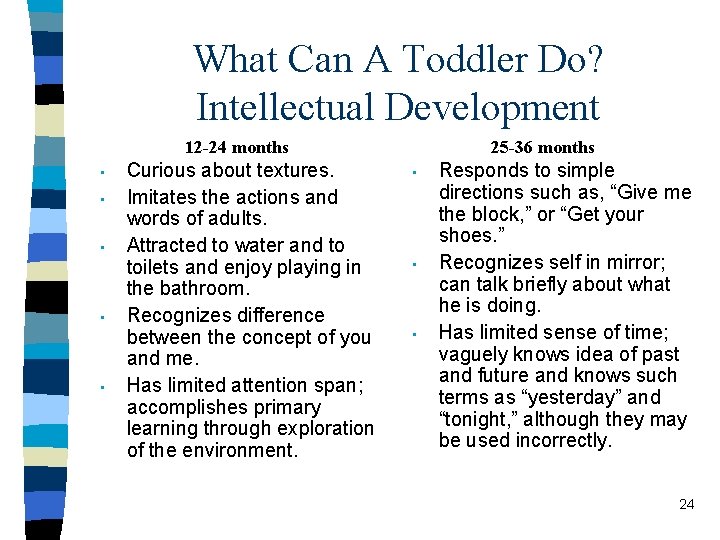
What Can A Toddler Do? Intellectual Development 12 -24 months • • • Curious about textures. Imitates the actions and words of adults. Attracted to water and to toilets and enjoy playing in the bathroom. Recognizes difference between the concept of you and me. Has limited attention span; accomplishes primary learning through exploration of the environment. 25 -36 months • • • Responds to simple directions such as, “Give me the block, ” or “Get your shoes. ” Recognizes self in mirror; can talk briefly about what he is doing. Has limited sense of time; vaguely knows idea of past and future and knows such terms as “yesterday” and “tonight, ” although they may be used incorrectly. 24
Developmental Stage: Toddler • Language Development • Babies begin to produce a few basic words at about one year of life. • By 24 months, most children are speaking phrases and have a wide range of words. • A two year old has a vocabulary of perhaps 50 words, which increases to about 900 words by the time the child is three. 25
Developmental Stage: Toddler • Many factors contribute to the development of language in a child: • A strong, emotional relationship with the parents. • The amount and quality of time spent together. • The amount of talking, asking questions, and responding to what the child says. 26
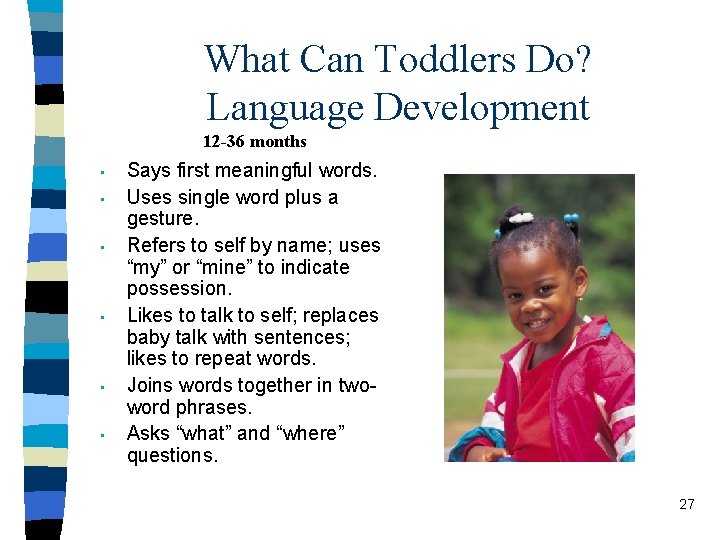
What Can Toddlers Do? Language Development 12 -36 months • • • Says first meaningful words. Uses single word plus a gesture. Refers to self by name; uses “my” or “mine” to indicate possession. Likes to talk to self; replaces baby talk with sentences; likes to repeat words. Joins words together in twoword phrases. Asks “what” and “where” questions. 27
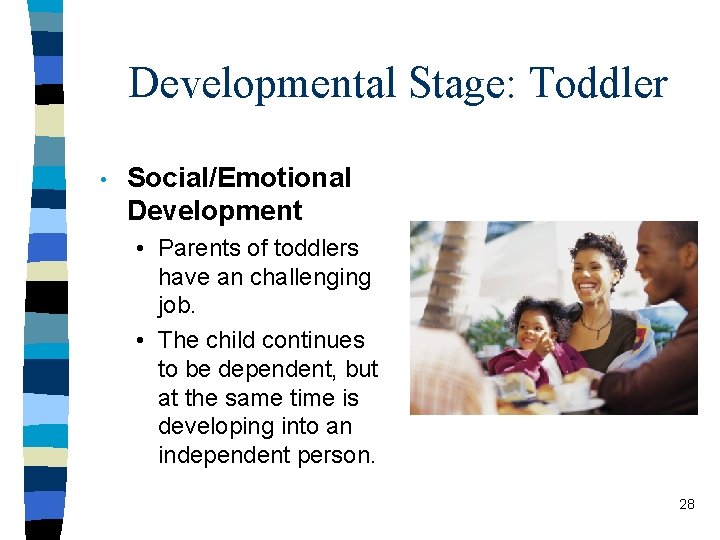
Developmental Stage: Toddler • Social/Emotional Development • Parents of toddlers have an challenging job. • The child continues to be dependent, but at the same time is developing into an independent person. 28
Developmental Stage: Toddler • • • The second and third years of a child’s life focus on the emergence of autonomy. This autonomy is built upon the child’s new motor and mental abilities. The child takes pride in his new accomplishments and wants to do everything himself. It is important during this stage to allow the child to express autonomy. 29
What Can Toddlers Do? Language Development 12 -36 months • • Toddler likes to say the word “no” to express autonomy. Toddler wants to do things by himself, such as eat or dress. Begins to show interest in using the toilet like adults. Likes to play near other children even though they may not play together. Likes to play dress-up to imitate parent’s behavior. May want to hold a favorite toy or blanket or suck thumb to comfort self. May have an imaginary friend. 30
Developmental Stage: Toddler Special Problems • Separation From Parents • Crying at separation is normal. • Throwing temper tantrums at separation is a sign of possible problems. • Children feel fear that can turn into panic during actual separation. • Feelings of security need to be developed, and assurances that the parent will not abandon the child need to be expressed. 31
Developmental Stage: Toddler Special Problems • • • Sometimes children are comforted by having a picture of the parent or an item belonging to the parent to hold until the parent returns. Some children may comfort themselves with a favorite blanket, toy, or their thumb. Never threaten to leave a child as a form of discipline. Be sure to say goodbye to your child before you leave. Do not “sneak out” to avoid upsetting the child. This only makes the child fearful. 32
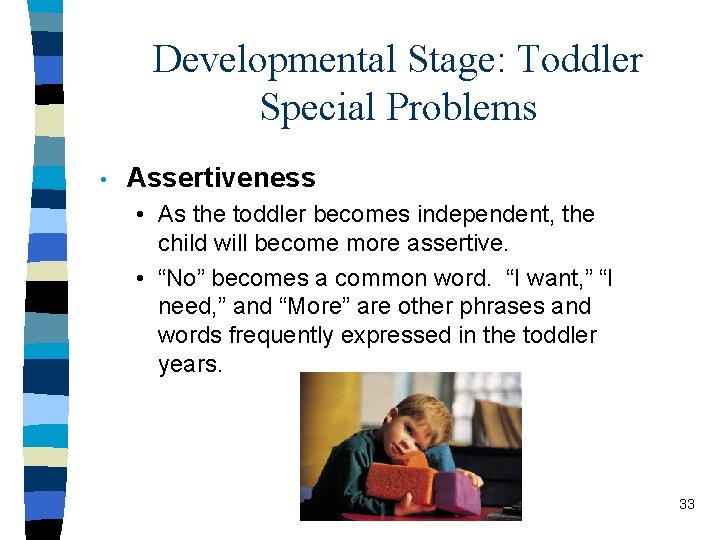
Developmental Stage: Toddler Special Problems • Assertiveness • As the toddler becomes independent, the child will become more assertive. • “No” becomes a common word. “I want, ” “I need, ” and “More” are other phrases and words frequently expressed in the toddler years. 33
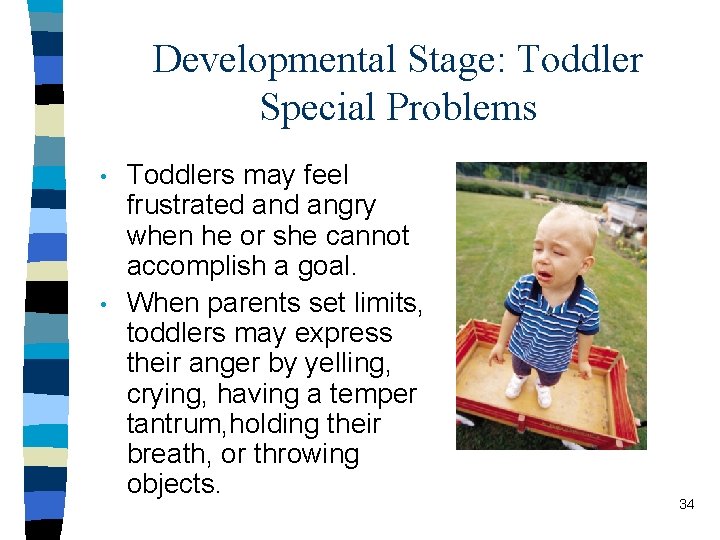
Developmental Stage: Toddler Special Problems • • Toddlers may feel frustrated angry when he or she cannot accomplish a goal. When parents set limits, toddlers may express their anger by yelling, crying, having a temper tantrum, holding their breath, or throwing objects. 34
How To Handle Challenging Behaviors • • Ignore undesirable behavior that is harmless. Praise desirable behavior. Use time-out or loss of a privilege for undesirable behavior that cannot be ignored. As children become more capable and competent at achieving their goals, the tantrums will decrease. 35
Developmental Stage: Toddler • Parents need to help a child explore and grow during this stage. • Provide a safe environment for the child to explore. • Provide a creative environment for the child to explore. • Be involved in the child's exploration. 36