
Agents of Erosion Wind and Waves Wind Erosion

- Slides: 23
Agents of Erosion: Wind and Waves
Wind Erosion § Wind picks up sediment and then drives it against other rocks which will then wear down or weather those rocks. § Erosion of sediments by wind is most common in arid climates and along shorelines.
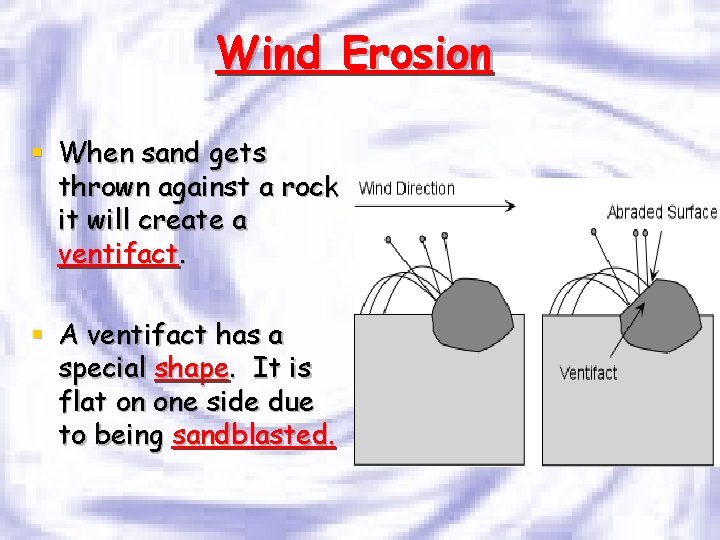
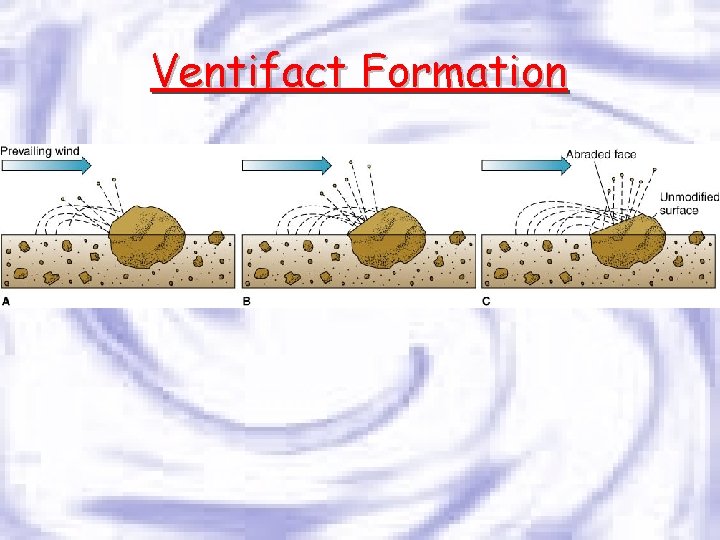
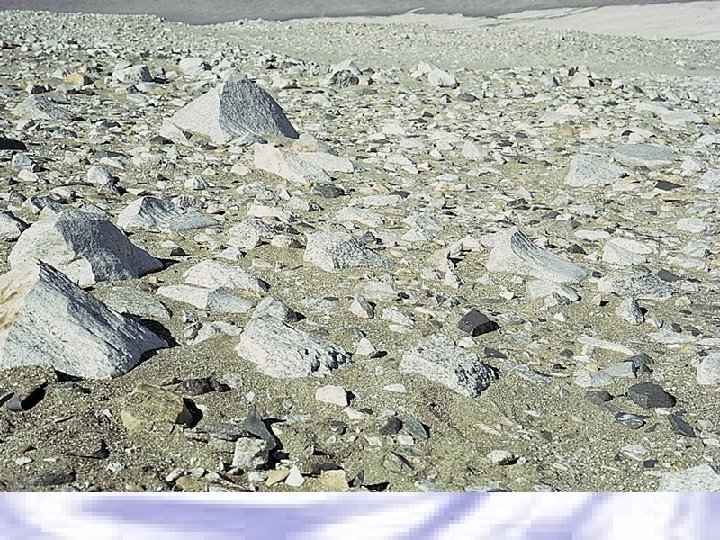
Wind Erosion § When sand gets thrown against a rock it will create a ventifact. § A ventifact has a special shape. It is flat on one side due to being sandblasted.
Ventifact Formation
Wind Deposition § Loess is the name of the actual sediment that gets deposited from wind erosion. § These particles are angular in shape. § How is this different from running water eroded particles? Water particles are smooth, smaller, and round.
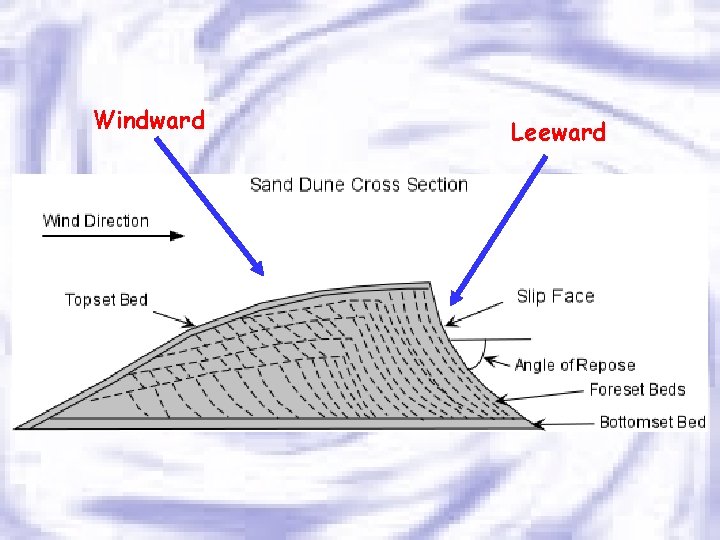
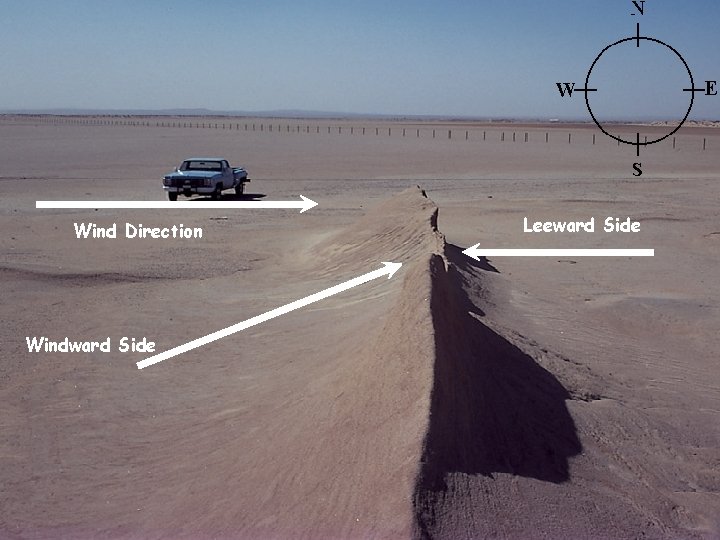
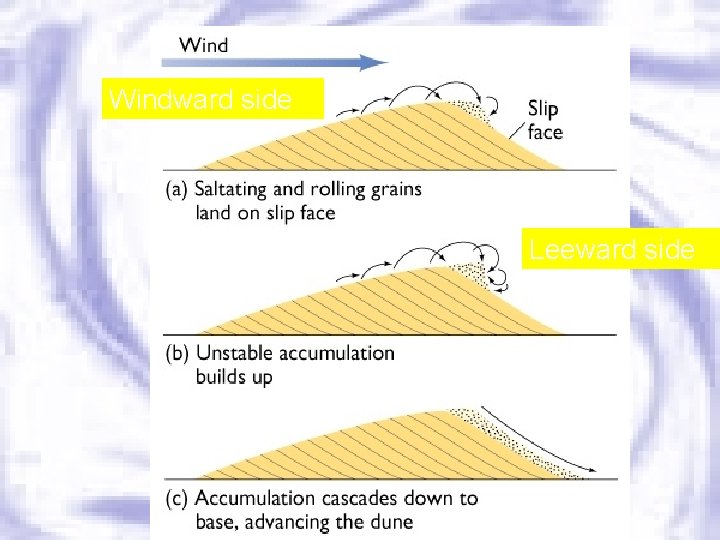
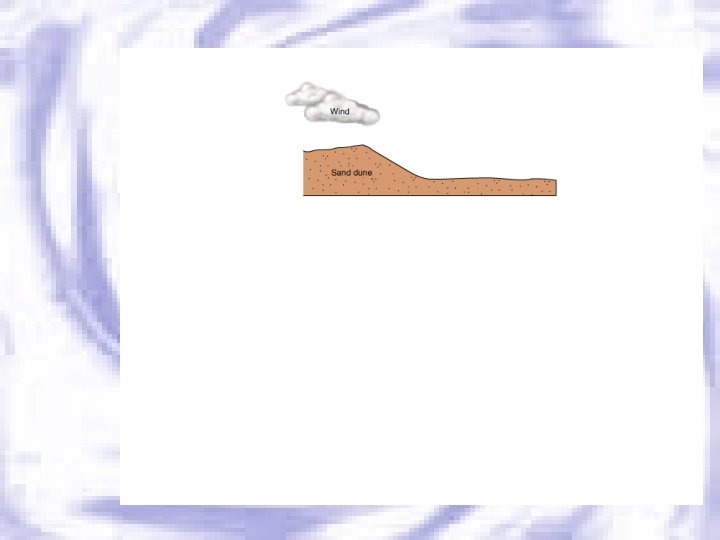
Sand Dunes § Sand dunes are hills of sand that are deposited by wind. § There is always a windward side and a leeward side to a sand dune. § The windward side is gentle and shows which way the wind is blowing. § The leeward side is steeper and on the opposite side the wind blows.
Windward Leeward
Wind Direction Windward Side Leeward Side
Windward side Leeward side
Waves § Waves can be caused by three main things: § 1. Wind § 2. Earthquakes (Tsunami) § 3. Moon (produces tides)
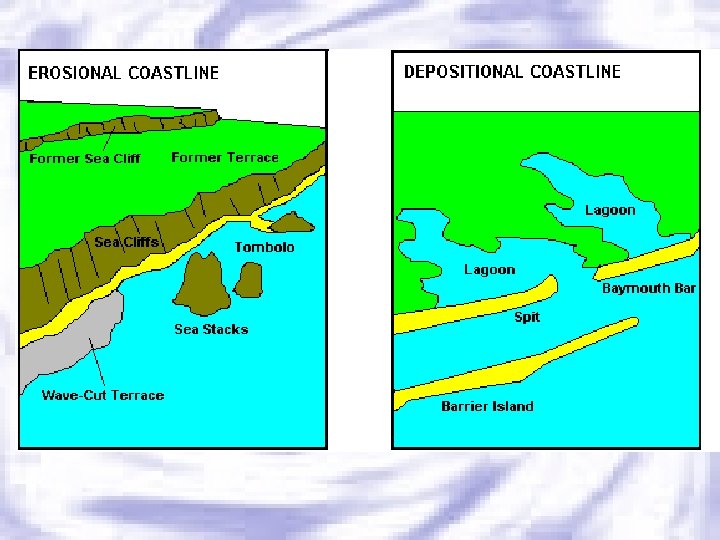
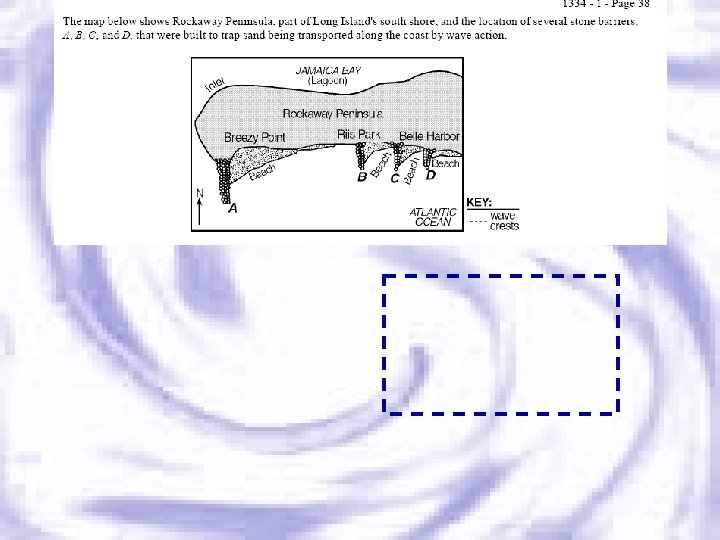
Depositional Features of Waves Erosion and deposition cause changes in shoreline feature, including beaches, sand bars and barrier islands. Wave action rounds sediments as a result of abrasion. Waves approaching a shoreline move sand parallel to the shore within the zone of breaking waves.
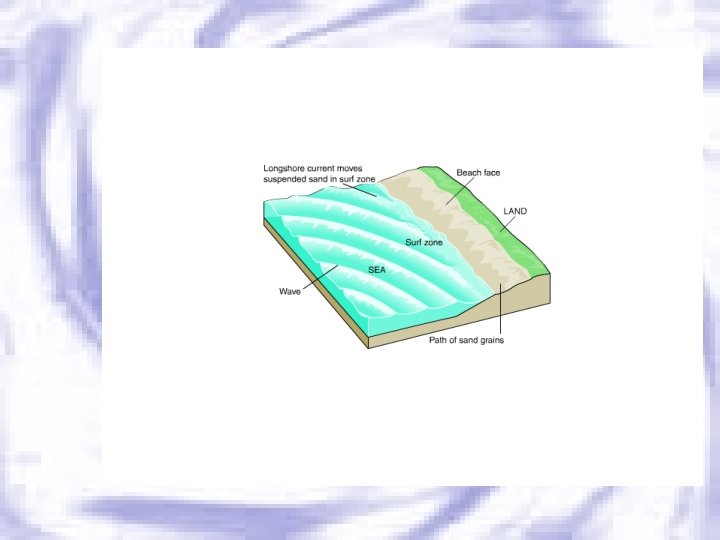
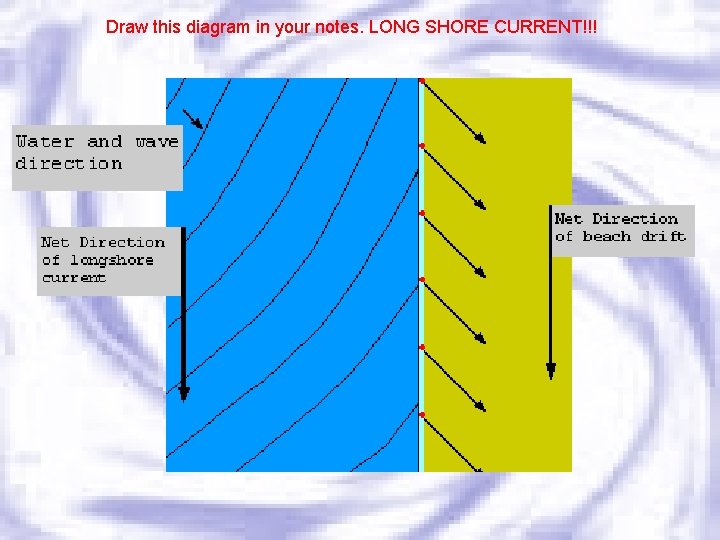
Wave Erosion § A current that flows parallel to the shore is called a longshore current. § Have you ever been in the ocean for a while and noticed that you’ve moved along the beach sideways? You were being carried by the longshore current.
Draw this diagram in your notes. LONG SHORE CURRENT!!!
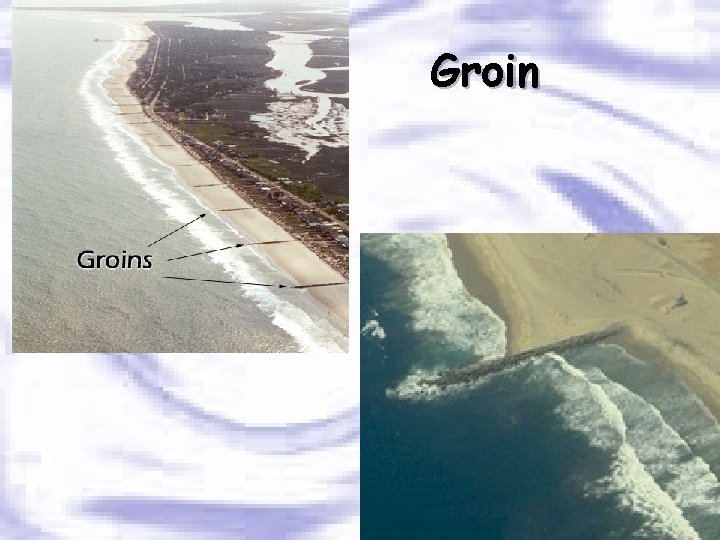
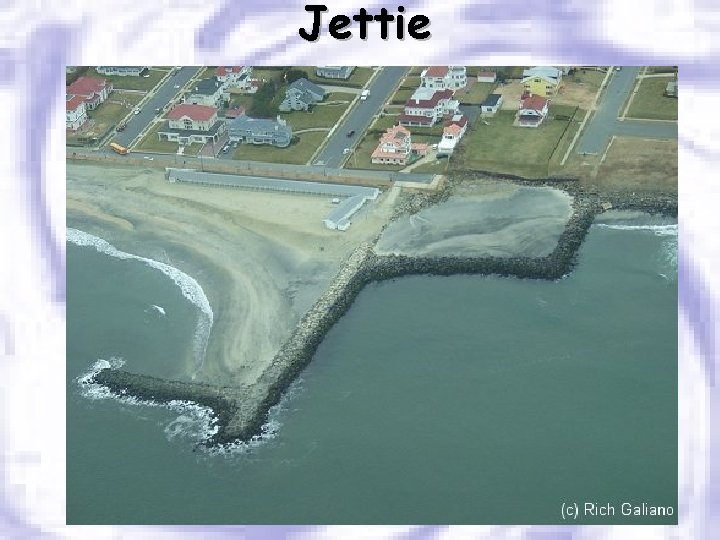
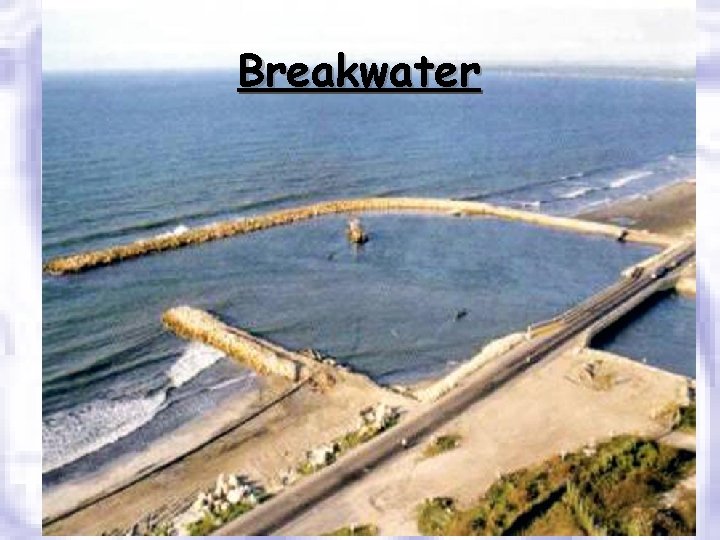
Protective Structures § In many coastal areas, man-made protective structures have been built to preserve beaches. § § § These include: 1. Seawalls 2. Groins 3. Jetties 4. Breakwaters
Groin
Jettie
Breakwater