
Agendasetting Policy Formulation I the foundations of policy

- Slides: 31
Agenda-setting; Policy Formulation I: the foundations of policy analysis October 14, 2014
Midterm October 21 • You are responsible for readings, lectures, and themes up through this week (through October 16) • Theme list for midterms is finalized • Be Connect smart: download lectures rather than relying on system • Today: – Policy cycle – Agenda setting – Policy formulation • Thursday: – Finish policy formulation – Midterm review • Special office hours – Monday 10 -12, 2 -3
Today’s agenda • Policy cycle – Agenda setting – Policy formulation • Policy analysis • consultation
Reading this week • Review In Search of Sustainability reading from first week – policy cycle • Carl Patton and Sawicki, Basic Methods of Policy Analysis and Planning, pp. 52 -65 (reading packet) – steps in policy analysis • Drea Cullen et al, “Collaborative Planning in Complex Stakeholder Environments: An Evaluation of a Two-Tiered Collaborative Planning Model, ” Read pp. 332 -9 only. Multistakeholder processes (collaborative planning)
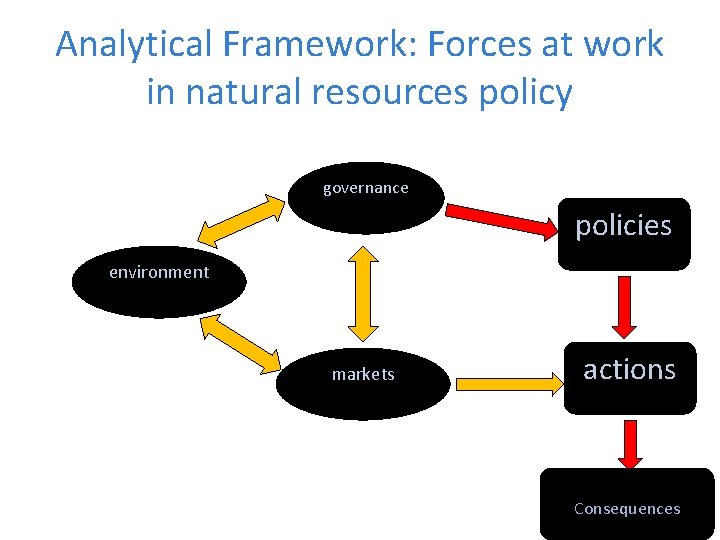
Analytical Framework: Forces at work in natural resources policy governance policies environment markets actions Consequences 5
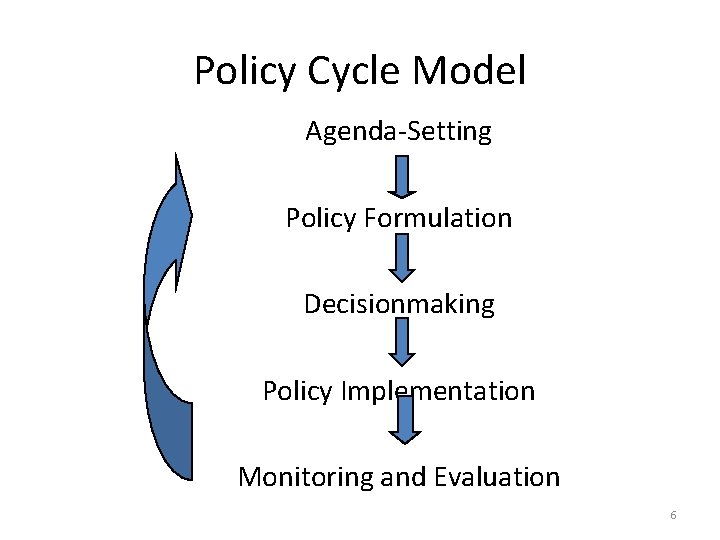
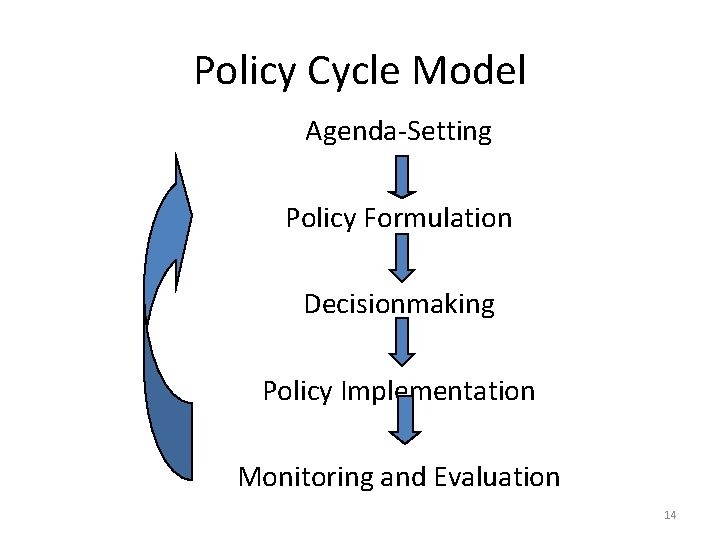
Policy Cycle Model Agenda-Setting Policy Formulation Decisionmaking Policy Implementation Monitoring and Evaluation 6
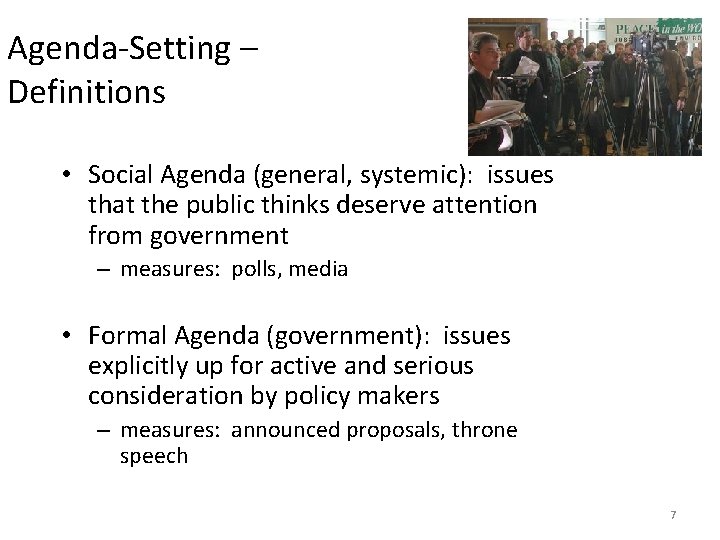
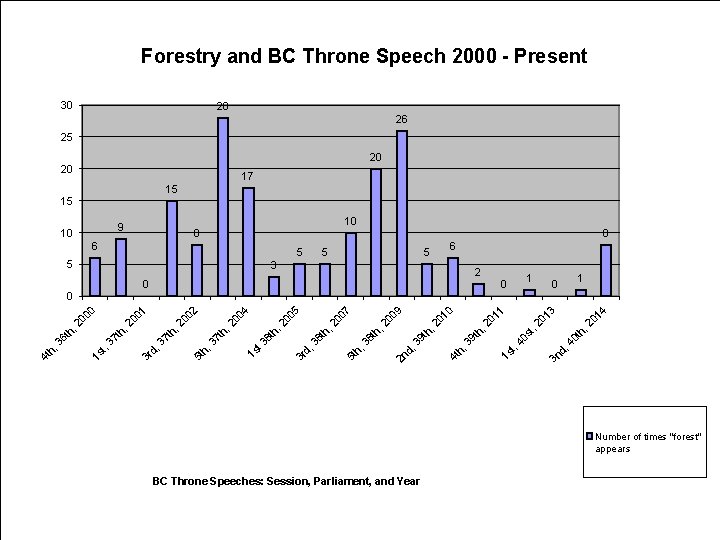
Agenda-Setting – Definitions • Social Agenda (general, systemic): issues that the public thinks deserve attention from government – measures: polls, media • Formal Agenda (government): issues explicitly up for active and serious consideration by policy makers – measures: announced proposals, throne speech 7
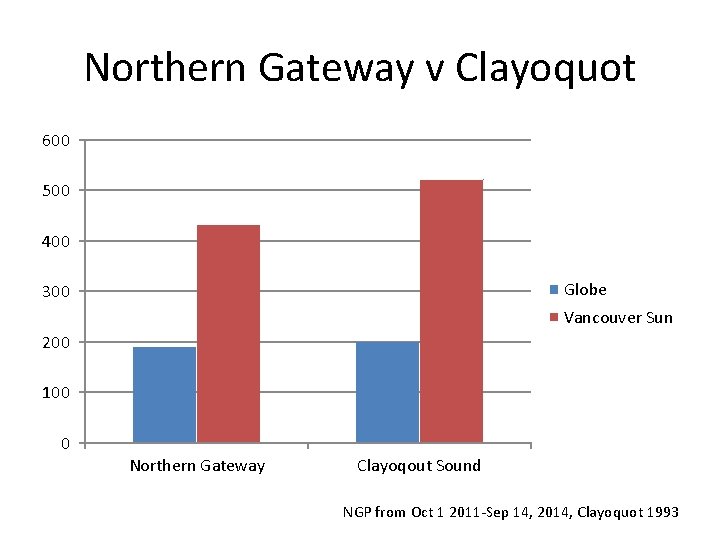
Northern Gateway v Clayoquot Media coverage 600 500 400 Globe 300 Vancouver Sun 200 100 0 Northern Gateway Clayoqout Sound NGP from Oct 1 2011 -Sep 14, 2014, Clayoquot 1993
Forestry and BC Throne Speech 2000 - Present 30 28 26 25 20 20 17 15 15 10 9 8 8 2 4 3 01 , 2 th st 40 40 t, 1 s th 39 h, 4 t 39 d, 2 n 1 0 01 1 01 , 2 th th 38 h, 5 t th 38 d, 3 r 0 9 , 2 00 , 2 20 h, 8 t t 3 00 7 05 4 1 s 37 h, 5 t th 37 d, 3 r th , 2 00 00 2 1 , 2 th 37 t, 1 s 1 0 00 , 2 th 36 h, 5 0 0 4 t 5 3 d, 5 5 6 3 n 6 , 2 10 Number of times "forest" appears BC Throne Speeches: Session, Parliament, and Year
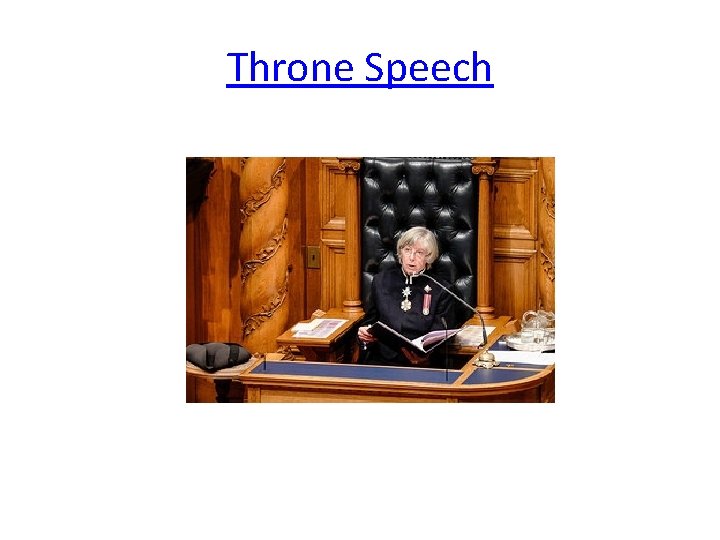
Throne Speech
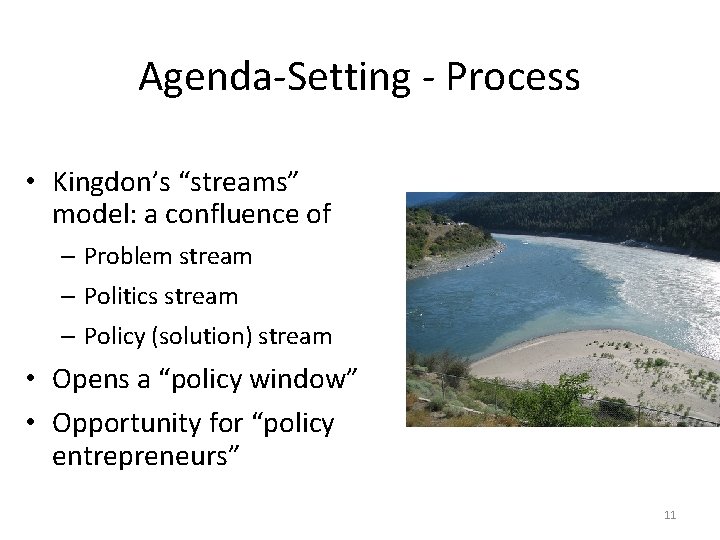
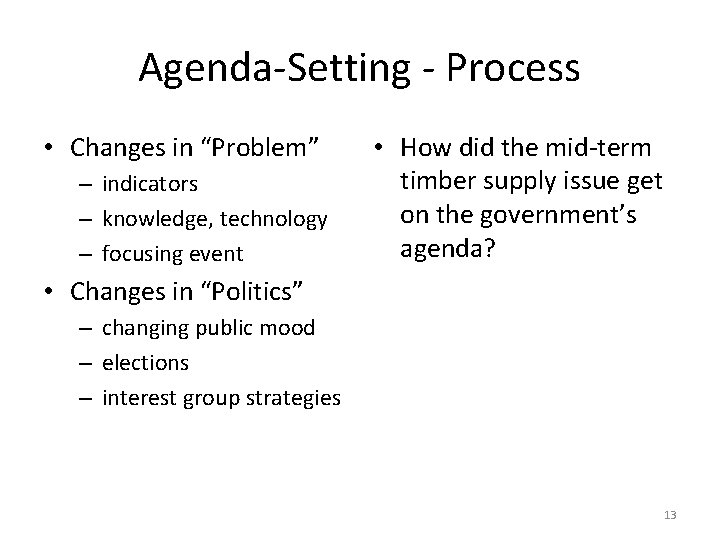
Agenda-Setting - Process • Kingdon’s “streams” model: a confluence of – Problem stream – Politics stream – Policy (solution) stream • Opens a “policy window” • Opportunity for “policy entrepreneurs” 11
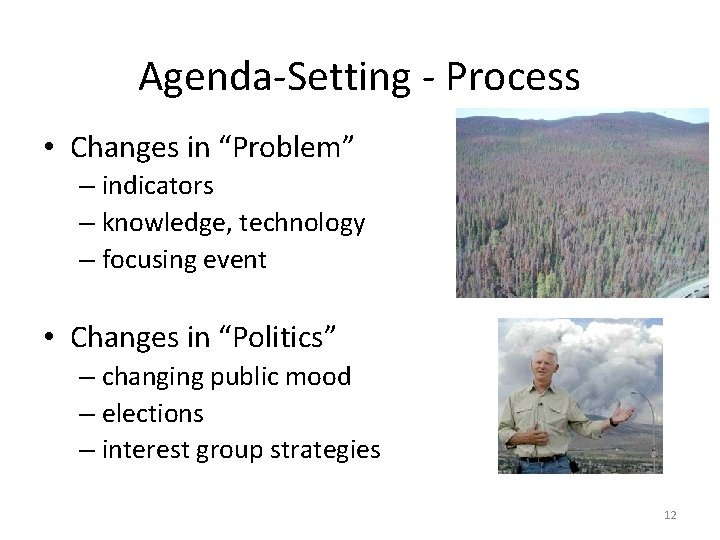
Agenda-Setting - Process • Changes in “Problem” – indicators – knowledge, technology – focusing event • Changes in “Politics” – changing public mood – elections – interest group strategies 12
Agenda-Setting - Process • Changes in “Problem” – indicators – knowledge, technology – focusing event • How did the mid-term timber supply issue get on the government’s agenda? • Changes in “Politics” – changing public mood – elections – interest group strategies 13
Policy Cycle Model Agenda-Setting Policy Formulation Decisionmaking Policy Implementation Monitoring and Evaluation 14
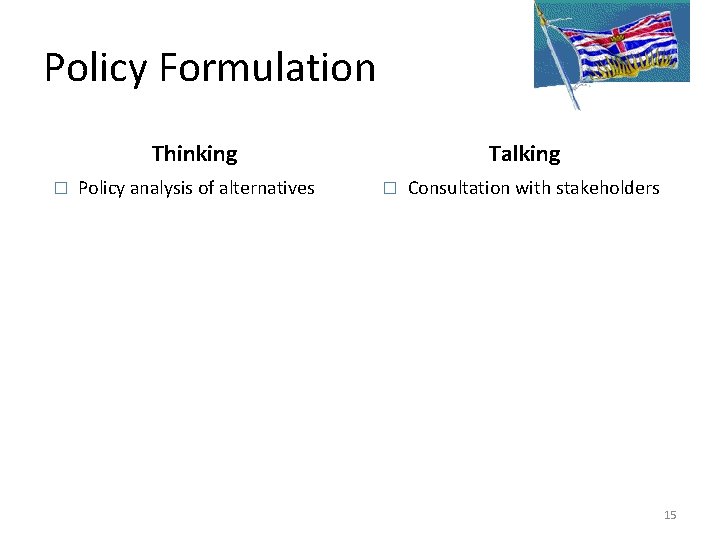
Policy Formulation Thinking � Policy analysis of alternatives Talking � Consultation with stakeholders 15
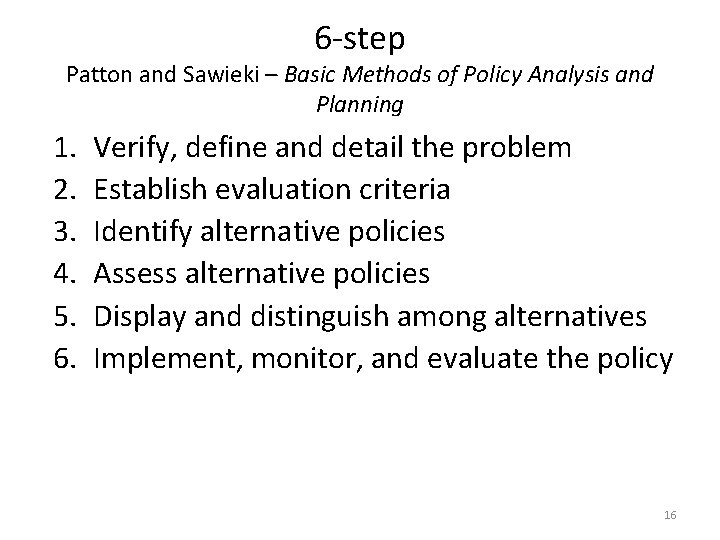
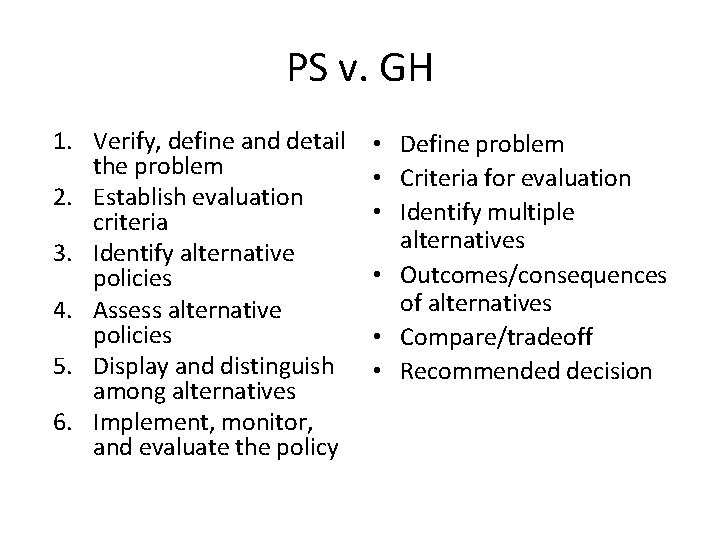
6 -step Patton and Sawieki – Basic Methods of Policy Analysis and Planning 1. 2. 3. 4. 5. 6. Verify, define and detail the problem Establish evaluation criteria Identify alternative policies Assess alternative policies Display and distinguish among alternatives Implement, monitor, and evaluate the policy 16
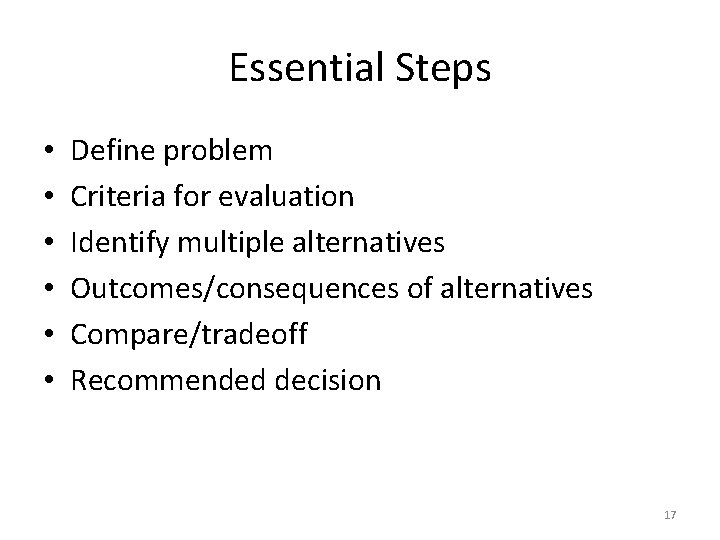
Essential Steps • • • Define problem Criteria for evaluation Identify multiple alternatives Outcomes/consequences of alternatives Compare/tradeoff Recommended decision 17
PS v. GH 1. Verify, define and detail the problem 2. Establish evaluation criteria 3. Identify alternative policies 4. Assess alternative policies 5. Display and distinguish among alternatives 6. Implement, monitor, and evaluate the policy • Define problem • Criteria for evaluation • Identify multiple alternatives • Outcomes/consequences of alternatives • Compare/tradeoff • Recommended decision
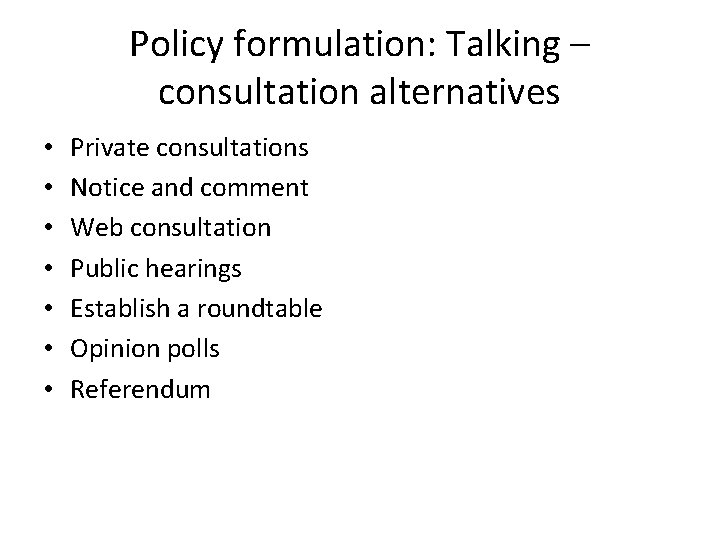
Policy formulation: Talking – consultation alternatives • • Private consultations Notice and comment Web consultation Public hearings Establish a roundtable Opinion polls Referendum
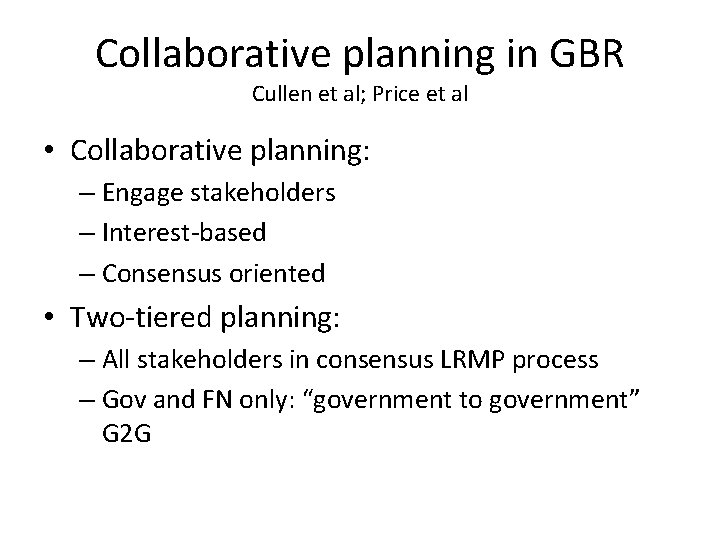
Collaborative planning in GBR Cullen et al; Price et al • Collaborative planning: – Engage stakeholders – Interest-based – Consensus oriented • Two-tiered planning: – All stakeholders in consensus LRMP process – Gov and FN only: “government to government” G 2 G
Case Study of Successful Collaboration: the Great Bear Rainforest
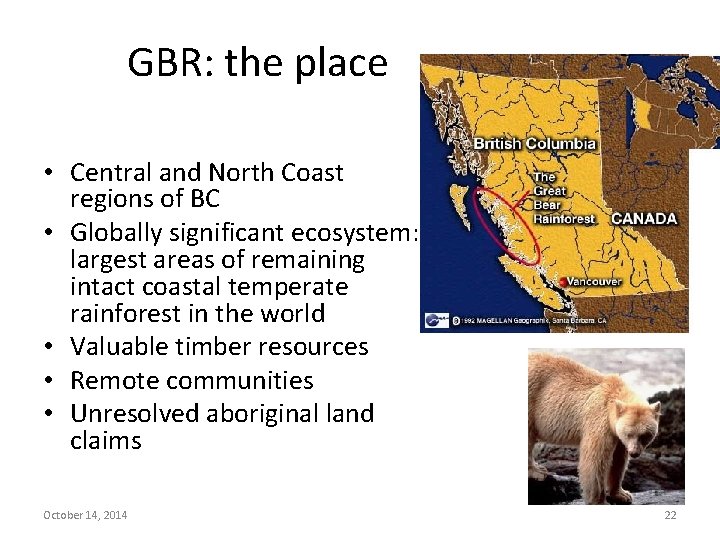
GBR: the place • Central and North Coast regions of BC • Globally significant ecosystem: largest areas of remaining intact coastal temperate rainforest in the world • Valuable timber resources • Remote communities • Unresolved aboriginal land claims October 14, 2014 22
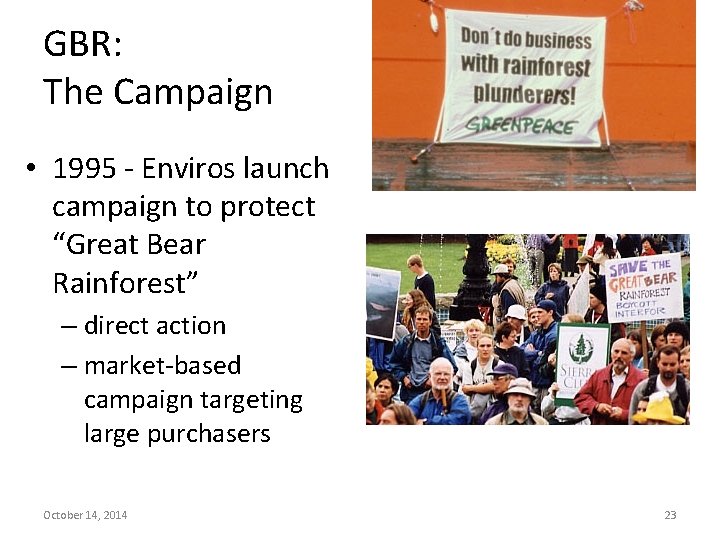
GBR: The Campaign • 1995 - Enviros launch campaign to protect “Great Bear Rainforest” – direct action – market-based campaign targeting large purchasers October 14, 2014 23
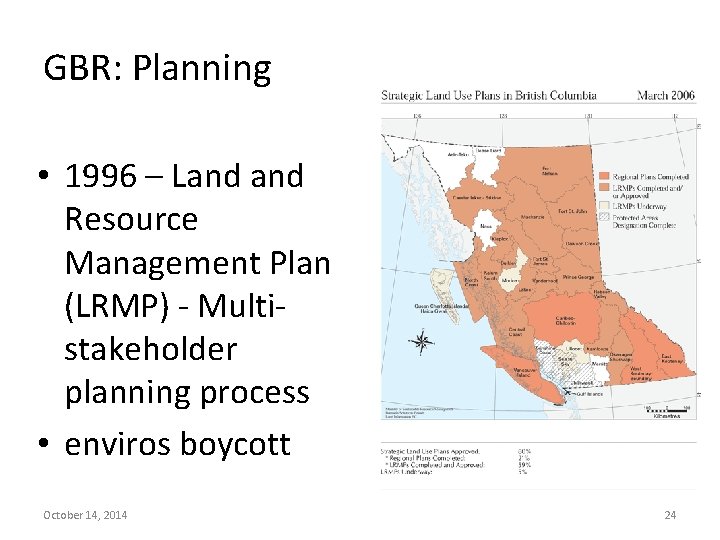
GBR: Planning • 1996 – Land Resource Management Plan (LRMP) - Multistakeholder planning process • enviros boycott October 14, 2014 24
GBR: enviro-industry cooperation • Enviros’ market campaign forces industry into (secret) negotiations outside of formal process • 1998: Enviros and industry agree to ceasefire: – industry agrees to suspend logging in intact areas – engos agree to suspend market campaign and join LRMP process October 14, 2014 25
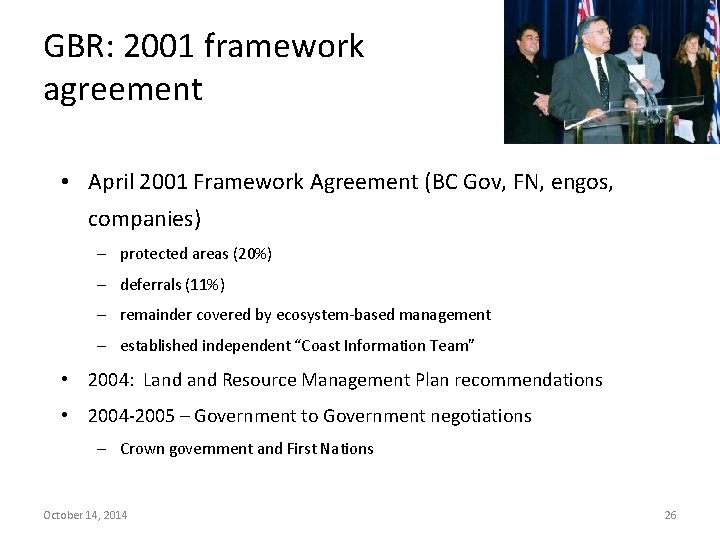
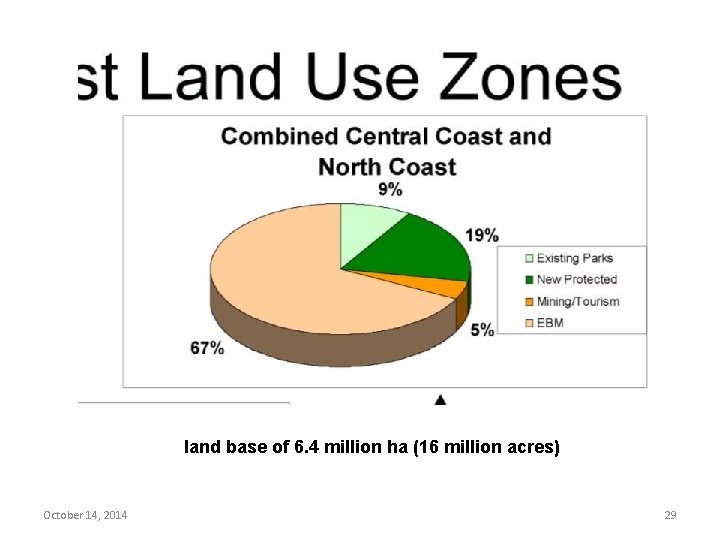
GBR: 2001 framework agreement • April 2001 Framework Agreement (BC Gov, FN, engos, companies) – protected areas (20%) – deferrals (11%) – remainder covered by ecosystem-based management – established independent “Coast Information Team” • 2004: Land Resource Management Plan recommendations • 2004 -2005 – Government to Government negotiations – Crown government and First Nations October 14, 2014 26
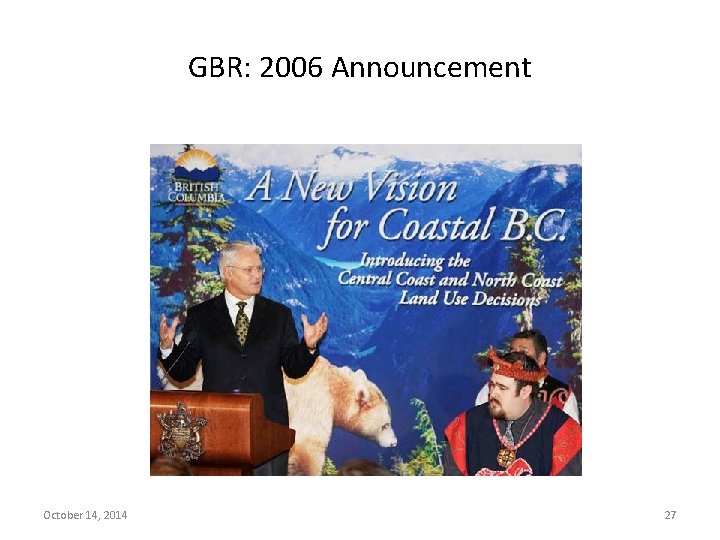
GBR: 2006 Announcement October 14, 2014 27
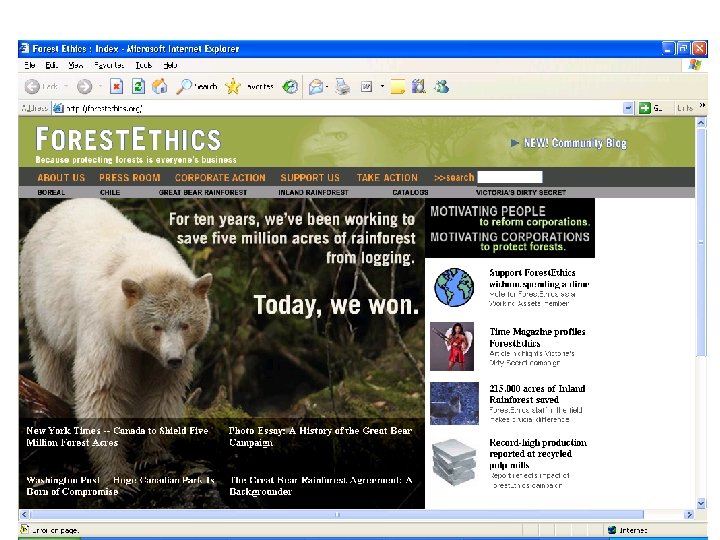
October 14, 2014 28
land base of 6. 4 million ha (16 million acres) October 14, 2014 29
Insights from GBR • One of most important land use decisions • Extraordinary instance of collaborative decisionmaking • Power shift created by enviros’ use of international market pressures • Landmark co-jurisdictional arrangements with First Nations • Challenging issues in policy design* • Revealing implementation challenges* October 14, 2014 *addressed after midterm 30
Thursday • Bigger picture on collaborative land use planning in BC (Cullen reading + updates) • Collaborative planning vs other consultation tools • Midterm review