
Agenda Introduction to management IT strategy 1 Famous
- Slides: 27
Agenda: • Introduction to management • IT strategy 1
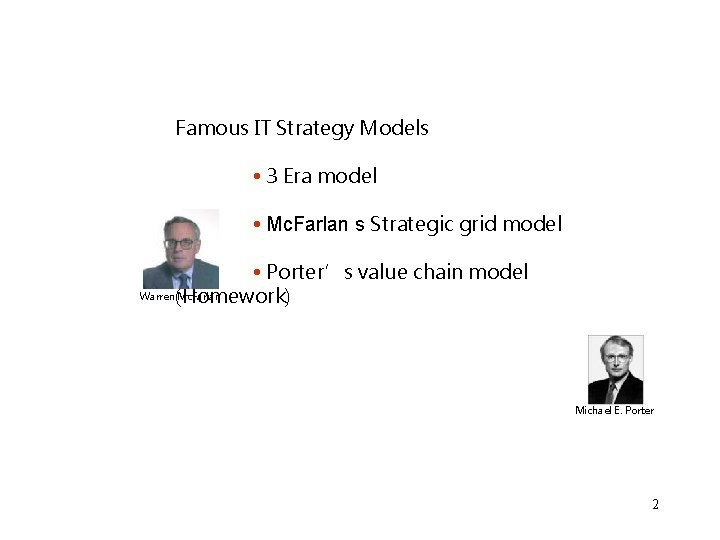
Famous IT Strategy Models • 3 Era model • Mc. Farlan s Strategic grid model • Porter’s value chain model Warren (Homework) Mc. Farlan Michael E. Porter 2
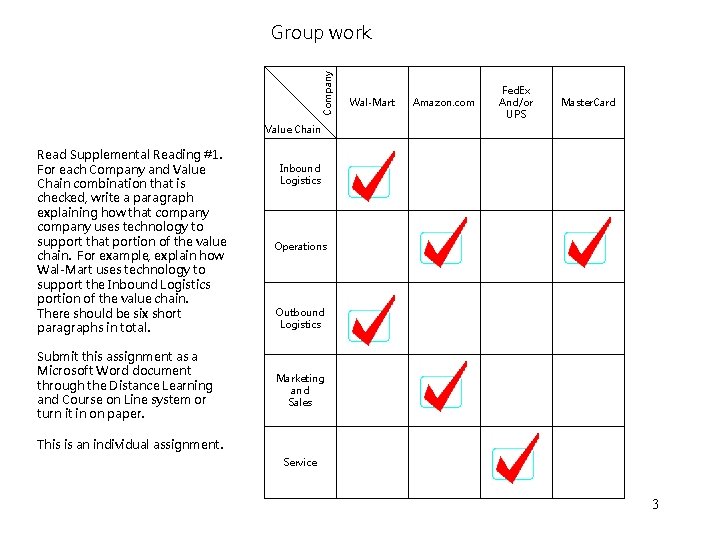
Company Group work Wal-Mart Amazon. com Fed. Ex And/or UPS Master. Card Value Chain Read Supplemental Reading #1. For each Company and Value Chain combination that is checked, write a paragraph explaining how that company uses technology to support that portion of the value chain. For example, explain how Wal-Mart uses technology to support the Inbound Logistics portion of the value chain. There should be six short paragraphs in total. Operations Submit this assignment as a Microsoft Word document through the Distance Learning and Course on Line system or turn it in on paper. Marketing and Sales Inbound Logistics Outbound Logistics x x x This is an individual assignment. Service x 3
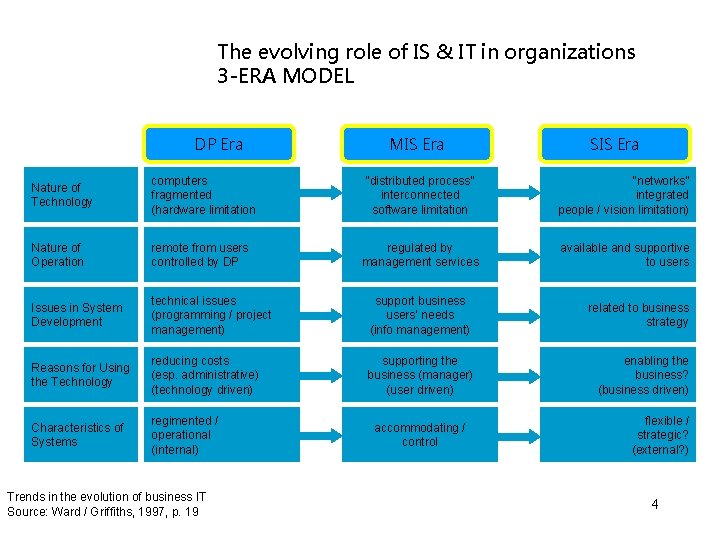
The evolving role of IS & IT in organizations 3 -ERA MODEL DP Era MIS Era SIS Era Nature of Technology computers fragmented (hardware limitation Nature of Operation remote from users controlled by DP Issues in System Development technical issues (programming / project management) support business users’ needs (info management) related to business strategy Reasons for Using the Technology reducing costs (esp. administrative) (technology driven) supporting the business (manager) (user driven) enabling the business? (business driven) Characteristics of Systems regimented / operational (internal) Trends in the evolution of business IT Source: Ward / Griffiths, 1997, p. 19 “distributed process” interconnected software limitation “networks” integrated people / vision limitation) regulated by management services available and supportive to users accommodating / control flexible / strategic? (external? ) 4
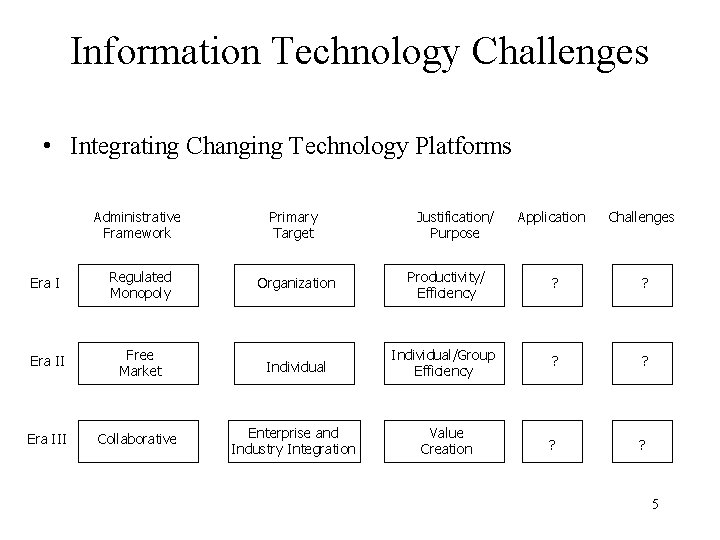
Information Technology Challenges • Integrating Changing Technology Platforms Administrative Framework Primary Target Era I Regulated Monopoly Organization Era II Free Market Era III Collaborative Justification/ Purpose Application Challenges Productivity/ Efficiency ? ? Individual/Group Efficiency ? ? Enterprise and Industry Integration Value Creation ? ? 5
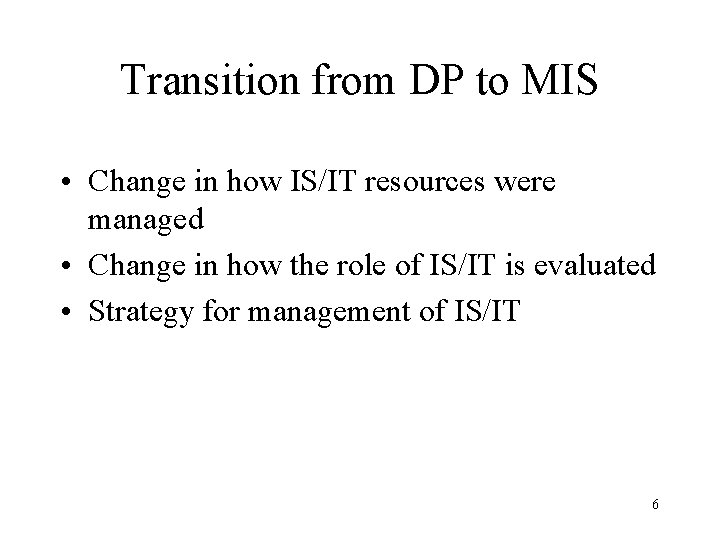
Transition from DP to MIS • Change in how IS/IT resources were managed • Change in how the role of IS/IT is evaluated • Strategy for management of IS/IT 6
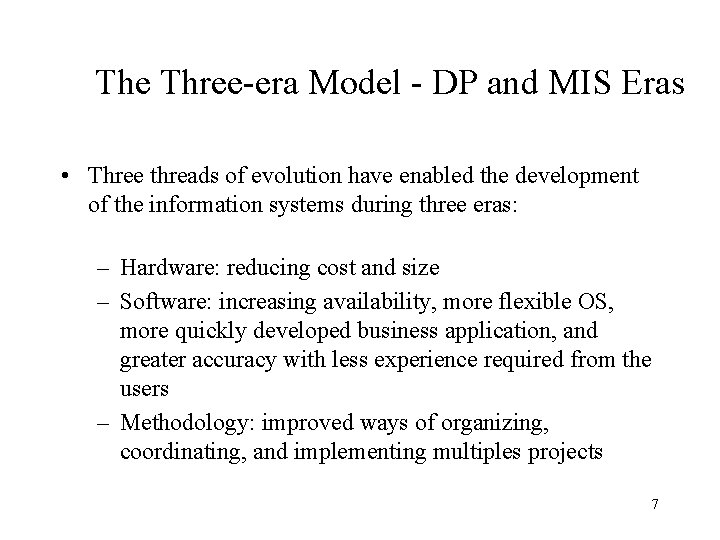
The Three-era Model - DP and MIS Eras • Three threads of evolution have enabled the development of the information systems during three eras: – Hardware: reducing cost and size – Software: increasing availability, more flexible OS, more quickly developed business application, and greater accuracy with less experience required from the users – Methodology: improved ways of organizing, coordinating, and implementing multiples projects 7
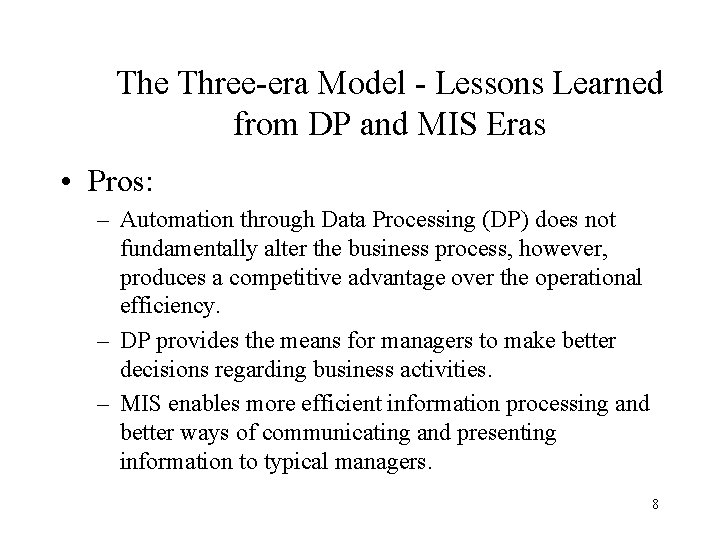
The Three-era Model - Lessons Learned from DP and MIS Eras • Pros: – Automation through Data Processing (DP) does not fundamentally alter the business process, however, produces a competitive advantage over the operational efficiency. – DP provides the means for managers to make better decisions regarding business activities. – MIS enables more efficient information processing and better ways of communicating and presenting information to typical managers. 8
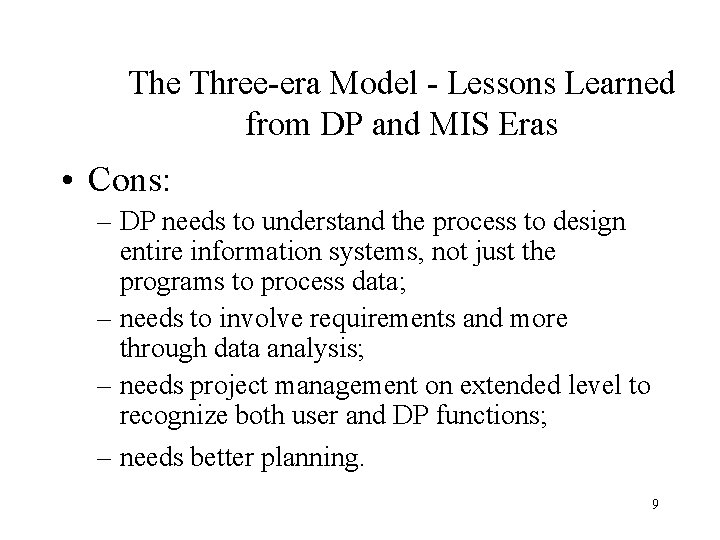
The Three-era Model - Lessons Learned from DP and MIS Eras • Cons: – DP needs to understand the process to design entire information systems, not just the programs to process data; – needs to involve requirements and more through data analysis; – needs project management on extended level to recognize both user and DP functions; – needs better planning. 9
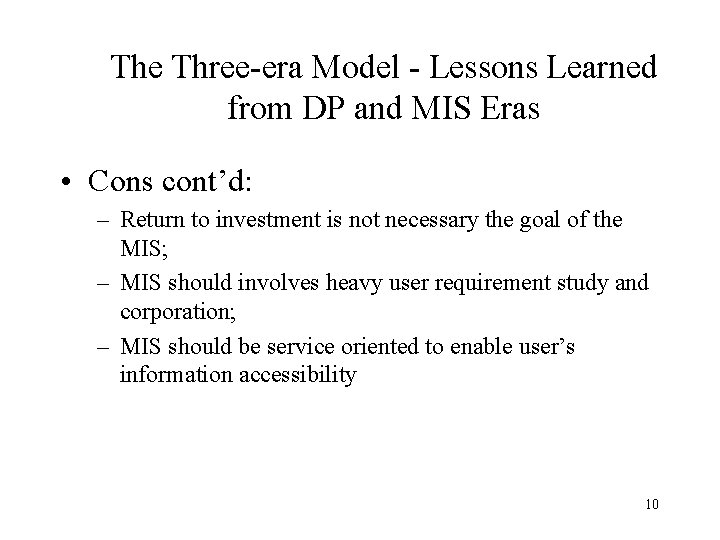
The Three-era Model - Lessons Learned from DP and MIS Eras • Cons cont’d: – Return to investment is not necessary the goal of the MIS; – MIS should involves heavy user requirement study and corporation; – MIS should be service oriented to enable user’s information accessibility 10
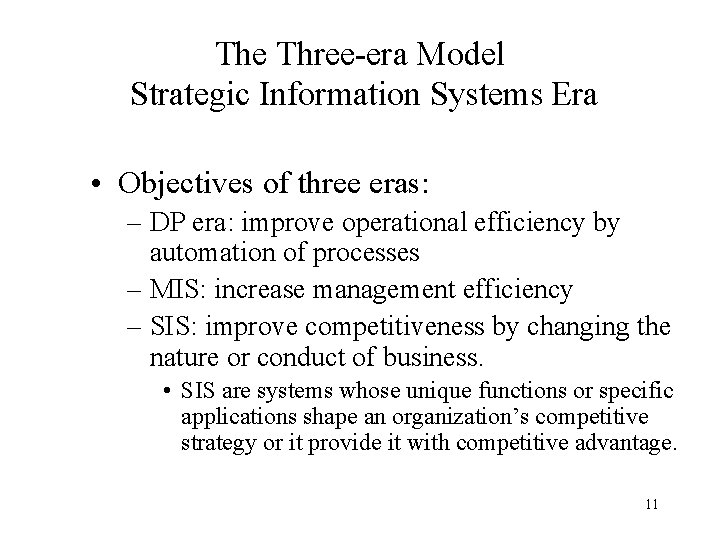
The Three-era Model Strategic Information Systems Era • Objectives of three eras: – DP era: improve operational efficiency by automation of processes – MIS: increase management efficiency – SIS: improve competitiveness by changing the nature or conduct of business. • SIS are systems whose unique functions or specific applications shape an organization’s competitive strategy or it provide it with competitive advantage. 11
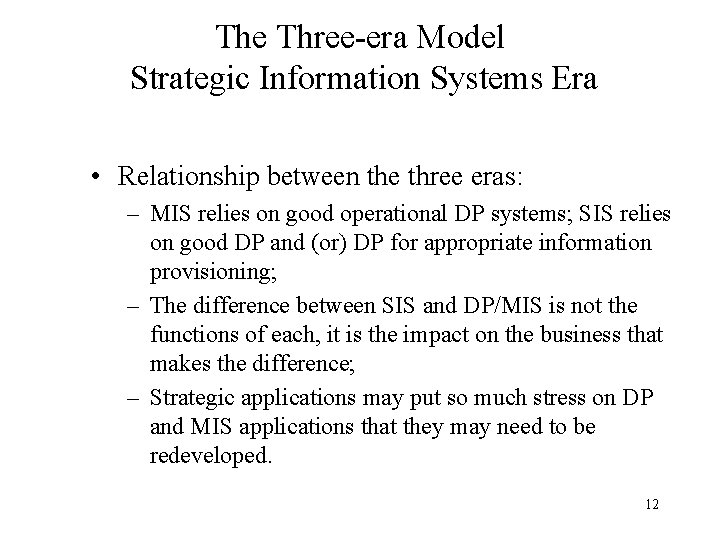
The Three-era Model Strategic Information Systems Era • Relationship between the three eras: – MIS relies on good operational DP systems; SIS relies on good DP and (or) DP for appropriate information provisioning; – The difference between SIS and DP/MIS is not the functions of each, it is the impact on the business that makes the difference; – Strategic applications may put so much stress on DP and MIS applications that they may need to be redeveloped. 12
Towards a Fourth Era • Distinction between sustainability and competitive advantage • Only IS Management skills will be the source of sustained advantage -Mata • Organizations must focus less on IT itself and more on managing IT 13
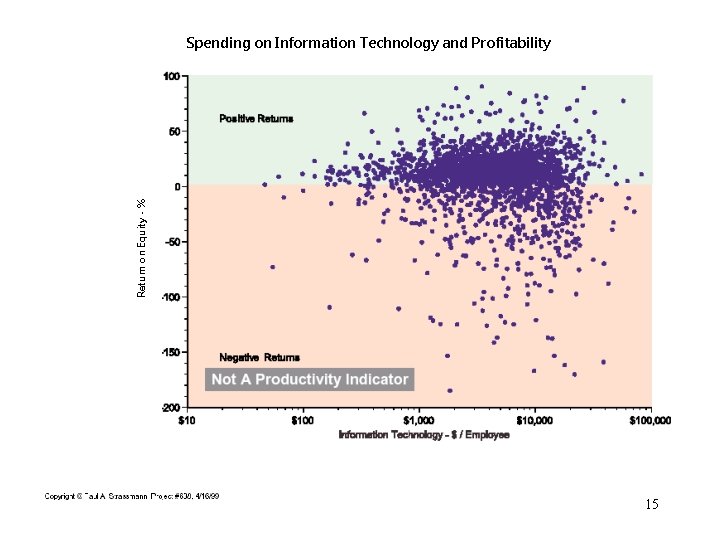
• Most IT developments can easily be copied by competitors – Sometimes there is less risk attached to being second • Productivity paradox – large scale IT investment rarely translates into substantial cost savings 14
Return on Equity - % Spending on Information Technology and Profitability 15
Sustainability • It may be that only IS management skills, rather than particular IT applications, can be the source of sustainable competitive advantage • The ability to learn faster than competitors may be the only truly sustainable competitive advantage 16
“How you gather, manage, and use information will determine whether you win or lose” - Bill Gates 17
IT is inextricably intertwined with business • Technology is an expected way to conduct business • Organizations are looking to apply technology to streamline existing processes • Organizations are also looking to create new opportunities which are a source of competitive advantage 18
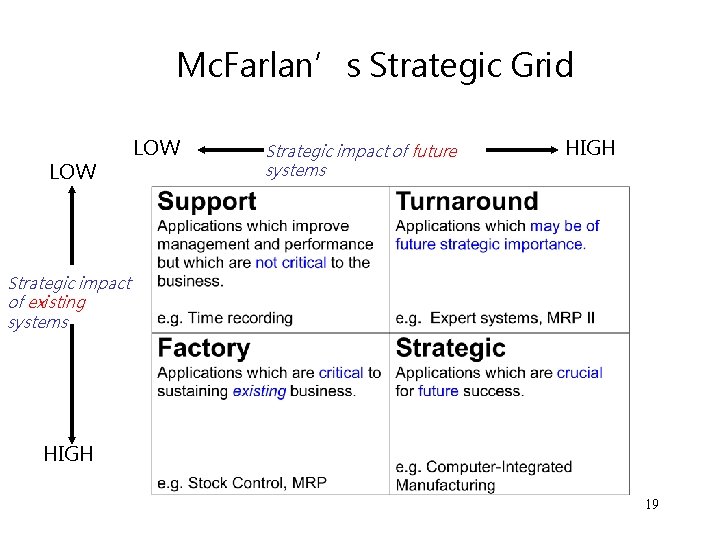
Mc. Farlan’s Strategic Grid LOW Strategic impact of future systems HIGH Strategic impact of existing systems HIGH 19
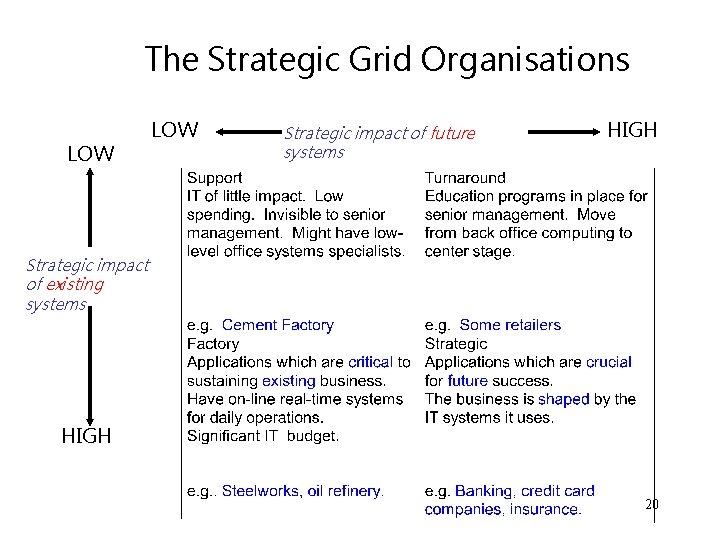
The Strategic Grid Organisations LOW Strategic impact of future systems HIGH Strategic impact of existing systems HIGH 20
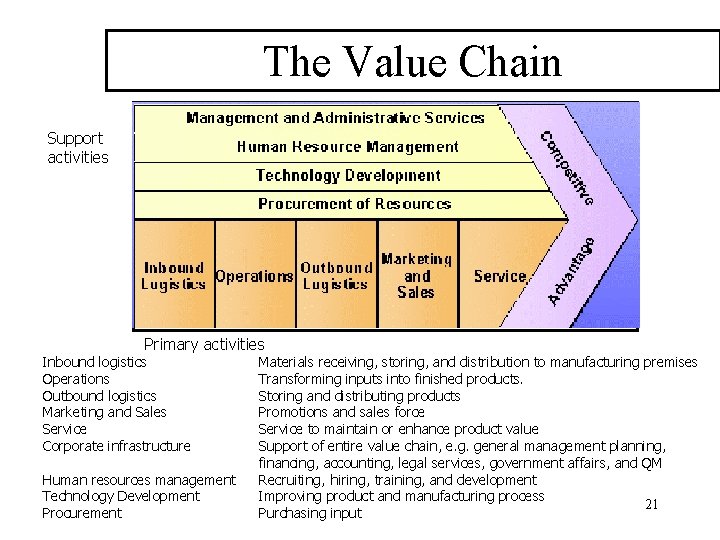
The Value Chain Support activities Primary activities Inbound logistics Operations Outbound logistics Marketing and Sales Service Corporate infrastructure Human resources management Technology Development Procurement Materials receiving, storing, and distribution to manufacturing premises Transforming inputs into finished products. Storing and distributing products Promotions and sales force Service to maintain or enhance product value Support of entire value chain, e. g. general management planning, financing, accounting, legal services, government affairs, and QM Recruiting, hiring, training, and development Improving product and manufacturing process 21 Purchasing input
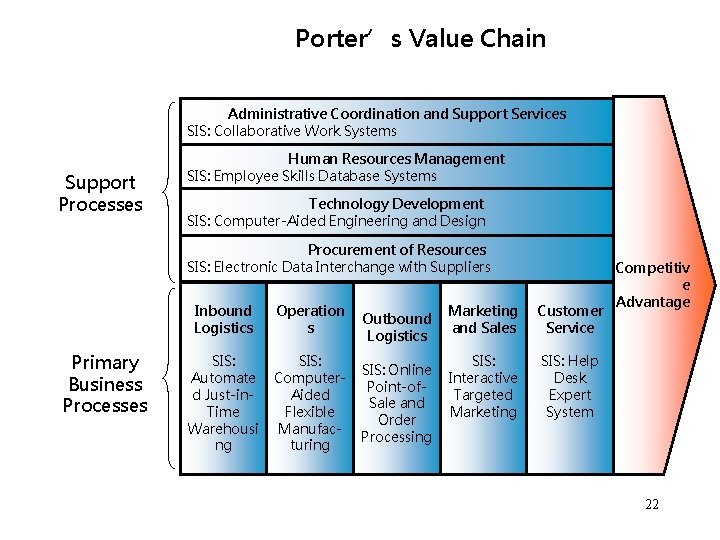
Porter’s Value Chain Administrative Coordination and Support Services SIS: Collaborative Work Systems Support Processes Human Resources Management SIS: Employee Skills Database Systems Technology Development SIS: Computer-Aided Engineering and Design Procurement of Resources SIS: Electronic Data Interchange with Suppliers Primary Business Processes Inbound Logistics Operation s SIS: Automate d Just-in. Time Warehousi ng SIS: Computer. Aided Flexible Manufacturing Outbound Logistics SIS: Online Point-of. Sale and Order Processing Marketing and Sales Customer Service SIS: Interactive Targeted Marketing SIS: Help Desk Expert System Competitiv e Advantage 22
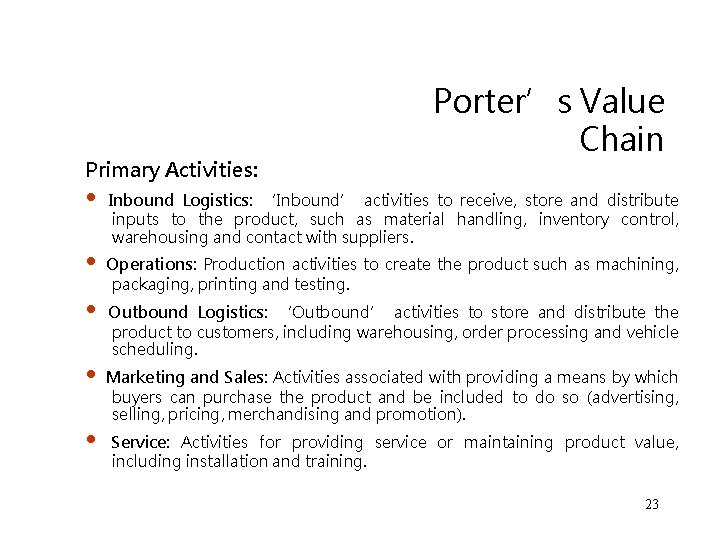
Primary Activities: • • • Porter’s Value Chain Inbound Logistics: ‘Inbound’ activities to receive, store and distribute inputs to the product, such as material handling, inventory control, warehousing and contact with suppliers. Operations: Production activities to create the product such as machining, packaging, printing and testing. Outbound Logistics: ‘Outbound’ activities to store and distribute the product to customers, including warehousing, order processing and vehicle scheduling. • Marketing and Sales: Activities associated with providing a means by which • buyers can purchase the product and be included to do so (advertising, selling, pricing, merchandising and promotion). Service: Activities for providing service or maintaining product value, including installation and training. 23
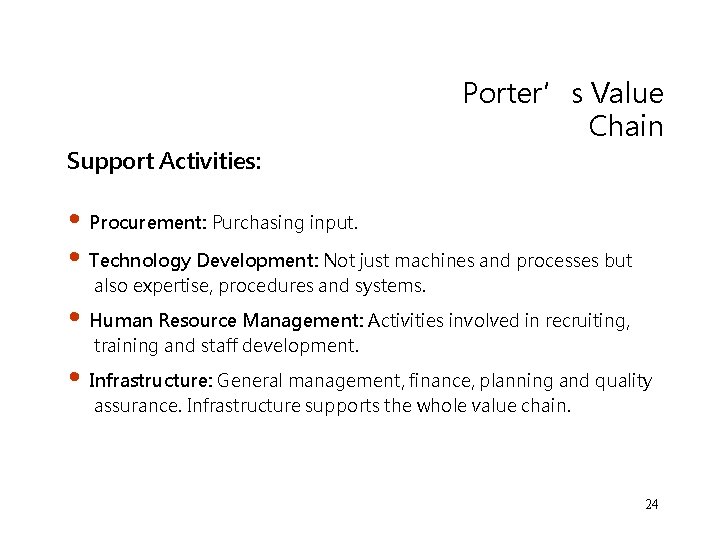
Porter’s Value Chain Support Activities: • Procurement: Purchasing input. • Technology Development: Not just machines and processes but also expertise, procedures and systems. • Human Resource Management: Activities involved in recruiting, training and staff development. • Infrastructure: General management, finance, planning and quality assurance. Infrastructure supports the whole value chain. 24
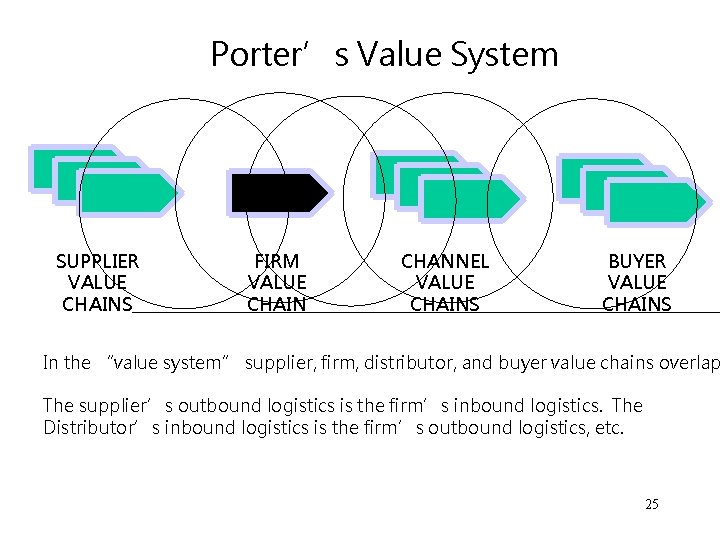
Porter’s Value System SUPPLIER VALUE CHAINS FIRM VALUE CHAIN CHANNEL VALUE CHAINS BUYER VALUE CHAINS In the “value system” supplier, firm, distributor, and buyer value chains overlap The supplier’s outbound logistics is the firm’s inbound logistics. The Distributor’s inbound logistics is the firm’s outbound logistics, etc. 25
Why do IT managers care about these models? Jean Botin founded the world's oldest restaurant (according to the Guinness Book of Records) on Cuchillero Street in 1725. Goya supposedly once washed dishes here, and the restaurant is mentioned in the last lines of Hemmingway’s The Sun Also Rises. 26
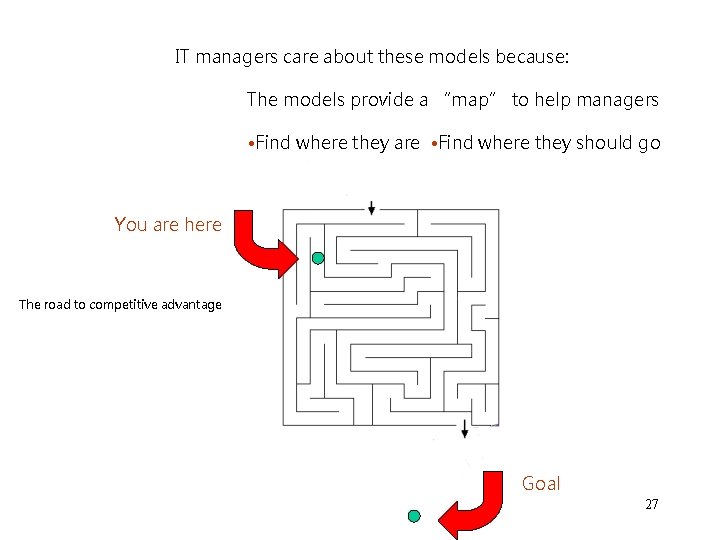
IT managers care about these models because: The models provide a “map” to help managers • Find where they are • Find where they should go You are here The road to competitive advantage Goal 27