
Agenda Best Paving Practices Team Work Project Planning
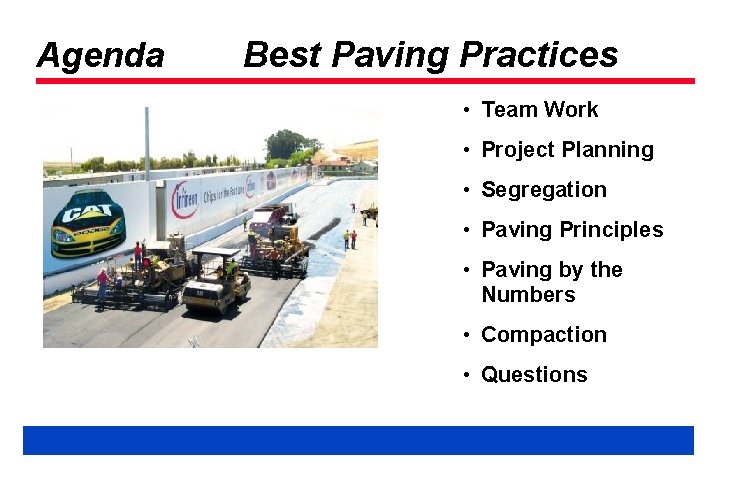
Agenda Best Paving Practices • Team Work • Project Planning • Segregation • Paving Principles • Paving by the Numbers • Compaction • Questions
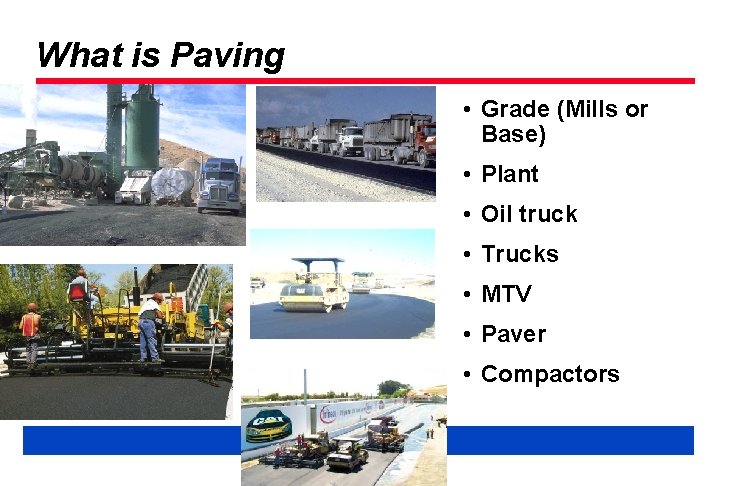
What is Paving • Grade (Mills or Base) • Plant • Oil truck • Trucks • MTV • Paver • Compactors
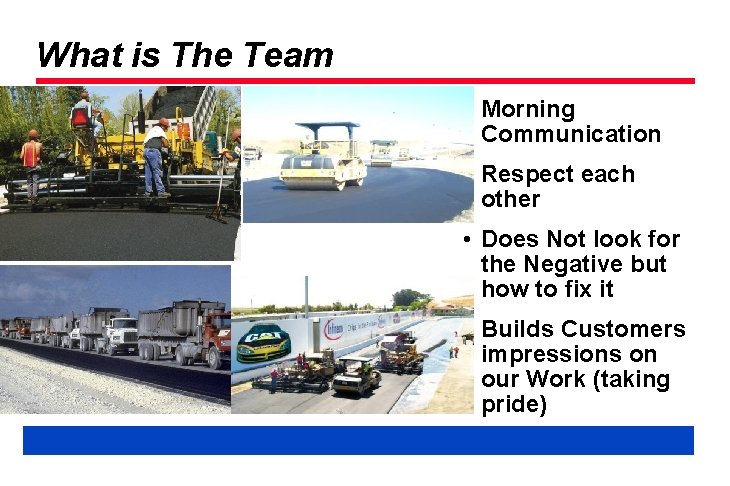
What is The Team • Morning Communication • Respect each other • Does Not look for the Negative but how to fix it • Builds Customers impressions on our Work (taking pride)
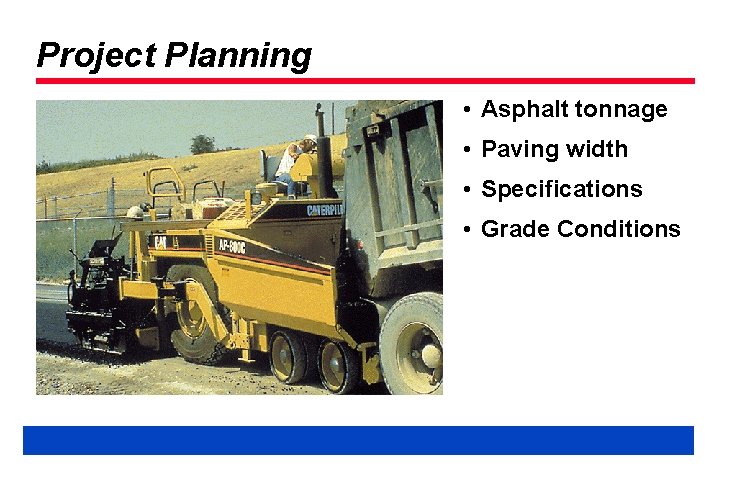
Project Planning • Asphalt tonnage • Paving width • Specifications • Grade Conditions
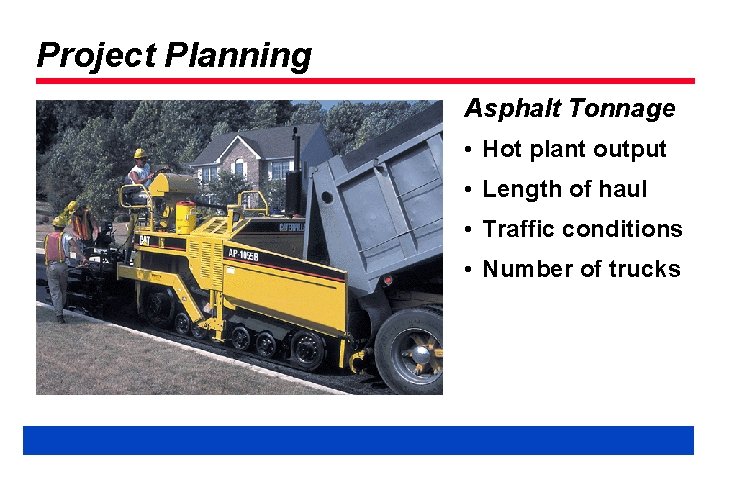
Project Planning Asphalt Tonnage • Hot plant output • Length of haul • Traffic conditions • Number of trucks
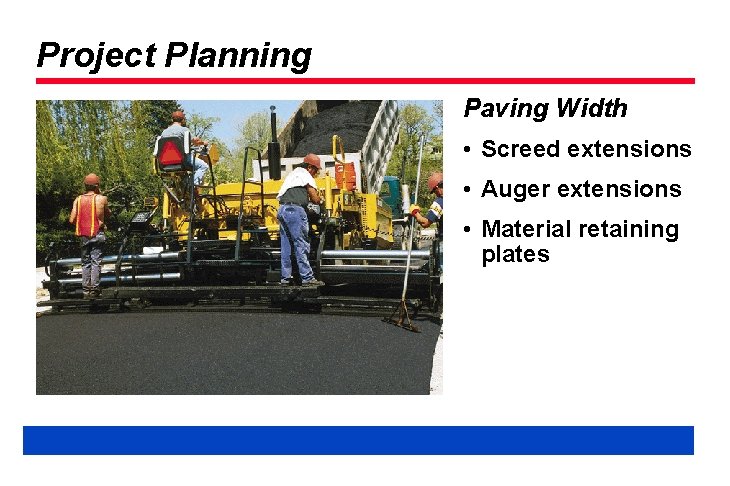
Project Planning Paving Width • Screed extensions • Auger extensions • Material retaining plates
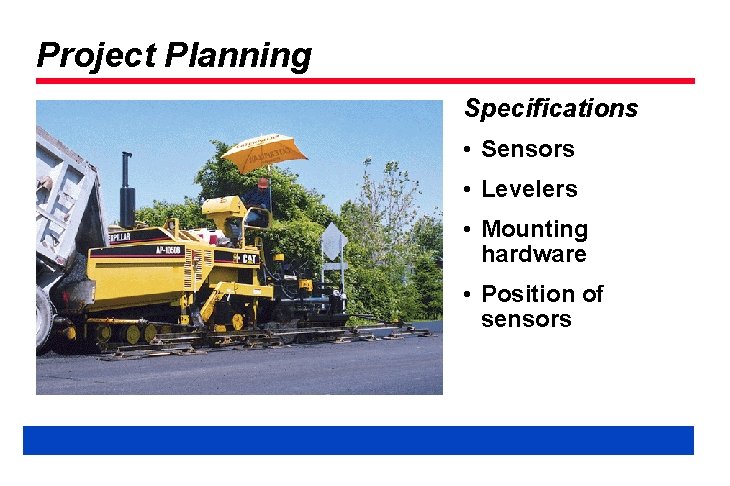
Project Planning Specifications • Sensors • Levelers • Mounting hardware • Position of sensors
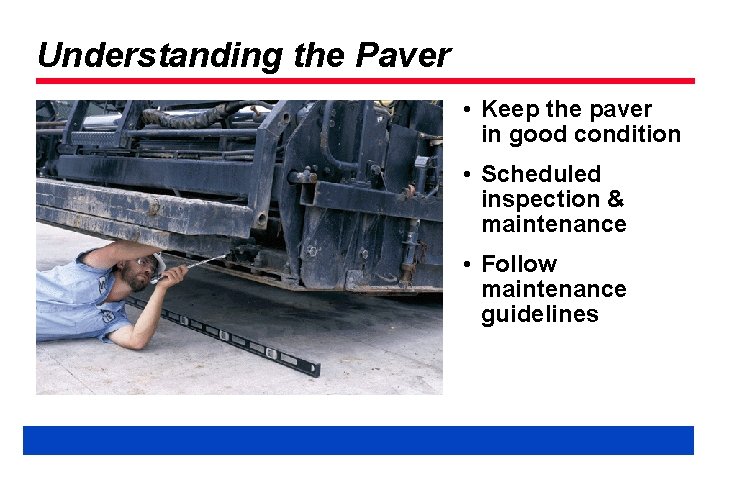
Understanding the Paver • Keep the paver in good condition • Scheduled inspection & maintenance • Follow maintenance guidelines
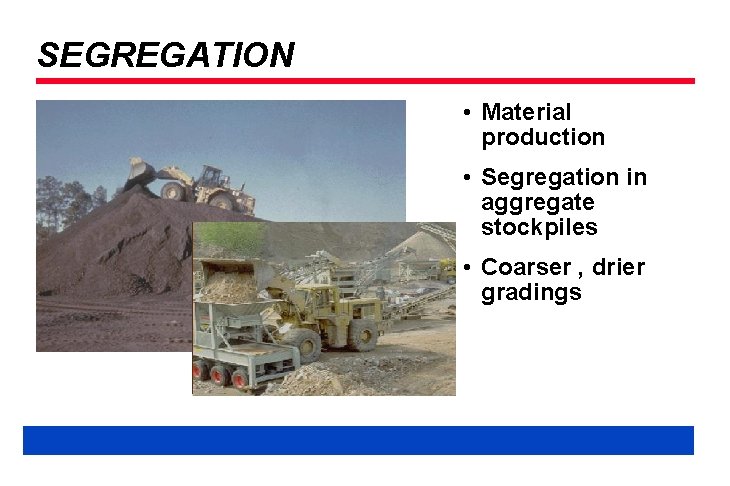
SEGREGATION • Material production • Segregation in aggregate stockpiles • Coarser , drier gradings
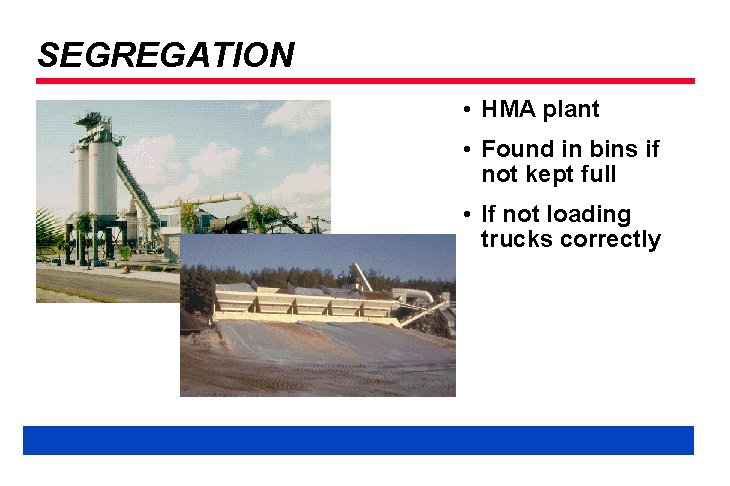
SEGREGATION • HMA plant • Found in bins if not kept full • If not loading trucks correctly
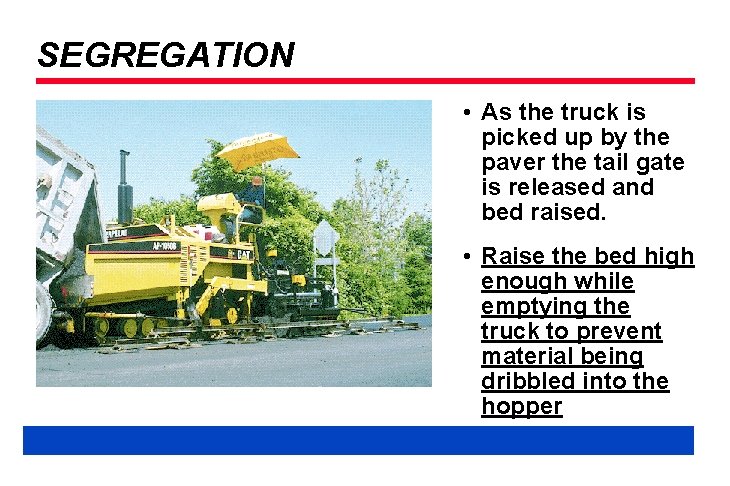
SEGREGATION • As the truck is picked up by the paver the tail gate is released and bed raised. • Raise the bed high enough while emptying the truck to prevent material being dribbled into the hopper
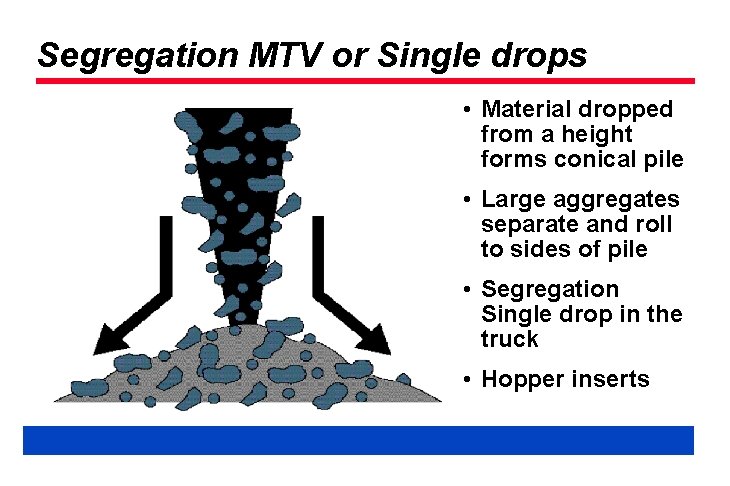
Segregation MTV or Single drops • Material dropped from a height forms conical pile • Large aggregates separate and roll to sides of pile • Segregation Single drop in the truck • Hopper inserts
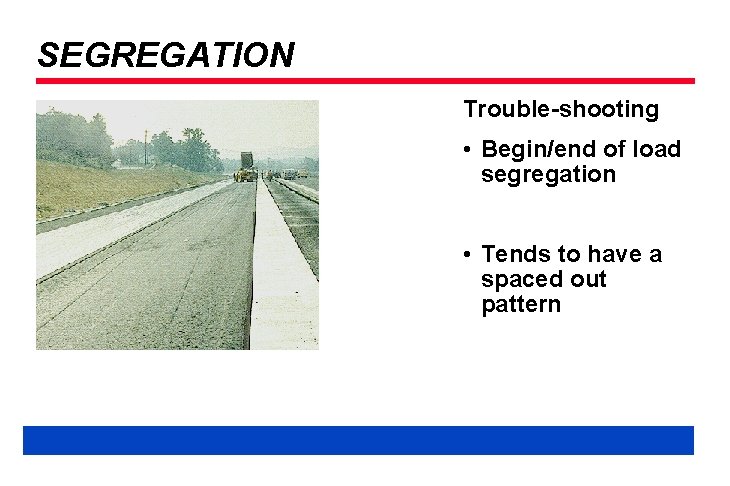
SEGREGATION Trouble-shooting • Begin/end of load segregation • Tends to have a spaced out pattern
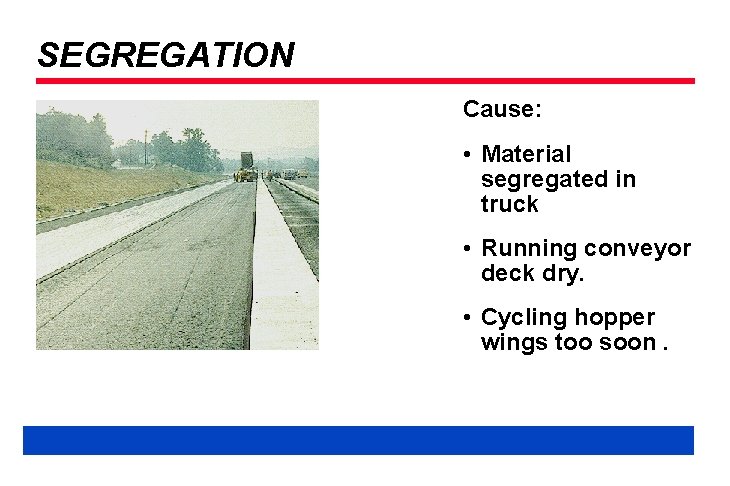
SEGREGATION Cause: • Material segregated in truck • Running conveyor deck dry. • Cycling hopper wings too soon.
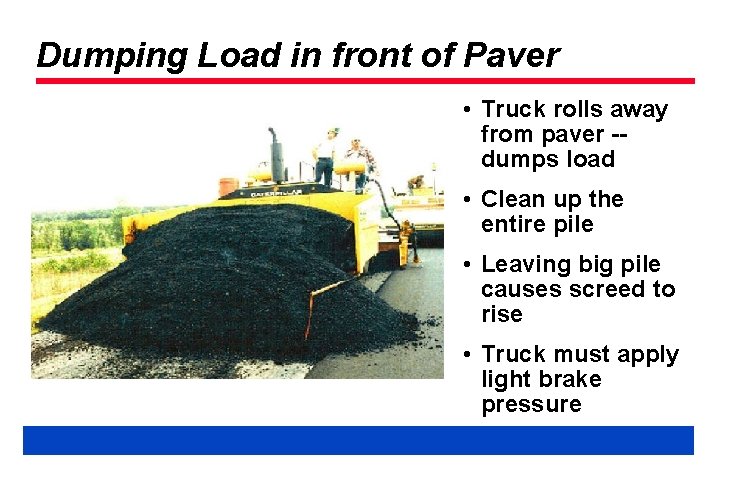
Dumping Load in front of Paver • Truck rolls away from paver -dumps load • Clean up the entire pile • Leaving big pile causes screed to rise • Truck must apply light brake pressure
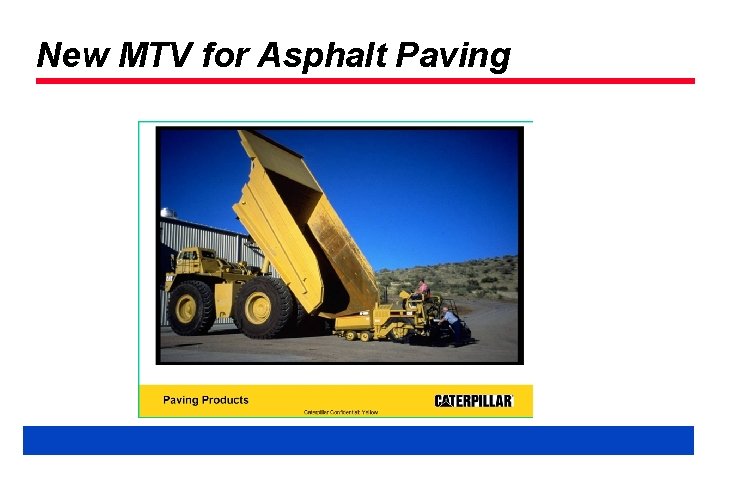
New MTV for Asphalt Paving
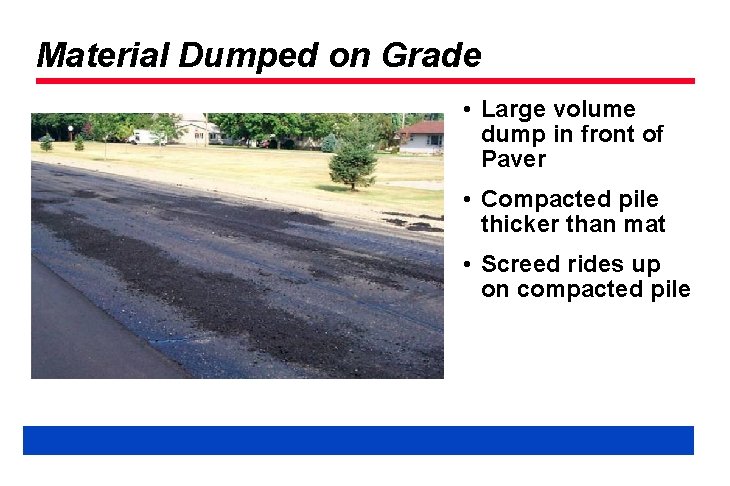
Material Dumped on Grade • Large volume dump in front of Paver • Compacted pile thicker than mat • Screed rides up on compacted pile
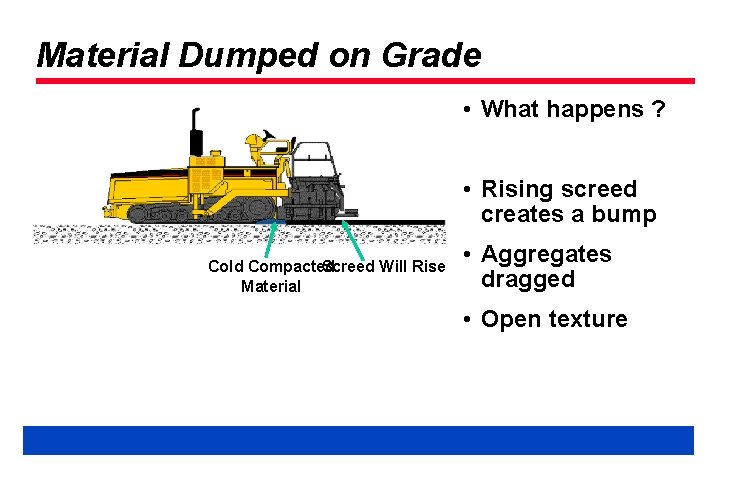
Material Dumped on Grade • What happens ? • Rising screed creates a bump Cold Compacted Screed Will Rise Material • Aggregates dragged • Open texture
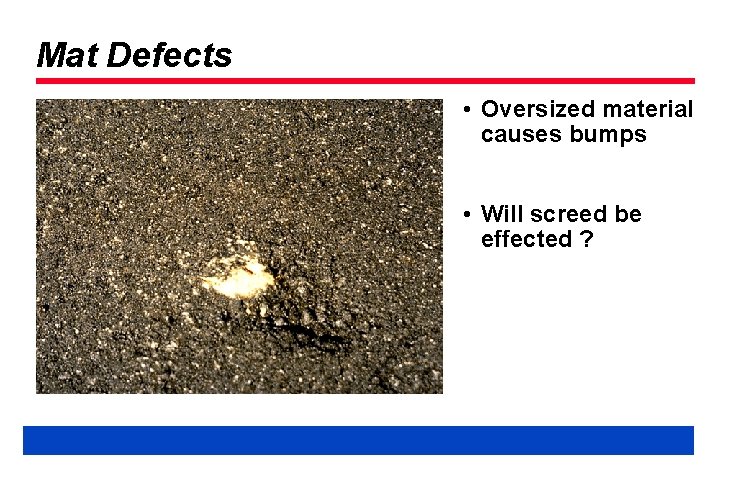
Mat Defects • Oversized material causes bumps • Will screed be effected ?
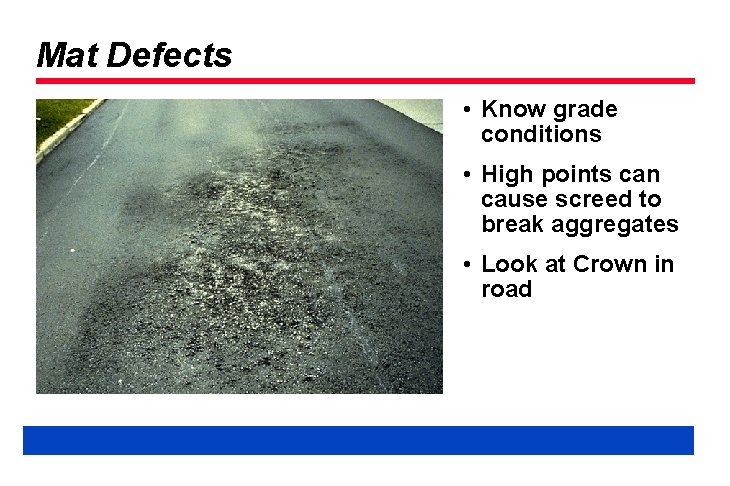
Mat Defects • Know grade conditions • High points can cause screed to break aggregates • Look at Crown in road
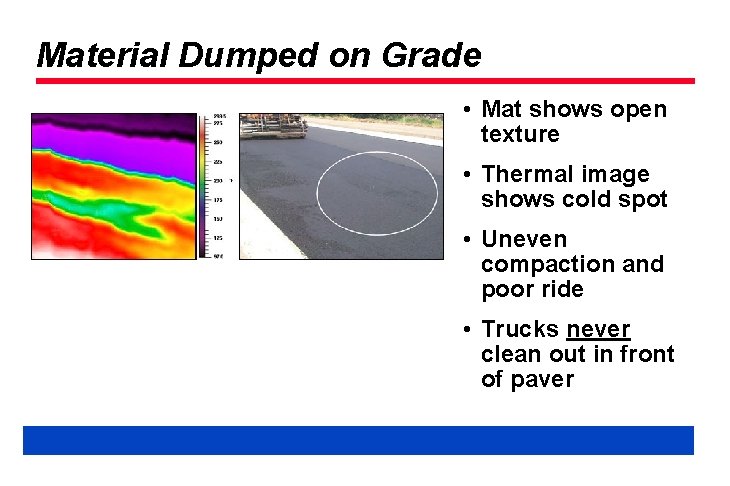
Material Dumped on Grade • Mat shows open texture • Thermal image shows cold spot • Uneven compaction and poor ride • Trucks never clean out in front of paver
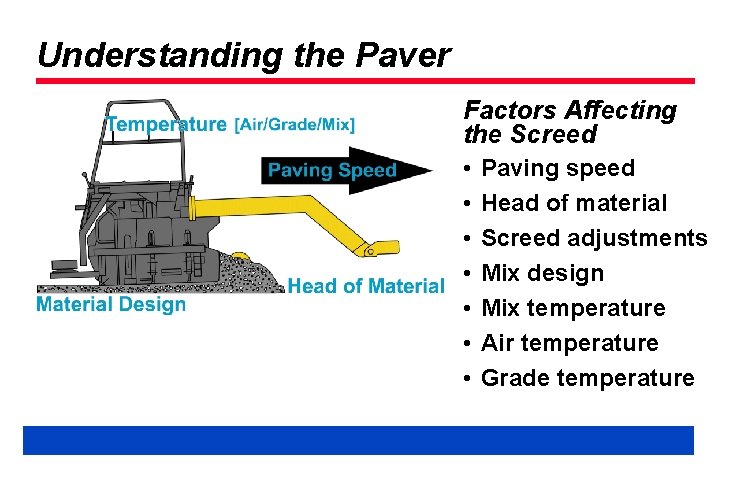
Understanding the Paver Factors Affecting the Screed • • Paving speed Head of material Screed adjustments Mix design Mix temperature Air temperature Grade temperature
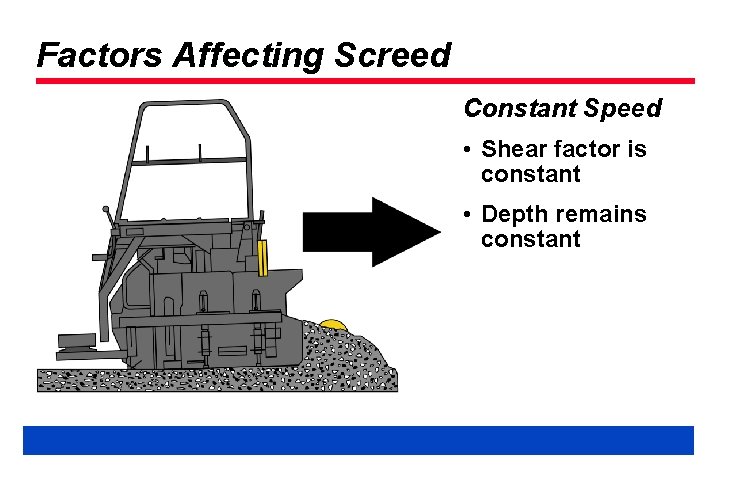
Factors Affecting Screed Constant Speed • Shear factor is constant • Depth remains constant
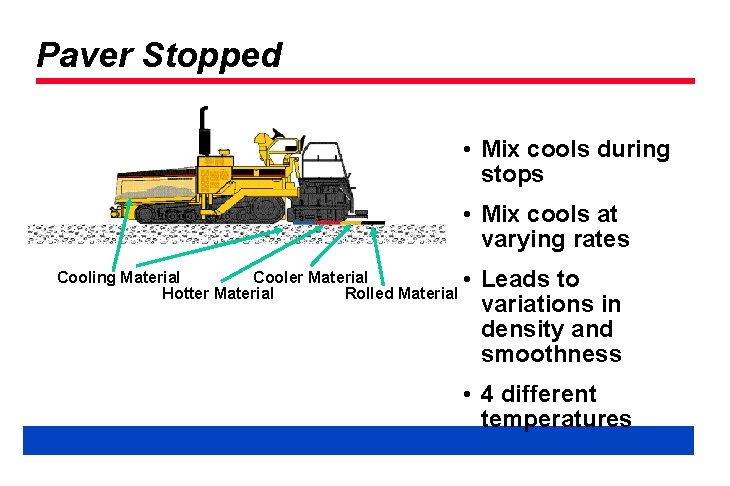
Paver Stopped • Mix cools during stops • Mix cools at varying rates Cooling Material Cooler Material • Hotter Material Rolled Material Leads to variations in density and smoothness • 4 different temperatures
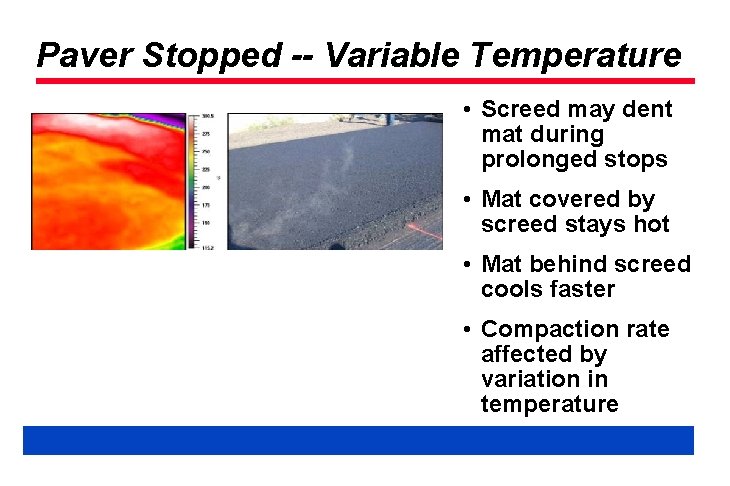
Paver Stopped -- Variable Temperature • Screed may dent mat during prolonged stops • Mat covered by screed stays hot • Mat behind screed cools faster • Compaction rate affected by variation in temperature
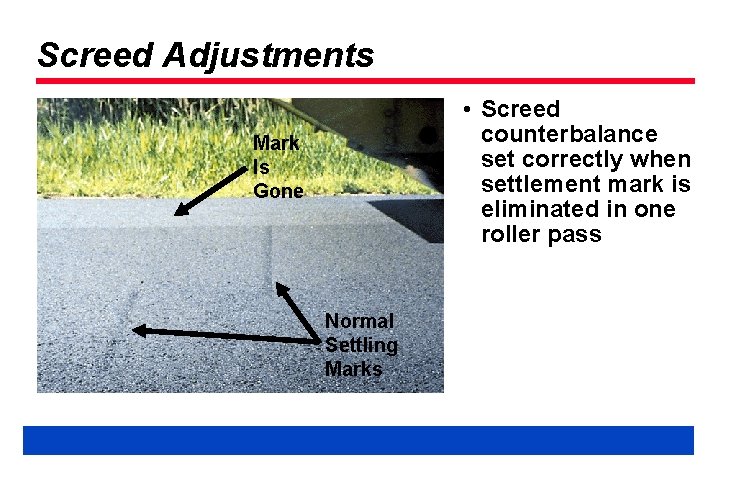
Screed Adjustments • Screed counterbalance set correctly when settlement mark is eliminated in one roller pass Mark Is Gone Normal Settling Marks
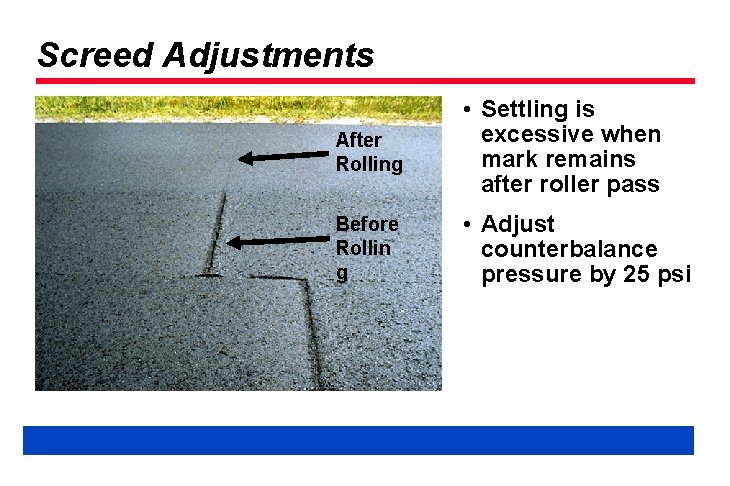
Screed Adjustments After Rolling • Settling is excessive when mark remains after roller pass Before Rollin g • Adjust counterbalance pressure by 25 psi
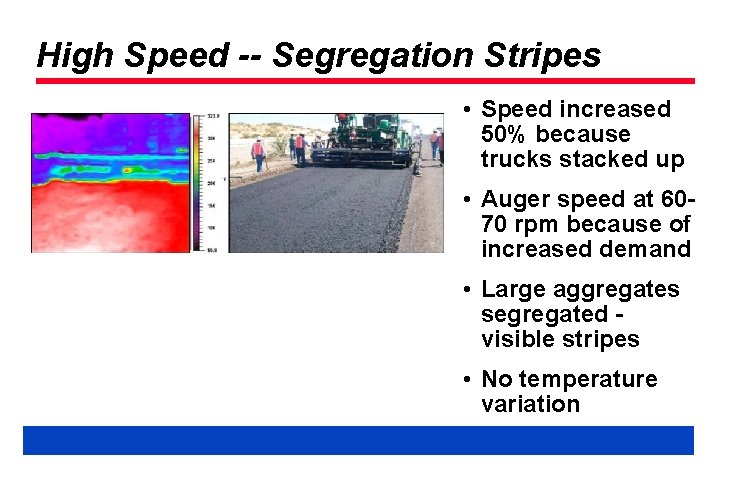
High Speed -- Segregation Stripes • Speed increased 50% because trucks stacked up • Auger speed at 6070 rpm because of increased demand • Large aggregates segregated visible stripes • No temperature variation
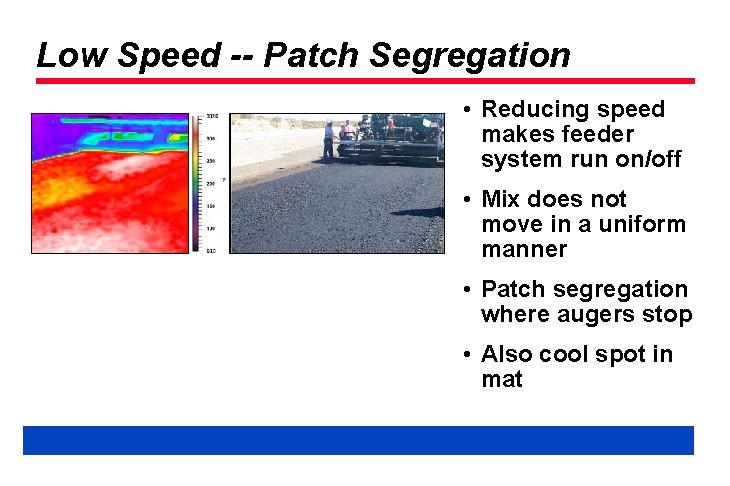
Low Speed -- Patch Segregation • Reducing speed makes feeder system run on/off • Mix does not move in a uniform manner • Patch segregation where augers stop • Also cool spot in mat
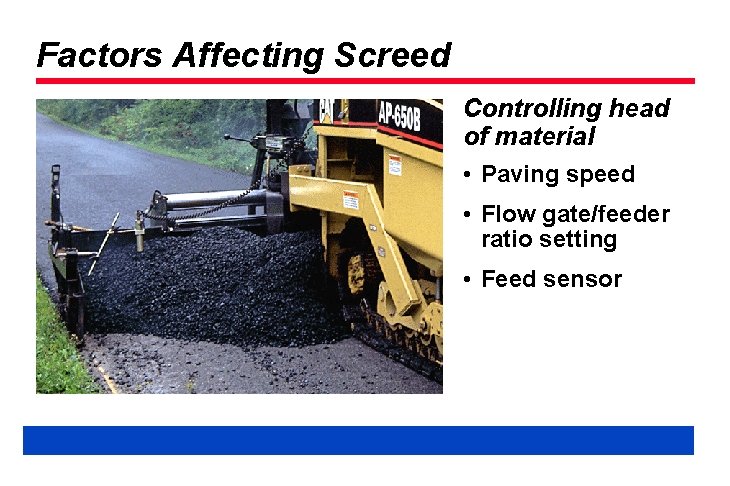
Factors Affecting Screed Controlling head of material • Paving speed • Flow gate/feeder ratio setting • Feed sensor
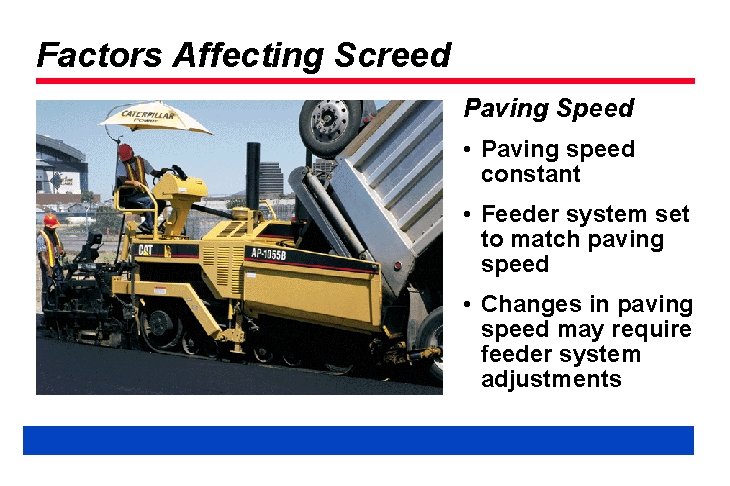
Factors Affecting Screed Paving Speed • Paving speed constant • Feeder system set to match paving speed • Changes in paving speed may require feeder system adjustments
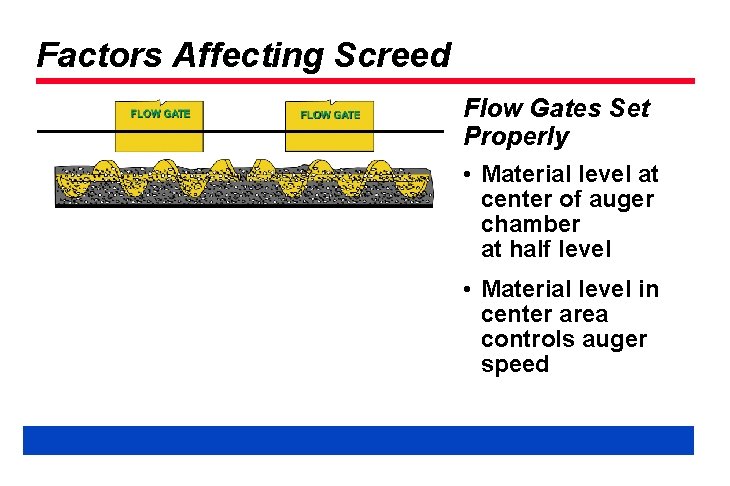
Factors Affecting Screed Flow Gates Set Properly • Material level at center of auger chamber at half level • Material level in center area controls auger speed
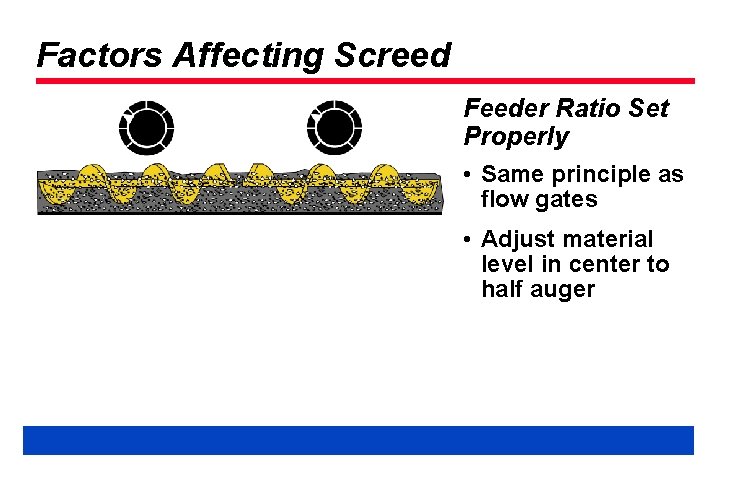
Factors Affecting Screed Feeder Ratio Set Properly • Same principle as flow gates • Adjust material level in center to half auger
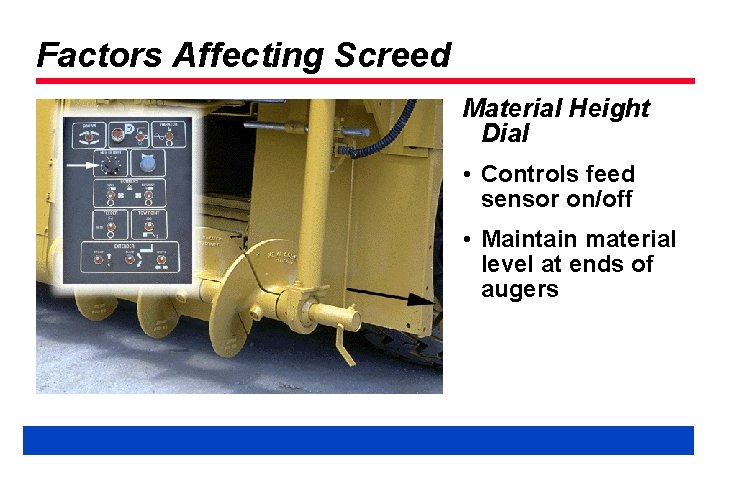
Factors Affecting Screed Material Height Dial • Controls feed sensor on/off • Maintain material level at ends of augers
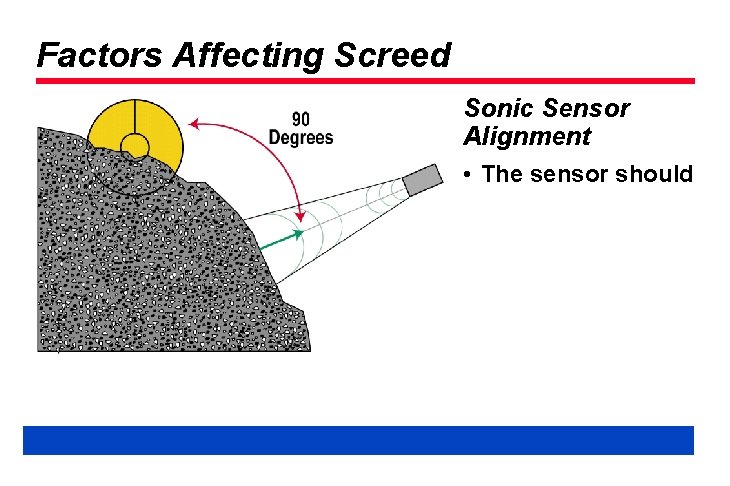
Factors Affecting Screed Sonic Sensor Alignment • The sensor should
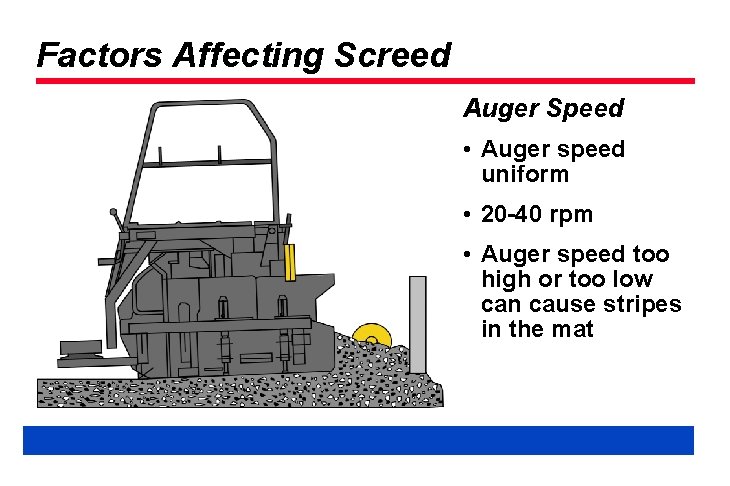
Factors Affecting Screed Auger Speed • Auger speed uniform • 20 -40 rpm • Auger speed too high or too low can cause stripes in the mat
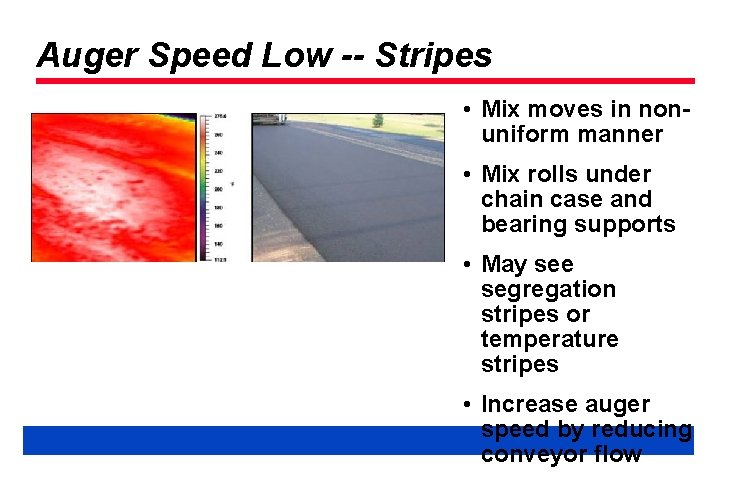
Auger Speed Low -- Stripes • Mix moves in nonuniform manner • Mix rolls under chain case and bearing supports • May see segregation stripes or temperature stripes • Increase auger speed by reducing conveyor flow
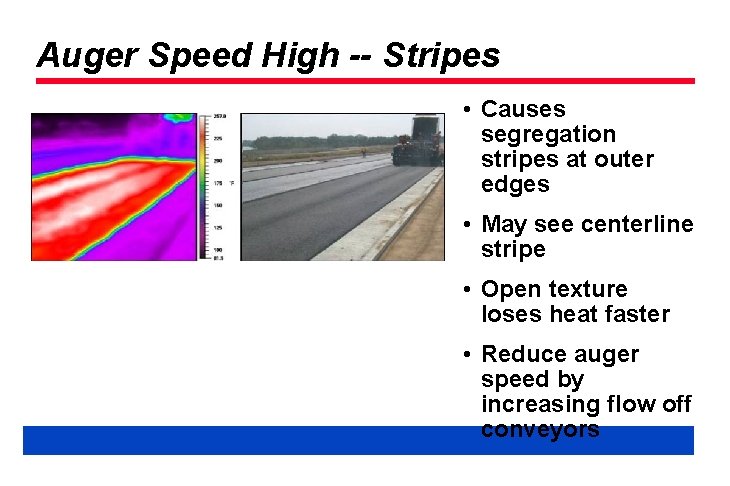
Auger Speed High -- Stripes • Causes segregation stripes at outer edges • May see centerline stripe • Open texture loses heat faster • Reduce auger speed by increasing flow off conveyors
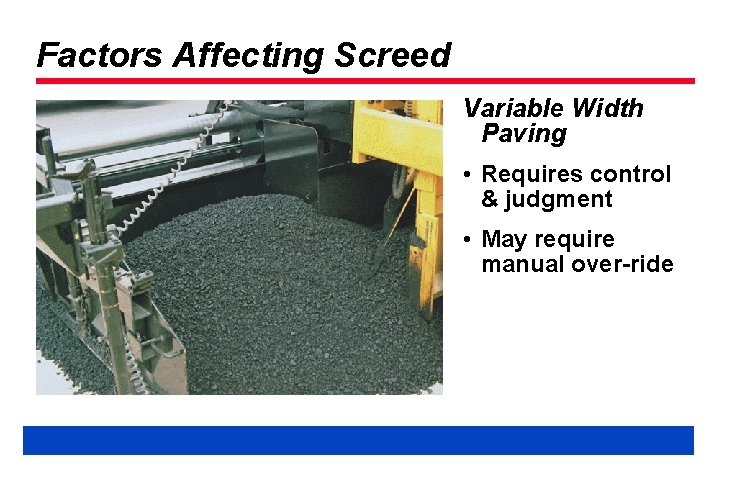
Factors Affecting Screed Variable Width Paving • Requires control & judgment • May require manual over-ride
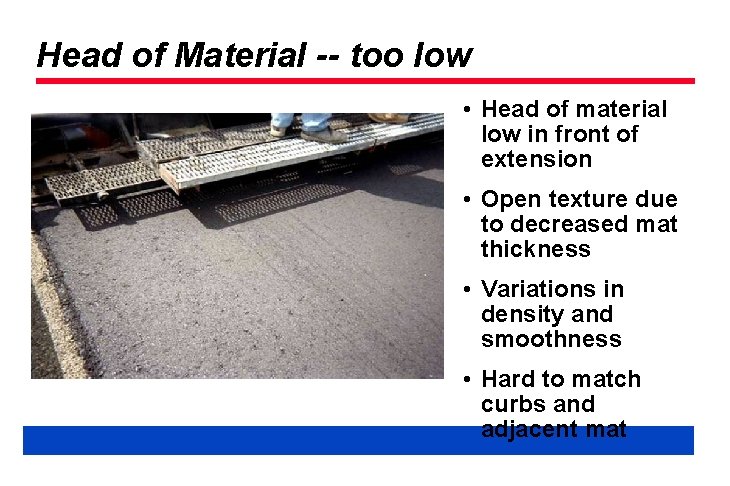
Head of Material -- too low • Head of material low in front of extension • Open texture due to decreased mat thickness • Variations in density and smoothness • Hard to match curbs and adjacent mat
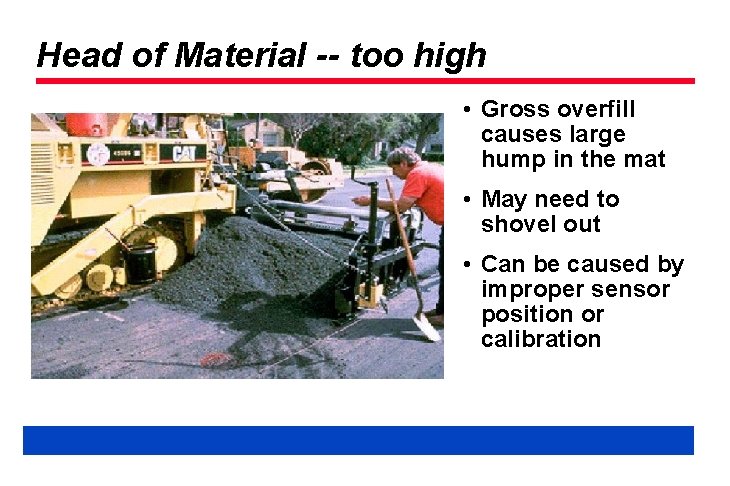
Head of Material -- too high • Gross overfill causes large hump in the mat • May need to shovel out • Can be caused by improper sensor position or calibration
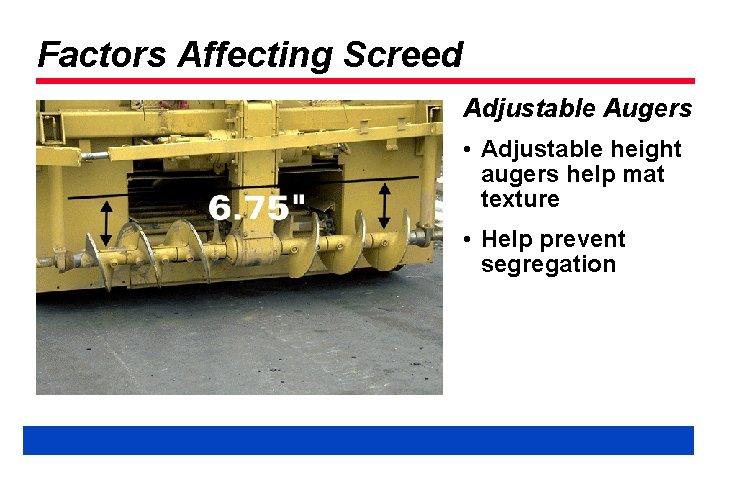
Factors Affecting Screed Adjustable Augers • Adjustable height augers help mat texture • Help prevent segregation
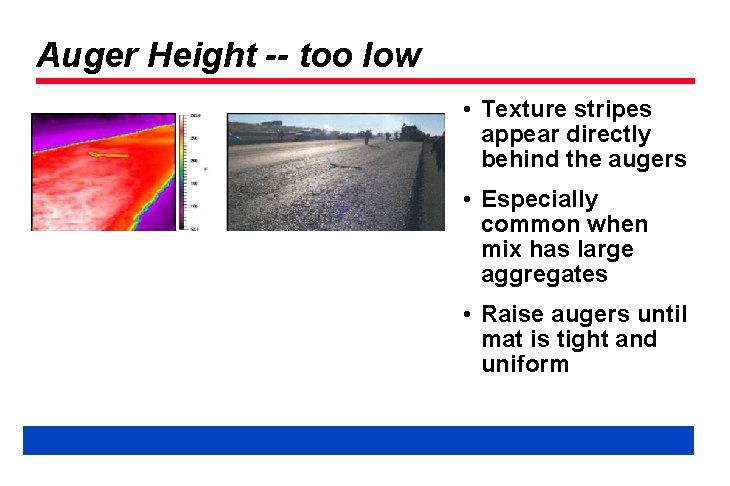
Auger Height -- too low • Texture stripes appear directly behind the augers • Especially common when mix has large aggregates • Raise augers until mat is tight and uniform
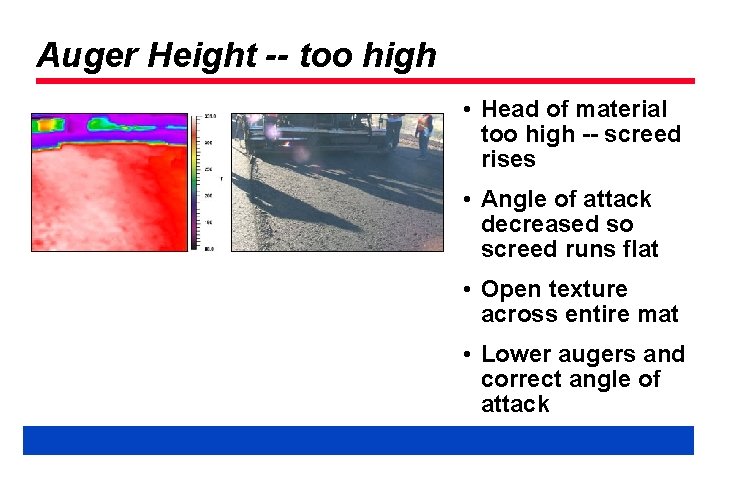
Auger Height -- too high • Head of material too high -- screed rises • Angle of attack decreased so screed runs flat • Open texture across entire mat • Lower augers and correct angle of attack
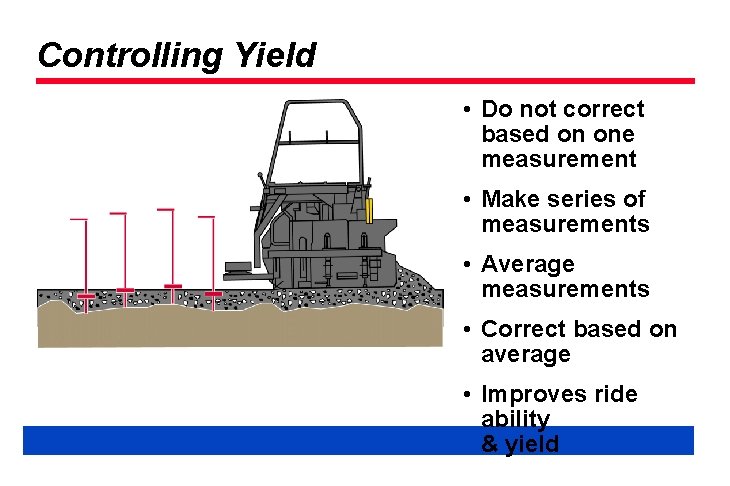
Controlling Yield • Do not correct based on one measurement • Make series of measurements • Average measurements • Correct based on average • Improves ride ability & yield
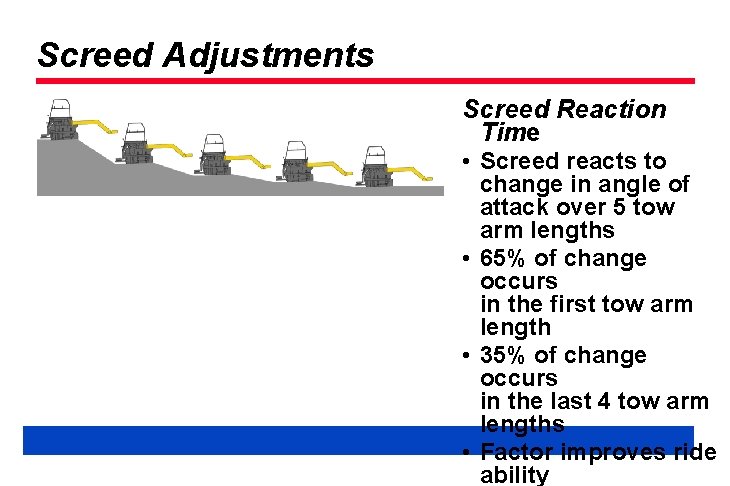
Screed Adjustments Screed Reaction Time • Screed reacts to change in angle of attack over 5 tow arm lengths • 65% of change occurs in the first tow arm length • 35% of change occurs in the last 4 tow arm lengths • Factor improves ride ability
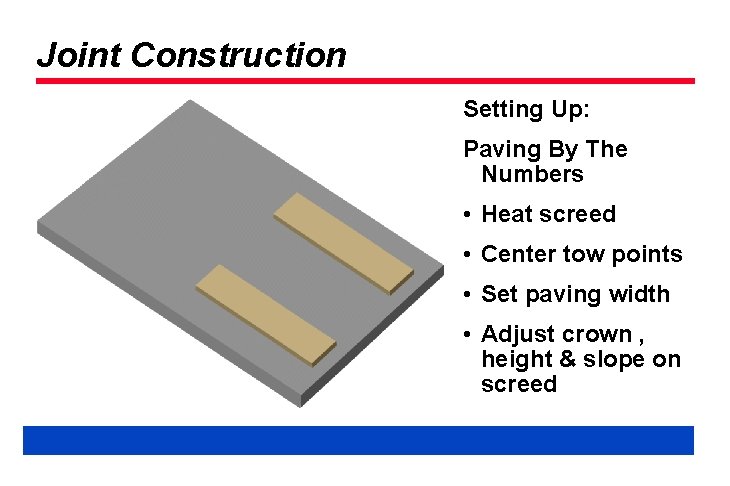
Joint Construction Setting Up: Paving By The Numbers • Heat screed • Center tow points • Set paving width • Adjust crown , height & slope on screed
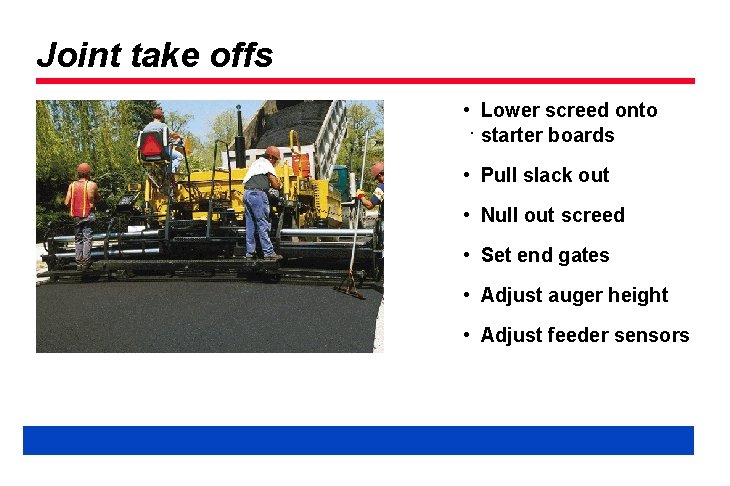
Joint take offs • Lower screed onto. starter boards • Pull slack out • Null out screed • Set end gates • Adjust auger height • Adjust feeder sensors
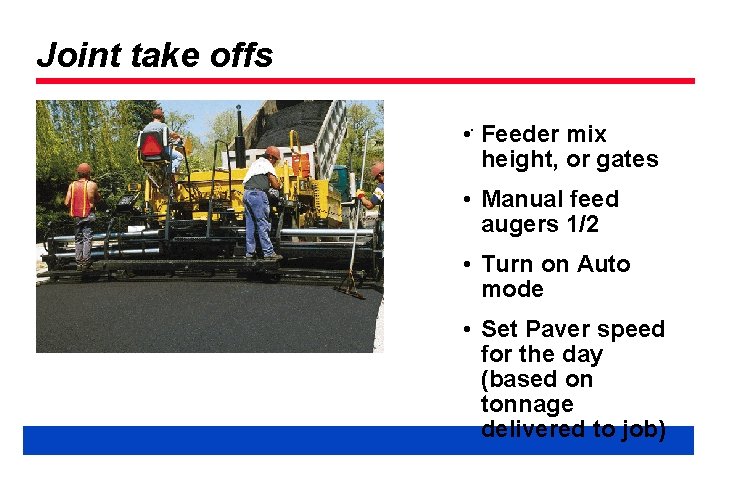
Joint take offs • . Feeder mix height, or gates • Manual feed augers 1/2 • Turn on Auto mode • Set Paver speed for the day (based on tonnage delivered to job)
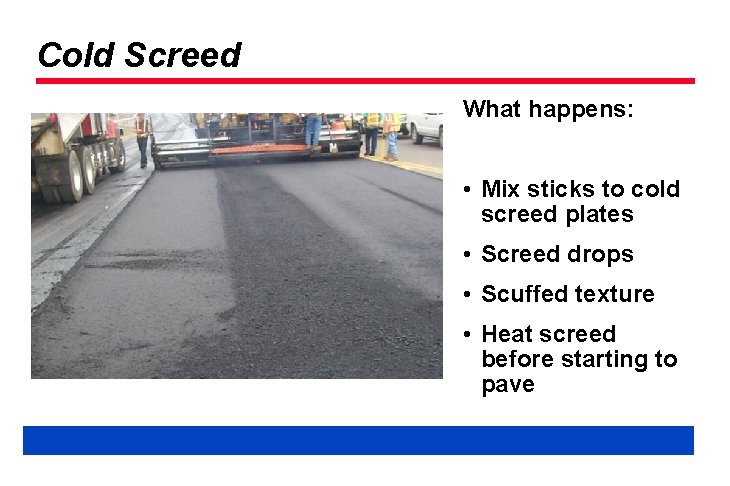
Cold Screed What happens: • Mix sticks to cold screed plates • Screed drops • Scuffed texture • Heat screed before starting to pave
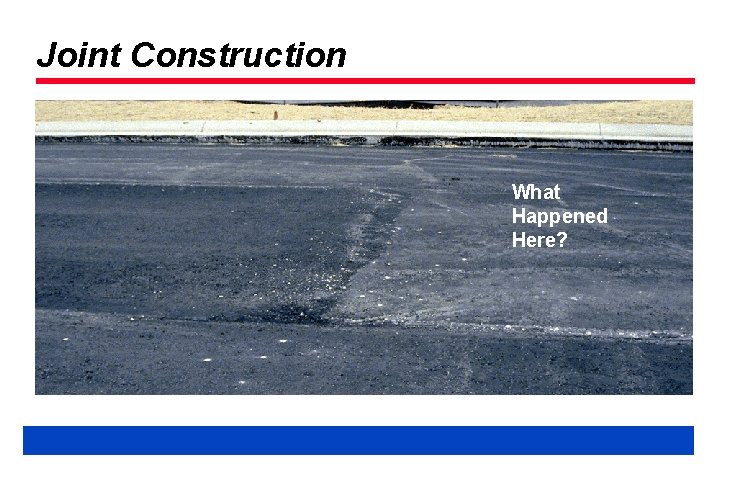
Joint Construction What Happened Here?
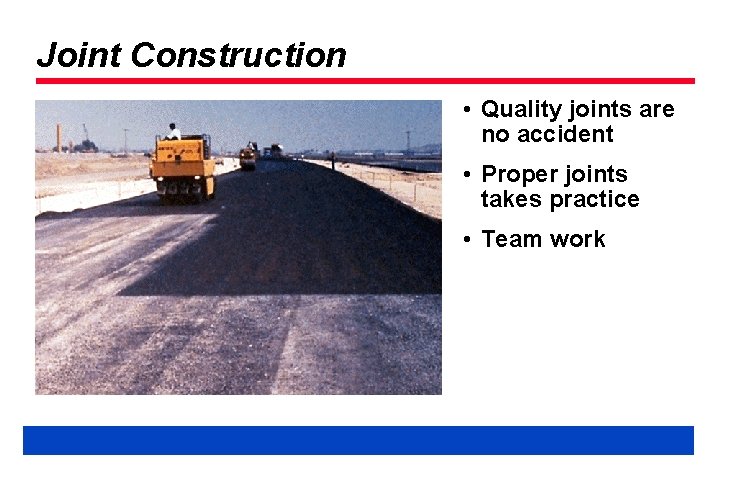
Joint Construction • Quality joints are no accident • Proper joints takes practice • Team work
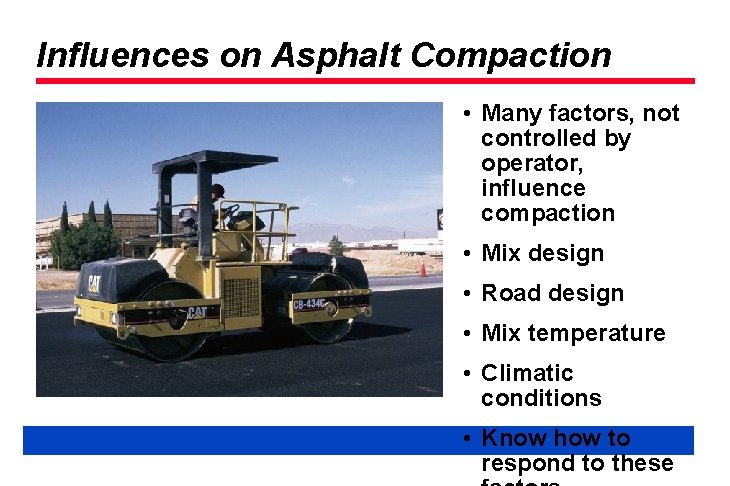
Influences on Asphalt Compaction • Many factors, not controlled by operator, influence compaction • Mix design • Road design • Mix temperature • Climatic conditions • Know how to respond to these
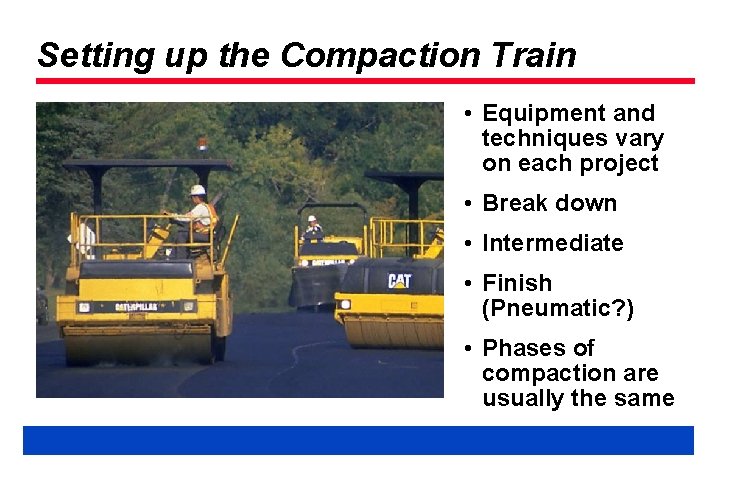
Setting up the Compaction Train • Equipment and techniques vary on each project • Break down • Intermediate • Finish (Pneumatic? ) • Phases of compaction are usually the same
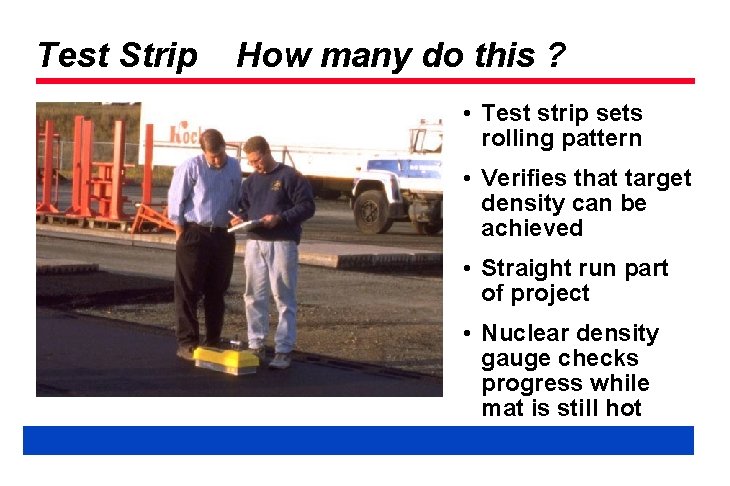
Test Strip How many do this ? • Test strip sets rolling pattern • Verifies that target density can be achieved • Straight run part of project • Nuclear density gauge checks progress while mat is still hot
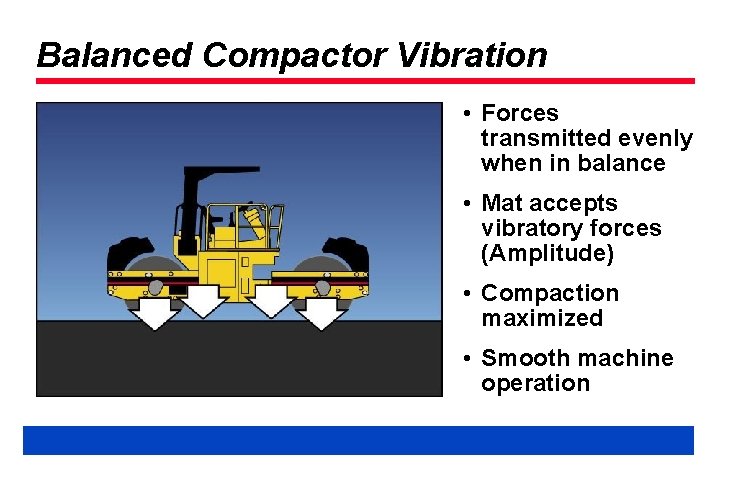
Balanced Compactor Vibration • Forces transmitted evenly when in balance • Mat accepts vibratory forces (Amplitude) • Compaction maximized • Smooth machine operation
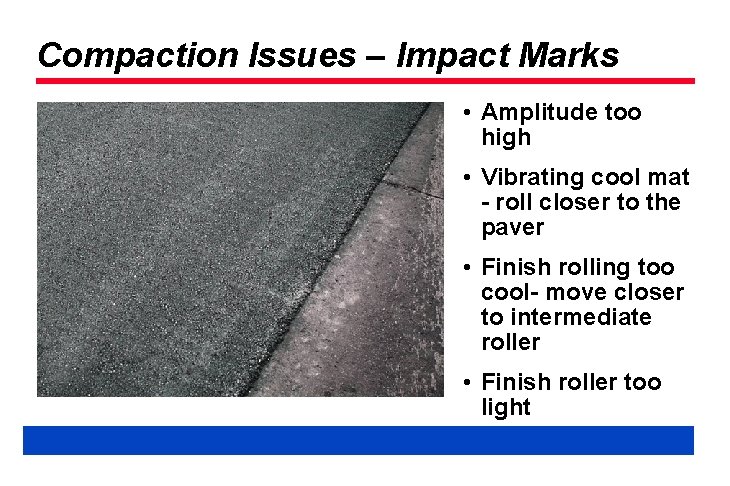
Compaction Issues – Impact Marks • Amplitude too high • Vibrating cool mat - roll closer to the paver • Finish rolling too cool- move closer to intermediate roller • Finish roller too light
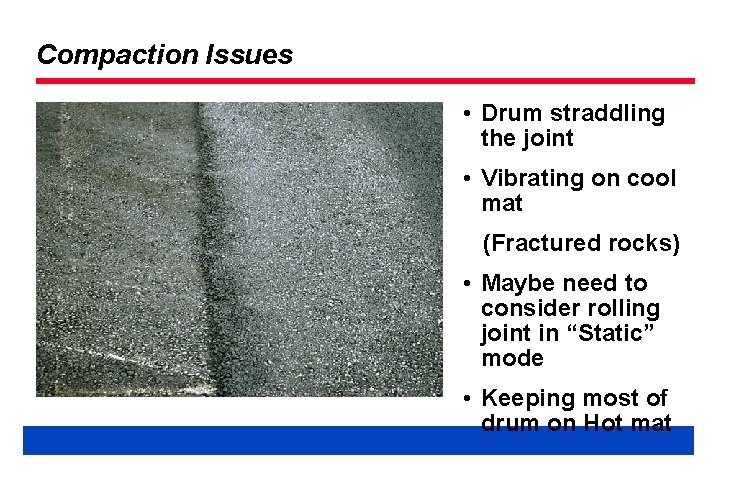
Compaction Issues • Drum straddling the joint • Vibrating on cool mat (Fractured rocks) • Maybe need to consider rolling joint in “Static” mode • Keeping most of drum on Hot mat
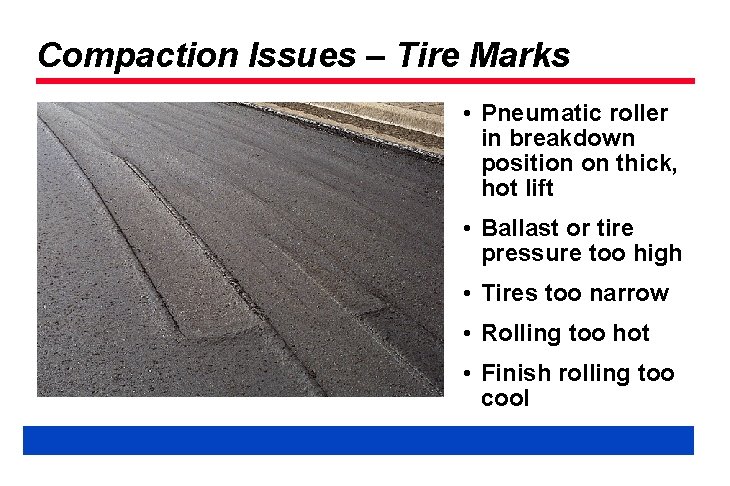
Compaction Issues – Tire Marks • Pneumatic roller in breakdown position on thick, hot lift • Ballast or tire pressure too high • Tires too narrow • Rolling too hot • Finish rolling too cool
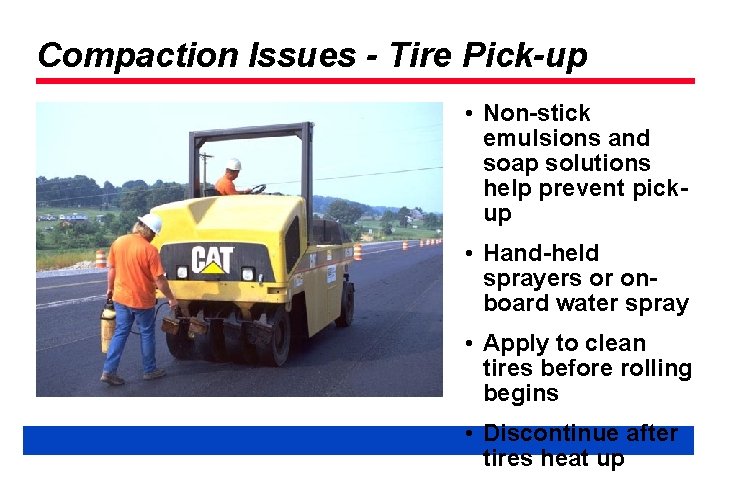
Compaction Issues - Tire Pick-up • Non-stick emulsions and soap solutions help prevent pickup • Hand-held sprayers or onboard water spray • Apply to clean tires before rolling begins • Discontinue after tires heat up
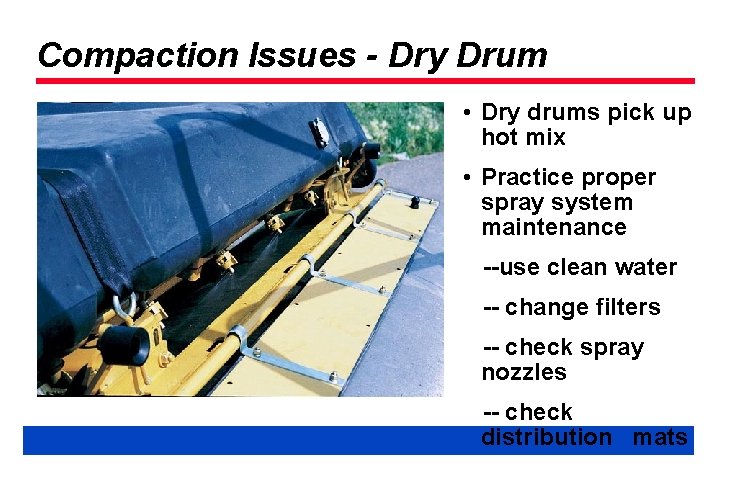
Compaction Issues - Dry Drum • Dry drums pick up hot mix • Practice proper spray system maintenance --use clean water -- change filters -- check spray nozzles -- check distribution mats
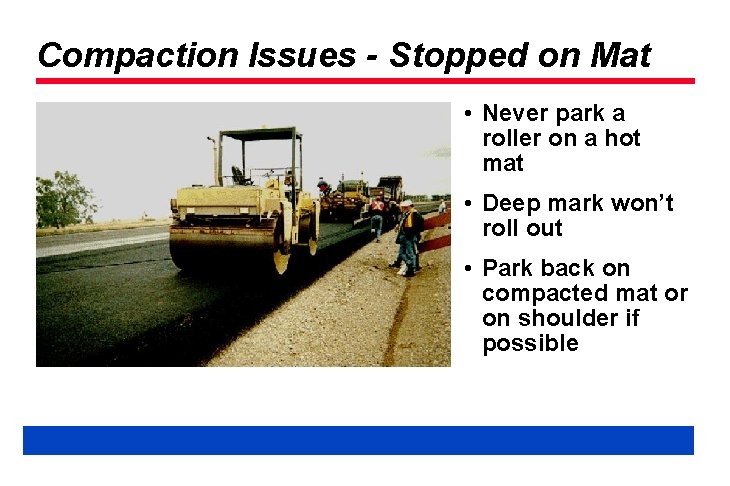
Compaction Issues - Stopped on Mat • Never park a roller on a hot mat • Deep mark won’t roll out • Park back on compacted mat or on shoulder if possible
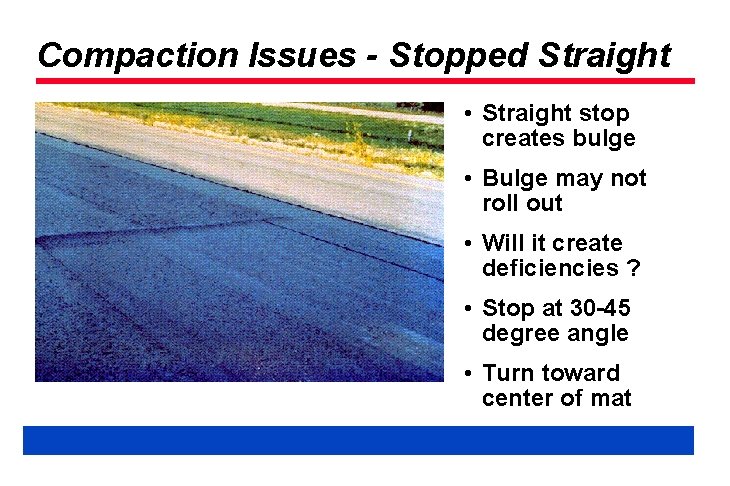
Compaction Issues - Stopped Straight • Straight stop creates bulge • Bulge may not roll out • Will it create deficiencies ? • Stop at 30 -45 degree angle • Turn toward center of mat
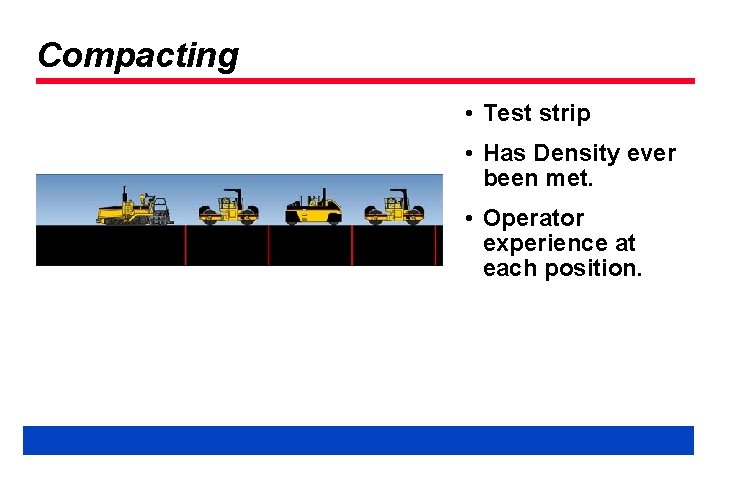
Compacting • Test strip • Has Density ever been met. • Operator experience at each position.

Best/Worst Paving Practices Questions Thank You !
- Slides: 65