
Agenda ActivityBased Travel Demand Modeling from Cellular Data
Agenda • Activity-Based Travel Demand Modeling from Cellular Data –Introduction –Activity Pattern Recognition from Cellular Data –Construction of Ground Truth Activities –Experimental Results –Conclusion and Future Works • Agent-Based Modeling of Traveler Behavior and System Operations with BEAM –Goals –Approach –Preliminary Results Presenter: Colin Sheppard 1
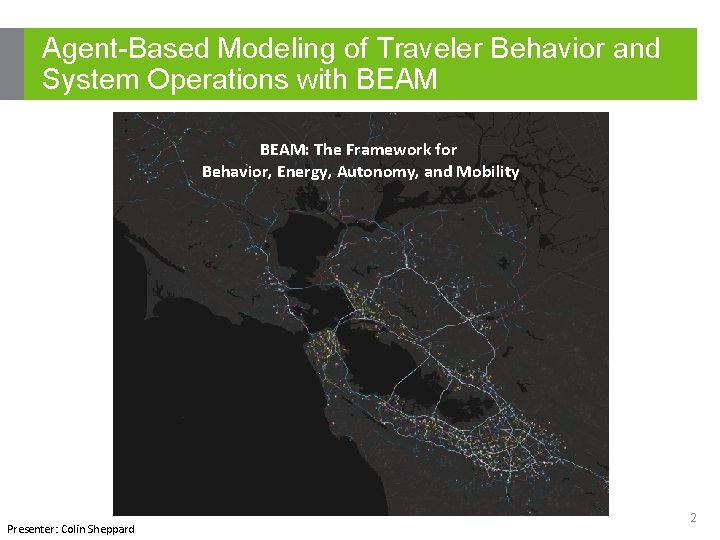
Agent-Based Modeling of Traveler Behavior and System Operations with BEAM: The Framework for Behavior, Energy, Autonomy, and Mobility Presenter: Colin Sheppard 2
Research Goals • Holistically understand analyze transportation mega-trends: – Mobility Services – Autonomy – Electrification • Answer a variety of research questions centered around emerging mobility through an energy and services lens: – What will be the energy and mobility impacts of X? • Create a simulation engine capable of: – Easy to use – Capturing all modes of travel – Modular and open for linkage with other modes (e. g. vehicle energy / controls) Presenter: Colin Sheppard 3
Approach: Why Agent-Based Modeling? • Travel behavior occurs at the scale of individuals • Travelers need a complete set of alternatives to choose from with accurate estimates of cost and travel time • Choices impact the whole system through externalities • Interactive effects of choices are complex • Resource competition is important, supplies are limited Presenter: Colin Sheppard 4
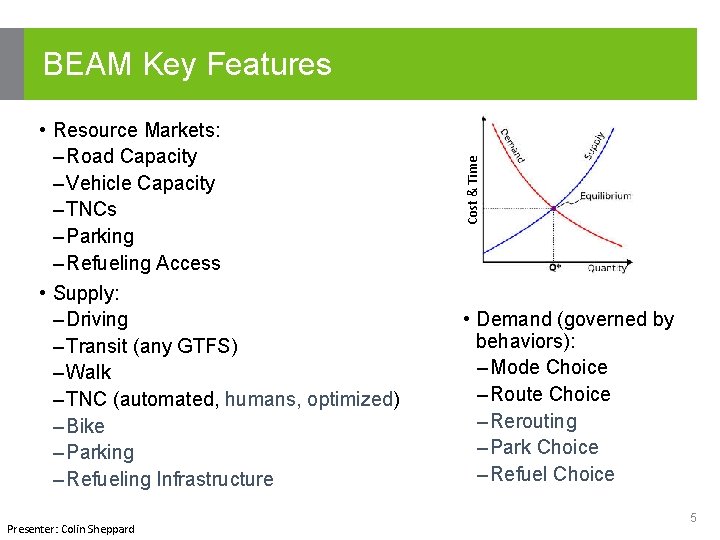
• Resource Markets: – Road Capacity – Vehicle Capacity – TNCs – Parking – Refueling Access • Supply: – Driving – Transit (any GTFS) – Walk – TNC (automated, humans, optimized) – Bike – Parking – Refueling Infrastructure Presenter: Colin Sheppard Cost & Time BEAM Key Features • Demand (governed by behaviors): – Mode Choice – Route Choice – Rerouting – Park Choice – Refuel Choice 5

BEAM Extends MATSim • Agent-based meso-scale simulation • Highly extensible including: – Multimodal, – Alt. Fuels, – TNCs, – Dynamic Pricing, – Etc. • Utility maximization through scoring and replanning Presenter: Colin Sheppard 6
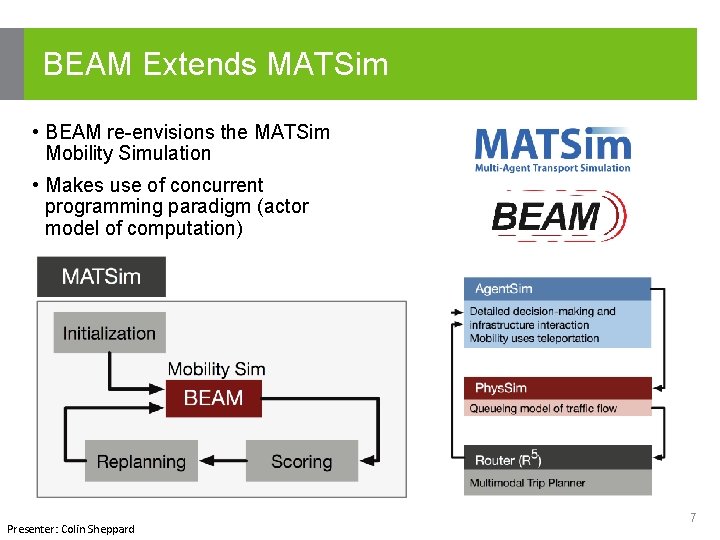
BEAM Extends MATSim • BEAM re-envisions the MATSim Mobility Simulation • Makes use of concurrent programming paradigm (actor model of computation) Presenter: Colin Sheppard 7
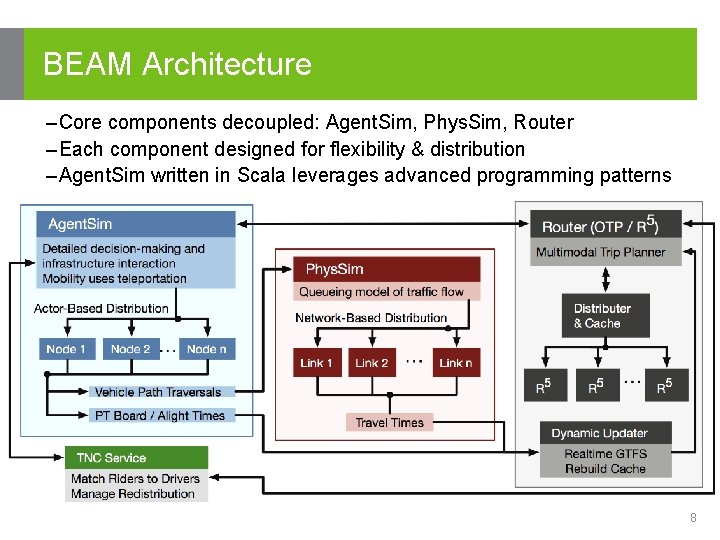
BEAM Architecture – Core components decoupled: Agent. Sim, Phys. Sim, Router – Each component designed for flexibility & distribution – Agent. Sim written in Scala leverages advanced programming patterns 8
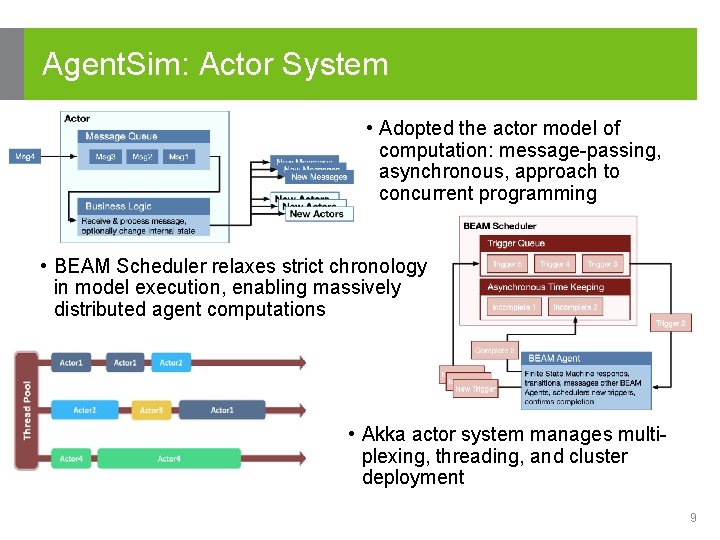
Agent. Sim: Actor System • Adopted the actor model of computation: message-passing, asynchronous, approach to concurrent programming • BEAM Scheduler relaxes strict chronology in model execution, enabling massively distributed agent computations • Akka actor system manages multiplexing, threading, and cluster deployment 9
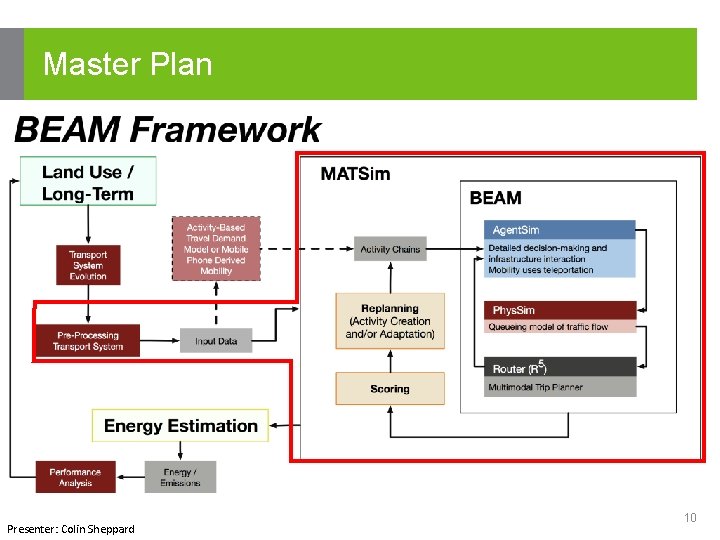
Master Plan Presenter: Colin Sheppard 10
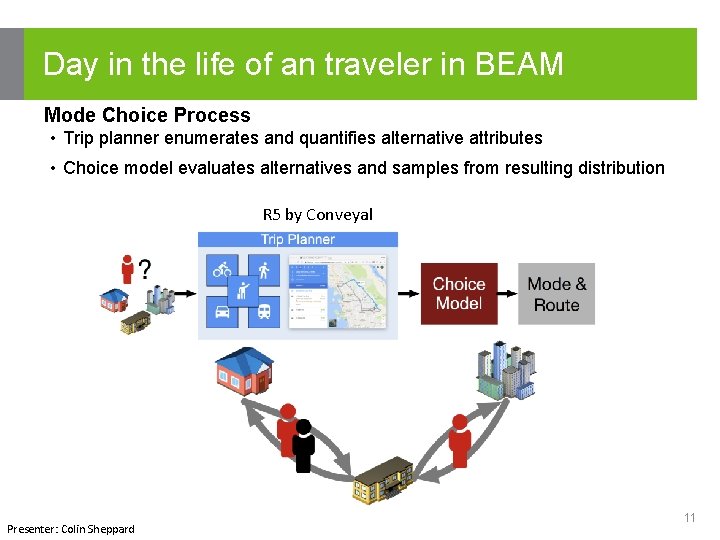
Day in the life of an traveler in BEAM Mode Choice Process • Trip planner enumerates and quantifies alternative attributes • Choice model evaluates alternatives and samples from resulting distribution R 5 by Conveyal Presenter: Colin Sheppard 11
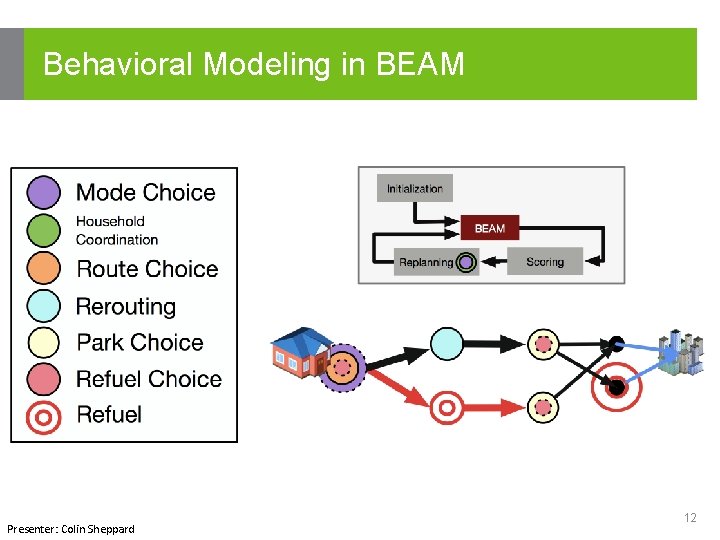
Behavioral Modeling in BEAM Presenter: Colin Sheppard 12
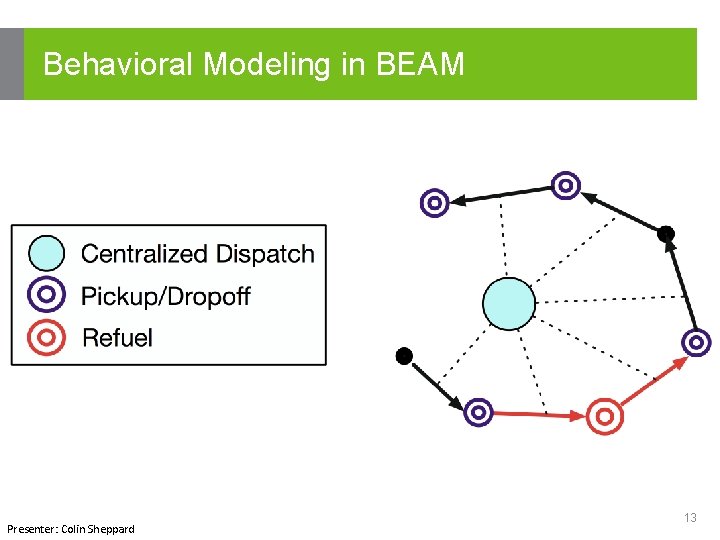
Behavioral Modeling in BEAM Presenter: Colin Sheppard 13
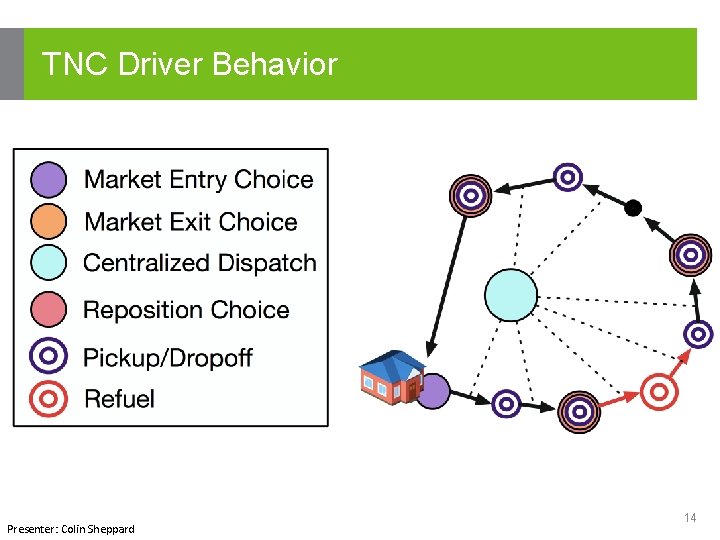
TNC Driver Behavior Presenter: Colin Sheppard 14
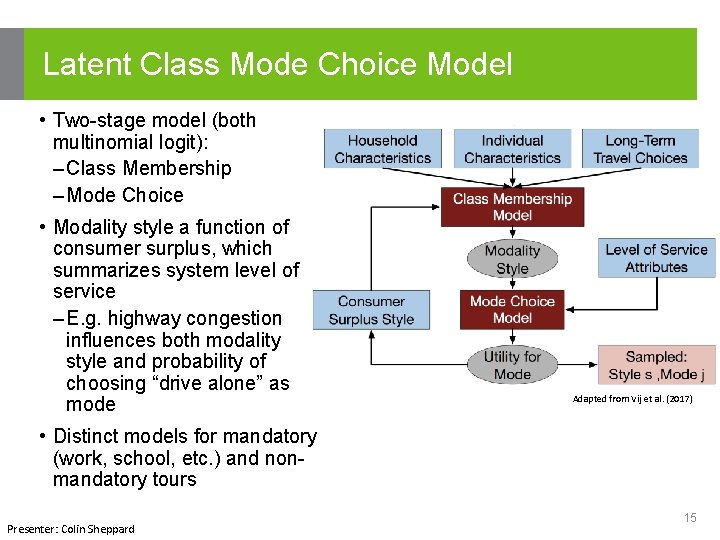
Latent Class Mode Choice Model • Two-stage model (both multinomial logit): – Class Membership – Mode Choice • Modality style a function of consumer surplus, which summarizes system level of service – E. g. highway congestion influences both modality style and probability of choosing “drive alone” as mode Adapted from Vij et al. (2017) • Distinct models for mandatory (work, school, etc. ) and nonmandatory tours Presenter: Colin Sheppard 15
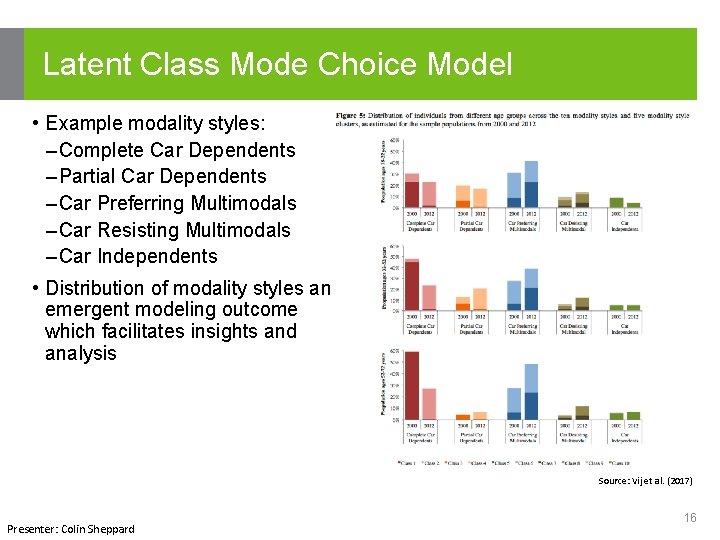
Latent Class Mode Choice Model • Example modality styles: – Complete Car Dependents – Partial Car Dependents – Car Preferring Multimodals – Car Resisting Multimodals – Car Independents • Distribution of modality styles an emergent modeling outcome which facilitates insights and analysis Source: Vij et al. (2017) Presenter: Colin Sheppard 16
Preliminary Results • Bay Area Scenario • Caveats / Disclaimers – 5% Sample (~400 k persons, 340 k – Work in progress cars) – Choice model not fully calibrated, – Full Transit (27 agencies, 828 routes) therefore modal splits not yet realistic – TNC Fleet (20, 000 - also referred to – TNC operations are still simplistic as Ride Haling) – Congestion feedback effects still not captured • Sensitivities Explored: – Transit is underutilized – Transit Price – Transit Capacity – TNC Price – TNC Number – Bridge Toll Price – Value of Time Presenter: Colin Sheppard 17
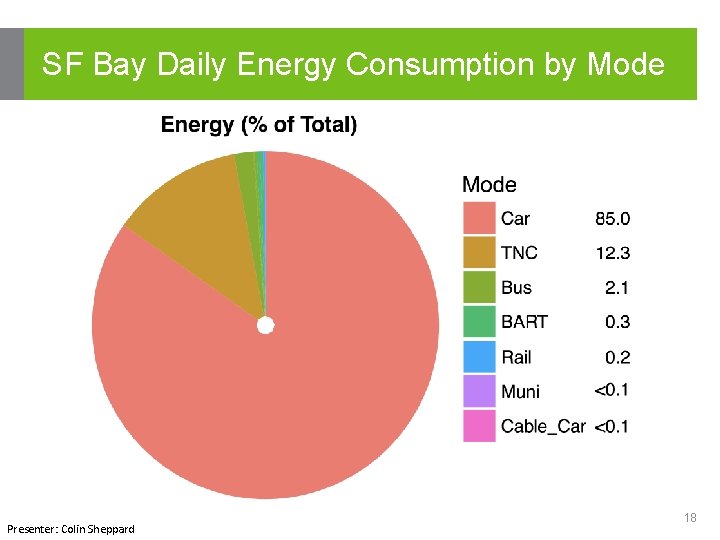
SF Bay Daily Energy Consumption by Mode Presenter: Colin Sheppard 18
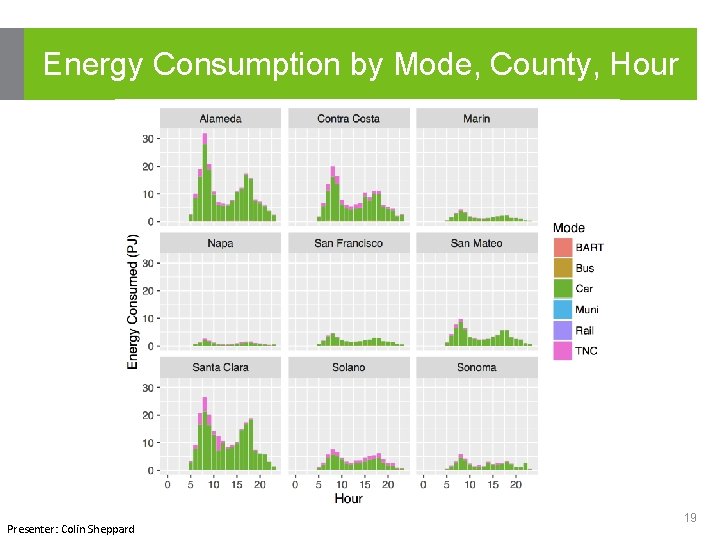
Energy Consumption by Mode, County, Hour Presenter: Colin Sheppard 19
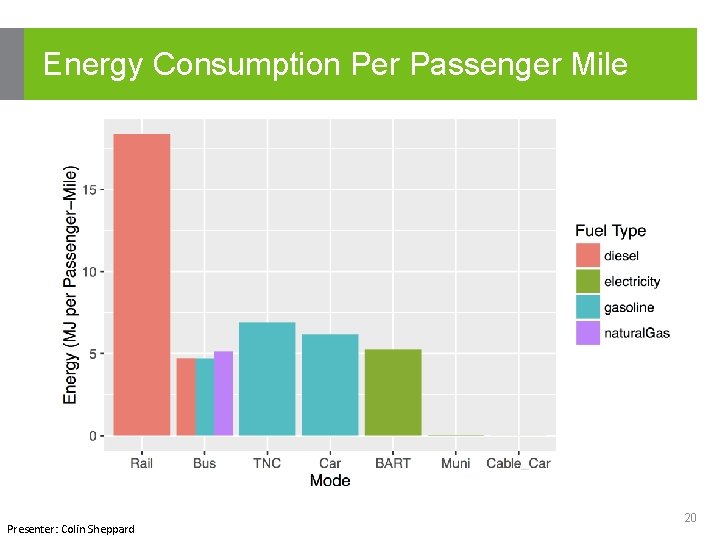
Energy Consumption Per Passenger Mile Presenter: Colin Sheppard 20
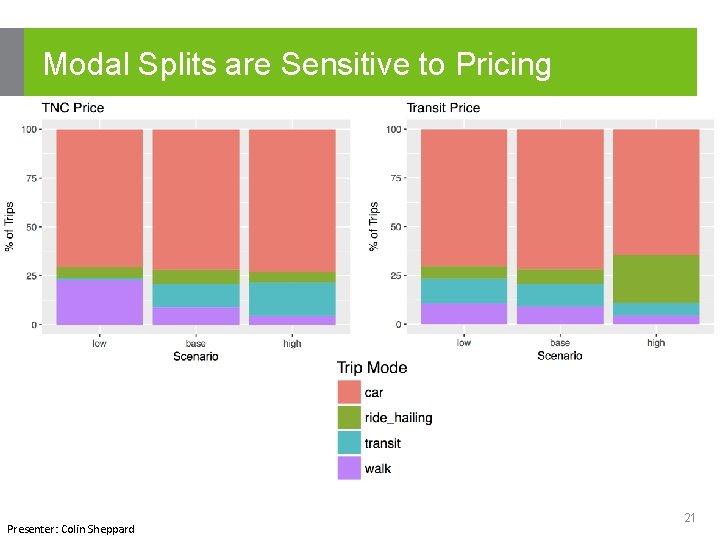
Modal Splits are Sensitive to Pricing Presenter: Colin Sheppard 21
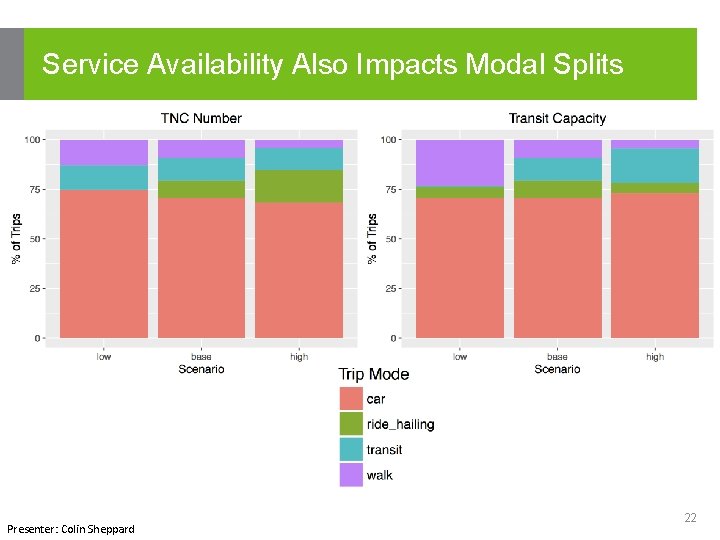
Service Availability Also Impacts Modal Splits Presenter: Colin Sheppard 22
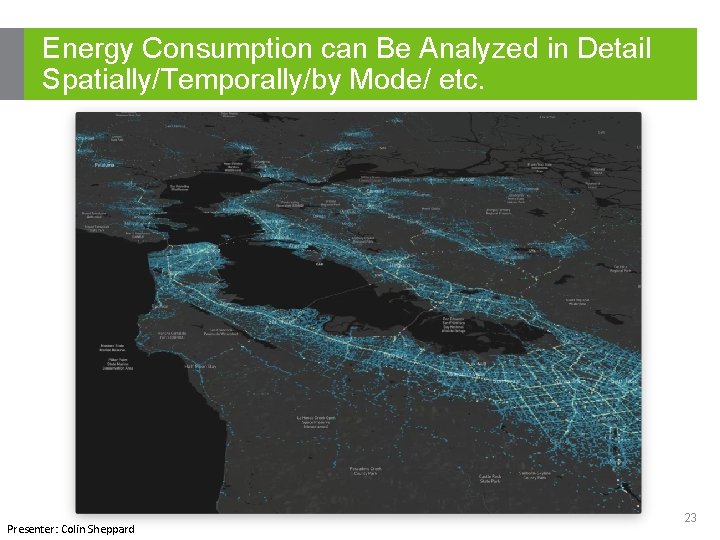
Energy Consumption can Be Analyzed in Detail Spatially/Temporally/by Mode/ etc. Presenter: Colin Sheppard 23
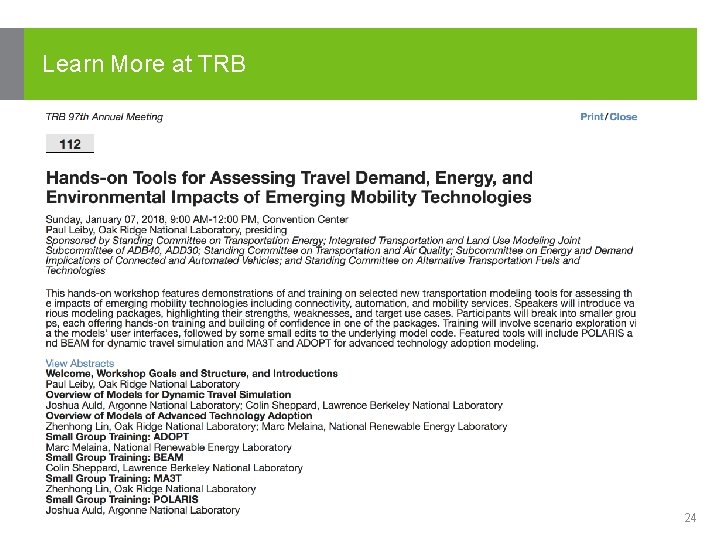
Learn More at TRB 24

Thank You! Mogeng Yin mogengyin@berkeley. edu Colin Sheppard colin. sheppard@lbl. gov
- Slides: 25