
Agenda 1 3 M Background 2 DRG Overview

Agenda 1. 3 M Background 2. DRG Overview 3. DRG Prerequisites 4. DRG Benefits & Examples 5. IR- DRGs 6. RTI Background 7. Shadow Billing for Inpatient IR-DRGs 8. Sensitivity Analyses 9. Monitoring 10. Adherence to the Projected Timeline 11. Regulation and Compliance 0 0
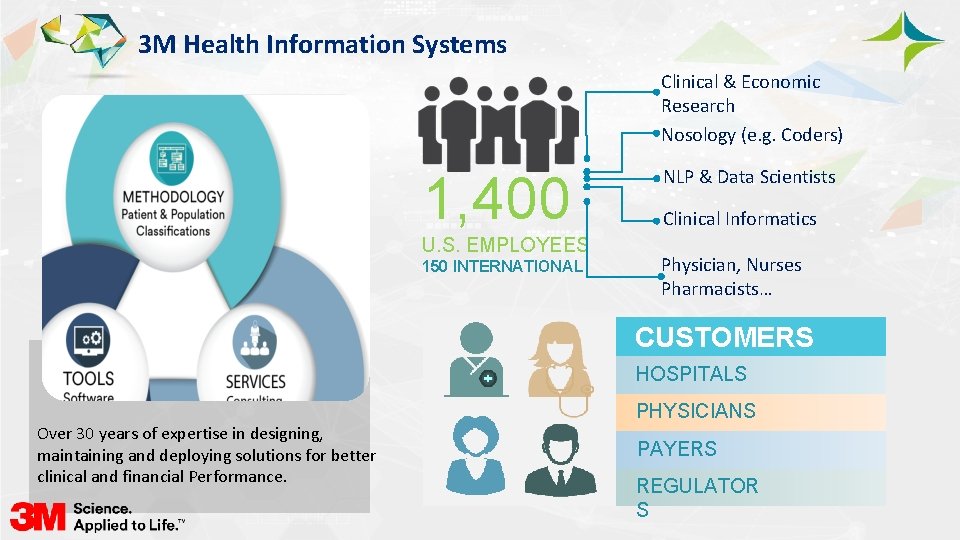
3 M Health Information Systems Clinical & Economic Research Nosology (e. g. Coders) 1, 400 U. S. EMPLOYEES 150 INTERNATIONAL NLP & Data Scientists Clinical Informatics Physician, Nurses Pharmacists… CUSTOMERS HOSPITALS Over 30 years of expertise in designing, maintaining and deploying solutions for better clinical and financial Performance. PHYSICIANS PAYERS REGULATOR S
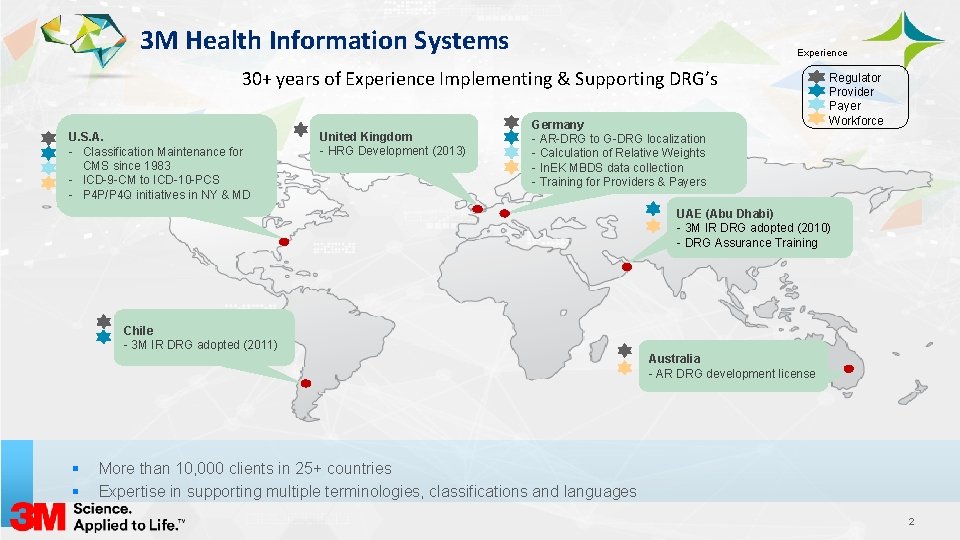
3 M Health Information Systems Experience 30+ years of Experience Implementing & Supporting DRG’s U. S. A. - Classification Maintenance for CMS since 1983 - ICD-9 -CM to ICD-10 -PCS - P 4 P/P 4 Q initiatives in NY & MD United Kingdom - HRG Development (2013) Germany - AR-DRG to G-DRG localization - Calculation of Relative Weights - In. EK MBDS data collection - Training for Providers & Payers Regulator Provider Payer Workforce UAE (Abu Dhabi) - 3 M IR DRG adopted (2010) - DRG Assurance Training Chile - 3 M IR DRG adopted (2011) Australia - AR DRG development license § § More than 10, 000 clients in 25+ countries Expertise in supporting multiple terminologies, classifications and languages 2
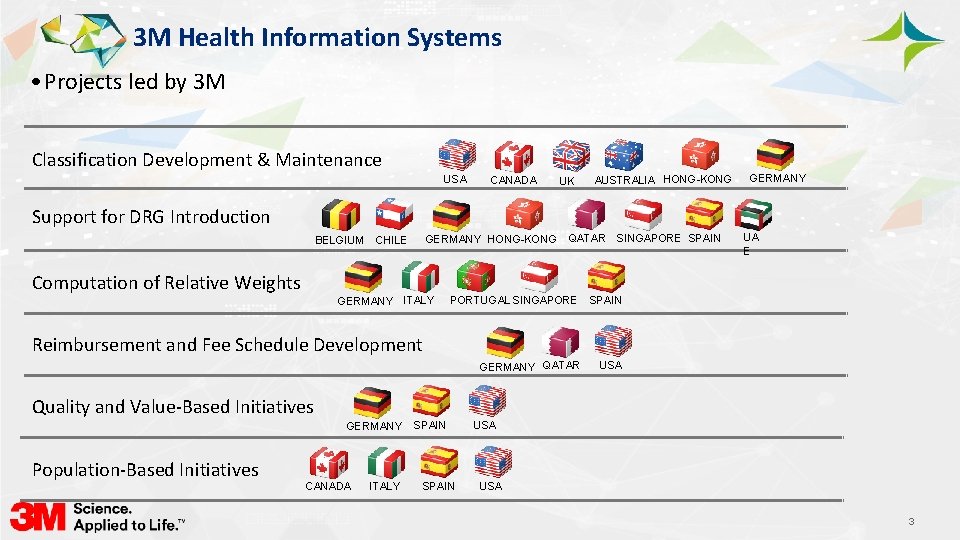
3 M Health Information Systems • Projects led by 3 M Classification Development & Maintenance USA CANADA UK AUSTRALIA HONG-KONG GERMANY Support for DRG Introduction BELGIUM GERMANY HONG-KONG CHILE QATAR SINGAPORE SPAIN UA E Computation of Relative Weights GERMANY ITALY PORTUGAL SINGAPORE SPAIN Reimbursement and Fee Schedule Development GERMANY QATAR USA Quality and Value-Based Initiatives GERMANY Population-Based Initiatives CANADA ITALY SPAIN USA 3

3 M Classification and Payment Methodologies • Expert Driven, Enabling Advanced Variability Analysis Inpatient & Outpatient Population Health Risk Adjusted, Linking Clinical Patterns to Cost Patient Centered Risk Adjusted Data, Quality & Patient Safety Measures, Total Cost of Care APR DRGs EAPGs IR-DRGs All Patient Refined Diagnosis Related Groups Enhanced International Refined Diagnosis Related Groups Inpatient Grouper Severity and Risk of Mortality Ambulatory Patient Groups Outpatient Grouper International Grouper In & Outpatient CRGs Clinical Risk Groups Health status Grouper PPCs Potentially Preventable PPRs Potentially Preventable Complications Readmission s Identify preventable complications Identify preventable readmissions Value Index Score PPV Potentially Preventable ED Visits PFEs PFPs Patient Focused Episodes Population Focused Preventables Defines 700+ patient episodes PPA Potentially Preventable Initial Admissions PPS Potentially Preventable Services
DRG Overview 5
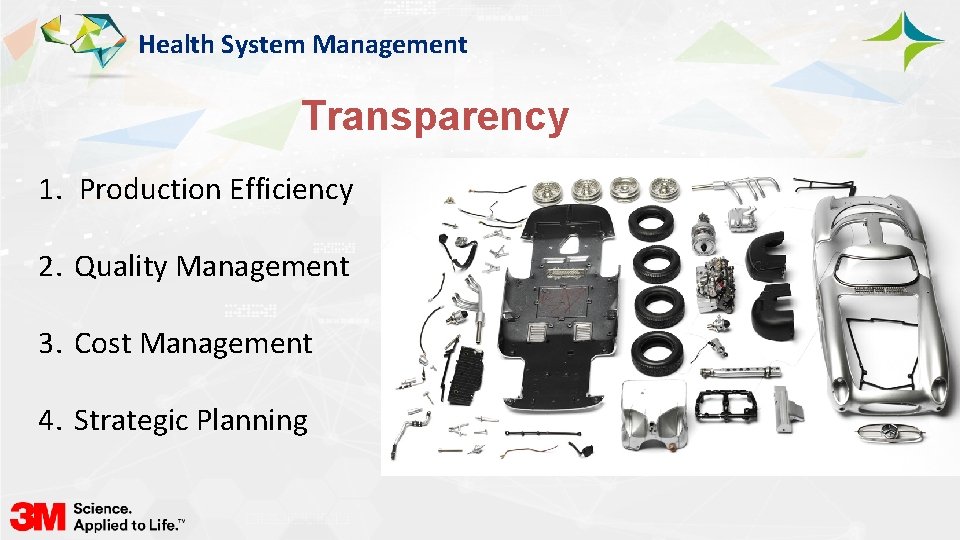
Health System Management Transparency 1. Production Efficiency 2. Quality Management 3. Cost Management 4. Strategic Planning

It started with a question…. . How could industrial methods of cost and quality control be adapted and applied to the hospital industry? Thompson to Fetter Yale University - 1968 7

The answer …. . Another question… “What is the true product of the hospital? ” 8
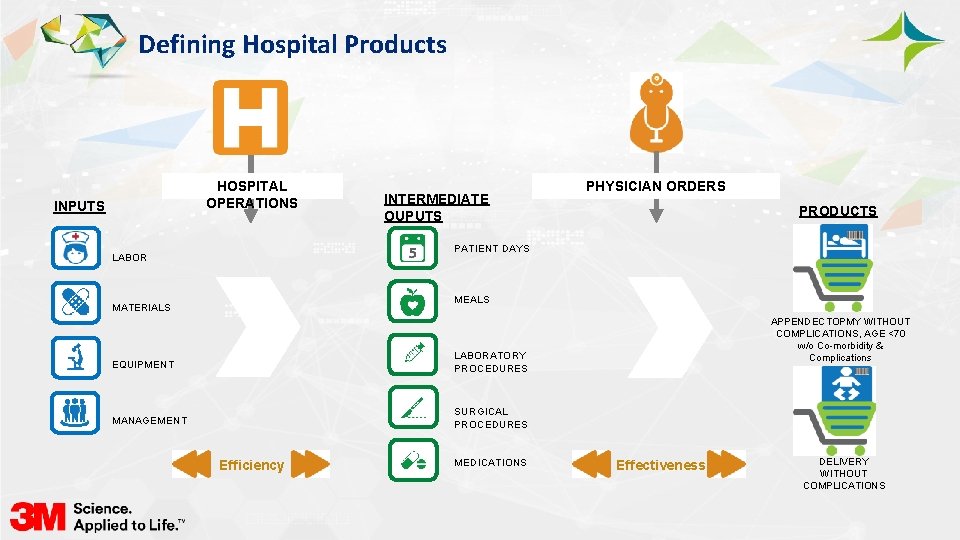
Defining Hospital Products HOSPITAL OPERATIONS INPUTS INTERMEDIATE OUPUTS PHYSICIAN ORDERS PRODUCTS PATIENT DAYS LABOR MEALS MATERIALS EQUIPMENT LABORATORY PROCEDURES MANAGEMENT SURGICAL PROCEDURES Efficiency MEDICATIONS APPENDECTOPMY WITHOUT COMPLICATIONS, AGE <70 w/o Co-morbidity & Complications Effectiveness DELIVERY WITHOUT COMPLICATIONS
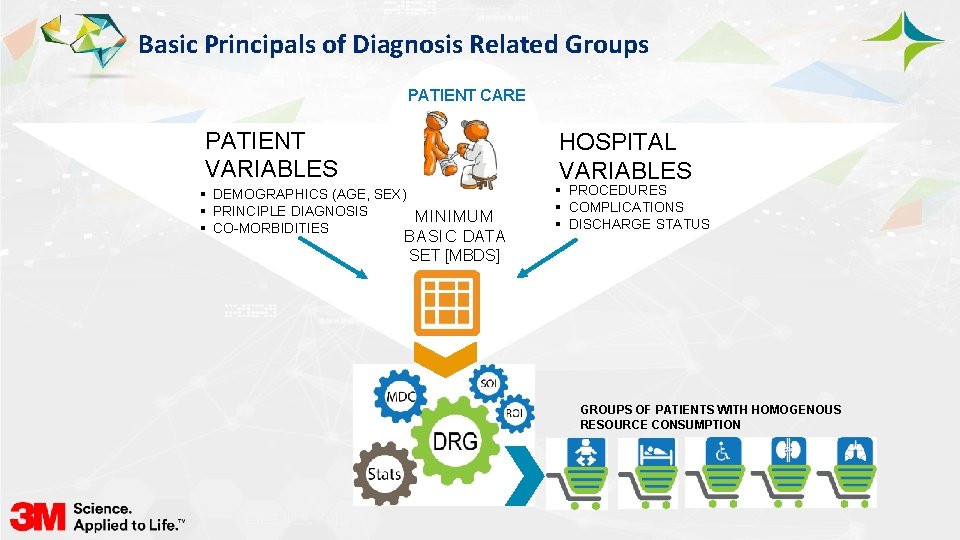
Basic Principals of Diagnosis Related Groups PATIENT CARE PATIENT VARIABLES HOSPITAL VARIABLES § DEMOGRAPHICS (AGE, SEX) § PRINCIPLE DIAGNOSIS MINIMUM § CO-MORBIDITIES BASIC DATA SET [MBDS] § PROCEDURES § COMPLICATIONS § DISCHARGE STATUS GROUPS OF PATIENTS WITH HOMOGENOUS RESOURCE CONSUMPTION
DRG as a hospital product One DRG= One product= One cost 11
Basic principals of Diagnosis Related Groups DRGs are § Cost homogeneous thus have similar patterns of resource use § Patients in DRG are not identical § Predict average level of resource use § Clinically coherent thus with similar clinical characteristics § Common organ system, etiology or clinical specialty § Mutually exclusive § 1 DRG = 1 Patient stay
Diagnosis Related Groups (DRGs) § Case mix information can tell us how many resources our hospitals need according to the patients they actually treat § First step in understanding quality issues 13
DRG Prerequisites 14
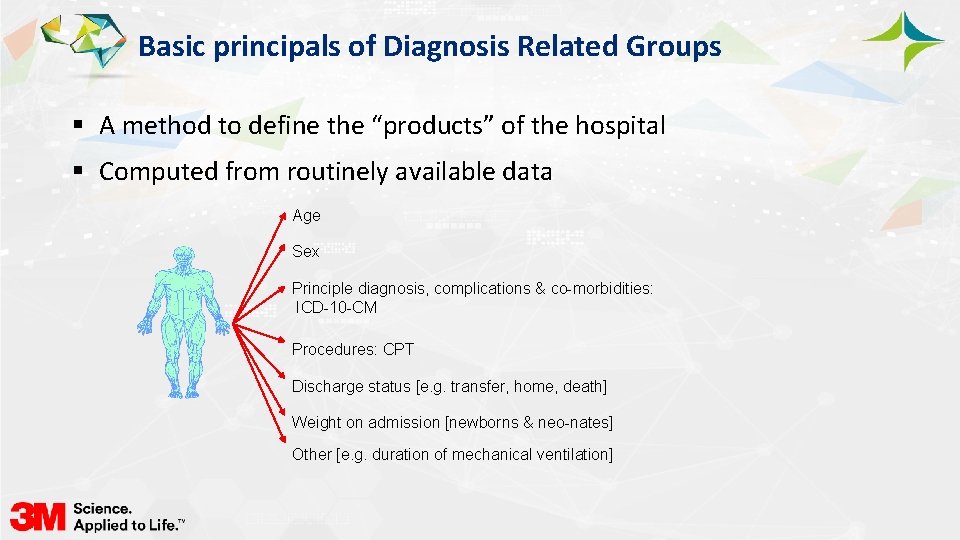
Basic principals of Diagnosis Related Groups § A method to define the “products” of the hospital § Computed from routinely available data Age Sex Principle diagnosis, complications & co-morbidities: ICD-10 -CM Procedures: CPT Discharge status [e. g. transfer, home, death] Weight on admission [newborns & neo-nates] Other [e. g. duration of mechanical ventilation]
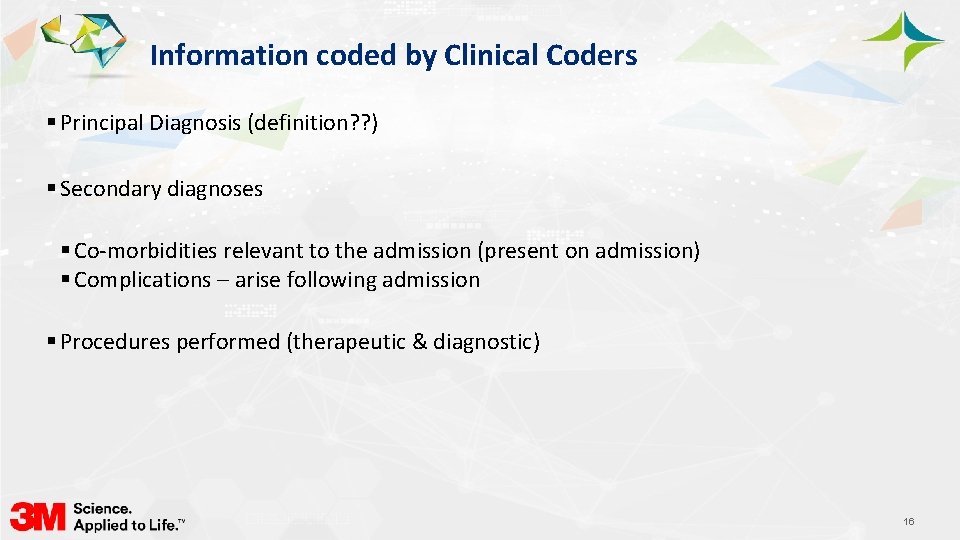
Information coded by Clinical Coders § Principal Diagnosis (definition? ? ) § Secondary diagnoses § Co-morbidities relevant to the admission (present on admission) § Complications – arise following admission § Procedures performed (therapeutic & diagnostic) 16
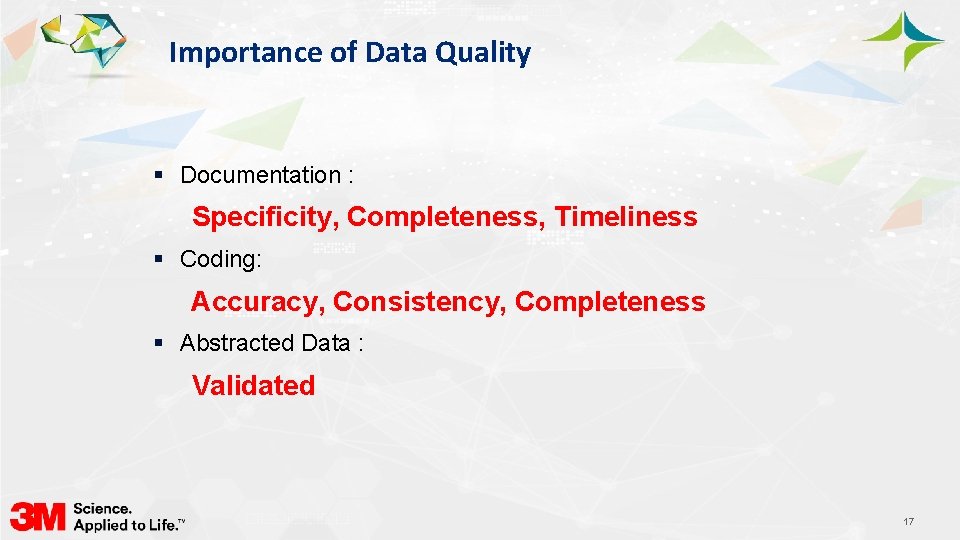
Importance of Data Quality § Documentation : Specificity, Completeness, Timeliness § Coding: Accuracy, Consistency, Completeness § Abstracted Data : Validated 17
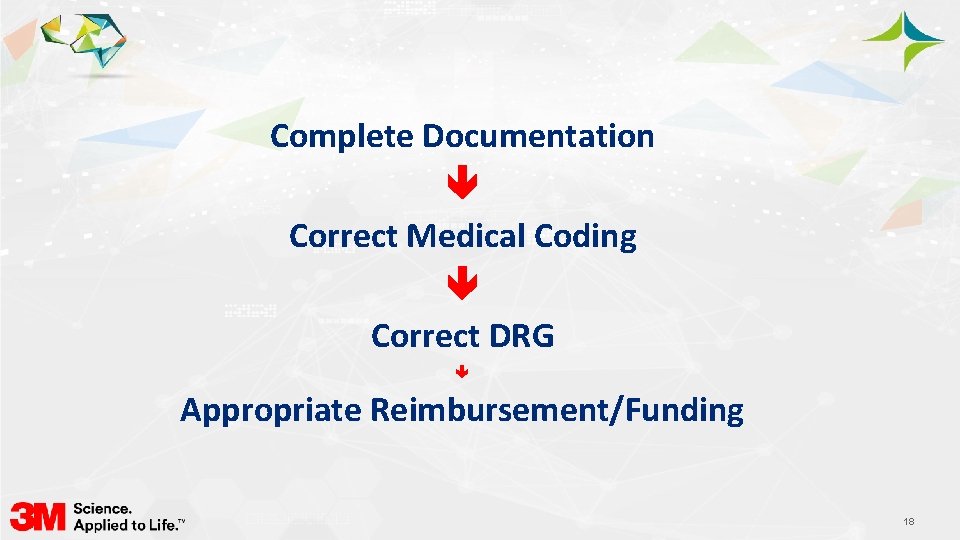
Complete Documentation Correct Medical Coding Correct DRG Appropriate Reimbursement/Funding 18

DRG Benefits & Examples 19
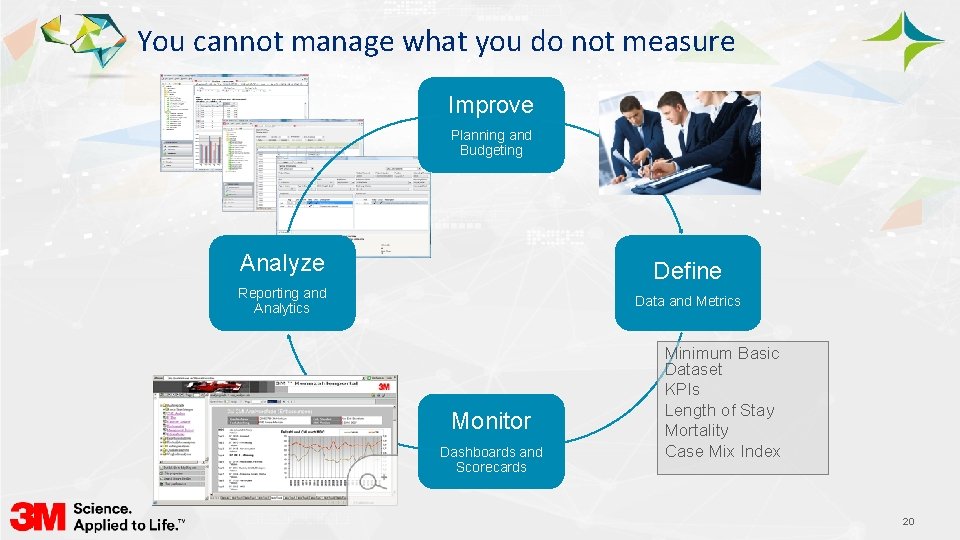
You cannot manage what you do not measure Improve Planning and Budgeting Analyze Define Reporting and Analytics Data and Metrics Monitor Dashboards and Scorecards Minimum Basic Dataset KPIs Length of Stay Mortality Case Mix Index 20
Purpose of a DRG system § To provide a classification system that is a better basis for: § Management § Budgeting § Payment § Profiling § Benchmarking § Clinical research § Quality reporting 21
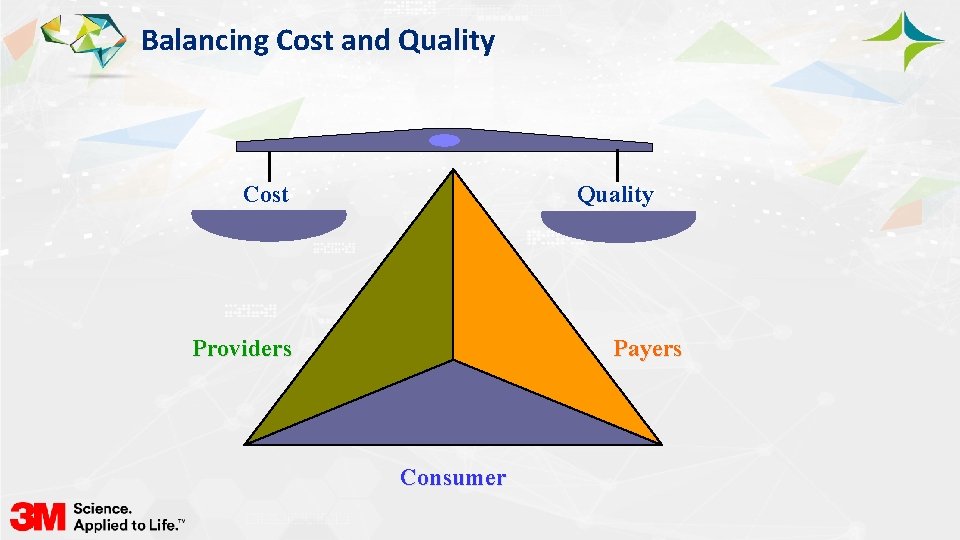
Balancing Cost and Quality Cost Quality Providers Payers Consumer
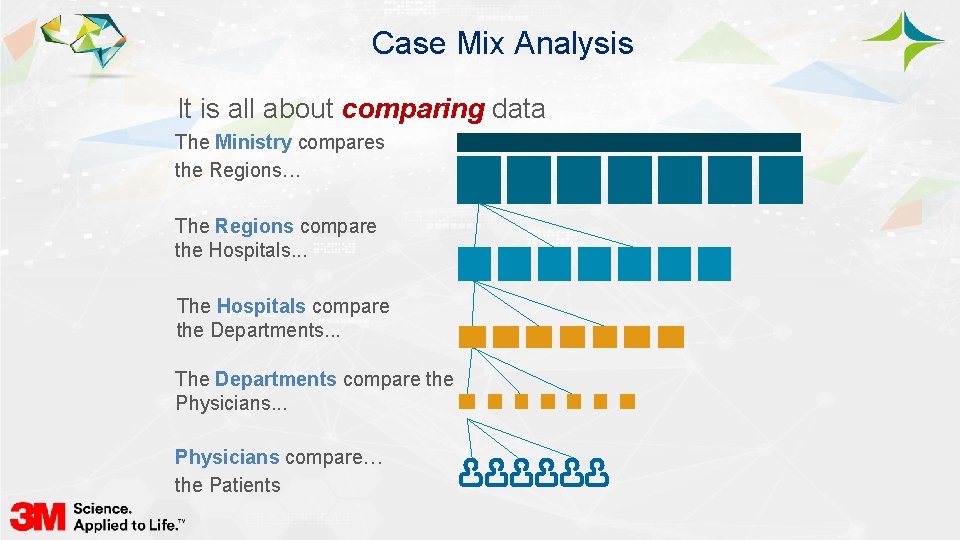
Case Mix Analysis It is all about comparing data The Ministry compares the Regions. . . The Regions compare the Hospitals. . . The Hospitals compare the Departments. . . The Departments compare the Physicians. . . Physicians compare… the Patients
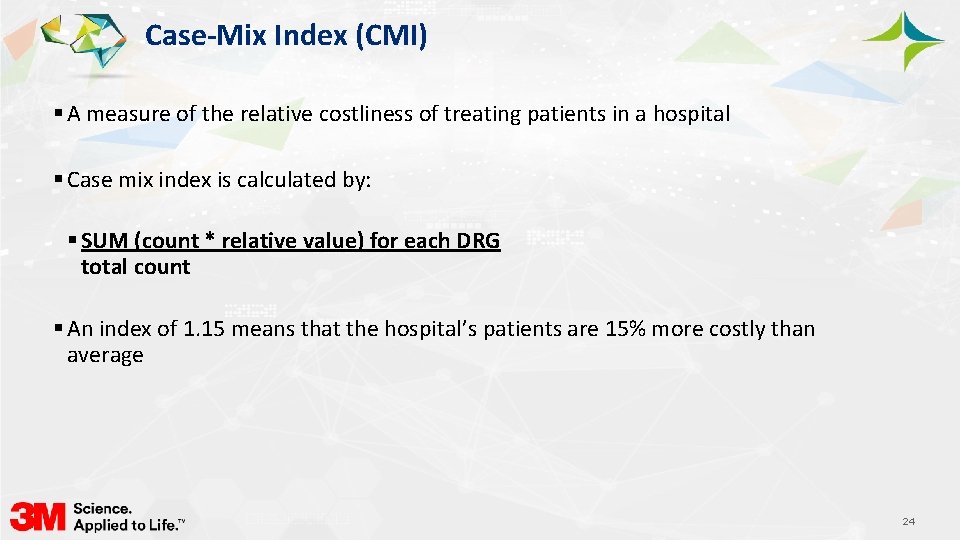
Case-Mix Index (CMI) § A measure of the relative costliness of treating patients in a hospital § Case mix index is calculated by: § SUM (count * relative value) for each DRG total count § An index of 1. 15 means that the hospital’s patients are 15% more costly than average 24
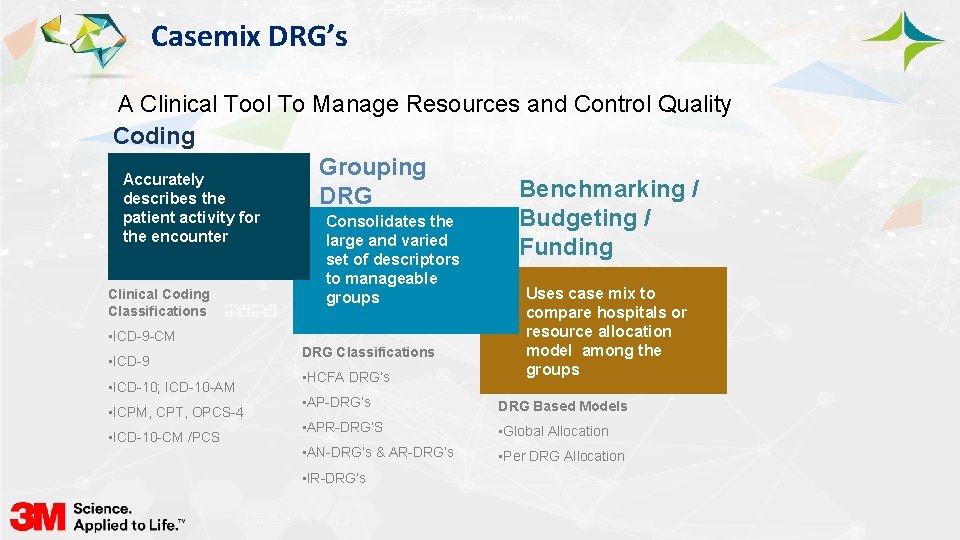
Casemix DRG’s A Clinical Tool To Manage Resources and Control Quality Coding Grouping Accurately Benchmarking / describes the DRG patient activity for Budgeting / Consolidates the encounter large and varied Funding set of descriptors Clinical Coding Classifications • ICD-9 -CM • ICD-9 • ICD-10; ICD-10 -AM • ICPM, CPT, OPCS-4 • ICD-10 -CM /PCS to manageable groups DRG Classifications • HCFA DRG’s Uses case mix to compare hospitals or resource allocation model among the groups • AP-DRG’s DRG Based Models • APR-DRG’S • Global Allocation • AN-DRG’s & AR-DRG’s • Per DRG Allocation • IR-DRG’s
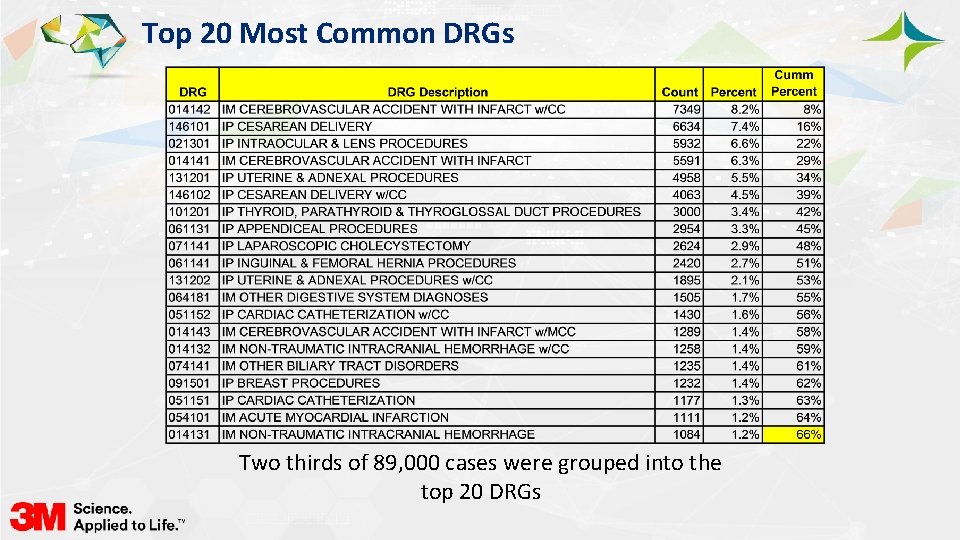
Top 20 Most Common DRGs Two thirds of 89, 000 cases were grouped into the top 20 DRGs

27
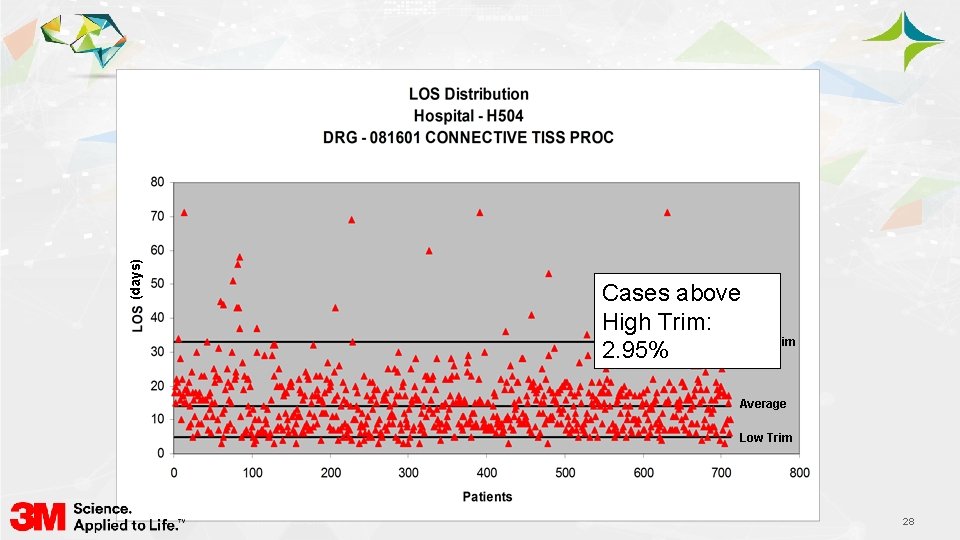
(days) Cases above High Trim: High Trim 2. 95% Average Low Trim 28
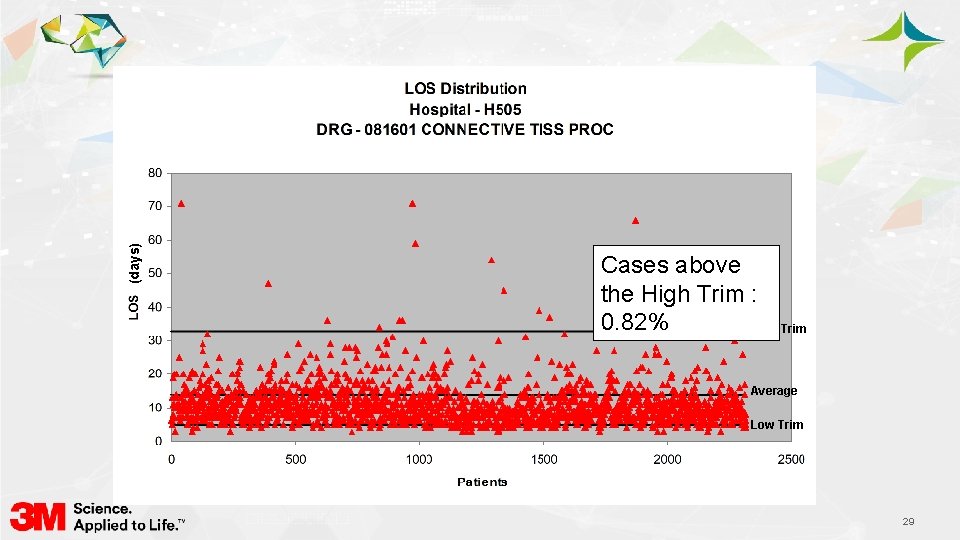
(days) Cases above the High Trim : 0. 82% High Trim Average Low Trim 29
IR DRGs (International Refined Diagnosis Related Groups) 30
Examples of DRG Family • “Medicare”; MS-DRGs – original 1983 – Includes Multiple Trauma, Transplants, Tracheostomy. Focus on Over 65 Population • All Patient; AP-DRGs – Adds DRGs for Newborns, Major Complications and Co-morbidities, Intended for a General Population • All Patient Refined; APR-DRGs – Based on AP-DRGs, Yale Refinements, CMS updates - Adds Four Severity Levels Based on Severity of Illness Risk of Mortality, and Resource Intensity--Minor, Moderate, Major, Extreme • International Refined; IR-DRGs – Based on AP-DRGs, Yale Refinements, CMS updates and the APR-DRGs - has Three Severity Levels Based on Severity of Illness-- Non-Complications, With Complications and with Major Complications 31
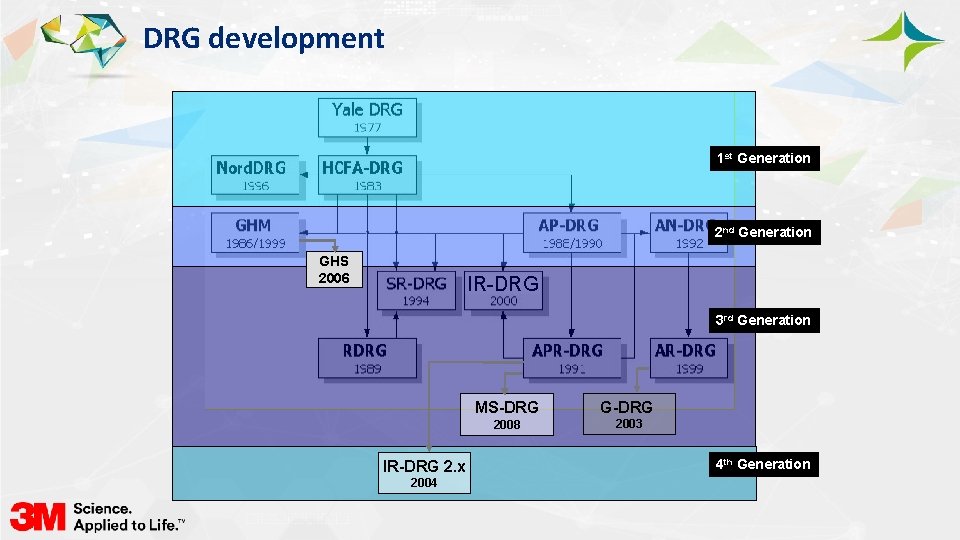
DRG development 1 st Generation 2 nd Generation GHS 2006 IR-DRG 3 rd Generation IR-DRG 2. x 2004 MS-DRG G-DRG 2008 2003 4 th Generation
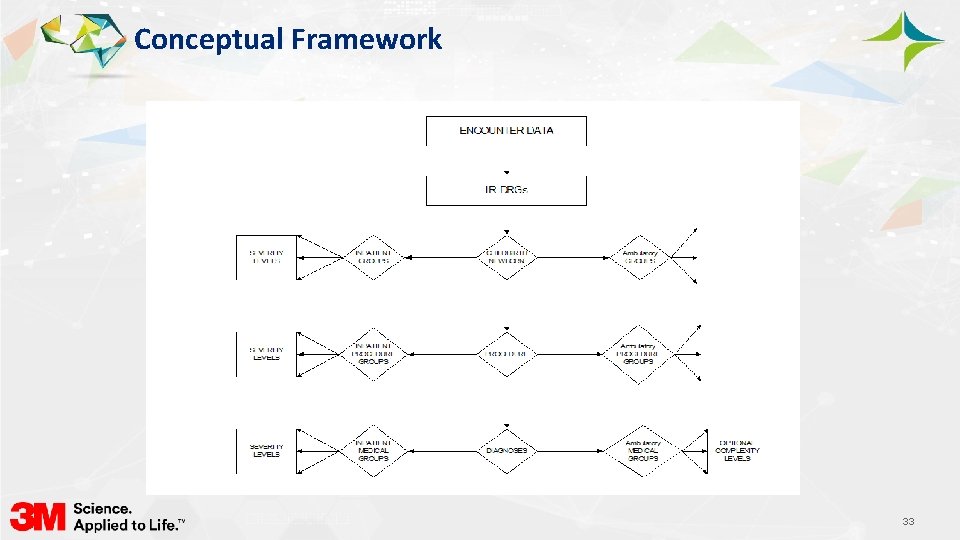
Conceptual Framework 33
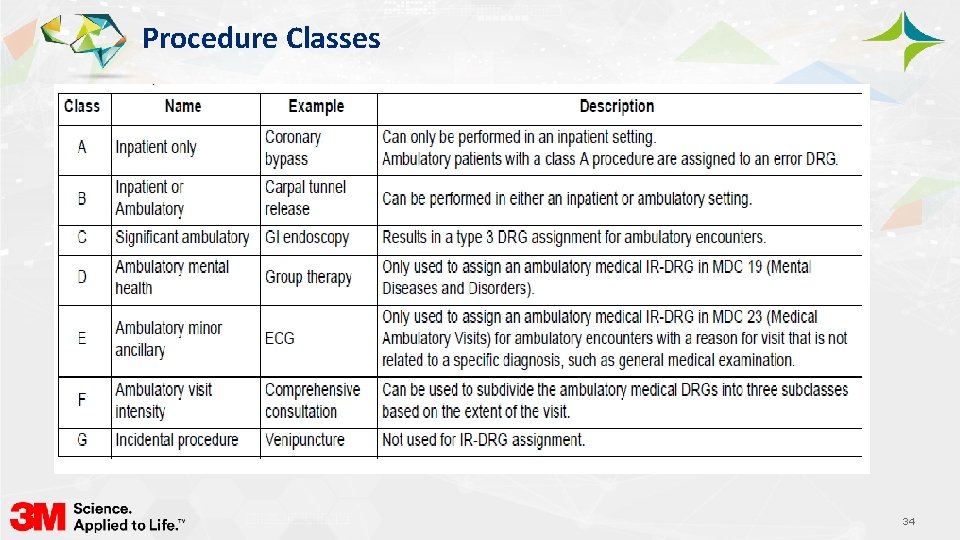
Procedure Classes 34
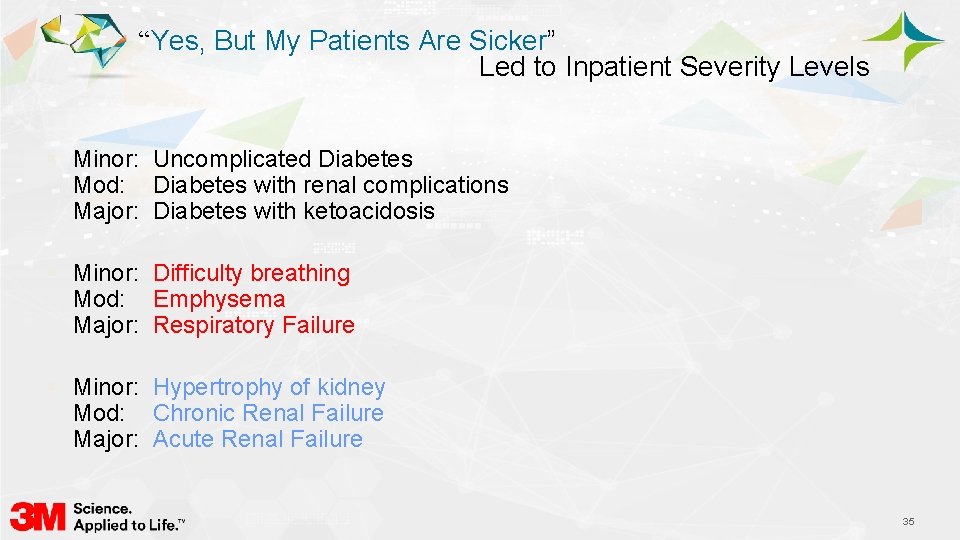
“Yes, But My Patients Are Sicker” Led to Inpatient Severity Levels § Minor: Uncomplicated Diabetes Mod: Diabetes with renal complications Major: Diabetes with ketoacidosis § Minor: Difficulty breathing Mod: Emphysema Major: Respiratory Failure § Minor: Hypertrophy of kidney Mod: Chronic Renal Failure Major: Acute Renal Failure 35
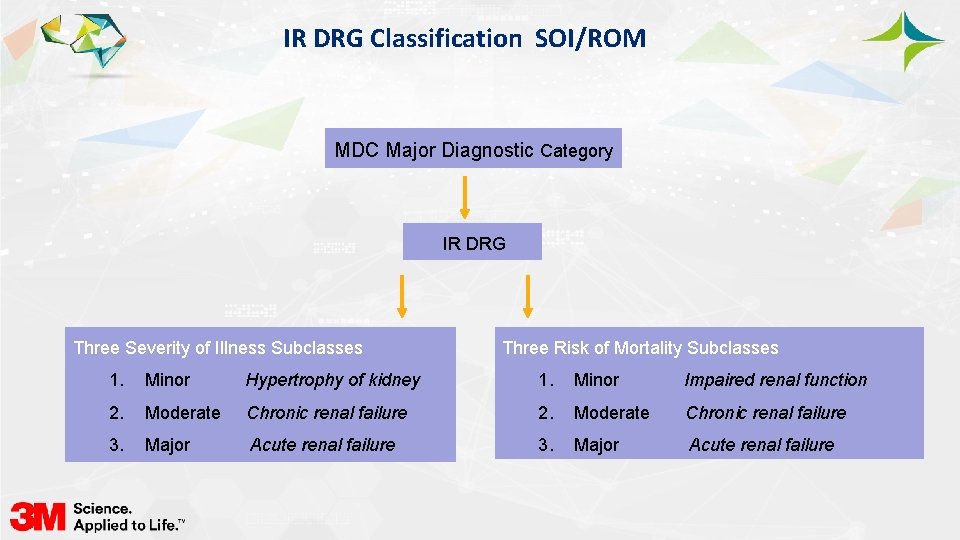
IR DRG Classification SOI/ROM MDC Major Diagnostic Category IR DRG Three Severity of Illness Subclasses Three Risk of Mortality Subclasses 1. Minor Hypertrophy of kidney 1. Minor Impaired renal function 2. Moderate Chronic renal failure 3. Major Acute renal failure
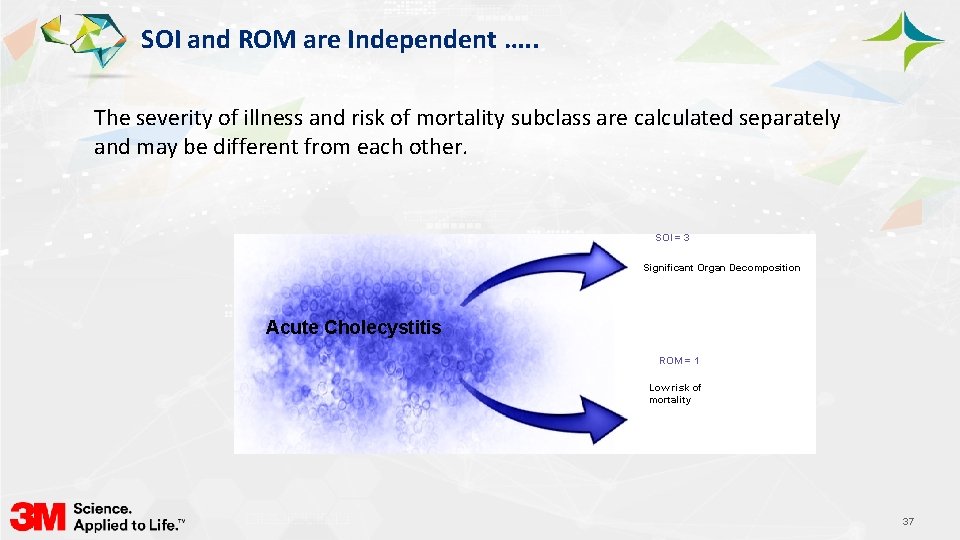
SOI and ROM are Independent …. . The severity of illness and risk of mortality subclass are calculated separately and may be different from each other. SOI = 3 Significant Organ Decomposition Acute Cholecystitis ROM = 1 Low risk of mortality 37
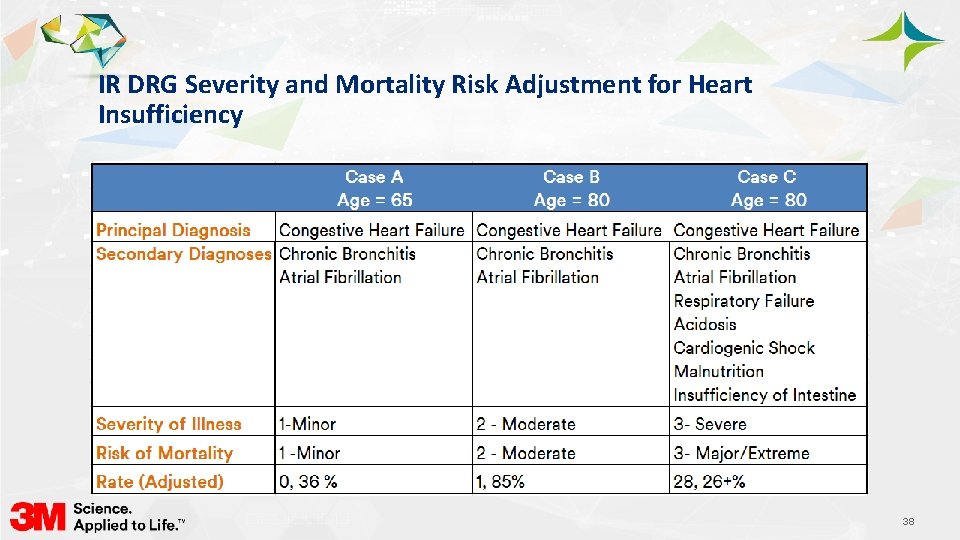
IR DRG Severity and Mortality Risk Adjustment for Heart Insufficiency 38
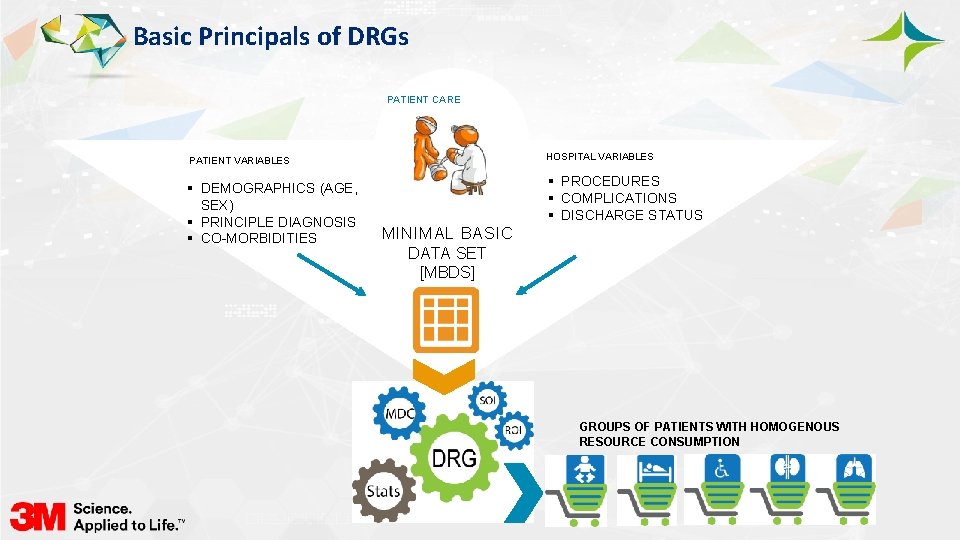
Basic Principals of DRGs PATIENT CARE HOSPITAL VARIABLES PATIENT VARIABLES § DEMOGRAPHICS (AGE, SEX) § PRINCIPLE DIAGNOSIS § CO-MORBIDITIES § PROCEDURES § COMPLICATIONS § DISCHARGE STATUS MINIMAL BASIC DATA SET [MBDS] GROUPS OF PATIENTS WITH HOMOGENOUS RESOURCE CONSUMPTION

Research Triangle Institute (RTI) Michael Trisolini 40

RTI – Who we are RTI is an independent, nonprofit institute that provides research, development, and technical services to government and commercial clients worldwide. Our mission is to improve the human condition by turning knowledge into practice. 3 41
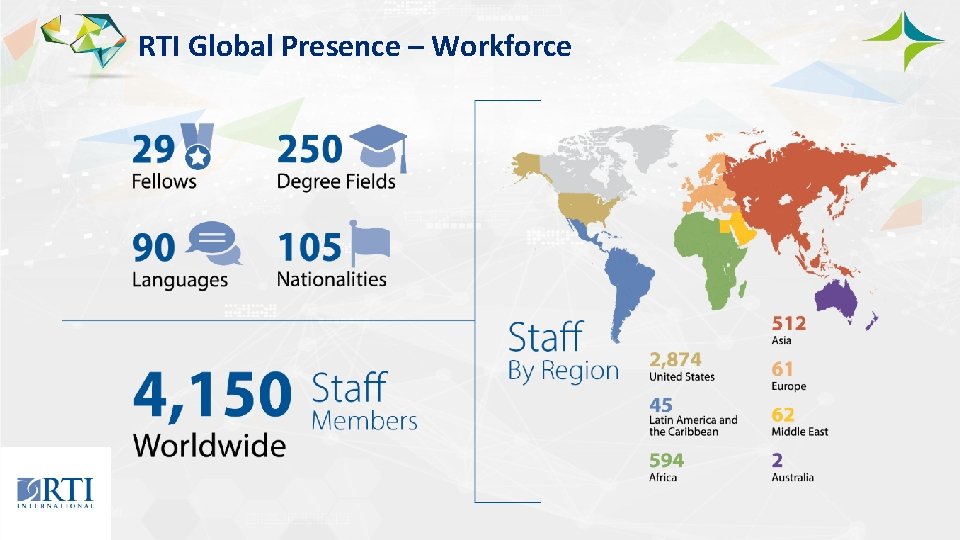
RTI Global Presence – Workforce 5

RTI Health Research, Development, and Technical Service Areas • Global health • Health economics & financing • Health care quality • Public health • Health planning and policy • Health information technology • Health communication 8 • Epidemiology
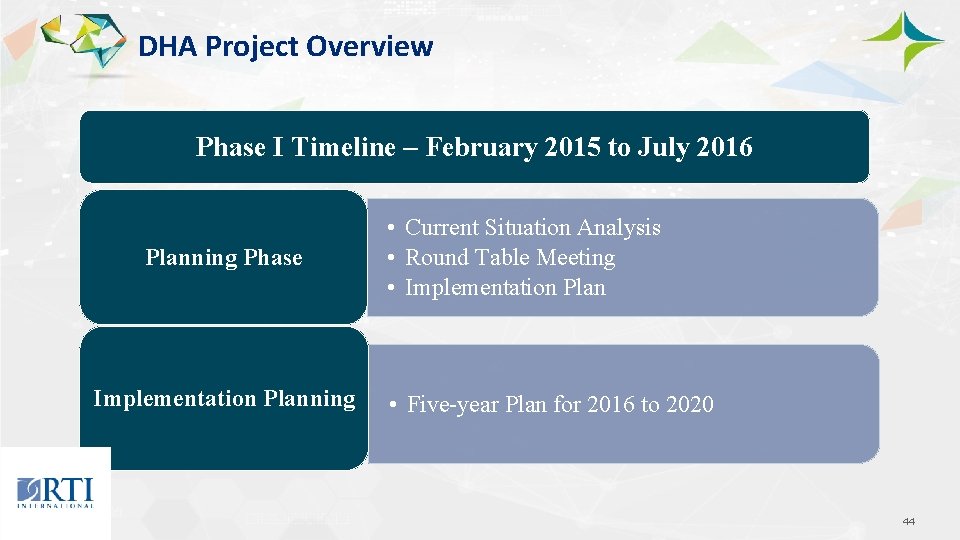
DHA Project Overview Phase I Timeline – February 2015 to July 2016 Planning Phase Implementation Planning 9 • Current Situation Analysis • Round Table Meeting • Implementation Plan • Five-year Plan for 2016 to 2020 44
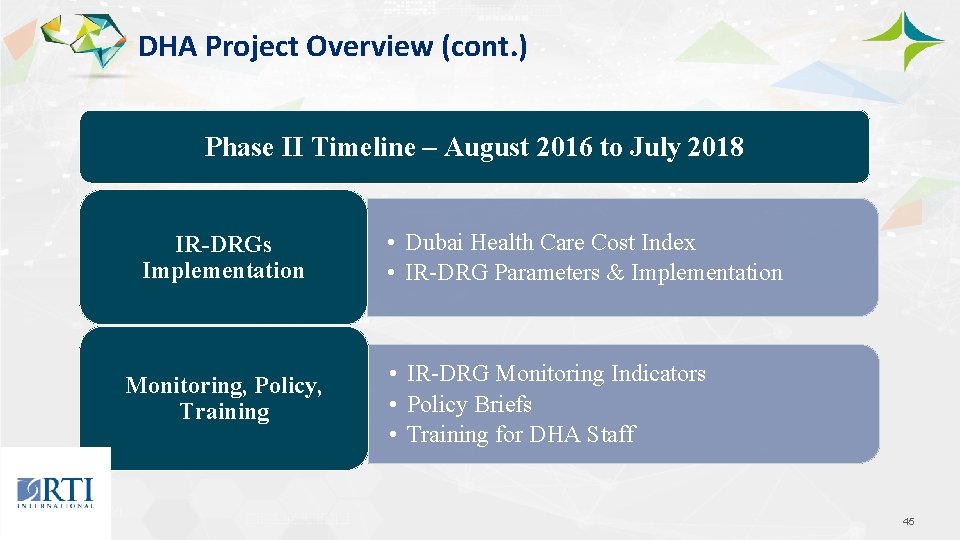
DHA Project Overview (cont. ) Phase II Timeline – August 2016 to July 2018 IR-DRGs Implementation Monitoring, Policy, Training 10 • Dubai Health Care Cost Index • IR-DRG Parameters & Implementation • IR-DRG Monitoring Indicators • Policy Briefs • Training for DHA Staff 45
Shadow Billing for Inpatient IR-DRGs 46 46
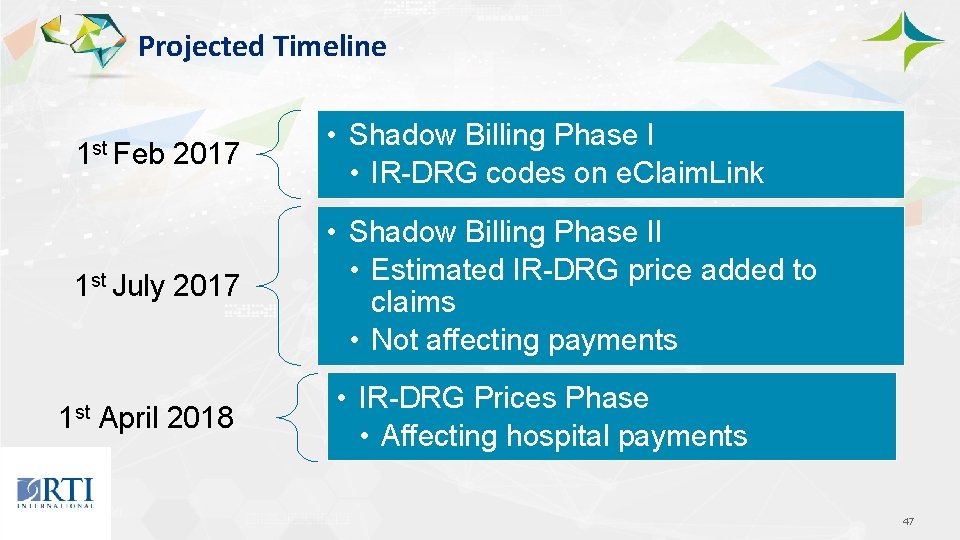
Projected Timeline 1 st Feb 2017 1 st July 2017 1 st April 2018 • Shadow Billing Phase I • IR-DRG codes on e. Claim. Link • Shadow Billing Phase II • Estimated IR-DRG price added to claims • Not affecting payments • IR-DRG Prices Phase • Affecting hospital payments 47
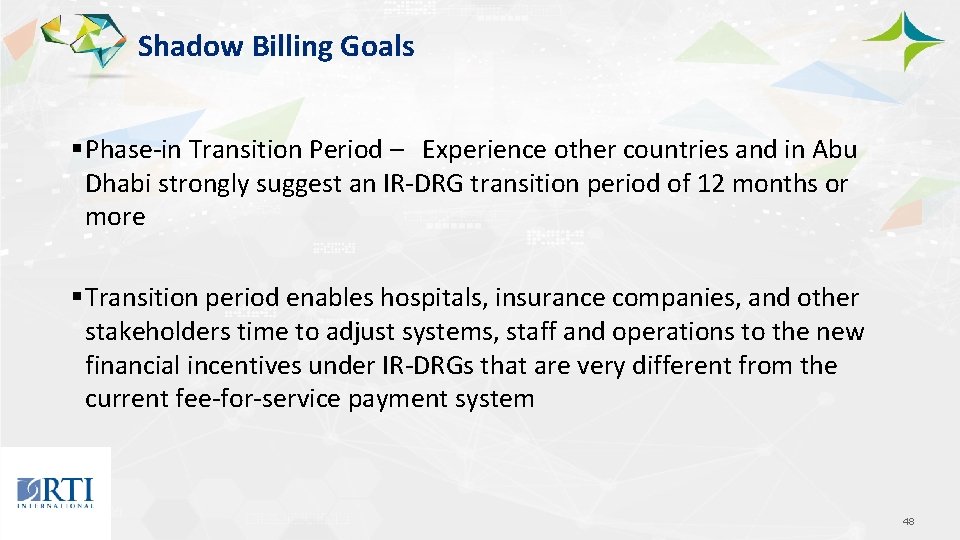
Shadow Billing Goals § Phase-in Transition Period – Experience other countries and in Abu Dhabi strongly suggest an IR-DRG transition period of 12 months or more § Transition period enables hospitals, insurance companies, and other stakeholders time to adjust systems, staff and operations to the new financial incentives under IR-DRGs that are very different from the current fee-for-service payment system 48 48
Shadow Billing Goals § Start with Shadow Billing -- Include IR-DRGs on hospital inpatient claims for information only and not for payment for 12 months or more, while continuing fee-for-service payment to hospitals § Shadow billing allows hospitals, insurance companies, and other stakeholders time to understand the details of IR-DRG payment system requirements and the impact of the new payment system on them 49 49
Shadow Billing Goals (cont. ) § Shadow billing allows time to adjust hospital systems, staff, financial management, and clinical operations. For example: § Cost analysis by IR-DRG § Medical records coding staff training § Clinical staff managing hospital ancillary services utilization for efficiency versus for increasing billings § At the same time, while managing for efficiency, also avoid underutilization of hospital services needed by patients 50 50
Goals of IR-DRG Payment § Goals of Bundling Services in IR-DRGs for Hospital Inpatient Payment 51 § Remove financial incentives for overtreatment or increasing volumes of care – laboratory tests, radiology, length of stay (LOS) in hospital – that exist in fee-for-service payment § Provide financial rewards for efficient hospitals providing care that is less costly than the fixed DRG payment per inpatient stay § Simplify hospital billing for inpatient care by reducing the number of units of service billed, simplify utilization review, fewer denials § Provide flexibility for future implementation of paying for quality 51
What do IR-DRG Payments Cover? All Inpatient Hospital Services Are Covered by a DRG Payment, Including: 52 • Physician care • Nursing care • Technician services • Therapies • Radiology • Laboratory • Pharmaceuticals • Room • Meals • And Others… 52
Shadow Billing – Phase I § IR-DRG coding – Each inpatient stay needs to have an IR-DRG assigned using the 3 M grouper software § ICD-10 and CPT coding – An IR-DRG system depends upon accurate coding of all hospital services provided in inpatient hospital stays, and diagnoses, so hospital coding needs to be reviewed and upgraded if needed 53 53
Shadow Billing – Phase I (cont. ) • Standardizing payment terminology and claims data coding for Encounter Type – Defining key measures of hospital use and cost – For example, define what constitutes an inpatient stay that will be paid using IR-DRGs, versus outpatient care – Is one overnight in the hospital required to define an inpatient stay, or patient’s presence in the hospital for the midnight census, or formal admission by a doctor to define an inpatient stay – Other rules, regulations, data dictionaries for claims data coding and IR-DRG payment – Consultation and discussion among stakeholders 54 54
Shadow Billing – Phase I (cont. ) § Ensuring other claims data fields are defined in detail and coding is complete and consistent across all hospitals § Ensuring that patient demographic data and unique identifiers are complete and consistent in all member registries for health insurance companies 55 55
Shadow Billing – Phase II § Estimated payments added to claims for information only to provide hospitals with information on the new IR-DRG payment system, not affecting hospital payment that continues under feefor-service § Enables hospitals time to adjust systems, staff, financial management, and clinical operations to the new types of payment information and financial incentives under the IR-DRG system § Consultation and discussion among stakeholders 56 56

Sensitivity Analyses 57 57
Sensitivity Analyses Goals and Methods • To assess the planned Dubai IR-DRG payment system for biases and understand the potential effects of the IR-DRG implementation on the Dubai health care system • Conducted at the hospital, insurer, IR-DRG, and healthcare sector levels during the shadow billing period initially, and also continuing • Use DHA’s e. Claim. Link claims data and IR-DRG payment calculation parameters developed to reflect the Dubai health care system 58
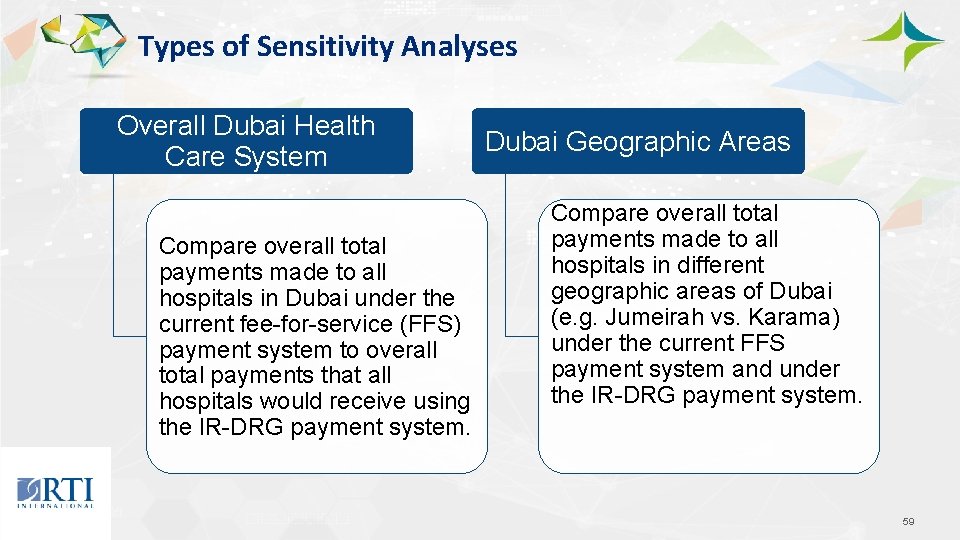
Types of Sensitivity Analyses Overall Dubai Health Care System Compare overall total payments made to all hospitals in Dubai under the current fee-for-service (FFS) payment system to overall total payments that all hospitals would receive using the IR-DRG payment system. Dubai Geographic Areas Compare overall total payments made to all hospitals in different geographic areas of Dubai (e. g. Jumeirah vs. Karama) under the current FFS payment system and under the IR-DRG payment system. 59
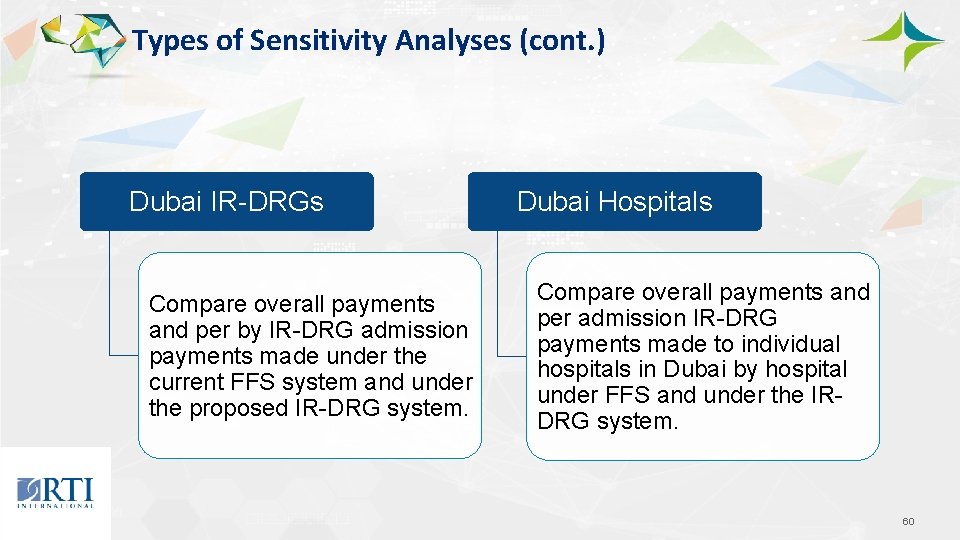
Types of Sensitivity Analyses (cont. ) Dubai IR-DRGs Compare overall payments and per by IR-DRG admission payments made under the current FFS system and under the proposed IR-DRG system. Dubai Hospitals Compare overall payments and per admission IR-DRG payments made to individual hospitals in Dubai by hospital under FFS and under the IRDRG system. 60
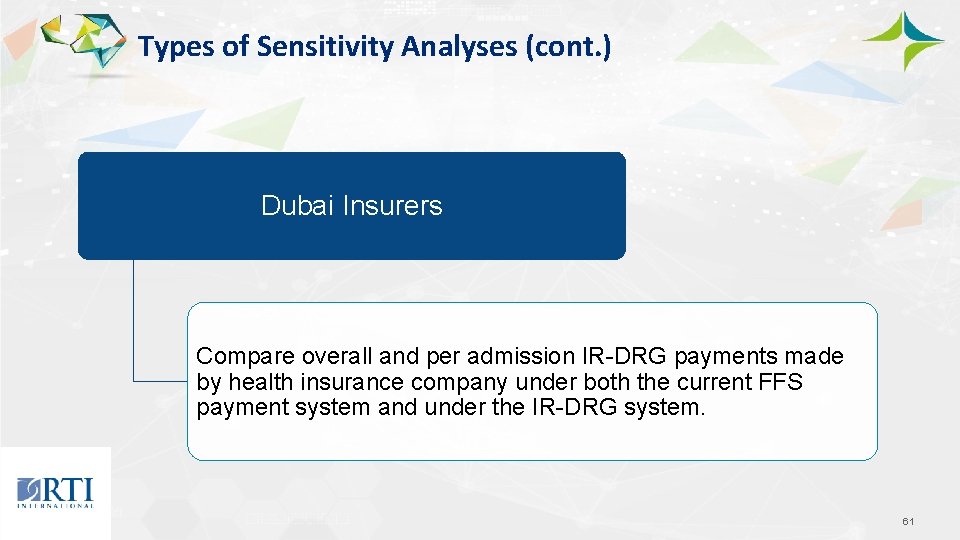
Types of Sensitivity Analyses (cont. ) Dubai Insurers Compare overall and per admission IR-DRG payments made by health insurance company under both the current FFS payment system and under the IR-DRG system. 61
Monitoring 62 62
Need for Monitoring IR-DRGs by DHA § Incentives for increasing the number of hospital admissions to increase hospital revenue from additional IR-DRG payments § Incentives for decreasing services and quality of care for patients to reduce hospital costs per admissions to increase profits in relation to the fixed IRDRG payment per admission § Incentives for upcoding CPT procedure codes and ICD-10 diagnosis codes in hospital inpatient claims to move to IR-DRG with higher payment rate (increase severity adjuster) 63
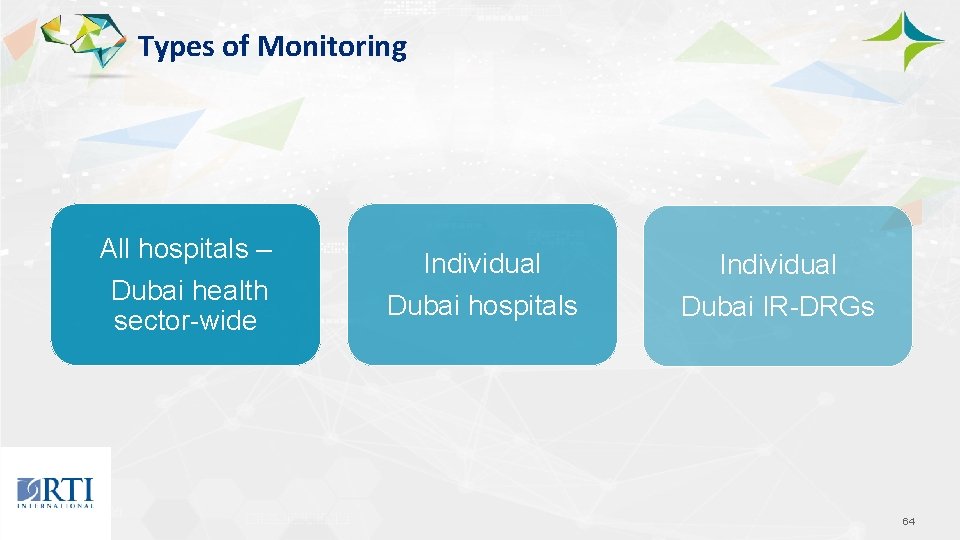
Types of Monitoring All hospitals – Dubai health sector-wide Individual Dubai hospitals Dubai IR-DRGs 64
Monitoring 1 – Dubai Health Sector-wide § Trends over time – hospital admissions, readmissions, average length of stay, transfers of patients to other hospitals § New hospital openings, hospital closures, hospital services added, hospital services dropped § Patient safety events – hospital acquired conditions (HACs), patient safety indicators (PSIs), never events, hospital acquired infections (HAIs) § Changes in CPT procedure codes, ICD-10 diagnosis codes, average case-mix § Medical records audits of procedure codes, diagnosis codes 65
Monitoring 2 – Individual Dubai Hospitals § Trends over time – individual hospital payments, individual hospital case-mix, individual hospital occupancy rate, average length of stay, number of ICU days § Starting or stopping hospital admissions for specific IR-DRGs § Changes in the numbers of outpatient procedures, outpatient visits, ED visits § Medical records audits of procedure codes, diagnosis codes, that are included in the claims data and used to assign IR-DRGs and severity of illness (SOI) levels for payment 66
Monitoring 3 – Individual Dubai IR-DRGs §Trends over time § Number of times billed per month overall for high volume IR-DRGs, § Number of times billed per month by each individual hospital for high volume IR-DRGs, § Changes in severity of illness levels (SOI) billed for high volume DRGs §Starting or stopping billing for specific IR-DRGs 67
Regulation and Compliance 68
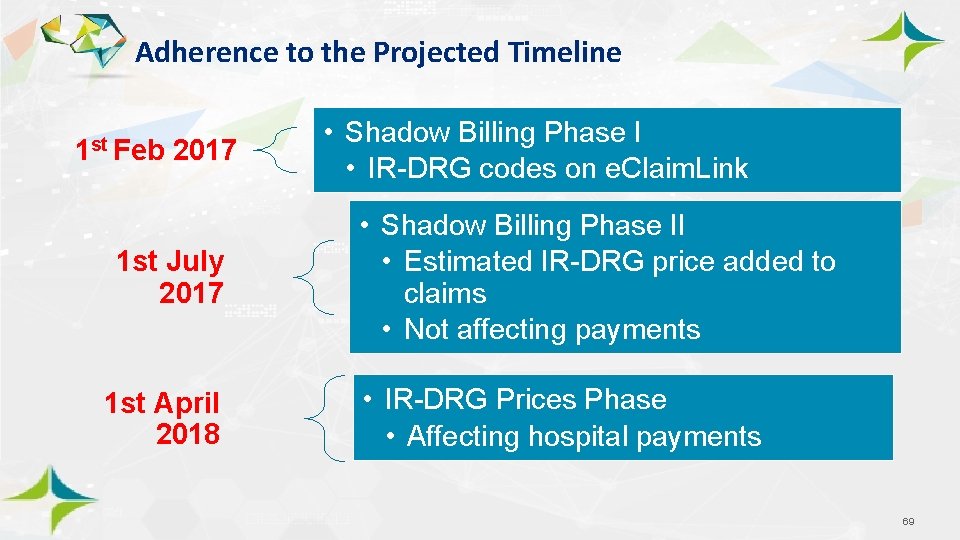
Adherence to the Projected Timeline 1 st Feb 2017 1 st July 2017 1 st April 2018 • Shadow Billing Phase I • IR-DRG codes on e. Claim. Link • Shadow Billing Phase II • Estimated IR-DRG price added to claims • Not affecting payments • IR-DRG Prices Phase • Affecting hospital payments 69
Regulation and Compliance § Failure to complete shadow billing will have a direct impact on parameters that are vital to billing using the IR-DRG system. As a result…. § From 1 st of March, claims submitted to e. Claim. Link will be rejected if DRG codes are not included § Technically, the DRG code will be mandatory on the claim schema. 70

Q&A 71
- Slides: 72