
Age of Nationalism Chapter 23 Nationalism Review What
- Slides: 19
Age of Nationalism Chapter 23
Nationalism Review • What are the characteristics that promote a common identity in a nation? • Language, history, heroes, flag, folklore, religion, culture, common enemy) • What is the difference between a nation and a state? • Nation (a people) and state (political entity)
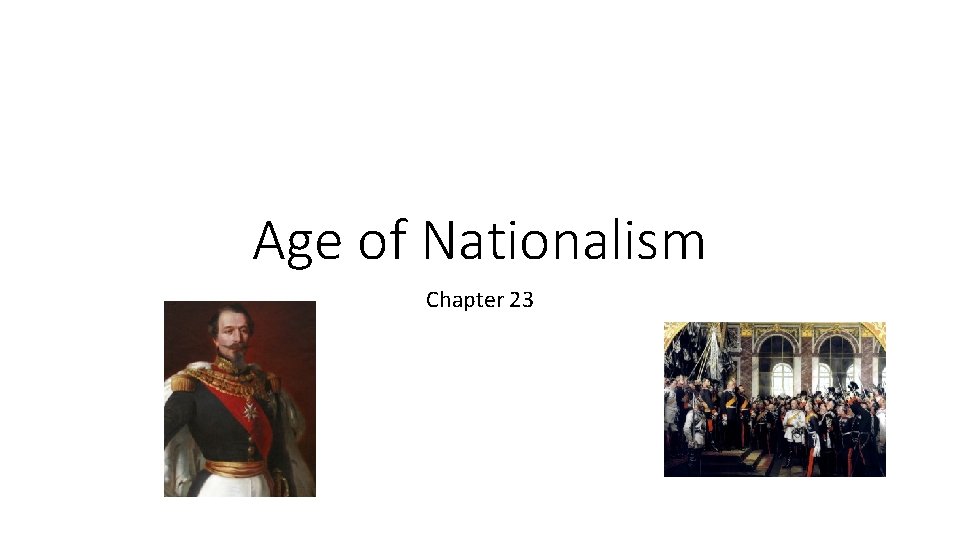
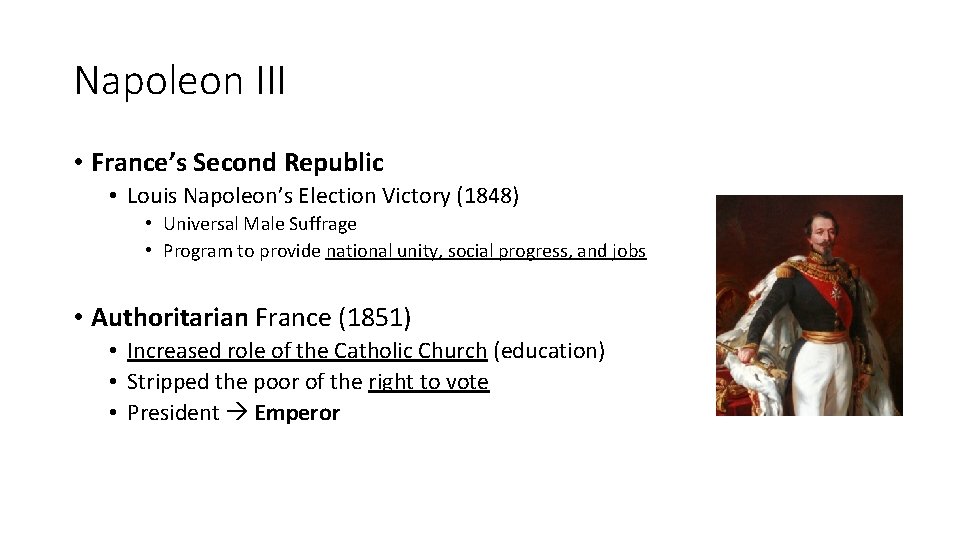
Napoleon III • France’s Second Republic • Louis Napoleon’s Election Victory (1848) • Universal Male Suffrage • Program to provide national unity, social progress, and jobs • Authoritarian France (1851) • Increased role of the Catholic Church (education) • Stripped the poor of the right to vote • President Emperor
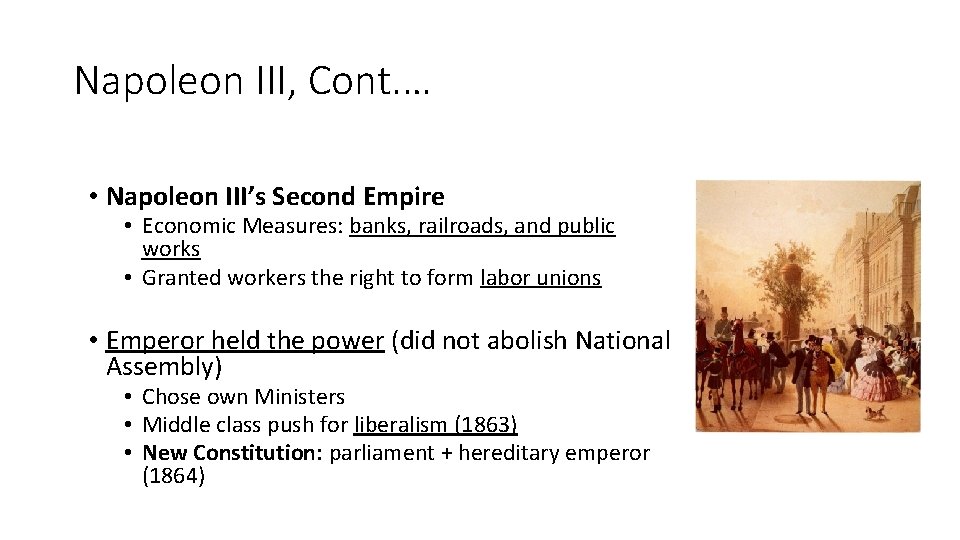
Napoleon III, Cont. … • Napoleon III’s Second Empire • Economic Measures: banks, railroads, and public works • Granted workers the right to form labor unions • Emperor held the power (did not abolish National Assembly) • Chose own Ministers • Middle class push for liberalism (1863) • New Constitution: parliament + hereditary emperor (1864)
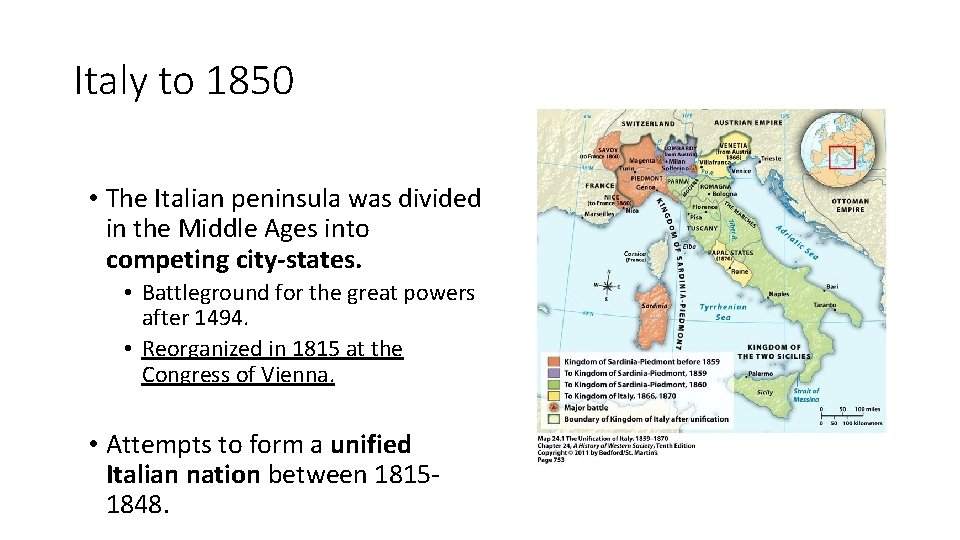
Italy to 1850 • The Italian peninsula was divided in the Middle Ages into competing city-states. • Battleground for the great powers after 1494. • Reorganized in 1815 at the Congress of Vienna. • Attempts to form a unified Italian nation between 18151848.
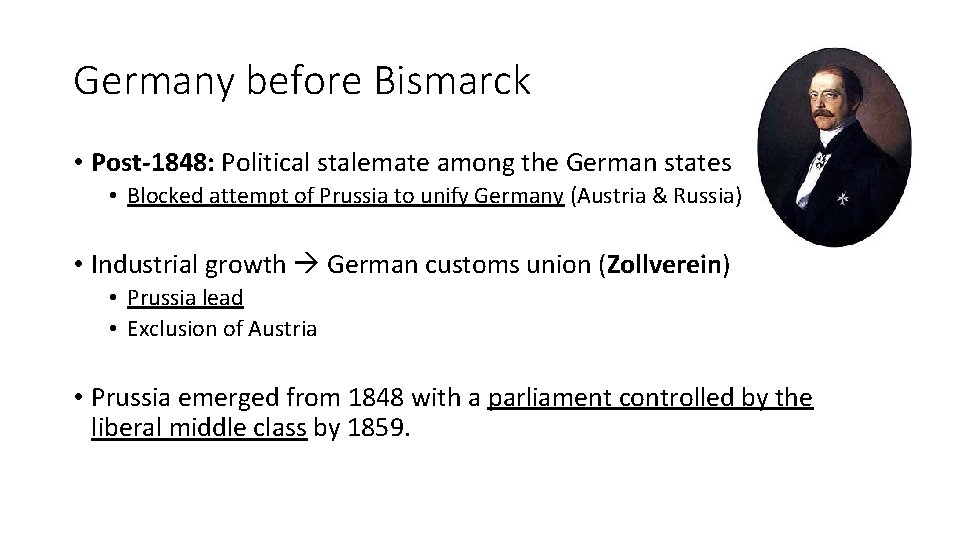
Germany before Bismarck • Post-1848: Political stalemate among the German states • Blocked attempt of Prussia to unify Germany (Austria & Russia) • Industrial growth German customs union (Zollverein) • Prussia lead • Exclusion of Austria • Prussia emerged from 1848 with a parliament controlled by the liberal middle class by 1859.
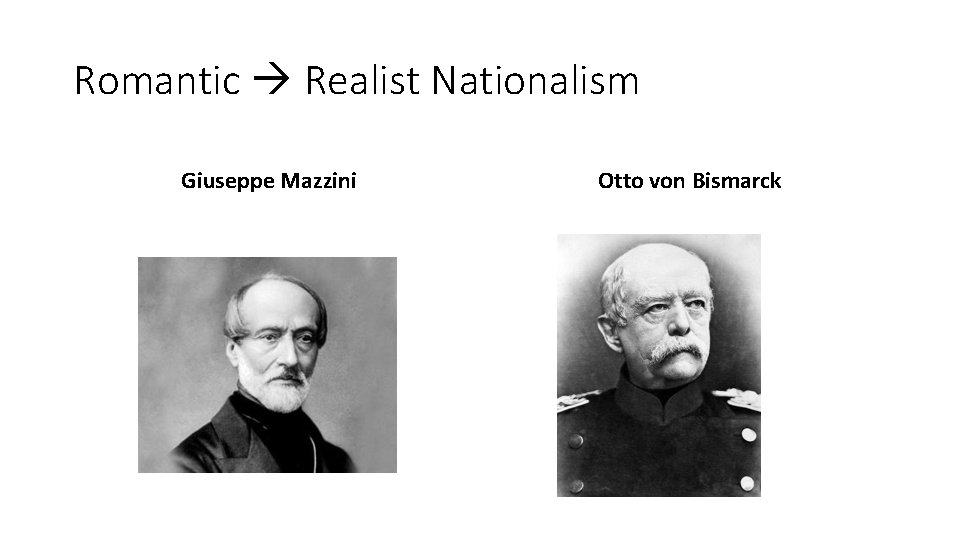
Romantic Realist Nationalism Giuseppe Mazzini Otto von Bismarck
Realpolitik • Realpolitik: politics or diplomacy based primarily on considerations of given circumstances and factors, rather than explicit ideological notions or moral and ethical premises. • Though based primarily on power, realism and pragmatism are both exercised by this concept. • Practical government
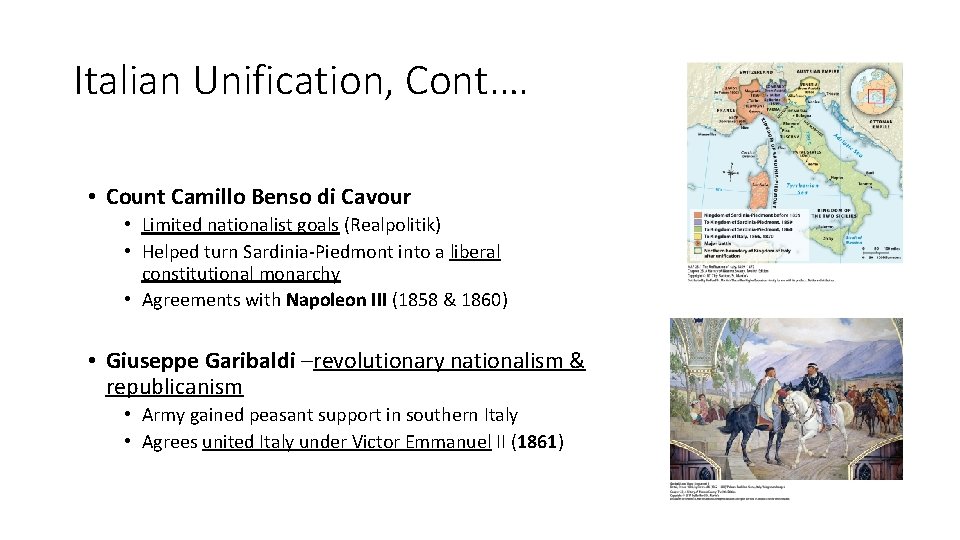
Italian Unification, Cont. … • Count Camillo Benso di Cavour • Limited nationalist goals (Realpolitik) • Helped turn Sardinia-Piedmont into a liberal constitutional monarchy • Agreements with Napoleon III (1858 & 1860) • Giuseppe Garibaldi –revolutionary nationalism & republicanism • Army gained peasant support in southern Italy • Agrees united Italy under Victor Emmanuel II (1861)
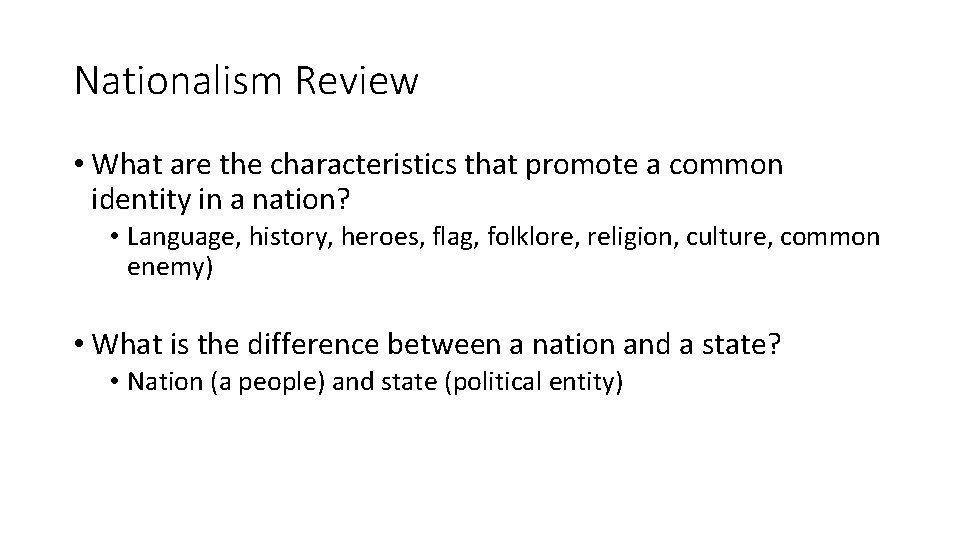
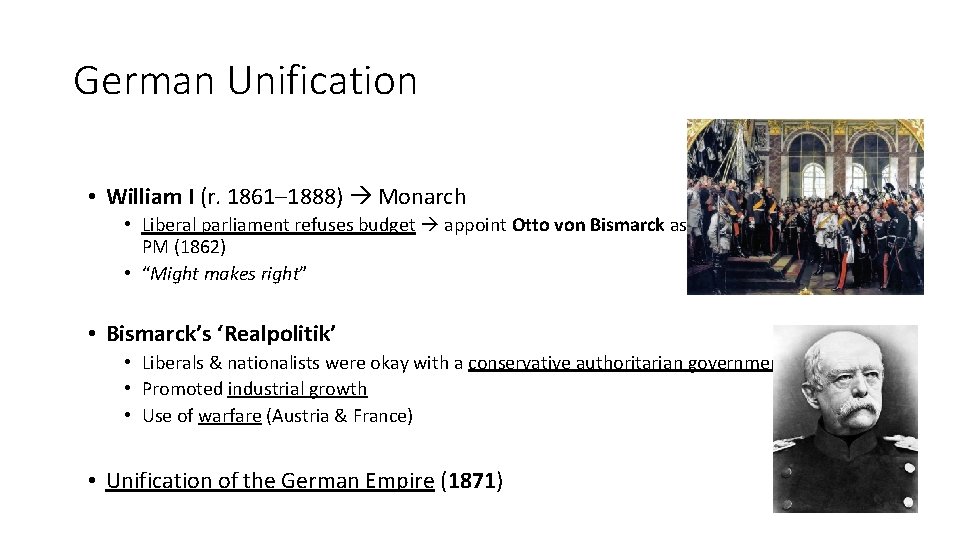
German Unification • William I (r. 1861– 1888) Monarch • Liberal parliament refuses budget appoint Otto von Bismarck as PM (1862) • “Might makes right” • Bismarck’s ‘Realpolitik’ • Liberals & nationalists were okay with a conservative authoritarian government • Promoted industrial growth • Use of warfare (Austria & France) • Unification of the German Empire (1871)
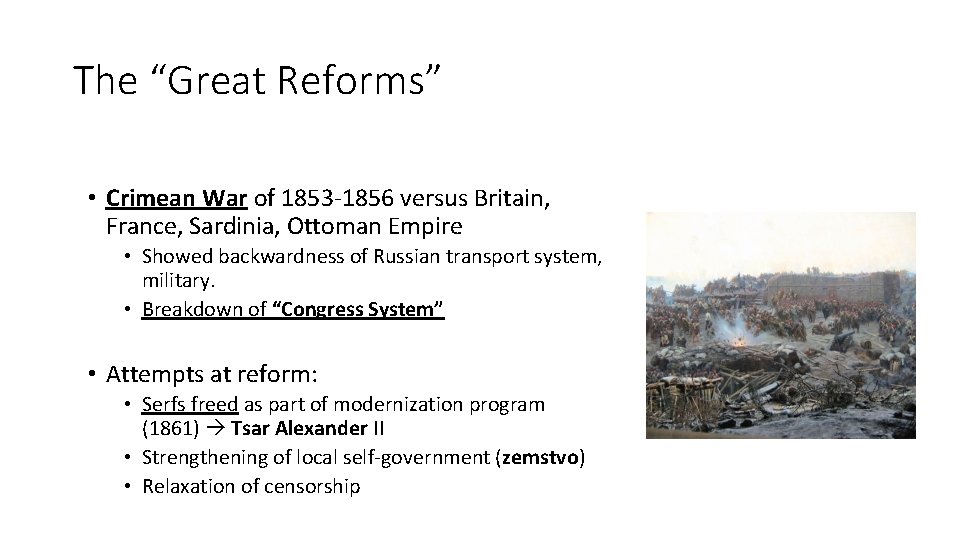
The “Great Reforms” • Crimean War of 1853 -1856 versus Britain, France, Sardinia, Ottoman Empire • Showed backwardness of Russian transport system, military. • Breakdown of “Congress System” • Attempts at reform: • Serfs freed as part of modernization program (1861) Tsar Alexander II • Strengthening of local self-government (zemstvo) • Relaxation of censorship
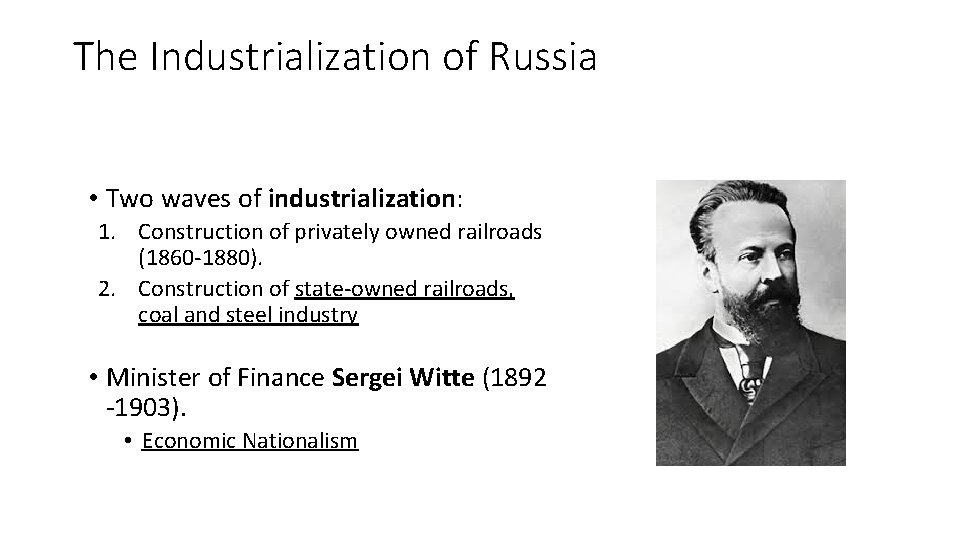
The Industrialization of Russia • Two waves of industrialization: 1. Construction of privately owned railroads (1860 -1880). 2. Construction of state-owned railroads, coal and steel industry • Minister of Finance Sergei Witte (1892 -1903). • Economic Nationalism
The Responsive Nation-State • Rapid change to European domestic politics & growing popular loyalty (post 1870) • New Constitutions • Universal male suffrage (W. Europe) • New political parties • Consequences • Fears of socialism militarist & anti liberal policies
Making National Citizens • Late 19 th century nationalism led to questions of “national loyalty” • Laws to promote conformity • By 1890 s, most people embraced national solidarity • Use of new symbols & rituals • Centralized institutions (military conscription & education) • Common currency & post offices • Flags, uniforms, national anthems
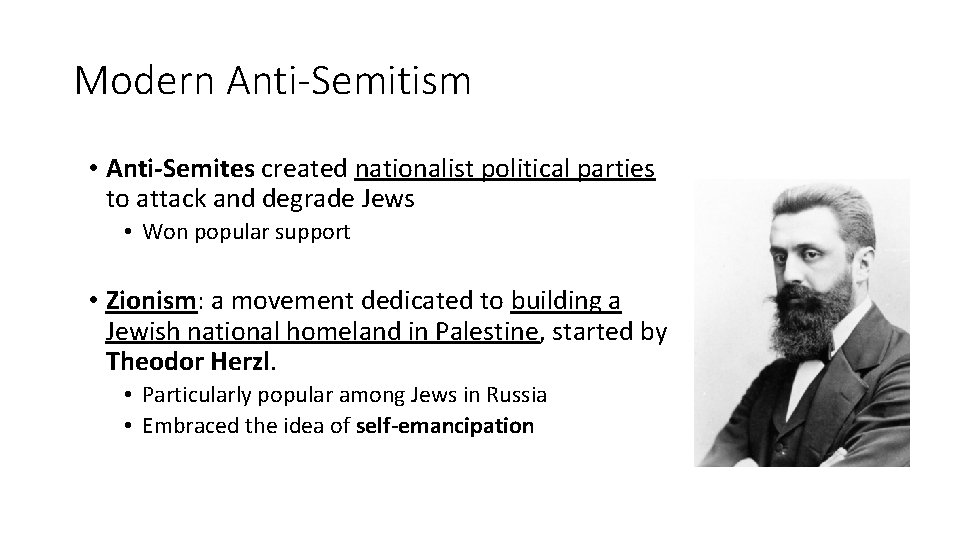
Modern Anti-Semitism • Anti-Semites created nationalist political parties to attack and degrade Jews • Won popular support • Zionism: a movement dedicated to building a Jewish national homeland in Palestine, started by Theodor Herzl. • Particularly popular among Jews in Russia • Embraced the idea of self-emancipation
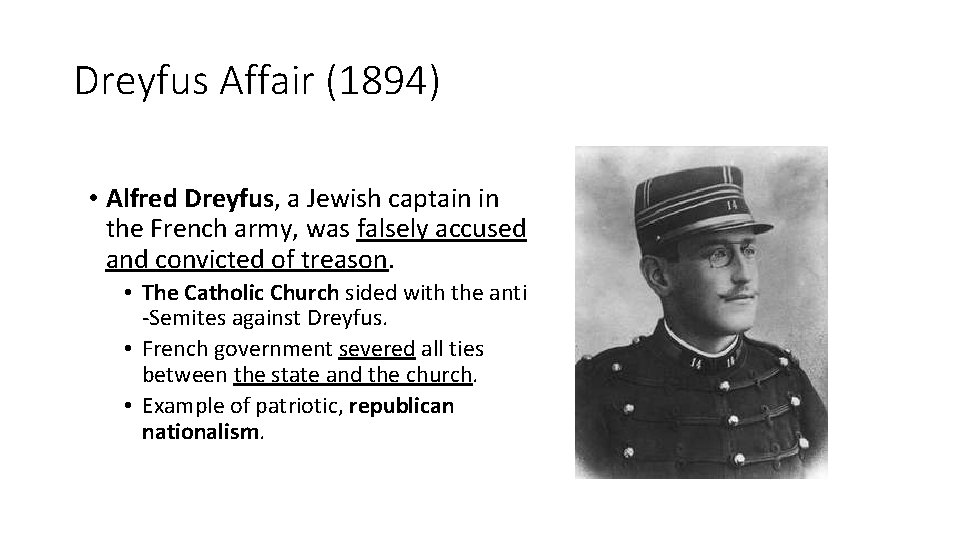
Dreyfus Affair (1894) • Alfred Dreyfus, a Jewish captain in the French army, was falsely accused and convicted of treason. • The Catholic Church sided with the anti -Semites against Dreyfus. • French government severed all ties between the state and the church. • Example of patriotic, republican nationalism.
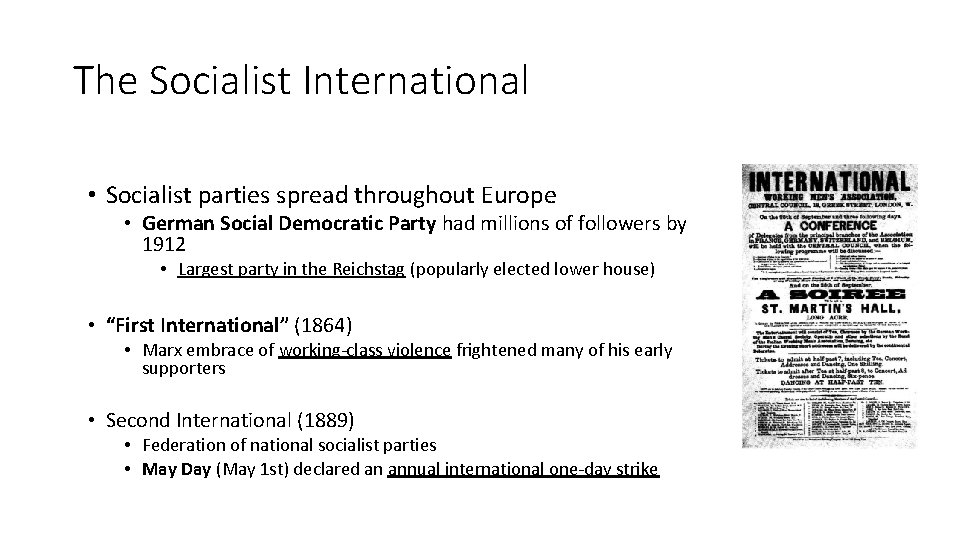
The Socialist International • Socialist parties spread throughout Europe • German Social Democratic Party had millions of followers by 1912 • Largest party in the Reichstag (popularly elected lower house) • “First International” (1864) • Marx embrace of working-class violence frightened many of his early supporters • Second International (1889) • Federation of national socialist parties • May Day (May 1 st) declared an annual international one-day strike
Labor Unions As socialist parties grew, they focused more on gradual change and improvement than revolution. • Workers’ standard of living rose after 1850 • Grow of labor unions reinforced modernization • By early 20 th century, most socialist parties had national characteristics. • Socialists in Russia and the Austro-Hungarian empire the most radical • Spain and Italy focused more on anarchism than socialism.
Revisionist Socialism: Roots & Fruits • Revisionism: An effort made by moderate socialists to update Marxist doctrines to reflect the realities of the late 19 th century.