
Age of Exploration and Conquest Causes for Exploration
- Slides: 26
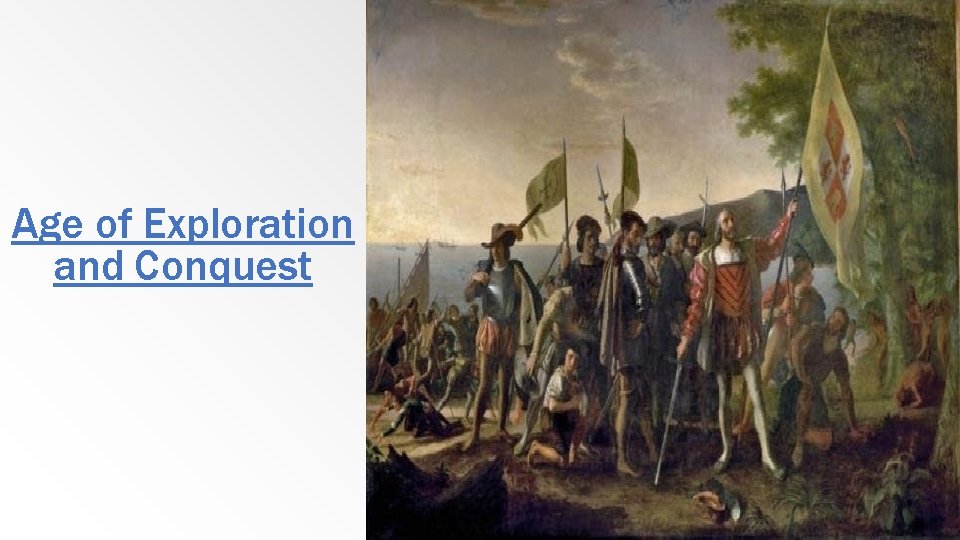
Age of Exploration and Conquest
Causes for Exploration ▪ God, glory, and gold” were the primary motives. ▪ Christian crusaders in 11 th and 14 th centuries created European interest in Asia and the Middle East. ▪ Rise of nation states (New Monarchs) resulted in competition for empire and trade ▪ Portugal and Spain sought to break the Italian monopoly on trade with Asia ▪ Impact of the Renaissance: search for knowledge ▪ Revival of Platonic studies, especially mathematics ▪ Awareness of living “at the dawn of a new age” ▪ Invention of the printed book resulted in the spread of accurate texts and maps
▪ The commercial revolution resulted in capitalist investments in overseas exploration. ▪ The religious desire to convert pagan peoples in the New World served as an important impulse.
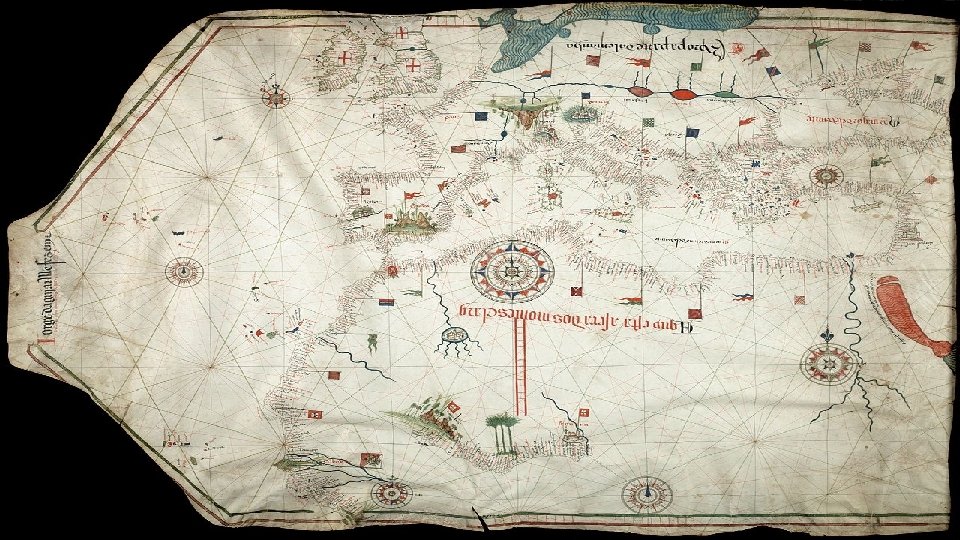
Maps ▪ Advances in cartography (map making) improved navigation ▪ Martin Behaim: terrestrial globe, 1492 ▪ Waldseemullee’s word map (1507) ▪ Mercator (1569) ▪ Portolani: navigational maps based on compass directions and estimated distances for ports and coastal areas ▪ Portugal and Spain saw them as state secrets.
Technological Advances in astronomy helped in charting locations at sea ▪ Instruments ▪ Magnetic compass (ca. 1300) ▪ Geometric quadrant (ca. 1460) ▪ Mariner’s astrolabe (ca. 1480) ▪ Ships ▪ Portuguese caravel (ca. 1450) ▪ Lateen sail and rope riggings ▪ Stern-post rudder (axial rudder) ▪ Guns, gunpowder, cannons, and horses
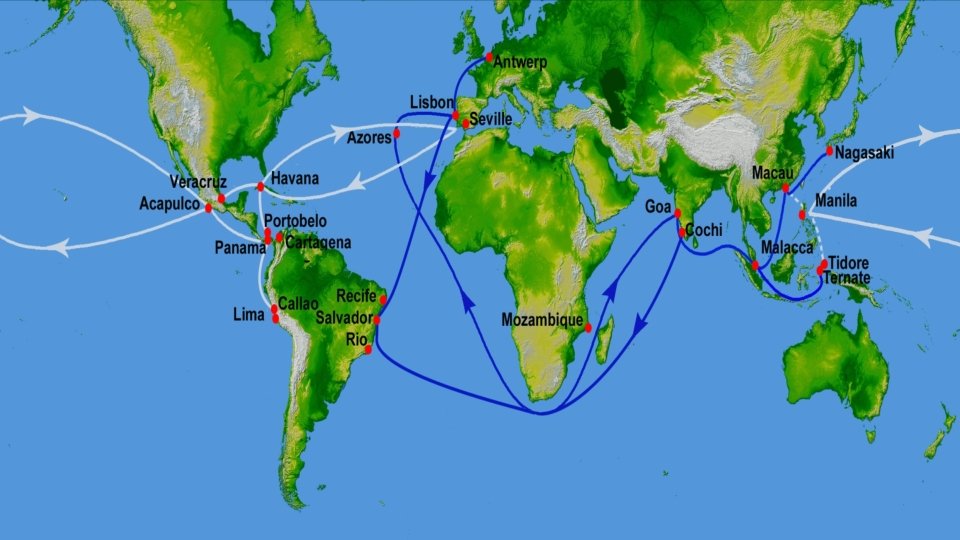
Portugal ▪ Portugal established a commercial network along the African coast, in South and East Asia, and in South America. ▪ Motives for exploration ▪ Economic: sought an all-water route to Asia to tap the spice trade ▪ The Ottoman Empire blocked land routes to Asia. ▪ Religious: sought to find the mythical Prester John (a Christian king somewhere in the East) for an alliance against the Muslims ▪ Prince Henry the Navigator (1394 -1460) ▪ Financed numerous expeditions along the West African coast ▪ Ushered in a new era of European exploration
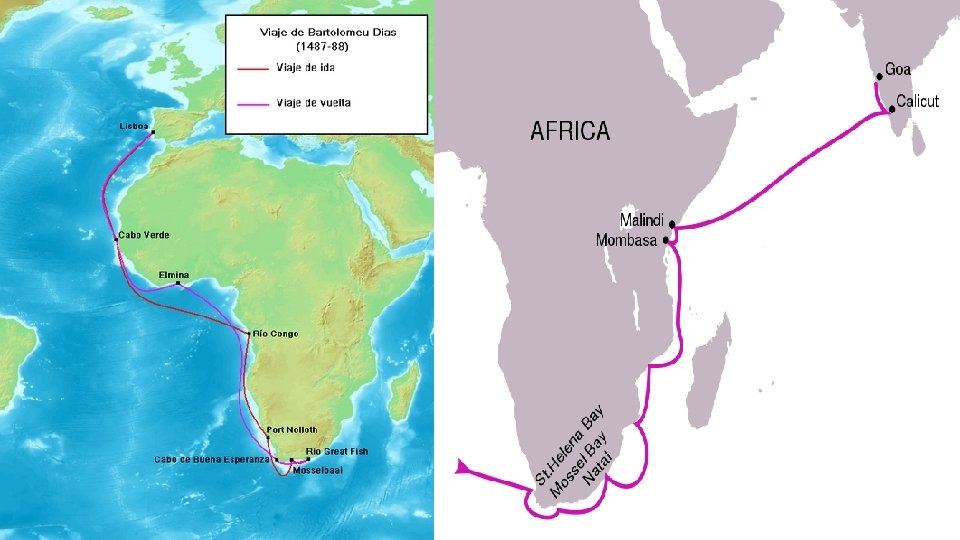
Portuguese Explorers ▪ Bartholomew Dias (1450 -1500): he rounded the southern tip of Africa in 1488 ▪ Vasco da Gama (1469 -1525): ▪ he completed an all-water expedition to India in 1498 ▪ brought back Indian goods creating a huge demand for these products in Europe. ▪ This was a huge blow to the Italian monopoly of trade with Asia and helped precipitate the economic and political decline of the Italian city-states. ▪ Amerigo Vespucci (1454 -1512) ▪ He explored Brazil. ▪ He was perhaps the first European to realize that he had discovered a new continent in the New World. ▪ “America” was named after him when Waldseemüller honored Vespucci’s false claim that he was the first to sight the new continent
Brazil ▪ Portugal’s major colony in the New World ▪ Administrative structure was similar to that of Spain in the New World (viceroyalties) ▪ In the 17 th century, large numbers of slaves from Africa were imported for production of coffee and cotton and most importantly, sugar (18 th century). ▪ A significant racial mixture between whites, American Indians and blacks resulted.
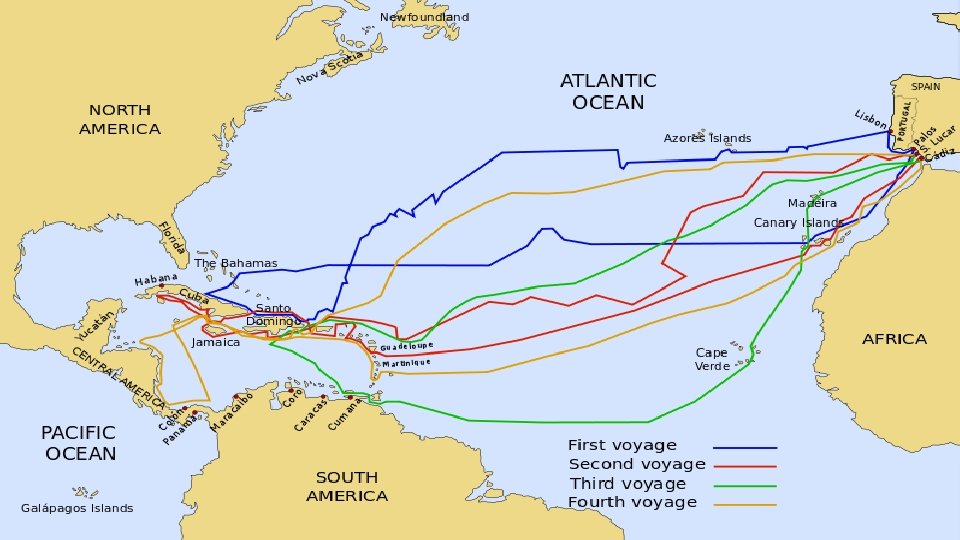
Spain ▪ Christopher Columbus (1451 -1506): wanted to compete with Portuguese expansion ▪ Ferdinand Isabella financed Columbus’ voyage. ▪ 1492, Columbus reached the Bahamas, believing he had reached the “Indies” somewhere west of India. ▪ His four expeditions charted most of the major islands in the Caribbean as well as Honduras in Central America. ▪ The monumental significance of Columbus’ expeditions was that it ushered in an era of European exploration and domination of the New World.
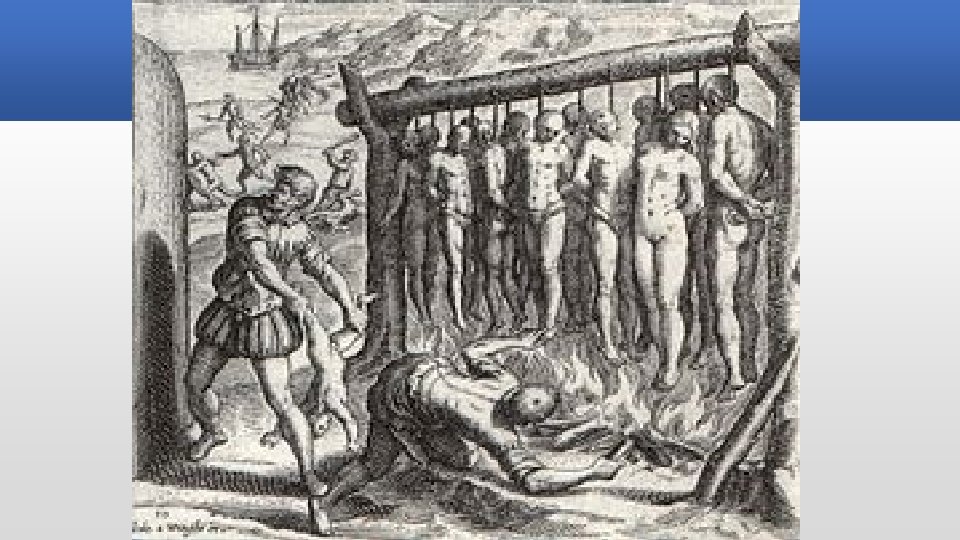
Bartholomew (Bartalome) de Las Casas (14741566) ▪ Priest and former conquistador whose father had accompanied Columbus on his 2 nd voyage ▪ A Brief Account of the Destruction of the Indies (1542) ▪ Publicly criticized the ruthlessness with which Columbus and his successors treated the American Indians. ▪ His writings helped spread the “black legend” in Protestant countries ▪ Spain was accused of using Christianity ostensibly for killing countless natives. ▪ In reality, Protestant countries, like England, were just as guilty of decimating American Indian populations.
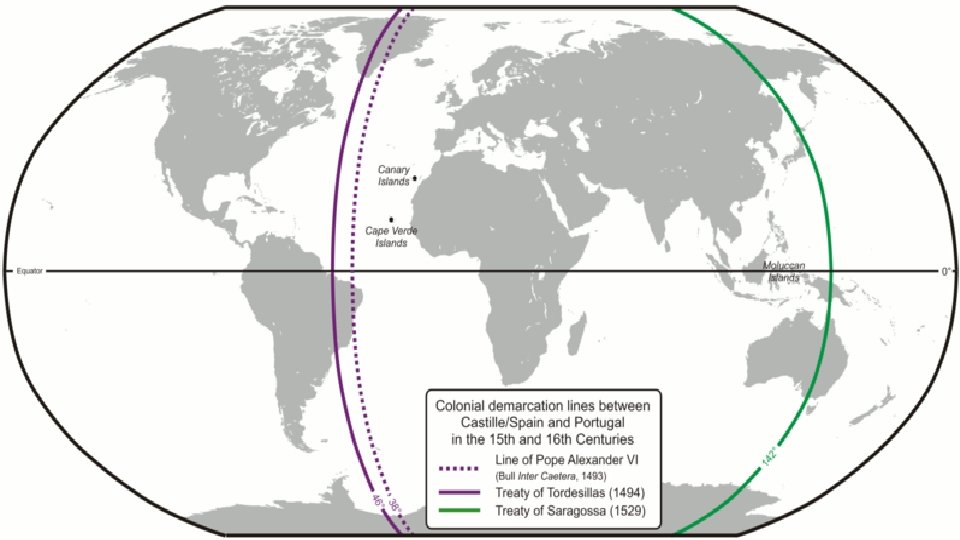
Treaty of Tordesillas (1494) ▪ Spain sought to secure Columbus’ discoveries in the New World. ▪ Provisions: ▪ The New World was divided between Spain and Portugal (at the behest of Pope Leo V). ▪ A north-south line was drawn down the middle of the Atlantic Ocean: Spain’s territory was west of the line; Portugal’s was east ▪ Portugal was granted exclusive rights to the African slave trade. ▪ Portugal retained Brazil and its claims to Africa while Spain received the rest of the Americas.
Spanish Conquest ▪ Spanish conquistadores: began creating Spain’s New World empire by conquering American Indians ▪ Hernando Cortès (1495 -1547): conquered the Aztecs in Mesoamerica in 1521 ▪ Francisco Pizarro: conquered the Inca in Peru in 1532
Golden Age of Spain ▪ The empire was divided into four vice-royalties, each led by a viceroy. ▪ It was mercantilist in philosophy from the early-16 th century onward. ▪ Colonies existed for the benefit of the mother country. ▪ The mining of gold and silver was most important ▪ the Crown got 1/5 of all precious metals); this accounted for 25% of the crown’s total income. ▪ In 1545, the opening of the world’s richest silver mines at Potosí in Peru ushered in the “golden age. ” ▪ Spain shipped manufactured goods to America
Encomienda System ▪ Motive: the Spanish government sought to reduce the savage exploitation of American Indians in the Spanish empire. ▪ In reality, the laws against exploitation were poorly enforced. ▪ System: American Indians worked for an owner for certain number of days per week but retained other parcels of land to work for themselves. ▪ Spain’s ability to forcibly utilize American Indian labor was a major reason why the Spanish Empire imported few slaves from Africa.
Social Groups in Spanish Colonies ▪ Creoles: ▪ Spaniards who were born in the New World to Spanish parents ▪ Eventually, they came to dominate politics in the empire and later, independence movements. ▪ Mestizos ▪ Spaniards married American Indian women creating children of mixed white and Native American descent. ▪ Relatively few Spanish women came to the New World during the 16 th and 17 th centuries.
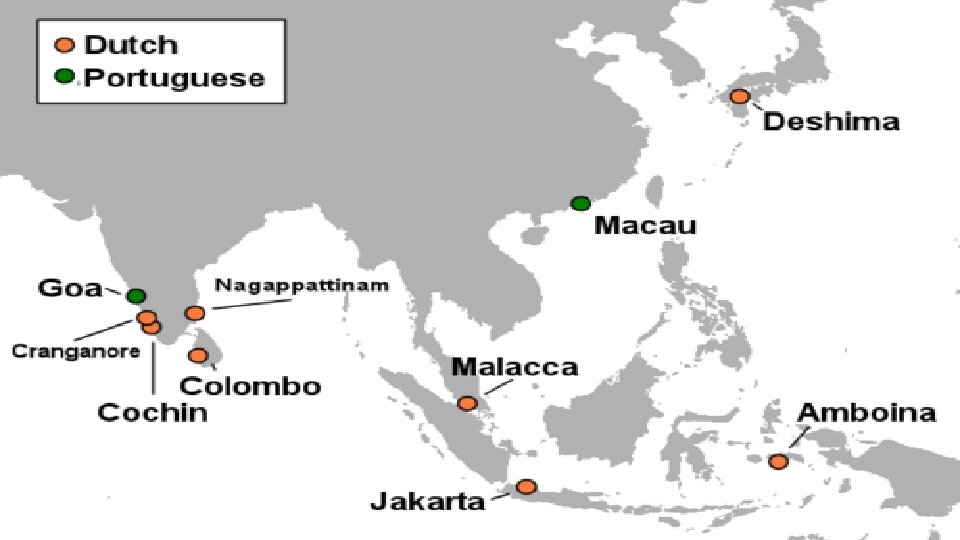
“Old Imperialism”- Africa and Asia ▪ The establishment of posts and forts on coastal regions but not penetration inland ▪ Posed a sharp contrast to Spanish imperialism in the New World ▪ Posed a sharp contrast to the late-19 th and early 20 th-century pattern of “New Imperialism” ▪ Portugal had set up forts along the African coast by 1495 ▪ Da Gama had created trading posts in Goa and Calcutta (India) ▪ Alphonso d’Albuquerque had established the imperial patterns that would allow Portugal to dominate the Indian Ocean Region in 16 th and 17 th centuries. ▪ Jesuit missionaries had traveled to east Asia and converted many to Catholicism
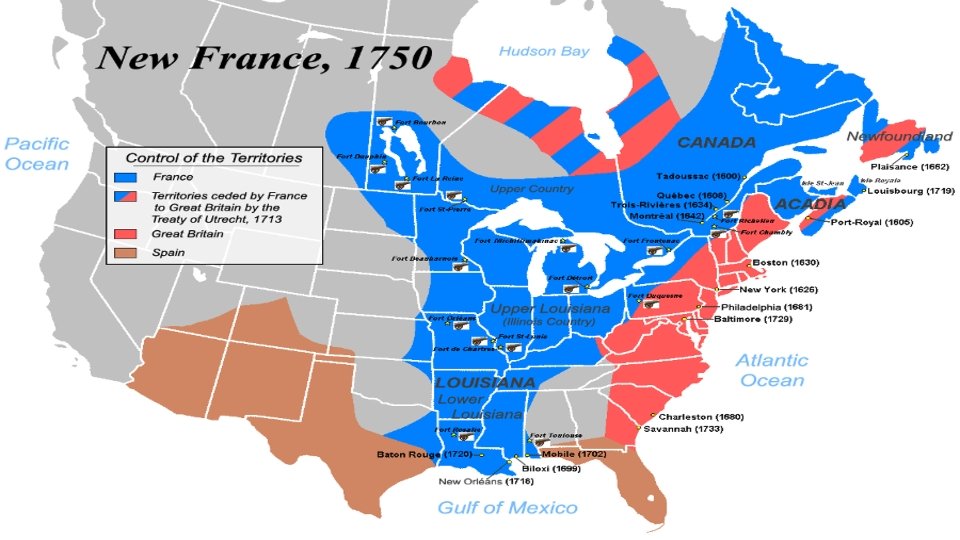
Other European Claims ▪ Dutch Republic (Netherlands) ▪ The Dutch East India Company was founded in 1602 and became the major force behind Dutch imperialism. ▪ Expelled the Portuguese from Ceylon (Sri Lanka) and other Spice Islands (Indonesia). ▪ By 1650, began challenging Spain in the New World and controlled much of the American and African trade ▪ France ▪ Quebec, France’s first settlement in the New World, was not founded until 1608. ▪ France eventually lay claim to over one-half of North America before being expelled in 1763.
▪ England ▪ The first permanent settlement in North America was not founded until 1607 in Jamestown (Virginia). ▪ Tens of thousands of Englishmen came to the eastern coast of North America in the 17 th and 18 th centuries ▪ Far more English came to the New World than the French, Spanish and Portuguese combined; ▪ By 1775 2. 5 million Europeans lived in the original thirteen American colonies