
Age of Animals How to estimate the age
- Slides: 59
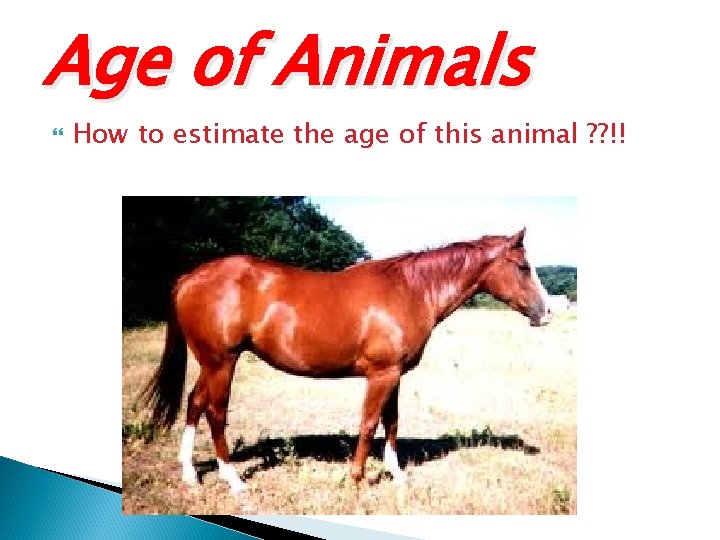
Age of Animals How to estimate the age of this animal ? ? !!
q. There are many methods used for aging of animals External appearance Used by well-trained people and long experience. but not have any scientific base 2)Number of parturitions It is only used in females 1) Age of animal year = number of parturition + 2. It is not accurate method
3)Number of ring in horned animals Age of animal year = number of rings around the base of the horn + 1. It is not accurate method as the owner may make rasping of these rings
4)Dentition By using teeth It is most accurate method used for detecting age of animals
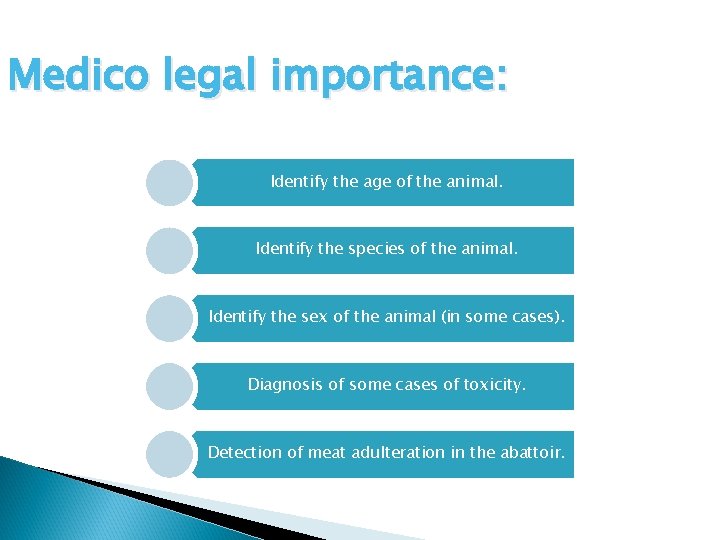
Medico legal importance: Identify the age of the animal. Identify the species of the animal. Identify the sex of the animal (in some cases). Diagnosis of some cases of toxicity. Detection of meat adulteration in the abattoir.
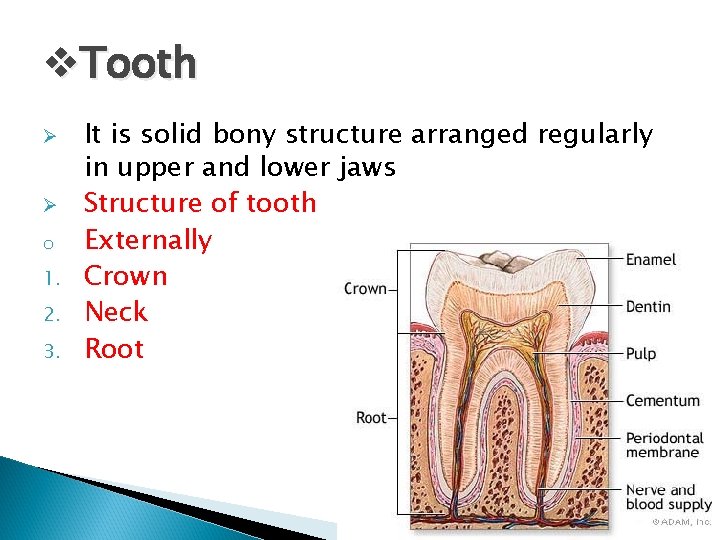
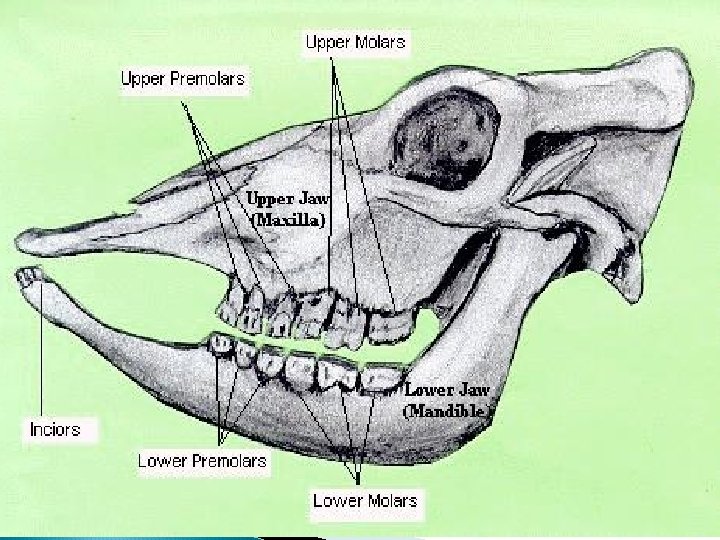
v. Tooth Ø Ø o 1. 2. 3. It is solid bony structure arranged regularly in upper and lower jaws Structure of tooth Externally Crown Neck Root
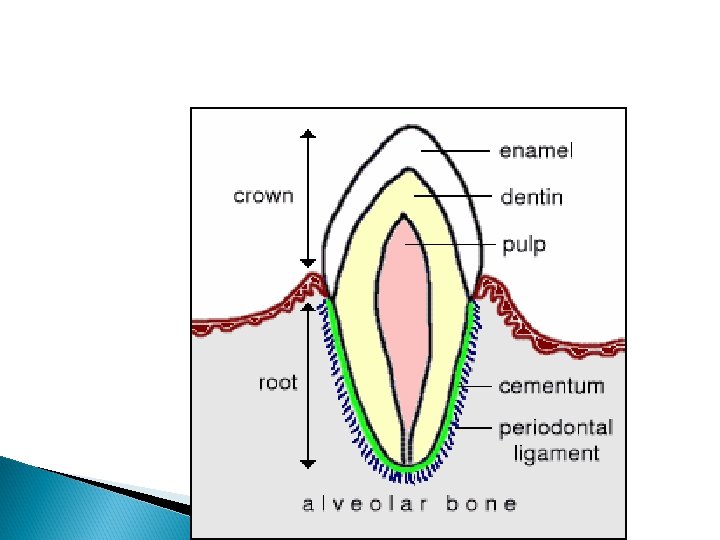
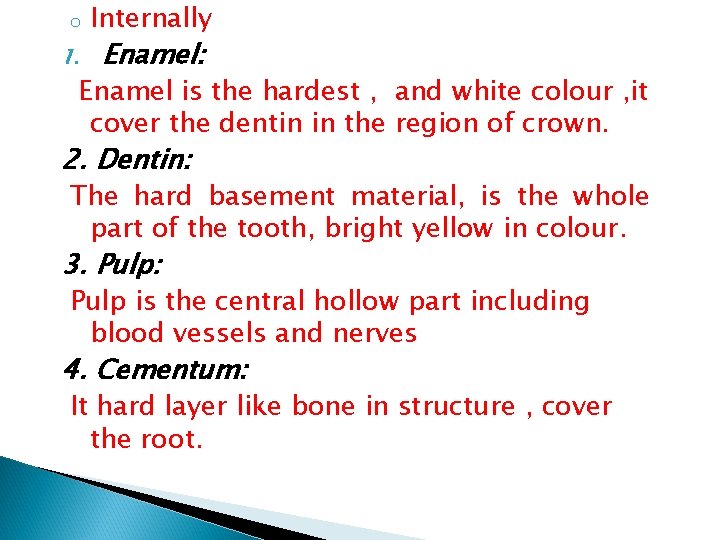
o 1. Internally Enamel: Enamel is the hardest , and white colour , it cover the dentin in the region of crown. 2. Dentin: The hard basement material, is the whole part of the tooth, bright yellow in colour. 3. Pulp: Pulp is the central hollow part including blood vessels and nerves 4. Cementum: It hard layer like bone in structure , cover the root.
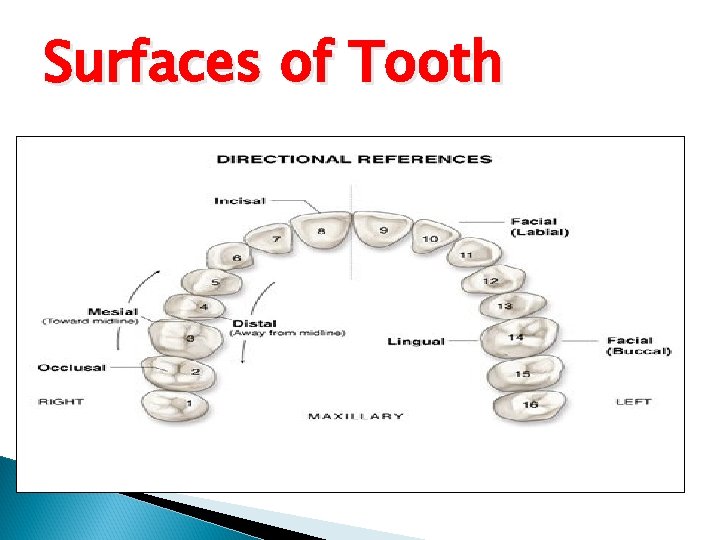
Surfaces of Tooth
Types of teeth according to time of eruption There are 2 types: 1 -Temporary (milky)Teeth in the early stage of life which get erupted through gum then changed with permanent one 2. Permanent It is the teeth that not changed
Factors affect on the date of eruption of temporary and permanent teeth 1 -genetic factor 2 -species and breed 3 -management 4 -diet 5 -condition of the animal, deficiency disease
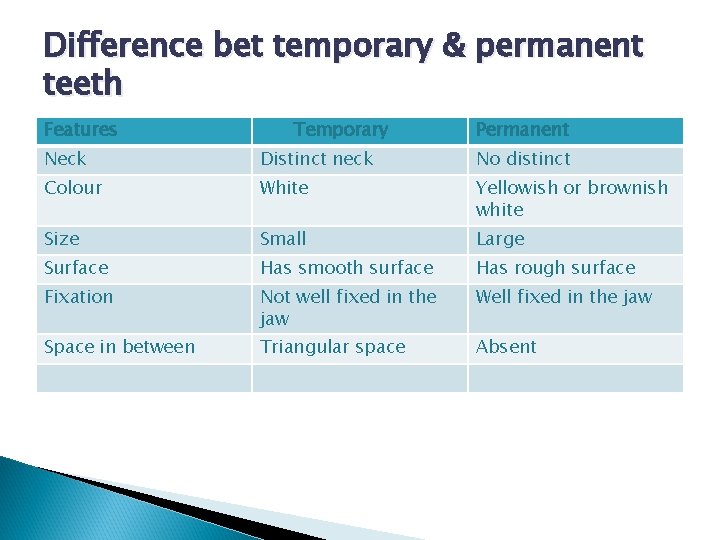
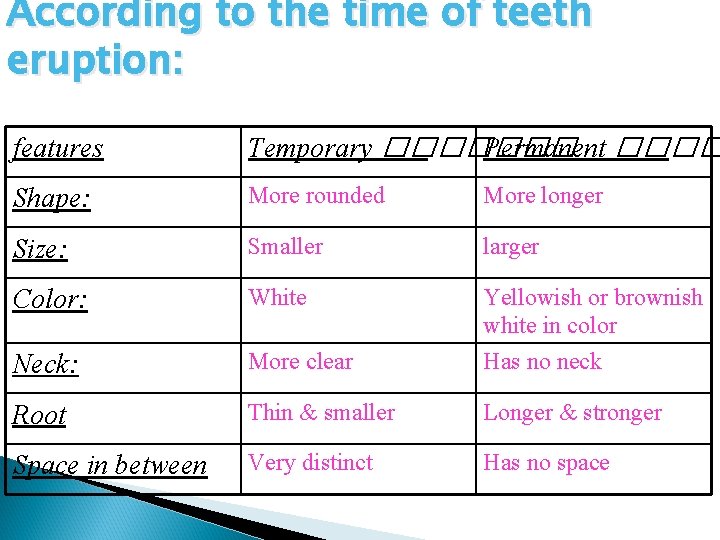
Difference bet temporary & permanent teeth Features Temporary Permanent Neck Distinct neck No distinct Colour White Yellowish or brownish white Size Small Large Surface Has smooth surface Has rough surface Fixation Not well fixed in the jaw Well fixed in the jaw Space in between Triangular space Absent
According to the time of teeth eruption: features Temporary ������� Permanent ���� Shape: More rounded More longer Size: Smaller larger Color: White Neck: More clear Yellowish or brownish white in color Has no neck Root Thin & smaller Longer & stronger Space in between Very distinct Has no space
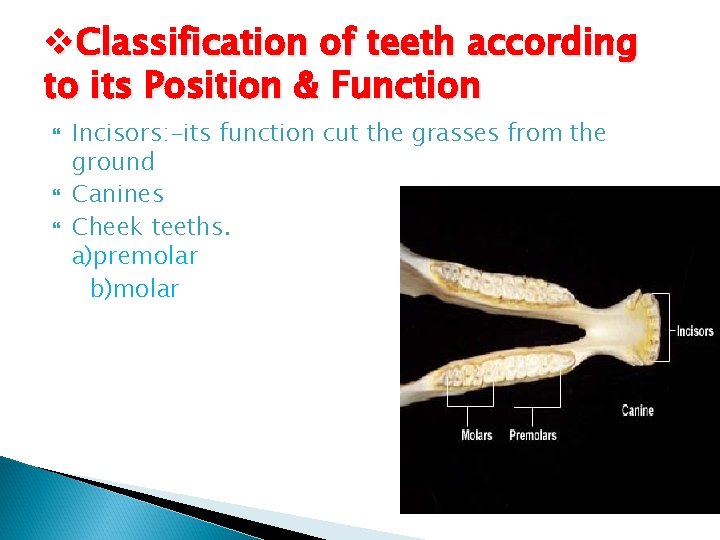
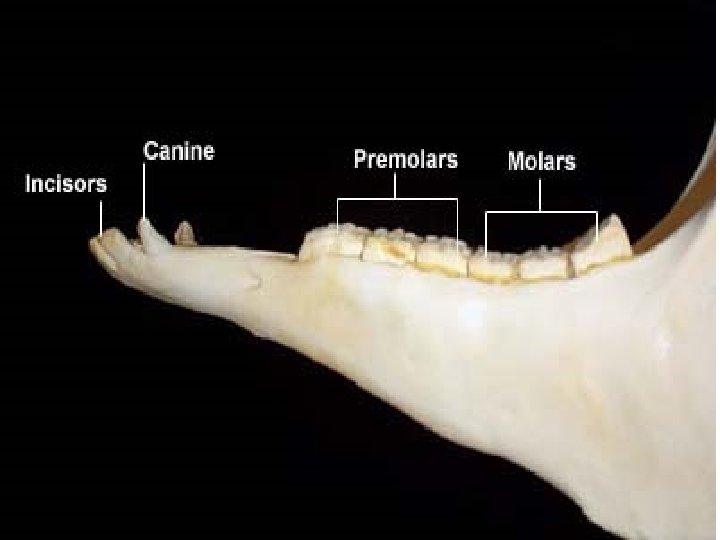
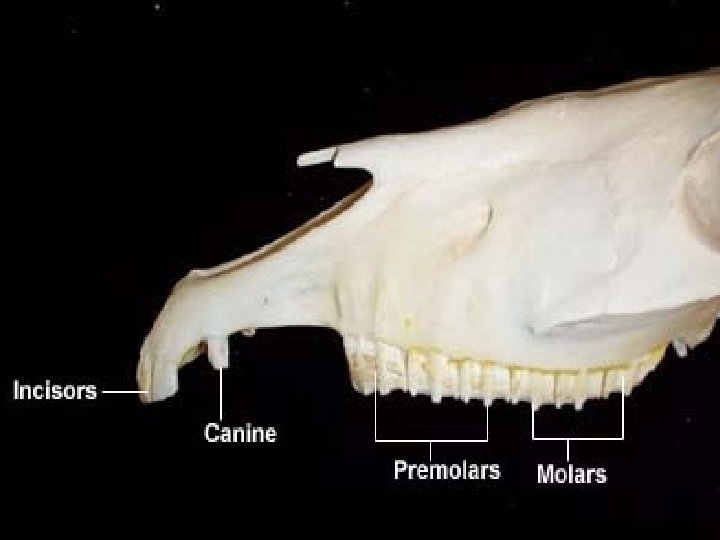
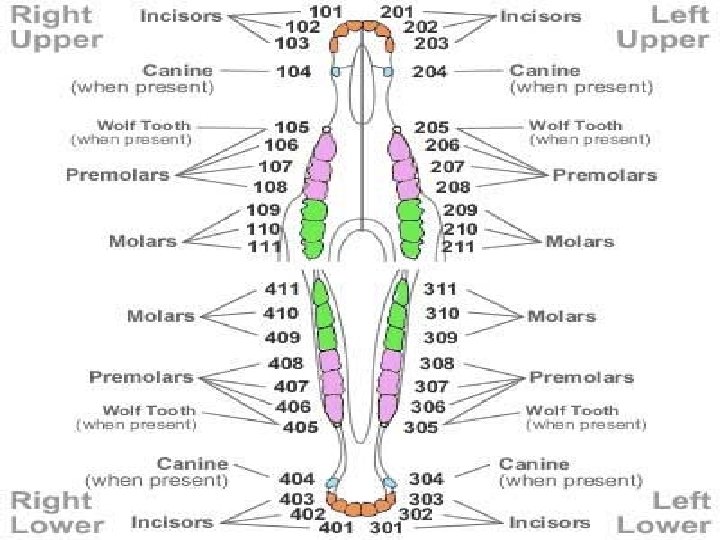
v. Classification of teeth according to its Position & Function Incisors: -its function cut the grasses from the ground Canines Cheek teeths. a)premolar b)molar
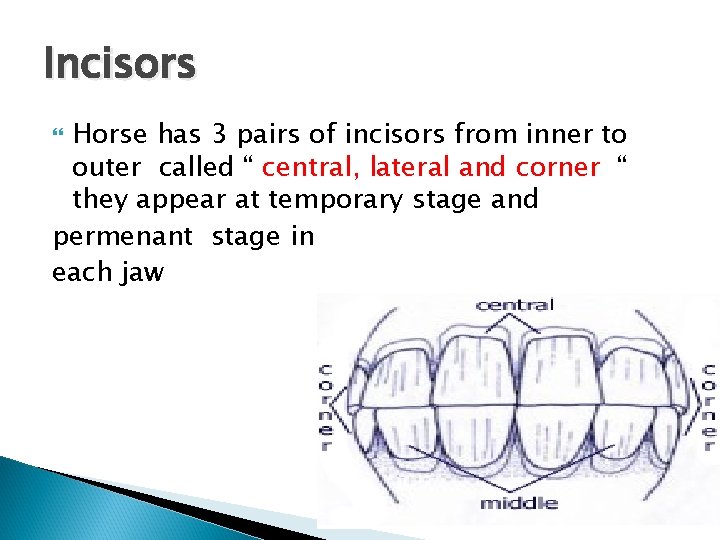
Incisors Horse has 3 pairs of incisors from inner to outer called “ central, lateral and corner “ they appear at temporary stage and permenant stage in each jaw
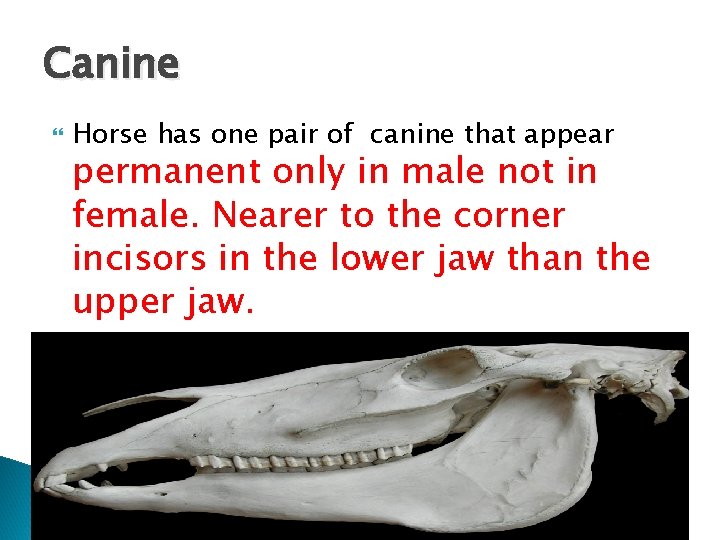
Canine Horse has one pair of canine that appear permanent only in male not in female. Nearer to the corner incisors in the lower jaw than the upper jaw.
Horse has 3 pairs premolars appear temporary and permanent Also has 3 pairs of molars but appear only in permanent stage
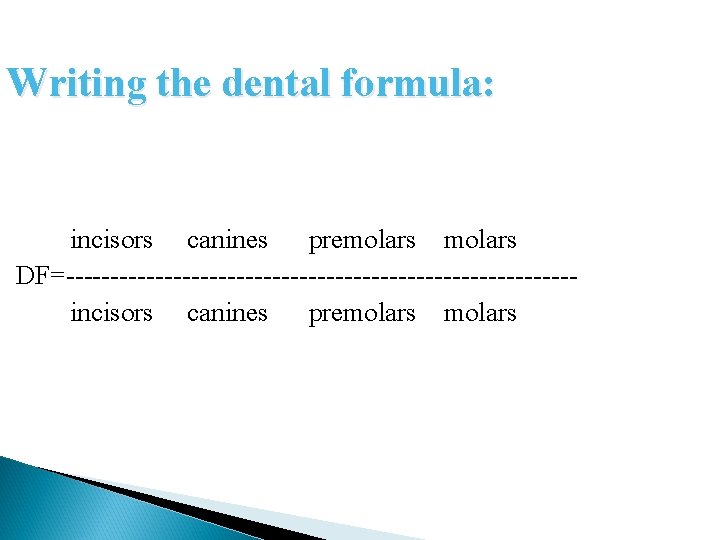
Writing the dental formula: incisors canines premolars DF=----------------------------incisors canines premolars
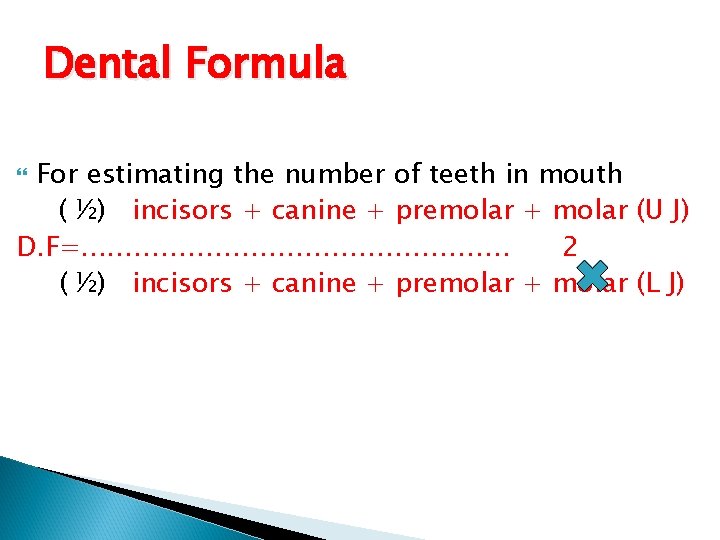
Dental Formula For estimating the number of teeth in mouth ( ½) incisors + canine + premolar + molar (U J) D. F=. . . …………………… 2 ( ½) incisors + canine + premolar + molar (L J)
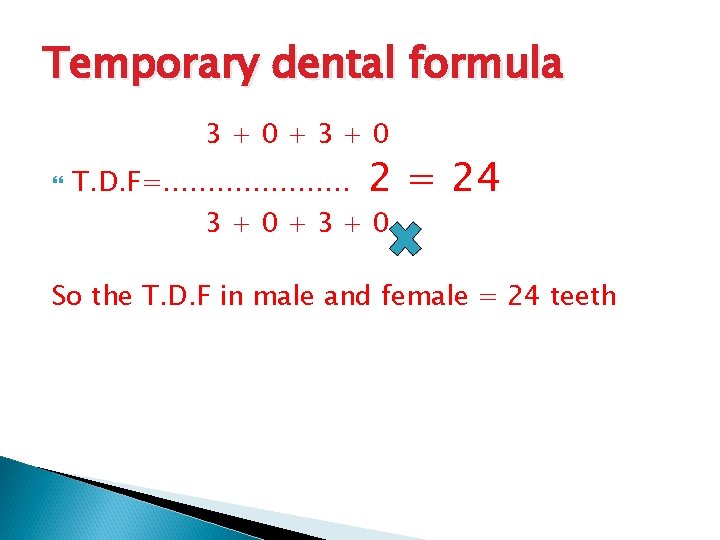
Temporary dental formula 3+0+3+0 T. D. F=………………… 2 = 24 3+0+3+0 So the T. D. F in male and female = 24 teeth
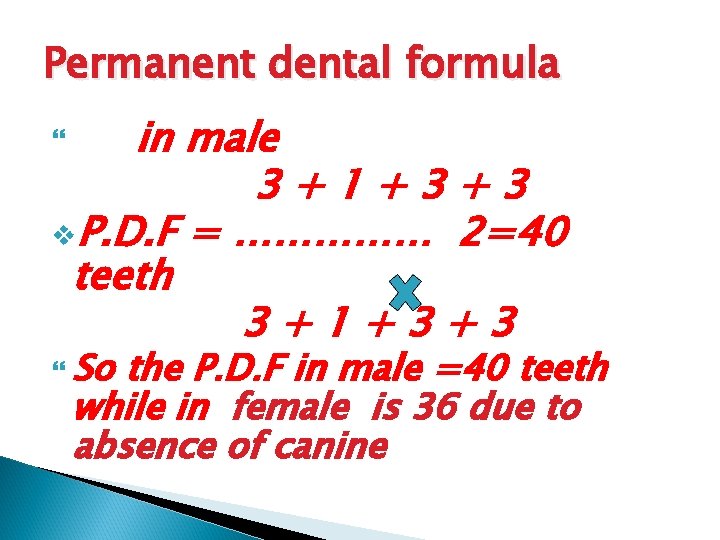
Permanent dental formula in male 3+1+3+3 v. P. D. F = …………… 2=40 teeth 3+1+3+3 So the P. D. F in male =40 teeth while in female is 36 due to absence of canine
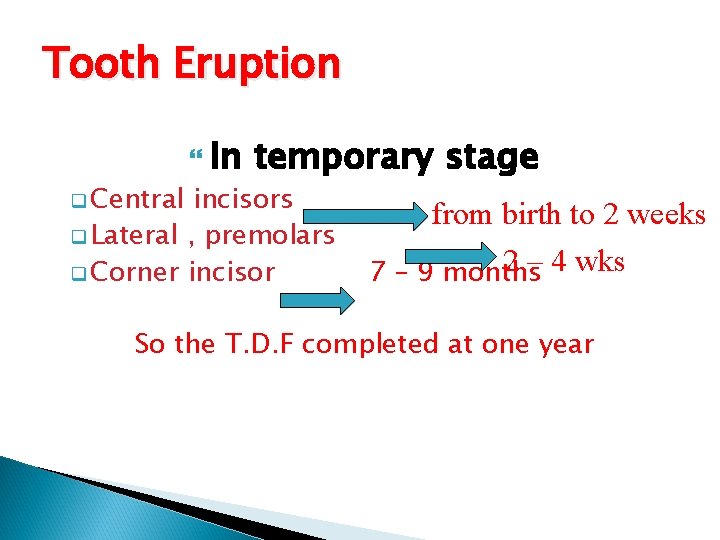
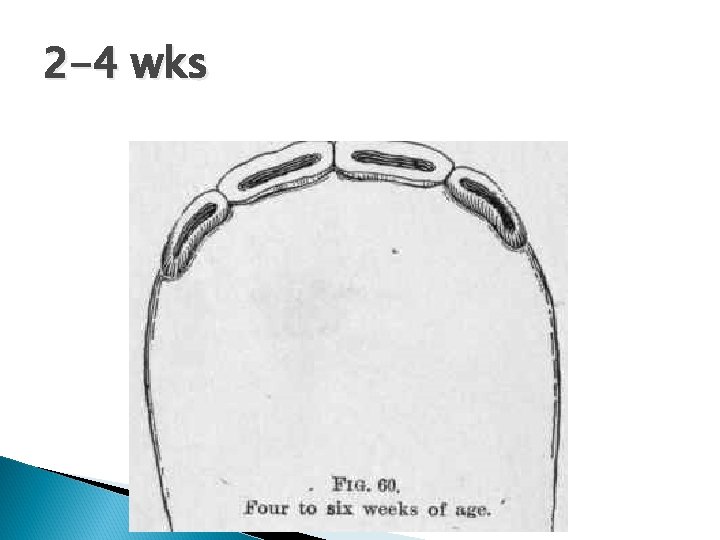
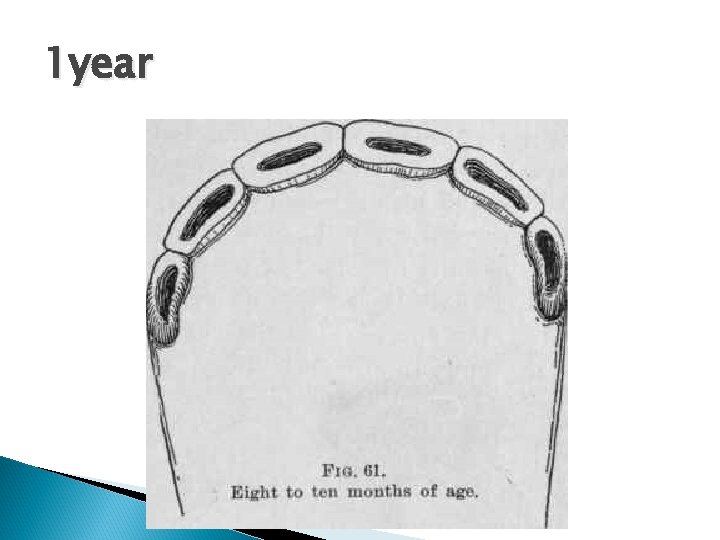
Tooth Eruption q Central In temporary stage incisors q Lateral , premolars q Corner incisor from birth to 2 weeks 2 – 4 wks 7 – 9 months So the T. D. F completed at one year
2 -4 wks
1 year
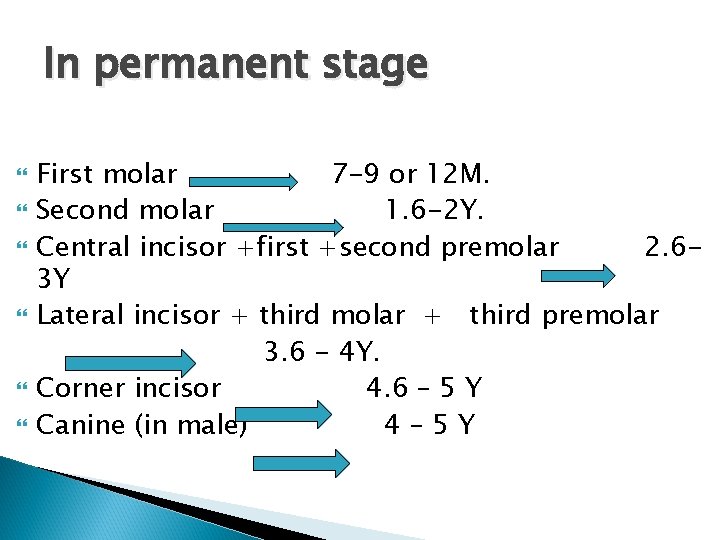
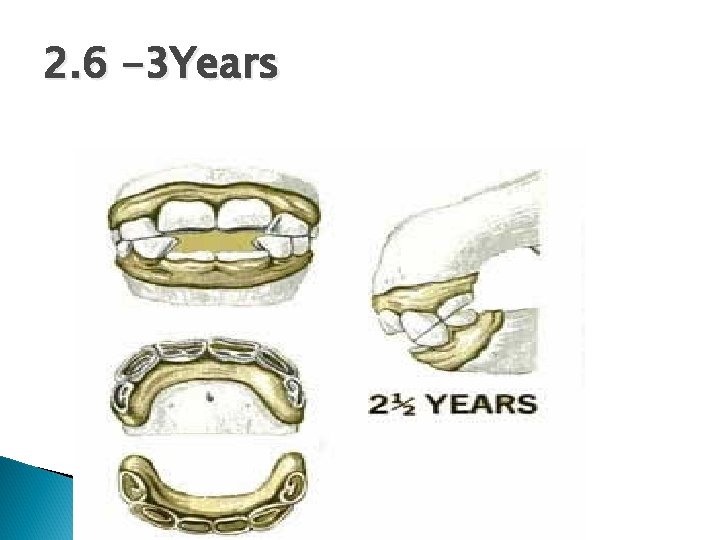
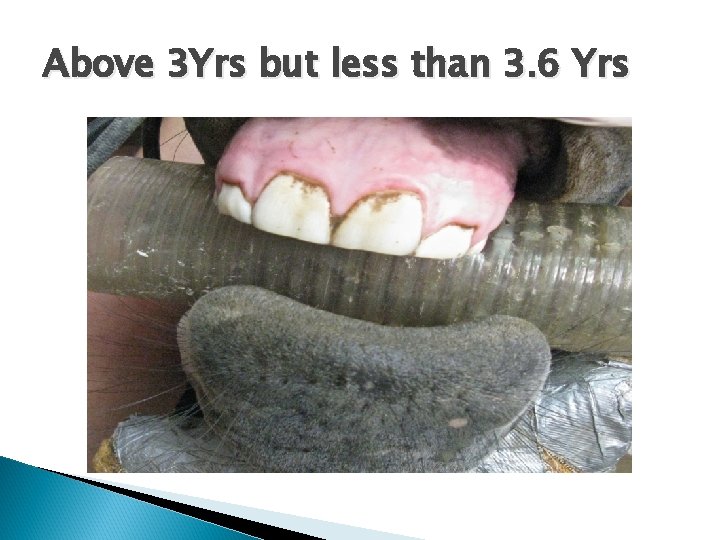
In permanent stage First molar 7 -9 or 12 M. Second molar 1. 6 -2 Y. Central incisor +first +second premolar 2. 63 Y Lateral incisor + third molar + third premolar 3. 6 - 4 Y. Corner incisor 4. 6 – 5 Y Canine (in male) 4– 5 Y
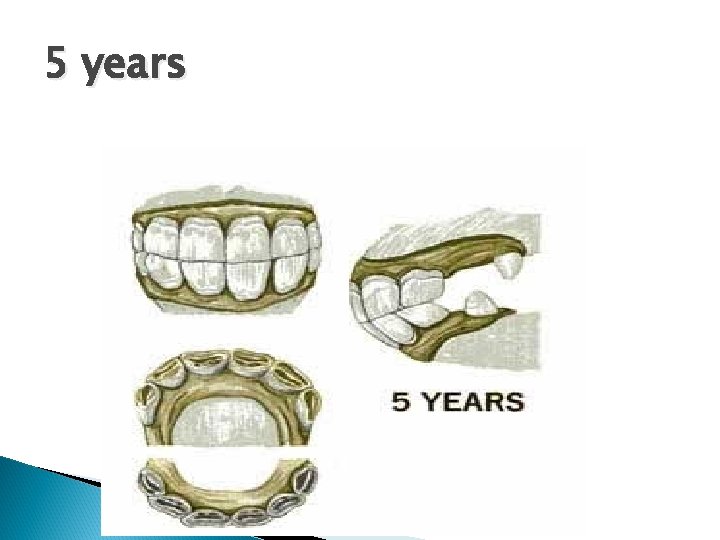
So the P. D. F completed at 5 years This means that horse with “Full Mouth”
2. 6 -3 Years
Above 3 Yrs but less than 3. 6 Yrs
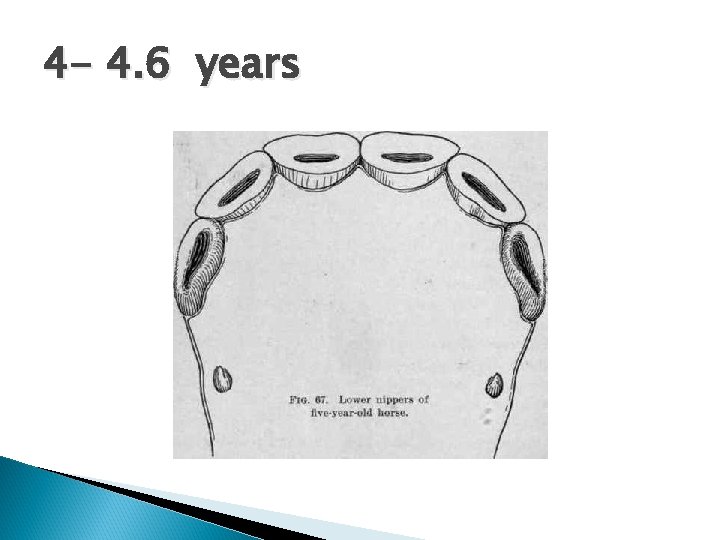
4 - 4. 6 years
5 years
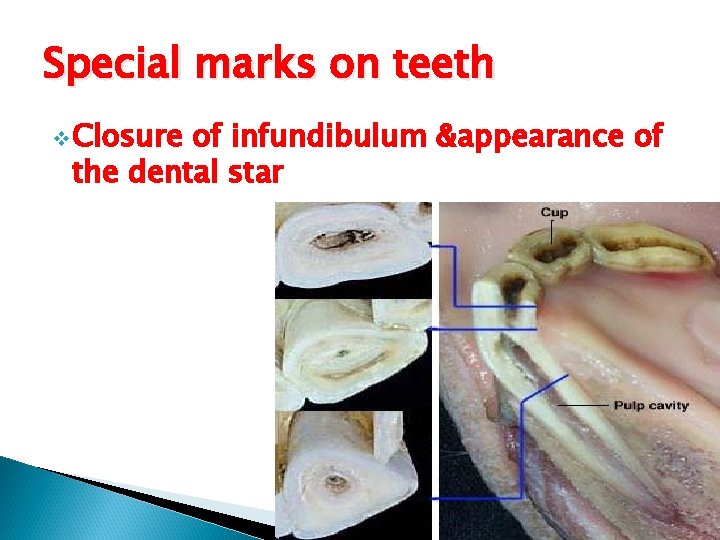
Special marks on teeth v Closure of infundibulum &appearance of the dental star
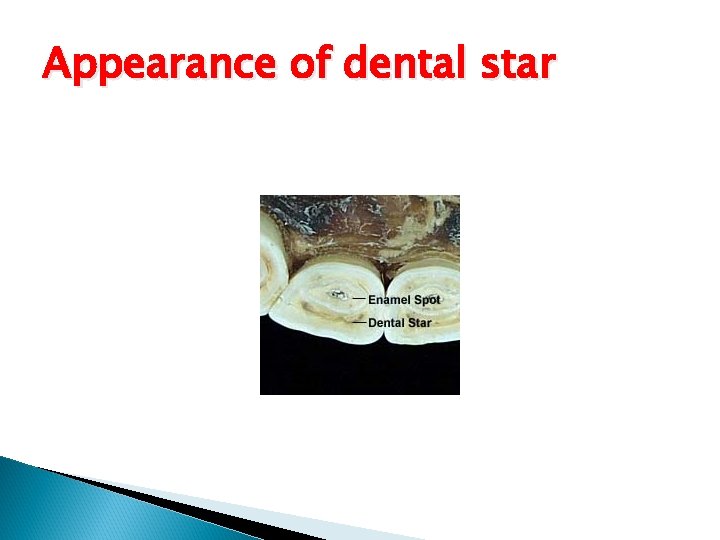
Appearance of dental star
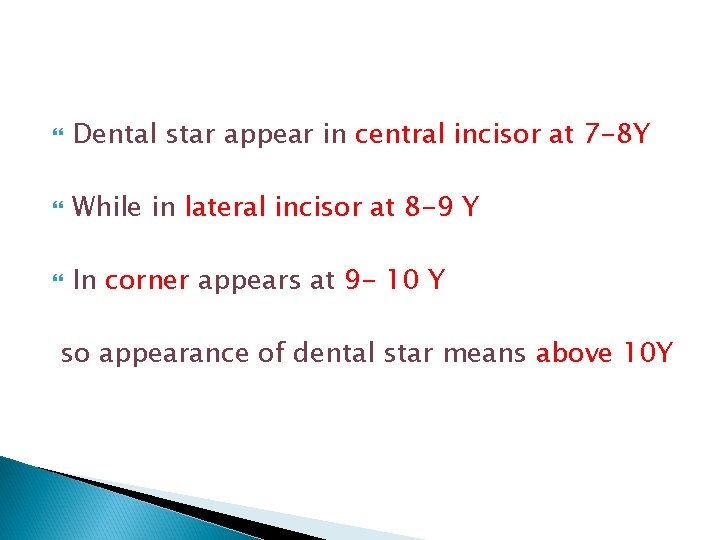
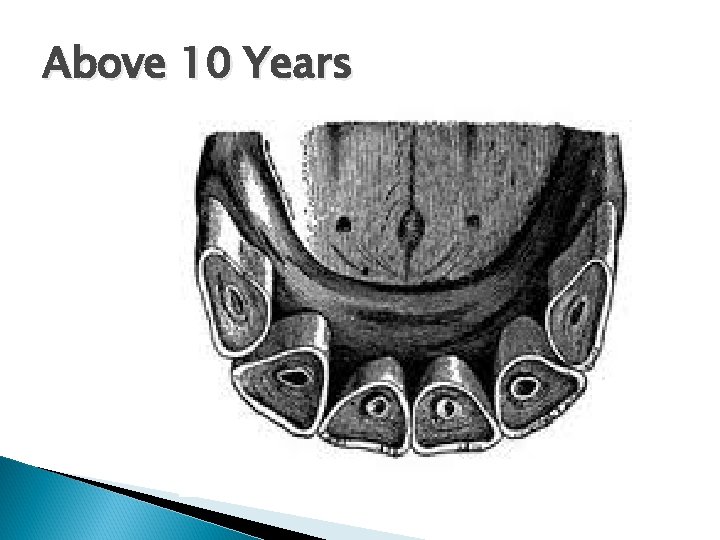
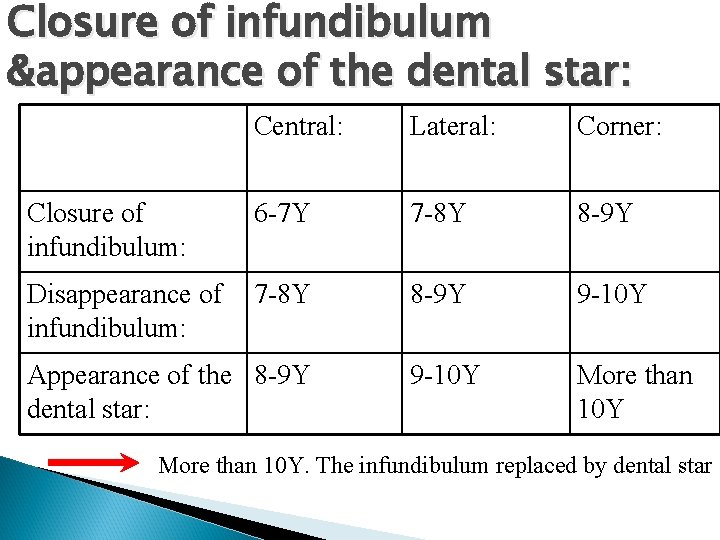
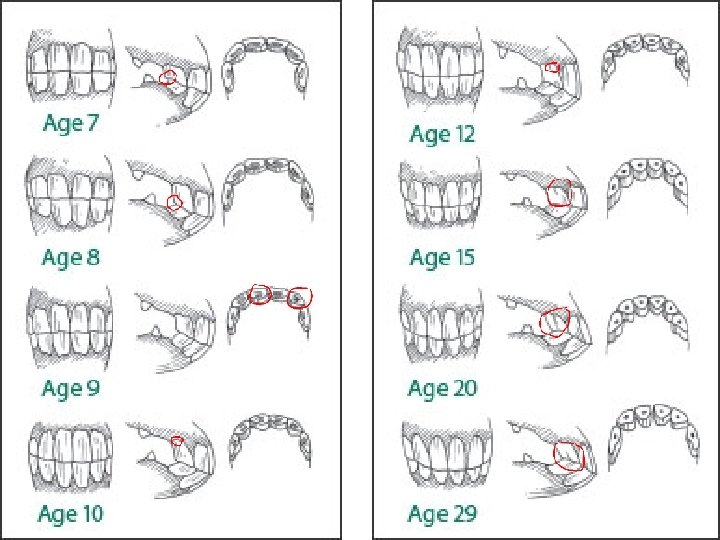
Dental star appear in central incisor at 7 -8 Y While in lateral incisor at 8 -9 Y In corner appears at 9 - 10 Y so appearance of dental star means above 10 Y
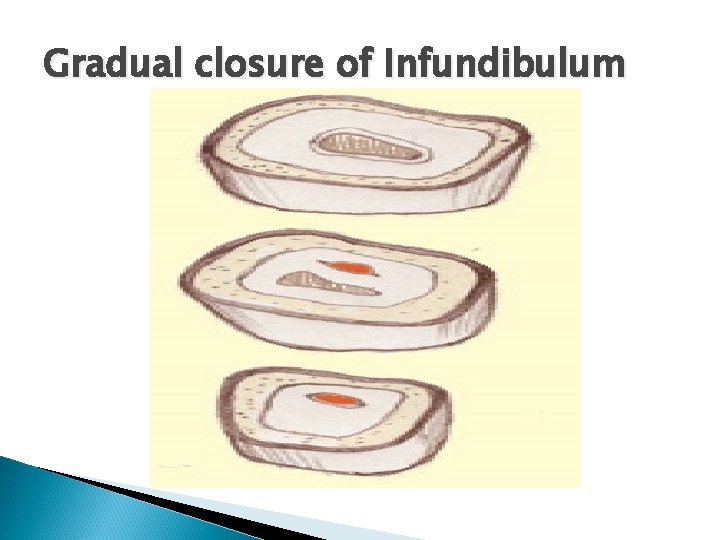
Gradual closure of Infundibulum
Above 10 Years
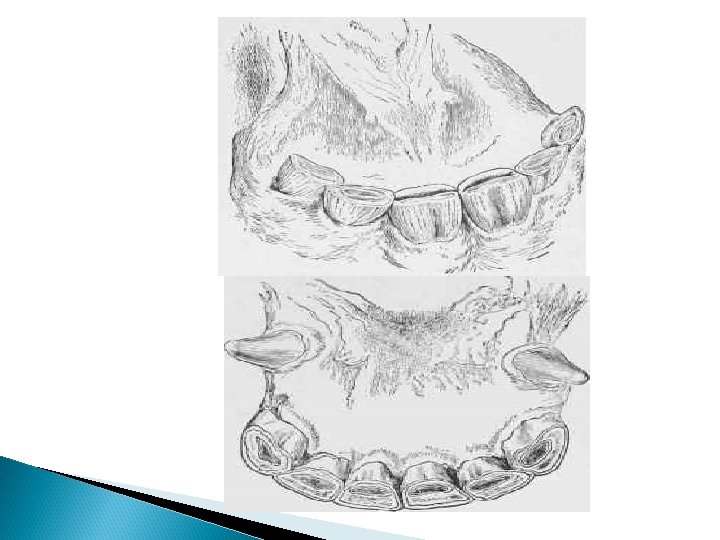
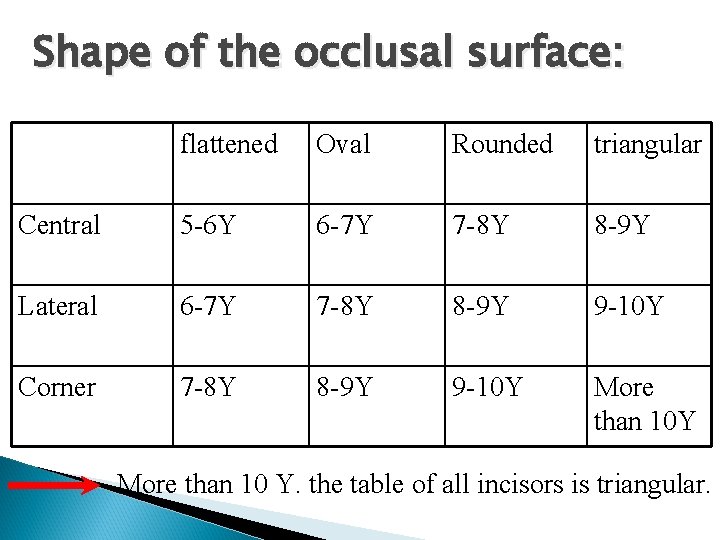
Shape of the occlusal surface: flattened Oval Rounded triangular Central 5 -6 Y 6 -7 Y 7 -8 Y 8 -9 Y Lateral 6 -7 Y 7 -8 Y 8 -9 Y 9 -10 Y Corner 7 -8 Y 8 -9 Y 9 -10 Y More than 10 Y. the table of all incisors is triangular.
Closure of infundibulum &appearance of the dental star: Central: Lateral: Corner: Closure of infundibulum: 6 -7 Y 7 -8 Y 8 -9 Y Disappearance of infundibulum: 7 -8 Y 8 -9 Y 9 -10 Y More than 10 Y Appearance of the 8 -9 Y dental star: More than 10 Y. The infundibulum replaced by dental star
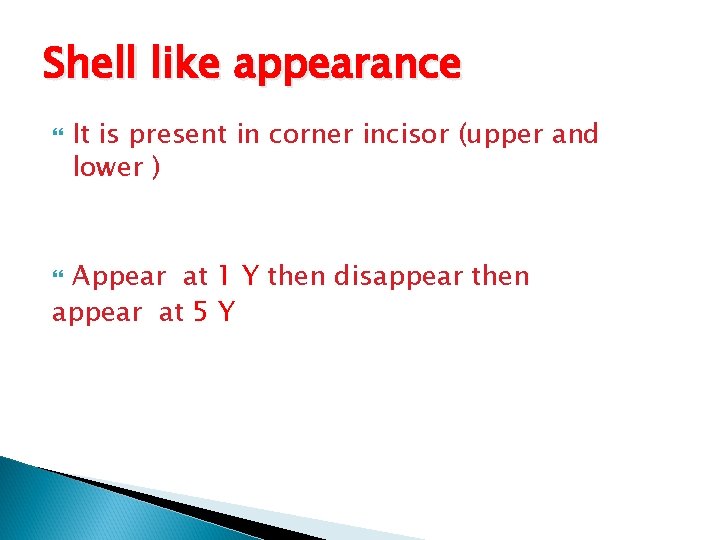
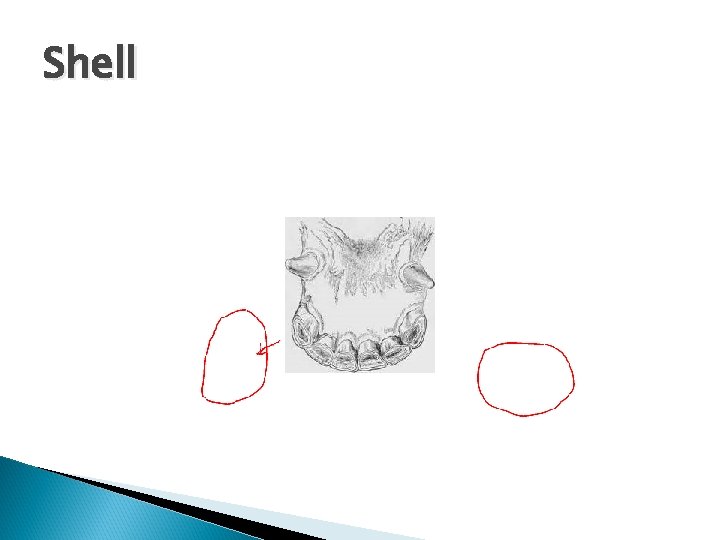
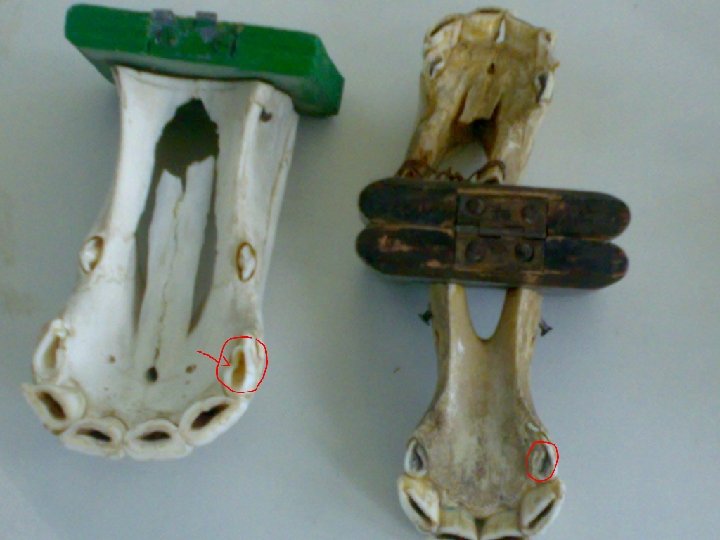
Shell like appearance It is present in corner incisor (upper and lower ) Appear at 1 Y then disappear then appear at 5 Y
Shell
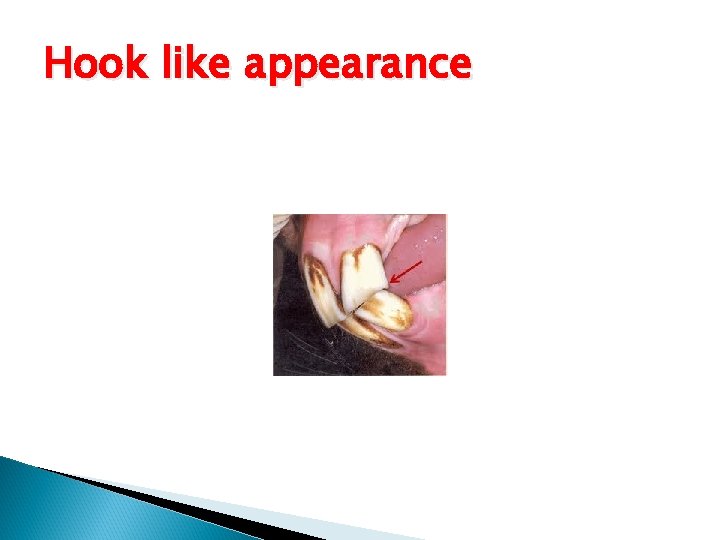
Hook like appearance
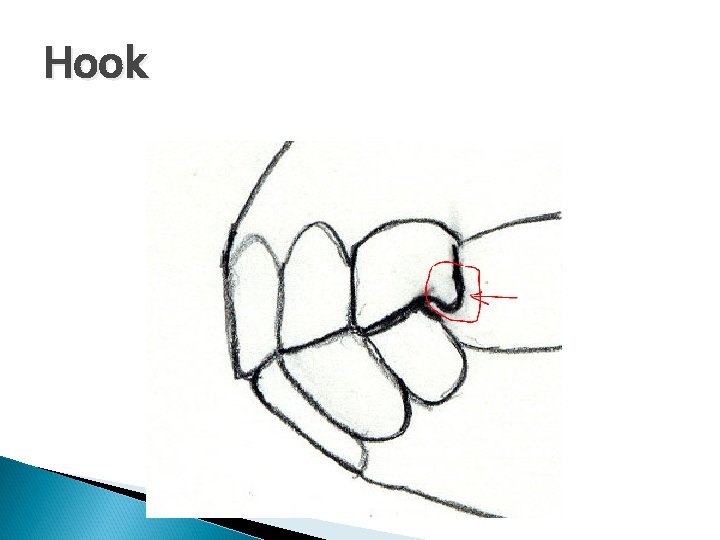
It appears in upper corner incisor Appear at 7 Y then disappear at 8 Y then appear again at 13 Y then disappear at 14 Y
Hook
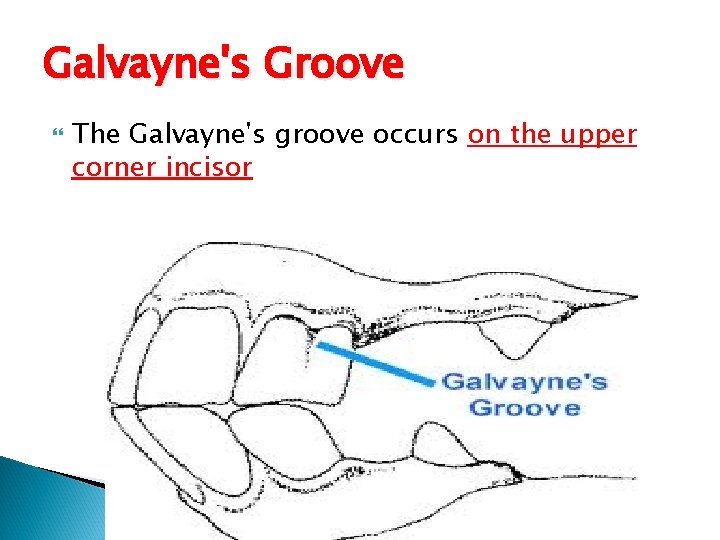
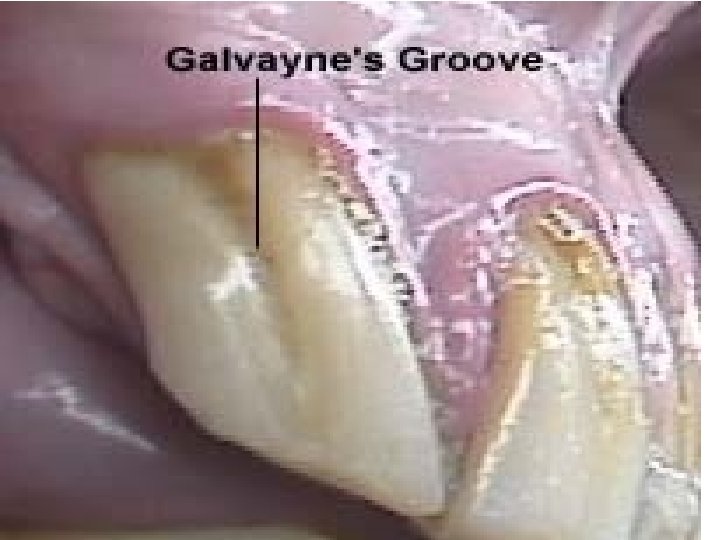
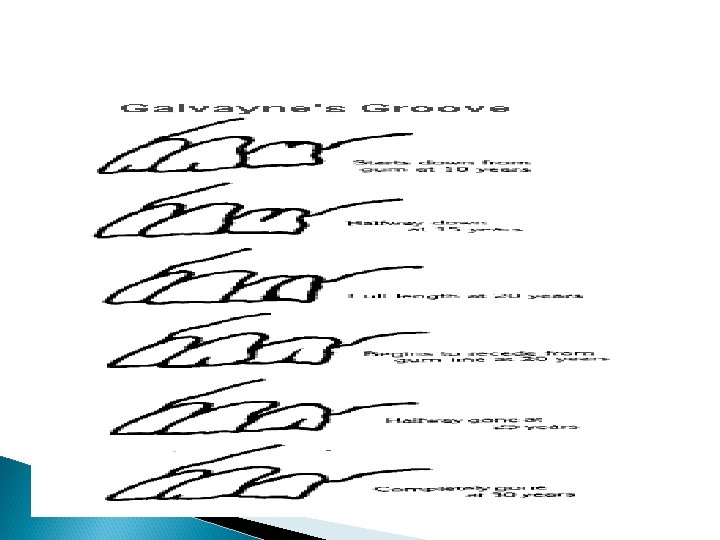
Galvayne's Groove The Galvayne's groove occurs on the upper corner incisor
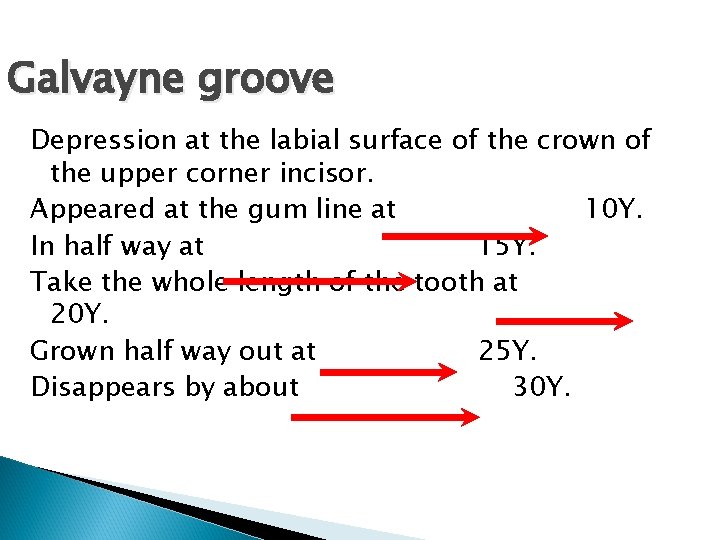
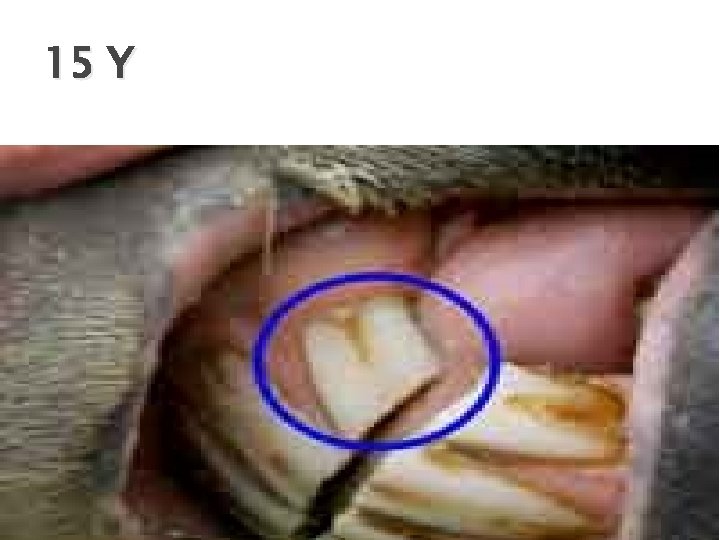
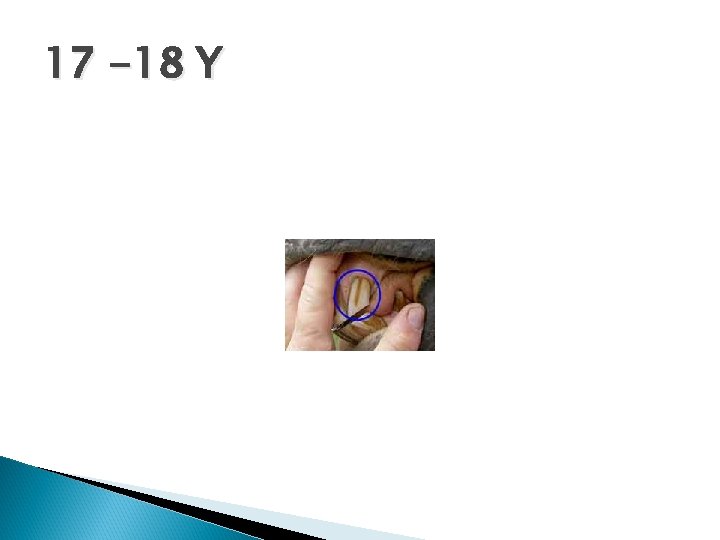
Galvayne groove Depression at the labial surface of the crown of the upper corner incisor. Appeared at the gum line at 10 Y. In half way at 15 Y. Take the whole length of the tooth at 20 Y. Grown half way out at 25 Y. Disappears by about 30 Y.
It generally first appears at age 10 from gum , reaches halfway down the tooth by age 15, and is completely down the tooth at age 20. It then begins to disappear, usually half-way gone by age 25, and completely gone by age 30.
15 Y
17 -18 Y
Deformities of teeth in horse 1 -Parrot mouth: -Teeth of the upper jaw is much longer and over lapping the lower jaw. -The teeth of the lower jaw may contact with the mouth and injury the palate.
2 -under shot -The teeth of the lower jaw are longer than the upper jaw. 3 -Crib biting -The incisors are worn down
4 -Sharp teeth common in horse -Wearing of the molar teeth irregularly , so the molars has sharp edges this cause chews hay or corn partially and let it drop from the mouth saturated with saliva. -Treat: - rasping the outer edge of the upper and the inner edge of the lower molars.