
AGE OF ABSOLUTISM LOUIS XIV OF FRANCE CHARACTERISTICS
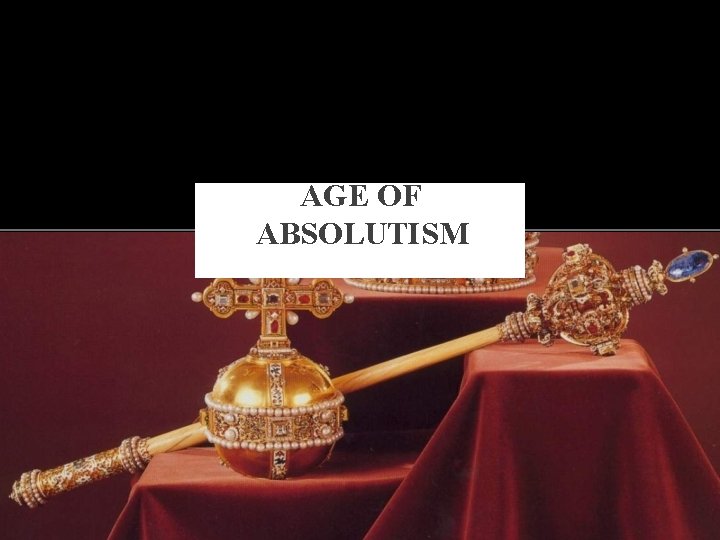
AGE OF ABSOLUTISM
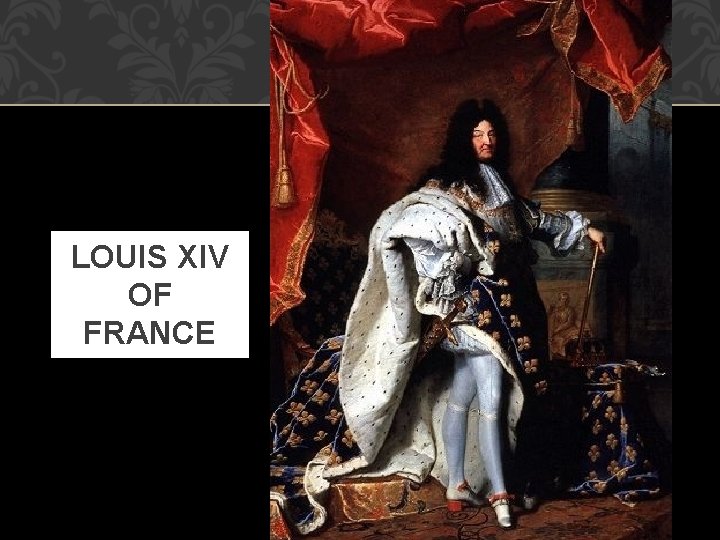
LOUIS XIV OF FRANCE

CHARACTERISTICS OF ABSOLUTISM • Bishop Jacques-Bénigne Bossuet • Politics Taken From the Very Words of Scripture.
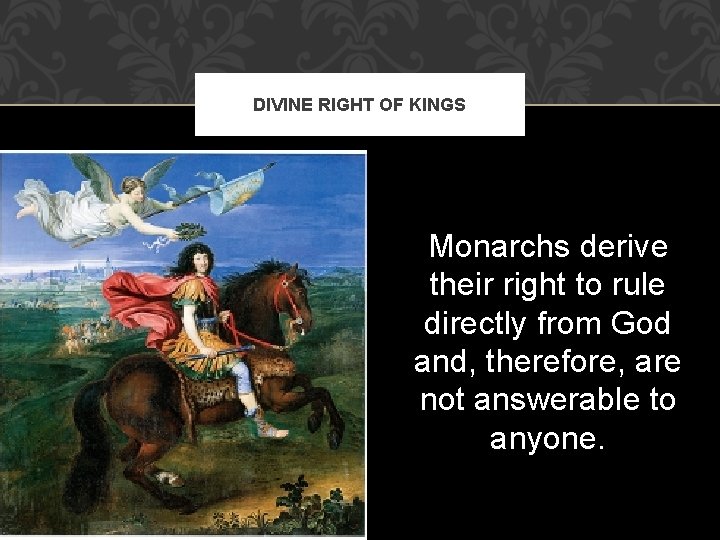
DIVINE RIGHT OF KINGS Monarchs derive their right to rule directly from God and, therefore, are not answerable to anyone.
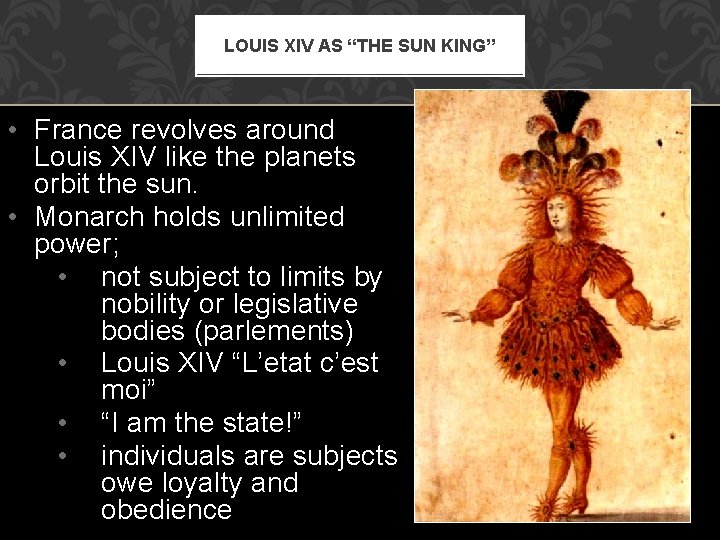
LOUIS XIV AS “THE SUN KING” • France revolves around Louis XIV like the planets orbit the sun. • Monarch holds unlimited power; • not subject to limits by nobility or legislative bodies (parlements) • Louis XIV “L’etat c’est moi” • “I am the state!” • individuals are subjects owe loyalty and obedience
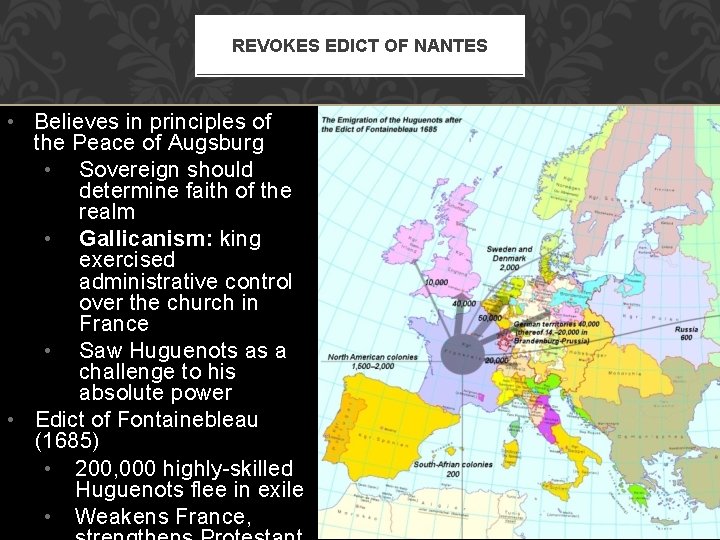
REVOKES EDICT OF NANTES • Believes in principles of the Peace of Augsburg • Sovereign should determine faith of the realm • Gallicanism: king exercised administrative control over the church in France • Saw Huguenots as a challenge to his absolute power • Edict of Fontainebleau (1685) • 200, 000 highly-skilled Huguenots flee in exile • Weakens France,

INTENDANT SYSTEM • Monarch dominates upper classes, which in turn dominate lower classes. • “intendants” • “Nobles of the Robe” loyal only to Louis XIV • administrators sent out to carry out Louis’ decisions • vs. “Nobles of the Sword” from old aristocratic families descended from feudal knights
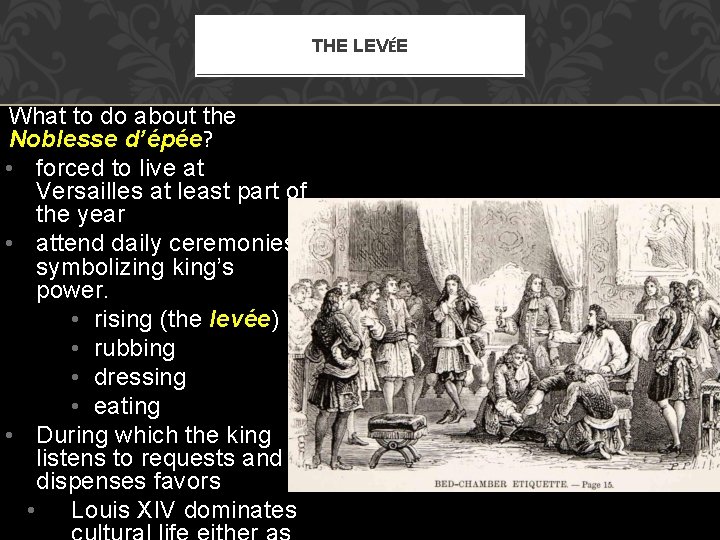
THE LEVÉE What to do about the Noblesse d’épée? • forced to live at Versailles at least part of the year • attend daily ceremonies symbolizing king’s power. • rising (the levée) • rubbing • dressing • eating • During which the king listens to requests and dispenses favors • Louis XIV dominates
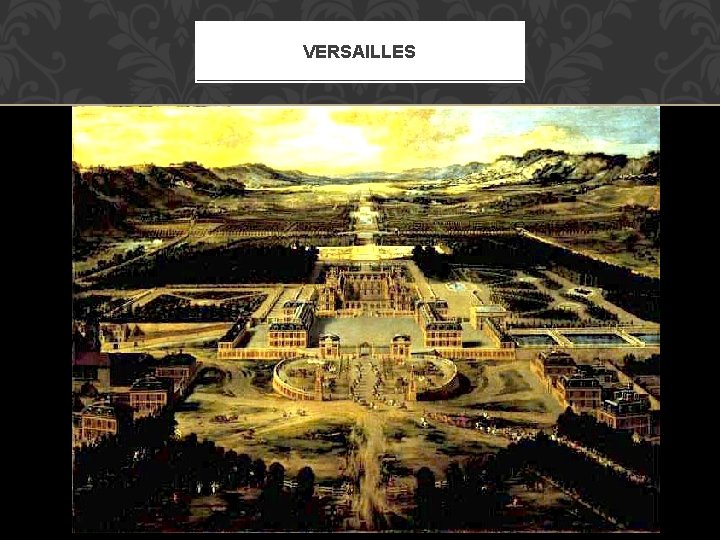
VERSAILLES
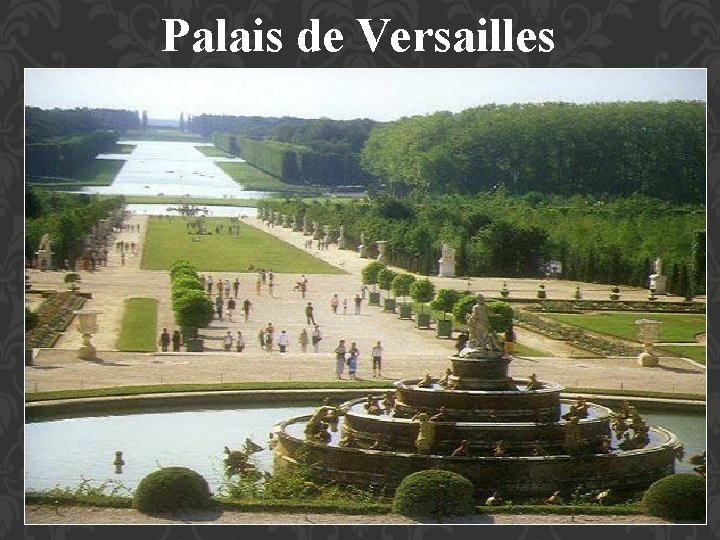
Palais de Versailles
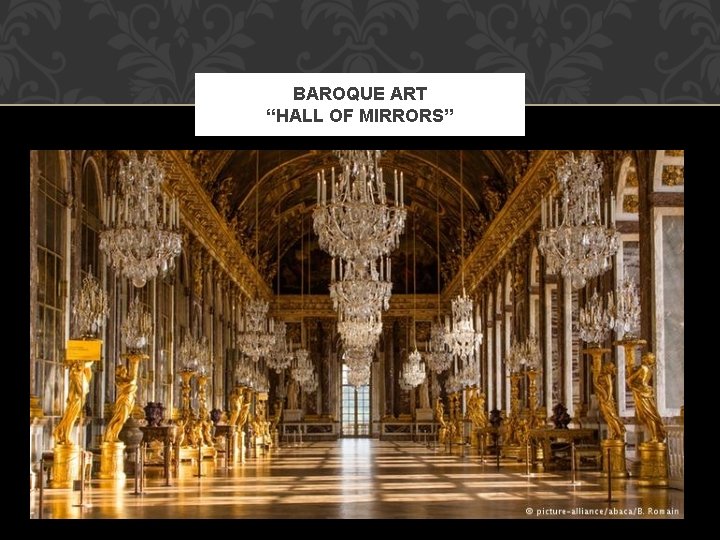
BAROQUE ART “HALL OF MIRRORS”
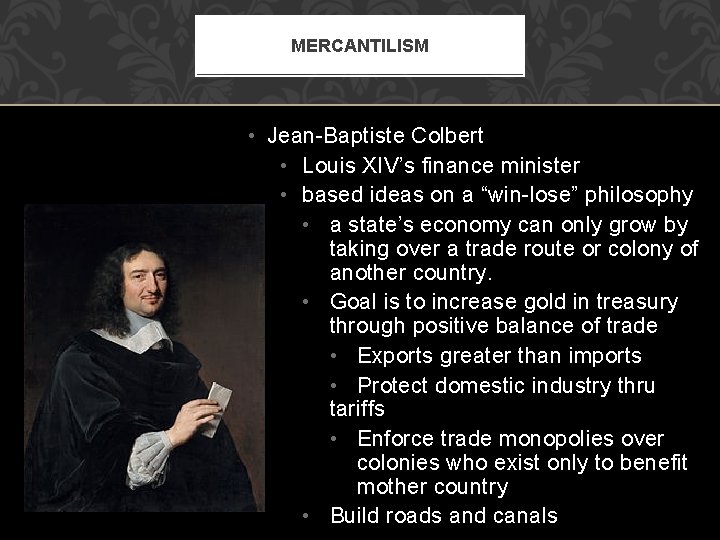
MERCANTILISM • Jean-Baptiste Colbert • Louis XIV’s finance minister • based ideas on a “win-lose” philosophy • a state’s economy can only grow by taking over a trade route or colony of another country. • Goal is to increase gold in treasury through positive balance of trade • Exports greater than imports • Protect domestic industry thru tariffs • Enforce trade monopolies over colonies who exist only to benefit mother country • Build roads and canals
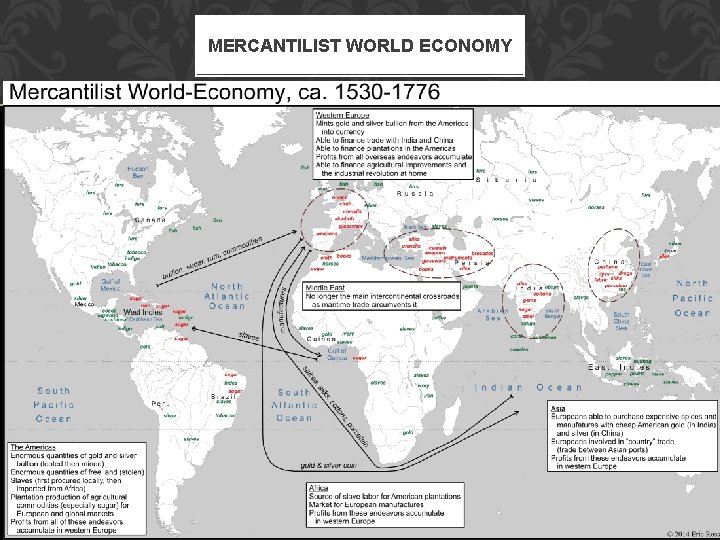
MERCANTILIST WORLD ECONOMY
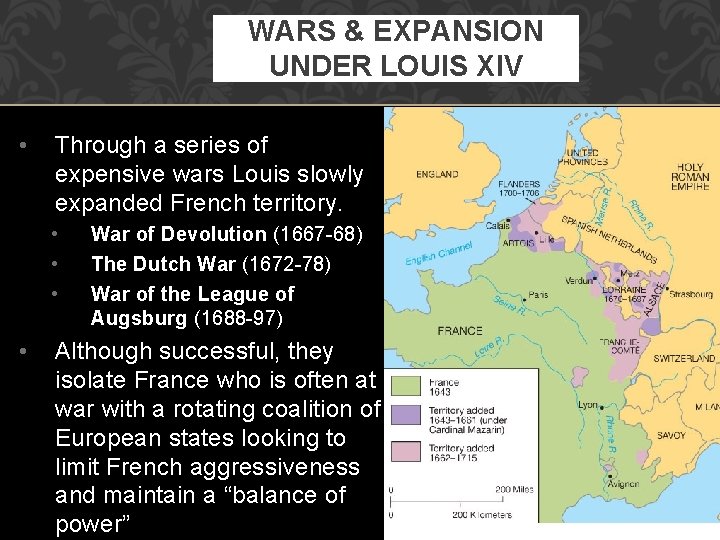
WARS & EXPANSION UNDER LOUIS XIV • Through a series of expensive wars Louis slowly expanded French territory. • • War of Devolution (1667 -68) The Dutch War (1672 -78) War of the League of Augsburg (1688 -97) Although successful, they isolate France who is often at war with a rotating coalition of European states looking to limit French aggressiveness and maintain a “balance of power”
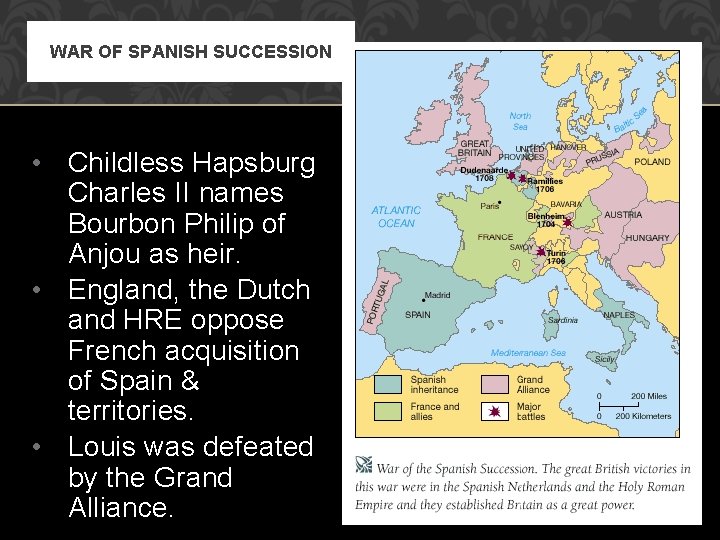
WAR OF SPANISH SUCCESSION • Childless Hapsburg Charles II names Bourbon Philip of Anjou as heir. • England, the Dutch and HRE oppose French acquisition of Spain & territories. • Louis was defeated by the Grand Alliance.
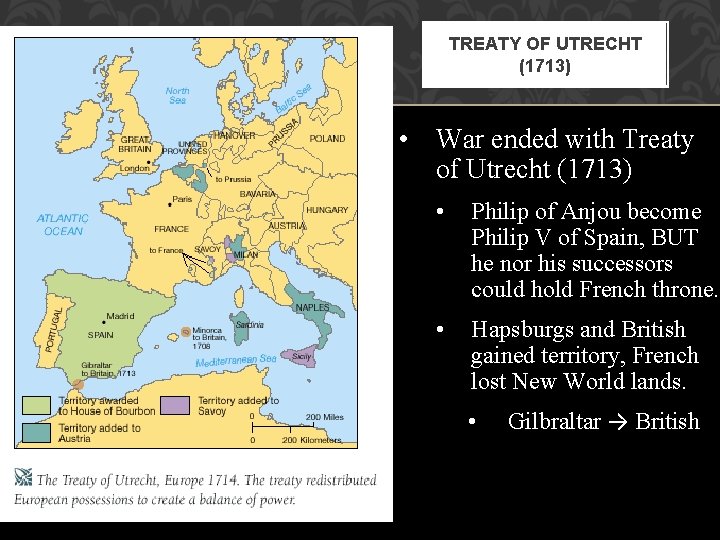
TREATY OF UTRECHT (1713) • War ended with Treaty of Utrecht (1713) • Philip of Anjou become Philip V of Spain, BUT he nor his successors could hold French throne. • Hapsburgs and British gained territory, French lost New World lands. • Gilbraltar → British
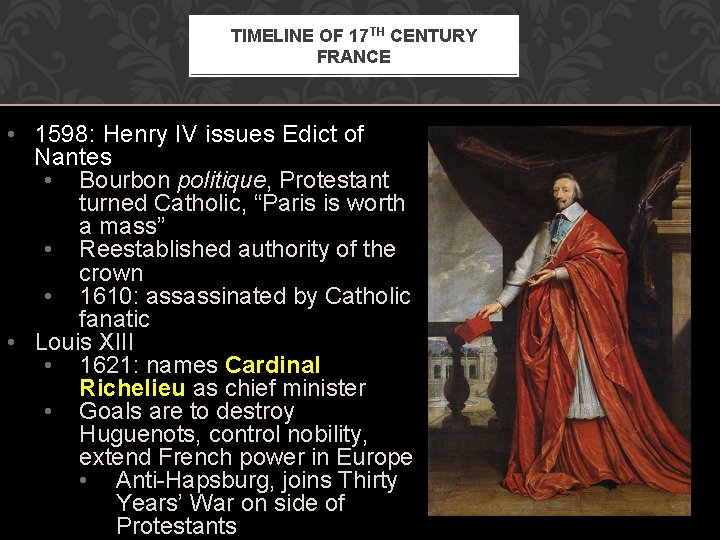
TIMELINE OF 17 TH CENTURY FRANCE • 1598: Henry IV issues Edict of Nantes • Bourbon politique, Protestant turned Catholic, “Paris is worth a mass” • Reestablished authority of the crown • 1610: assassinated by Catholic fanatic • Louis XIII • 1621: names Cardinal Richelieu as chief minister • Goals are to destroy Huguenots, control nobility, extend French power in Europe • Anti-Hapsburg, joins Thirty Years’ War on side of Protestants
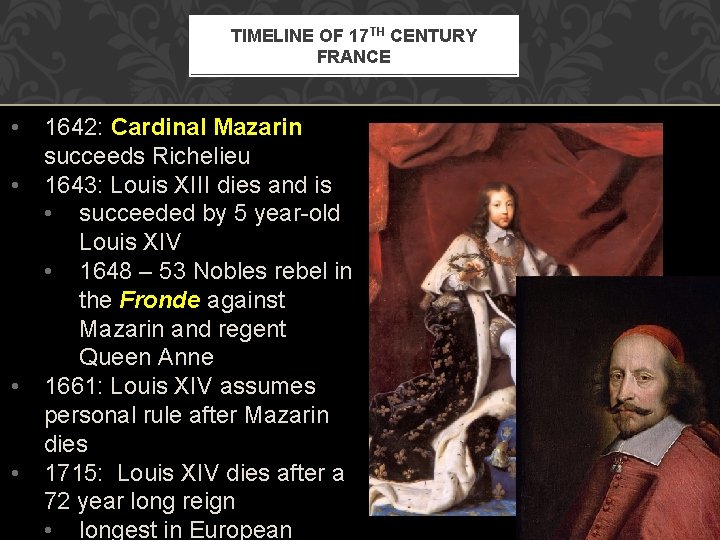
TIMELINE OF 17 TH CENTURY FRANCE • 1642: Cardinal Mazarin succeeds Richelieu • 1643: Louis XIII dies and is • succeeded by 5 year-old Louis XIV • 1648 – 53 Nobles rebel in the Fronde against Mazarin and regent Queen Anne • 1661: Louis XIV assumes personal rule after Mazarin dies • 1715: Louis XIV dies after a 72 year long reign • longest in European
BAROQUE: ART OF ABSOLUTISM • Originated in Rome with the Counter-Reformation in the 16 th century. • Comes to define the 17 th century and therefore coincides with the Age of Absolutism. • Images are dramatic, draw the viewer in to participate in the scene. • Emotionally intense (Bernini’s Ecstasy of St. Theresa)
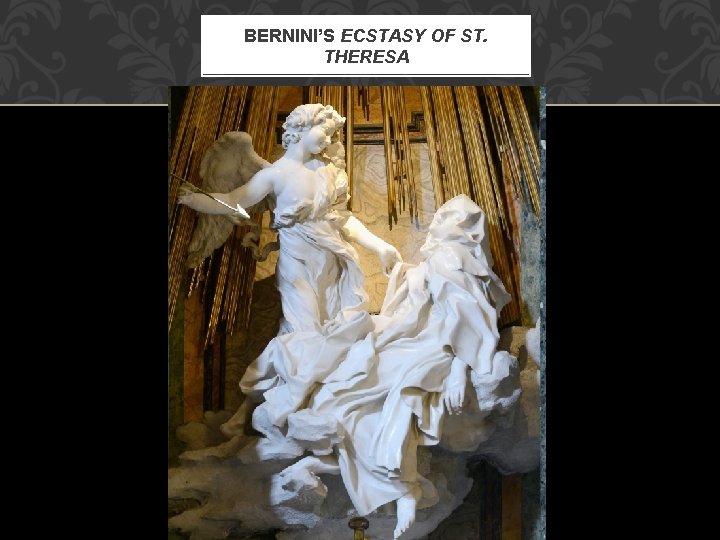
BERNINI’S ECSTASY OF ST. THERESA
BAROQUE: ART OF ABSOLUTISM • Originated in Rome with the Counter-Reformation in the 16 th century. • Comes to define the 17 th century and therefore coincides with the Age of Absolutism. • Images are dramatic, draw the viewer in to participate in the scene. • Emotionally intense (Bernini’s Ecstasy of St. Theresa) • Extravagant settings and ornamentation. (Versailles) • Dramatic contrasts between light and dark, light and shadow (Caravaggio’s Judith Beheading Holofernes, Rembrandt’s The Night Watch)
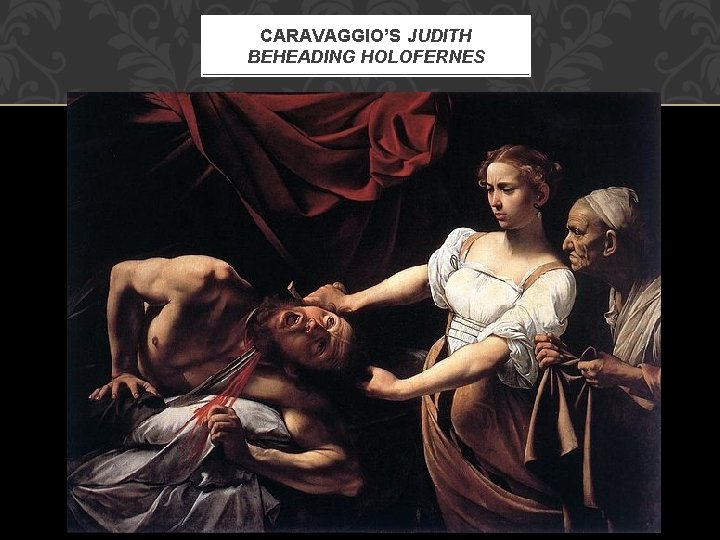
CARAVAGGIO’S JUDITH BEHEADING HOLOFERNES
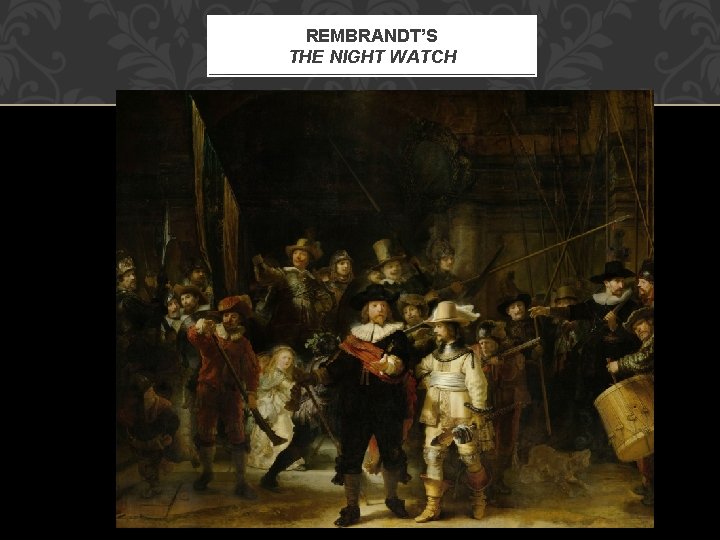
REMBRANDT’S THE NIGHT WATCH
BAROQUE: ART OF ABSOLUTISM • Originated in Rome with the Counter-Reformation in the 16 th century. • Comes to define the 17 th century and therefore coincides with the Age of Absolutism. • Images are dramatic, draw the viewer in to participate in the scene. • Emotionally intense (Bernini’s Ecstasy of St. Theresa) • Extravagant settings and ornamentation. (Versailles) • Dramatic contrasts between light and dark, light and shadow (Caravaggio’s Judith Beheading Holofernes, Rembrandt’s The Night Watch) • As opposed to Renaissance art with its clearly defined planes, with each figure placed in isolation from each other, Baroque art has continuous overlapping of figures and elements (Peter Paul Ruben’s Massacre of the Innocents)
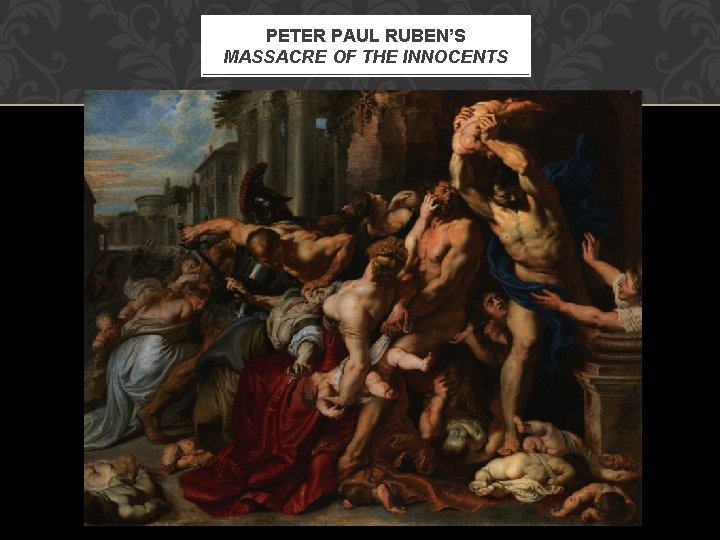
PETER PAUL RUBEN’S MASSACRE OF THE INNOCENTS
- Slides: 25